Hi-Fi Amplifiers
Monoblock Amplifiers Explained: Five Pairs Worth Considering at Every Price Level
What a monoblock amplifier changes, what it costs in cabling and space, and five pairs spanning roughly $280 to $3,200.
Introduction
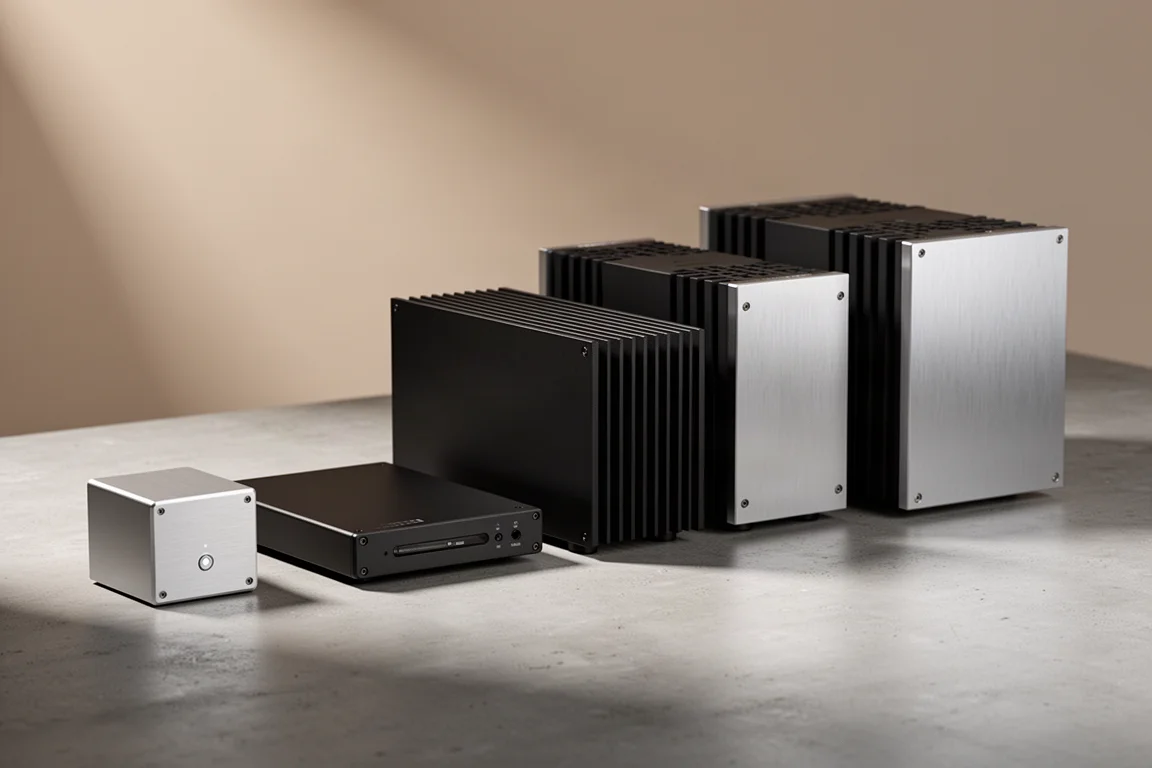
A monoblock amplifier is exactly what the name suggests: one channel of amplification in its own chassis, with its own power supply. It is not a gimmick, and it is not reserved for six-figure systems. It is a design choice that removes a specific set of compromises from a stereo amplifier, and the entry price for a working pair is lower than most listeners expect.
This guide covers what monoblocks actually change, the practical costs that come with them, and five pairs that span roughly $280 to $3,200. Each one has a distinct character, a distinct footprint, and a clear group of buyers it suits.
What Is a Monoblock Amplifier?
Mono means one. A monoblock amplifier handles a single channel, so a two-channel music system needs two of them. A home theater system with seven or nine channels would need a matching number of chassis, which is where most people draw the line: monoblocks for the left, center, and right channels, and a multichannel amplifier for the surrounds and height channels.
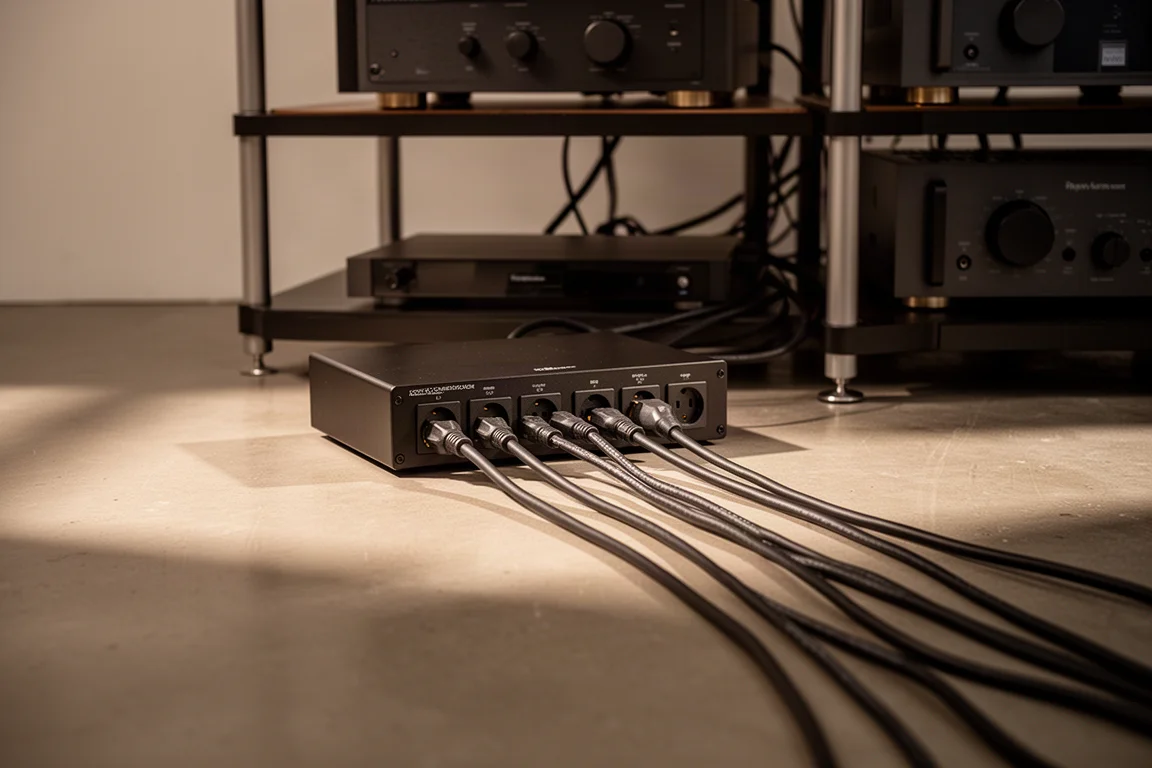
The trade-off is cabling. Every monoblock needs its own power cord and its own interconnect, so a three-channel front stage already means six cables behind the rack. A power conditioner or surge protector with a generous number of outlets keeps that from turning into a mess.
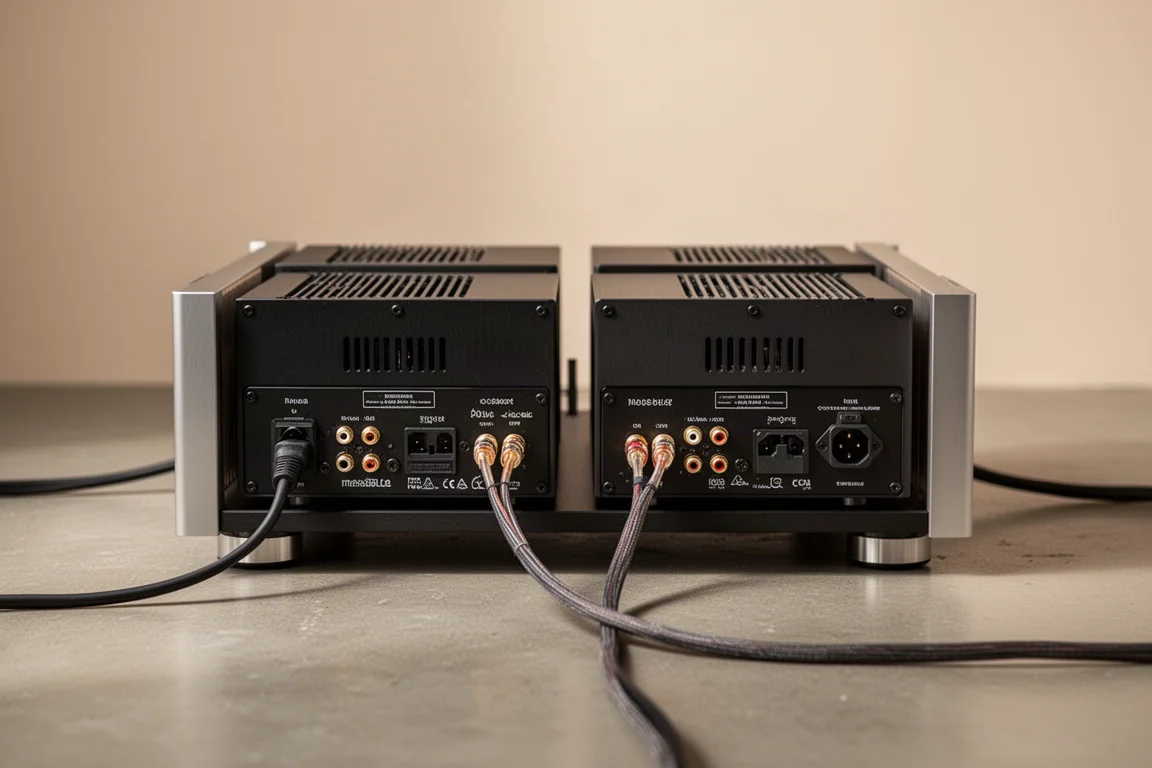
For listeners stepping up from a single stereo chassis, the first surprise is usually how much space a pair occupies and how much cabling it adds, not how different it sounds on day one.
Why Monoblocks Are Built Differently
The argument for monoblocks comes down to separation and current. Two channels sharing one power supply compete for the same reservoir, and the resulting modulation on the supply rails can be measurable. Give each channel its own transformer and its own supply, and that interaction largely disappears.
The practical benefits that designers of these amplifiers point to include:
- No shared power supply between channels, so no supply modulation from the other channel
- More current available to the loudspeaker, which matters with low-impedance, low-sensitivity designs
- Effectively zero crosstalk, because each speaker is coupled to one amplifier
- Better channel separation and greater dynamic capability
- Cooler running, plus simpler and more modular construction that is easier to service
There is a useful analogy for crosstalk: two people talking in the same room versus one person talking alone. The single voice is simply easier to follow.
Two further consequences are worth knowing. Monoblocks let you place each chassis close to its speaker, which shortens speaker cable but lengthens interconnects. And because a differential monoblock carries the positive and negative halves of the signal on separate power stages, noise picked up along the way tends to cancel rather than accumulate.
How These Five Pairs Were Evaluated
Each pair below was judged on the same handful of practical points: rated power into 8 ohms and 4 ohms, input flexibility, physical size and stackability, how comfortably it drives demanding loudspeakers, and the sonic character that comes through in normal listening. Price is the last variable rather than the first, because the spread here is wide and every option has a defensible place in it.
One expectation to set early: moving to monoblocks is unlikely to be a night-and-day transformation. The difference is real, and it shows up most clearly in dynamics, bass control, and the sense of space between instruments.
Best Budget Pair: Fosi Audio V3 Mono
The Fosi Audio V3 Mono is the pair that makes monoblocks accessible. Two chassis, each with its own 48V/5A power supply, come in under $300 for the pair, with a coupon sometimes bringing that closer to $265. That is less than plenty of single stereo amplifiers.
The design is Class D built around the 3255 amplifier chipset, and the claimed rating is 240W into 4 ohms at under 1% total harmonic distortion. In practice these small chassis deliver far more level than their size suggests, driving full-size speakers in a large room into the nineties in decibels without strain. Sustained output with bass-heavy material settles lower, but it stays well beyond what the footprint implies.
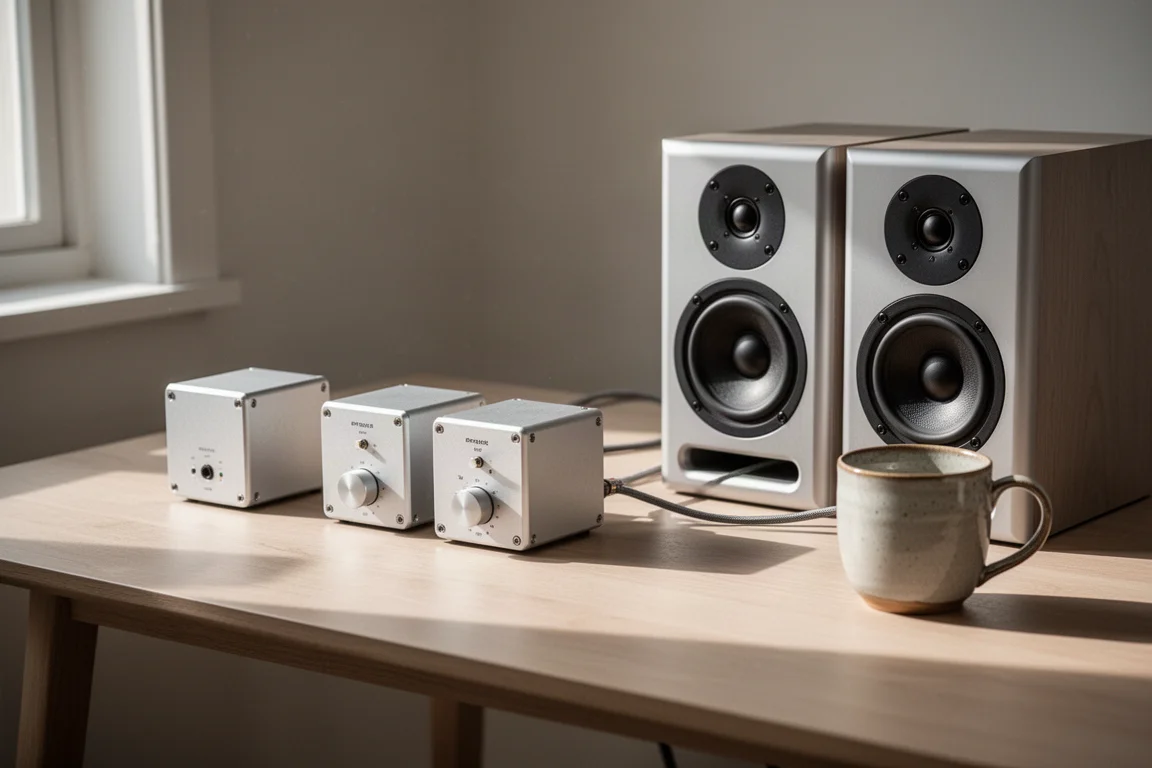
On the back there is one single-ended input and one balanced input, plus a gain setting that moves between 21 and 25 dB. Sonically, the V3 Mono is clean, a touch more dynamic than the stereo V3, and slightly more natural in the upper range.
There is one caveat to weigh. Anecdotal reports of units failing during burn-in have circulated, even though many owners run them without issue. Buying from a retailer with a straightforward return window and putting the pair through its paces early is the sensible approach, and customer service has generally been responsive when problems do come up.
Best Mid-Range Pair: Outlaw Model 2220
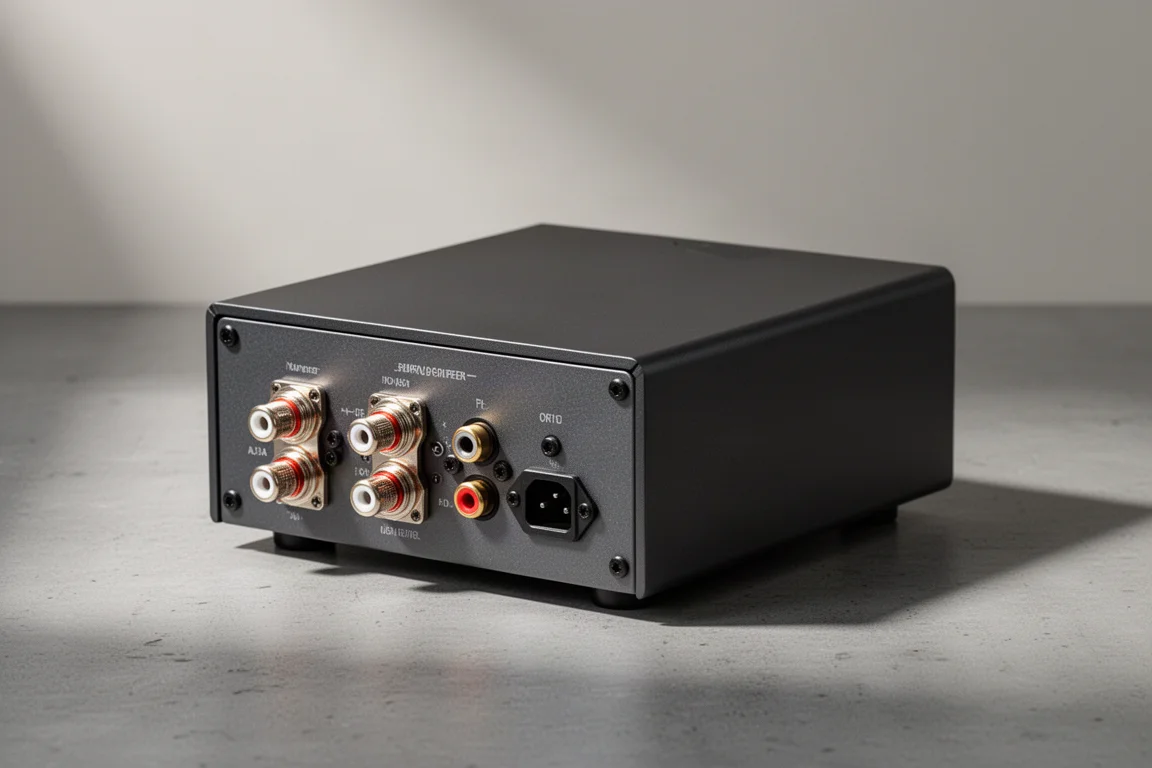
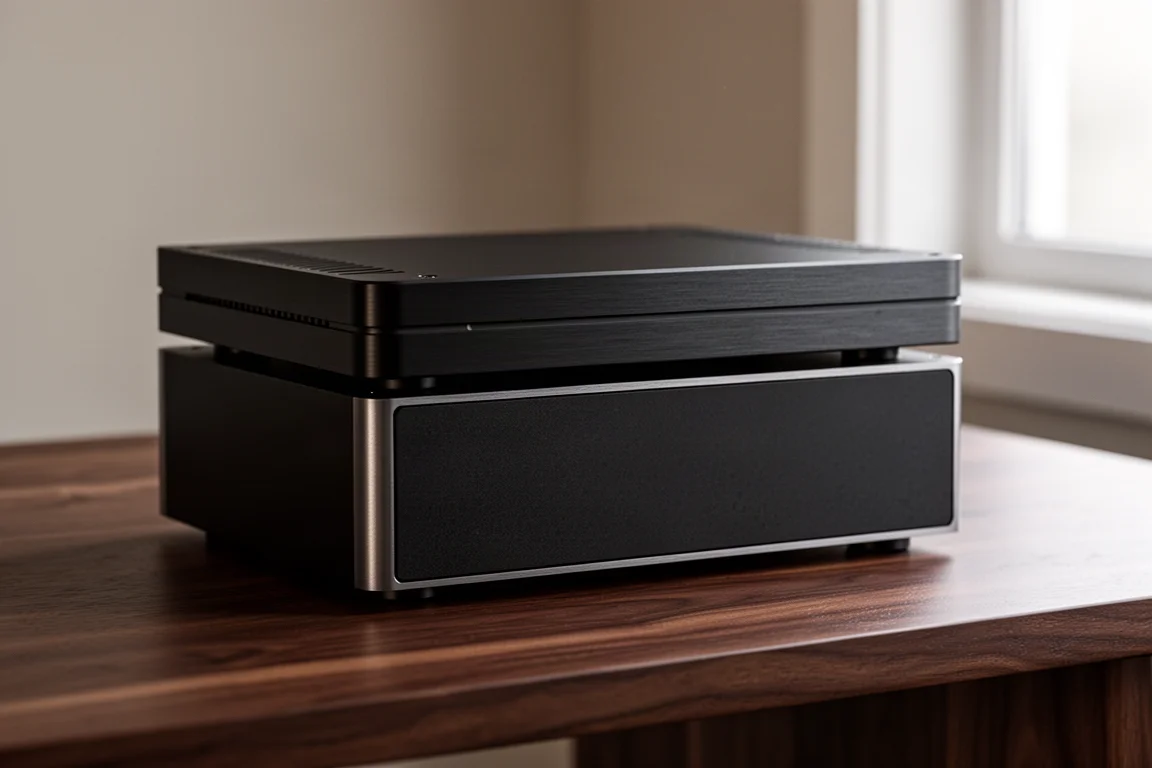
The Outlaw Model 2220 moves up to a Class AB design with a toroidal transformer, rated at 200W into 8 ohms and 300W into 4 ohms, at roughly $800. The chassis is deliberately slim rather than tall, which means a pair stacks neatly into the space of one large stereo amplifier.
Inputs include both balanced and single-ended connections, along with a signal-sensing switch on the rear panel. The voicing is very clean and slightly forward in the midrange, and it is not quite as dynamic as the more expensive pairs here. What it does well is deliver big moments with control: when a track calls for a drop, the amplifier hands it over intact rather than smearing it.
Difficult loads are not a problem. Four-ohm floorstanders with moderate sensitivity have been driven to sustained levels in the mid-nineties without the amplifier running out of headroom first. The speakers give up before the amplifier does.
Best Upper Mid-Range Pair: Emotiva A1
The Emotiva A1 has a retail price of $1,138, and Emotiva discounts it periodically; a 20% promotion brings it to about $910. For that you get 200W into 8 ohms and 325W into 4 ohms from a compact, stackable chassis with a large toroidal transformer.
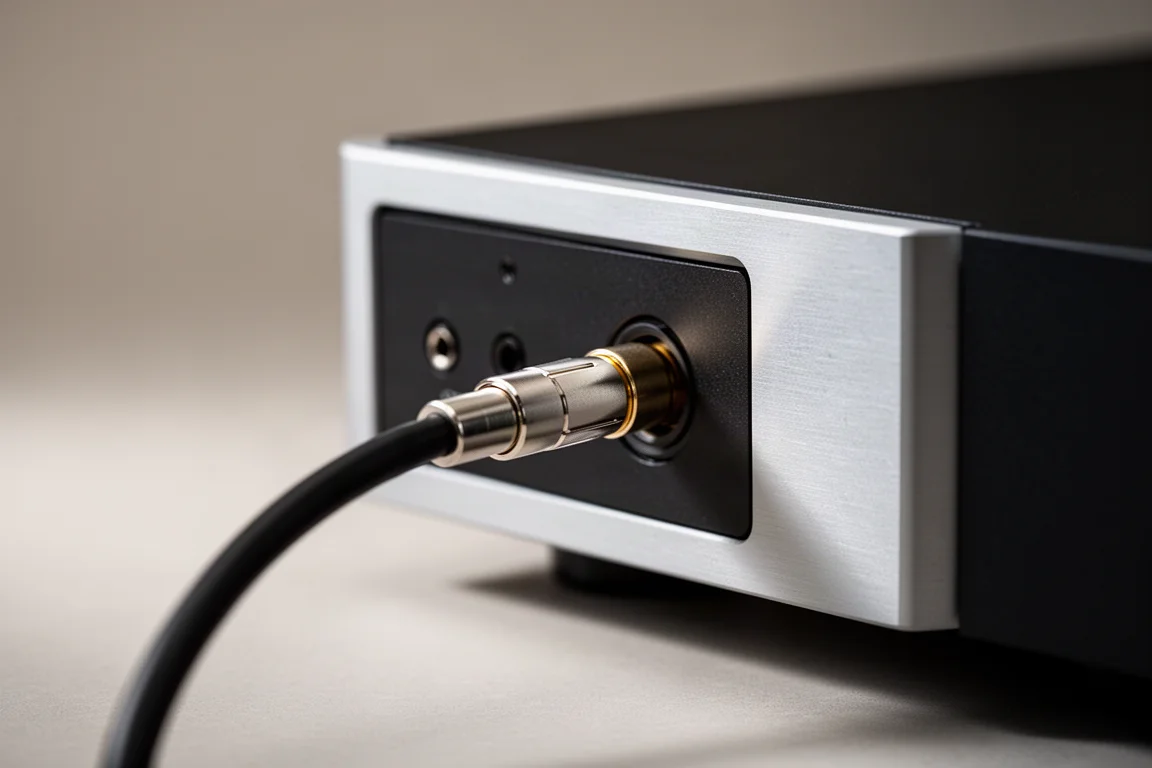
The input situation is the main limitation. There is a single RCA input, so a preamp with balanced outputs will need an adapter or a different amplifier. Stacking is possible, and two units will fit on a standard rack shelf with the feet removed, but airflow then becomes your responsibility: leave a gap below and between the amplifiers. They run fairly cool in normal use, so this is manageable rather than a dealbreaker.
Sonically the A1 is the most energetic pair in the middle of this list. The presentation leans toward the bass, with a slightly recessed midrange and a broad, deep soundstage. Rock, hip-hop, metal, and punk all benefit from that combination.
That bass-forward balance is a deliberate character rather than a neutral reference, so listeners who want a flat, analytical presentation should look further up the list.
Best Premium Pair: Emotiva DR1
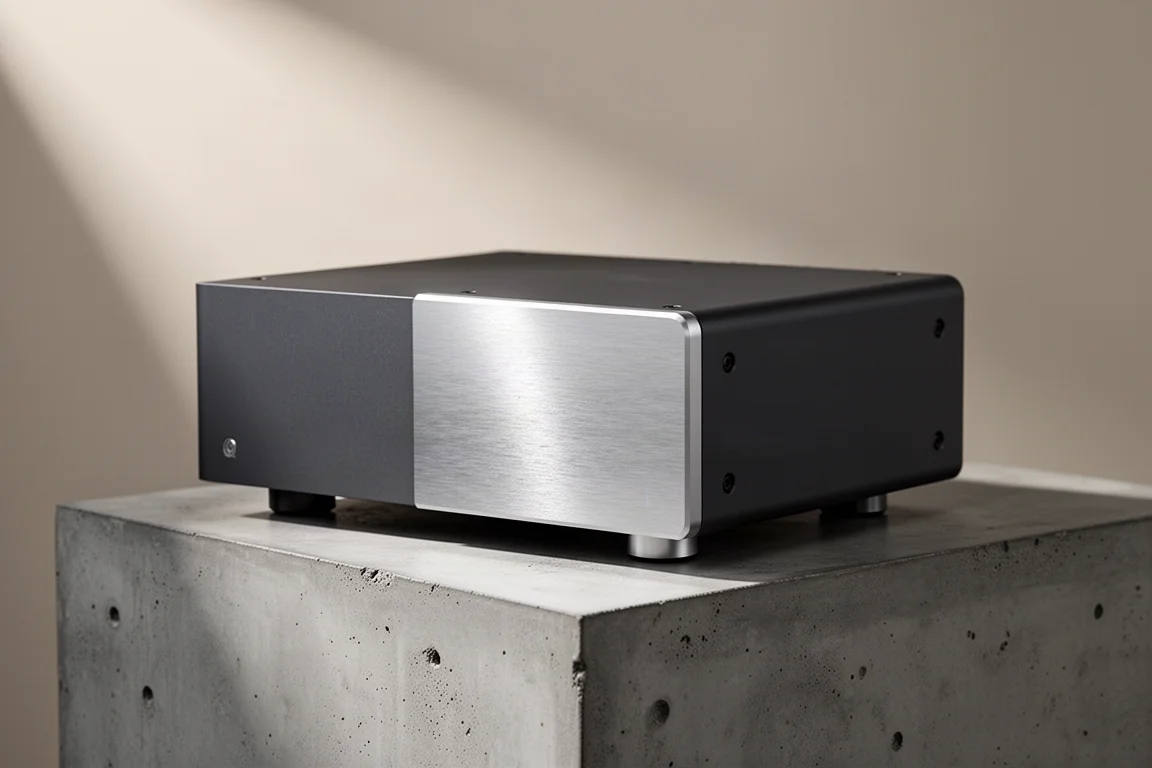
The Emotiva DR1, the differential reference monoblock, is the most powerful pair here by a wide margin: 650W into 8 ohms, 1,000W into 4 ohms, and distortion below 0.1%. A pair lists at around $3,000, and periodic 20% promotions bring that down further.
The differential topology is what sets it apart. A balanced signal arrives as two waveforms 180 degrees out of phase, and the amplifier uses a separate power stage for each half. Noise picked up along the way tends to appear on both halves and cancels at the output. Emotiva pairs that with a switching power supply of its own design rather than the linear supplies used elsewhere in this list.
The result is the most effortless bass control and the most resolved presentation in this group, with dynamics that the smaller pairs cannot match. The cost is physical: these chassis are genuinely large, and a pair may not fit a standard rack at all. Plan on floor placement or a dedicated shelf, and budget the space before you budget the money.
Best Premium Choke Design: Schiit Tyr
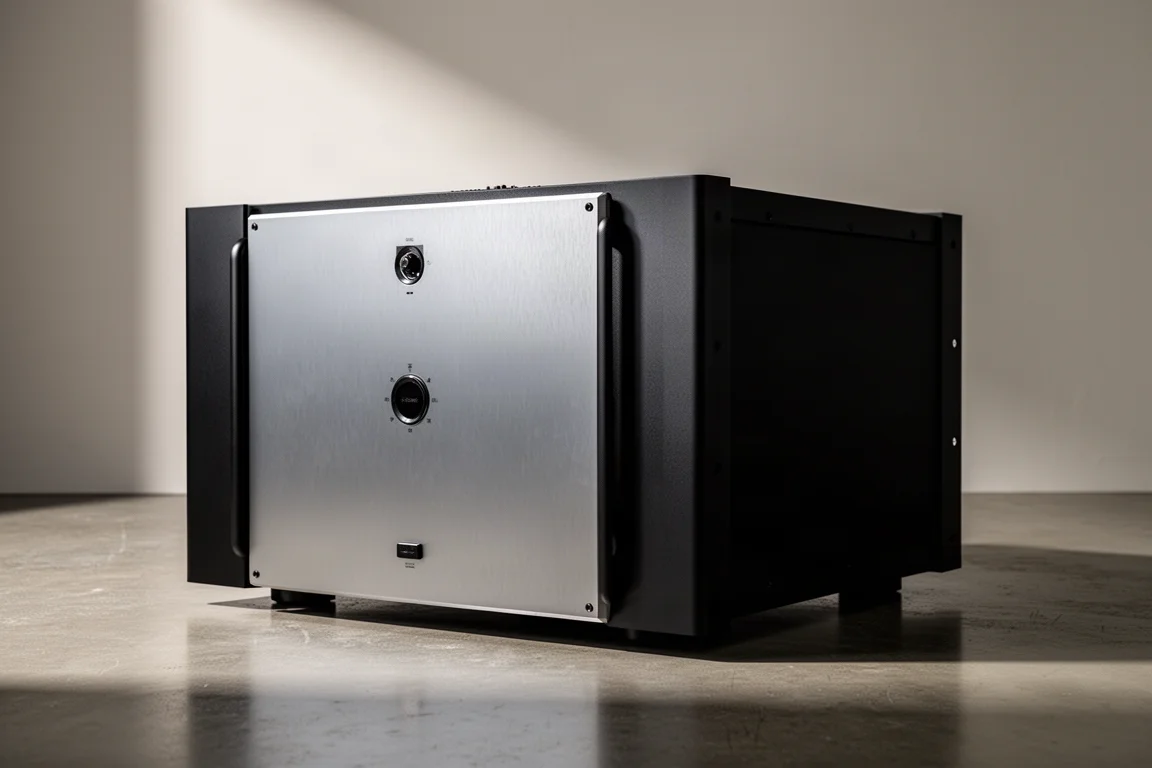
The Schiit Tyr takes a different route. Rated at 200W RMS into 8 ohms and 350W RMS into 4 ohms, it uses a choke-input power supply, an old-school approach that stores energy in a choke rather than relying entirely on capacitors. Choke designs largely disappeared as capacitors became smaller, lighter, and cheaper, but they offer better filtering.
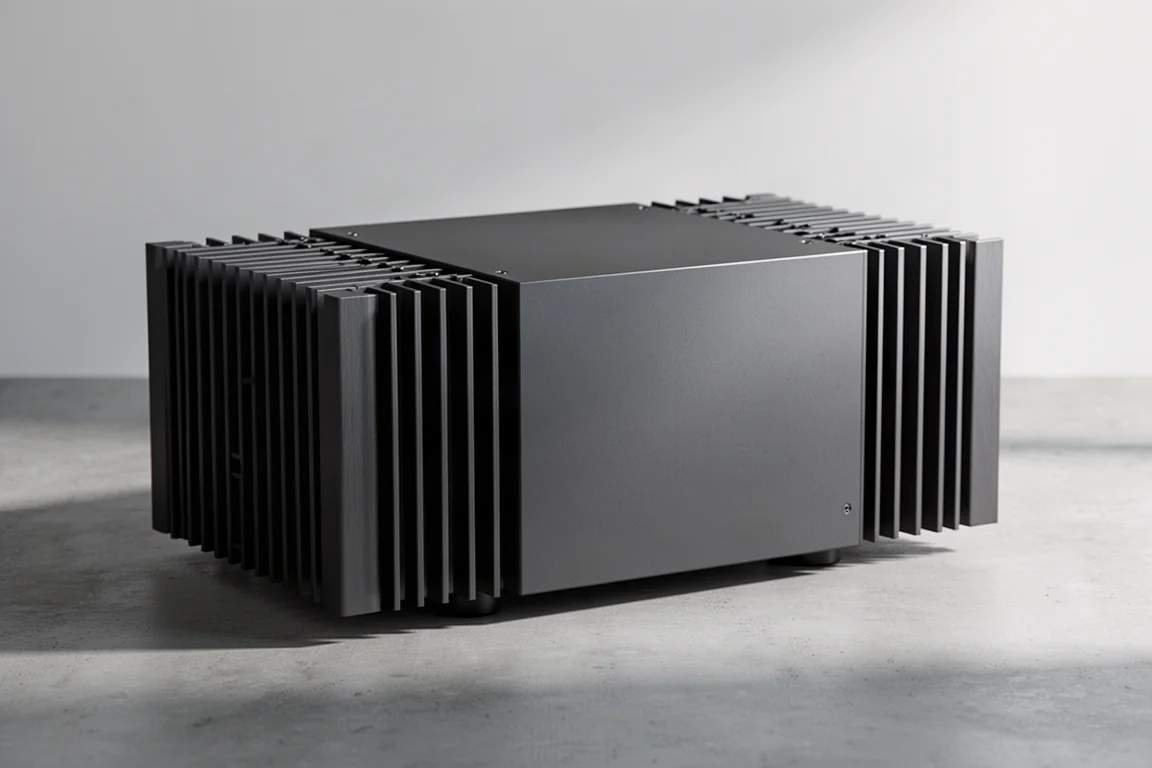
A pair runs $3,200, and they are extremely heavy for their height. The chassis are not tall, but the side heat sinks are enormous, and stacking them is a two-person job. Handle them with care.
The sound follows the house character: very neutral, slightly forward in the midrange, and highly detailed. Everything in a recording is audible. They are not quite as dynamic as the DR1, although the DR1’s differential design gives it an inherent advantage in that department.
Buying Advice: What to Budget Beyond the Amplifiers
Monoblocks are only part of a system, and the supporting pieces matter. You will need a preamp, or a source with a variable output. A streaming preamp feeding an external DAC is a perfectly workable arrangement, with volume handled digitally at the source.
Cabling is the other line item. A pair means two power cords and two interconnects, and a three-channel front stage doubles that. A power conditioner with enough outlets keeps the rear of the rack orderly and protects the investment. Placing each monoblock near its speaker shortens the speaker runs, which is the usual arrangement once you commit to separate chassis.
If your budget and your rack can absorb it, a pair of monoblocks generally outperforms a stereo amplifier from the same manufacturer. That comparison holds even within a single brand: the A1 monoblocks sound better than the equivalent stereo model, which costs considerably less. More power and no crosstalk are the reasons, and they are the same reasons monoblocks exist at all.
For home theater, the pragmatic build is monoblocks for left, center, and right, with a multichannel amplifier handling the remaining channels. That captures most of the benefit without turning the rack into a wall of chassis.
Conclusion
Monoblocks are not for everyone. If a simple, clean setup matters more than the last increment of performance, a good stereo amplifier is the smarter purchase, and it will cost less and take up less space.
For listeners who enjoy the pursuit, though, the case is straightforward. Two chassis per channel means more current, no shared supply, and effectively no crosstalk, and the five pairs here cover a genuinely wide range of budgets. The Fosi Audio V3 Mono gets you in for under $300. The Outlaw Model 2220 adds transformer-based Class AB muscle for around $800. The Emotiva A1 brings an energetic, bass-forward voicing at roughly $910 when discounted. The Emotiva DR1 and the Schiit Tyr sit at the top, with the DR1 offering the most power and the Tyr offering a neutral, choke-filtered alternative.
Expect an improvement rather than a transformation, and match the pair to your speakers, your preamp, and your shelf space. Choose well and any of these will reward the upgrade.
Further reading
Related Reviews
Hi-Fi Amplifiers
Accuphase E-280 Review: Entry-Level Accuphase With Flagship Attention to Detail
A close look at the Accuphase E-280 integrated amplifier, covering its champagne build, AAVA volume control, sound quality, and the speakers and sources that suit it best.
Hi-Fi Amplifiers
Advance Paris A10 Classic vs Yamaha A-S301: Two Integrated Amplifiers Compared
A practical comparison of a $350 integrated amplifier and a $2,500 reference model, covering the differences that matter and the ones that do not.
Hi-Fi Amplifiers
Affordable Chinese Amplifiers Worth Buying: Five Budget Hi-Fi Amps Compared
A practical look at five affordable amplifiers, what each one does well, and the trade-offs to weigh before you buy.