Hi-Fi Speakers
Monitor Audio Studio 89 vs KEF LS50 Meta vs Buchardt S400 Mark II: Three Compact Speakers Compared
A close look at three compact standmount speakers, what each one does well, and how to choose between them for a small to midsize room.
Introduction
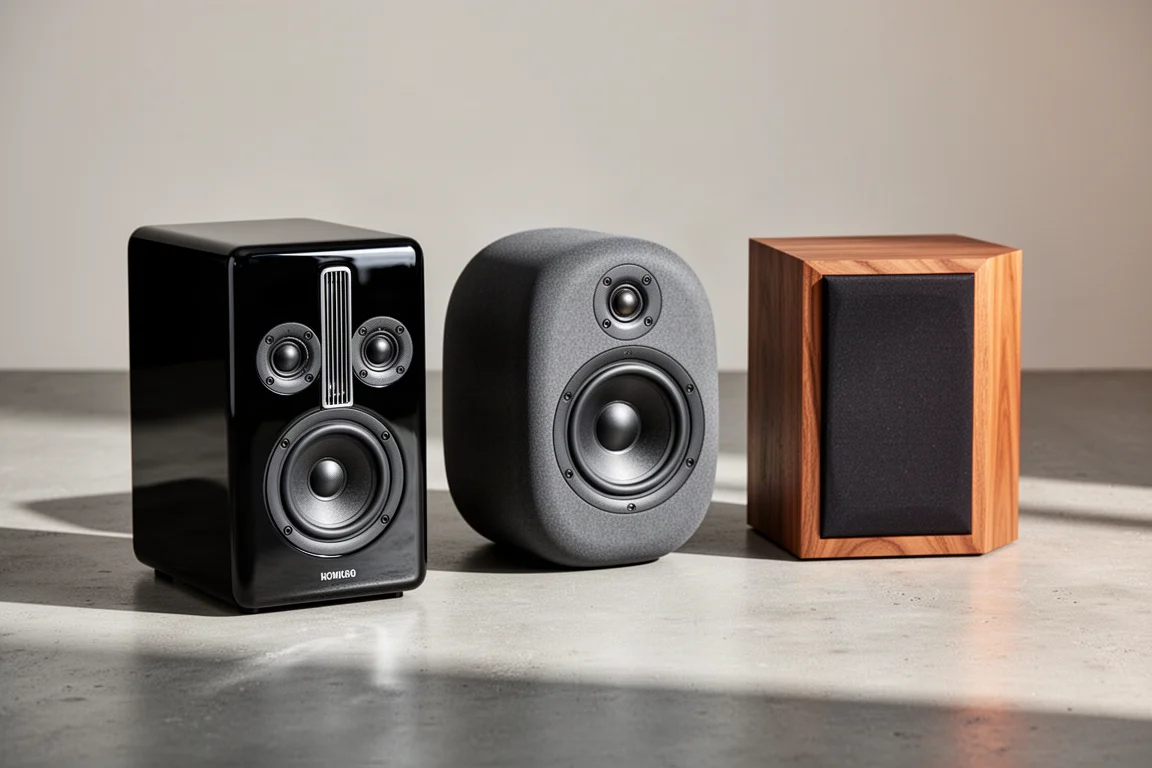
Compact standmount speakers are the most room-friendly route into serious two-channel sound, and the three models here take noticeably different paths to get there. The Monitor Audio Studio 89 is the newest of the group and carries the most distinctive engineering story. The KEF LS50 Meta is the even-handed option. The Buchardt S400 Mark II is the one that pushes hardest on low-frequency output from a genuinely small cabinet.
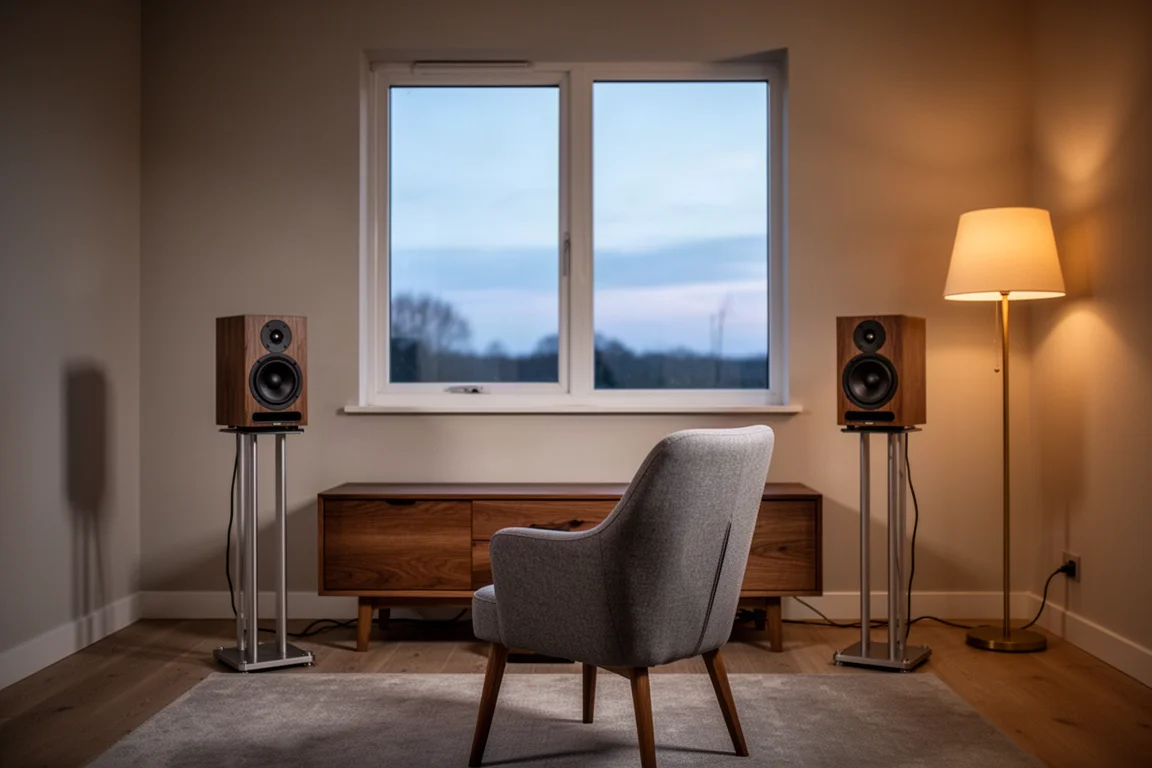
All three are small enough to sit on a stand or a shelf, and all three are at their best in a small to midsize room rather than a large open space. The real differences show up in bass weight, treble character, imaging precision, and how demanding each speaker is of the amplifier feeding it.
How We Compared These Speakers
The evaluation focused on four things that matter most in a compact speaker: how much bass the cabinet can genuinely deliver, how the treble handles detail without turning harsh, how precisely the speakers place instruments in space when toed in toward the listening position, and how well each one copes with dense, hard-driving rock compared with quieter, more spacious recordings.
Amplifier matching mattered as much as the speakers themselves. Each model was driven by a Linear Tube Audio Ultra Linear amplifier, a First Watt F7 class A amplifier rated at 20 watts per channel, and a Pass Labs XA25 used as the long-term reference. Of those three, the First Watt F7 was the preferred match.
Monitor Audio Studio 89: Clarity and Inner Detail
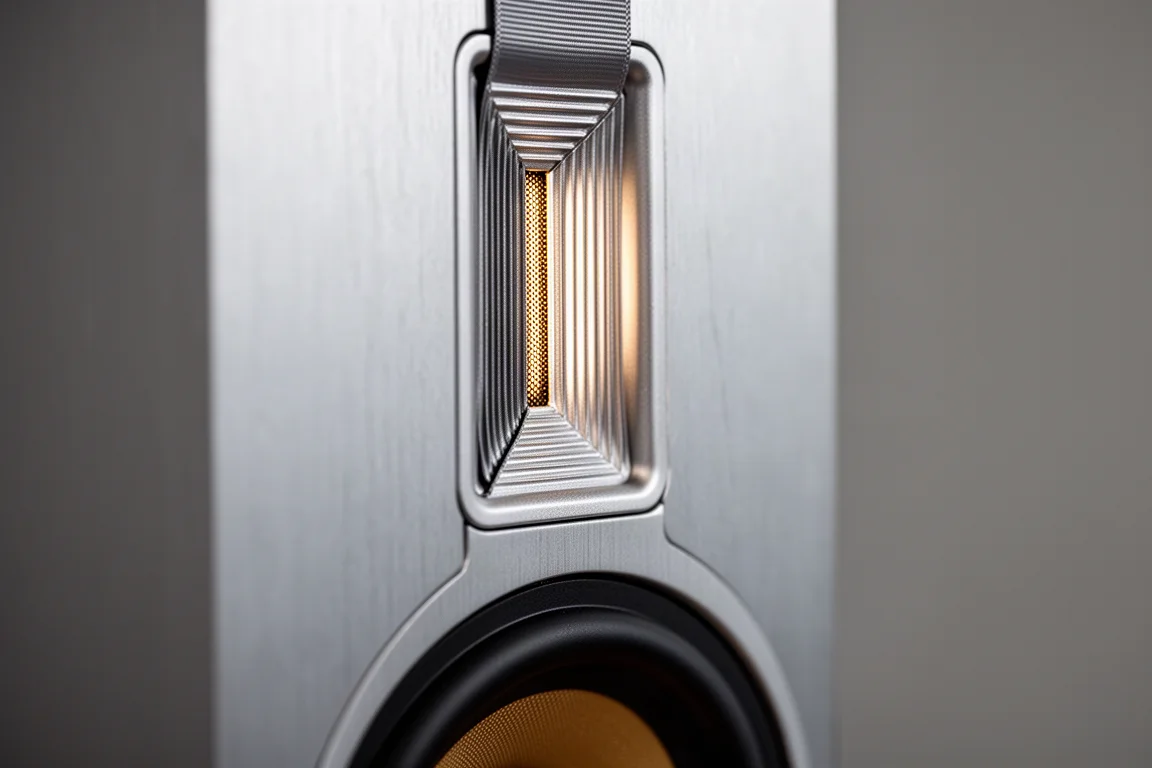
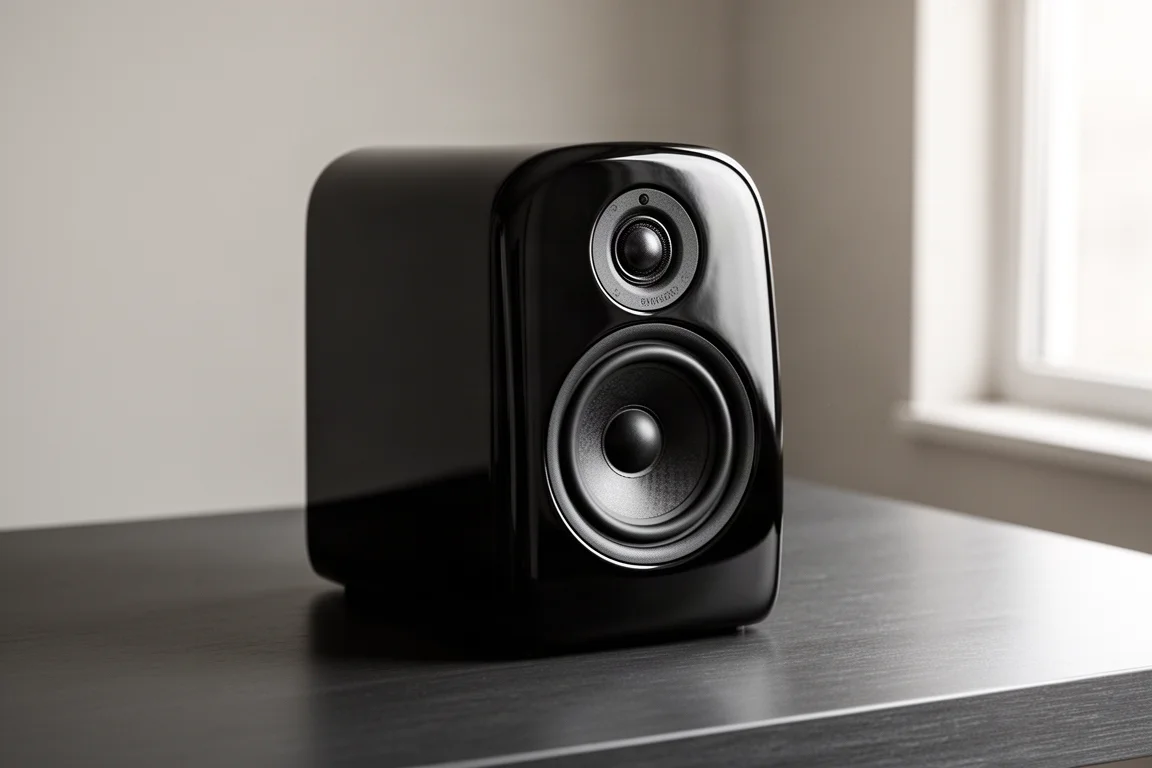
The Studio 89 is the newest speaker of the three, but its name reaches back to a series that began in 1989. It is a compact design built around a pair of 4.25-inch midwoofers arranged in a d’Appolito configuration, with a folded ribbon tweeter mounted between them. The result is a speaker that prioritizes clarity and imaging over cabinet-filling bass.
Driver Design and Cabinet Construction
The midwoofer cones use a sandwich construction: a ceramic-coated aluminium-magnesium front surface, a Nomex honeycomb core, and a carbon fibre rear surface. The basket is substantial and the magnet assembly is large, and the driver is treated as a new design.
The handover from the two midwoofers to the ribbon tweeter happens at 2.4 kHz through a third-order crossover. All three drivers bolt to an aluminium baffle, and that baffle is bolted through from the front of the cabinet to the rear with a set of rods that stiffen the enclosure.
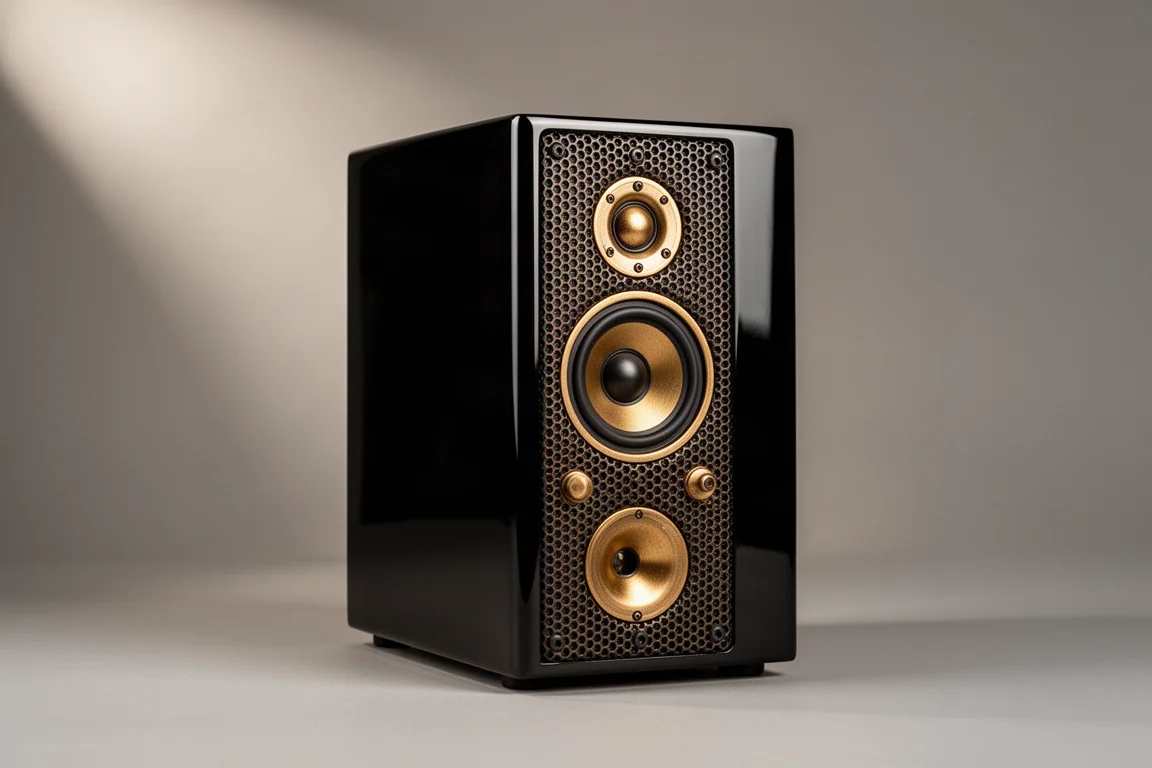
The cabinet itself is small, roughly 13 inches tall and about 13 inches deep, and it is offered only in high gloss black. No grilles are available. On the back there are two slot-loaded bass ports with ribbed surfaces, and the binding posts are unusually handsome.
Sound Character and Real-World Listening
With two 4.25-inch woofers in a small cabinet, the Studio 89 is not going to move a great deal of air. In practice it runs out of steam at around 50 Hz, and it is happiest in a small to midsize room. If deep bass is a priority, this is not the speaker to choose. If it is not, the speaker stands comfortably on its own.
Imaging is one of its real strengths. Toed in toward the listening position, it throws a wide and spacious image that is fairly precise and well focused. Soundstage depth and dimensionality are less impressive than the width.
The treble is the headline. It is not brighter than the alternatives, but it carries more inner detail and clarity, and it does so without ever tipping into hardness. Vocals benefit most. On Van Morrison’s The Healing Game, the Studio 89 placed the voice more fully in the room and gave a clearer picture of what happened at the sessions, while the KEF LS50 Meta had already handled the same record cleanly and without complaint.
Transparency is the quality that keeps pulling you back, and the ribbon tweeter is the reason. On the remixed and remastered edition of John Lennon’s Mind Games, a soloed electric bass came through chunky, meaty and textured. On A Certain Ratio’s Sextet, an album of mostly instrumental dance material with strong basslines and a live-in-the-studio feel, the speaker kept its composure and its sense of fun. A contemporary classical recording for strings, electronics and vocals was equally convincing, with the string passages bursting forward.
What to Consider Before Buying
The Studio 89 is priced at $2,499 per pair. Optional stands bolt directly to the cabinet and cost $749 per pair. The warranty runs to five years.
Two specifications deserve attention before you buy. Sensitivity is rated at 86 dB, and the nominal 6 ohm impedance drops to a minimum of 4.2 ohms. That combination rewards a capable amplifier rather than a low-powered budget unit, and the speaker responded well to all three amplifiers used here.
Also worth knowing: there is no grille option, the finish list is limited to high gloss black, and bass output is modest by design. Buyers who want a small speaker that can also handle dense hard rock may find this model and the LS50 Meta both wanting. The Rolling Stones’ Exile on Main Street never quite delivered the aggression it should.
KEF LS50 Meta: The Balanced Alternative
The LS50 Meta is the calm counterpoint. On The Healing Game it presented everything that makes the record work, with no obvious weakness and nothing to complain about. It is even-handed across the range and easy to live with.
Where it gives ground is bass. In a cabinet this small, low-frequency weight is limited, and both the LS50 Meta and the Studio 89 give up ground to the Buchardt S400 Mark II in that department. It met the same wall on dense hard rock: Exile on Main Street did not have the bite that either compact speaker could produce.
What it offers instead is balance. If you want a compact speaker that handles familiar recordings cleanly and asks very little of the rest of your system, this is the safer of the three.
Buchardt S400 Mark II: Bigger Bass in a Small Cabinet
The S400 Mark II is a very small speaker with an unusually large passive radiator on the back. That single design choice changes its character: it produces a lot more bass than either the Studio 89 or the LS50 Meta, and it gives the impression of listening to a larger speaker than the cabinet suggests.
That extra weight comes with a trade-off. When the same recordings were played across all three, the sense of liveness was better on the Studio 89, while the S400 Mark II conveyed more solidity. It is a speaker that favours body and fullness over immediacy.
For listeners who want the most low-frequency output available from a genuinely small cabinet, this is the one to consider first. For listeners chasing the last word in transparency and vocal presence, the Studio 89 remains the more compelling choice.
Matching Amplifiers and Room Size
All three speakers are compact, and all three are at their best in small to midsize rooms. None of them is designed to fill a large open-plan space, and the models with more modest bass output benefit most from realistic expectations about low-frequency extension.
Amplification is the other variable worth planning for. The Studio 89’s 86 dB sensitivity and 4.2 ohm minimum impedance make it the most demanding of the three on paper. In practice it matched well with a Linear Tube Audio Ultra Linear amplifier, a First Watt F7 class A amplifier rated at 20 watts per channel, and a Pass Labs XA25 reference amplifier. Of those three, the First Watt F7 was the preferred pairing.
Buying Advice
Choose the Monitor Audio Studio 89 if clarity, treble detail and imaging matter more to you than bass weight, and if your room is small to midsize. Its transparency and its ribbon tweeter are the reasons to pay the $2,499 asking price, and the five-year warranty adds some long-term reassurance.
Choose the KEF LS50 Meta if you want a balanced, unfussy compact speaker that handles familiar material cleanly and does not ask much of the rest of your system. It gives up bass weight to the Buchardt, but it rarely puts a foot wrong.
Choose the Buchardt S400 Mark II if low-frequency output from a small cabinet is the priority. Its large rear passive radiator lets it punch well above its size, at the cost of some of the immediacy the Studio 89 delivers.
Whichever you pick, budget for a capable amplifier and plan around a small to midsize room. The Studio 89 in particular benefits from being toed in toward the listening position.
Conclusion
These three compact speakers are not really competing for the same buyer. The Monitor Audio Studio 89 is the transparency specialist, with an exceptional ribbon tweeter, wide imaging and a level of inner detail that stands apart, in exchange for limited bass extension and a need for a capable amplifier. The KEF LS50 Meta is the balanced, low-drama option. The Buchardt S400 Mark II is the one to choose when a small cabinet still has to deliver real low-frequency weight.
Match the speaker to your room and your priorities, and any of the three will reward the effort.
Further reading
Related Reviews
Hi-Fi Speakers
1723 THX Tower vs 1528 Bookshelf: Which Speaker Fits Your Room?
Two speakers at roughly the same price, built very differently. How the 1723 THX tower and the 1528 bookshelf compare on construction, bass, power needs, and sound.
Hi-Fi Speakers
Acoustic Energy AE 300 Review: Deep Bass From a Compact Standmount
A two-way standmount with real wood veneer, surprising low-end weight, and a warm, easygoing character. Here is what to know before buying.
Hi-Fi Speakers
Acoustic Energy AE1 40th Anniversary Review: A Modern Take on a British Classic
A compact standmount that revives a 1980s favorite with all-new parts, a warm mid-centric balance, and a price of £1,499 per pair.