Standmount Speakers
Monitor Audio Silver 100 7G 50th Anniversary vs Sonus Faber Lumina II vs Q Acoustics Concept 30
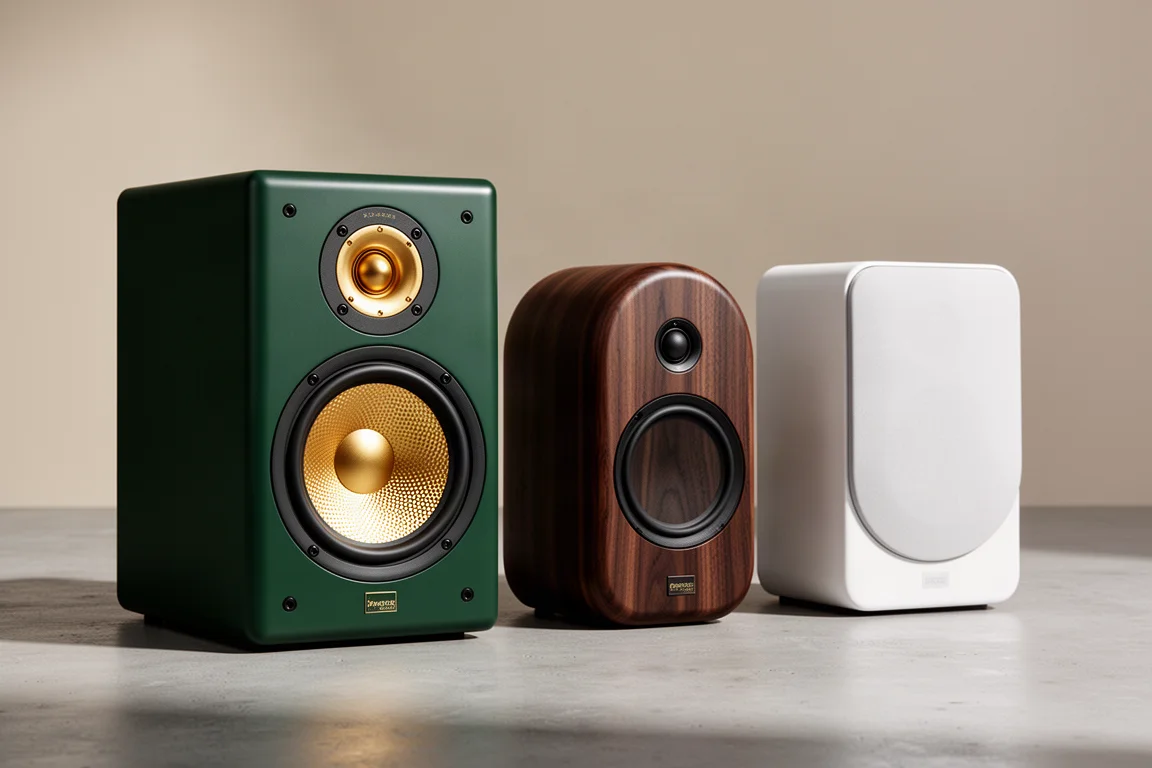
A side-by-side comparison of the Monitor Audio Silver 100 7G 50th Anniversary Limited Edition, Sonus Faber Lumina II and Q Acoustics Concept 30.
Introduction
Three two-way standmount speakers sitting at a similar price point make for a genuinely useful comparison. The newest of the group is the Monitor Audio Silver 100 7G 50th Anniversary Limited Edition, a limited-run version of the Silver 100 7G finished in classic heritage green to mark Monitor Audio’s 50th anniversary.
Alongside it are the Sonus Faber Lumina II and the Q Acoustics Concept 30, both pint-sized standmounts with their own followings. All three were run side by side in the same room over an extended period.
The short version: the Monitor Audio is the largest and the most capable in the low end, the Sonus Faber is the sharpest at imaging, and the Q Acoustics is the most relaxed. Which one belongs in your room depends on the room itself as much as on taste.
What These Three Standmount Speakers Have in Common
All three are two-way standmount designs with a similar price tag, and all three are aimed at the same kind of buyer: someone building a compact two-channel system rather than a floorstanding one.
The differences show up in cabinet size and voicing. The Monitor Audio is the largest of the three by a clear margin, and that extra volume is not just cosmetic. A bigger cabinet allows a bigger mid-bass driver, and a bigger mid-bass driver moves more air.
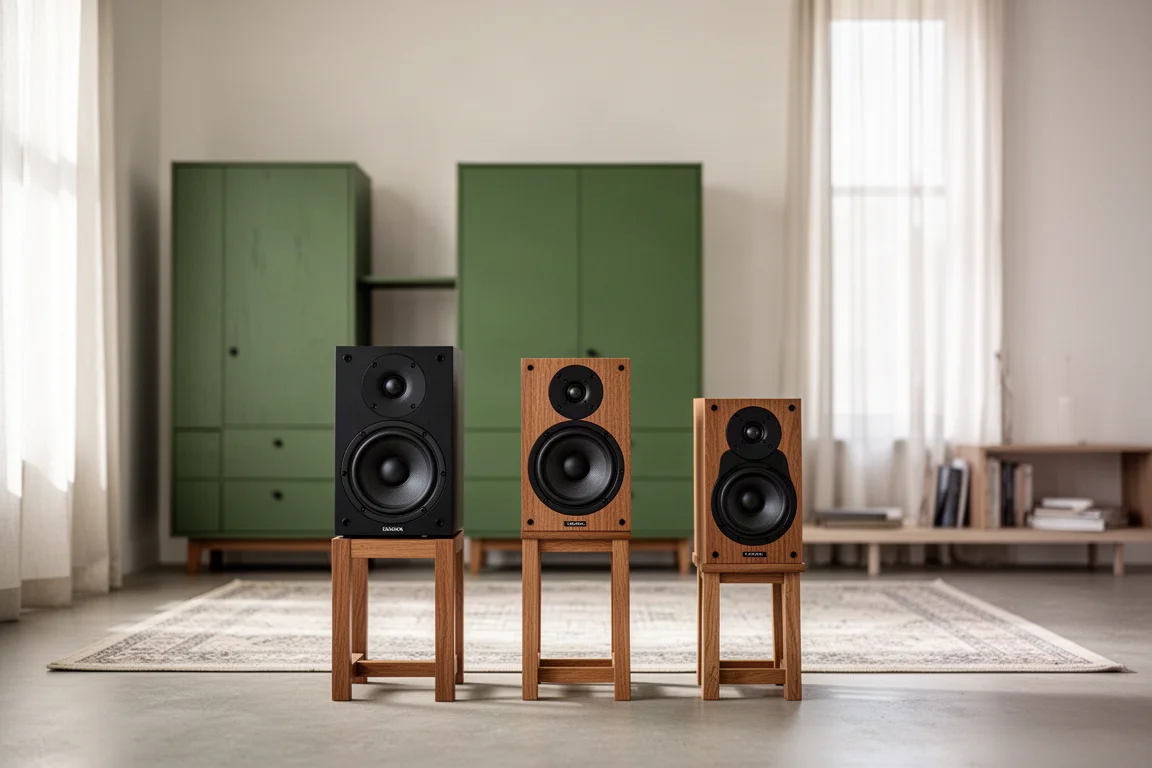
Finish and character diverge too. The Q Acoustics Concept 30 has the most futuristic look of the group, while the Monitor Audio leans traditional. In the limited-edition heritage green it reads as a piece of audio furniture rather than a piece of technology, and that traditional character will appeal to plenty of listeners.
Monitor Audio Silver 100 7G 50th Anniversary: Cabinet, Drivers and Finish
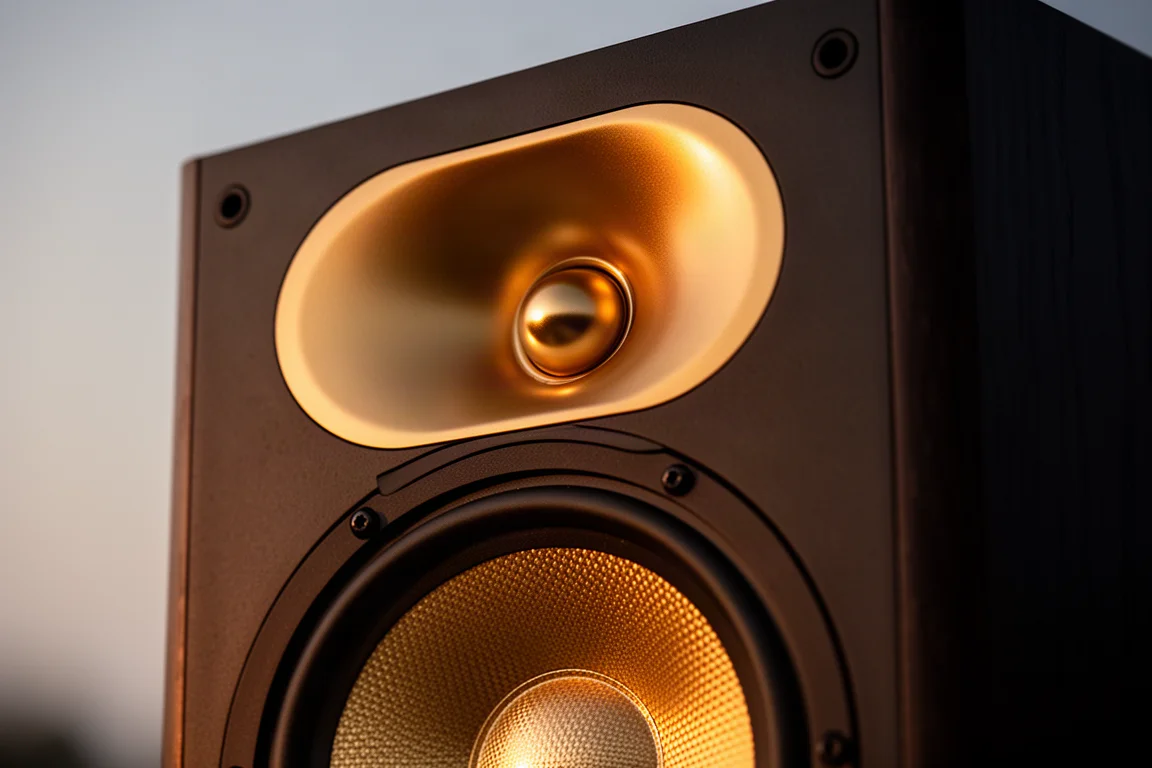
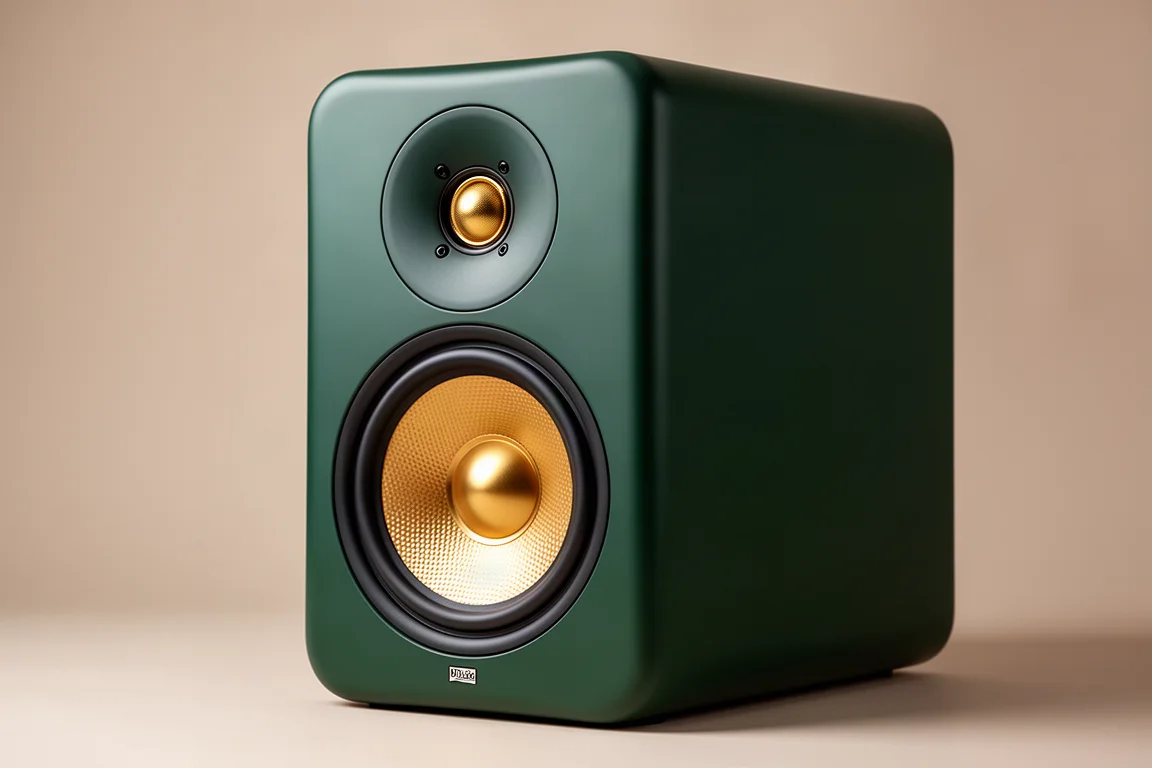
The Silver 100 7G is a two-way design built around a 25 mm (1 inch) C-CAM gold dome tweeter. That tweeter sits inside a waveguide that also acts as a physical guard, which matters if there are small children in the house who might otherwise press a finger into the dome. It is a small detail that becomes more valuable over years of ownership.
Below it is a 20 cm C-CAM mid-bass driver, referred to by Monitor Audio as an RST 2 unit, with a fine dimpled texture across its surface. The reflex port and the binding posts both sit on the rear panel, and there are two sets of binding posts for bi-amping or bi-wiring.
Monitor Audio rates the speaker as 6 dB down at 35 Hz, which describes how far the bass rolls off rather than a hard cutoff. In practice it means the cabinet reaches meaningfully lower than either of the smaller speakers here.
The 50th Anniversary Limited Edition adds the classic heritage green finish. Magnetically attached grilles are included, though the rounded bottom edge is a divisive look, and with gold drivers behind them many listeners will prefer to leave the grilles off entirely.
Monitor Audio Silver 100 7G: How It Sounds and What It Needs
Low end is where the Silver 100 7G separates itself most clearly. On ambient electronic material with occasional deep bass notes, the Q Acoustics and the Sonus Faber only hint that those notes exist. Through the Monitor Audio they are fully present. It also kicks harder and goes lower than either.
The larger mid-bass driver pays off in the midrange as well, which sounds more open than the Concept 30. The Q Acoustics comes across as relatively pinched by comparison. Tonality also reads truer through the Monitor Audio, particularly on toms and acoustic guitar, where the shape of the instrument is easier to follow.
Treble sits in the middle of the group: more energy than the Concept 30’s laid-back smoothness, less than the Lumina II’s sparkle.
Imaging is the trade-off. The smaller standmounts draw player outlines more crisply, and next to them the Silver 100 can sound a little diffuse.
Macro dynamics are a clear strength. The speaker comes alive at lower volume settings, which makes it a strong choice for quiet evening listening and for television. It also delivers scale, bass and dynamics with a sense of effortlessness that usually belongs to floorstanders, and it does not call for a subwoofer the way the smaller speakers do.
Amplifier matching deserves attention. A Bluesound Powernode Edge left the low end a little short of fullness, and the Silver 100 does not need extra top-end pep. An Audiolab 6000A Play, rated at 50 W per channel into 8 ohms in class AB, paired with a Bluesound Node gave a better balance of drive and relaxation. That combination costs roughly twice as much as the Powernode Edge.
Sonus Faber Lumina II: Imaging and Treble Energy
The Lumina II is the hardest of the three to pin down, and that is part of its appeal. It shifts character with the material in a way that keeps it interesting over long listening sessions.
Its clearest advantage is image specificity. Player outlines are drawn more crisply than with the Silver 100, and the sense of separate performers within a mix is stronger. Treble has sizzle and get-up-and-go, which suits recordings that benefit from a bit of forward energy.
Low end is the limitation. On material with genuinely deep bass notes, the Lumina II suggests them rather than delivering them, and a subwoofer is a sensible addition for anyone who wants the bottom octave properly represented.
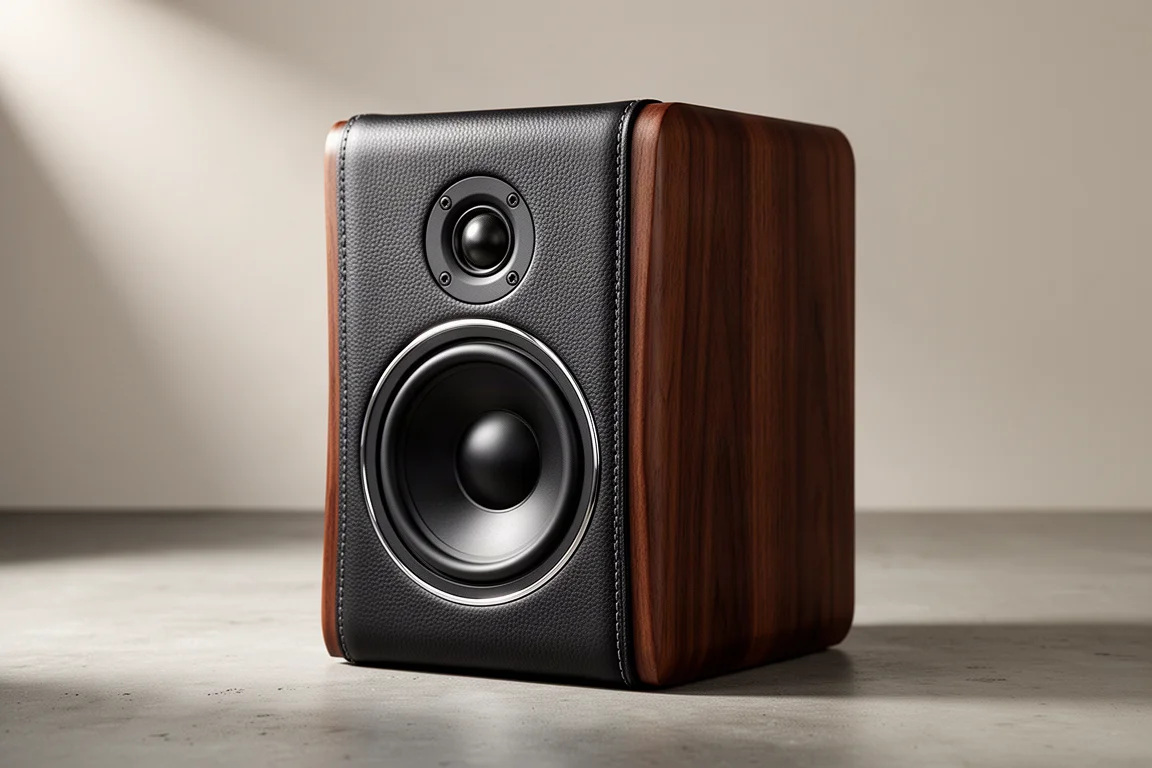
Q Acoustics Concept 30: Smooth and Laid-Back
The Concept 30 takes the most modern visual approach of the three, leaning futuristic rather than traditional.
Sonically it is the smoothest and most laid-back. Treble is gentle rather than energetic, and the presentation is easy to live with over hours at a time. Imaging is better than the Monitor Audio’s, and it draws a tighter picture of individual players.
Two things are worth knowing before buying. First, the midrange sounds relatively pinched next to the Silver 100, which has more openness through that region. Second, it needs more volume to come alive. It rewards being turned up in a way the Monitor Audio does not, which is a real consideration if quiet listening is a priority.
It also misses the deepest bass notes that the Monitor Audio reproduces, so a subwoofer helps here too.
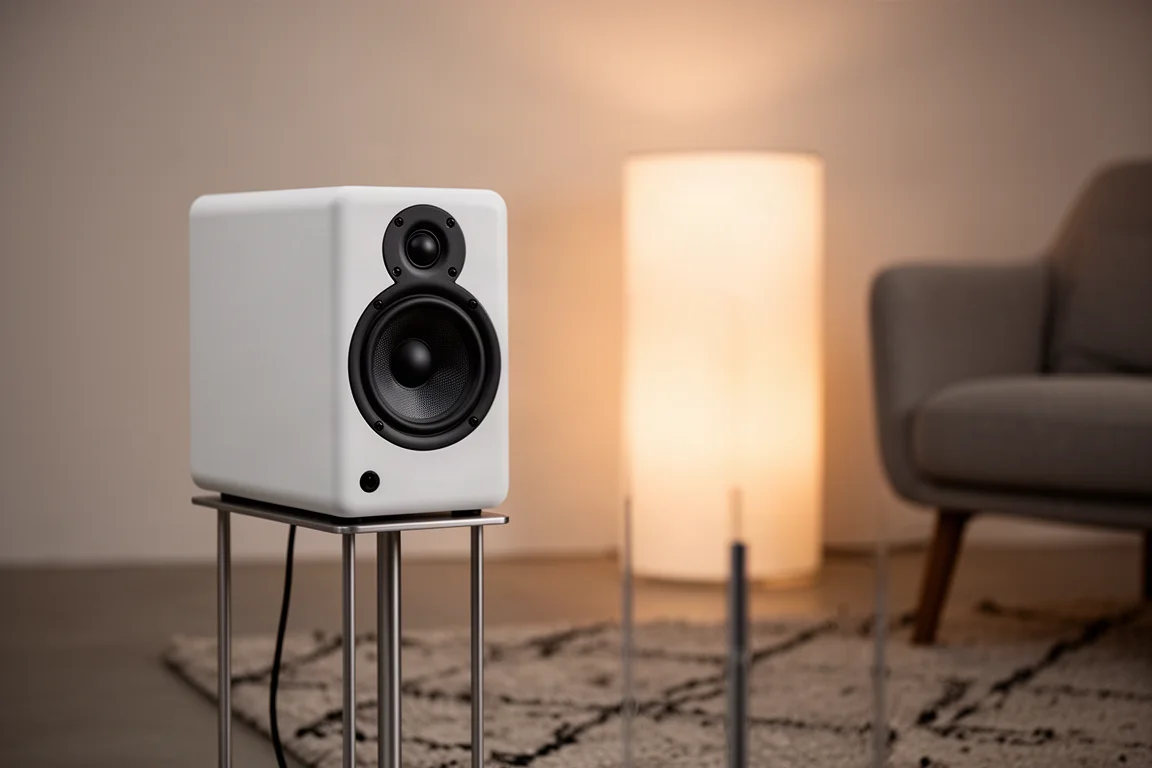
The Concept 30 was at its best with a Bluesound Powernode Edge, both sonically and visually, which makes it the easiest of the three to pair with a compact all-in-one streaming amplifier.
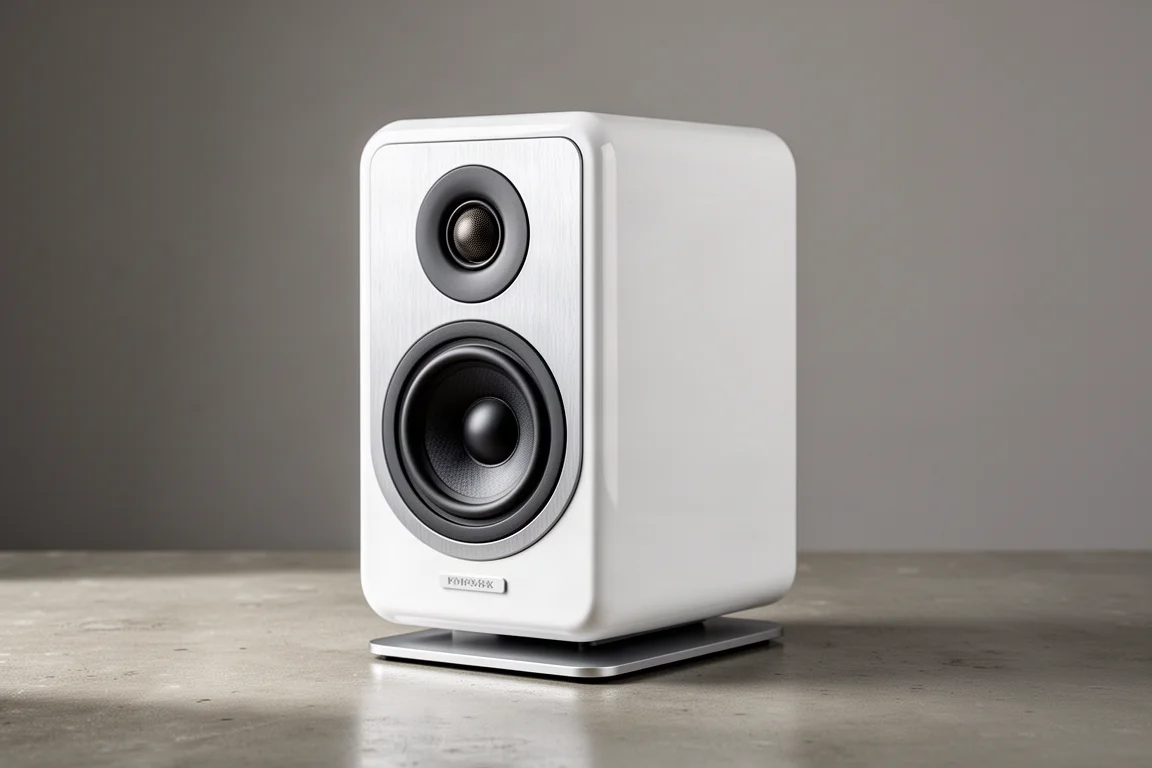
Amplifier Pairing Notes
The amplifier you already own, or plan to buy, can shift which of these speakers makes sense.
With the Q Acoustics Concept 30, the Bluesound Powernode Edge was the preferred partner, both for sound and for looks. The pairing keeps the system simple and compact.
With the Monitor Audio Silver 100 7G, the same amplifier ran short of fullness in the low end. The larger driver wants more control, and the speaker does not benefit from extra top-end energy. An Audiolab 6000A Play with a Bluesound Node was the better match, though that route costs around twice as much as the Powernode Edge. The Silver 100 also does not call for a subwoofer in the way the smaller speakers do.
The Sonus Faber Lumina II sits between the two in amplifier terms. It benefits from the extra top-end energy a livelier amplifier brings, and it benefits most of all from adding a subwoofer to cover the deepest notes.
Room Size and Buying Advice
Room dimensions matter as much as sound here. The comparison was carried out in a room measuring six metres by five metres.
In a room of that size or larger, the Monitor Audio Silver 100 7G 50th Anniversary Limited Edition is the pick of the three. It fills the space with scale, bass and dynamics that the smaller speakers cannot match, and it does so without needing to be driven hard.
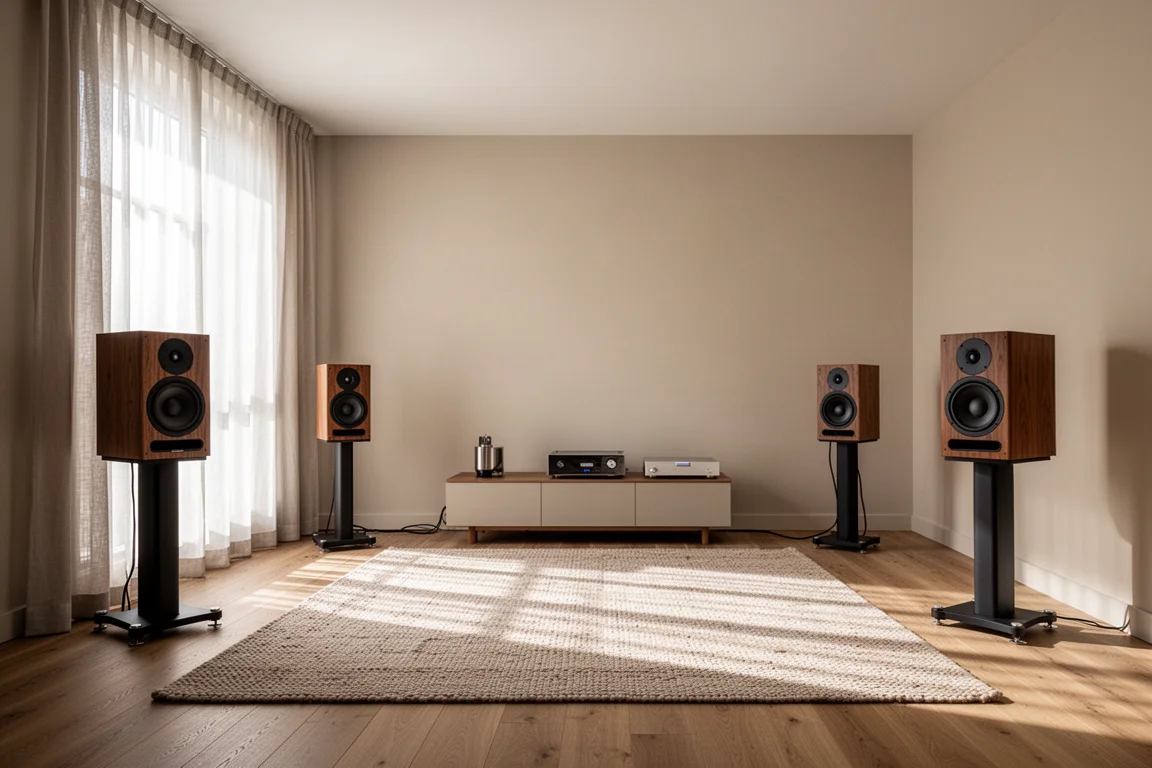
In a significantly smaller room, the calculus flips. A pint-sized standmount like the Lumina II or the Concept 30 suits a smaller space better, and the Silver 100 would be too large for something like a small upstairs bedroom.
All three sit at a similar price, so the decision comes down to room size, amplifier and the presentation you prefer: the Monitor Audio for weight and openness, the Sonus Faber for imaging and treble energy, the Q Acoustics for smoothness and a modern look.
Conclusion
The Monitor Audio Silver 100 7G 50th Anniversary Limited Edition is the strongest of the three in a room that can support it. It reaches lower, sounds more open through the midrange, and delivers dynamics at low volume that the others cannot match. The heritage green finish is a genuine part of the appeal rather than a gimmick.
Choose the Sonus Faber Lumina II if imaging precision and a livelier treble matter more than low-end reach, and plan on a subwoofer for the deepest notes.
Choose the Q Acoustics Concept 30 if you want the smoothest, most relaxed presentation of the group, a modern look and a simple amplifier pairing, and accept that you will need to turn the volume up to get the best from it.
Further reading
Related Reviews
Standmount Speakers
Arendal Sound 1528 Monitor 8 Review: A Full-Range Standmount Built Like a Tower
A three-way standmount with a 3-inch HDF baffle, 22 Hz tuning, and 104 pounds per cabinet. Here is what the 1528 Monitor 8 does well and what to weigh before buying.
Hi-Fi Speakers
1723 THX Tower vs 1528 Bookshelf: Which Speaker Fits Your Room?
Two speakers at roughly the same price, built very differently. How the 1723 THX tower and the 1528 bookshelf compare on construction, bass, power needs, and sound.
Hi-Fi Audio
Accuphase C-57 vs Allnic H-7000V: Two High-End Phono Stages Compared
A fully balanced solid-state phono stage with a pitch-black noise floor meets a tube design built for well-loved records. Here is how to choose between them.