Bookshelf Speakers
Monitor Audio Gold 100 6G Review: A Three-Way Bookshelf Speaker With Real Range
A close look at the Monitor Audio Gold 100 6G, a three-way stand-mount with an eight-inch bass driver, a micro-pleated tweeter, and a character that stays engaging without turning fatiguing.
Introduction
The Monitor Audio Gold 100 6G is the largest bookshelf speaker in the Gold Series, a range that also includes two tower models, a second and smaller stand-mount design, an on-wall speaker and a matching centre channel. It is a three-way stand-mount, a configuration that rarely reaches the market, and it carries the driver count and cabinet volume of a considerably larger speaker. For anyone assembling a serious two-channel system, or a higher-end home theatre that needs substantial front left and right channels, it belongs on the audition list.
Who the Gold 100 6G Is For
The Gold 100 6G suits listeners who want a stand-mount speaker that behaves like a full-range design. In our room it reached down to just below 30 Hz on its own, with a predictable rise in the bass between roughly 40 Hz and 200 Hz. If you have a smaller space, or if you are simply not chasing room-shaking low frequencies, it is entirely possible to live with these speakers without a subwoofer.
It is also a good fit for anyone who wants a neutral speaker that still keeps music interesting. There is a hint of character through the midrange and treble that keeps vocals and fine detail well defined without pushing everything forward.
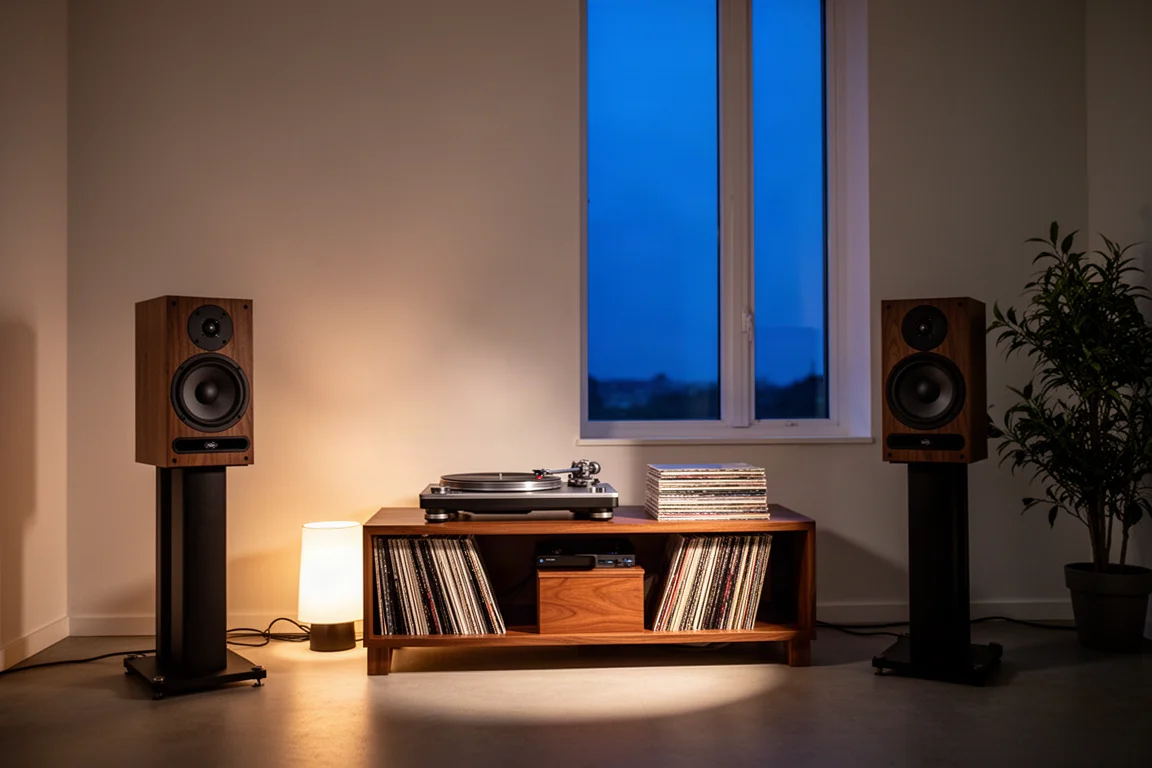
Where the speaker asks for some care is system matching. This is not a plug-and-play desktop speaker, and it rewards a listener who is willing to think about placement, stands and amplification before committing.
Build, Drivers, and Design
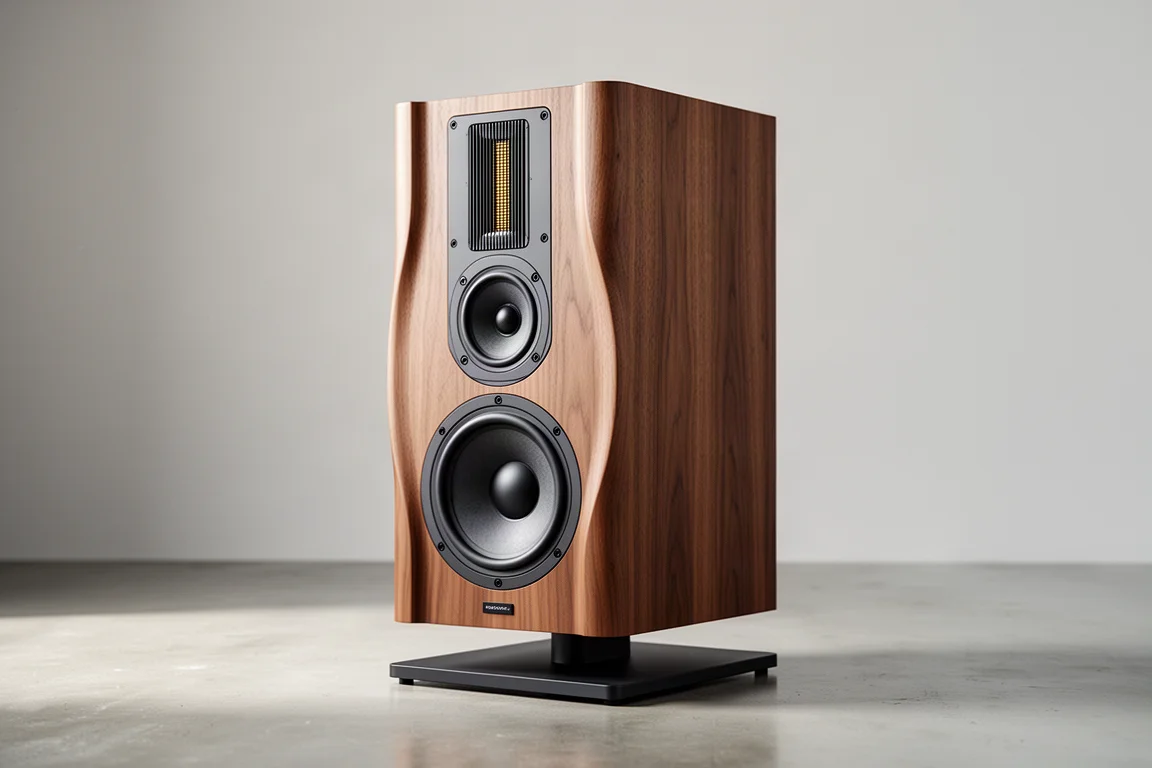
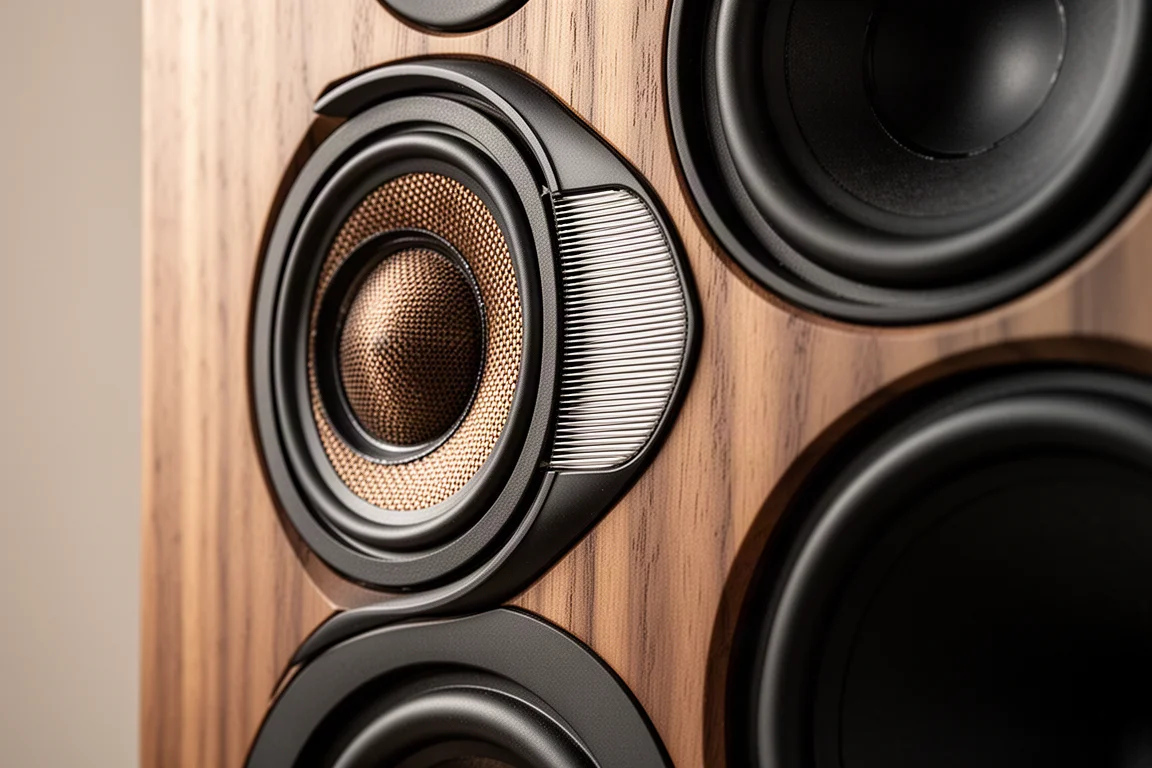
Behind the grille sit three drivers: an 8-inch bass unit, a 3-inch mid-range driver, and a micro-pleated diaphragm tweeter, a design closely related to AMT tweeters. Both the bass and the mid-range driver are built from ceramic-coated aluminium and magnesium. A rear-facing port handles the low-frequency output, and the reported in-room frequency response spans 32 Hz to 60 kHz.
The cabinet is available in three finishes: satin white, gloss black, and a wood veneer. The Gold 100 6G is a substantial speaker, and its size is worth noting before you commit, because a large three-way stand-mount can feel imposing in a smaller room.
Sound Quality and Character
Through the mids and treble the Gold 100 6G is even keeled. The high-frequency response rolls off gradually until around 10 kHz, where the roll-off becomes steeper, which helps explain the calm, unfatiguing presentation. It is not a subdued or warm speaker in the manner of some rivals. There is a splash of liveliness, but it stops well short of the forward, high-contrast sound associated with Bowers & Wilkins designs.
The tweeter deserves particular mention. AMT-style tweeters can turn aggressive at high volumes, and this one stays composed and fatigue-free, which is a genuine achievement. Some listeners will still prefer the extra sparkle of a good dome tweeter, and that is a matter of taste rather than a shortcoming.
Soundstage and dynamics are where the Gold 100 6G gets close to Monitor Audio’s flagship Platinum Series. It is second only to that line in our experience: the Platinum models disappear a little more easily and present a more open stage, but the gap is narrower than the price difference suggests. Centre image and focus are a real strength, which matters if you plan to run the speakers with a phantom centre in a multi-channel setup.
Placement, Power, and Subwoofer Pairing
Monitor Audio recommends placing the speakers 6 to 10 feet apart, or at a distance equal to your seating distance, to achieve the widest soundstage, with roughly 3 feet to the side walls and 8 to 14 inches between the rear of the cabinet and the front wall. Our best result came at about 11 feet apart, 4.5 feet off the side walls and a foot off the front wall.
On amplification, the impedance is stable at 4 ohms, so you do not need to spend wildly. The sensitivity is modest, however, and low-power tube amps and small chip amplifiers will limit you to low-volume or nearfield listening. A quality amplifier capable of roughly 50 to 75 watts per channel that is comfortable with a 4-ohm load is a sensible match.
Subwoofer integration is refreshingly straightforward. Crossing over between 50 and 60 Hz blended seamlessly with the speaker’s natural bass rise and extended the system below 20 Hz in room at sustained levels above 90 dB, with the handoff between sub and speaker virtually impossible to hear at the listening position. Sealed subwoofers worked especially well, and the KEF KC92 was another good match. Just make sure the sub can keep pace with the punchy lower octaves of the Gold 100 6G.
Home Theater Performance
As front left and right channels the Gold 100 6G is excellent. The Gold Series is a natural starting point for a higher-end home theatre or a living-room-friendly cinema setup, and the matte finish is far less reflective than the glossier Platinum line, which matters if you have a large screen close to the speakers. Dynamically they deliver scale and punch while keeping detail and nuance intact when you turn the volume up.
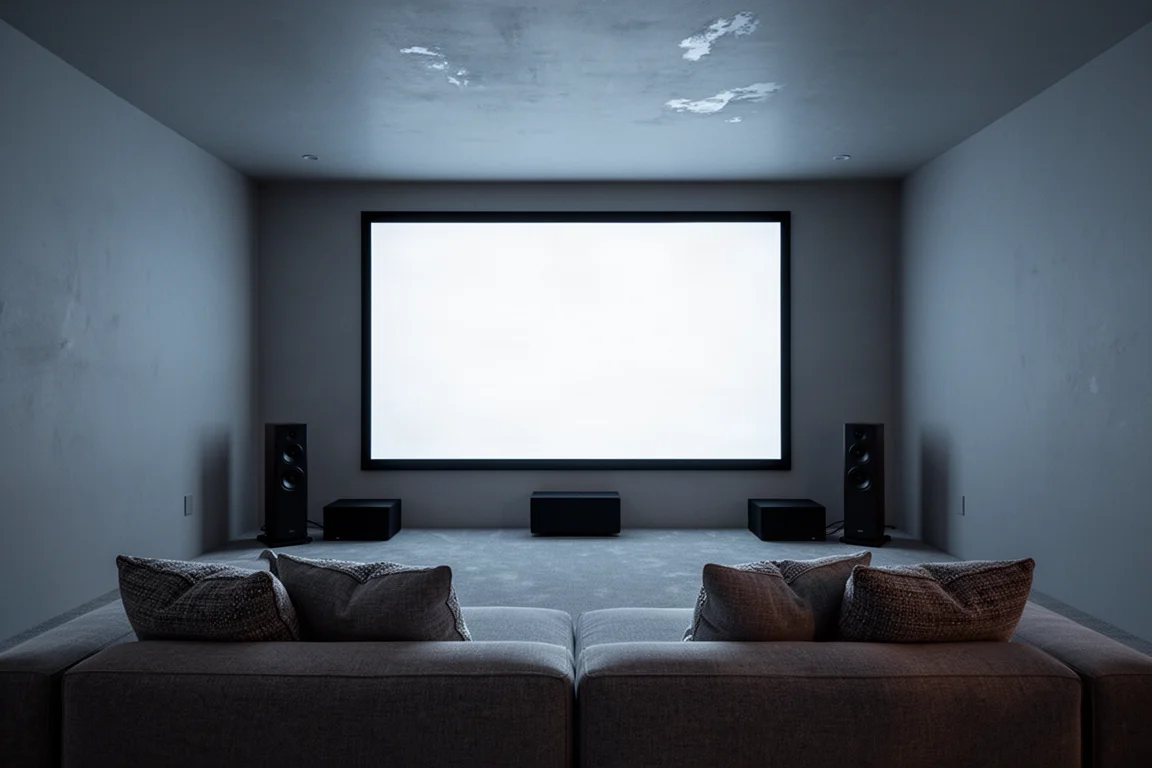
There is one practical caveat: you will want a quality pair of stands, and that cost belongs in the budget. If home theatre is the priority, it is also worth auditioning the Gold 300 towers before making a final decision, because the extra cabinet volume changes the equation considerably.
How the Gold 100 6G Compares With Other Speakers
The Gold 100 6G sits in an interesting spot. It costs roughly twice as much as the KEF R3 Meta, a well-regarded three-way stand-mount, and it answers with a little more character and a livelier sense of engagement. Buyers who weigh value heavily will find the KEF hard to argue with, and that is a fair conclusion.
Against the Bowers & Wilkins 805 D4, the Gold 100 6G gives up some detail and image precision, particularly at lower volumes, and the 805 D4’s sense of horizontal and vertical scale sits closer to Monitor Audio’s Platinum line. Even so, the Gold 100 6G holds its own as the more versatile everyday speaker across music, television and film at roughly half the price.
Compared with the smaller Monitor Audio Studio 89, the Gold 100 6G is the easier speaker to live with: it needs less power to sound right, works with a broader range of recordings, and does not require a subwoofer to convey weight and scale. Listeners drawn to the Studio 89’s less intrusive presentation may still want to audition the Gold 50 6G.
Against the SVS Titan Towers, which cost about the same, the Gold 100 6G gives up bass capability and the extra scale that comes with a larger cabinet. In a room that can accommodate them, the towers remain the choice for maximum low-frequency output, though the Gold 100 6G is the better-finished and better-built speaker in our view. Stepping up to the Platinum 200 is what it takes to clearly beat the Gold 100 6G overall, and the Platinum 200 costs considerably more.
Things to Consider Before Buying
The Gold 100 6G is a large stand-mount, so check that your room and stands can accommodate it before you commit. It also needs a capable amplifier, which is an additional cost if you are starting from a modest integrated amp.
A subwoofer is not mandatory, but it does change what the speaker can do. Acoustic, jazz and soul recordings sound effortless on their own, while electronic music, hard rock and modern pop benefit noticeably from a subwoofer that can match the speaker’s pace. The finish options are a genuine selling point, particularly the wood veneer, which is unusual at this level.
Buying Advice
If you want a stand-mount that can carry a two-channel system on its own, the Gold 100 6G is one of the most complete options available. It is at its best with a quality amplifier, careful placement and a good pair of stands, and adding a capable subwoofer transforms its dynamic headroom for bass-heavy genres.
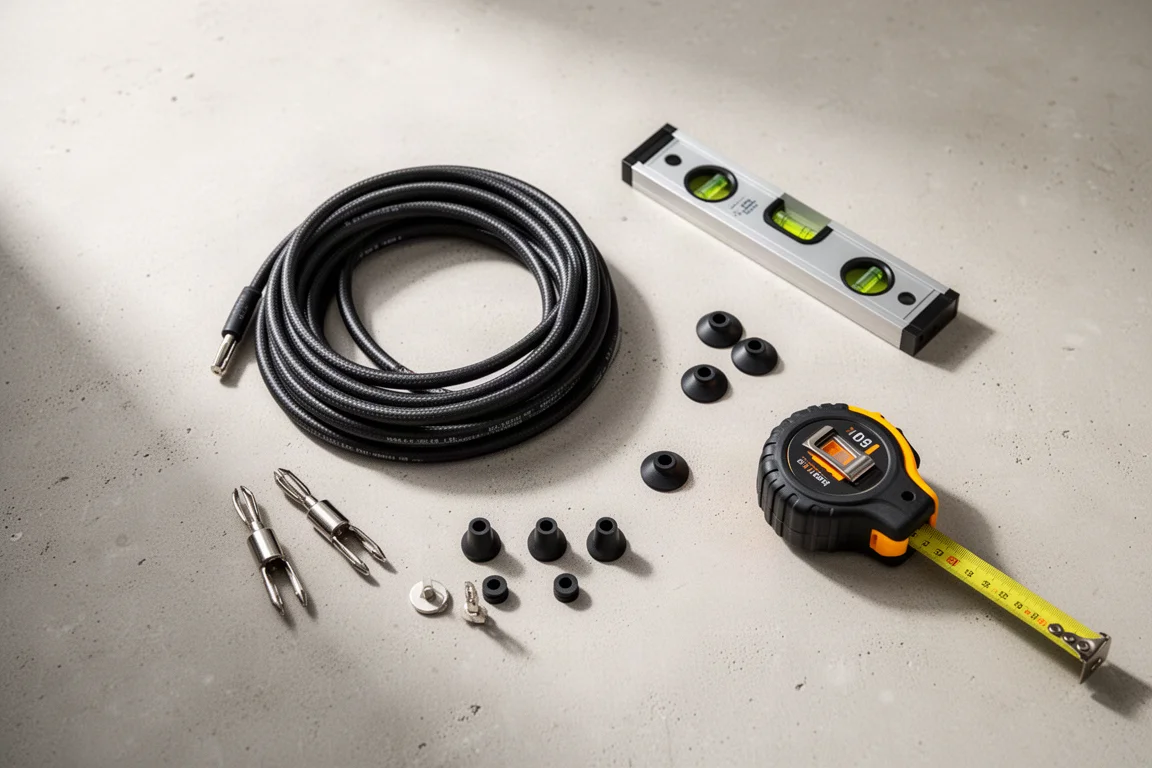
Budget for the supporting cast as well as for the speakers themselves, and take the time to try a few amplifier pairings, because the speaker is revealing enough to make those differences audible.
Listeners who prioritise absolute transparency and the most open soundstage should plan for the Platinum Series instead. Everyone else gets a speaker that is easy to live with across music, television and film, and that is a rare combination at this size.
Conclusion
The Monitor Audio Gold 100 6G earns its place. Three-way stand-mount speakers are rare for a reason, and this one makes the configuration work: full-range bass on its own, a neutral midrange with just enough liveliness, a tweeter that never turns harsh, and a strong centre image. It asks for a quality amplifier, proper stands and some patience with placement, and it rewards all three. For a stand-mount that has to do everything well, it is a compelling choice.
Product link
View more details for Monitor Audio Gold 100 6G
This product is mentioned in the review. Check the specifications, options, and compatibility before buying.
View more details for Monitor Audio Gold 100 6GFurther reading
Related Reviews
Bookshelf Speakers
Acoustic Energy A100 Mark II Review: A Compact Standmount With an Expansive Soundstage
The Acoustic Energy A100 Mark II brings clarity, natural tonality and a wide soundstage to an entry-level standmount, with a few setup details worth knowing first.
Bookshelf Speakers
Acoustic Energy AE-100 Mark II Review: Compact Bookshelf Speakers With Standout Imaging
A compact British two-way bookshelf speaker with deep, layered imaging, fast bass, and a slight treble lift to weigh against a crowded $500 field.
Bookshelf Speakers
Acoustic Energy AE100 MK2 Review: Measured Performance and Four Alternatives
A close look at the Acoustic Energy AE100 MK2 bookshelf speaker, what its measured performance reveals, and four alternatives with different trade-offs.