Turntables
MoFi MasterDeck Review: A Reference Turntable Built for the Long Run
A close look at the MoFi MasterDeck, a reference-grade turntable with a 10-inch carbon fiber tonearm, a dual pivot bearing design, a hybrid platter, and adjustable isolation feet.
Introduction
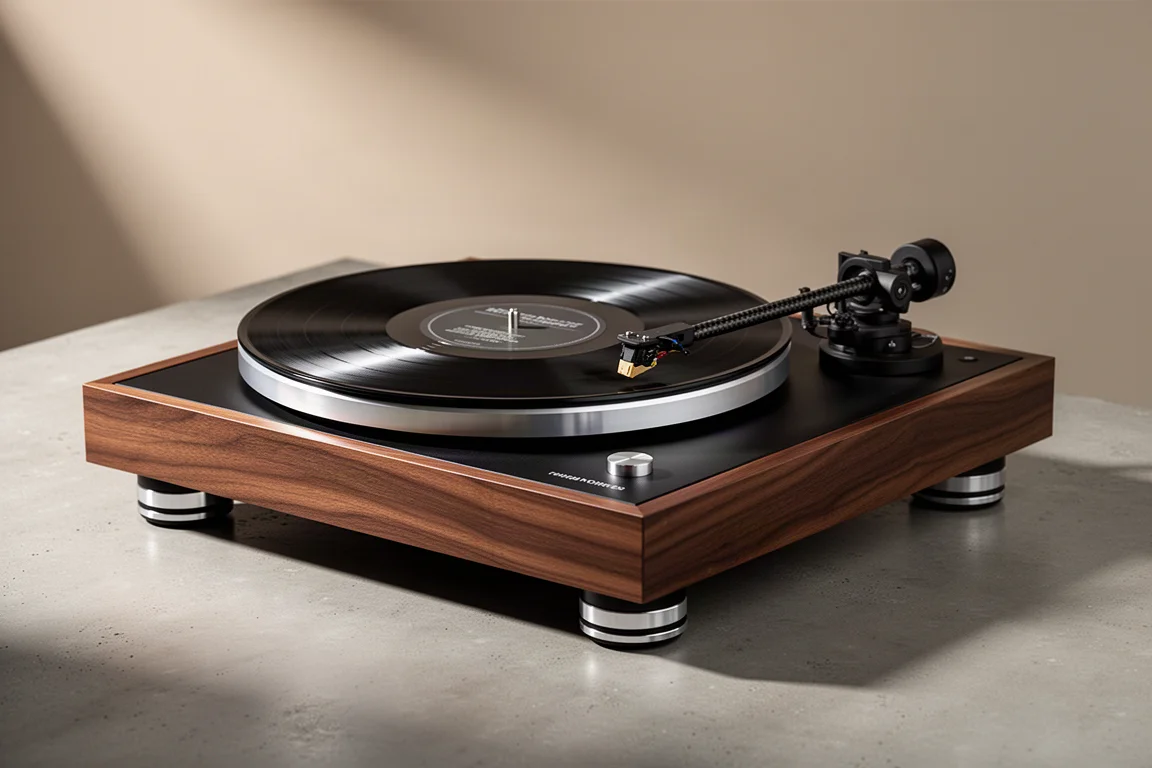
The MoFi MasterDeck is a reference-grade turntable built around a simple idea: give the record and the cartridge a clean, stable platform, then stay out of the way. MoFi came to this design with a long history behind it. In 2016 the company released the award-winning StudioDeck and UltraDeck turntables, decks that struck a balance between high-end build quality and sound at a price that remained attainable for most music lovers. The MasterDeck is the step beyond that. After years of customer requests, MoFi set out to build a true reference product, and it handed the design work to chief analog designer Allen Perkins, who brought everything he had learned across a long career in turntable design into a single deck.
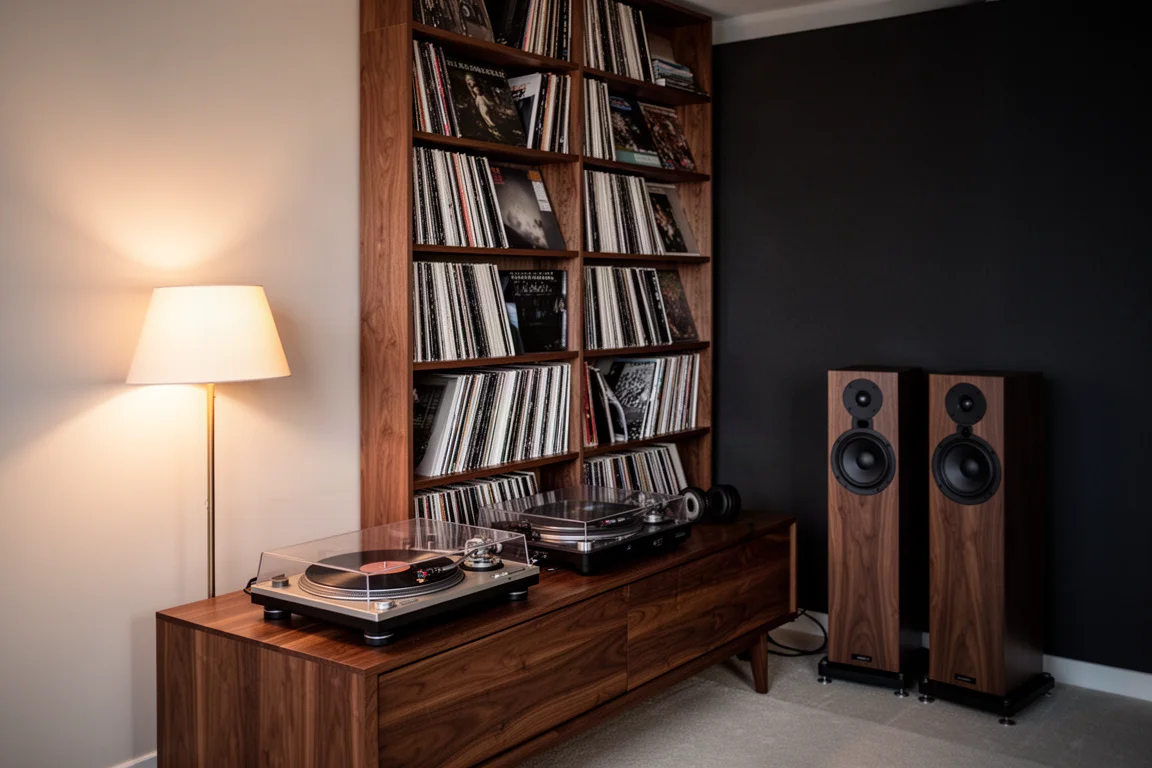
The result reads as a considered engineering exercise rather than a styling statement. Every major subsystem, from the tonearm bearings to the motor isolation to the feet, has a stated purpose. This review walks through what the MasterDeck does, who it suits, and what to weigh before buying.
Who This Turntable Is For
The MasterDeck is not a platform for endless experimentation. It does not offer multiple tonearm mounts or a menu of swappable components, and that is deliberate. It is aimed at listeners who want a reference-quality deck that arrives, sets up cleanly, and then simply works, without requiring them to choose a tonearm or hunt down other parts to make the table perform.
That makes it a strong fit for someone with a growing record collection who wants one serious, long-term turntable rather than an ongoing project. It also suits listeners who already own a good phono stage and good records and want the source component to stop being the limiting factor. Because the arm accepts cartridges from 5 g to 14 g, there is still room to shape the sound with a cartridge choice, and MoFi offers the UltraDeck MC phono cartridge as a matched option, with a modest saving when the two are bought together as a combo package.
Where it fits less well is with tinkerers who enjoy rotating arms, trying multiple cartridge bodies on a whim, or rebuilding a table over time. The MasterDeck is a finished statement, not a kit.
Main Strengths
The MasterDeck’s strengths sit in three areas: the tonearm, the drive and platter system, and the isolation and finish.
Tone Arm Design and Cartridge Flexibility
The tonearm is one of the clearest departures from the norm. It is a 10-inch carbon fiber design, and carbon fiber was chosen for rigidity while keeping the arm lightweight and agile. Most turntables in this class use a standardized 9.3-inch arm. A 10-inch arm allows better tracking performance, in the same spirit as the esoteric 10 to 12-inch arms found on much more expensive decks. The trade-off is that setup becomes more critical, though the MasterDeck’s range of adjustments is broad enough that this should not be a serious obstacle.
The arm uses a dual pivot design: a unipivot bearing handles lateral movement, while a gimbal bearing handles vertical movement. That combination aims to deliver the friction-free motion that unipivot arms are known for alongside the controlled vertical movement associated with gimbal bearings. Two high-precision ruby bearings sit in the unipivot section, and the gimbal section uses high-speed bearings rated for thousands of RPM, far beyond anything a tonearm would ever see.
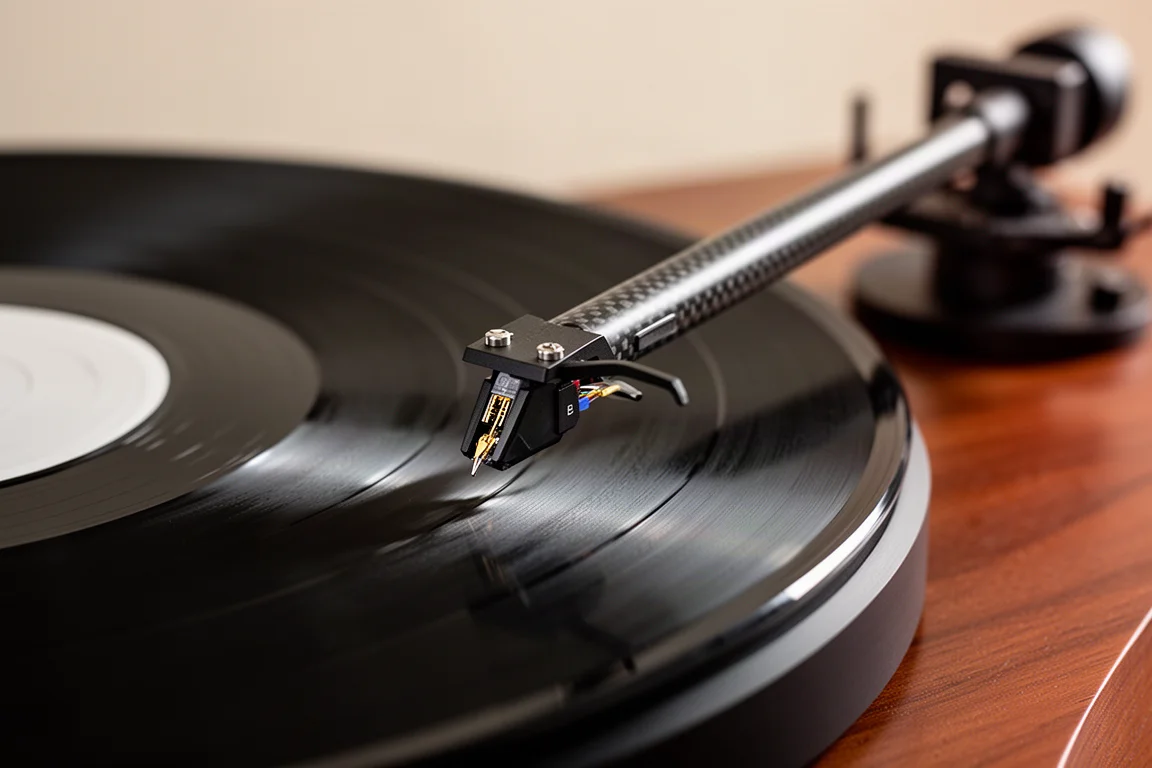
MoFi also took a different route on the headshell. Detachable headshells are often criticized for adding an unnecessary connection point in the arm-to-cartridge wiring, and the MasterDeck keeps a removable headshell while addressing that concern: a precision collar holds it far more securely than standard mounts, and the tone arm wires run directly to the cartridge without extra connection points. The removable headshell also makes cartridge mounting far easier, and azimuth can be adjusted by rotating the headshell itself rather than the whole arm. Adjustments cover azimuth, a precision screw collar VTA adjustment, overhang, and anti-skate.
Motor, Platter, and Speed Stability
Speed and motor noise are the areas that can undermine an otherwise excellent turntable, and MoFi designed accordingly. The drive system is a sensor-regulated, synchronized three-phase brushless DC motor built to achieve and maintain speed stability, and it is completely isolated from the plinth so it cannot interfere with the delicate cartridge and tonearm.
The platter is an aluminum and Delrin hybrid. MoFi has long used Delrin because its impedance matches vinyl naturally, and the hybrid construction adds mass, particularly toward the outer edges. That extra mass improves the flywheel effect and, with it, speed stability. The platter rides on an encapsulated spiral groove inverted bearing with tight tolerances. A spiral groove bearing has grooves machined into its face that hydrodynamically pump oil across the bearing surface, which supports both precision and longer bearing life. On paper at least, this is a design built to last a lifetime.
Playing records is refreshingly simple. The MasterDeck handles 33, 45, and 78 RPM, with settings for all three speeds plus a trim control. There are no belt changes and no multiple pulleys to juggle: you set the speed with a dial and play. The trim control matters more than it might appear, since it lets you correct for speed anomalies that can affect playback. And because the headshell comes off, mounting a dedicated 78 RPM cartridge is straightforward.
Isolation Feet and Wood-Framed Plinth
To keep outside forces from reaching the deck, MoFi turned to Harmonic Resolution Systems for the isolation feet. These provide 5.5 degrees of freedom, with a mechanism that floats inside each foot, so the plinth stays isolated wherever the turntable is placed. That level of isolation is normally associated with very expensive aftermarket feet or dedicated isolation platforms. The feet are fully adjustable as well.
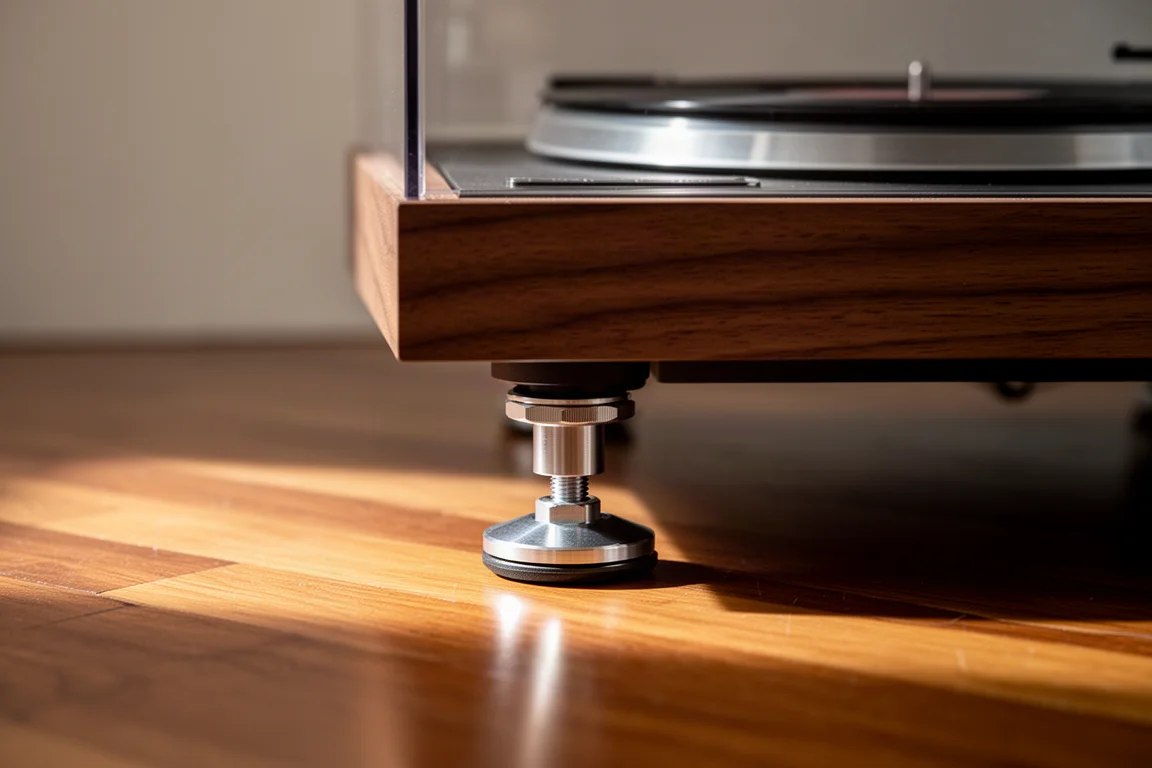
The plinth itself uses a real wood frame, available in black ash or walnut. It is an understated look rather than a colorful or exotic one, and it sits a clear step above the StudioDeck and UltraDeck in aesthetic terms. More finish options would have been welcome, but the two on offer are handsome and should sit comfortably in most rooms.
Things to Consider Before Buying
Setup deserves attention. A 10-inch arm is more sensitive to correct alignment than a shorter one, so plan on taking time with overhang, VTA, azimuth, and anti-skate. The good news is that the adjustments themselves are easier to work with than on the StudioDeck and UltraDeck: the collar screw VTA adjustment is simpler to set and more precise in its movement than the earlier grub screw arrangement. Assembly is also straightforward, with all parts easy to find in the box and a picture-filled manual guiding the process. If you would rather not handle cartridge mounting yourself, a retailer can mount a cartridge before shipping when the turntable and cartridge are purchased together.
The MasterDeck also has a fixed identity. It is not the kind of table you buy to swap tonearms or reconfigure components later. If that flexibility matters to you, this is the wrong deck.
It is worth being realistic about the ceiling, too. There are considerably more expensive turntables in cost-is-no-object territory that will outperform the MasterDeck. What the MasterDeck offers is a reference-grade package at a price level well below those decks.
Listening Impressions
The first record used to assess the deck was Oscar Peterson’s We Get Requests. On the track “You Look Good to Me,” the stand-up bass came through with all of its detail while keeping the emotion and musical feel intact. Detail and musicality together in one source component is a rare combination, and the MasterDeck delivered both. The other instruments carried the same level of detail without losing the character of each player. Imaging and soundstage were excellent, with each player given their own space.
The Smiths’ Hatful of Hollow followed. It is an iconic 1980s rock album whose recording can be troublesome for lesser components, often turning grating and sharp. Through the MasterDeck the presentation stayed energetic, as the music deserves, while remaining about the music rather than any playback shortcoming. Bass had good detail and extension, and the treble was smooth and lifelike. “How Soon Is Now” was played several times, and the wide soundstage and detail were consistently surprising. The instrumental work seemed to step into the room, a level of realism that is genuinely hard to find.
The overall impression is of a turntable designed to get out of the way and let the cartridge sound the way it was designed to sound.
Buying Advice
The MasterDeck earns its reference label in the ways turntables are measured: speed options with trim control, a dual pivot tonearm, and a hybrid platter. Those fundamentals point to a deck that will serve for a very long time.

Pairing matters as much as the deck itself. Feed the MasterDeck into a quality phono stage, such as the MoFi Master Phono or another capable unit, and a record collection takes on a realism that is easy to appreciate. If you are shopping in this class and you want reference sound without turning the purchase into a component-selection project, the MasterDeck is a strong option.
Conclusion
The MoFi MasterDeck is a reference-grade turntable with a clear philosophy: a rigid, lightweight tonearm, an isolated and stable motor, a heavy and well-damped platter, and feet that keep the outside world at a distance. It rewards careful setup and asks for nothing else in return. For listeners who want their vinyl to sound as detailed and as musical as their records allow, it is an easy deck to recommend.
Product link
View more details for MoFi MasterDeck
This product is mentioned in the review. Check the specifications, options, and compatibility before buying.
View more details for MoFi MasterDeckFurther reading
Related Reviews
Turntables
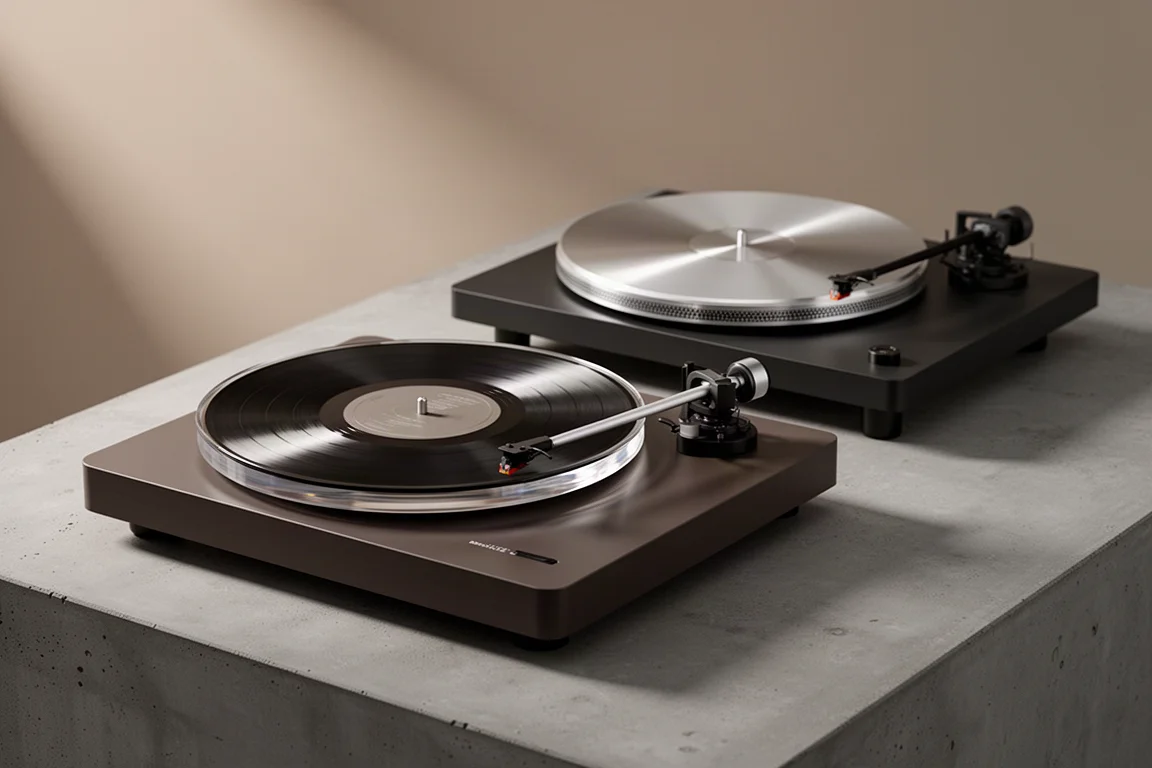
Best Turntables 2026: Seven Standout Picks From Entry Level to Premium
A practical roundup of seven turntables worth considering, from a US-made budget deck to small-batch premium models with a clear upgrade path.
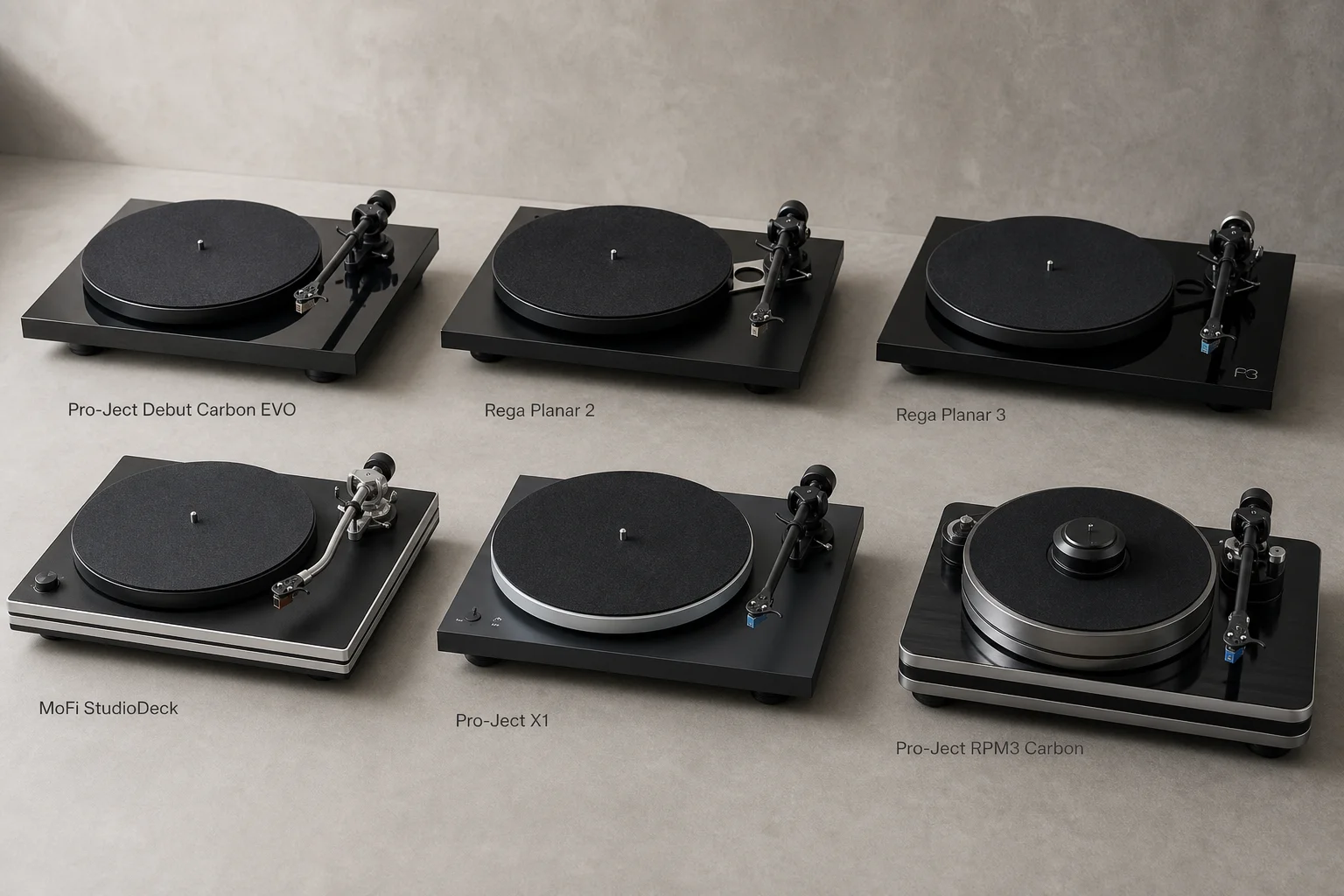
Turntables
Best Turntables Under $1,000: Five Fully Manual Picks Worth Considering
Five fully manual turntables under $1,000, compared on build quality, cartridges, upgrade potential, and the character of sound each one brings to a system.
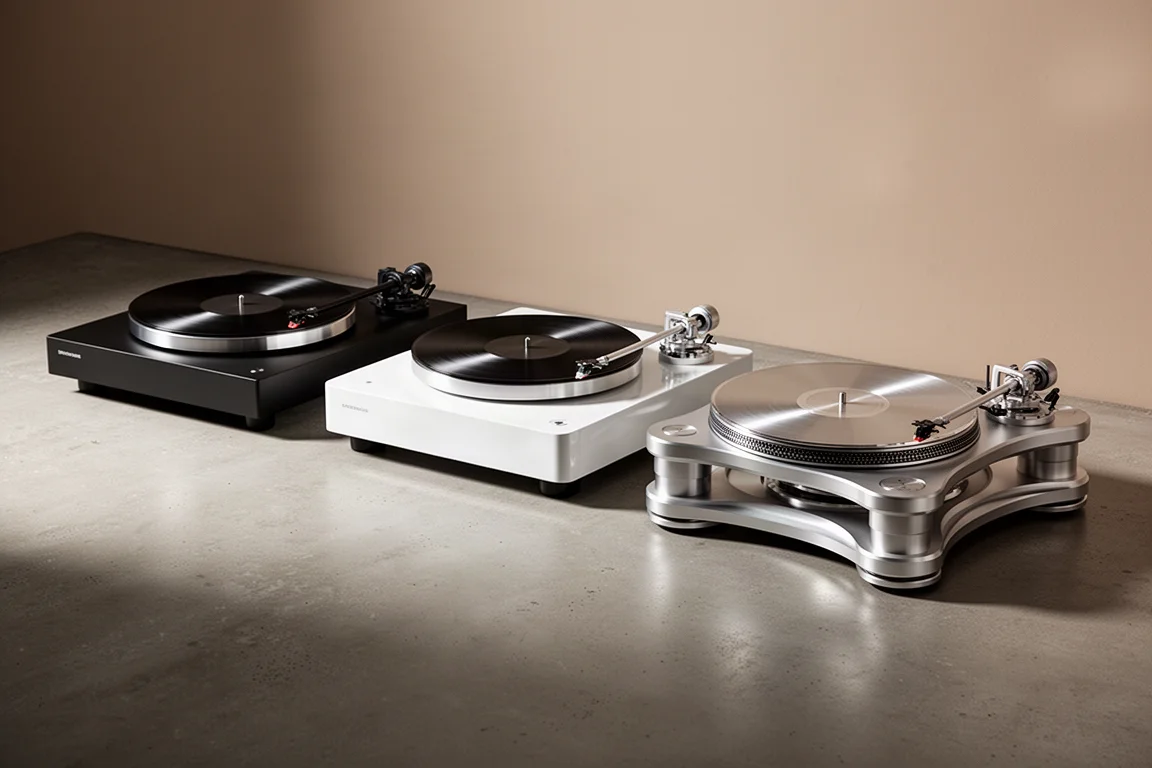
Turntables
Best Turntables Under $2,000: Six Vinyl Decks Worth Building a System Around
Six turntables under $2,000, from a value-focused belt-drive deck to a fully balanced design, with the strengths and trade-offs that matter before you buy.