Preamplifiers
ModWright LS 99 Review: A Balanced Tube Line Stage With Body and Presence
A two-chassis tube line stage preamplifier that adds dimensionality and texture to recordings, with analog-only connectivity and a few practical trade-offs to weigh first.
Introduction
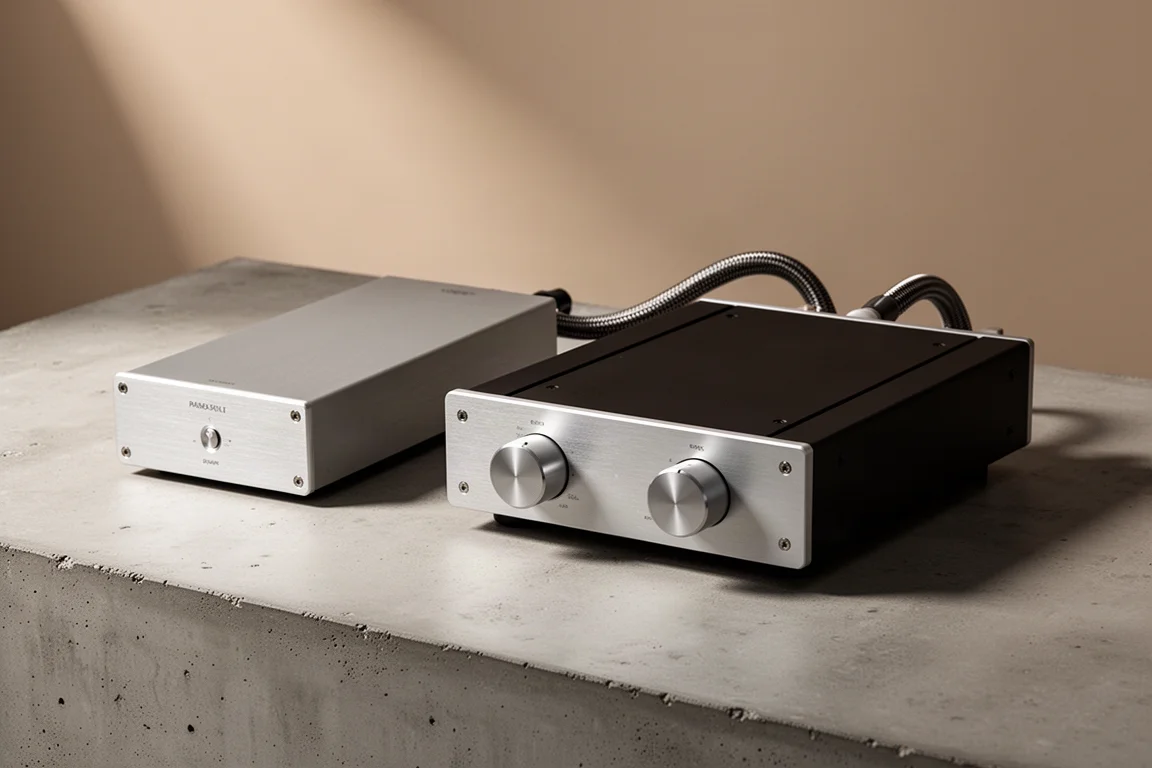
The ModWright LS 99 is a balanced tube line stage preamplifier built as a two-chassis design. One chassis houses the power supply, the other contains the preamp itself, and the two are joined by a thick but flexible cable roughly a foot long. Separating the power supply from the audio circuit is a deliberate choice, and it sets the tone for a component that is laid out without much compromise.
At $6,500, the LS 99 sits below ModWright’s flagship LS 300, and the company states that the LS 99 delivers about 95 percent of the flagship’s performance. It comes in silver or black, and it is an analog-only design: no DAC, no phono section, no headphone output. What it offers instead is a straight analog-in, analog-out line stage with a fully balanced topology.
That focus shapes how the LS 99 is used. It is not a hub for every source in a modern system. It is a component for listeners who have already solved digital conversion and phono amplification elsewhere and want the line stage itself to be the piece that defines the character of the system.
Who This Product Is For
This preamplifier is aimed at listeners who value what tubes bring to a system and are willing to pay for it. If the priority is accuracy and neutrality above all else, a tube line stage is not the obvious first choice, and the LS 99 is not designed around that goal.
The more useful question is whether tubes have actually been part of the system recently. The common assumption is that tubes soften, blur or thicken the music, and that is not what happens here. What the LS 99 adds is dimensionality, body and texture rather than a blanket of warmth over the detail.
It also suits listeners with several sources and flexible amplification. With two sets of balanced inputs, two sets of single-ended inputs and a home theater pass-through, plus two pairs of balanced outputs and two pairs of single-ended outputs, the LS 99 can feed bi-amped systems or multiple subwoofers without extra switching hardware.
Main Strengths
Build quality is first rate. The chassis is meticulous, the two-box layout keeps the power supply away from the audio circuit, and the unit carries a five-year warranty in the USA. It is built in St. Amboy, Washington.
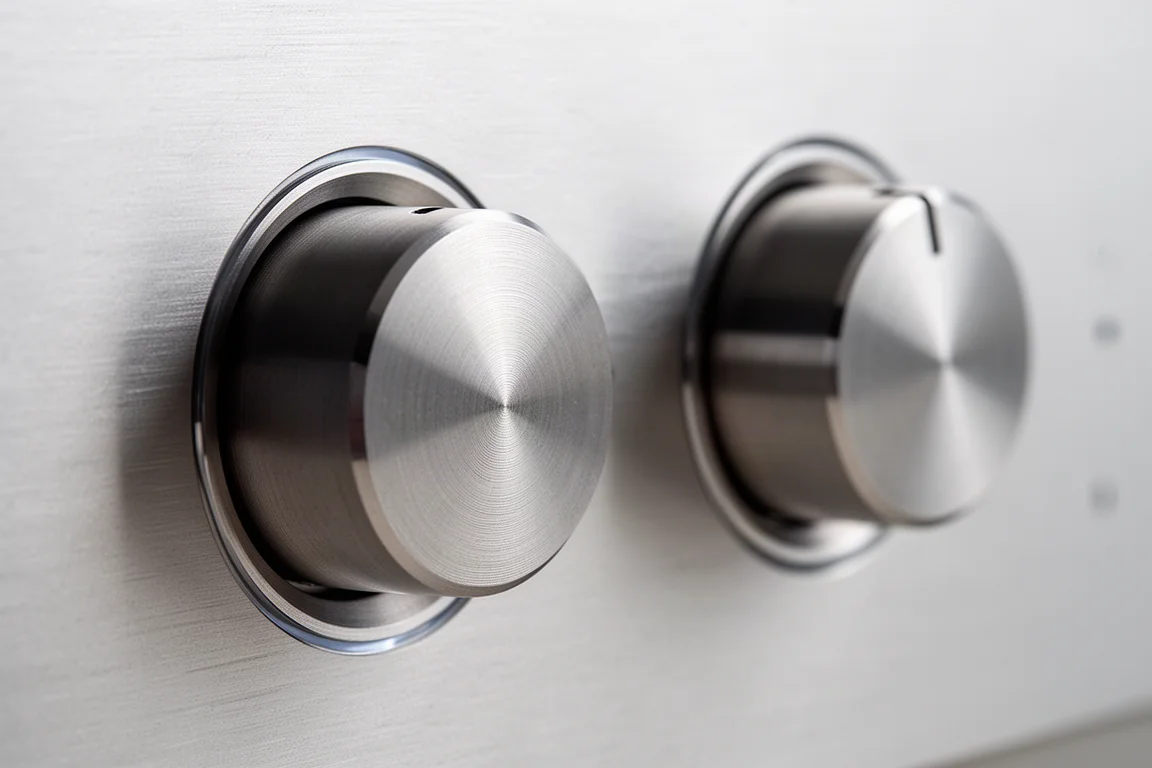
The front panel controls are a genuine pleasure to use. Both knobs are large, solid metal pieces: the left one selects inputs, the right one controls volume, and the volume action is silky smooth. That tactile quality matters more in daily use than it might sound like it should.
Connectivity is generous in the analog domain. Two sets of XLR inputs, two sets of RCA inputs and a home theater pass-through cover most source collections, and the dual output pairs make it straightforward to run a subwoofer alongside a main amplifier. There is no digital connectivity, no phono section and no headphone output, so those functions need to live elsewhere in the system.
Noise is another strong point. Despite being a tube design, the LS 99 is very quiet in use. There is no audible tube hiss, no noise floor and no rumbling, which is not something every tube preamplifier can claim.
The core of the case for the LS 99 is what it does with recorded space. With Tom Waits’ Mule Variations, and particularly the track “What’s He Building in There”, the scraping, banging and gurgling sounds behind the voice occupied their own place in the room rather than sitting flat against the vocal. That sense of a recording as a physical space, rather than a spread of sound between two speakers, is the LS 99’s signature.
Vocals benefit in the same way. On the Beatles’ A Hard Day’s Night soundtrack, the voices of John, George and Paul came through with a presence that made decades-old recordings feel immediate and current.
How the Sound Compares With Other Preamps
The LS 99 is a fully balanced design, and running it with balanced cables versus single-ended cables produced little or no audible difference. The practical argument for XLR is mechanical: the connectors click firmly into place, while RCA connections are easier to dislodge by accident.

Set against a fully balanced solid-state reference preamplifier, the LS 99 gave up a little tightness in the bass and some of the clinical clarity that solid-state designs tend to deliver. In exchange, it sounded more open, more spacious and more three-dimensionally present. The solid-state alternative came across as flatter and slightly more withdrawn, even though it was likely the more accurate of the two.
Against a tube reference preamplifier, the LS 99 traded some liveliness and dynamic contrast for a fuller, more substantial tone. The reference was more dynamic and a touch leaner; the LS 99 added more body. Neither approach is better in the abstract, and the difference comes down to which character suits the rest of the system.
With the Pixies’ Doolittle, a thin-sounding record with plenty of loud-soft contrast, the LS 99 made Kim Deal’s basslines throb and bound out of the speakers with more gusto than the solid-state alternative managed. With John Williams’ score for Close Encounters of the Third Kind, the presentation was deep, powerful and dynamic, and the preamp let the music fill the room without inviting any critical notes.
Things to Consider Before Buying
The remote control is the clearest weak point. It is plastic, lightweight and feels out of step with a preamplifier at this price and build level. Everything else about the LS 99 feels premium; the remote does not.
The analog-only design is a limitation for some systems. There is no built-in DAC, no phono stage and no headphone output, so the $6,500 outlay covers the line stage alone. Buyers need to account for those functions separately, either with existing components or with new purchases.
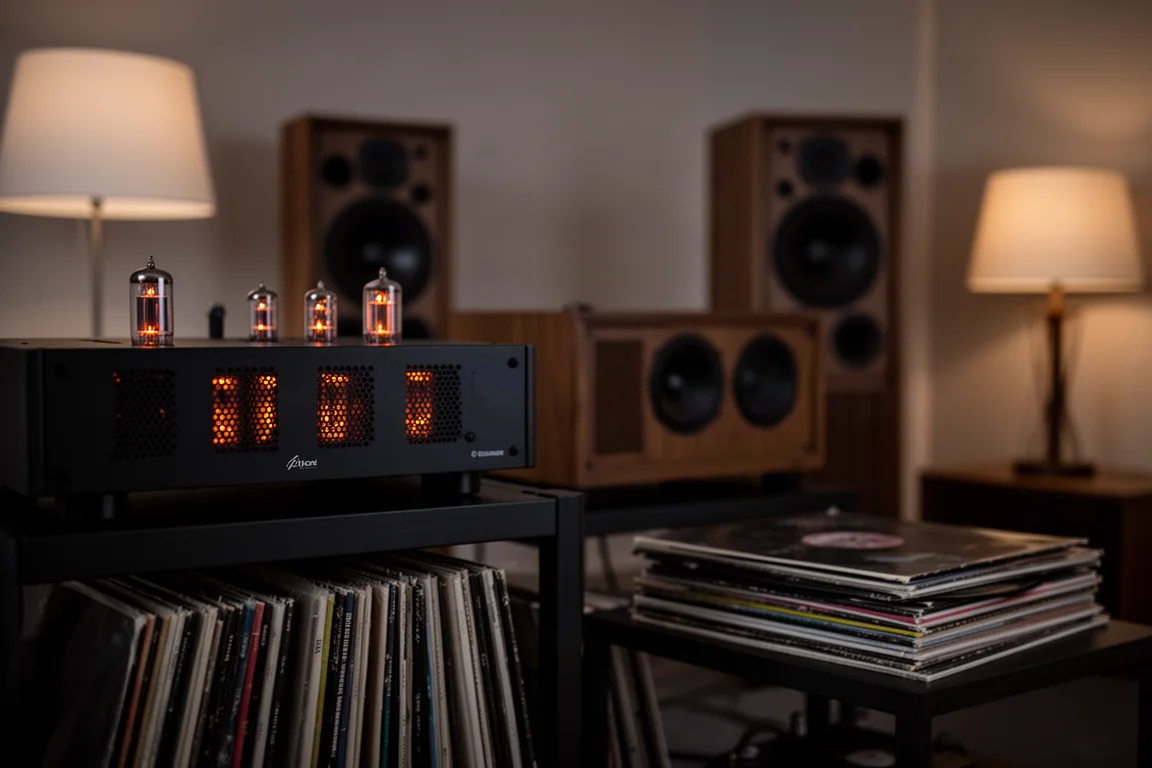
Tubes are part of the ownership equation. The LS 99 uses three tubes: two 6922 output tubes, also known as 6DJ8, with stock tubes from JJ, and one 5AR4 rectifier tube from Sovtek. Other rectifiers of that general type will work, and the output tubes can be swapped for alternatives such as a Mullard 6922 to change the character of the sound, usually for a modest cost. Some listeners will see that as an opportunity; others will prefer to leave the stock tubes in place.
Availability is broad. ModWright has brick-and-mortar dealers in the USA, and buyers without a local dealer can purchase directly from the company. Distribution covers Europe and the UK, and most countries have some form of availability.
Buying Advice
The LS 99 makes the most sense in a system that is already settled everywhere else. If digital conversion, phono amplification and headphone listening are handled by other components, this preamplifier can serve as the character-defining piece in the chain.
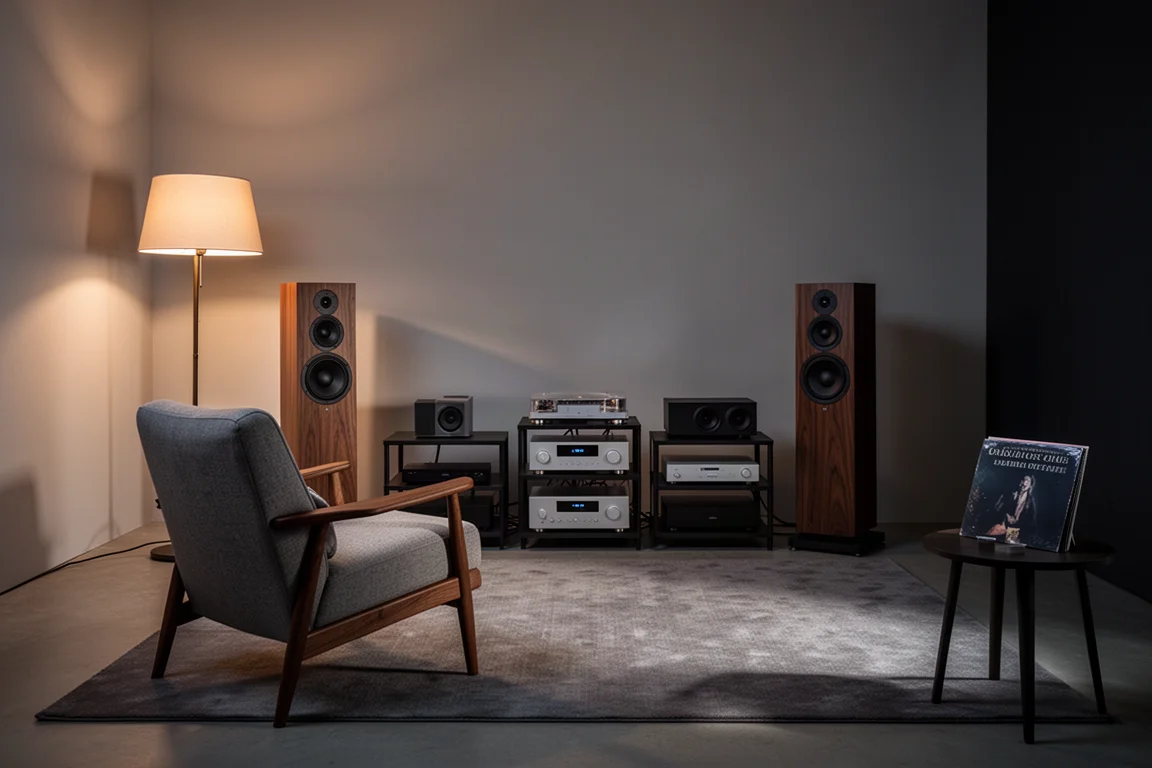
Matching matters more than specifications here. Systems that lean bright or lean will likely appreciate the added body and dimensionality, while listeners who prioritize measured neutrality above all else should think carefully before committing. The comparison with a solid-state reference made that trade-off clear: a little bass tightness and clinical clarity in exchange for a bigger, more present soundstage.
If the budget is fixed, it is worth reserving a small amount for tube rolling. A different pair of 6922 tubes changes the sound meaningfully for relatively little money, which effectively gives the preamplifier more than one voicing over time. Buyers who never intend to experiment should simply factor in the stock tubes and judge the LS 99 on that basis.
Conclusion
The ModWright LS 99 is a two-chassis balanced tube line stage with first-rate build quality, a genuinely quiet tube circuit, generous analog connectivity and a five-year warranty in the USA. Its weaknesses are specific and easy to identify: a cheap-feeling remote, no digital or phono inputs, no headphone output, and a $6,500 price.
What it delivers in return is a way of presenting music that many listeners find hard to give up once they have heard it. Recordings gain body, texture and a sense of occupying the room, and older material can feel startlingly present. For a system that is otherwise complete and a listener who values that quality, the LS 99 is a compelling choice. For anyone chasing neutrality first and foremost, it is a considered risk rather than an obvious upgrade.
Product link
View more details for ModWright LS 99
This product is mentioned in the review. Check the specifications, options, and compatibility before buying.
View more details for ModWright LS 99Further reading
Related Reviews
Preamplifiers
Akitika PR-102 Review: A Preamp That Sounds as Good as It Is to Build
The Akitika PR-102 is a discrete line preamp sold as a kit or fully assembled, with two amplifier outputs, swappable op amps, and a neutral, three-dimensional sound.
Preamplifiers
Ayre K-1 XE Review: A Restored Vintage Preamplifier With Unusual Depth
A close look at the Ayre K-1 XE, a fully balanced zero feedback preamplifier from 1996, covering its four-attenuator volume system, its sound character, and what to weigh before buying.
Preamplifiers
Holo Audio Serene KTE Review: A Balanced Line Stage With a Neutral Voice
A fully balanced line stage preamplifier with a detailed, neutral character, five inputs, buffered outputs, and no built-in DAC or phono stage.