Hi-Fi Audio
Modern DACs Compared: SMSL RAW-MD1, SMSL DL200, and WiiM Ultra
Three current desktop converters, what each one does well, and the two missing connections that would make modern DACs nearly perfect.
Introduction
Modern digital-to-analog converters do exactly what they promise. They accept digital signals over USB, optical, coaxial, and Bluetooth, and they turn those signals into analog output. Many of them now measure extremely well, include a headphone amplifier, and ship with a remote control, which quietly turns a simple converter into a usable digital preamp.
That is a lot of value for the money. The SMSL RAW-MD1 at $279 is a clear example: a DAC, a headphone amp, and a remote in one chassis, with balanced and single-ended outputs. The criticism here is not that modern DACs sound bad or that they are poorly built. It is that after years of incremental releases, they have stopped short of two small additions that would make them close to perfect for far more listeners.
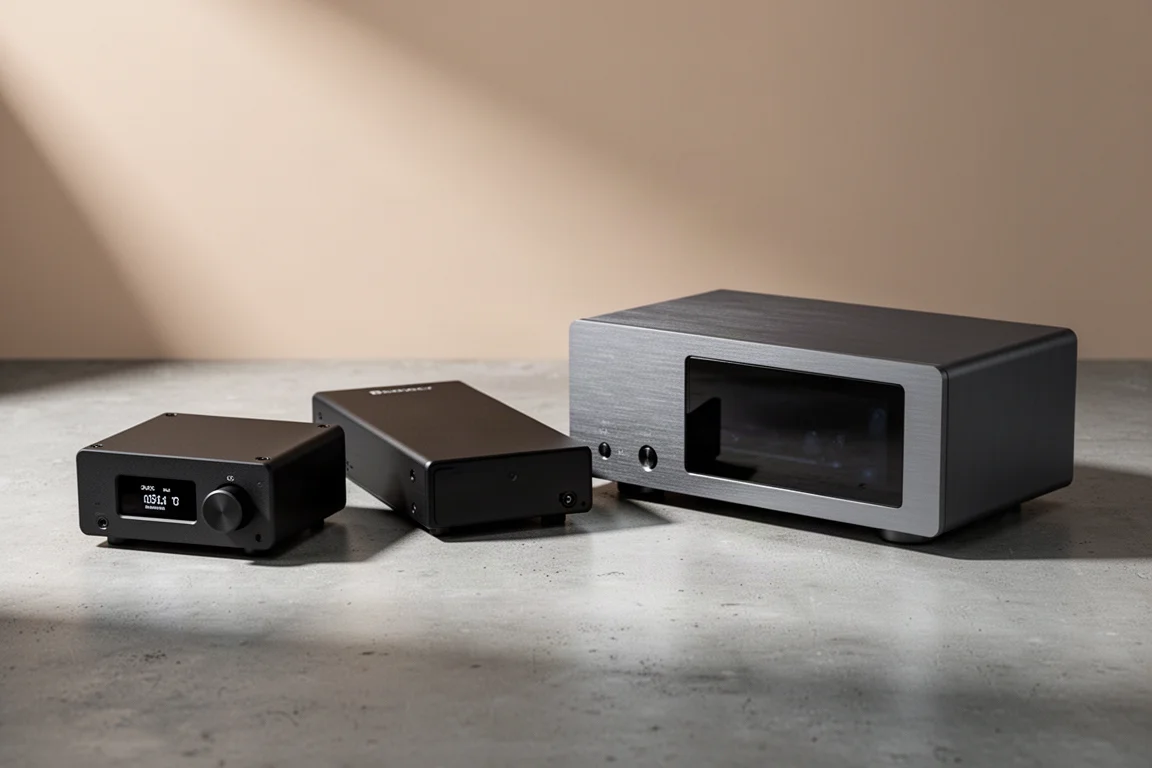
This guide looks at three current options that sit at different points on that spectrum: the SMSL RAW-MD1, the SMSL DL200, and the WiiM Ultra.
What Matters in a Modern DAC Today
A digital-to-analog converter takes digital inputs from USB, optical, coaxial, or Bluetooth and converts them into an analog signal. Despite the common claim that all converters sound the same, they do carry a character of their own, and in a carefully assembled system a DAC can be one of the most influential components in the chain.
The feature set has also expanded well beyond conversion. Balanced outputs, a capable headphone amplifier, Bluetooth codec support such as LDAC, a remote control, and menu-driven sound tuning are now common at prices that would once have bought a basic converter alone.
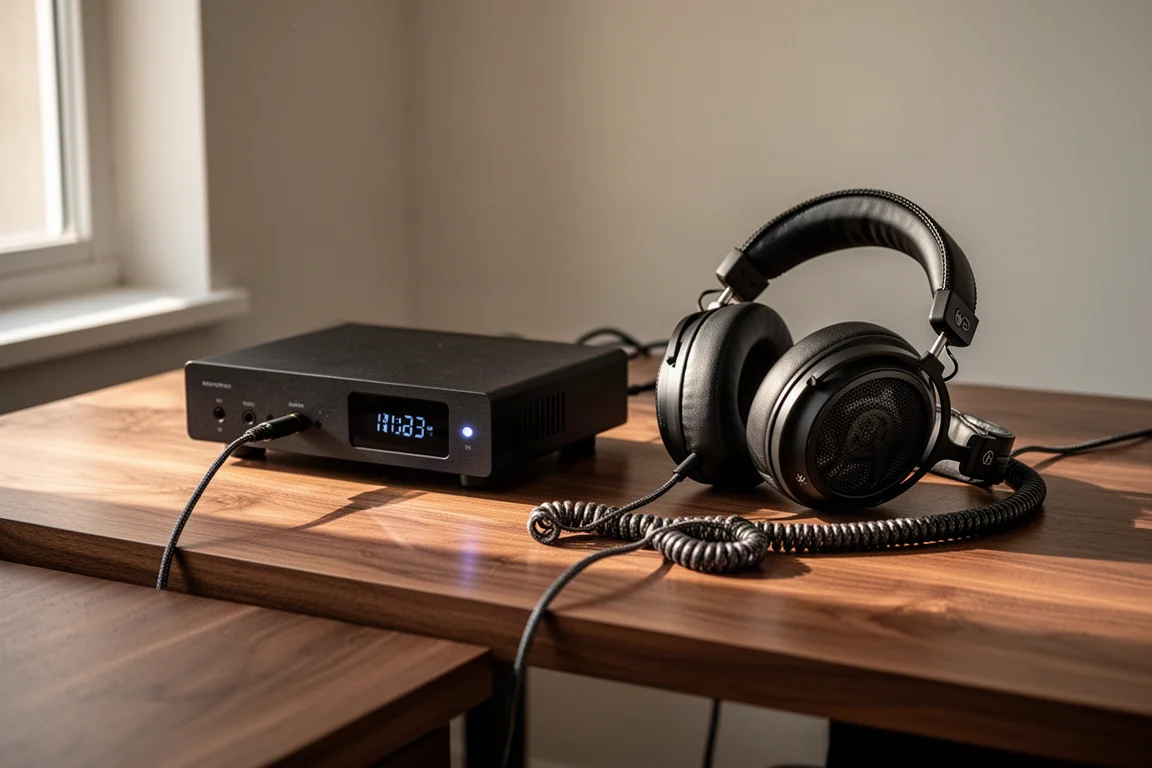
That expansion is precisely why the category feels stuck. A device with two optical inputs, two coaxial inputs, balanced and single-ended outputs, and a headphone amplifier is genuinely useful, but it is also starting to look like the same product released again with a slightly different set of connections on the back.
SMSL RAW-MD1: A Feature-Rich DAC and Headphone Amp
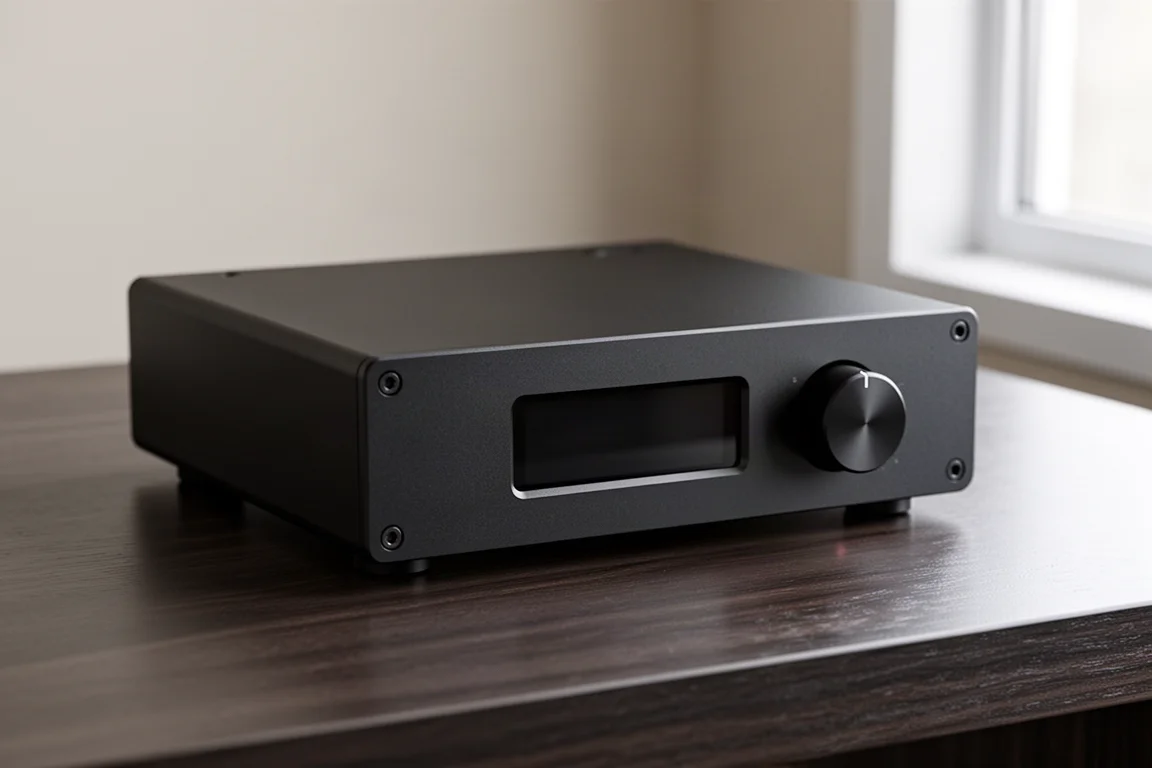
The SMSL RAW-MD1 is a DAC and headphone amplifier priced at $279. It uses dual ESS 9039 Q2M converter chips alongside an XMOS 316 processor and dual-mode USB 1.1 and 2.0 support. LDAC Bluetooth is included, so compatible Android phones can stream at higher quality over Bluetooth, while iPhone users will not be able to take full advantage of that codec.
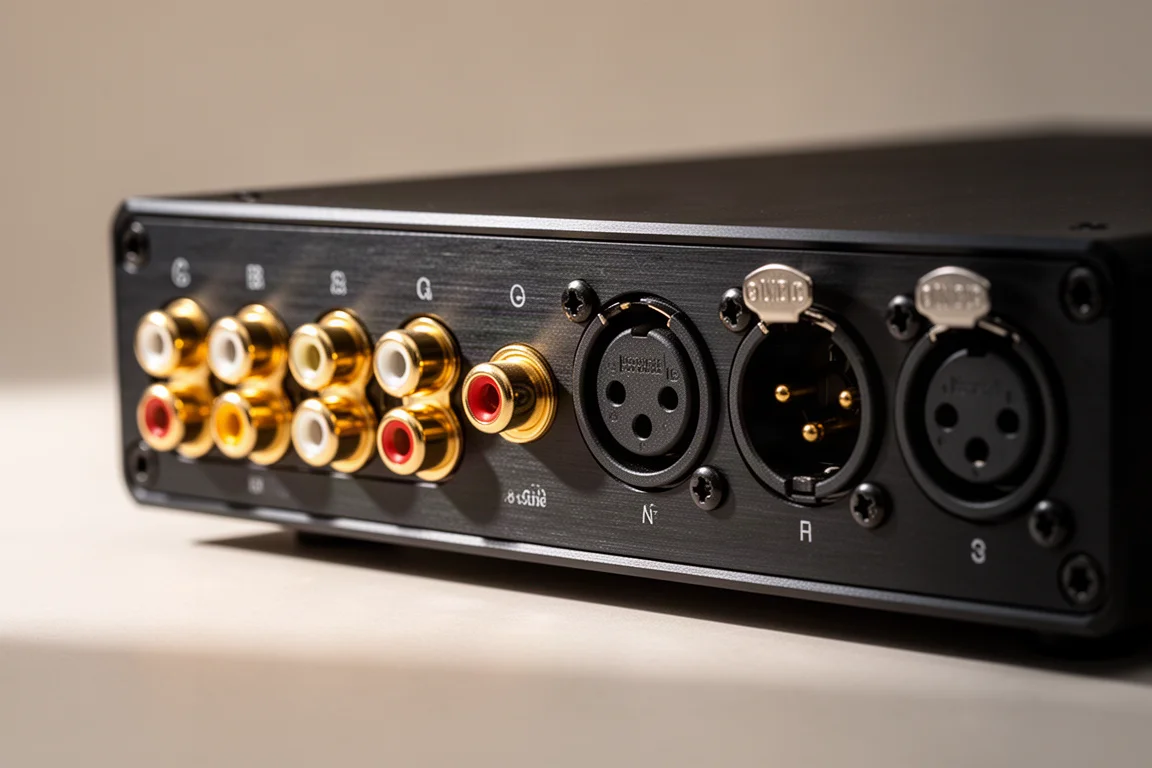
Around the back you get balanced XLR outputs and single-ended RCA outputs. On the headphone side there is both a single-ended and a balanced output, with enough power to drive just about any headphone you connect: roughly 2.5 W into 16 ohms and 1.7 W into 32 ohms per channel, most likely measured on the balanced output. Signal-to-noise ratio and distortion figures land where they should for a modern converter.
The remote control is the detail that changes how the unit is used. With volume control in hand, the RAW-MD1 can serve as a digital preamplifier feeding a power amplifier directly, which makes $279 a strong value for a complete front end.
Inside the RAW-MD1: Sound Modes and Outputs
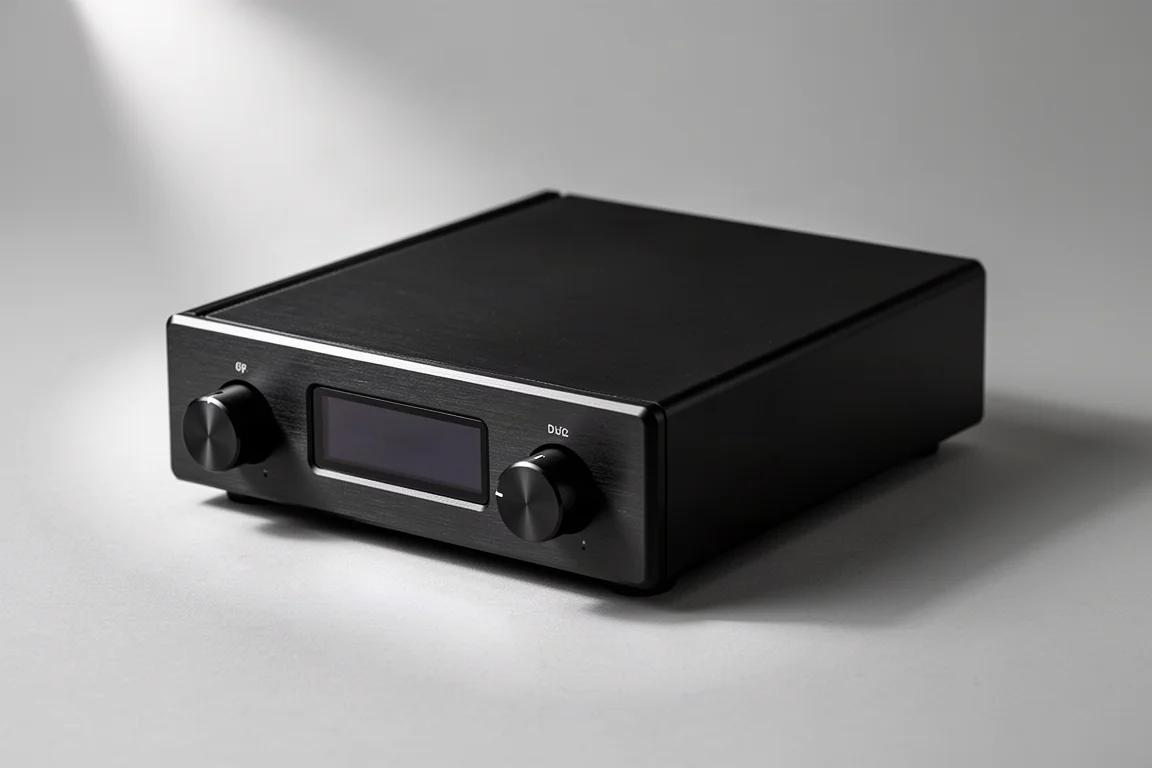
The menu is where the RAW-MD1 diverges from a simple converter. It offers a long list of sound color modes: Standard, three Rich settings, three Tube settings, and three Crystal settings, plus around six or seven filter rolloff options. The filter choices are subtle in practice, while the sound color modes change the presentation noticeably.
Standard mode can sit slightly forward in the treble. The Rich modes pull that edge back and add weight through the midrange and a firmer kick to bass drums, which many listeners will find easier to live with across long sessions. The Crystal modes push in the opposite direction, and the Tube modes soften detail in a way that trades away some of the music’s information.
The tuning options are digital processing rather than a change of hardware, and the op-amps are not user-swappable. That matters if you prefer a converter with a single fixed voicing you can identify immediately, rather than a device that adapts to several preferences. Soundstage and clarity are strong in every mode.
SMSL DL200: The Value Alternative
The SMSL DL200 is the more affordable sibling at around $189, roughly $100 less than the RAW-MD1. It uses the same 9039 Q2M converter family, includes a headphone amplifier, LDAC Bluetooth, seven PCM filters, and the same set of sound color modes.
The differences are in the details. The DL200 has one optical input and one coaxial input rather than two of each, and its balanced outputs are TRS rather than XLR. For most desktop systems those distinctions will not matter, and at its price the DL200 performs very well.
The decision between the two comes down to inputs. If you need to keep two optical sources and two coaxial sources connected at the same time, the RAW-MD1 justifies the extra cost. If one of each is enough, the DL200 delivers most of the experience for less.
WiiM Ultra: The Streaming Digital Preamplifier
The WiiM Ultra sits at $323 and takes a different approach. It works as a digital preamplifier with a built-in streamer, and it adds bass management and equalization on top of the usual conversion duties.
Those additions address part of the gap that dedicated DACs leave open. Streaming, room-friendly bass management, and EQ are exactly the features that turn a converter into the center of a system rather than one component in a chain.
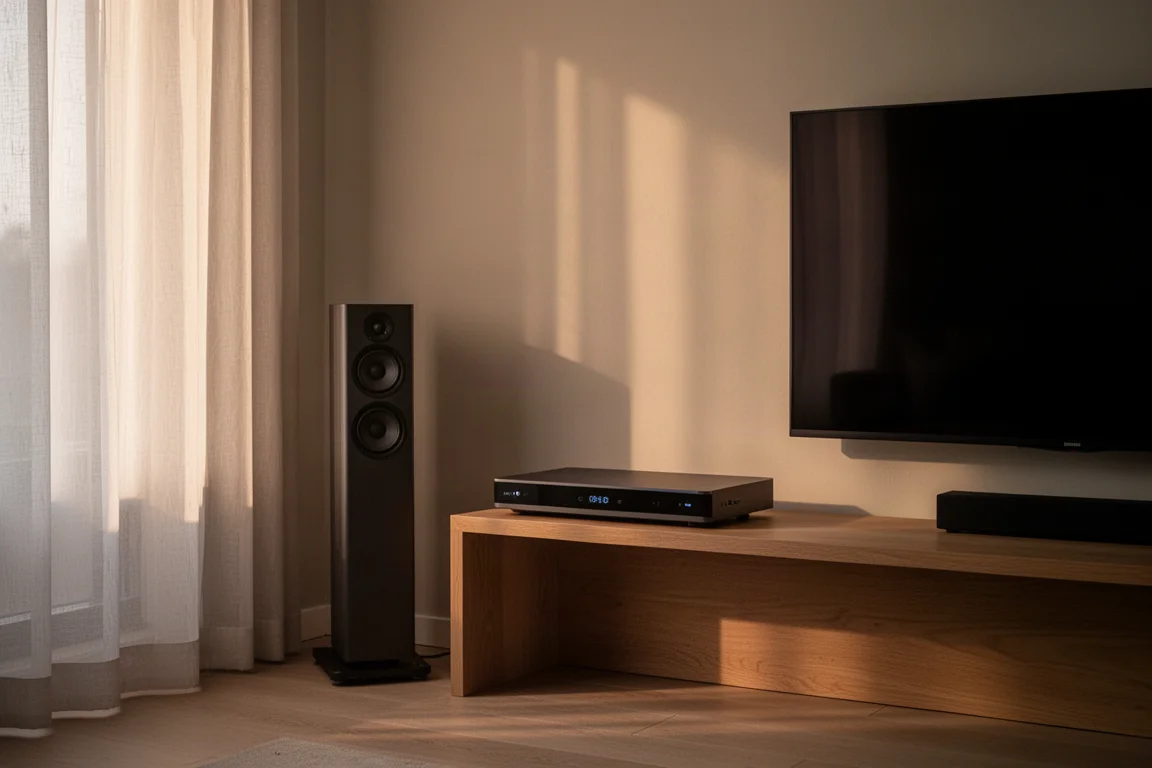
For listeners who want one box to handle sources, volume, and tone control, the Ultra’s combination is difficult to match at its price. It also raises the bar for what a desktop converter is expected to include, and that pressure is likely to shape the next generation of DACs from specialist brands.
The Features Modern DACs Still Need
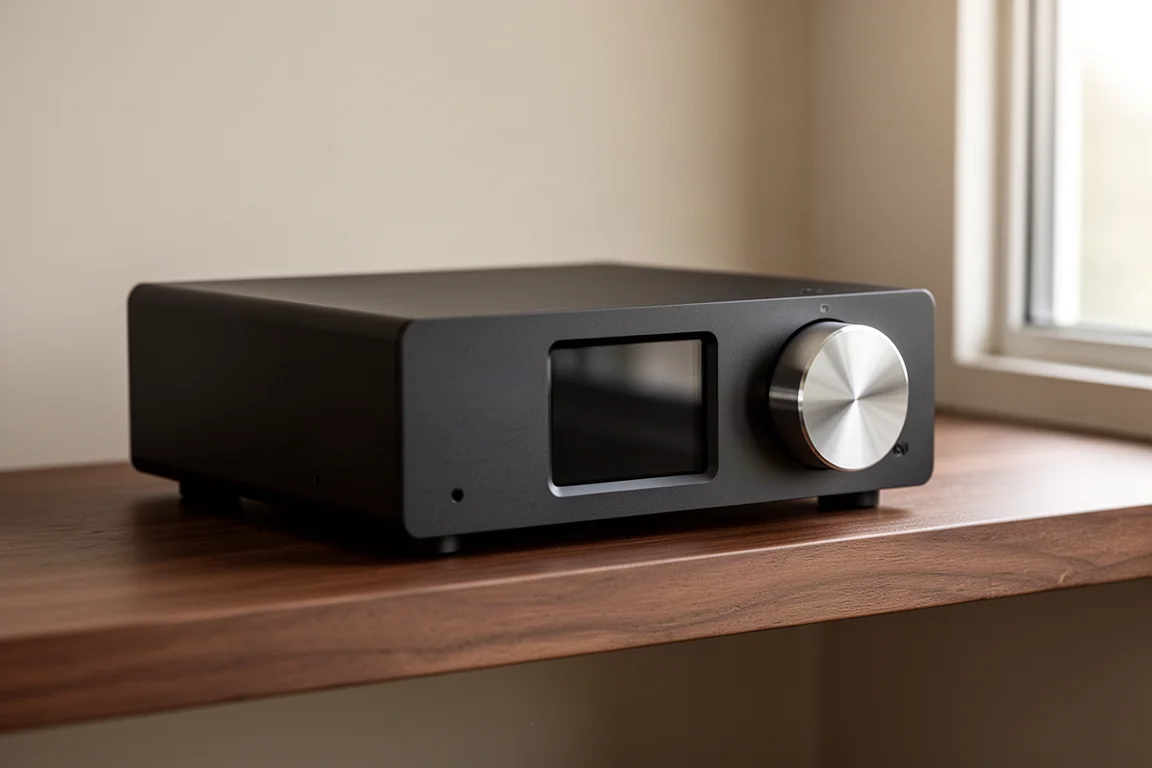
Two additions would close most of the remaining gap. The first is an HDMI ARC input, which would let a converter take audio directly from a television and simplify a living room setup considerably. The second is an analog input, which would allow a turntable or another line-level source to pass through the same box.
Both are realistic. Devices with an HDMI ARC connection already exist, and adding a single analog input is not a radical change to a design that already includes multiple digital inputs and a volume-controlled output stage. Once a converter has a remote and a preamp-style output, an analog input is the missing piece that makes it a genuine hub.
Without those two connections, the current generation of DACs remains very good at a narrower job. The RAW-MD1, for example, has two optical inputs and two coaxial inputs, which is generous, but it still cannot accept a television over HDMI ARC or a line-level analog source.
Buying Advice: Matching the DAC to Your System
Choosing between these three comes down to what your system is missing.
If you need a converter with two optical inputs, two coaxial inputs, XLR balanced outputs, and a headphone amplifier that can drive demanding headphones, the SMSL RAW-MD1 is the most complete of the three at $279. Its sound color modes give you room to tune the presentation, and its remote control makes it usable as a digital preamp.
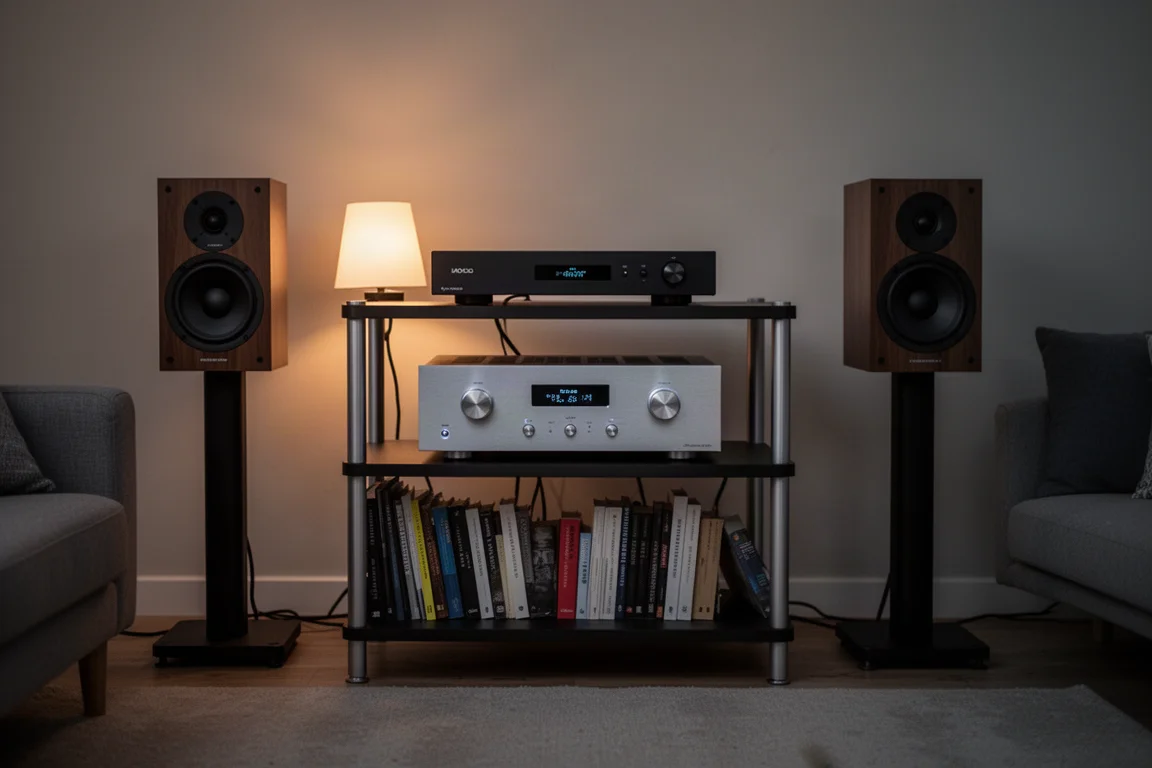
If budget is the priority and one optical and one coaxial input is enough, the SMSL DL200 at around $189 covers the essentials and performs excellently for the price.
If you want streaming, bass management, and equalization built in, the WiiM Ultra at $323 is the one to consider.
If an analog input is something you actively need, none of these three will provide it. In that case the RAW-MD1 is still an excellent converter, but the missing analog input is the reason to keep looking, or to plan for a separate preamplifier.
Conclusion
Modern DACs are not falling short because they sound bad. They are falling short because the category has settled into small iterations: another converter chip, another input, another set of filters, while two practical connections remain missing.
The SMSL RAW-MD1 is a strong example of how much value the current generation offers. At $279 it combines a well-measuring converter, a powerful headphone amplifier, balanced and single-ended outputs, LDAC Bluetooth, and a remote that turns it into a digital preamp. The SMSL DL200 delivers much of that for around $189, and the WiiM Ultra goes further with streaming, bass management, and EQ at $323.
Any of the three will serve a well-matched system. The choice is simply about which gaps matter most in yours.
Further reading
Related Reviews
Hi-Fi Audio
Accuphase C-57 vs Allnic H-7000V: Two High-End Phono Stages Compared
A fully balanced solid-state phono stage with a pitch-black noise floor meets a tube design built for well-loved records. Here is how to choose between them.
Hi-Fi Audio
Active vs Passive Hi-Fi: Five Components for a Modern System
Five components that define modern active and passive hi-fi systems, with the strengths, trade-offs and setup details worth weighing before you buy.
Hi-Fi Audio
Advance Paris A10 Apex Review: A Hybrid Integrated Amplifier That Covers a Lot of Ground
A French hybrid integrated amplifier with a class A tube preamp stage, analogue power meters, and an internal DAC and phono stage good enough to make extra boxes unnecessary.