Backpacking Gear
Minimalist Backpacking Gear: Warmth and Shelter Essentials for the Trail
Two minimalist backpacking essentials for shelter and warmth, plus the trade-offs worth understanding before you buy.
Introduction
Staying comfortable in the wild comes down to three needs: warmth, protection, and sustenance. There are many ways to meet them, from building your own shelter and sourcing your own food to parking an RV at a campground. A practical middle ground is carrying everything on your back, which lets you move camp quickly and keeps your impact on the land small.
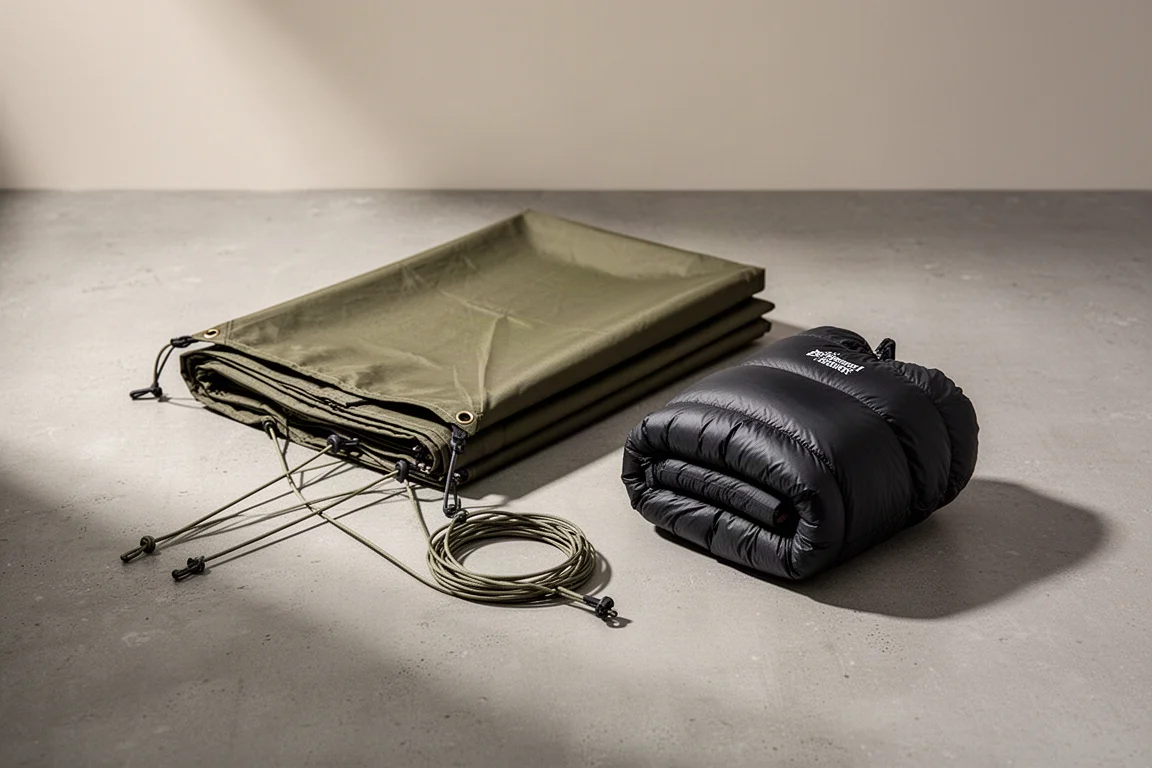
This guide covers two pieces of gear that handle the protection and warmth sides of that equation: a tarp-style minimalist shelter and a down jacket that weighs under 200 grams. Both are aimed at backpackers who would rather carry less and adapt to conditions than carry everything for every possible scenario.
What Matters Most in a Minimalist Backpacking Kit
Food and water set the outer limits of any trip. You can survive roughly three days without water but up to three weeks without food, which is why most minimalist kits treat water treatment as non-negotiable and food as a weight problem to solve.
Freeze-dried meals are the convenient option. Add boiling water and a meal is ready in 10 to 15 minutes. They cost more than ordinary groceries, so many backpackers mix them with simple snacks. Nuts are popular because they deliver a lot of calories for the weight carried, and homemade oatmeal with chocolate chips and fruit covers breakfast.
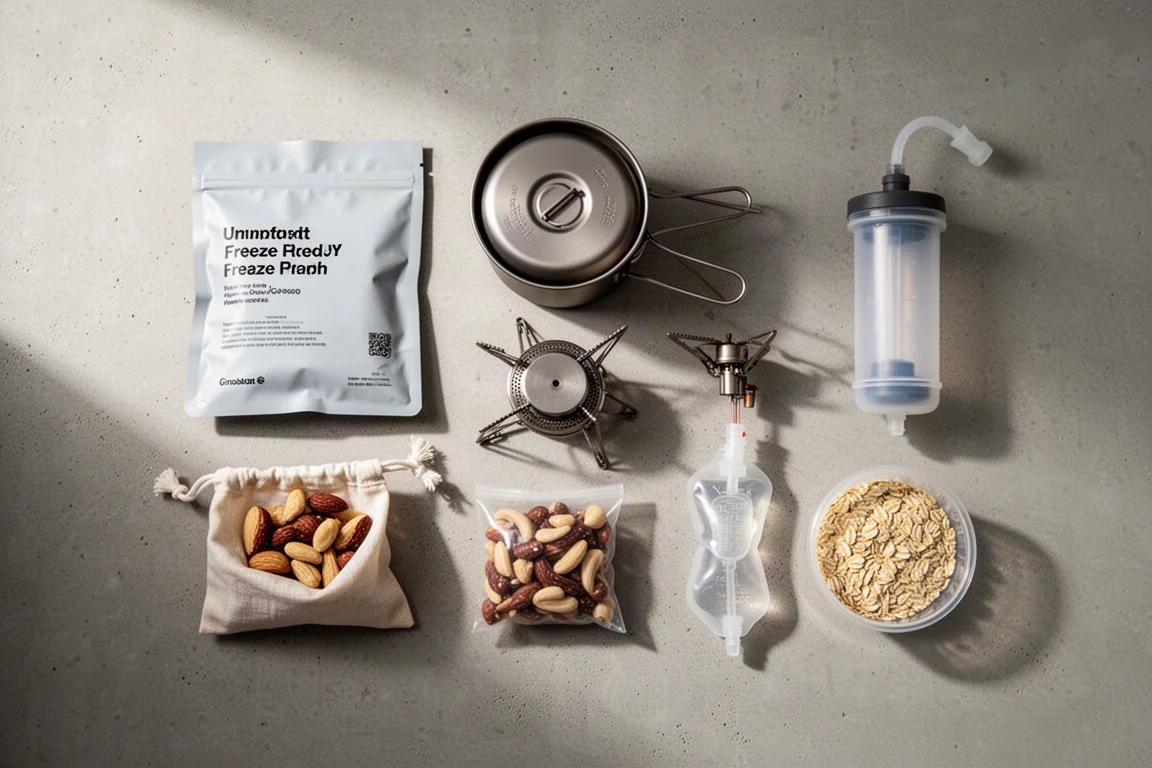
The cook kit behind all of this can be remarkably small. A lightweight stove of around 25 grams paired with a 550-milliliter titanium pot of around 72 grams keeps the whole setup under 100 grams before fuel. For water, a squeeze bag and filter handles most needs, and treatment tablets work as a backup that requires roughly 30 minutes of waiting. A green supplement can help fill nutrient gaps when trail food gets repetitive.
Shelter: The Zpacks Hexamid Tent
Rain and wind are the first two elements a shelter has to answer. Backpackers generally choose a tent for one practical reason: it goes up quickly when the weather turns.
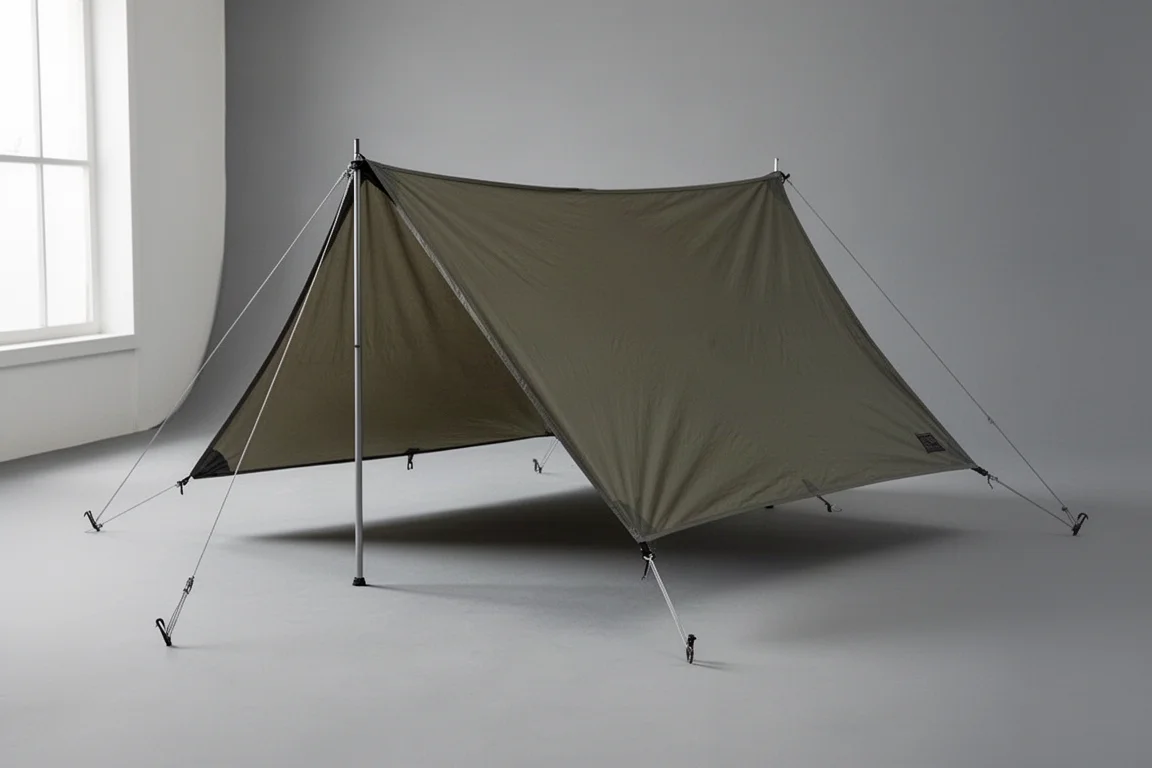
The Zpacks Hexamid Tent is about as minimal as a shelter gets. It is essentially a tarp, and that design brings two clear trade-offs. There is no mesh, so it will not keep insects out or block wind as effectively as an enclosed tent. There is also no floor, which means the sleep system you use inside needs its own protection from ground moisture and abrasion.
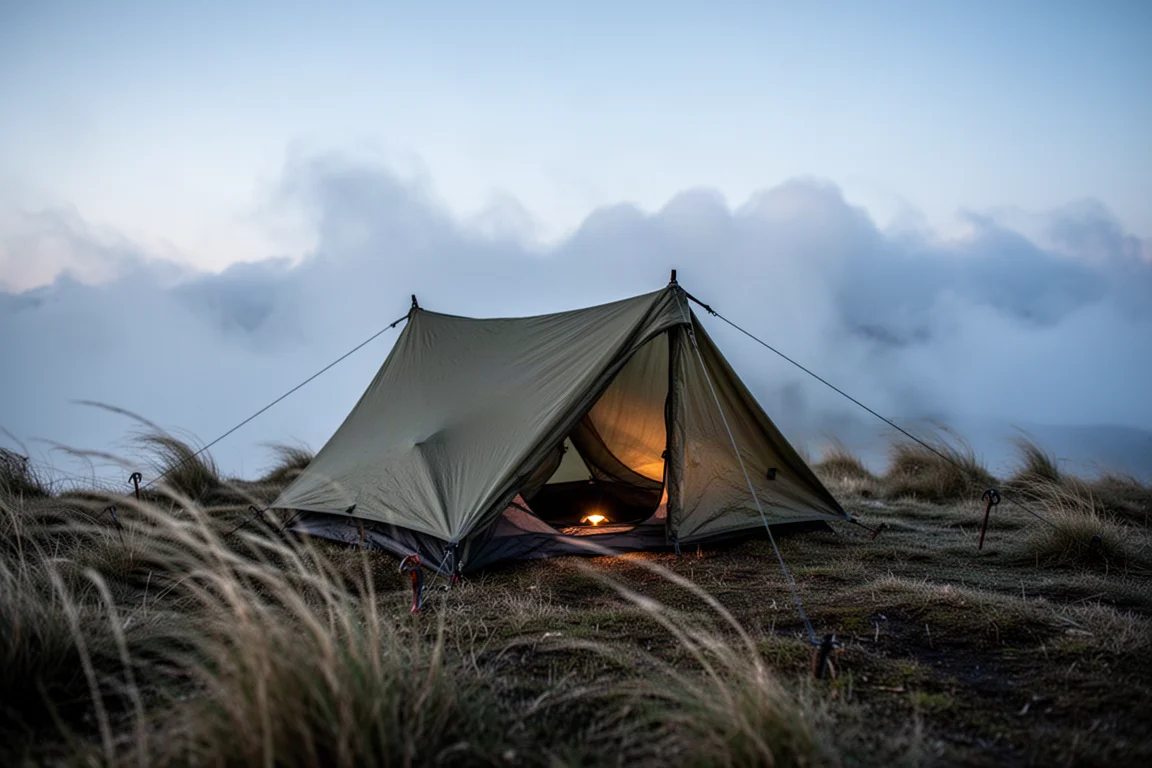
Those trade-offs are deliberate. Leaving out mesh and a floor removes weight and simplifies pitching, which suits trips where speed and pack weight matter more than insect protection. Site selection matters just as much as the shelter itself. Pitching under trees adds protection from rain, snow, wind, and sun, though suitable trees are not always available where you want to camp.
Warmth: The Patagonia Ultra Alpine Down Jacket
Warmth requirements depend entirely on the environment. In a mild climate, the clothing on your back may be enough. In many places, though, nighttime temperatures drop sharply, and a layer that felt unnecessary at midday becomes the difference between a good night and a cold one.
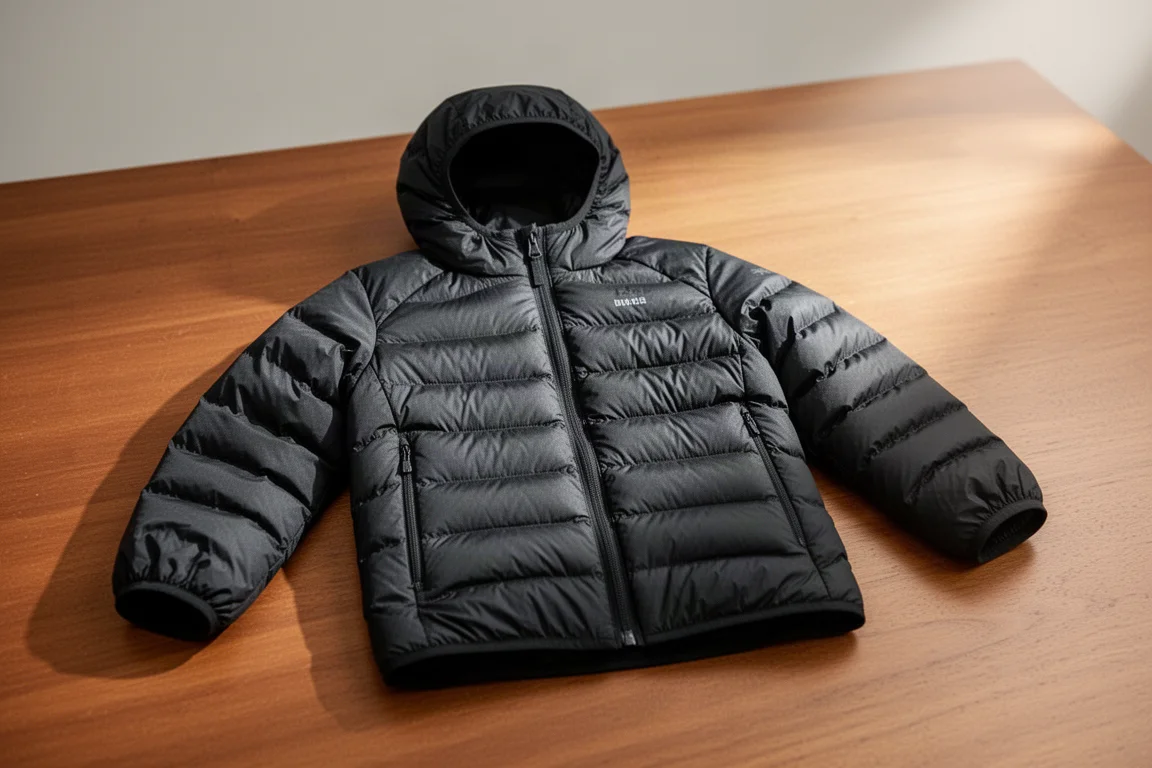
The Patagonia Ultra Alpine Down Jacket weighs under 200 grams, which makes it easy to justify as a just-in-case layer. It sits alongside the insulation doing the heavy lifting overnight: a sleeping pad underneath and a quilt on top. The jacket is the backup for when temperatures fall further than expected, and even in milder regions overnight temperatures can drop to around 10 degrees Celsius.
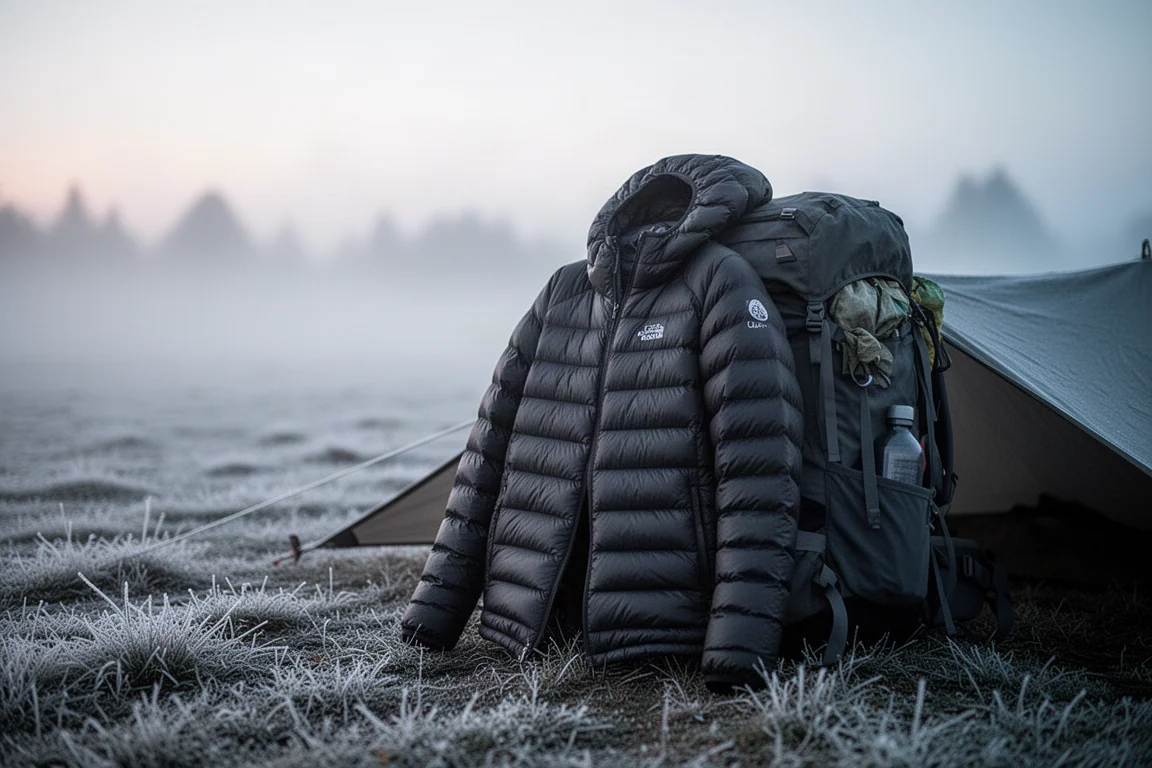
It is worth being realistic about what a light down jacket can do. Extreme cold, the kind that demands heavy and bulky gear, is a different problem entirely, and a sub-200-gram layer is not a substitute for it. As an additional layer for milder conditions and unexpected cold snaps, it is a sensible piece to keep in the pack.
How Shelter and Warmth Work Together
Shelter and insulation are not independent choices. A tarp-style shelter without a floor puts more responsibility on the sleep system, because the pad and quilt are the only barrier between you and the ground. A jacket that packs down small adds a margin of safety for the hours when the temperature drops fastest, without adding meaningful weight.
The environment decides how much margin you need. Warm regions can be handled with very little, while genuinely extreme cold requires substantially more gear and more weight, because at those temperatures the stakes are higher. Matching the kit to the conditions you actually expect, rather than the worst case imaginable, is what keeps a pack light and a trip manageable.
Overall Buying Advice
Start with the conditions you expect, not the ones you fear. If you backpack in mild to moderate climates and want to move fast, the Zpacks Hexamid Tent delivers a very minimal shelter, provided you accept the absence of mesh and a floor and you are willing to choose campsites carefully.
For warmth, treat a light down jacket as an addition to your sleep system rather than a replacement for it. The Patagonia Ultra Alpine Down Jacket is easy to carry and easy to justify on cool nights. If you regularly camp in severe cold, plan for heavier insulation instead and let the light jacket serve only as a layer for milder trips.
Conclusion
A minimalist kit works when each item has a clear job. The Zpacks Hexamid Tent covers protection from wind and rain with a design that pitches fast and weighs little, and the Patagonia Ultra Alpine Down Jacket covers unexpected cold in a package under 200 grams. Together they make a lightweight foundation for three-season backpacking, as long as you understand the trade-offs each one makes.
Further reading
Related Reviews

Backpacking Gear
Building a 10 lb Base Weight: An Ultralight Backpacking Gear List
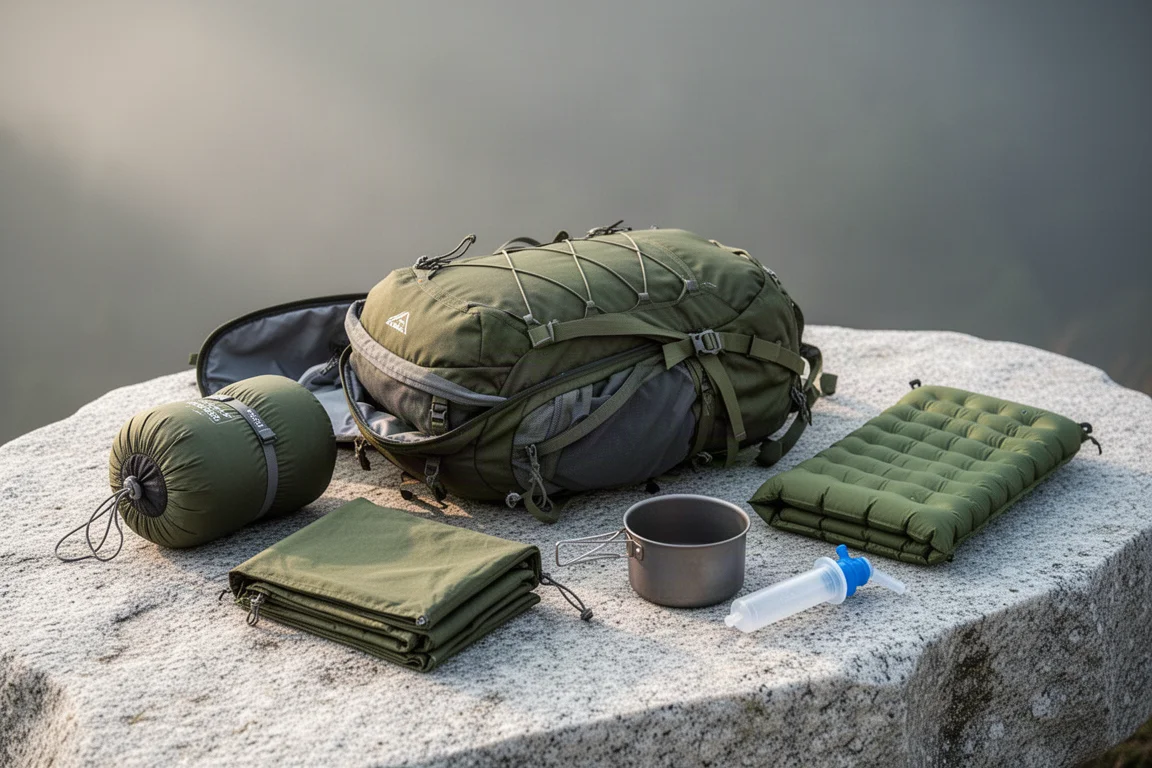
A practical walkthrough of the ultralight pieces behind a 10 lb base weight, from a 765 g pack and a roomy one-person tent to a full camp chair and a dependable water filter.
Backpacking Gear
A 15-Pound Lightweight Backpacking Gear List for Solo Trips
A beginner-friendly 15-pound backpacking setup built from easy-to-find gear, with notes on what each piece does, how it packs, and where to spend your attention.
Backpacking Gear
8 Ultralight Backpacking Gear Upgrades Worth Carrying
Eight small, affordable backpacking upgrades that solve real trail annoyances, from a pillow that stays put to a fuel valve that rescues leftover canister gas.