Welding
Miller Thunderbolt 210 MV Review: A 13-lb Stick Welder Built for Farmers and DIYers
A tiny multi-volt inverter stick welder with 210 amps, hot start, and a simple one-dial interface that makes farm and DIY welding far easier.
Introduction
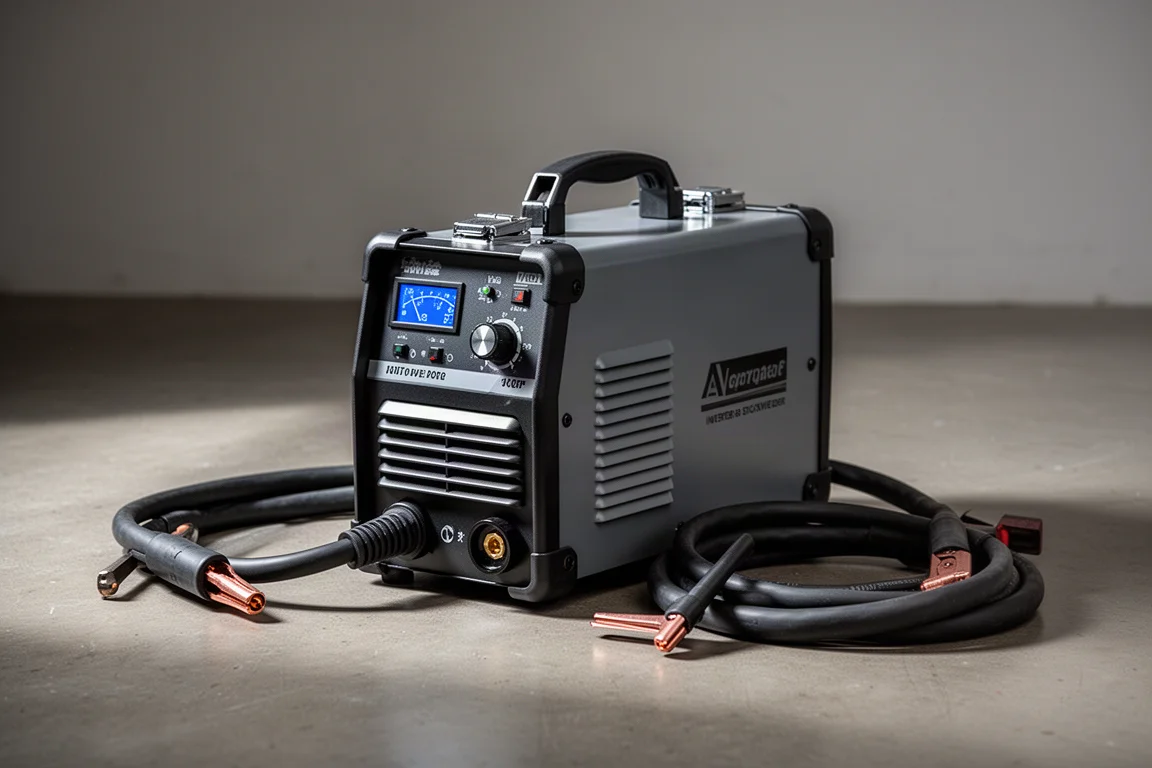
Portable welding machines usually force a trade-off: small and limited, or capable but heavy. The Miller Thunderbolt 210 MV manages to avoid that compromise. This inverter-style stick welder weighs just 13 lbs, yet it pushes up to 210 amps and runs on either 120 V or 240 V power. For anyone who welds occasionally on farm equipment, skid steer parts, or general repair projects, that combination is genuinely hard to beat.
Priced at around $850, it sits above bargain-basement import machines, but the build quality and thoughtful design explain the premium. Here is how it performed in real-world farm and DIY use.
Why a 13-lb Welder Is a Big Deal
The first thing that stands out is the size. Compared with a large, old-school transformer machine like the Thunderbolt XL, this unit is a total game changer for a DIY or farm welder. Instead of dragging a heavy machine across the property, you can simply pick it up and carry it wherever the job is.
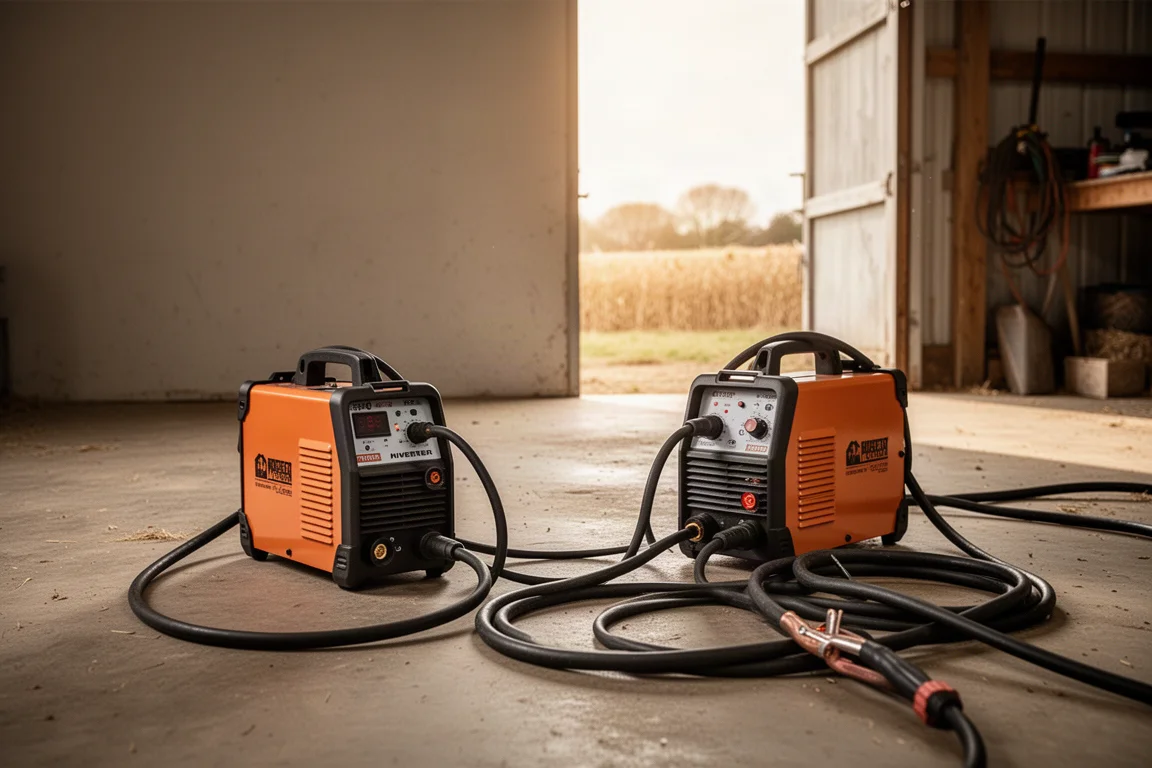
That portability matters more than most spec sheets suggest. If welding is not your full-time job, the difference between “haul out the big machine” and “grab this little box and go” often determines whether the repair happens today or gets postponed for weeks.
Multi-Volt Input and Simple Controls
The “MV” in the name stands for multi-volt, and the machine handles input detection automatically. Plugged into 110 V, it adjusts from 10 to 110 amps in 2-amp increments early in the range, then 1-amp increments for finer control. Plugged into 240 V, that range expands to 10 to 210 amps. The welder knows what it is connected to and prevents you from pulling more power than the circuit can supply, so you will not trip breakers.
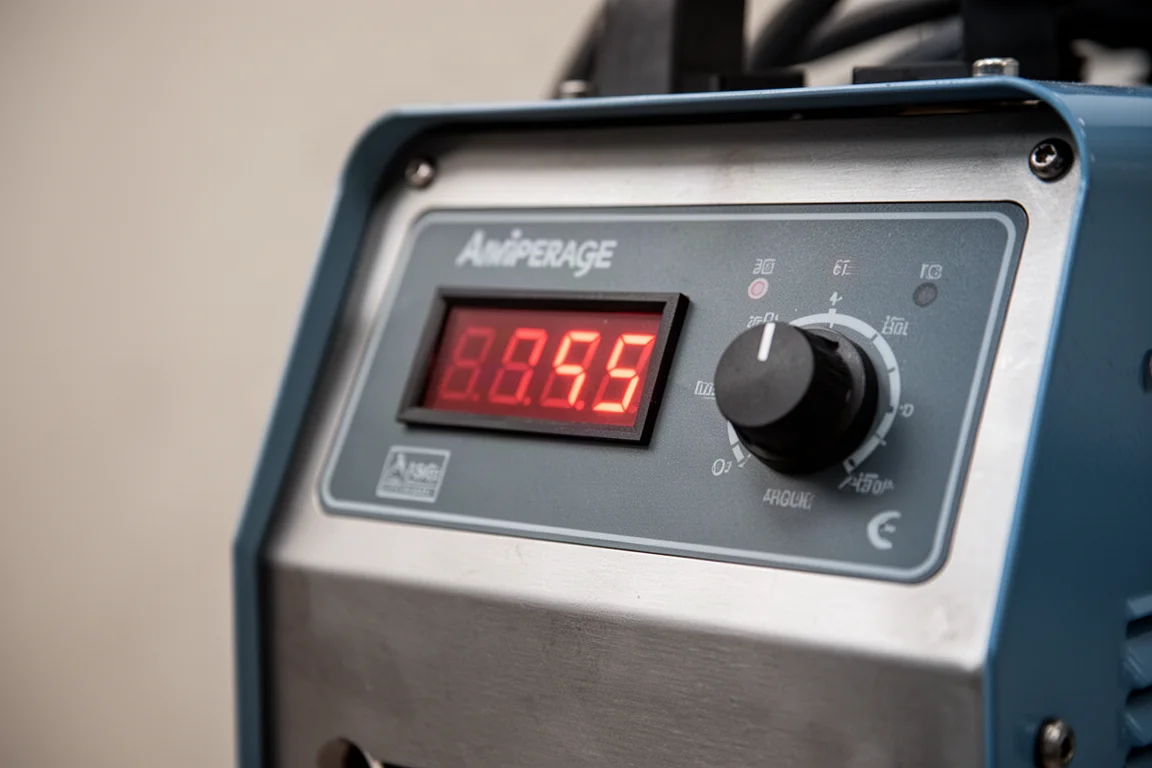
Polarity changes are just as simple: a quick twist unlocks the connection, and you can switch between DC positive and DC negative in seconds. There is genuinely only one adjustment to make, and its placement on the front panel makes operation about as beginner-friendly as a stick welder can be.
Welding Performance and Hot Start
Testing was done with 7018 low-hydrogen rod, and the hot start feature proved its worth immediately. The machine pushes extra amps when you first strike the arc, which means far less rod sticking. Anyone who has fought a sticking electrode while under-amperage on an older transformer machine will appreciate this immediately.
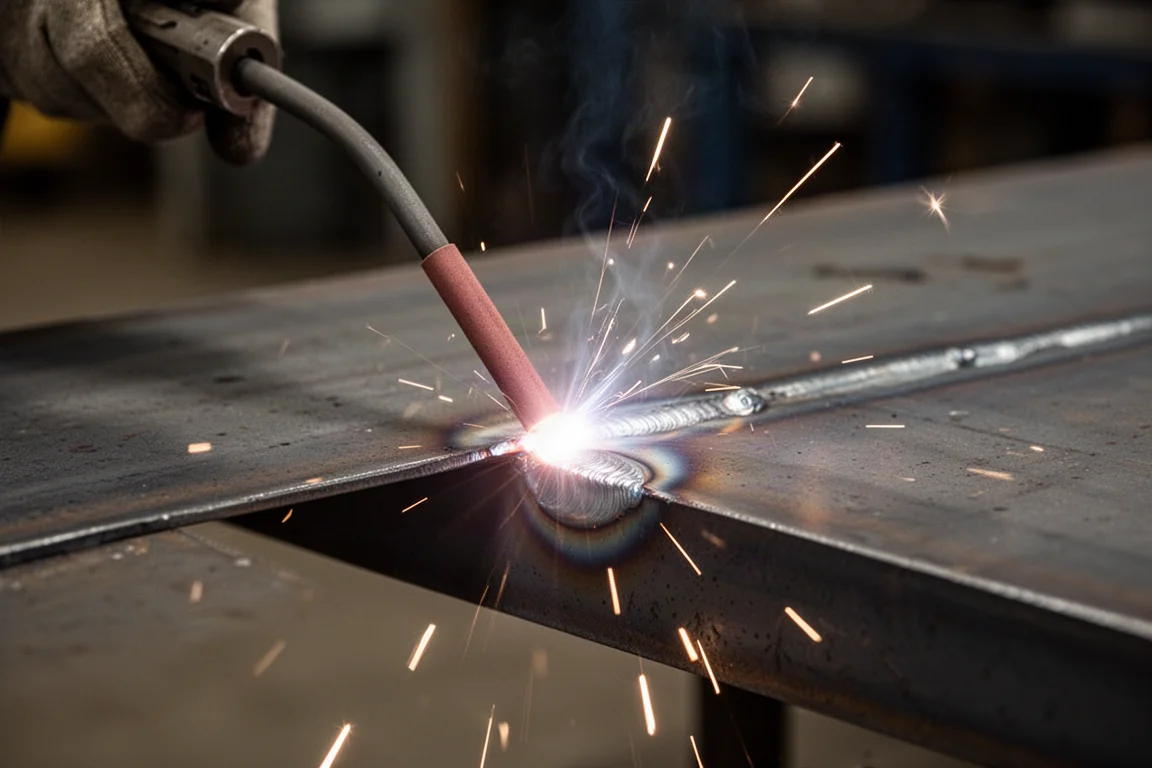
The weld puddle dragged smoothly and everything performed well above expectations, even working outdoors far from the machine. The 9-ft leads on both the stinger and ground clamp give you real freedom of movement without relocating the unit.
The Free Miller Welding App
One unexpected find deserves its own mention. The Miller welding app is free, requires no sign-in, and asks for no email. For a novice welder, it is genuinely game-changing: pick your process (MIG solid core, flux core, TIG, or stick), select the rod type such as 7018, 6011, or 6010, enter the material thickness, and it tells you the correct polarity and amperage range. For example, 7018 on thicker mild steel points to a 200-275 amp range, while 3/16-inch material with 6010 calls for 140 to 210 amps.
Instead of hunting through search results of mixed quality, you get straight answers. For anyone who does not weld often enough to memorize settings, this app removes most of the guesswork before the arc even starts.
Duty Cycle: Know the Limits
The duty cycle chart is worth reading before buying. On a 120 V input, you are looking at roughly 15 to 20 amps of primary draw, while a 240 V, 50 A circuit lets you run at full power. This data tells you how long you can weld continuously and whether that fits your needs.
The key takeaway: the duty cycle takes this machine out of the realm of production welding. If you need to lay beads all day, every day, you want a bigger machine. For intermittent farm repairs and DIY projects, it is well matched.
Who the Thunderbolt 210 MV Is For
This is a machine for farmers, DIYers, and people working remotely who need something lightweight, easy to use, and flexible about power input. Drop it down to 120 V for convenience, or plug into 240 V when you need hot burns on thicker material.
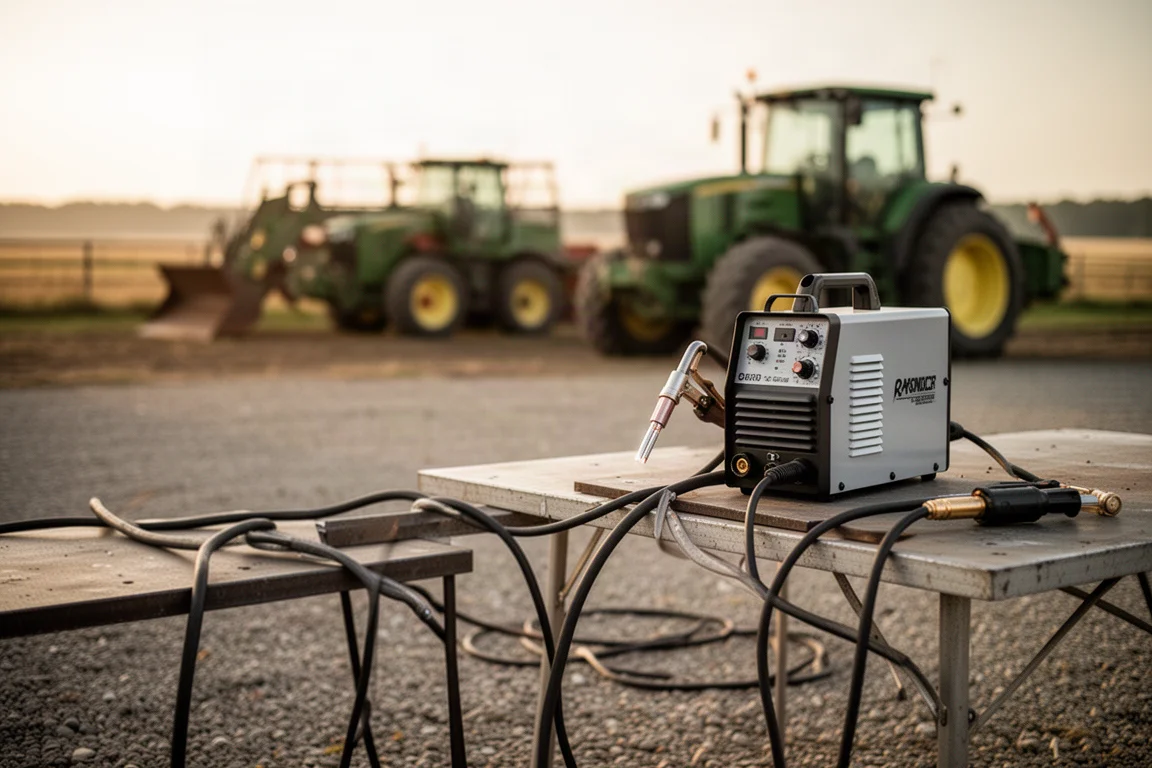
Yes, cheaper machines exist. But considering the build quality Miller is known for, this feels like a strong value in its price range. The simplicity of a single dial combined with the hot start and the companion app turns limited welding experience into consistently good-looking welds, and that is most of the battle.
Conclusion
The Miller Thunderbolt 210 MV packs full-size stick welding capability into a 13-lb package. Multi-volt input, automatic power management, deep-penetrating DC output up to 210 amps, effective hot start, and a free settings app make it an easy recommendation for farm and DIY welders. Just be honest about the duty cycle: it is not a production machine, and it does not try to be. For everyone else, it is an excellent value.
Product link
View more details for Miller Thunderbolt 210 MV
This product is mentioned in the review. Check the specifications, options, and compatibility before buying.
View more details for Miller Thunderbolt 210 MVFurther reading
Related Reviews
Welding
Budget Stick Welder vs Flux Core: What Beginners Should Know
A practical look at a sub-$60 drill-style stick welder and why a flux core machine may be the better starting point for home repairs.
Welding
Best Arc MIG Welder Review: A Budget Flux Core Welder for Small Repairs
A hands-on look at the Best Arc MIG welder, a gasless flux core machine that handles tack welds and thin-material repairs for around $100.
Welding
Best MIG Welders Compared: Budget Machines Against Premium Models
Seven MIG welders tested side by side for penetration, weld strength, thin-gauge work, and duty cycle, from a $189 budget unit to a $2,300 premium machine.