Smart Home
Mid-Tier Robot Vacuums 2026: Seven Models Tested Against Flagship Standards
We tested seven robot vacuums from $300 to $600 to see how they compare to flagship models in vacuuming, mopping, hair pickup, and object avoidance.
Introduction
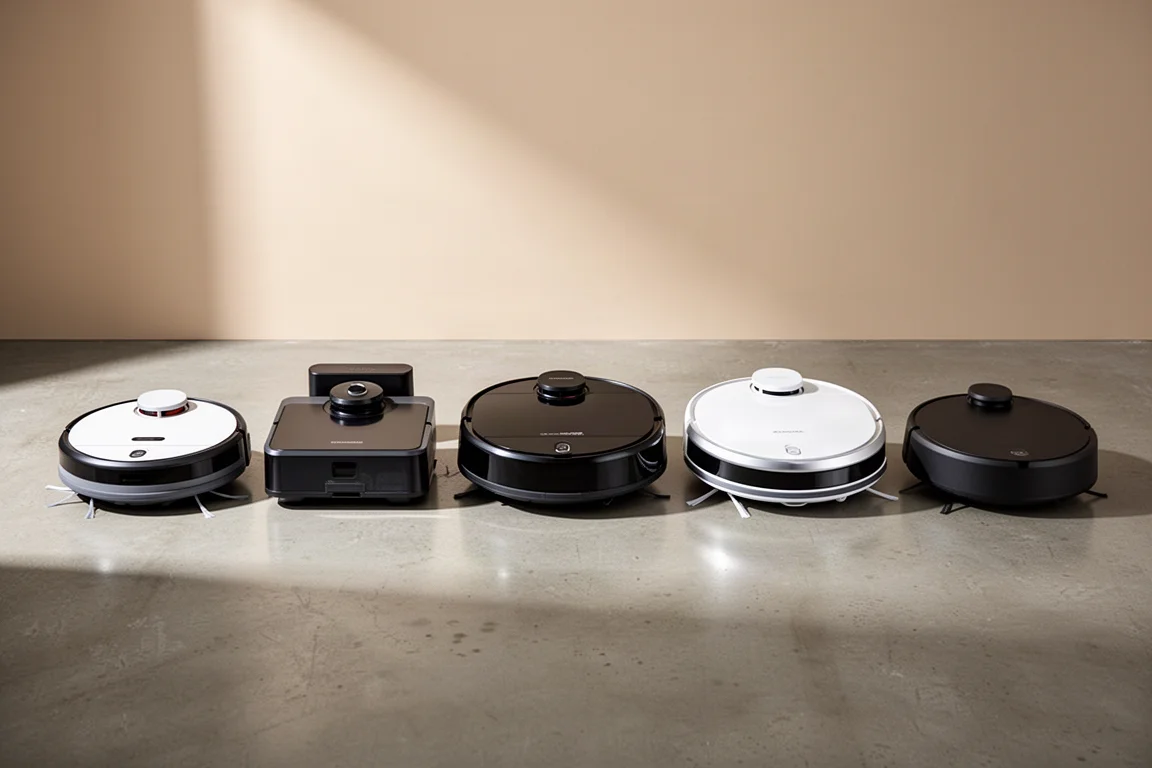
Choosing between a mid-tier robotic vacuum and a flagship model often comes down to a simple question: what are you really giving up? To answer that, we tested seven robotic vacuums priced from $300 to $600 from Yuthi, Roomba, SwitchBot, 3i, Dream, MUA, and Roborock. Each was put through the same battery of tests we use for flagship models, covering carpet and hard floor vacuuming, hair pickup and tangle avoidance, hard floor mopping, and object recognition.
The results were surprising. In several key areas, these mid-tier models matched or even outperformed flagships that cost significantly more. But there are also clear trade-offs, especially when it comes to object avoidance and smart home features. Here is how each model performed.
How We Tested
To measure carpet vacuuming performance, we mixed 10 grams each of salt, flax seeds, and rice to simulate dust and debris of different sizes. The mixture was sprinkled onto a high-pile carpet, and each vacuum was sent on a two-pass single room cleaning run at its highest suction setting. Dust bins were weighed before and after the run, and again after the auto-empty process.
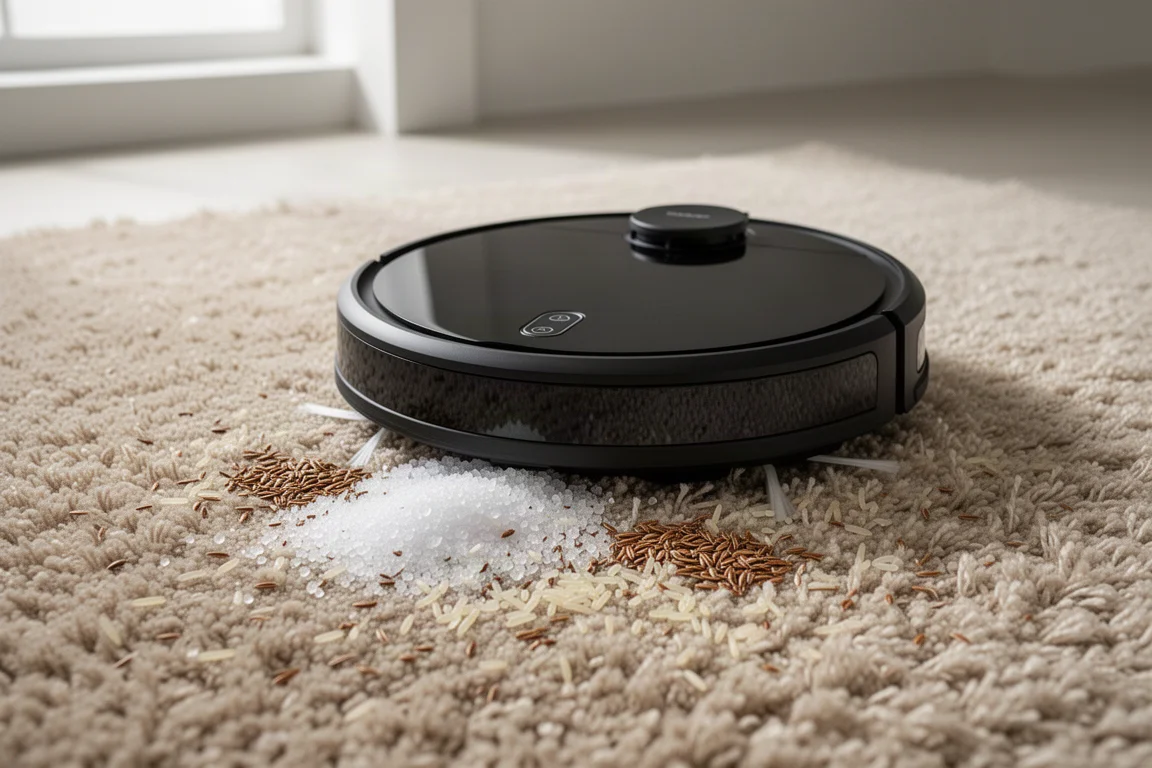
For hard floor vacuuming, the same 40-gram mixture was used, and historically all robotic vacuums perform well on this test. This batch was no different, with all vacuums picking up between 99 and 100 percent of the debris.
Yuthi OmniC20
The Yuthi OmniC20 typically sells for around $349 and features a single traditional brush roller with rubber and soft bristles, a fixed side brush, and 7,000 Pascals of suction. In our carpet test, it cleaned for 31 minutes and used 24 percent of its battery to pick up 55.5 percent of the debris mixture. After the auto-empty process, it had 1.2 grams left in its dust bin, mostly flour stuck in its mesh pre-filter and caked into the main filter pleat.
The Yuthi did very well in corner cleaning, leveraging its compact size to wedge itself under cabinets and into corners while rotating the entire body of the robot. It was on track for a perfect score until it changed its cleaning strategy at the last minute and skipped over the pile under the refrigerator. In the hair pickup stress test, the traditional soft bristle brush became completely tangled.
Roomba Plus 405
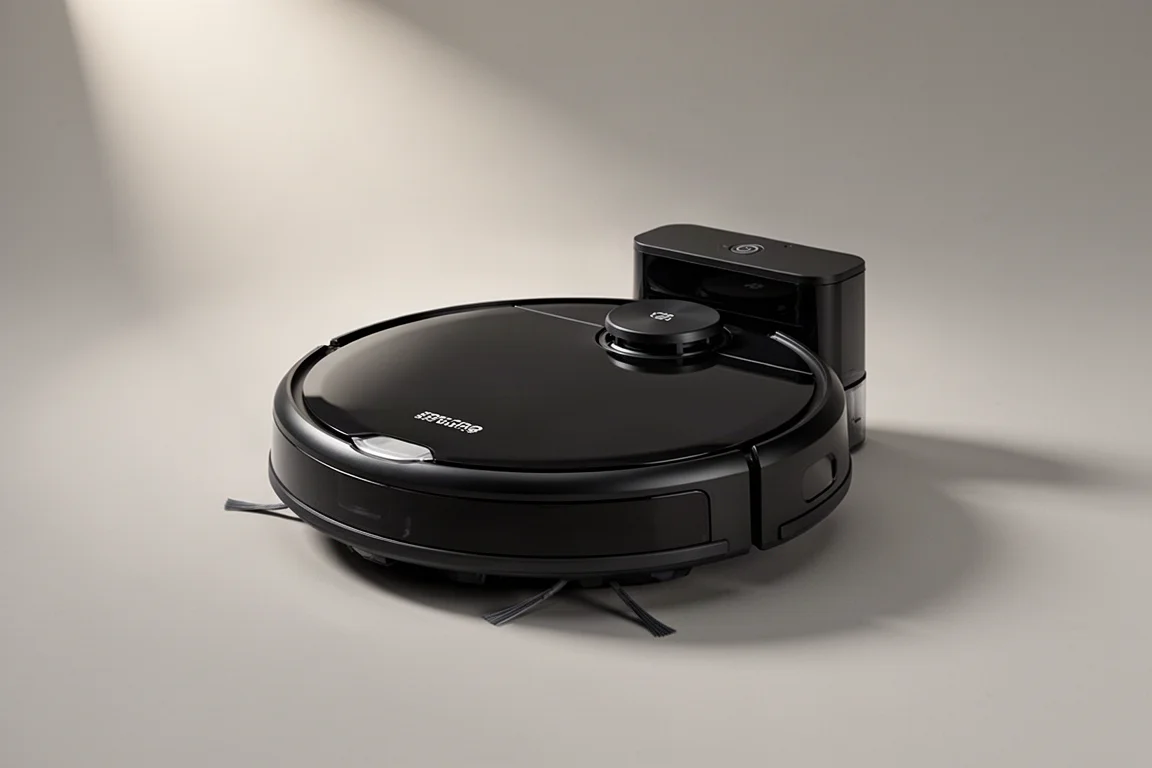
For $398, the Roomba Plus 405 is part of Roomba’s new lineup, which has adopted a more traditional robotic vacuum design. It abandons Roomba’s patented dual brush rollers in favor of a single soft roller brush, a fixed side brush, and 7,000 Pascals of suction. The Roomba cleaned for 20 minutes and used 26 percent of its battery to pick up 50 percent of the debris mixture. After the auto-empty process, it had 3.2 grams left in its dust bin, including some flour caked into the filter and a significant amount of loose debris.
The Roomba’s rubber brush roller funneled hair into the side and then into the brush, functioning exactly as designed. Of the vacuums with this brush design, the Roomba’s overall carpet pickup seemed the best, but it also had the most hair stuck in its roller. In corner cleaning, the Roomba was big and clumsy, randomly skipping over the majority of the cleaning area and not even attempting two of the piles, scoring just two out of eight points.
SwitchBot S20
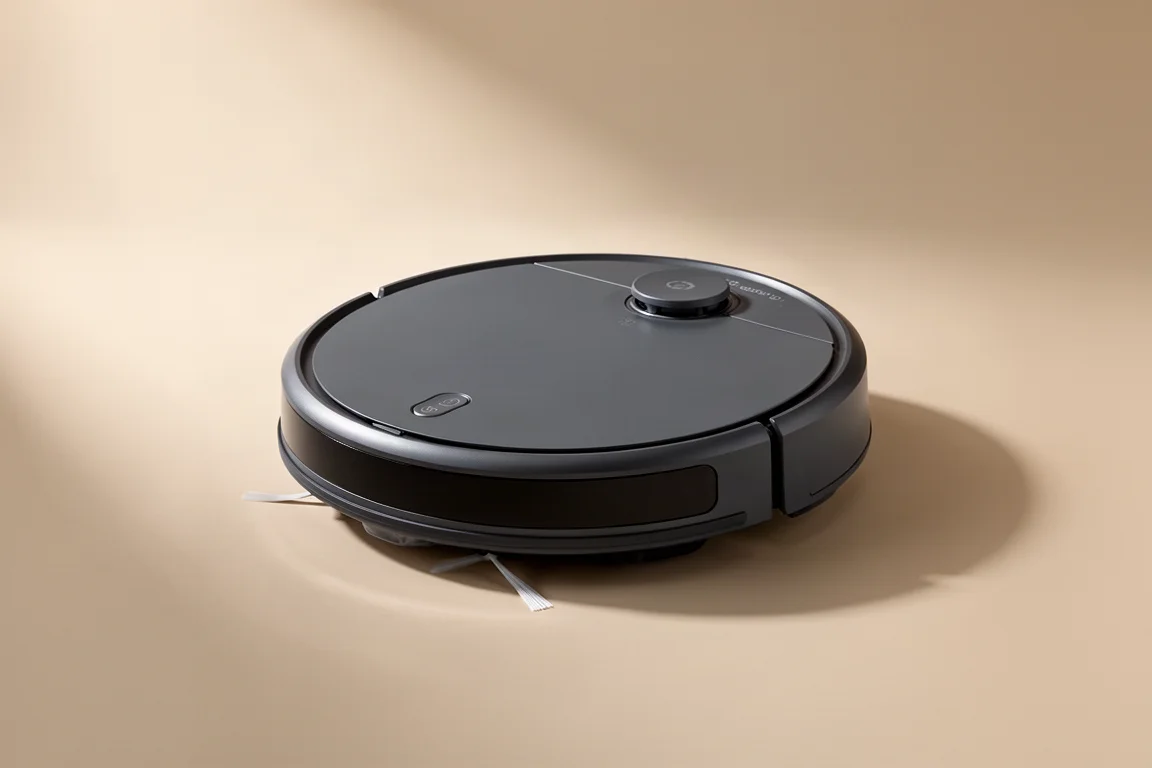
The SwitchBot S20, priced at $399, uses a single rubber main brush, a fixed side brush, and 10,000 Pascals of suction. It cleaned for just 16 minutes but used 28 percent of its battery to pick up 53.8 percent of the debris mixture. After the auto-empty process, it had 1.3 grams left in its bin, and the auto-empty process did a great job of clearing all the fine flour out of its extra-large air filter.
The SwitchBot completely avoided the dog poop in our object avoidance test and only gently nudged the shoes and extension cord while cleaning around them. Its biggest problem in corner cleaning was that it was too big to fit under the stool, and its brush wasn’t long enough to reach all the way into the inside corner, leaving it with a score of four out of eight.
3i P10 Ultra
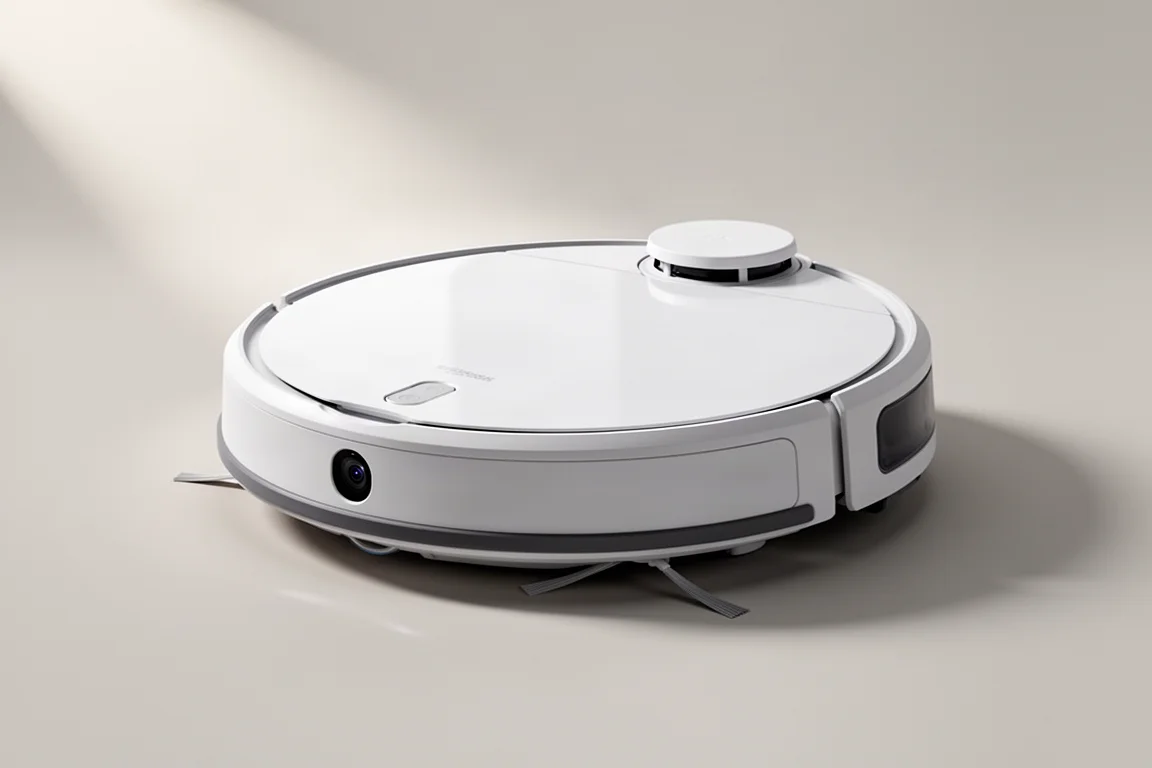
The 3i P10 Ultra, priced at $474, has a traditional single roller brush with rubber and soft bristles, a fixed side brush, and 18,000 Pascals of suction. It had the longest cleaning time in the carpet test at 35 minutes, used only 24 percent of its battery, and picked up 59.8 percent of the mixture, moving it into first place at that point. After the auto-empty process, it had just 1.5 grams of debris left in its bin, almost all flour caked into the air filter.
The 3i did a great job picking up almost all the synthetic hair in the stress test. However, even though its base station has a hair-cutting blade designed to cut tangled hair around the brush before the auto-empty process, the bristles on the brush were completely matted with hair after the test. Those matted bristles made it unable to pick up a lot of the pet fluff. The 3i also scored six out of eight points in corner cleaning, completely cleaning three of the piles using its elongated side brush design.

Dream L40S Ultra CE
The Dream L40S Ultra CE, with a typical price of $499, is part of Dream’s L40 lineup, which has very similar names but completely different features. The model we tested includes Dream’s Tricut brush to help avoid hair tangles, a fixed side brush, and 13,000 Pascals of suction. It cleaned for 23 minutes and used 25 percent of its battery to clean up an impressive 76 percent of the debris mixture, easily moving it into first place. After the auto-empty process, it had 3.7 grams left in its dust bin, all debris caked in its air filter, which lacks a pre-filter mesh.
The Dream performed at flagship level in hair pickup and tangle avoidance, thanks to the Tricut brush. In the stress test, it picked up the majority of fluff and hair, and its Tricut brush was moderately effective at cutting the synthetic hair into smaller pieces. It did have a fairly significant amount of hair wrapped in its wheels, but the brush itself stayed relatively clean.
MUA P50 Ultra
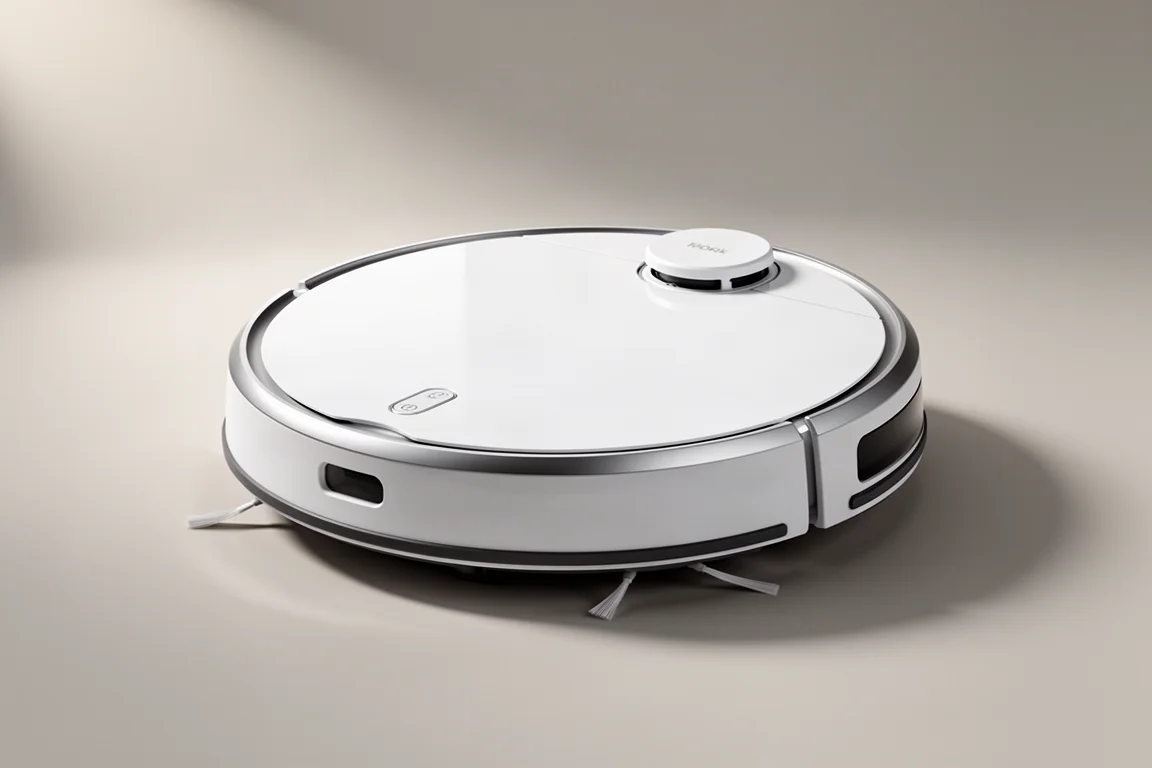
Also priced at $499, the MUA P50 Ultra is a sister brand of Dream and shares a lot of the same designs and technology. It has a traditional single rubber roller brush, a lifting and extending side brush, and 19,000 Pascals of suction. After cleaning for 28 minutes and using 26 percent of its battery, it picked up 77 percent of the debris mixture, putting it in first place ahead of the Dream by 1 percent. After the auto-empty process, it had 5.3 grams of debris left in its dust bin, which shares the exact same design as the Dream and would really benefit from a mesh pre-filter.
The MUA has an extending side brush that should theoretically allow it to clean deeper into corners, but because it used that extending side brush, it didn’t use the stop-and-rotate method that helped other robots fit into corners. It ended up with a corner brush score of five out of eight points. Its rubber brush roller functioned exactly as designed, funneling hair into the side and then into the brush.
Roborock Q Revo S5V
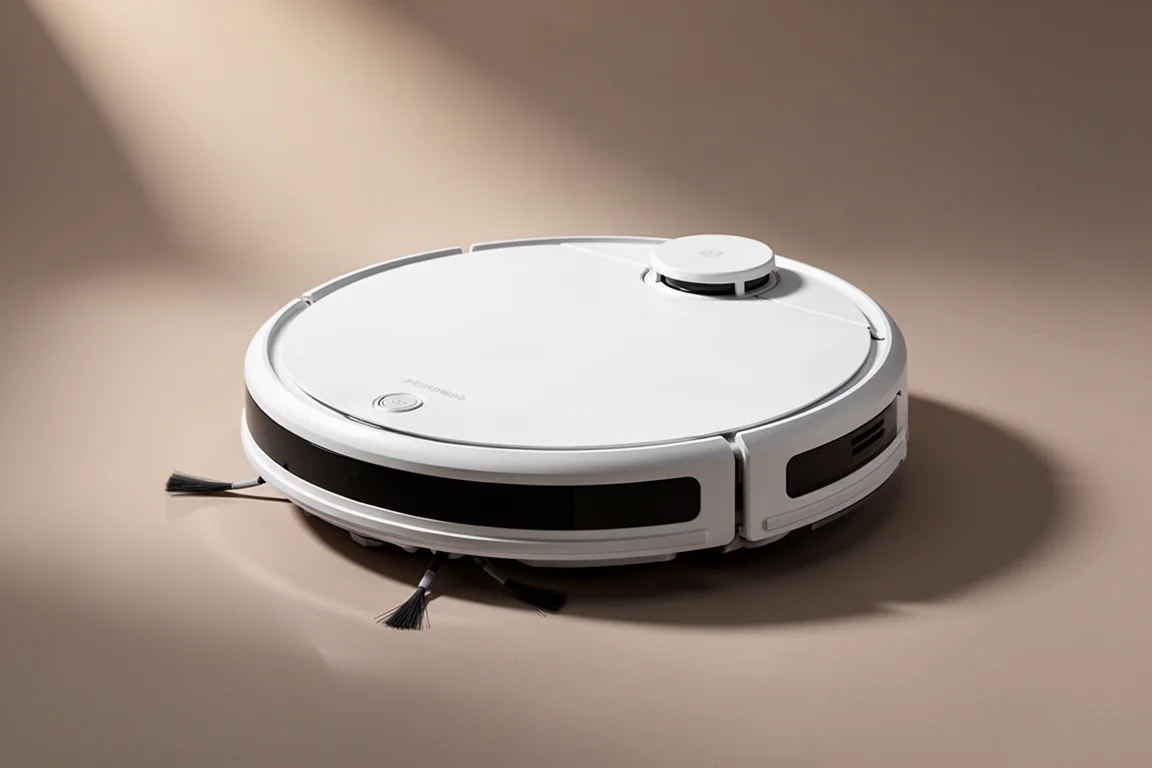
The most expensive vacuum in this group is the Roborock Q Revo S5V, which typically sells for $549. It has Roborock’s Duo Divide brush roller system, a fixed side brush, and 12,000 Pascals of suction. It cleaned for just 16 minutes and used 17 percent of its battery to pick up 64.5 percent of the debris mixture, putting it in third place overall. It struggled with auto-empty and had 5.3 grams of dust left in its bin after the process, all flax and flour caked into its air filter.
The Roborock performed at flagship level in hair pickup and tangle avoidance, thanks to the Duo Divide roller system. In the stress test, it did an okay job with the pet fluff but left the majority of the synthetic hair matted into the carpet. However, it had almost zero hair tangled in the robot itself. In corner cleaning, the fixed brush design combined with better navigation led to the best score of seven out of eight points, completely cleaning all the piles except the one under the refrigerator.
Hair Pickup and Tangle Avoidance
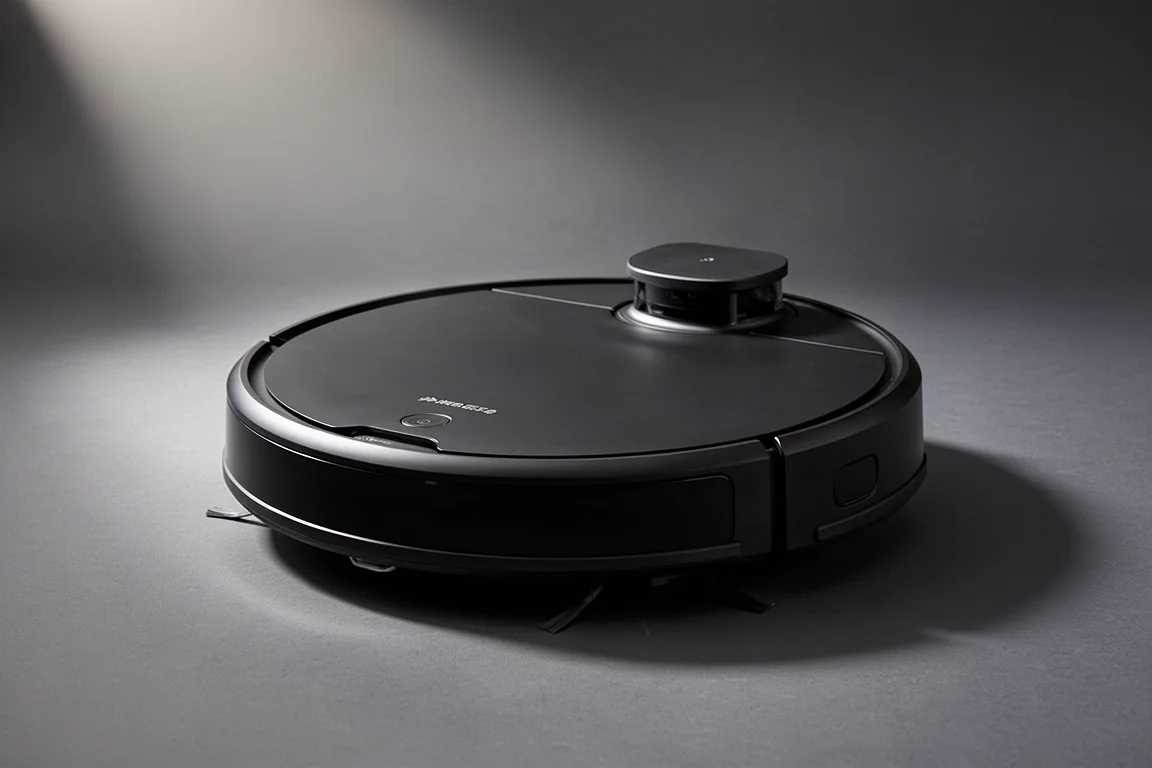
For the hair pickup test, we started with a reasonable task of picking up 30 individual 12-inch strands of real human hair on a bathroom floor. After a single pass run, we carefully inspected both the floor and the robot for any hairs that didn’t make it into the dust bin. Most flagships have no problem with this test, ending up with either zero tangled hairs or just one random straight hair. Out of these vacuums, only the Dream L40S Ultra CE and Roborock Q Revo S5V performed at that level.
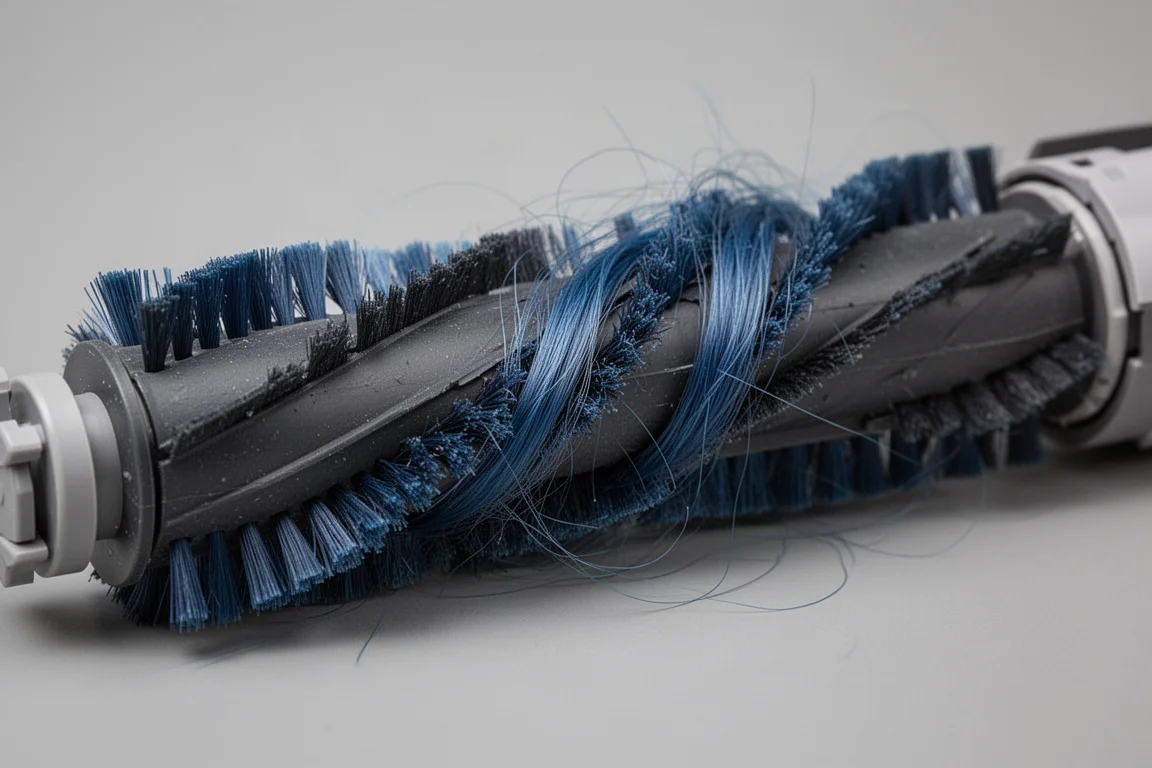
We also performed a much less reasonable stress test using 1 gram of synthetic 16-inch blue hair and two cotton balls separated into tufts to simulate pet fluff. The best overall pickup performance came from the Dream, which picked up the majority of fluff and hair. The Roborock was next best, leaving most of the synthetic hair matted into the carpet but with almost zero hair tangled in the robot itself. The 3i did a great job picking up almost all the synthetic hair, but its bristles were completely matted with hair afterward. The Yuthi’s traditional soft bristle brush was completely tangled. The Roomba, MUA, and SwitchBot rubber brush rollers funneled all the hair into the side and then into the brush, which means they need to be cleaned out about once a month depending on the amount of hair in your house.
Mopping Performance
To simulate realistic mopping conditions, we spread 10 milliliters of mud over a 2-foot by 2-foot square and dried it with a hairdryer. Each vacuum was set to maximum water flow in two passes on a combined mopping and vacuuming run. The results were surprising: both the MUA P50 Ultra and Dream L40S Ultra CE ended up with almost completely clean paper towels, something we had previously only seen from much more expensive flagships.
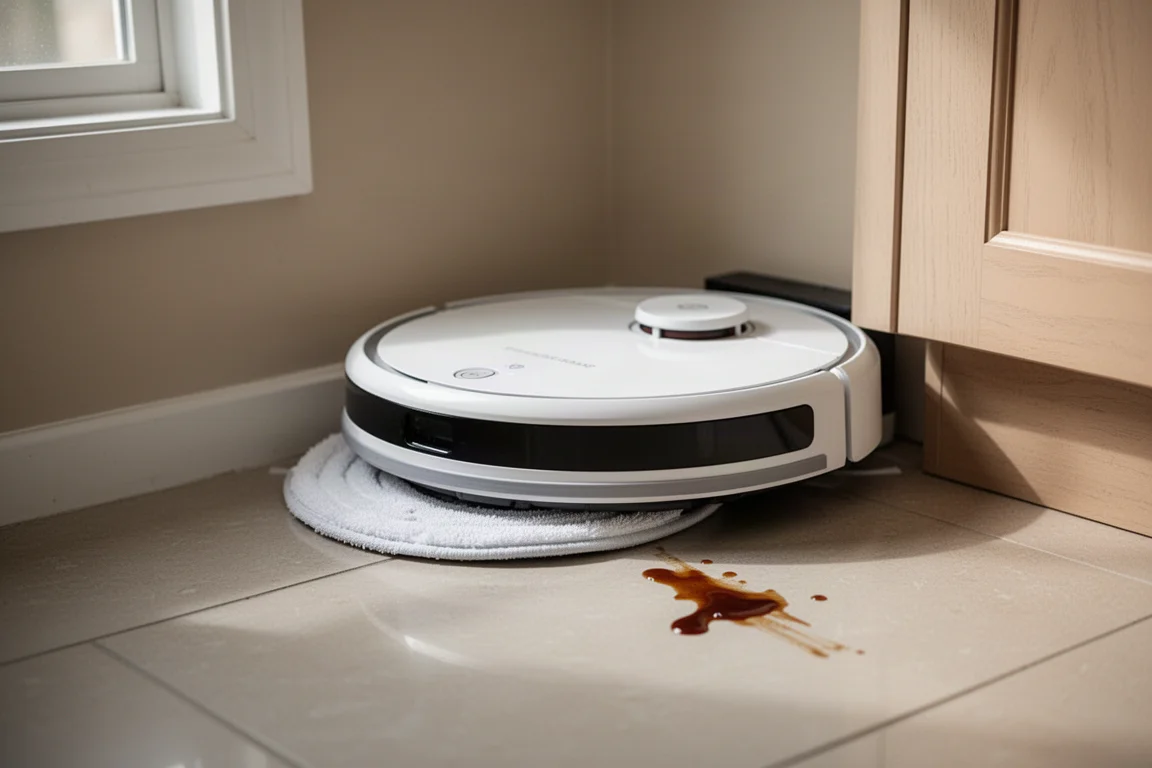
For corner mopping, we put a smear of hot sauce in five separate locations in the kitchen. Only the Roborock was able to combine its extending mopping pad with effective navigation to clean all the stains, scoring a perfect 10 out of 10. The Dream managed nine out of 10 through careful edge rotation. The 3i and MUA scored eight out of 10. The Roomba, SwitchBot, and Yuthi did extremely poorly, mostly running over the stains with their side brush and creating a sticky mess.
When it came to lifting mopping pads to prevent tracking dirty water onto carpets, the Roborock and 3i both have options to vacuum carpets before getting their mopping pads wet, keeping carpets completely dry. The Dream and MUA have a similar option, but they still clean their mopping pads at the base station before starting, resulting in wet carpets. The Roomba was by far the worst, absolutely soaking carpets during its combined vacuum and mop run.
Object Recognition and Avoidance
To test object avoidance, we set up a living room with a pair of untied shoes, some rubber dog poop, and a loose extension cord. Only two vacuums scored decently. The 3i P10 Ultra avoided the dog poop and the shoes but ran over the extension cord. The SwitchBot S20 completely avoided the dog poop and only gently nudged the shoes and extension cord. Every other vacuum ran directly over the dog poop and moved both the extension cord and the shoes. The Yuthi even managed to get stuck on the extension cord, scoring only one out of a possible six points.
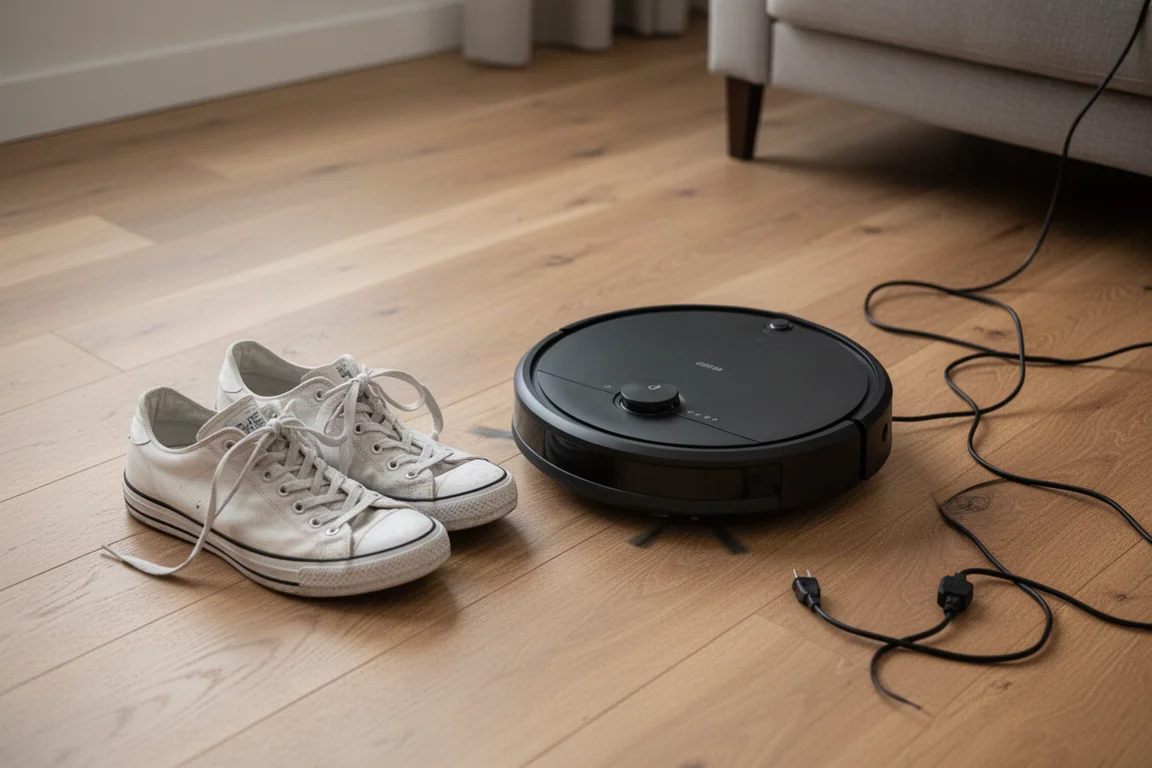
Compared to flagship vacuums, these are not strong scores. Several flagships have scored perfect six out of six on this test. If you constantly have things on the ground that could get run over, this is one area where a flagship still makes sense.
Apps and Smart Home Features
All these vacuums, with the exception of the Roomba, have very similar apps with a lot of great options for mapping, spot cleaning, and cleaning customization. The Roomba app is better than their old app but still significantly worse than every other app on the market, managing to be both oversimplified and overcomplicated at the same time.
One feature becoming common on flagship vacuums is the ability to drive the robot around using its front-facing camera. In this group, only the 3i P10 Ultra has that option, despite most of the vacuums having front-facing RGB cameras that could technically be used for this feature. Smart home integrations are hit and miss right now. All brands have at least some form of Amazon Echo support, with the majority supporting room-specific cleaning. Google Home support is also inconsistent. For Home Assistant integration, Roborock definitely works and is full-featured, the SwitchBot works via Matter, and Dream requires the Xiaomi Mi Home app instead of the Dream Home app. If local-only control is a must-have, the SwitchBot and Roborock via their Matter integrations are the only completely local options.
Overall Buying Advice
If you are looking for a robotic vacuum and mop that actually vacuums and mops well, the Dream L40S Ultra CE and MUA P50 Ultra currently sit in rank one and two among all vacuums tested in the last three years in terms of vacuuming performance. They are also tied for first place for mopping performance. Between them, the Dream functions better right now, but the MUA has the potential to be better in the future since it has both an extending side brush and an extending mop, though it needs its movement algorithms updated to make better use of them.
If you extend the ranking criteria to include battery life, hair tangle avoidance, carpet mopping behavior, and smart home integrations, the Roborock Q Revo S5V takes the clear lead and is a very capable vacuum for $550.
There are three specific cases where you should probably still buy a flagship. First, if you need state-of-the-art object avoidance because you constantly have things on the ground, look at flagships with excellent object avoidance. Second, if you have a ton of pet hair in your house, the best hair pickup and tangle avoidance scores come from a flagship that also happens to be a fantastic mop. Third, if your house has large thresholds between rooms, some flagships are the best at traversing unreasonably large transitions between flooring. None of the vacuums in this group could make it over a 30-millimeter threshold, let alone the 50-millimeter threshold that some flagships can clear.
Conclusion
The answer to whether you should buy a mid-tier vacuum instead of a flagship is more nuanced than it used to be. For raw vacuuming and mopping performance, these mid-tier models actually deliver better results than many flagships. The Dream L40S Ultra CE and MUA P50 Ultra are standout performers that rival much more expensive options. The Roborock Q Revo S5V offers the best all-around package when you factor in hair tangle avoidance, corner cleaning, and smart home features.
The main compromises come in object avoidance, where none of these models match flagship-level performance, and in a few specific areas like threshold clearance and the ability to leave mopping pads at the base station. If those features matter to you, a flagship is still worth the investment. Otherwise, the $300 to $600 price range offers exceptional value with very few real compromises.
Further reading
Related Reviews
Smart Home
Amazon Echo Hub Review: A Smart Home Dashboard That Finally Gets It Right
The Amazon Echo Hub puts smart home controls front and center with a fast, simple interface. Here is how it performs as a family-friendly dashboard.
Smart Home
15 Amazon Smart Home Automations: Practical Ideas for Every Room
Fifteen practical Amazon Alexa routines and automations that solve real household problems, from pet care to security and entertainment.
Smart Home
Apple TV as HomeKit Hub: Why It's Your Best Choice for Home Automation
The Apple TV combines HomeKit hub functionality with a display, camera viewing, and local automation control. Here's what makes it stand out from iPad and HomePod Mini alternatives.