Bookshelf Speakers
Micca RB42 vs ELAC BS41 vs Sony SS-CS5: Three Budget Bookshelf Speakers Compared
A practical comparison of three compact bookshelf speakers in the same entry-level price class, covering bass, midrange, treble, placement and who each one suits.
Introduction
Three compact bookshelf speakers, one entry-level price bracket, and three very different approaches to sound. The Micca RB42, the ELAC BS41 and the Sony SS-CS5 are all small passive speakers that a modest amplifier can drive, and all three are capable of disappearing into a room and throwing a soundstage far larger than their cabinets suggest.
Prices in this class move around, so it helps to know where each one usually sits. The ELAC BS41 has been sold for as little as $68, though its normal price is around $150. The Micca RB42 sells for roughly $150. The Sony SS-CS5 was priced at $228 at the time of writing, but it commonly settles near $150 and has dropped as low as $80.
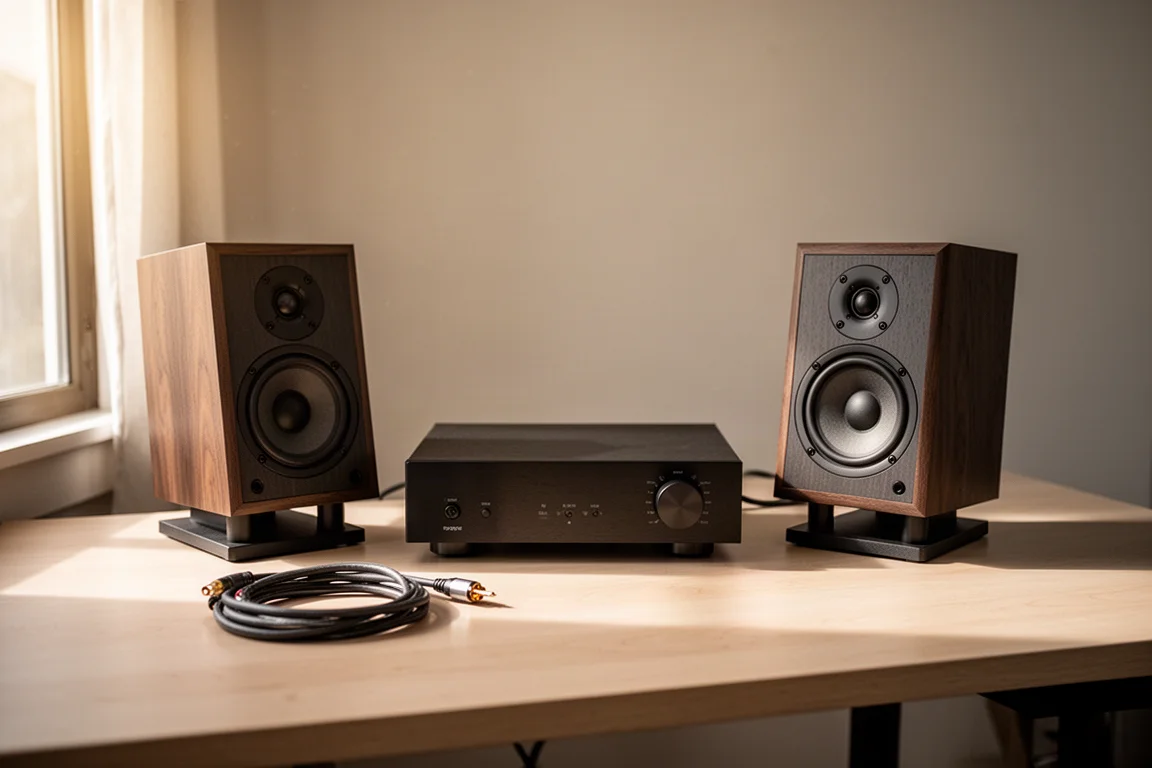
What makes the three worth comparing side by side is that each one solves the same problem differently: one chases neutrality, one chases warmth and punch, and one chases detail and energy. The sections below work through each speaker in turn, then pull the differences together.
What These Three Speakers Have in Common
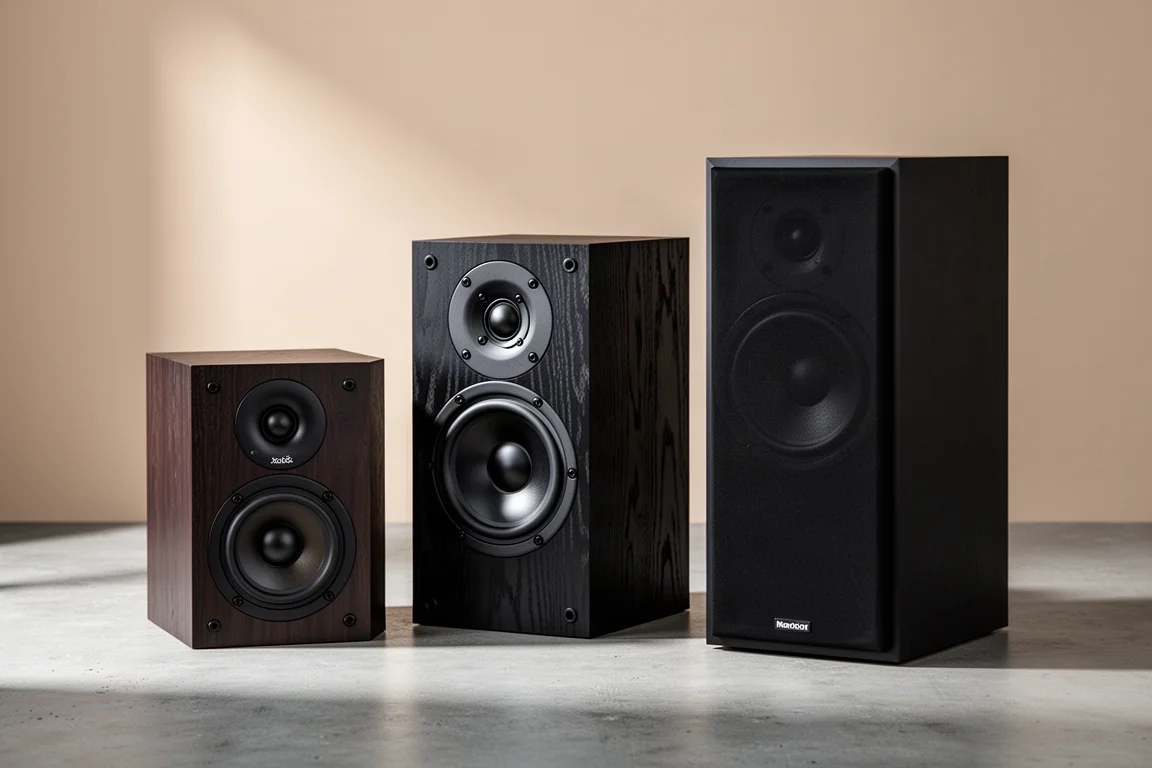
All three are compact, stand-mounted designs aimed at small rooms, desktops and starter stereo systems, and none of them will leave you short of soundstage or imaging. Where they differ immediately is size. The Micca RB42 and the ELAC BS41 are close to each other in size, while the Sony SS-CS5 is clearly the largest of the group: it has similar cabinet depth to the Micca but noticeably more height, and it feels like a bigger speaker the moment the three sit next to each other.
They also differ in how much amplifier they ask for. The Micca RB42 is rated at 83 dB sensitivity, which is unusually low and means it needs more power to reach the same volume as the other two. The ELAC BS41 is rated at 87 dB, making it the easier load of the pair.
Micca RB42: Neutral, Compact and Desktop Friendly
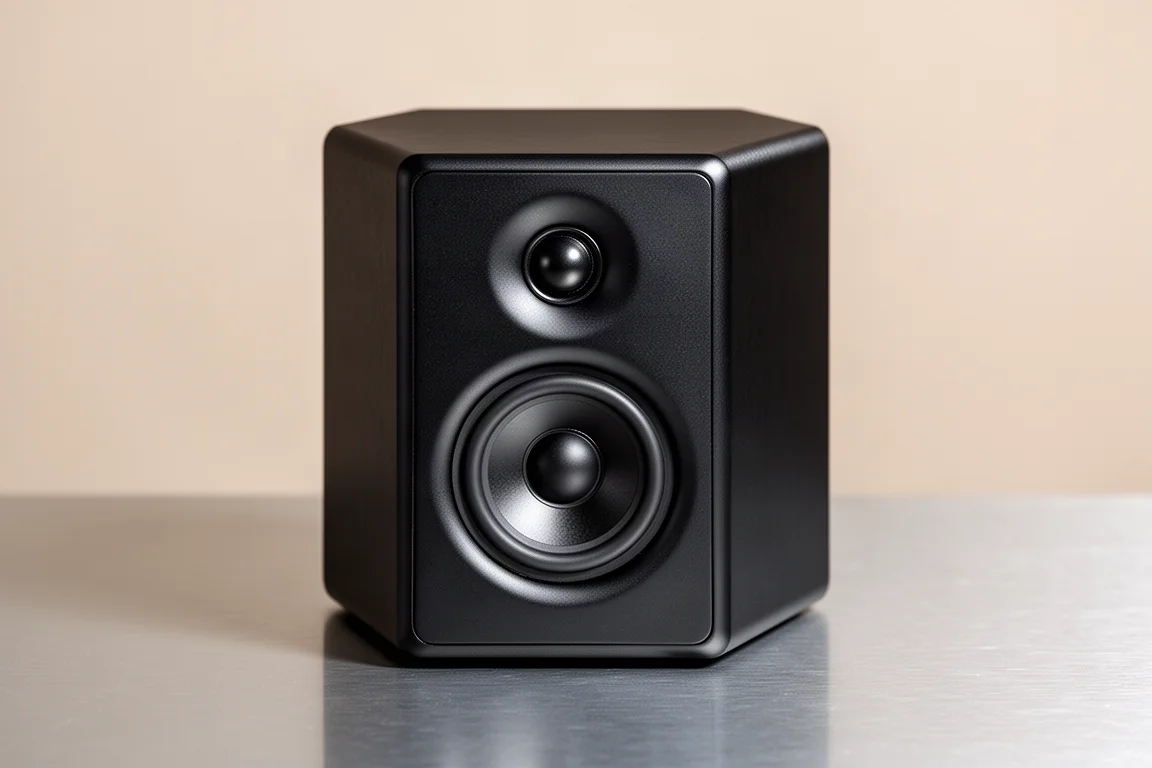
The Micca RB42 is the smallest speaker here, and its specifications explain its priorities. It pairs a 0.75-inch silk dome tweeter with a 4-inch coated paper woofer, quotes a reported frequency response of 50 Hz to 20,000 Hz, and lists a nominal impedance range of 4 to 8 ohms. Sensitivity is the 83 dB figure noted above, so plan on an amplifier with some headroom.
Bass output is more generous than the cabinet size suggests, but it is better described as present than as clean. It is not especially impactful and not especially extended, and it loses ground as soon as you compare it directly with the other two speakers here.
The midrange sits squarely in the middle: neither warm nor cool, neither the most detailed nor the least. Treble follows the same logic. It is neutral and unfussy, though it is noticeably less lively than what the Sony and the ELAC offer.
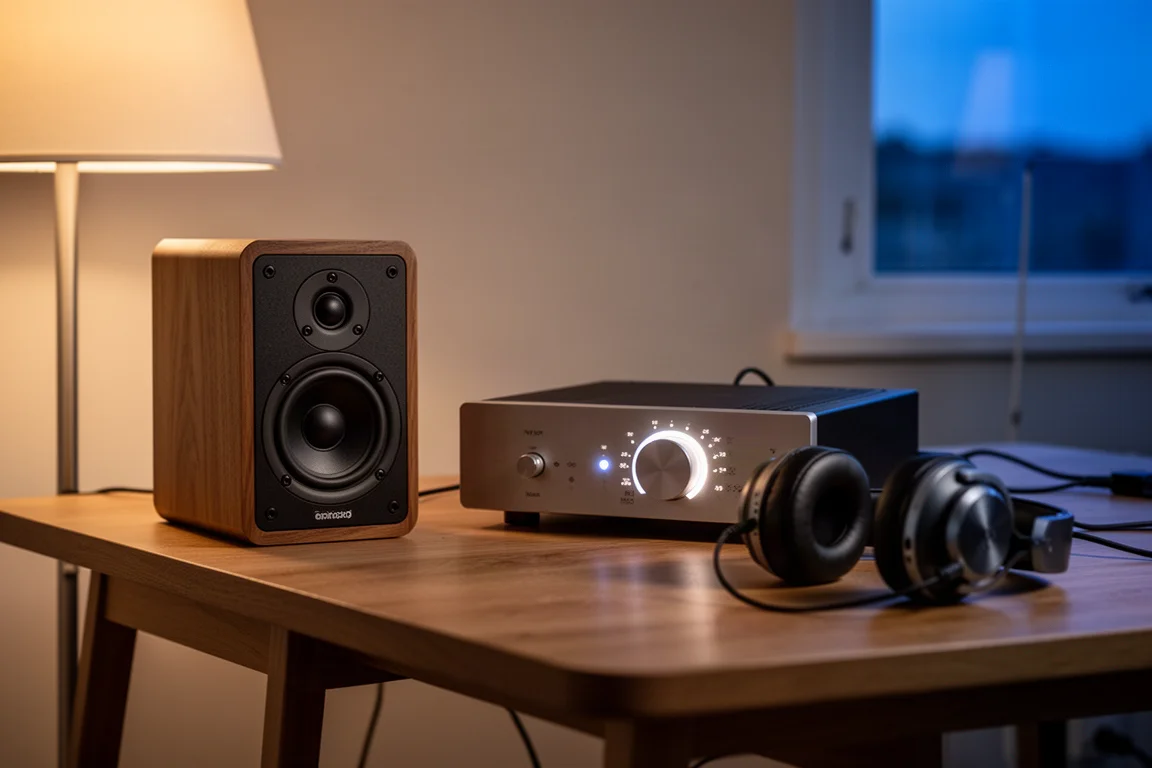
In a desktop setup the RB42 is genuinely impressive. Positioned at the front edge of a desk and angled slightly inward, the speakers disappear and the soundstage opens up well behind them, which is rare for a cabinet this small.
The trade-off is character. The RB42 adds very little of its own, which makes it a strong match for a system whose amplifier or source already has a sound you like, and a less exciting choice for listeners who want the speaker itself to bring the energy.
ELAC BS41: Warm, Punchy and Distinctive
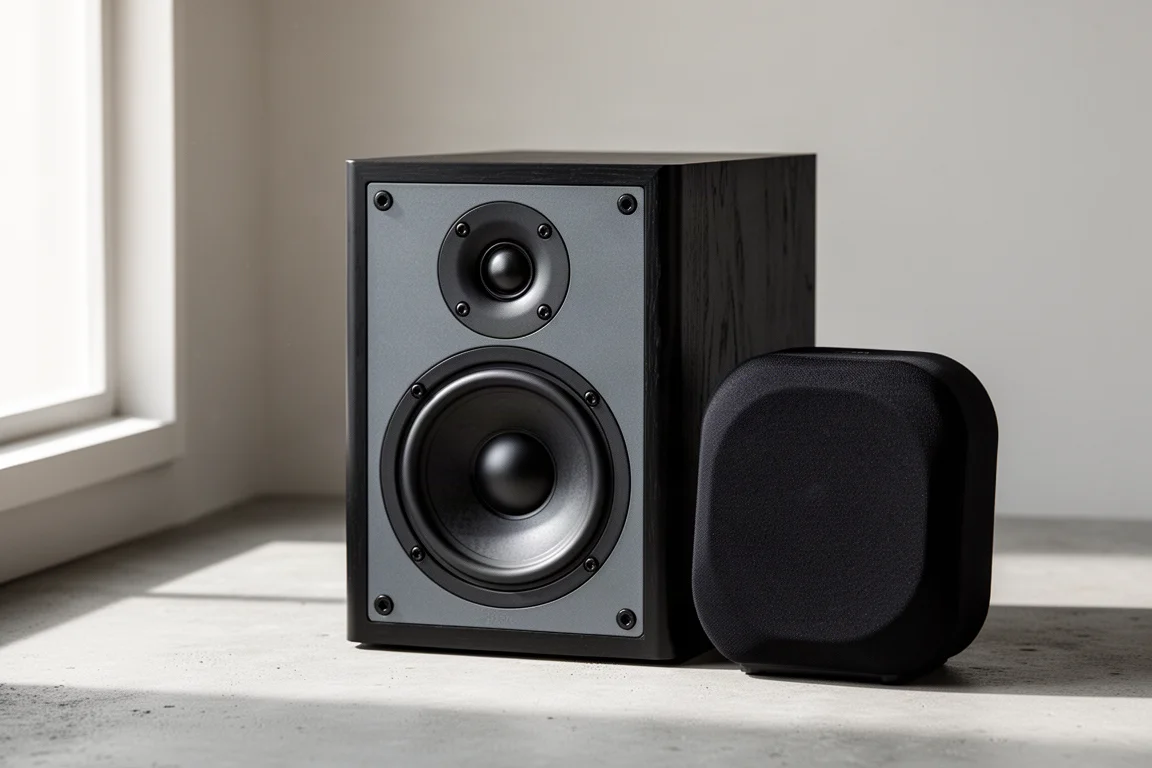
The ELAC BS41 takes a different route. It is a three-way design with a 1-inch soft dome tweeter, a 5.25-inch woofer and a 0.75-inch super tweeter, with a 6-ohm nominal impedance, an 87 dB sensitivity rating and a reported frequency response of 53 Hz to 50,000 Hz. That sensitivity advantage over the Micca is audible: it plays louder for the same amplifier output.
Bass presence is the BS41’s strongest card. It punches hard for a cabinet this size and leads this comparison at the low end. The caveat is control. Placed close to a wall, the low end thickens and can start to sound muddy, so a little breathing room helps.
The midrange is voiced warm. Male vocals come across rich and rounded, female vocals smoky and substantial, and fine detail takes a step back next to the Sony. Treble is detailed and sparkly with a slight lift, which keeps the speaker from ever sounding soft.
The BS41 throws a large soundstage, though its centre image is not as sharply defined as the Sony’s. Its voicing will be familiar to anyone who has heard the first generation of Debut designs, and it sits close in character to the B4, B5 and B6 models.
Value depends on timing. At its normal price of around $150 the BS41 is a strong option, and at the $68 it has occasionally sold for it is remarkable, though that price is not a standard one.
Sony SS-CS5: Detailed and Lively
The Sony SS-CS5 is the largest speaker in this group and the most detailed. It is a three-way design built around a metal dome tweeter, and its taller cabinet gives it a more substantial presence on a stand or shelf than the other two.
Bass is where it separates itself. Tone, texture and realism are the best of the three. It is not more powerful than the ELAC, and its bass presence is roughly in line with the Micca, but it is far cleaner. Moving it closer to a wall adds low-end weight without muddying anything above it, which makes placement relatively forgiving in small rooms.
The midrange is the most detailed of the group and leans cool, with female vocals that sound lively and open. Treble is detailed and sparkly, possibly a touch boosted, and it is the most engaging of the three.
The SS-CS5 does ask a little more of its placement. Its centre image is the most precise here once you take the time to position it properly, but it does not lock in as easily as the other two. At higher volumes it can also sound a bit forward.
Price is worth watching. It was $228 at the time of writing, well above its usual $150, and it has been sold for as little as $80. Its limits are the limits of an entry-level speaker, and it is not a substitute for speakers costing several times more.
Bass, Midrange and Treble Compared
Bass: the ELAC BS41 has the most presence, the Sony SS-CS5 has the best tone and texture, and the Micca RB42 has more output than expected but is the least clean and least extended of the three.
Midrange: the Sony SS-CS5 is the most detailed and the coolest, the ELAC BS41 is warm and rounded, and the Micca RB42 sits between them without leaning either way.
Treble: the Sony SS-CS5 is the most detailed and sparkly, the ELAC BS41 is warm and slightly less detailed, and the Micca RB42 is neutral and the least exciting of the group.
Which Budget Bookshelf Speaker Should You Buy?
For a desktop, the Micca RB42 is the natural pick. Its size and its ability to vanish behind the desk make it the most practical of the three in a nearfield setup, provided your amplifier has enough power for its 83 dB sensitivity.
For a small traditional stereo setup, the ELAC BS41 is the more rewarding choice. It brings the most bass presence and the warmest midrange, and at around $150 it earns its place. If you happen to find it near $68, it becomes an easy recommendation.
For most listeners, though, the Sony SS-CS5 is the speaker to aim for. It offers the cleanest bass, the most detail through the midrange and the liveliest treble, and it is the easiest of the three to enjoy straight out of the box. The main caveats are placement, which rewards a little patience, and price, which is worth tracking because it moves around a lot in this class.
If your system already has a strong character of its own, the neutral Micca RB42 will stay out of the way. If you want warmth and weight in a small room, the ELAC BS41 delivers it. If you want detail and energy at an entry-level price, the Sony SS-CS5 is the one that stands out.
Conclusion
Three compact speakers, three distinct personalities. The Micca RB42 is the compact neutral option that shines on a desk, the ELAC BS41 is the warm, punchy speaker that leads on bass presence, and the Sony SS-CS5 is the most detailed and the most engaging of the three. Match the choice to the character you want from your system, and any of them will make a small room sound considerably bigger than it is.
Further reading
Related Reviews
Bookshelf Speakers
Acoustic Energy A100 Mark II Review: A Compact Standmount With an Expansive Soundstage
The Acoustic Energy A100 Mark II brings clarity, natural tonality and a wide soundstage to an entry-level standmount, with a few setup details worth knowing first.
Bookshelf Speakers
Acoustic Energy AE-100 Mark II Review: Compact Bookshelf Speakers With Standout Imaging
A compact British two-way bookshelf speaker with deep, layered imaging, fast bass, and a slight treble lift to weigh against a crowded $500 field.
Bookshelf Speakers
Acoustic Energy AE100 MK2 Review: Measured Performance and Four Alternatives
A close look at the Acoustic Energy AE100 MK2 bookshelf speaker, what its measured performance reveals, and four alternatives with different trade-offs.