Base Layers
Mesh vs Wool Base Layers: Three Cold-Weather Options Compared
A Brynje mesh layer, a lightweight WoolX merino top, and an Arc'teryx zip layer compared on warmth, water retention, drying time, and price.
Introduction
Choosing a cold-weather base layer usually means picking a side: wool for the way it keeps insulating when damp, or synthetics for fast drying and easy care. A less common third option is mesh, an open fishnet knit that has been used in the outdoors for decades, including on the first ascent of Mount Everest in 1953, but which remains a niche choice in the United States.
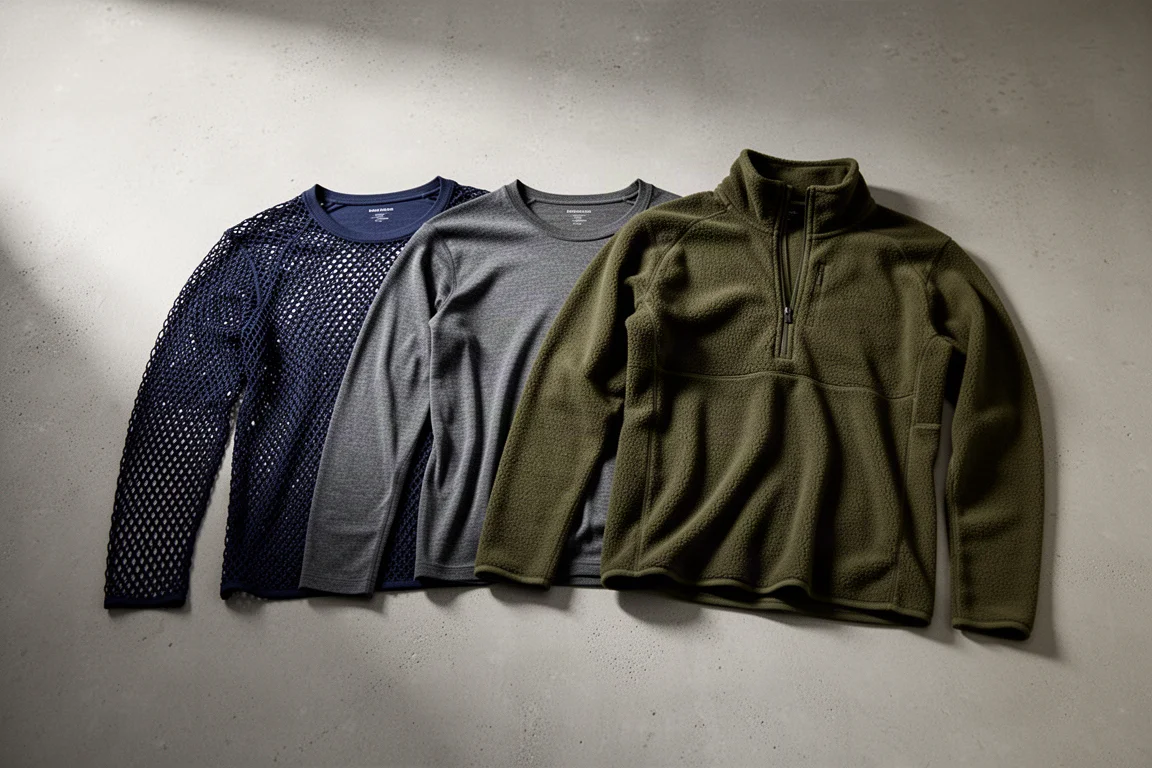
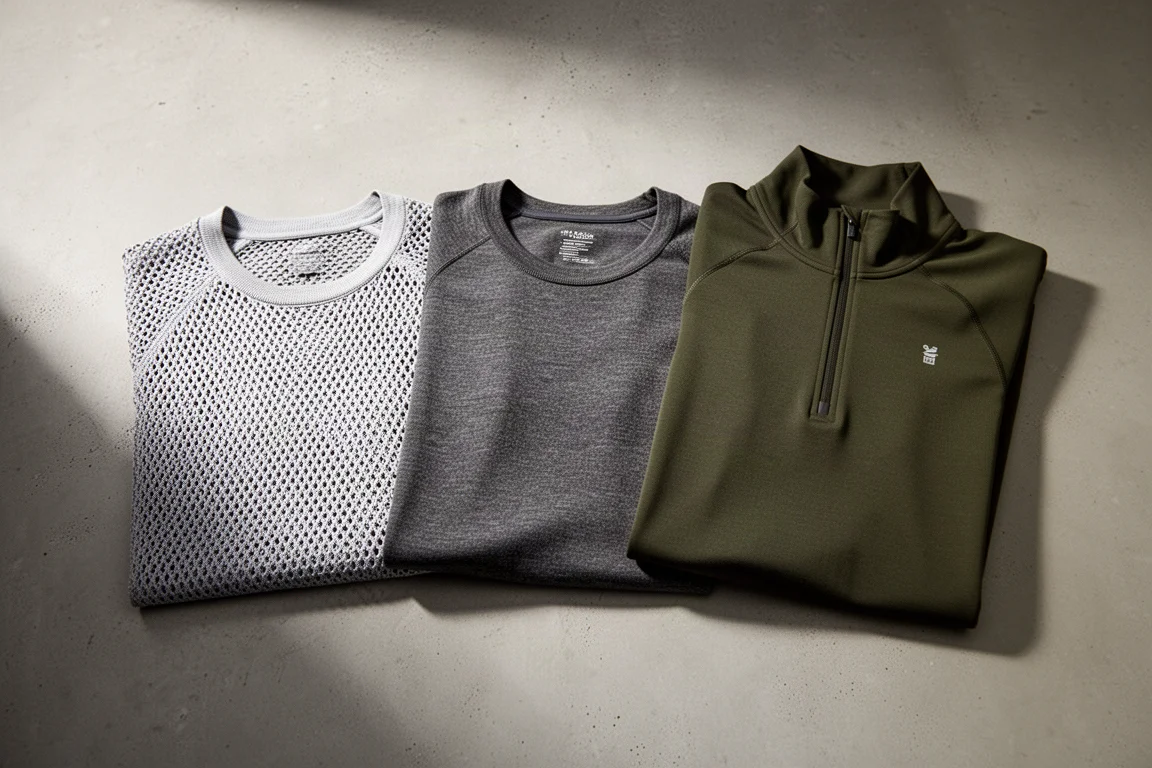
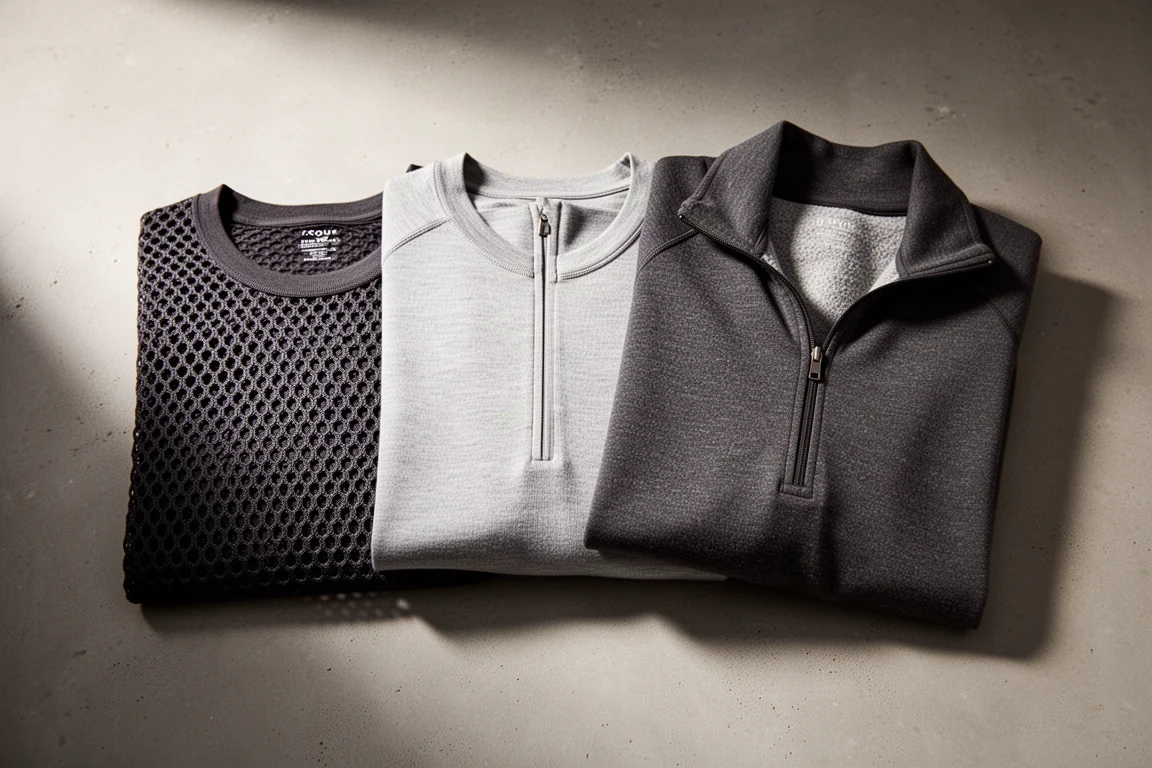
Three long-sleeve base layers were compared on a cold, snowy day: a Brynje women’s mesh layer with a modesty panel, a lightweight WoolX merino top, and an Arc’teryx zip layer. Each was worn on its own for a short walk outside, then all three were soaked, weighed, worn wet, and hung to dry. What follows is what actually stood out.
How These Base Layers Were Compared
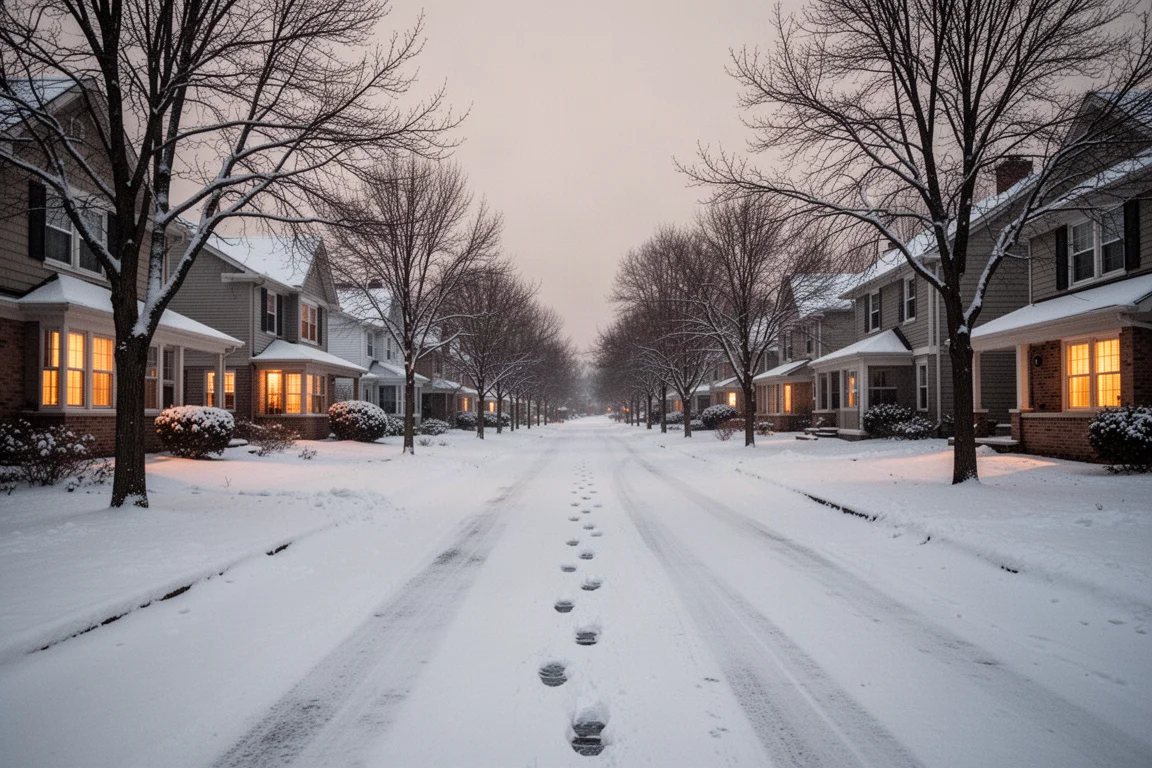
The comparison started with the layer that felt warmest by weight and thickness and worked down toward the lightest option, so differences in warmth would be easier to notice. Each layer was worn alone during a walk in freezing, snowy conditions.
To test moisture behavior, all three layers went through a short wash cycle with no detergent so they would be soaked and spun out as evenly as possible. Each was weighed dry and again wet to measure water retention, worn while soaked to judge comfort, then hung up and timed until fully dry.
Price and durability were part of the picture too. The mesh layer cost $65. Comparable Arc’teryx layers now run around $140, and the WoolX layer, bought for $55 several years ago, is now listed at about $130 on the brand’s website. Comparable wool options elsewhere range widely, from roughly $7 to $100.
Brynje Women’s Mesh Base Layer With Modesty Panel
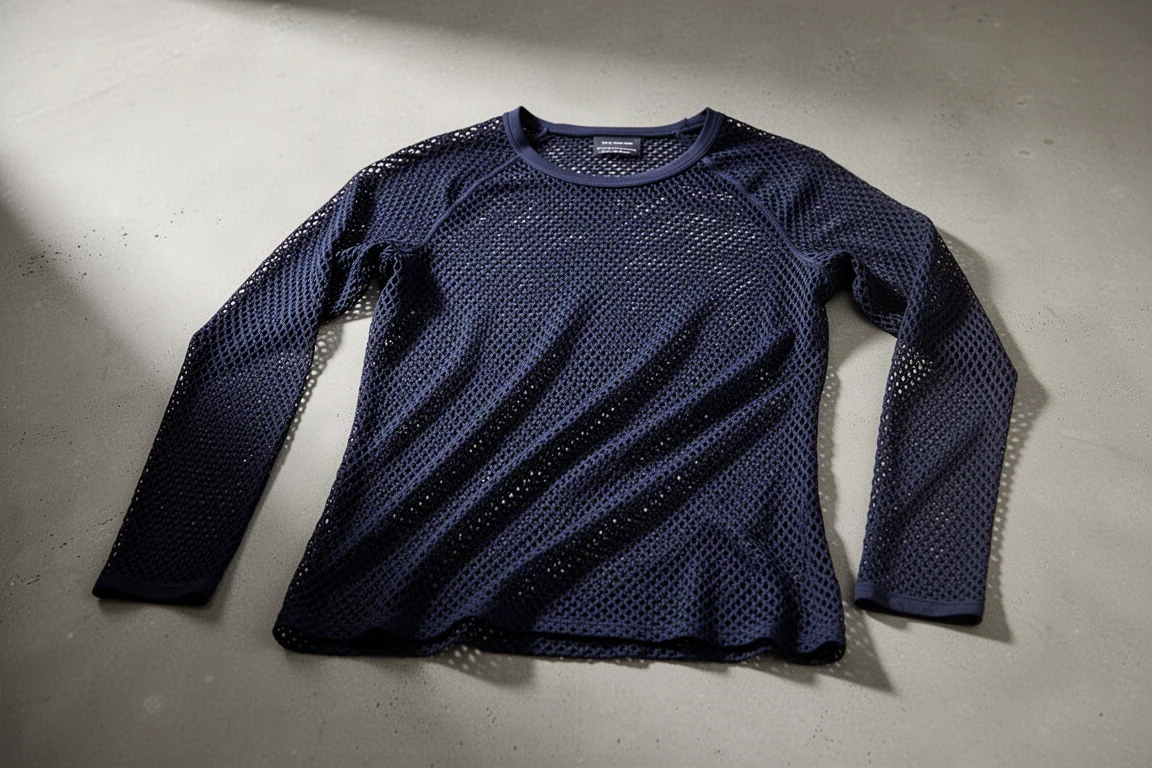
The Brynje layer is a long-sleeve top built from an open, fishnet-style polypropylene mesh, and this version adds a modesty panel across the chest. The knit is the first thing anyone notices: it is full of holes by design.
The fabric is described as having one of the lowest surface tensions of all synthetic functional fibers, which is meant to keep it from retaining moisture. It is also described as resistant to high heat, so it can be washed and dried on a high setting, a genuine convenience for long-distance hikers who rarely have time to air-dry gear. Wool, by contrast, needs care in a hot dryer because it can shrink. Brynje also offers the same layer in a wool version for people who prefer that fiber.
Weight is close to a lightweight wool layer: the mesh top came in about 2 ounces heavier than the WoolX top. The torso is cut long, which makes it easy to tuck in.
Warmth, Wet Comfort, and Drying Notes
On the first lap out of a warm house, the mesh layer felt at least as warm as the lightweight wool layer, though not as warm as the much heavier Arc’teryx layer. The design intent is that the open knit vents sweat before the fabric saturates, so it may never reach the soaked state that a wet test creates.
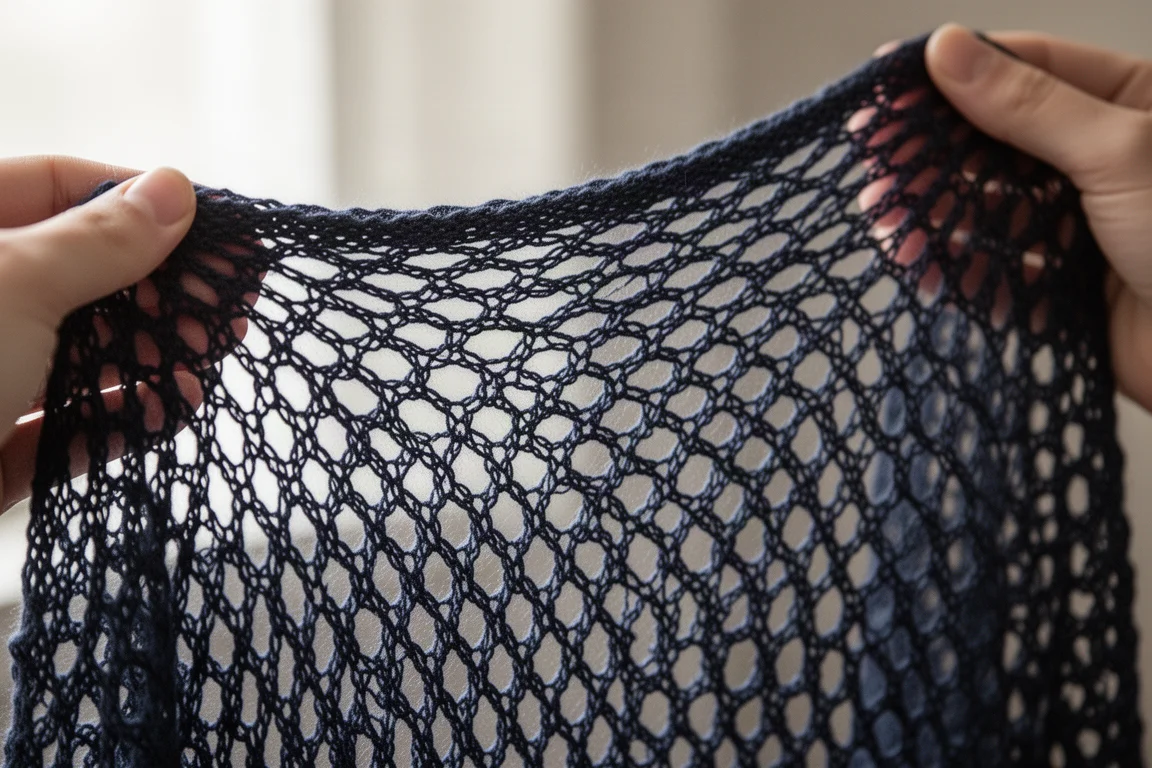
In the wet test the mesh layer held the least water of the three at about 2.35 ounces, and it was the most comfortable to wear while soaked in freezing conditions. It also dried fastest: the mesh portion was dry in about two hours, with the modesty panel and cuffs fully dry at roughly two and a half hours.
WoolX Lightweight Base Layer
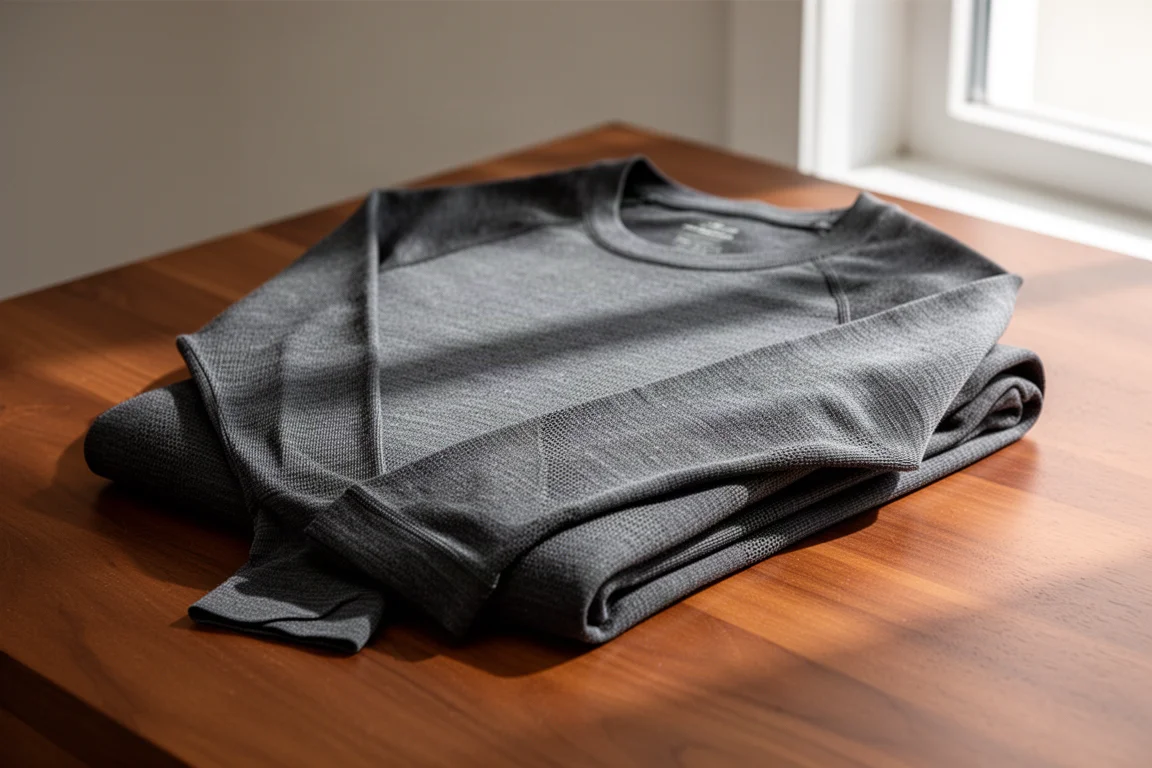
The WoolX top is a lightweight merino wool layer, roughly half the weight of the Arc’teryx layer. Wool remains a popular base layer fiber because it keeps some insulating value even when it gets wet, but a light knit like this one can only hold so much warmth.
In the wet test it absorbed about 3.75 ounces of water and was the least comfortable of the three to wear while soaked. It dried in about three hours, landing between the mesh layer and the Arc’teryx layer. Durability has been solid over years of use, mostly as a sleeping layer on long trails, with a small hole that has not affected how it functions.
Arc’teryx Zip Base Layer
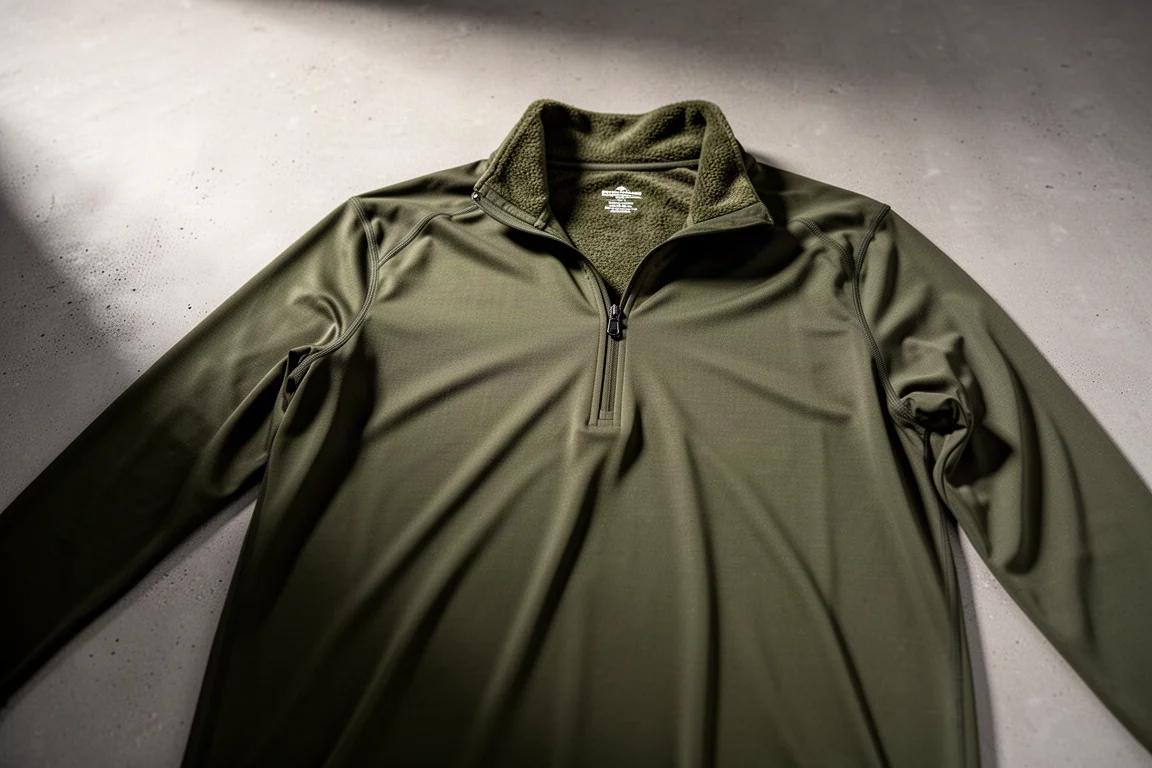
The Arc’teryx zip layer is the heaviest and thickest of the three, with a brushed, fuzzy interior. On the cold walk it was clearly the warmest, which tracks with its weight, and it is the layer to reach for when the goal is maximum warmth rather than fast drying.
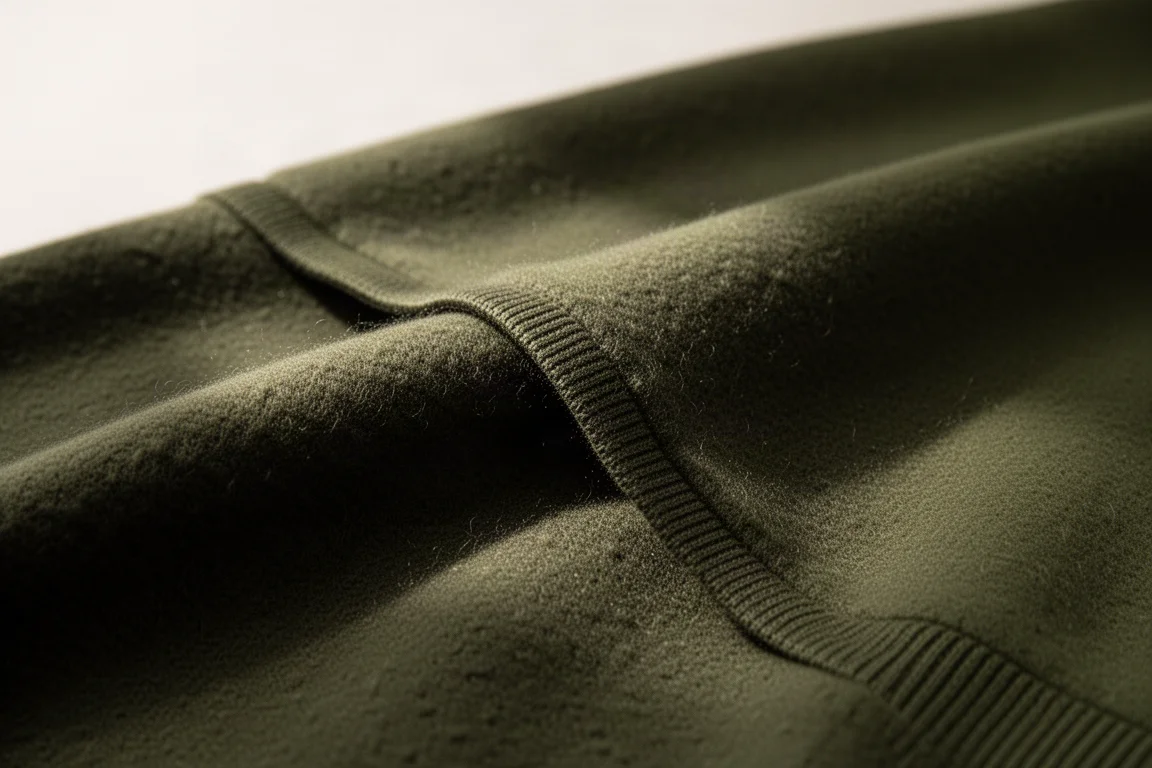
Getting soaked is where it gives up ground: it held the most water at about 4.5 ounces and took the longest to dry at around four hours. Even so, it was more comfortable to wear while wet than the lightweight wool layer. Long-term durability has been good, again mostly as a sleeping layer on long trips.
What the Knit Structure Suggests
Warmth and drying speed are not the only variables worth thinking about. A 1990 study published in the European Journal of Applied Physiology and Occupational Physiology found that the knit structure of underwear can influence thermoregulatory responses to intermittent exercise, suggesting that how a fabric is built can matter as much as what it is made of, particularly with a fishnet construction.
That idea fits the mesh layer’s design. The point is not only the fiber but the open structure, which moves air and lets moisture escape before it builds up. Because the layer ventilates so well, it may never reach the saturation level used in a soak test, which means the drying-time gap could matter less in real use.
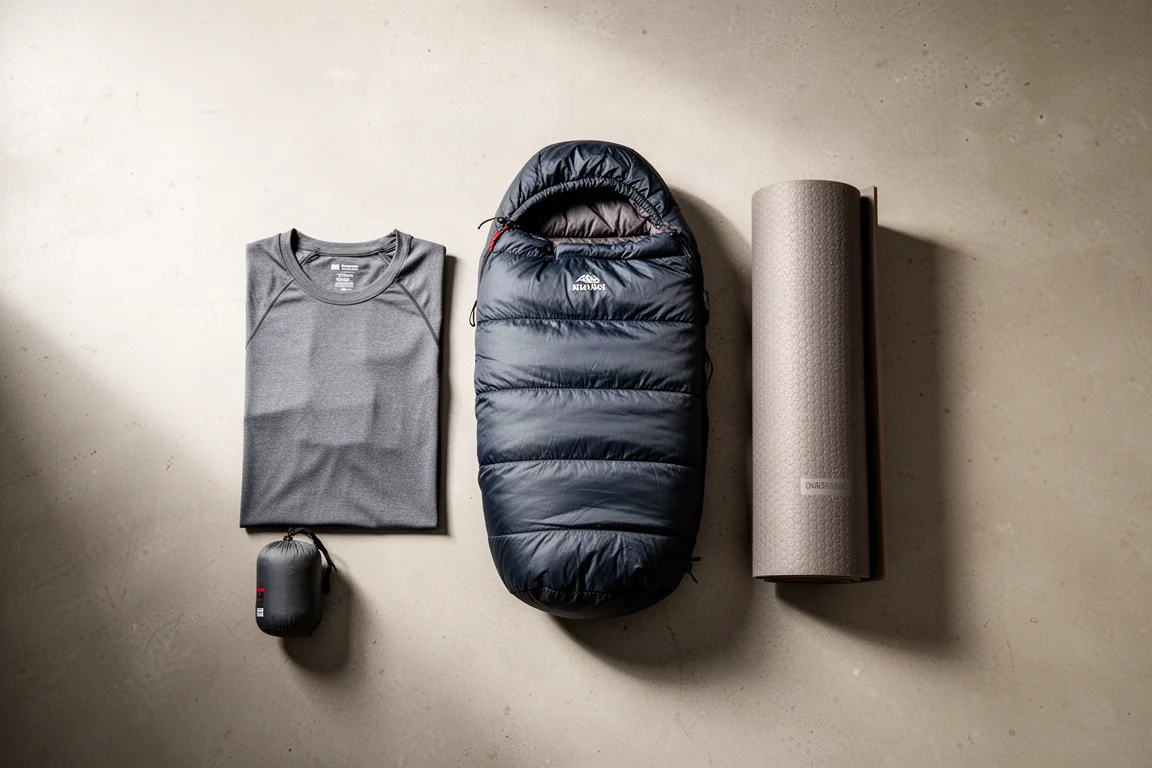
It is also worth being honest about how base layers are actually used. On long-distance hikes, base layers are usually sleeping layers rather than hiking layers, with the exception of the cold ends of a season, such as an early-spring start or a late-fall finish. That pushes warmth and comfort higher on the list for many hikers and makes ultra-fast drying less critical.
Overall Buying Advice
Match the layer to the conditions you actually expect. If warmth in cold, static conditions is the priority, the thicker Arc’teryx layer is the most insulating of the three and the easiest to trust on a genuinely cold trip. If drying speed and comfort when damp matter more, the mesh layer stands out, and at $65 it is also the least expensive option here. The lightweight WoolX layer sits in the middle on warmth, was the slowest of the three to feel comfortable when soaked, and is now priced around $130, which makes it a harder case unless you specifically want a light merino sleeping layer.
A few practical points are worth weighing alongside raw performance. Synthetic mesh can be washed and dried at high heat, while wool needs a gentler approach, and that difference adds up on a long trip where laundry options are limited. Fit matters too: a longer torso cut, as on the mesh layer, makes tucking in easier under a pack and a midlayer.
Conclusion
All three layers do the same basic job, but they do it differently. The Arc’teryx zip layer wins on warmth, the Brynje mesh layer wins on drying speed, wet comfort, and price, and the lightweight WoolX layer is a middle option that has held up well over years of use but is now priced above the mesh layer. For cold, damp trips where gear stays wet for hours, the mesh design is the more interesting choice, and it will be worth watching how widely mesh base layers are adopted.
Further reading
Related Reviews
Base Layers
Mesh vs Wool Base Layers: Comparing Brynje, WoolX, and Arc'teryx for Cold Weather
Three cold-weather base layers compared on warmth, water retention, wet comfort, and drying time, from an open Norwegian mesh knit to lightweight merino and a heavier synthetic zip neck.
Base Layers
Mesh vs Wool Base Layers: Brynje, WoolX, and Arc'teryx Compared
Three base layers, two very different approaches to staying warm and dry. A close look at warmth, water retention, drying time, weight, and price.

Backpacking Gear
Building a 10 lb Base Weight: An Ultralight Backpacking Gear List
A practical walkthrough of the ultralight pieces behind a 10 lb base weight, from a 765 g pack and a roomy one-person tent to a full camp chair and a dependable water filter.