Hi-Fi DACs
Merason Frerot Review: A Swiss DAC Against Denafrips and Gustard
A close look at the Swiss-made Merason Frerot, the optional Pow1 linear power supply, and how both compare with the Denafrips Ares 12.1 and the Gustard R26.
Introduction
DAC buying habits have shifted a great deal over the past decade. Speakers and amplifiers are still usually auditioned before purchase, but a large number of listeners now buy digital-to-analog converters direct, often without hearing them first. Chinese brands have become a fixture of that market, and not only below the £1,000 mark where a handful of names dominate. If you are shopping below £5,000, a direct-sale Chinese DAC is very likely to be on your shortlist.
Against that backdrop, the Merason Frerot is an unusual proposition. Merason is a small Swiss company, and Switzerland is one of the most expensive places in the world to manufacture anything. A Swiss DAC at around £1,500 should, on paper, struggle against the newest direct-sale designs. The interesting question is whether it actually does.
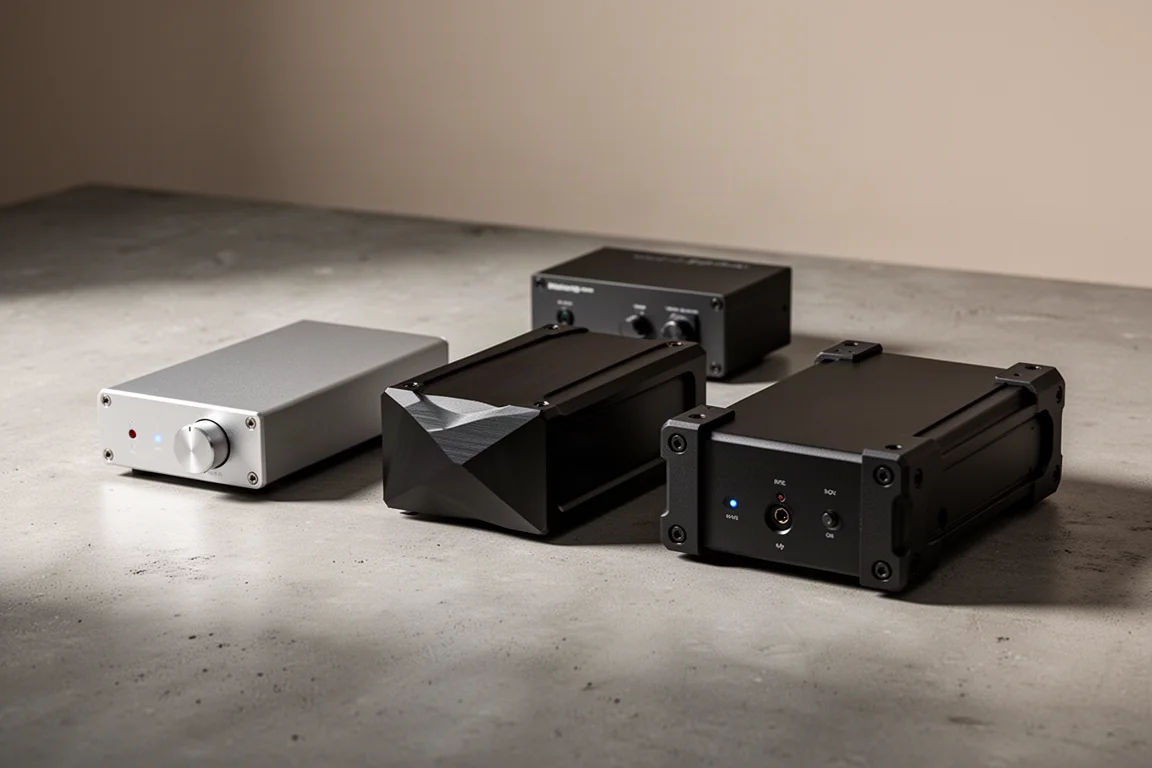
This article covers the Frerot, the optional Pow1 linear power supply that pairs with it, and two Chinese competitors at similar or lower prices: the Denafrips Ares 12.1 and the Gustard R26.
What to Look For in a Desktop DAC
Before comparing, it helps to separate the features that change how a DAC fits into a system from the ones that change how it sounds.
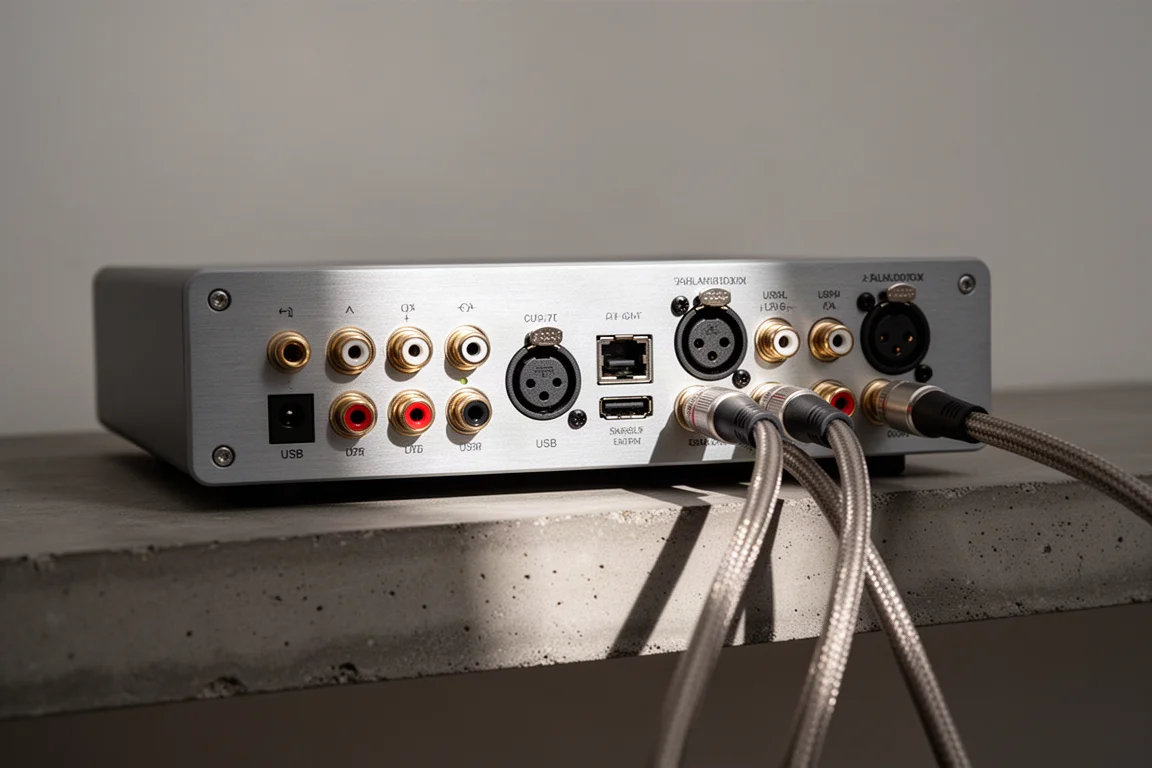
Connectivity comes first. A coaxial or optical input covers disc players and streamers, while USB is the usual route from a computer or a network bridge. Balanced XLR outputs can offer a slightly lower noise floor than single-ended RCA, provided the rest of the system is balanced as well.
Then there is the question of what the DAC is allowed to do. Some converters are pure DACs with no volume control and no remote, which means a preamplifier or an integrated amplifier with its own volume stage is mandatory. Others can serve as a digital preamplifier in an all-digital system. Format support matters too: PCM resolution, DSD playback and MQA decoding are not universal, and not every listener needs all three.
Power supply design and conversion architecture are the deeper variables. External linear supplies, galvanic isolation and low-jitter USB interfaces are all aimed at keeping noise away from the conversion stage, while delta-sigma and multi-bit conversion approaches have long-standing reputations for measured performance and for natural tone respectively. None of these choices guarantees a particular result, but they explain why two DACs at the same price can sound noticeably different.
System matching decides how much of any of this you actually hear. A converter that reveals timing and spatial information is only useful if the amplifier and speakers can reproduce it, and a resolving DAC can just as easily expose weaknesses further down the chain.
Merason Frerot: Swiss Design in a Compact Chassis
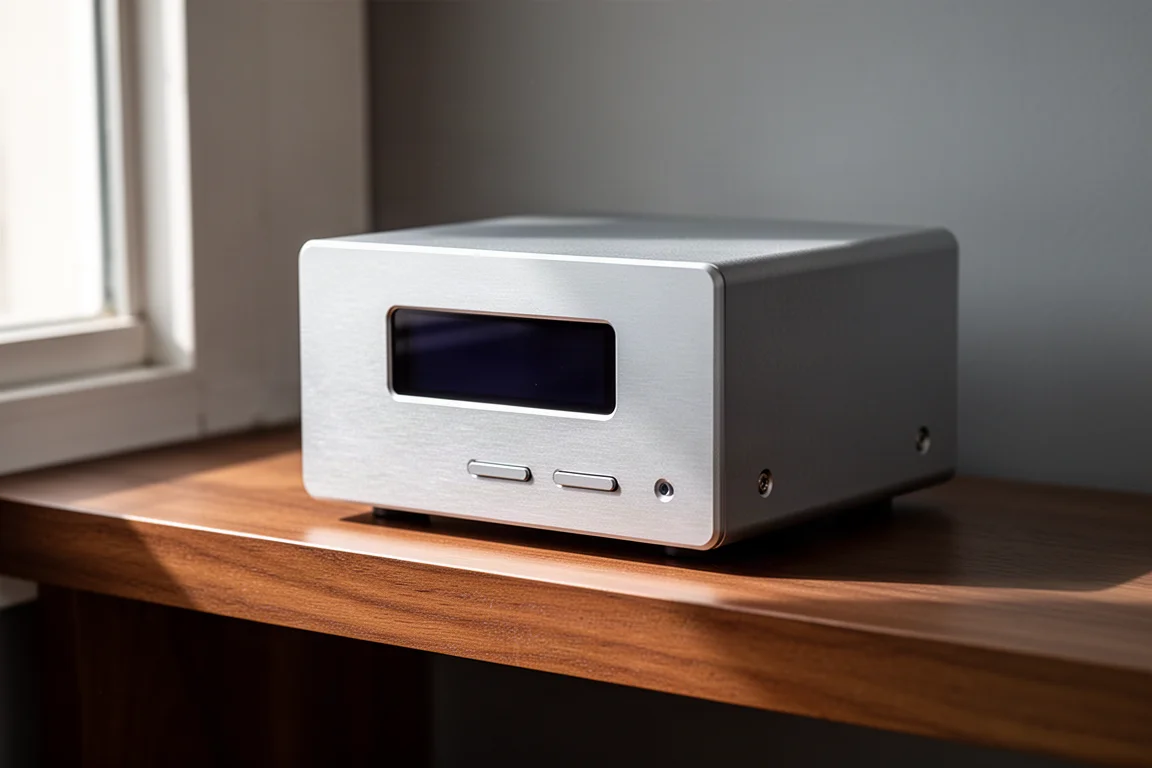
The Frerot is a small unit, weighing just under 1 kg and measuring 225 x 50 x 180 mm. The casework is all metal and neatly finished, though it does not use the billet aluminium construction found on the Denafrips. There is very little to adjust: one LED shows that the unit is powered, and a second lights when it locks onto an input. Inputs are selected with a rotary dial, and there are five of them.
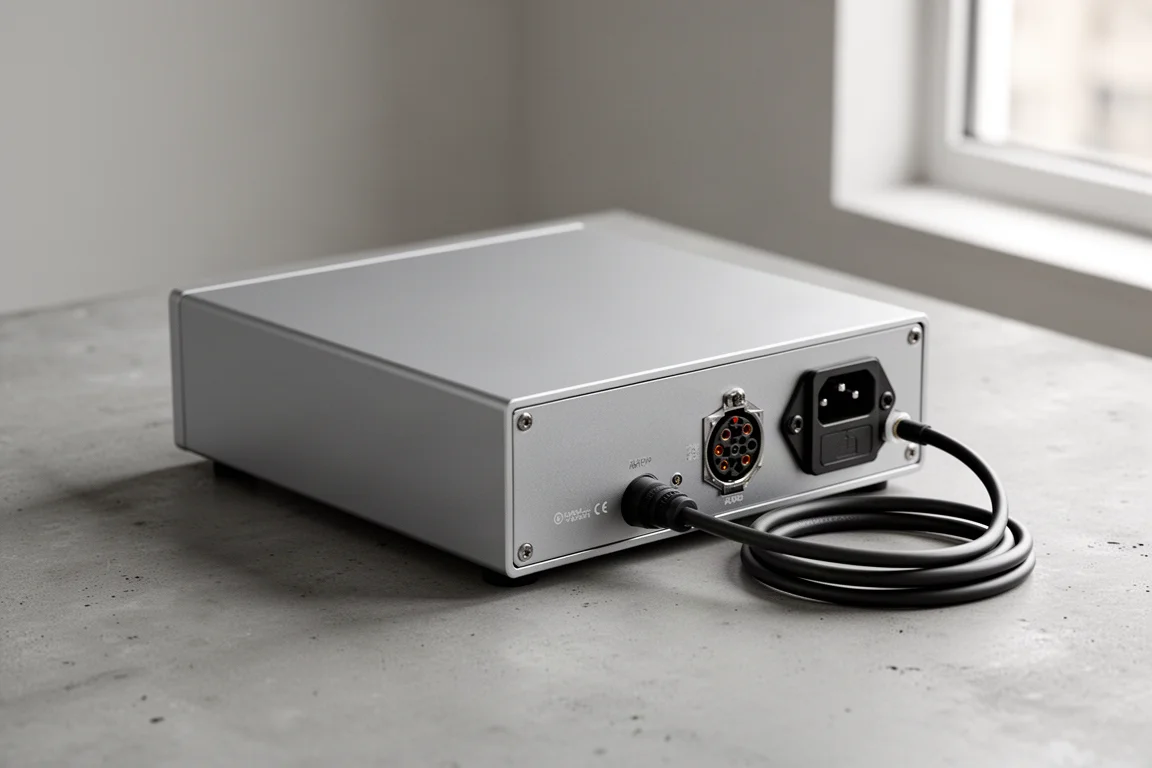
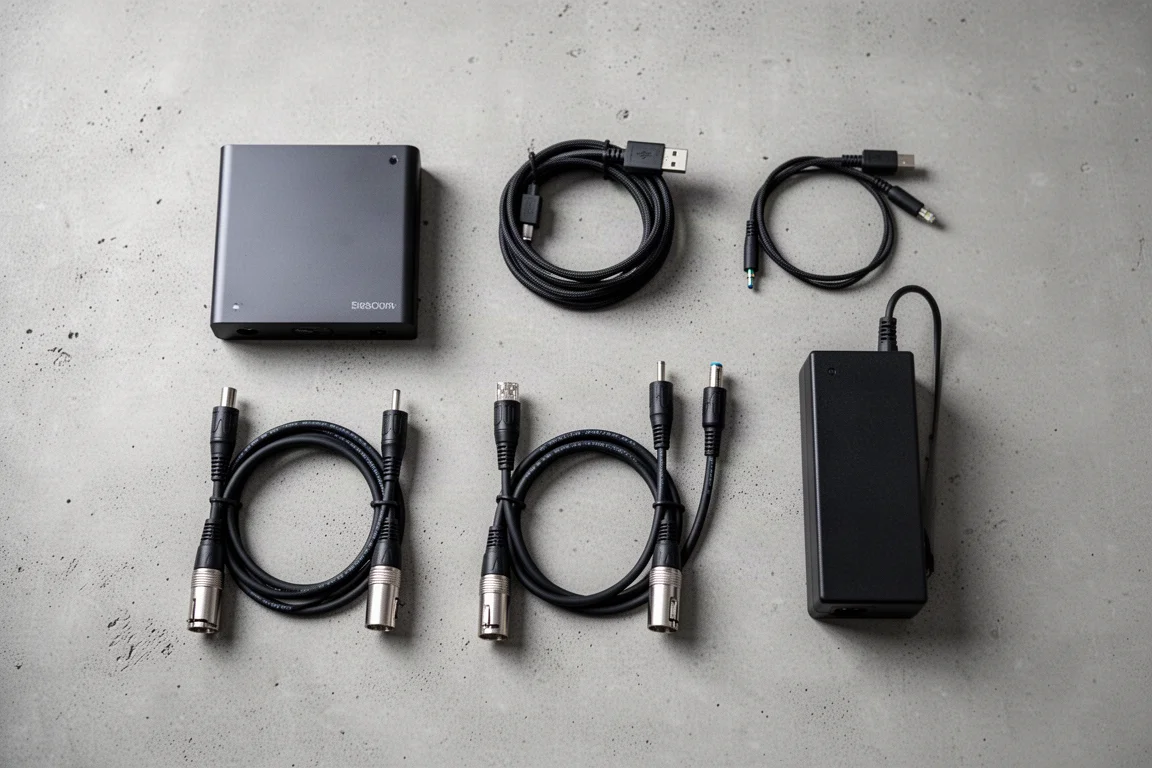
Around the back you get balanced XLR and single-ended RCA analog outputs, two coaxial digital inputs, two optical Toslink inputs and one USB input. There is no remote control and no volume adjustment, so the Frerot is purely a DAC. It ships with a 9V 4A switch-mode power supply, and beside that connector sits a five-pin D socket for the optional Pow1 linear supply.
Internally the design is straightforward but carefully considered. The USB interface uses the Amanero scheme, which is known for producing a low-jitter output, and the USB input is galvanically isolated, as are the Toslink and coaxial inputs. Two crystal oscillators handle 44.1 kHz and 48 kHz and their multiples. Conversion is handled by a Burr-Brown PCM1794A, a hybrid chip in which the lower 18 bits of the 24-bit conversion are delta-sigma and the top six bits are multi-bit. The analog output stage is fully discrete Class A with four channels, so the balanced XLR outputs can be used to take advantage of a slightly lower noise floor.
Format support is PCM only, up to 192 kHz at 24-bit. There is no DSD playback and no MQA decoding, which will matter to some listeners and not at all to others.
In sound, the Frerot has a warm tone that leans closer to neutral than the Denafrips. Its bass is the more agile of the two while still carrying plenty of authority, and because there is less bleed into the midrange it is easier to follow individual performers in a mix. Sound stage depth is very good for the price.
Merason Pow1: The Optional Linear Power Supply
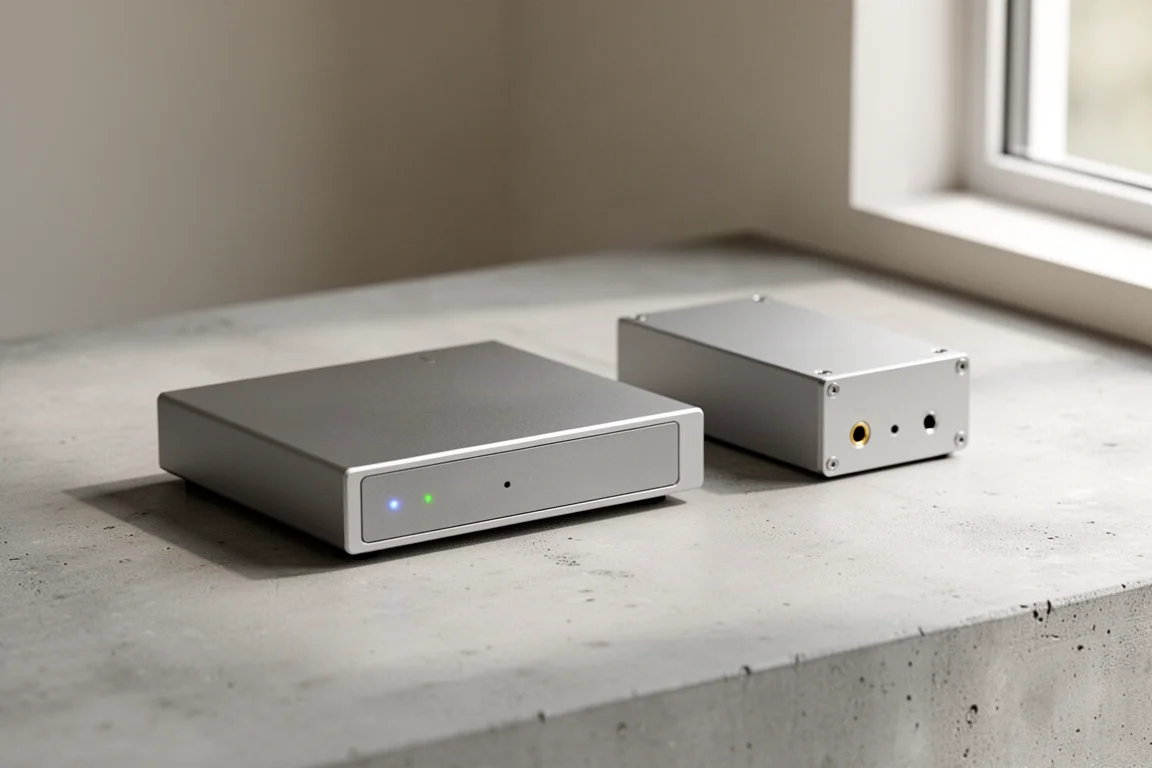
The Pow1 arrives in a chassis identical in size to the Frerot and connects to it with a D cable supplied in the box, a more secure arrangement than the offboard supply connections usually found on desktop gear. It costs £850 on its own, or £2,200 for the pair, which works out £50 cheaper than buying the two separately.
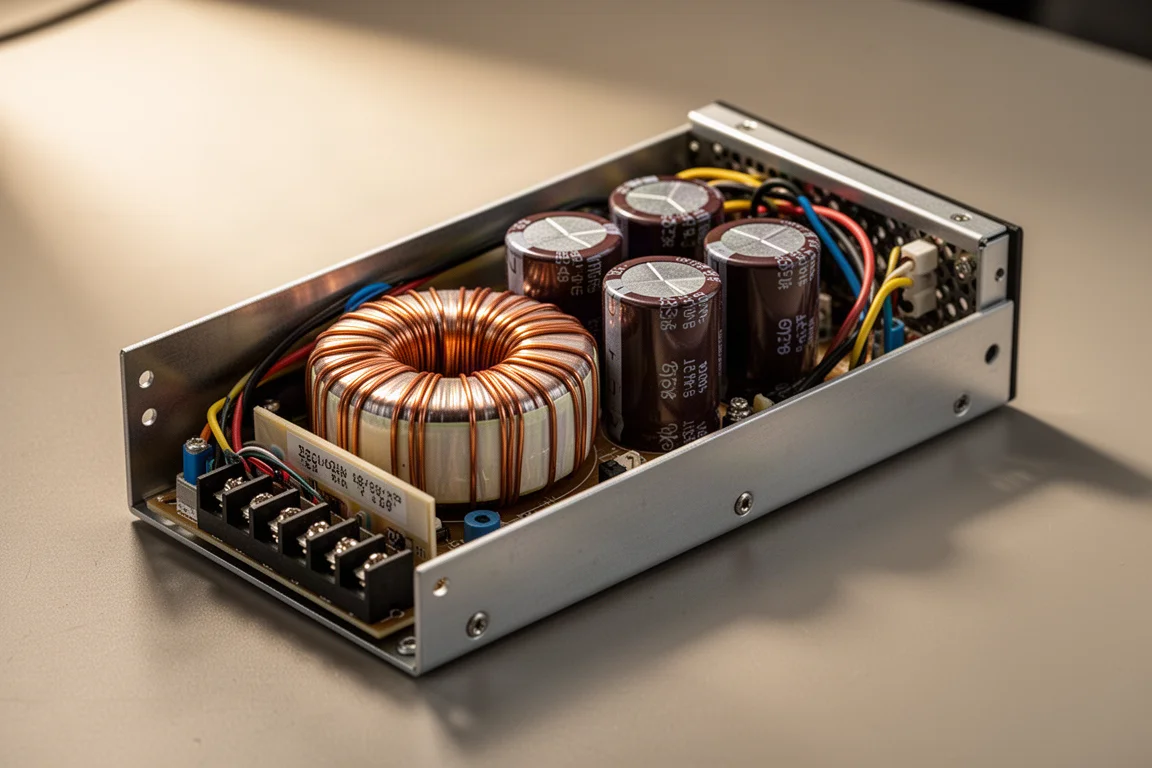
Inside, an encased toroidal transformer has three secondary windings rated at 15 VA, 15 VA and 10 VA. That gives three independent supplies: one for each analog channel and one for the digital section. Rectification for the two analog rails is handled by Schottky diodes, with the digital rectifier sitting between the capacitors, and three Japanese Nichicon capacitors rated at 5,600 microfarads smooth the rails. Three regulators stabilise the outputs, and the five-pin D connector on the back carries all three voltages to the DAC.
The effect is not subtle in a system that can show it. Clarity and focus take a clear step up, and the Frerot shifts from sounding slightly smaller than the Denafrips to sounding noticeably bigger in terms of sound stage width, with no discernible change in depth. Bass and midrange are cleaned up, and the improvement in timing makes the positions of performers in the mix far more tangible. The most obvious gain is in the high frequencies, where the combination moves ahead of the Denafrips Ares 12.1 rather than trailing it. Cymbal hits make that difference easy to hear.
The caveat is system sensitivity. The Pow1 earns its price in a revealing setup, and with more modest electronics the gains are much harder to justify.
Denafrips Ares 12.1: The Reference Point
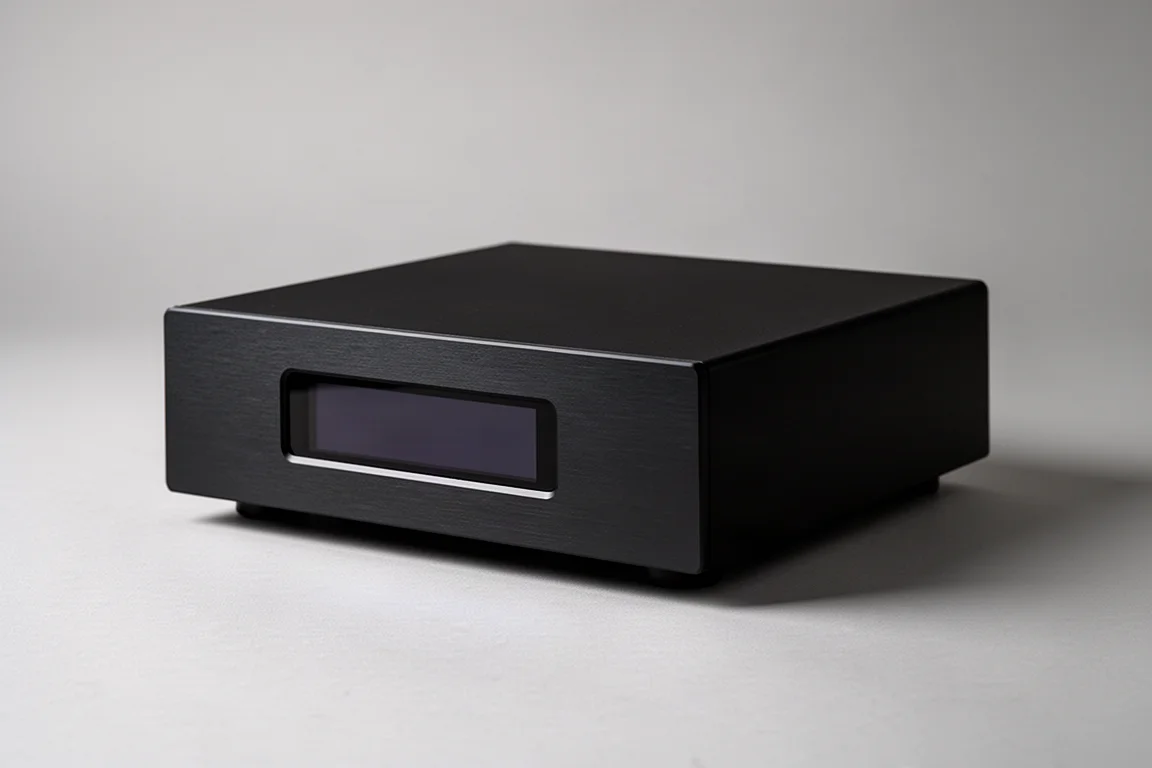
The Ares 12.1 is essentially the same converter as the 12th Anniversary edition, presented in a more substantial case with a natural billet aluminium finish. It sits at around £1,000 and is the warmer of the two designs here.
Its presentation extends a little wider than the Frerot’s and carries a touch more bass weight, along with slightly more openness at the top. Against that, the Frerot’s bass is more agile, which gives it an edge when following performers through a dense mix.
These are subtle differences rather than a clear hierarchy. Over extended listening both converters perform at a similar level, and there is no outright winner between them.
Gustard R26: Strong Resolving Performance
The Gustard R26 is another Chinese converter, built with a rugged, industrial feel, and it sells for around £600 when bought direct from retailers based in China. It uses an R2R ladder conversion design, and converters of this type are known for taking a very long time to burn in. Even once that process is complete the sound keeps a slight dryness, which the Merason pairing never hints at.
What the R26 offers is resolution. It is the best sounding DAC below £2,000 in this comparison, though it is not quite the giant killer some listeners describe. Its background is quieter, allowing a few more micro details to emerge, and its sound stage depth is greater than the Frerot’s, even if it does not match the width of the Frerot and Pow1 combination.
The choice between it and the Merason pairing therefore comes down to priorities rather than absolute quality. The R26 resolves more for less money, while the Merason combination is the more natural and less dry sounding of the two.
Buying Advice: Which DAC Makes Sense
Start with what your system can actually show. The Frerot’s strengths, its agile bass, its ability to separate performers and its sound stage depth, are most obvious on electronics and speakers that already create a sense of space. The Pow1 amplifies those strengths further, but it costs £850 and only makes sense when the rest of the chain is revealing enough to pass the improvement through. With the supplied power supply, the Frerot is also a clear upgrade over the internal DAC in an integrated amplifier such as the Hegel H190, which lacks the natural tone and sound stage depth the Merason contributes.
If you want the most resolution for the least money, the Gustard R26 is the obvious candidate at around £600, provided you are comfortable buying direct and living with a ladder converter that needs a long burn-in and keeps a hint of dryness. The Denafrips Ares 12.1 at roughly £1,000 offers a warmer, wider presentation and is a sensible middle path.
The Frerot is the one to consider if natural tone and depth matter more to you than feature count. Its limitations are real and worth weighing up in advance: no volume control, no remote, no DSD and no MQA, and PCM capped at 192 kHz at 24-bit. For a digital-only system that needs a preamp function, that rules it out. For a system with a good integrated amplifier or preamplifier, those omissions cost nothing.
Support is the other consideration. Buying from an overseas website can leave you with limited recourse if something goes wrong, whereas the Frerot is sold through a traditional dealer network, which normally leaves some room to negotiate on price. That can change the value calculation considerably and is worth factoring in alongside the specification sheet.
Conclusion
The Merason Frerot makes a strong case that careful design can still compete with lower production costs overseas. It is a natural, detailed sounding DAC without obvious shortcomings, and adding the Pow1 linear power supply lifts clarity, timing and high frequency performance to the point where it surpasses the Denafrips Ares 12.1 in several respects. You do pay a premium for Swiss manufacturing, and the feature set is deliberately minimal, but with a revealing system the result is genuinely impressive.
Further reading
Related Reviews
Hi-Fi DACs
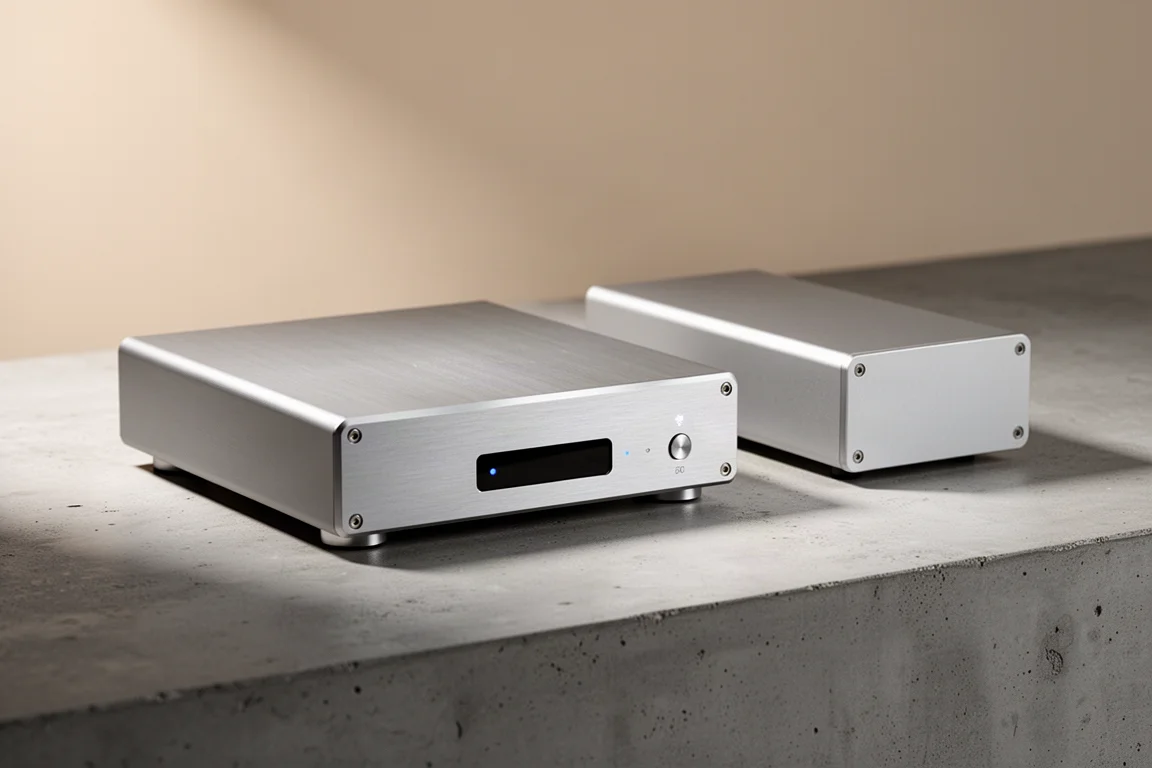
Denafrips Ares 12th-1 vs Geshelli Labs J2: Two Paths to a Better DAC
A two-DAC comparison of the Denafrips Ares 12th-1 and the Geshelli Labs J2, covering build, inputs, sound character, and which listener each converter suits.
Hi-Fi DACs
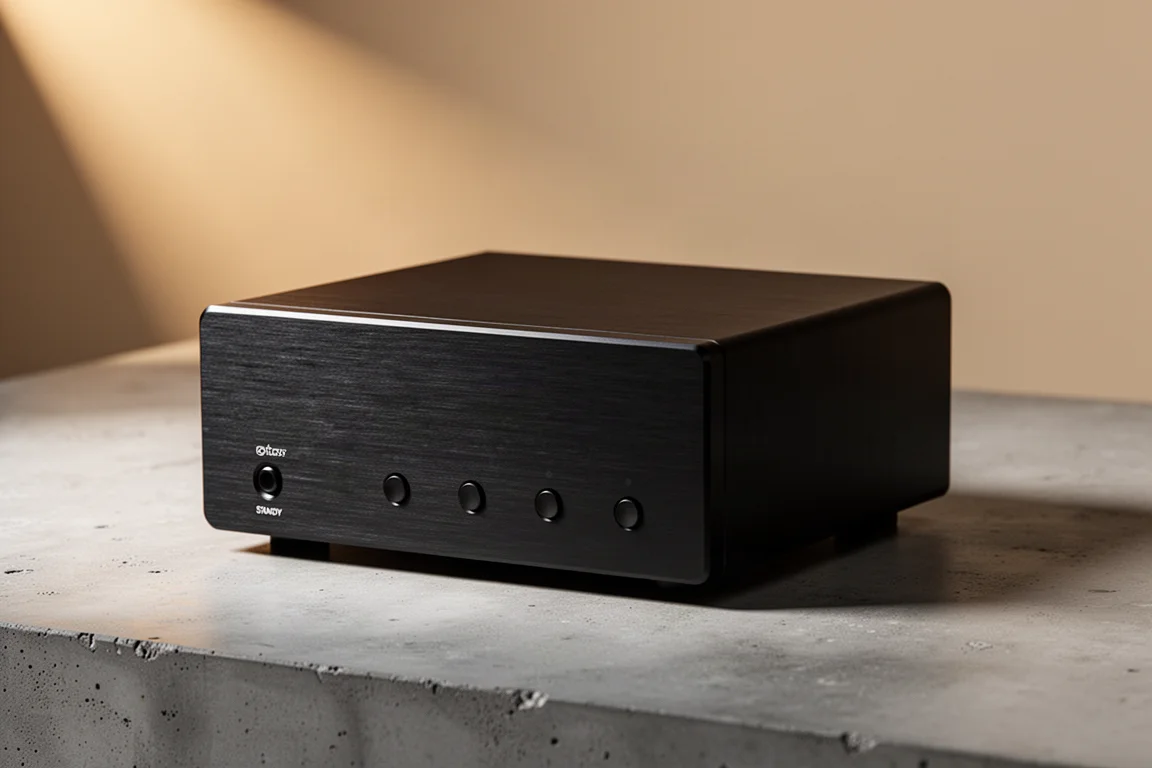
Denafrips Ares 12th Anniversary Review: A Purist R-2R DAC With an I2S Upgrade
A compact, fully balanced R-2R converter with a new I2S input, free anniversary firmware and a clear upgrade path at around £1,000.
Hi-Fi DACs
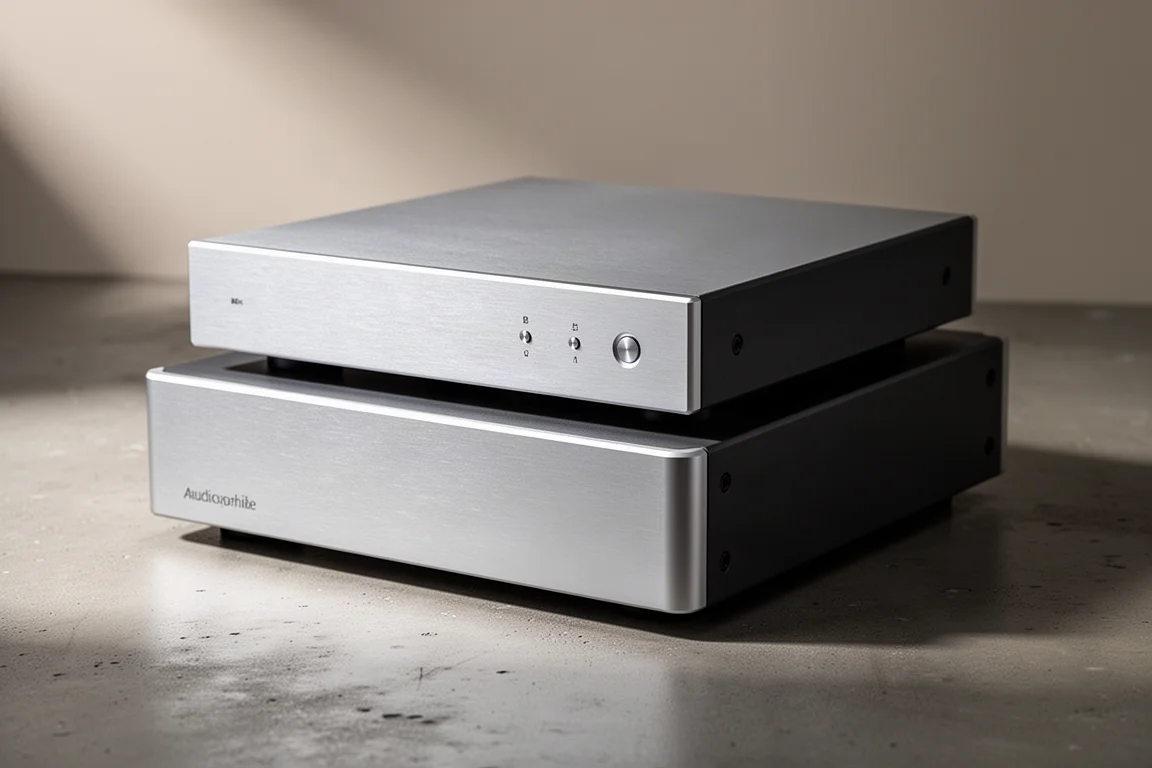
Denafrips Pontus 15th Generation DAC Review: Trickle-Down R-2R Sound
A two-box R-2R converter that carries the circuit of a far more expensive Denafrips model, with airy staging and a clear system-matching rule.