Hi-Fi Preamplifiers
Meitner PRE Review: A Neutral Line Stage Compared With the Pass Labs XP-30
A close look at the Meitner PRE line stage, its quiet and uncolored character, and how it compares with the Pass Labs XP-30.
Introduction
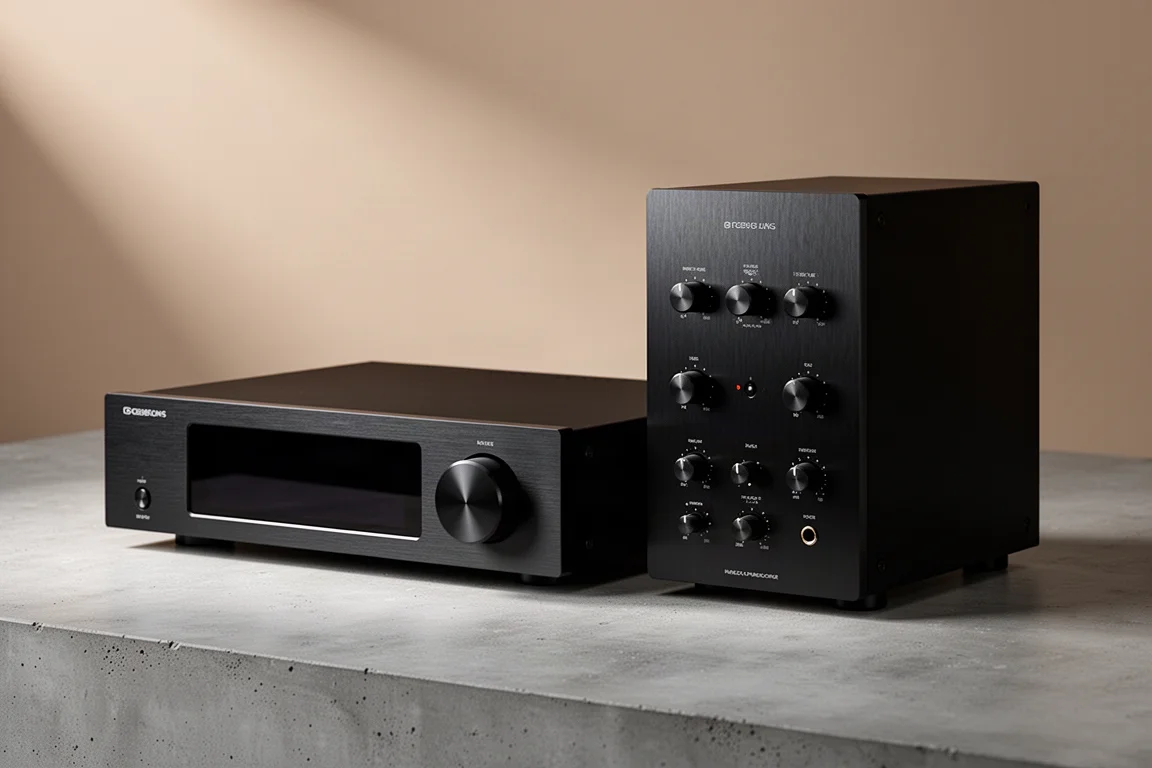
Meitner is a low-profile name in high-end audio, but not a new one. The Canadian company designs and builds its products in Canada, and founder and chief engineer Ed Meitner was designing recording studio consoles back in the 1970s before going on to pioneering work in DSD. The engineers and studios that have worked with him include Abbey Road, recording engineer Bruce Botnick and mastering engineer Bob Ludwig. Anyone who owned one of the company’s early preamplifiers, such as the PA6 with its mahogany case, already knows the house approach.
The Meitner PRE is the company’s current line-stage preamplifier. It sells for $7,500 and carries a three-year warranty. It is a deliberately focused design: no internal DAC, no phono stage, a fully analog signal path, and electronic contactless switching instead of mechanical switches or relays.
The Pass Labs XP-30 is a useful counterpoint. It is a high-end preamplifier with a fuller and more forceful tonal character, and the two take noticeably different approaches to the same job.
What Matters in a High-End Line Stage
Once you are shopping at this level, the useful questions are narrower than the spec sheets suggest. Does the preamplifier add a character you actually want, or does it get out of the way of the recording? Is the noise floor low enough that it never intrudes? Does it offer the inputs and outputs your system needs, and does it leave DAC and phono duties to components you can choose yourself?
A pure line stage answers that last question in a specific way. With no built-in DAC chipset and no built-in phono stage, the preamplifier does one job and you decide what feeds it. That is a real advantage if you already own a phono stage and a digital converter you like, or if you would rather choose them separately.
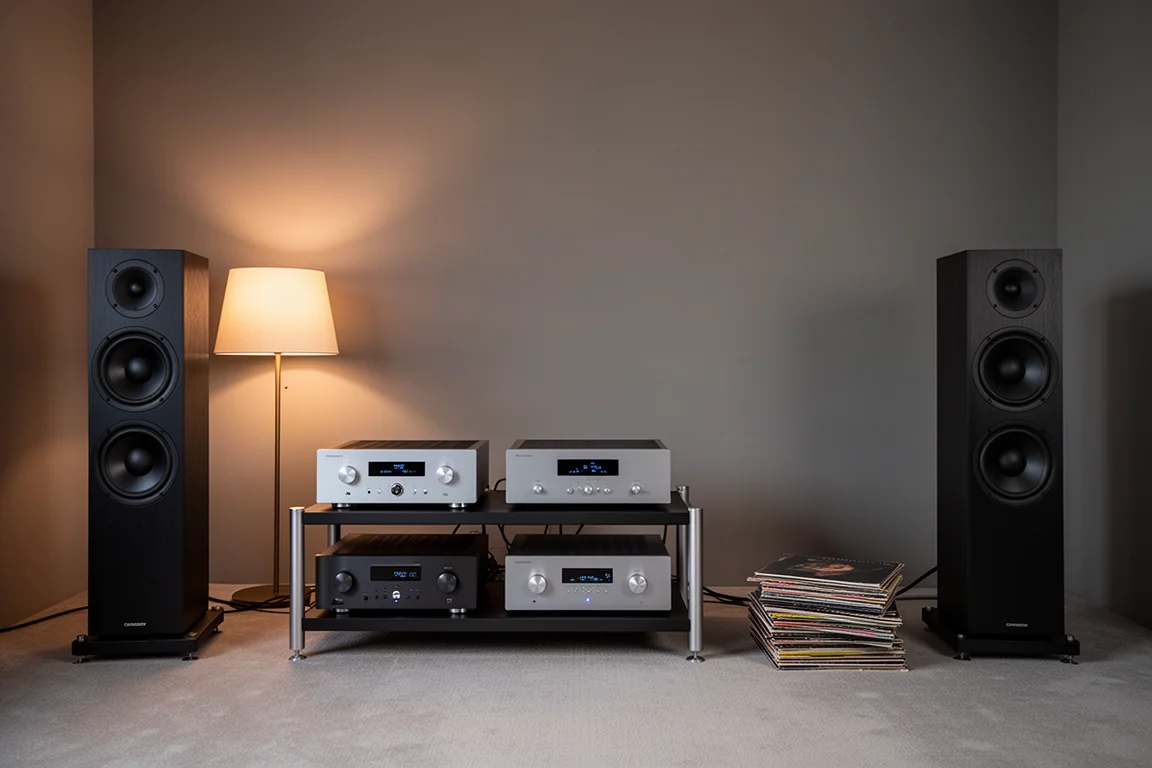
The trade-off is that a line stage is not a convenience product. You are adding boxes rather than reducing them, and you are accepting a fixed set of connections. Whether that is the right call depends entirely on how your system is already built.
Meitner PRE: Design and Build
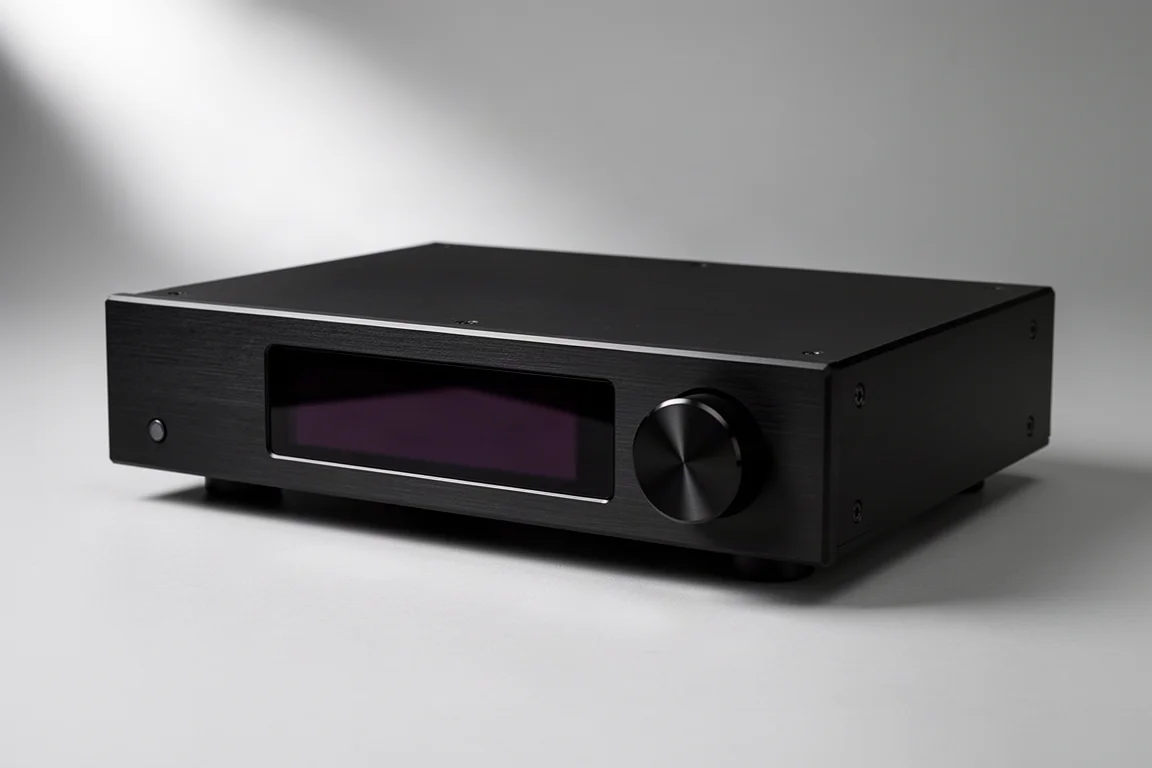
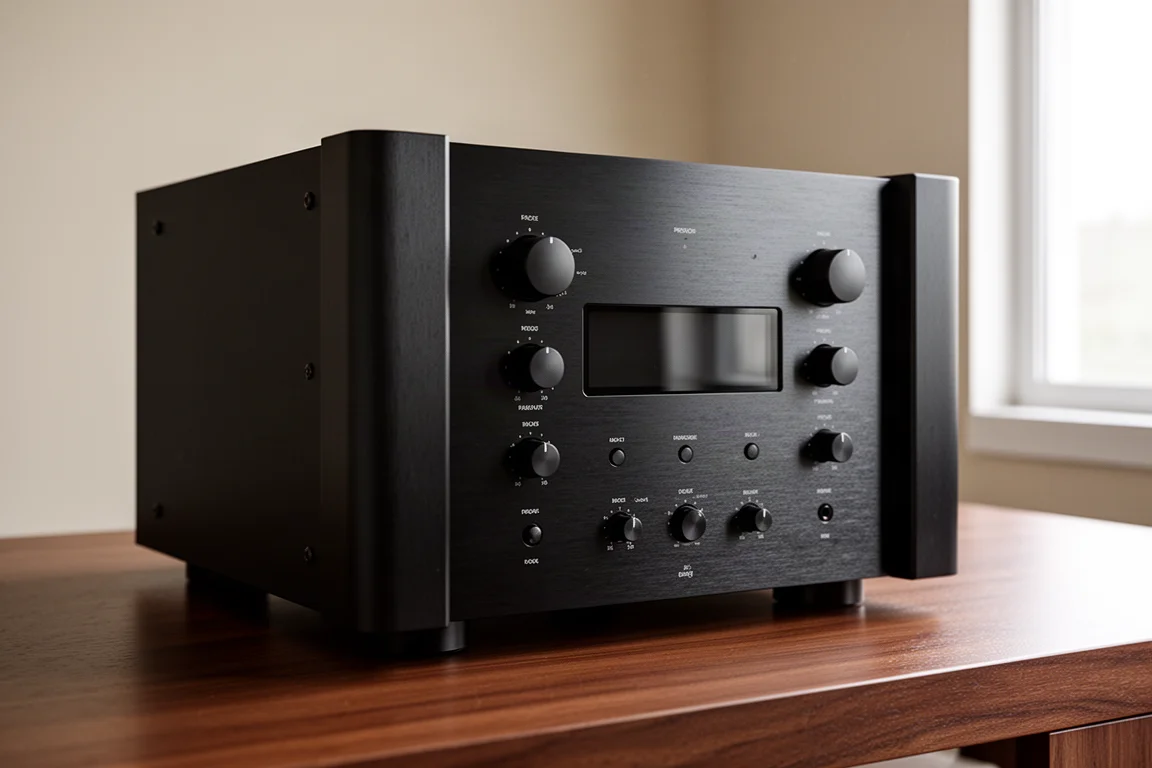
The PRE’s chassis is beautifully crafted, and the display is large and easy to read from across a room. The volume knob feels good in the hand, although its rotation is not silky smooth. It turns cleanly and without any sense of cheapness, but it does not have the fluid feel some listeners look for. The remote is a minimalist metal handset. It is not a luxurious object, but it does include left and right balance control, which is not a common feature on high-end preamplifiers, and it offers volume presets at three levels for each input, so you can move straight to a source at a known level instead of hunting for it.
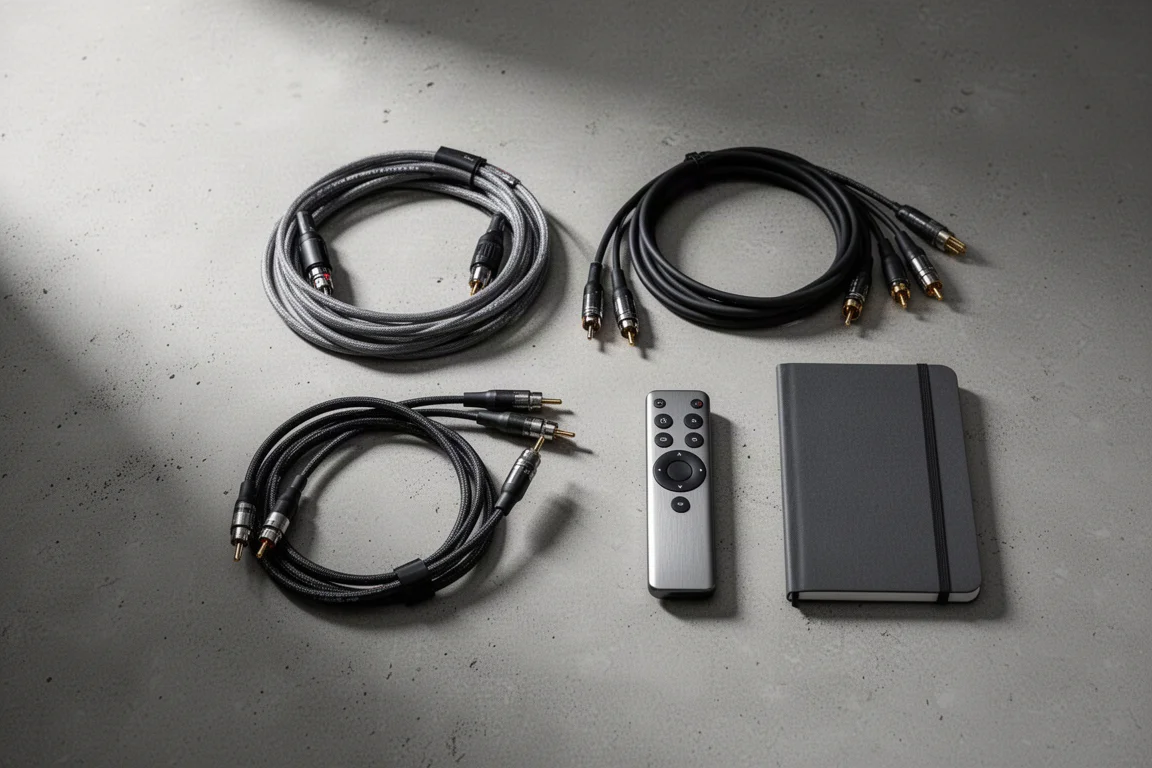
Connectivity is deliberately limited. There are three inputs: two RCA and one XLR. There are two outputs, one RCA and one XLR, and both can be used at the same time, which lets you drive a power amplifier and a subwoofer together.
Inside, the switching is contactless. There are no mechanical switches and no relays; all input and mute switching is handled electronically, and the signal path itself is fully analog.
Meitner PRE: Sound and Noise Floor
The PRE’s character is neutral, uncolored and accurate. That is worth stating plainly, because it is a specific kind of sound rather than a universal one. Listeners who prefer a preamplifier with warmth or a bit of personality may find the PRE understated at first. Its strength is that it lets the music through without adding much of its own.
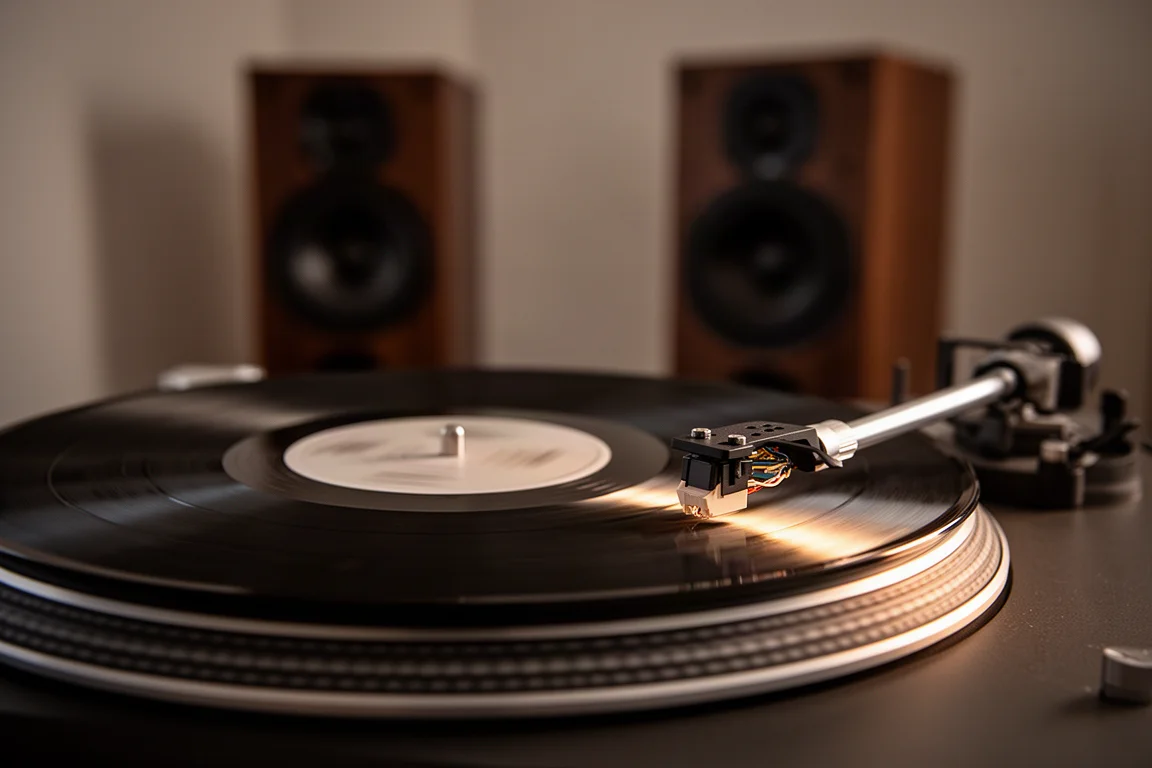
That impression held up across very different recordings. On a MoFi pressing of the Allman Brothers Band’s first album, a coarse and compressed recording by any measure, the PRE stayed revealing without turning unpleasant. On a duet recording for cello and piano captured in a concert hall, the tonality of both instruments came across as natural rather than forward, exaggerated or hyper-detailed. Mono recordings, played through planar magnetic speakers, still produced a sense of space and depth rather than collapsing into a narrow point between the speakers. On a live-to-two-track release built around a deep, resonant low instrument, the PRE unravelled the texture and information far down in the bass without blurring it.
The other half of the story is the noise floor. The PRE is remarkably quiet, and that is not a quality that announces itself immediately. Switching inputs or moving in and out of mute produced no pops and no noise of any kind. Even with an ear close to the speaker, the preamplifier contributed nothing audible of its own.
Against a tube-based reference preamplifier, the PRE had better edge definition, faster transients, more treble air and tighter bass definition, along with a clearer sense of speed and space. The tube design answered with a warmer, richer and fuller presentation. Neither approach is objectively better; they reward different priorities, and both were enjoyable for what they did.
Pass Labs XP-30: Weight and Dynamic Push
Swapping the Meitner PRE for the Pass Labs XP-30 in the same system changed the balance in an obvious way. The XP-30 had more fullness and more bass from the mid-bass down than either the Meitner PRE or the tube preamplifier. It was also less airy on top than the Meitner.
What the XP-30 adds is push. There is more dynamic kick and a little more weight behind the sound, and that difference is easy to hear on material with real low-frequency content. Tonally it sits between the other two preamplifiers, closer in character to the Meitner PRE than to the tube design, but with a bit more body throughout.
Matching a Preamplifier to Your System and Taste
The choice between these two comes down to what you want the preamplifier to contribute. If your priority is a clean window onto the recording, with maximum clarity and treble air and no added warmth, the Meitner PRE is the more natural fit. If you want more weight in the lower midrange and bass, along with a more forceful sense of drive, the Pass Labs XP-30 delivers that instead.
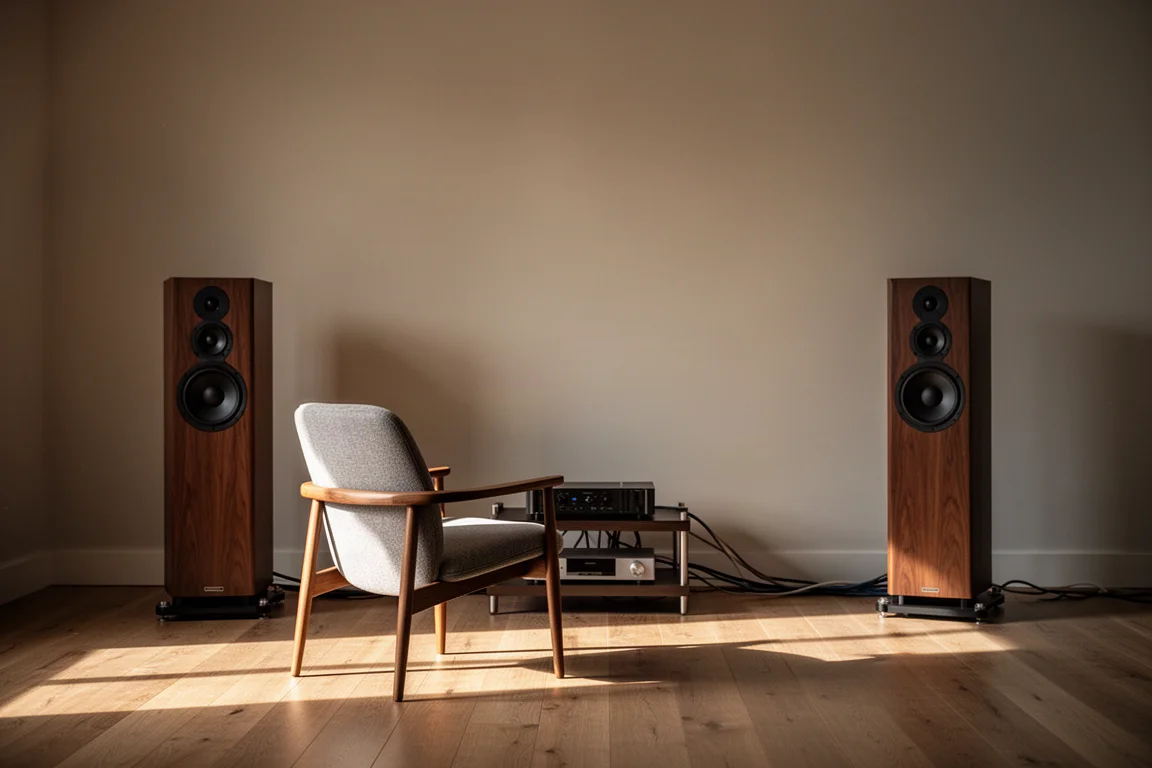
System context matters as much as the preamplifier itself. Both units were used with more than one power amplifier and more than one pair of speakers, and the character of each came through differently depending on what was downstream. The PRE’s transparency made it easy to hear what the rest of the chain was doing, while the XP-30’s fuller balance gave it a different kind of appeal.
Buying Advice: What to Weigh Before You Commit
The Meitner PRE costs $7,500 and includes a three-year warranty. Before committing, the practical questions are worth running through honestly.
First, connections. Three inputs and two outputs is a small complement. If you run a turntable, a streamer, a disc player and a tape deck, you will need to think carefully about how everything is routed. Second, the missing features. There is no internal DAC and no phono stage, so budget for those separately if you do not already own them. Third, character. The PRE is neutral by design, and that is either exactly what you want or precisely what you do not.
For the Pass Labs XP-30, the question is the reverse: whether the extra fullness and dynamic push suit the recordings and speakers you actually use. Both preamplifiers are serious pieces of equipment, and neither is a compromise purchase. The differences between them are about emphasis rather than quality.
Conclusion
The Meitner PRE is a quiet, neutral and carefully built line stage, and its absence of character is the whole point. It does not flatter poor recordings, but it does not punish them either, and it stays out of the way of good ones. The Pass Labs XP-30 takes the opposite emphasis, trading some treble air for more bass weight and a stronger sense of drive. Choose the one whose character matches the sound you are chasing, and check the input count before you do.
Further reading
Related Reviews
Hi-Fi Preamplifiers
Advance Paris XP700 Review: A Purist Two-Channel Preamplifier
A close look at the Advance Paris XP700, a $1,999 balanced preamplifier with a flexible phono stage, a Burr Brown DAC, and a deep set of sound-shaping options.
Hi-Fi Preamplifiers
Amps and Sound Badlands Review: A Tube Preamplifier Built for Drive
A compact, hand-built tube preamplifier that adds weight, punch, and dynamic contrast to a system, with three inputs and no remote to weigh against it.
Hi-Fi Preamplifiers
Aric Audio Motherlode XL Review: Handcrafted Tube Sound With Real Definition
A handcrafted two-box tube preamplifier with premium parts, textured low bass, and vivid imaging, plus the trade-offs to weigh before buying.