High-End Audio
Meitner MTRX Review: A High-Current Solid-State Amplifier Without Shortcuts
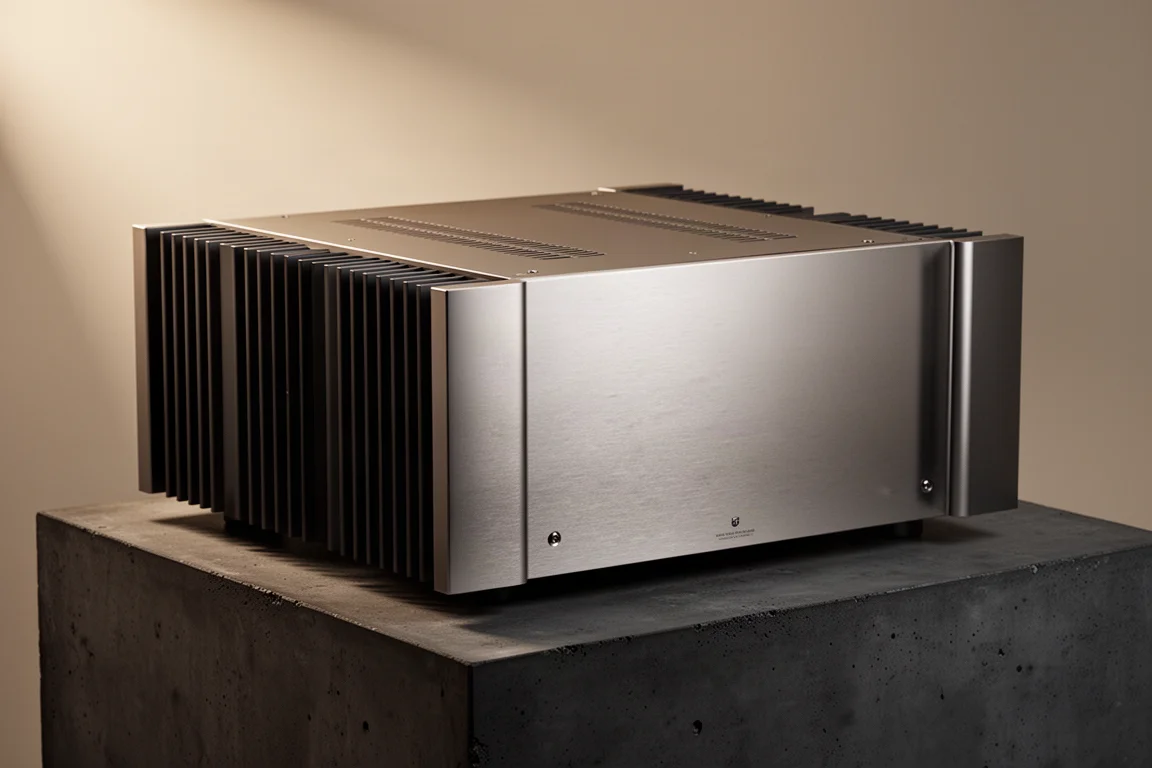
The Meitner MTRX is a high-current solid-state power amplifier built by Ed Meitner for demanding high-end speakers. Here is what it does well and what to weigh before buying.
Introduction
Most amplifier discussions begin with power output. The Meitner MTRX begins somewhere else, with current delivery, bandwidth, and a design approach that avoids convenient shortcuts. It is a solid-state power amplifier built by Ed Meitner and a small team in Calgary, Canada, at a workshop that ships fewer than 100 amplifiers a year and measures every unit by hand before it leaves the building.
The amplifier sits at the top of a body of work that stretches back more than five decades. Ed Meitner was one of three young designers behind the Olive console in Montreal in 1972, the first studio console in the world to use VCA controls and logic switching circuits, which later ended up at Caribou Ranch in Colorado and tracked a long run of major rock and pop records. He also identified the jitter problem that shaped early digital audio, and he designed the eight-channel analogue-to-digital and digital-to-analogue converters that Sony and Philips used to bring SACD from concept to reality.
This article covers who the MTRX suits, where it performs strongest, and the practical points worth weighing before committing to an amplifier at this level.
Who the Meitner MTRX Is For
The MTRX is aimed at listeners who already own a serious pair of speakers and want to hear everything those speakers are capable of. Its most natural match is a speaker that drops to very low impedance at certain frequencies, or one that responds to current delivery rather than a headline wattage figure.
Planar magnetic designs are the classic example. They are notoriously fussy about amplifier matching, and plenty of amplifiers that claim high current and high power can make them loud without ever making them sing. If that description sounds familiar, this is exactly the kind of amplifier worth investigating.
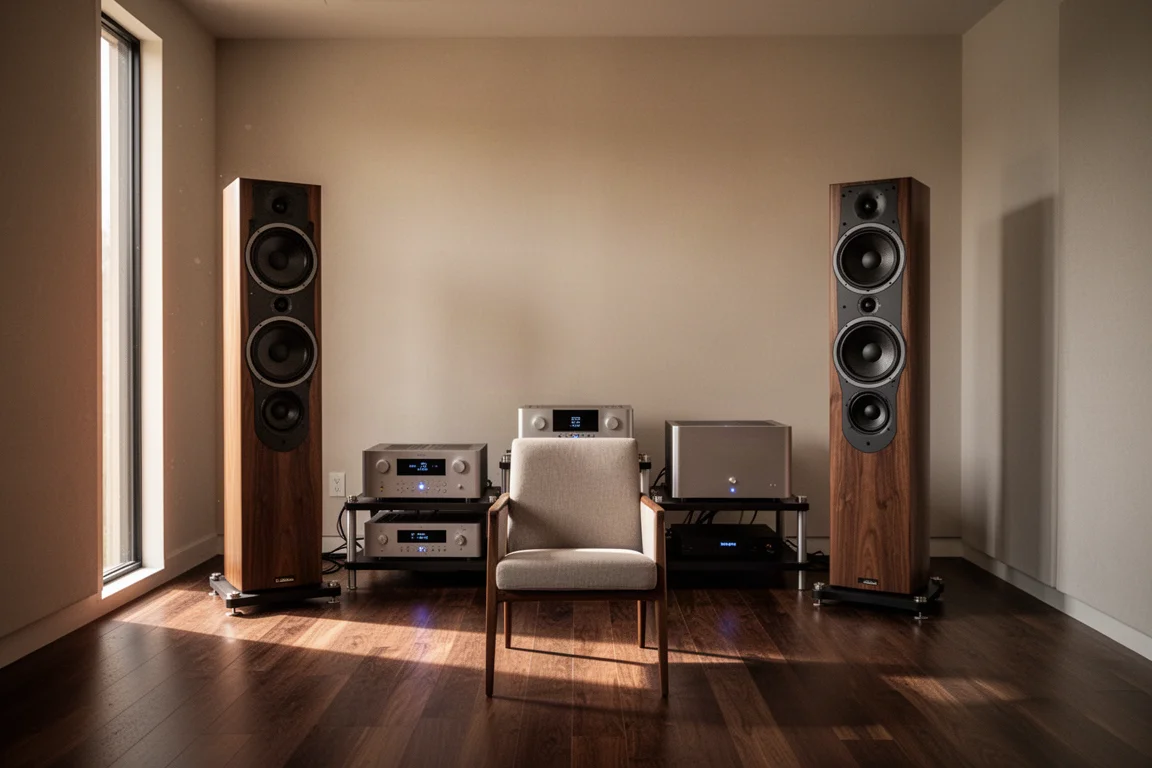
This is not a component for a first system, or for speakers that are already easy to drive. It makes most sense as the final piece in a carefully assembled high-end setup, where the speakers are the limiting factor and the rest of the chain is already resolved.
Main Strengths: Explosive Dynamics and Effortless Bandwidth
The first thing that stands out with the MTRX is dynamic behaviour. In practice, its arrival prompted a repositioning of the loudspeakers in the listening room, simply because the dynamics were so much more explosive than what came before. That surge is not confined to the bass. It runs through the midrange and the high frequencies as well.
A large part of that comes from current capability. Beneath the chassis sit substantial transformers, and the amplifier can drive demanding loads down to 1 ohm.
High bandwidth is the second pillar. Meitner has emphasised bandwidth in his digital converters for years, and the same thinking applies here. Bandwidth is not about hearing beyond 20 kHz. It is about pushing noise out of the audible band entirely, so the amplifier operates optimally where human hearing actually lives. Bandwidth also works in both directions, which is why low-frequency texture and body come through so convincingly.
The result is a presentation that sounds effortless rather than capped. Bass extension, bass amount and bass impact all increase noticeably, even alongside the high-end reference amplifier used in the same system.
The Engineering Behind the MTRX
Meitner is best known for digital audio, but his analogue work is equally deliberate. The output stage of the MTRX was designed in house and built on high-quality ceramic circuit boards, a detail that speaks to how much attention the analogue path receives.
The most significant design decision is the absence of overall negative feedback. It is a phrase that appears in a great deal of marketing copy, but here it reflects a genuine engineering position. Feedback makes it relatively easy to bring distortion figures down without addressing the underlying behaviour of a circuit. Meitner has avoided that route for decades, and instead developed a high-current Meitner power driver circuit to deliver current while solving the underlying problems directly.
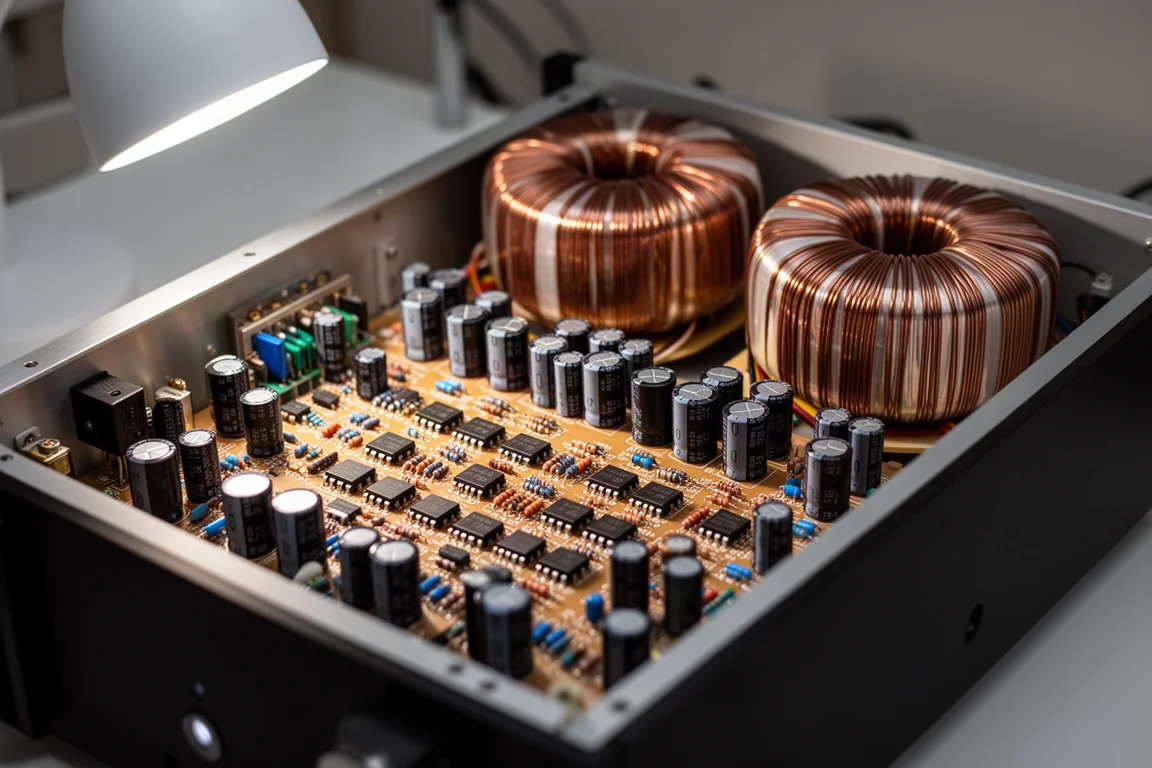
Every unit is measured personally before it ships. That level of hand finishing is unusual at any price, and it is a large part of why these amplifiers leave the workshop in such small numbers.
Musical Character and System Matching
Neutrality is often claimed and rarely delivered. Many amplifiers marketed as neutral and transparent end up sounding clinical, edgy or lean. The MTRX does not. It is uncoloured and balanced, with no emphasis on any part of the frequency range, and it avoids the brightness that makes long listening sessions tiring.
The midrange and high frequencies are arguably the most impressive part of its character. There is no sense of the amplifier adding a signature of its own. Instead, it steps out of the way and lets the speakers do their job at their best.
It is worth being realistic about what any amplifier can change. No component will rescue genuinely poor speakers. The MTRX is one of the rare cases where the claim holds some water, because a speaker whose problem is a low impedance dip, or a planar design that needs serious current, is exactly the kind of load this amplifier was built to handle.
Things to Consider Before Buying
Cost is the first consideration. The MTRX is a roughly $50,000 amplifier, which places it firmly in the top tier of high-end audio.
Availability is the second. This is a small, family-owned operation in Calgary that ships fewer than 100 amplifiers a year, and the brand sits well under the radar compared with larger high-end names. Production is limited, and the company receives far less attention than its engineering record would suggest.
Third, the amplifier rewards the right system. It is not a sensible purchase for speakers that are already easy to drive, or for a setup where the speakers themselves are the weak link.
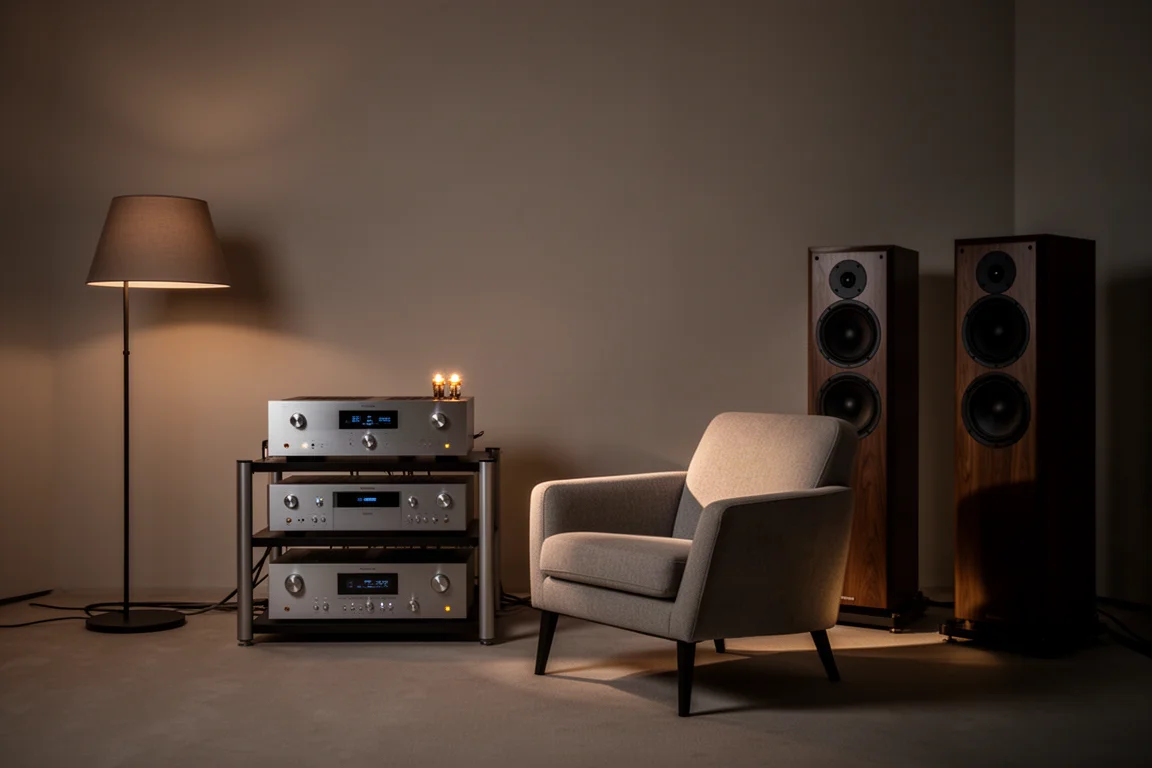
It is also worth remembering that the MTRX is one part of a broader design catalogue. Buyers who admire the engineering but not the price have options within the same family.
Where the MTRX Sits in the Ed Meitner Line
Meitner’s designs have been collected by enthusiasts for decades. Earlier components from Museatex, including the STR-55 and the more powerful MTR-101 monoblocks, earned a following for their ability to drive difficult loads with control and finesse, while the BiDAT converter and the Pre i preamplifier round out that era.
More recently, the MA3i has become a reference digital front end in the same system as the MTRX. It uses no off-the-shelf DAC chips; the delta-sigma conversion is designed in house. Its appeal is the same combination found in the MTRX: genuinely neutral and uncoloured, yet musical rather than sterile.
Industry recognition for this body of work is unusually strong for a company of this size. Mastering engineers including Bob Ludwig, George Massenburg and Bernie Grundman have all pointed to Meitner’s converters as a reference standard for high-resolution work.
For listeners who want the same design principles at a lower cost, the Meitner line is the more affordable route.
Buying Advice
If you own a high-end speaker that is difficult to drive, and you have been searching for an amplifier that can reveal its full potential, the MTRX is well worth seeking out. Its combination of peak current delivery and high dynamic capability is difficult to match, and its neutral character makes it a long-term reference rather than a passing flavour.
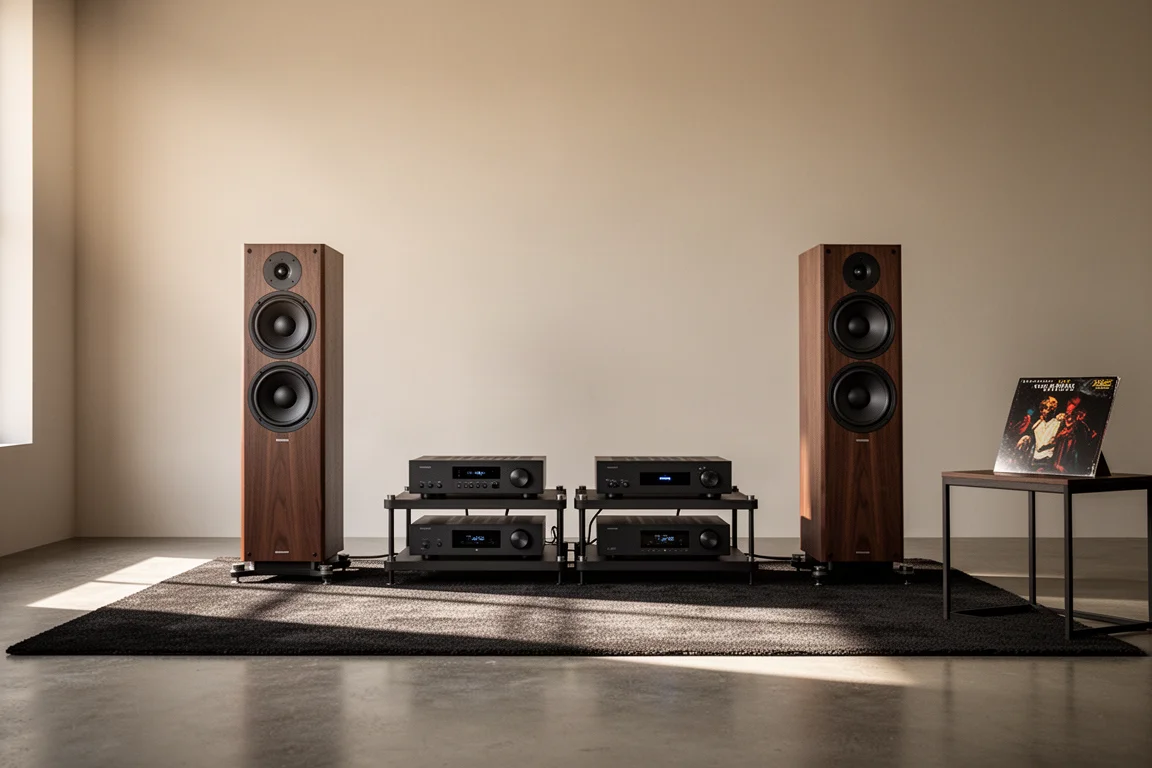
If budget is the deciding factor, the Meitner line offers the same underlying philosophy in a more accessible package. And if your speakers already perform well with a competent amplifier, there is little reason to chase this upgrade. The MTRX makes its case most strongly in systems where current delivery is the missing ingredient.
Conclusion
The Meitner MTRX is a rare amplifier, in the sense that it comes from a small workshop with an engineering pedigree that has shaped recorded music for more than 50 years, and it delivers on the promise of that pedigree. For demanding high-end speakers, it offers dynamics, current and bandwidth that are difficult to find elsewhere. For everyone else, it is a fascinating flagship rather than a necessary purchase.
Product link
View more details for Meitner MTRX
This product is mentioned in the review. Check the specifications, options, and compatibility before buying.
View more details for Meitner MTRXFurther reading
Related Reviews
High-End Audio
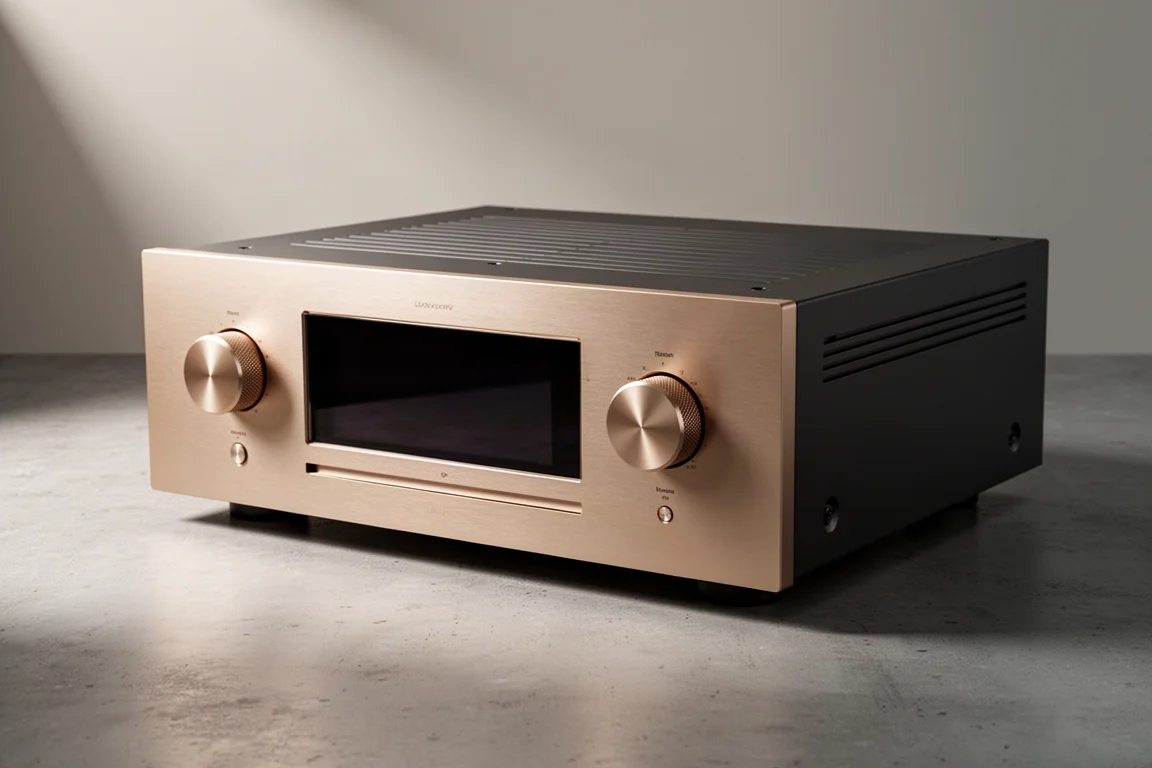
Accuphase E-3000 Review: A Class AB Integrated Amplifier Built to Last
The Accuphase E-3000 is the entry point into a legendary Japanese high-end line. Here is how it sounds, how it is built, and who should consider it.
High-End Audio
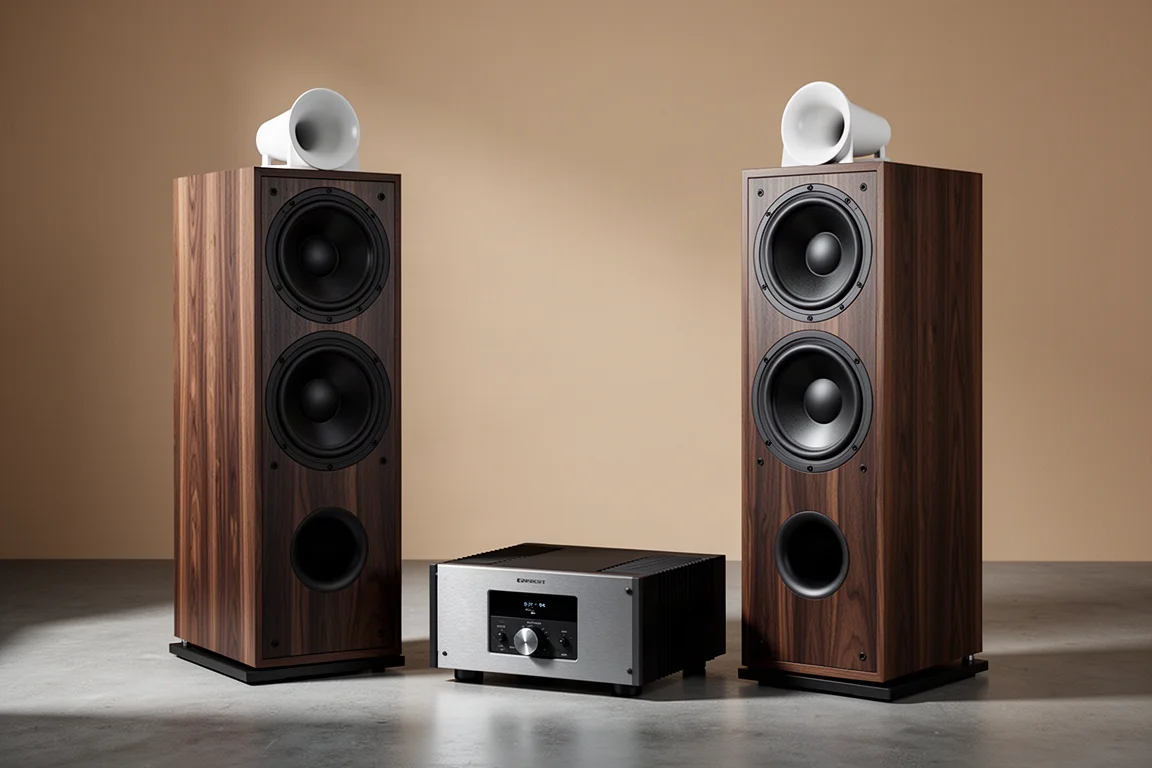
Arreté Floorstanding Speakers and Benchmark HPA2: A Premium Pairing Worth Hearing
A close look at how Arreté floorstanding speakers and Benchmark HPA2 power amplifiers pair up, what each component contributes, and what to weigh before buying.
High-End Audio
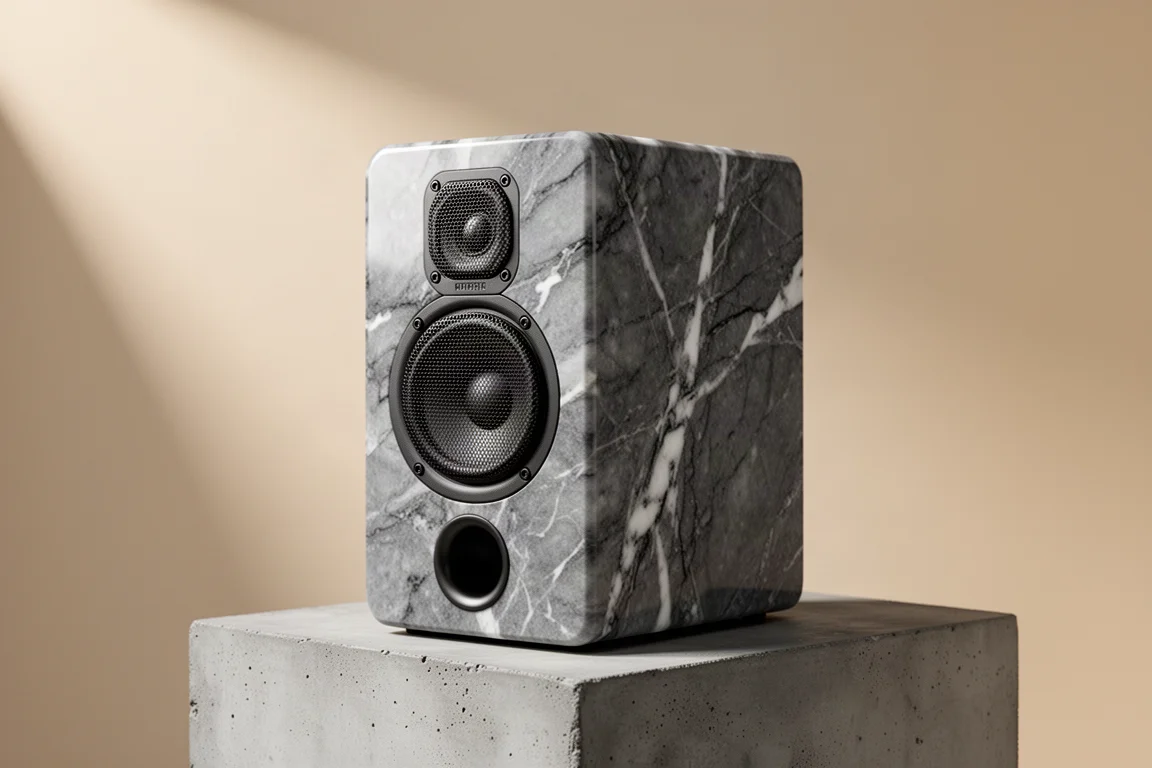
Aurelia Acoustics MRB1 Review: Marble Cabinets and a Big, Lively Sound
The Aurelia Acoustics MRB1 pairs a marble cabinet with Accuton ceramic drivers and a lively, spacious sound that stays easy to listen to. Here is what to know before buying.