Home Audio Speakers
McIntosh XR50 vs XR100: Two Speakers Built for Two Very Different Rooms
A practical look at the McIntosh XR50 bookshelf speaker and XR100 tower, who each one suits, and what to plan for before buying.
Introduction
McIntosh has been part of the audio world since 1949, when Frank McIntosh founded the company. Over more than 75 years it has produced some of the most recognizable electronics in hi-fi, from tube designs to solid-state separates, and its equipment has been present at landmark moments in music history, including the Grateful Dead’s Wall of Sound, an all-McIntosh amplified speaker system used at concerts in the 1970s. The brand is known for sound quality, distinctive looks, and tank-like build quality intended to last for generations.
McIntosh approaches speakers differently from most speaker-only brands. Its two compact models, the XR50 and the XR100, look similar at first glance, but they were designed for two completely different rooms and two different listening habits. Neither is a universal recommendation. If your space and your taste match one of these two profiles, both deserve serious consideration.
Two Speakers, Two Very Different Rooms
The XR50 exists for listeners who simply do not have room for a large speaker, or even for a subwoofer to support a small one. Think of a small listening area or an office system. The goal was a compact cabinet that produces bass deep enough to make you believe a subwoofer is in the room, without the loose, peaky low end that fakes that impression. McIntosh wanted low distortion and deep, fast, accurate bass instead.
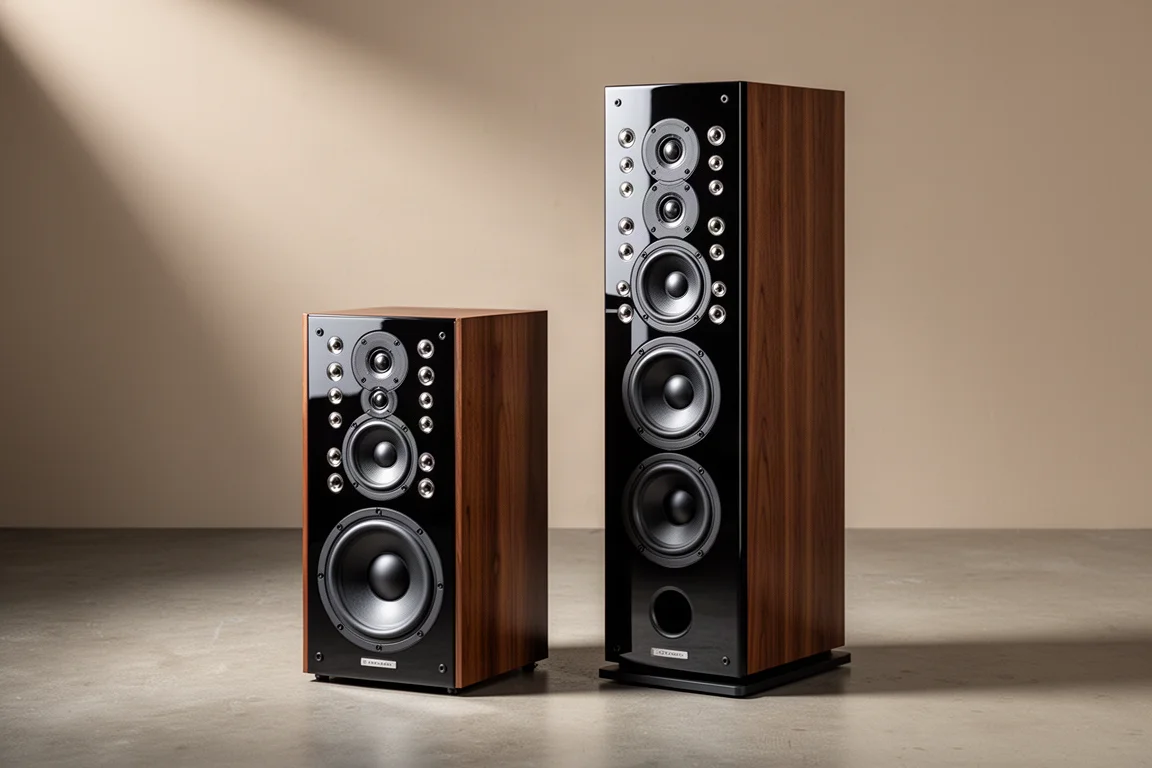
The XR100 answers a different problem. Many music lovers once owned large speakers capable of recreating the physical power of a live concert, but their living situation changed and those big cabinets no longer fit. Others love that full, loud concert sound and can afford serious speakers, yet their room demands something small. The XR100 is the small tower built for exactly that listener.
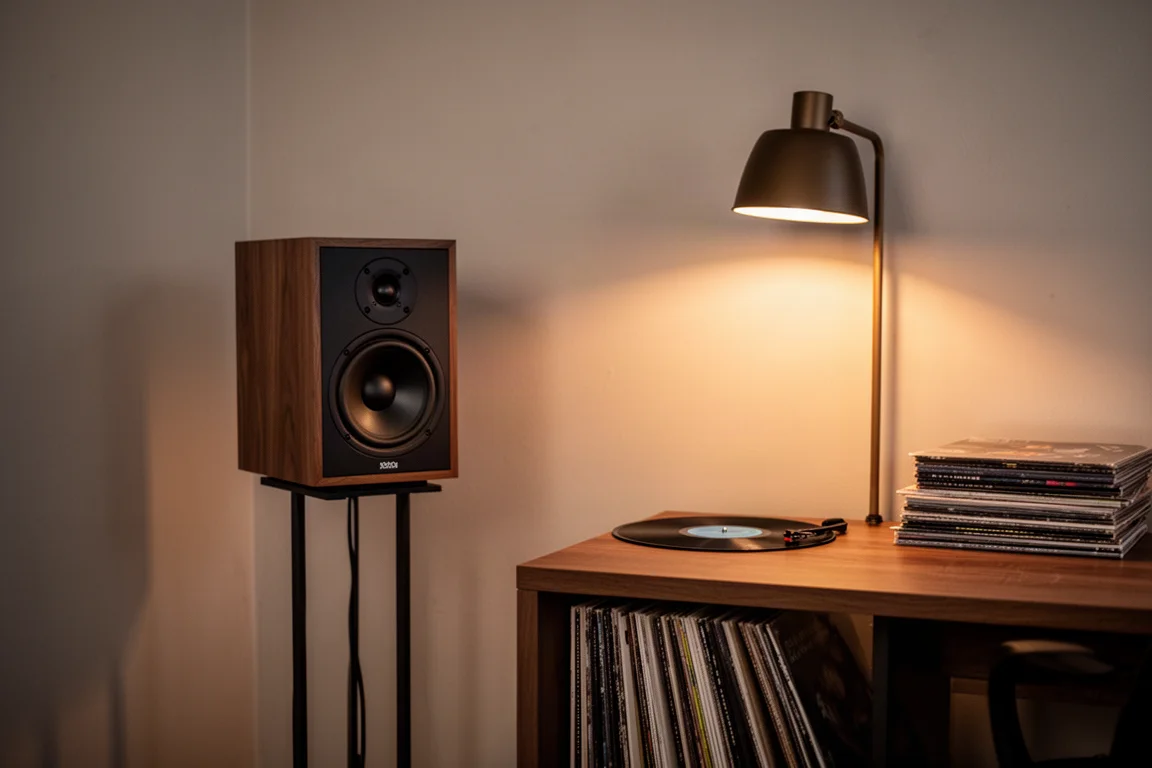
Both are finished to the standard McIntosh is known for, and both are available in gloss black or red walnut.
McIntosh XR50: Deep Bass From a Compact Cabinet
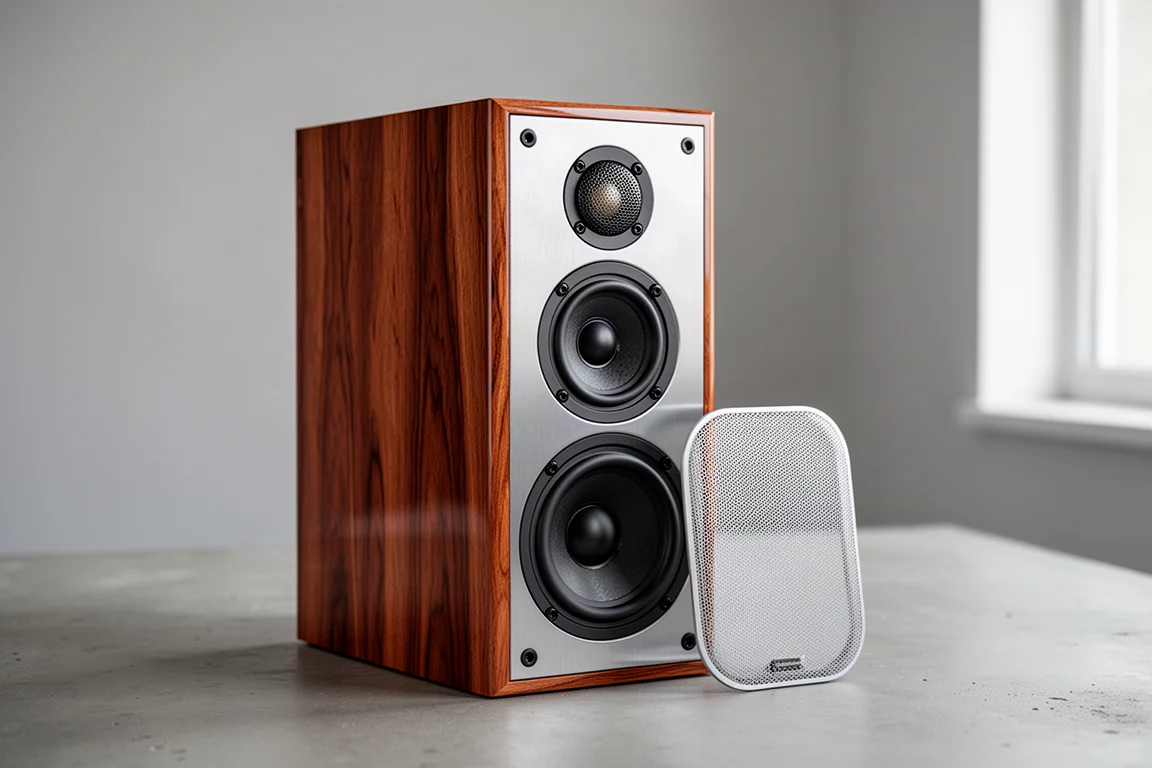
The XR50 measures 17 inches high, 8 inches wide, and just under 12 inches deep, which makes it friendly to bookshelves and small stands. It is not designed to be laid on its side, so it needs to sit vertically. From that small box it reaches an honest 40 Hz, a figure most listeners do not expect until they hear it.
That low end comes from a single 6-inch poly cone woofer built with McIntosh’s LD/HP technology, short for Low Distortion High Power. The design dates back roughly 30 years and was first released in the XR250. Engineers noticed that most woofers fluttered at certain frequencies, adding distortion and blurring the bass. The fix involved the magnetic gap: metal pieces with high conductivity placed above and below it, which reduced how the voice coil’s magnetic field reacted with the steel of the magnet structure. The measured result was distortion around one tenth of anything else tested at the time, and the technology has been refined since.
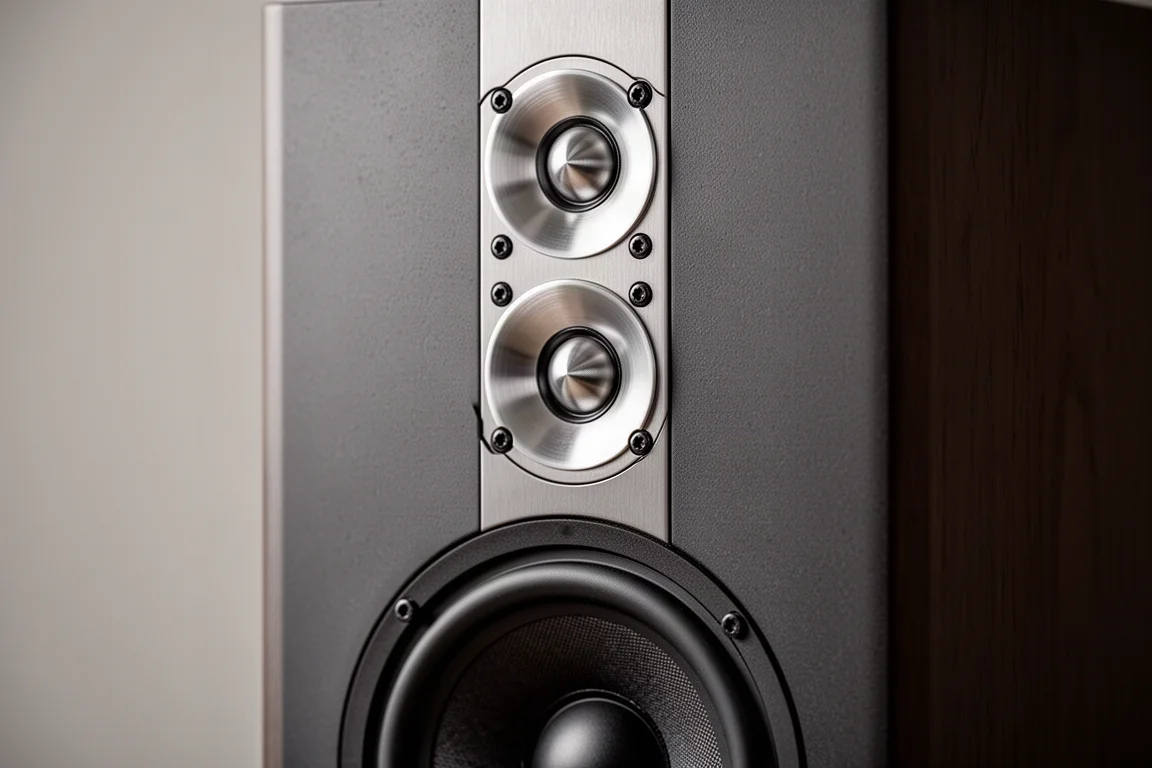
For the rest of the range, McIntosh took an unusual route. The midrange and tweeter drivers are inverted 2-inch titanium domes, arranged with one above and one below the super tweeter. Together they cover roughly 500 Hz out to 8 kHz. That vertical orientation produces very wide horizontal dispersion and more limited vertical dispersion, which reduces ceiling and floor reflections while creating a large sound stage. Using two drivers instead of one also means they can handle more power.
The top end uses a 3/4-inch titanium dome rather than the more common 1-inch design. The smaller dome spreads sound more widely, at the cost of some power handling, which is why the crossover sits at 8 kHz and dramatically reduces the power it receives. Response extends far beyond the range of human hearing, out to 45 kHz.
There is one significant catch. Sensitivity is rated at 81 dB, among the lowest you will see, and McIntosh does not fudge its specifications. The XR50 needs a genuinely powerful amplifier, roughly 200 watts per channel or more. Budget for that. Many owners will spend as much or more on amplification as they do on the speakers, but the payoff is bass that surprises everyone in the room and a sound field far larger than the cabinet suggests.
McIntosh XR100: Concert-Level Sound in a Small Tower
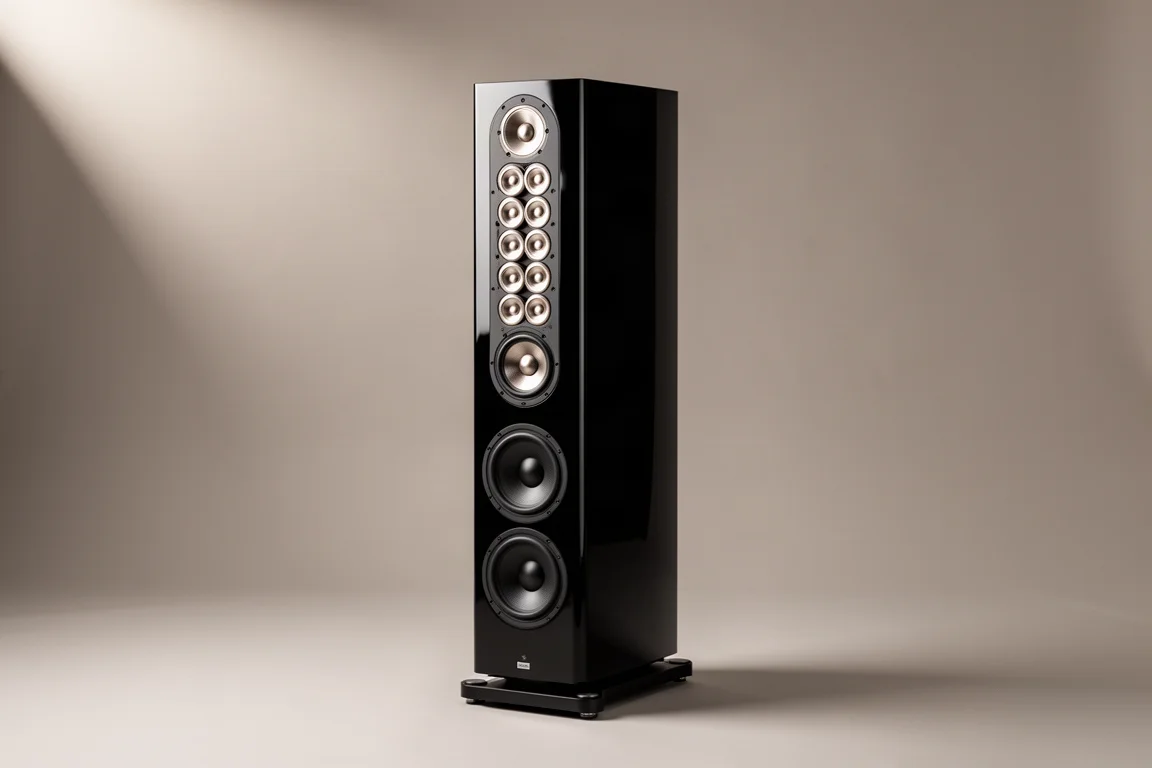
The XR100 is a floor-standing tower about 8 inches wide excluding its base, available in the same gloss black and red walnut finishes. It can crank out serious volume, and unlike the XR50 it does not demand a huge amplifier just to get going. Feed it power, though, and it will handle just about anything you throw at it.
The engineering answer is more of the same. Doubling the number of woofers in a system raises sensitivity by 3 dB, and quadrupling them adds 6 dB. The XR100 uses four of the same woofers found in the XR50, which lowers its power requirements, increases power handling, reduces distortion further, and pushes the bass down to an honest 30 Hz from a very small footprint.
To keep pace with four woofers, McIntosh uses ten inverted dome titanium midrange drivers. Two sit above and two below the tweeter covering 2 kHz to 8 kHz, while four above and four below handle 300 Hz to 2 kHz. The same 3/4-inch titanium tweeter is used because it crosses over high enough to survive the tower’s 600 watt rated maximum. The XR100 also adds bi-wiring and bi-amping capability.
The result is a neutral, effortless presentation with real bass punch. Put on a favorite live rock album and turn it up. The trade-off is imaging. With eight midrange drivers, the sound is less precisely localized than most small towers, and you need to sit equidistant from both speakers to get the most involving image. What you gain instead is a very wide, very large sound stage, which many listeners find just as enjoyable.
Amplifier and Power Considerations
The two speakers sit at opposite ends of the amplification conversation. The XR50’s 81 dB sensitivity means it needs a lot of clean power, around 200 watts per channel as a starting point, and more is better. The XR100 is easier to drive and can run on modest amplification, but it scales with whatever you feed it and rewards extra power at high volume. McIntosh makes a wide range of integrated amplifiers and separates that cover both demands comfortably.
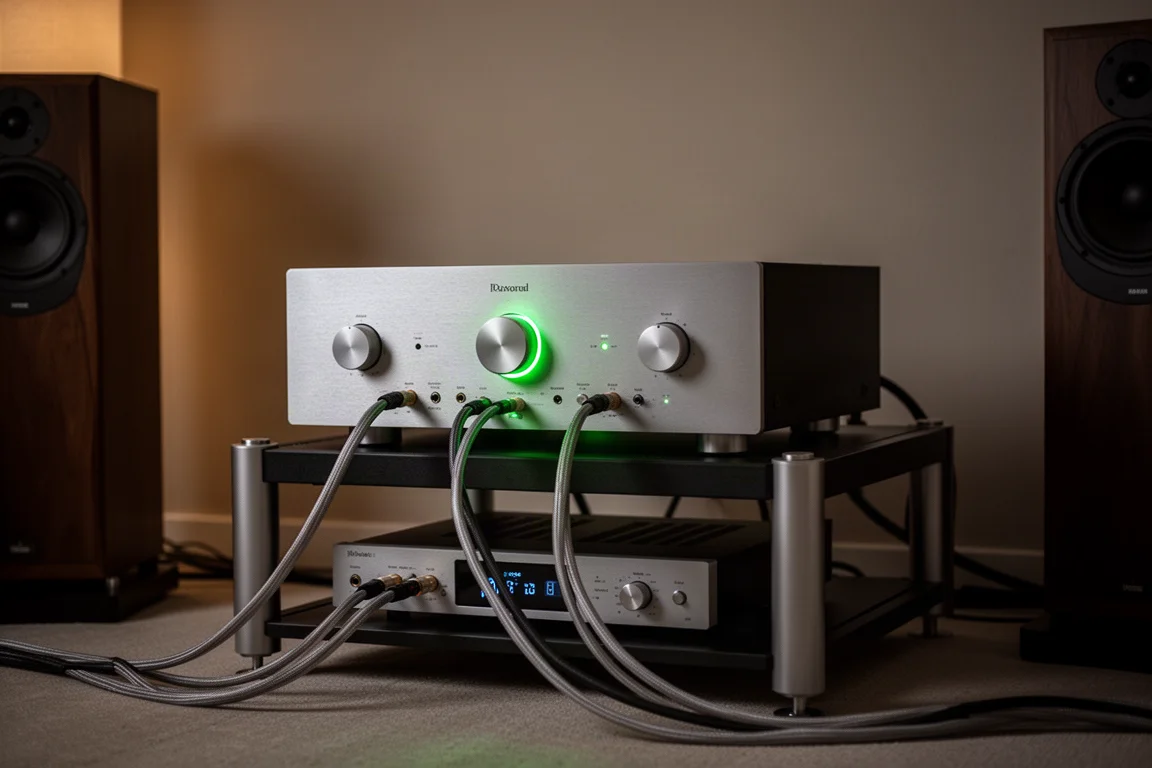
One small detail ties the pair together. If you already own McIntosh amplification, the illuminated green logo on the base of either speaker lights up when you switch the system on.
Finishes, Setup, and System Integration
Both models share the same two finishes, gloss black and red walnut, and both are built to the same long-service standard. Placement is where they diverge. The XR50 must stand vertically, which rules out lying it on a shelf, and it works best where a compact cabinet can breathe. The XR100 occupies a narrow strip of floor at roughly 8 inches wide, so it fits rooms where a conventional tower would dominate the space.
Buying Advice
Choose the XR50 if your listening room is small, an office system is the goal, or there is simply no space for a tower or a subwoofer, and you want bass that feels like a subwoofer is present. Go in knowing you will need a high-power amplifier, and plan the budget accordingly.
Choose the XR100 if you want live-concert volume and a huge, room-filling presentation from a footprint barely wider than a sheet of paper, and if pinpoint imaging matters less to you than scale and impact. It is also the friendlier option if you would rather not buy a large amplifier.
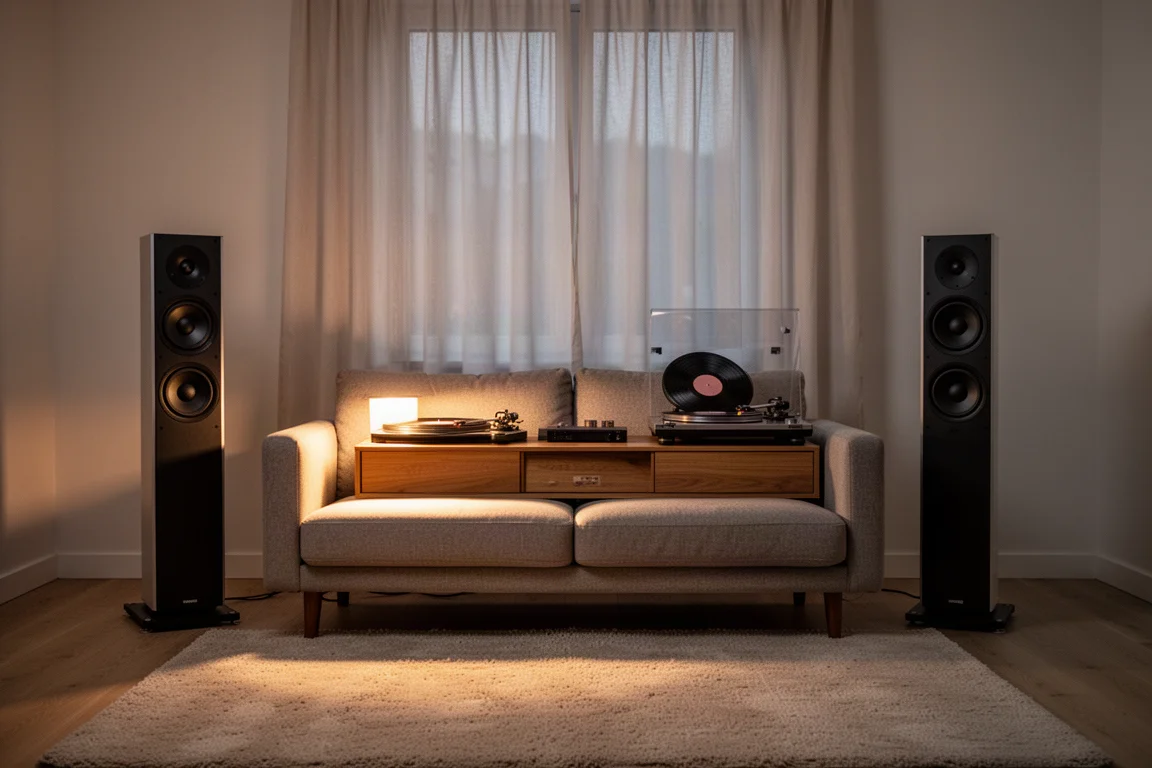
Neither speaker is a compromise for the sake of being small. Each one solves a specific problem: deep bass in a tiny space, or concert-level output in a small tower.
Conclusion
The XR50 and XR100 look related, but they serve two distinct listeners. If space is the constraint and bass quality is the priority, the XR50 delivers in a way its size does not suggest, provided you pair it with serious power. If volume, scale, and a wide sound stage matter more, the XR100 brings concert energy into a room that cannot host a large speaker. Match the speaker to the room and the listening habit, and either one becomes a long-term part of a system.
Further reading
Related Reviews
Home Audio Speakers
Bose 901 Series VI Review: The Final Direct/Reflecting Flagship
A close look at the last Bose 901, from its open reflected sound and stand-mounted design to the dedicated equalizer and amplifier it needs to perform.
Home Audio Speakers
Focal Aria Evo X Speaker Lineup: A Practical Guide to All Six Models
A model by model look at the Focal Aria Evo X range, from the compact stand-mount No.1 to the flagship No.4, plus the center and surround speakers that complete a full system.
Home Audio Speakers
Infinity Primus 360 Review: What a 20-Year-Old Three-Way Tower Still Gets Right
A discontinued three-way floorstander from around 2005 that still measures within about plus or minus 2 dB on axis. Here is what it does well, where it falls short, and what to check before buying a used pair.