Home Audio Speakers
Infinity Primus 360 Review: What a 20-Year-Old Three-Way Tower Still Gets Right
A discontinued three-way floorstander from around 2005 that still measures within about plus or minus 2 dB on axis. Here is what it does well, where it falls short, and what to check before buying a used pair.
Introduction
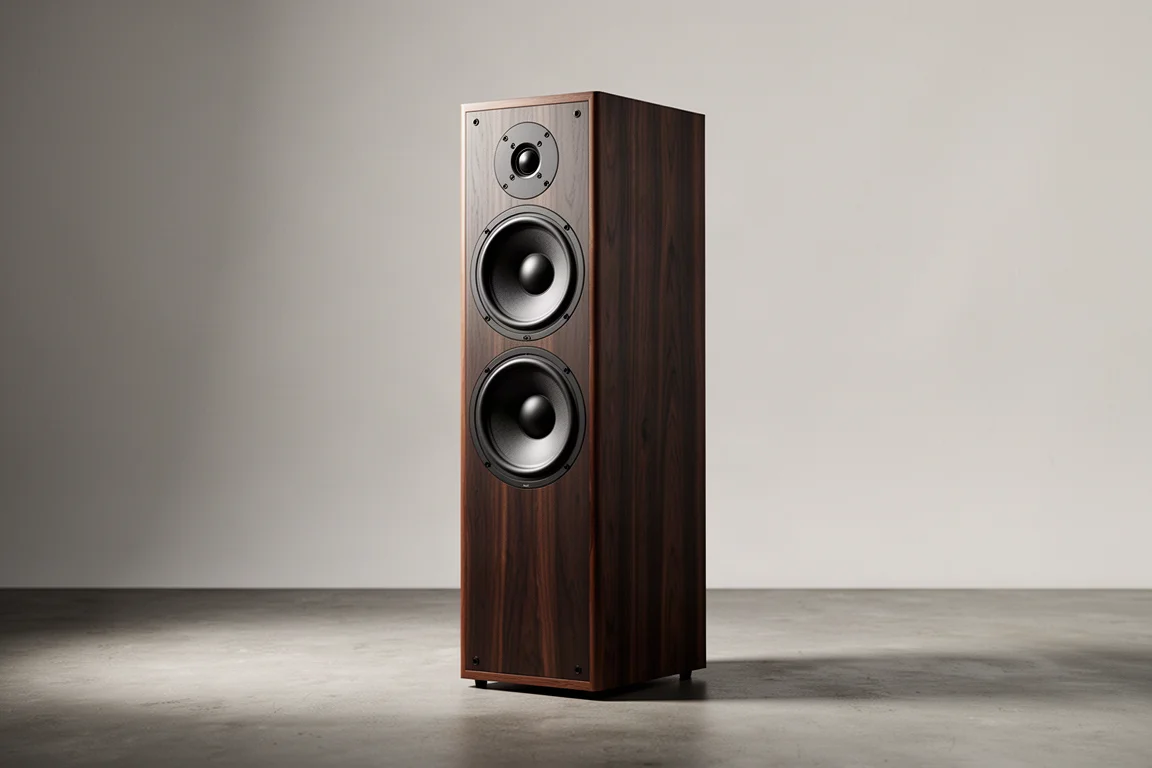
The Infinity Primus 360 is a three-way floorstanding speaker that arrived around 2005 at roughly $600 to $650 per pair. It has been out of production for a long time, so this is not a search for new stock. It is a reference point instead: a mid-priced tower from two decades ago whose measured behaviour still holds up against a surprising amount of what is sold today.
The design pairs two 6.5-inch midwoofers with a 4-inch midrange and a 3/4-inch dome tweeter, with an 8 ohm nominal impedance rating. Quoted sensitivity is 93 dB, and that figure turns out to be optimistic by about 3 to 4 dB.
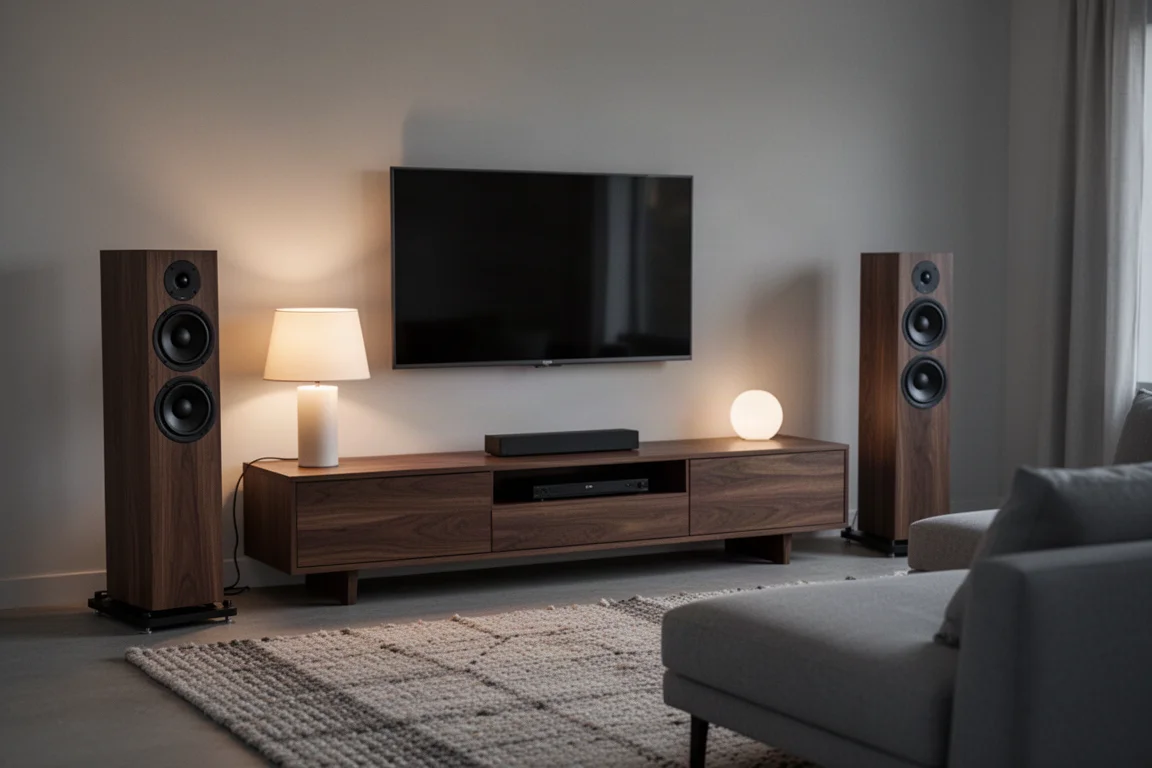
What makes the speaker interesting is what the numbers show once they are checked rather than assumed. On-axis response sits within roughly plus or minus 2 dB of flat, with a mean SPL of 89.4 dB. That is a tidy result for a cabinet of this age, and it makes the Primus 360 a genuinely useful case study for anyone trying to connect measurement data to what a room actually sounds like.
Who This Speaker Is For
This is a used-market proposition, and it rewards a specific kind of buyer. It suits listeners assembling a two-channel system around a pre-owned tower, ideally with an amplifier comfortable driving a 4 ohm load, because the minimum impedance dips to about 3.5 ohms near 150 Hz. Anyone who wants meaningful output below 50 Hz will also want to plan for a subwoofer.
It also suits listeners who are happy to shape the sound themselves. The Primus 360 has linear early reflections and a well-behaved directivity index, which means equalization tends to work predictably rather than fighting the cabinet.
It is a poor fit for anyone who wants a compact, wireless, or plug-and-play speaker. This is a passive tower that needs an amplifier, some space, and a willingness to experiment with placement.
Main Strengths
The headline strength is on-axis linearity. Landing within about plus or minus 2 dB across the band at this price point and this vintage is not a common result, and it explains why the midrange comes across as smooth and even rather than coloured.
The listening window is similarly well controlled, staying smooth within roughly 30 degrees horizontally and 10 degrees vertically. That matters because it is the window that covers a normal seated listening position, not just a single point in space.
Directivity is the second real strength. Early reflections track the direct sound closely, so the tonal balance you hear from the speakers themselves and the balance you hear bouncing off the walls stay in step. That is what makes the speaker easy to equalize: adjust the overall balance and the reflected sound follows. The horizontal contour plot keeps the same overall character out to about 75 degrees off axis.
Distortion is low at both 86 dB and 96 dB, and multi-tone distortion stays below the 3 percent mark that tends to signal trouble.
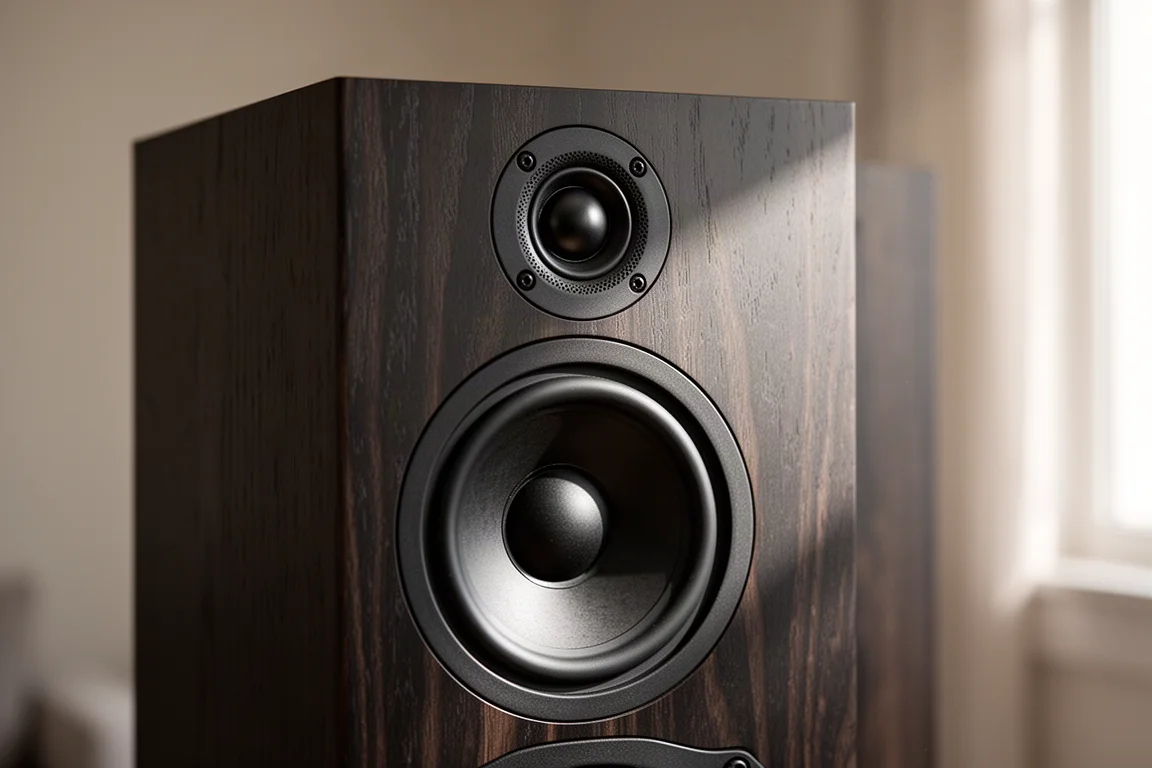
In practice, those three traits combine into a speaker that sounds coherent from a normal seat rather than only in a narrow sweet spot. The vertical window is tighter, holding its character within about 25 degrees above and below the midrange axis before response dips appear, so listening height is worth getting right.
Measurement-Informed Sound Notes
Bass extension is honest but limited. F3 sits at 53 Hz and F10 at 37 Hz, which means the speaker is already rolling off below about 50 Hz in a room. A kick drum will sound present, but the lowest octave is simply not there without help.
The lower treble is the area to watch. Aimed directly on axis, there is an elevation in the lower treble region around 4 kHz that can read as brightness and, on some material, as sibilance. Toeing the speaker out reduces it, but going too far costs top-end energy and thins out the handoff between the midrange and the tweeter.
The impedance plot shows resonances around 170 Hz, 220 Hz, and roughly 350 Hz. They are part of the cabinet’s character rather than a fault, but they are worth knowing about when matching an amplifier.
Compression behaviour below 80 Hz is the other measurable limit. Under sustained high-level playback, output in the bottom octave folds down, so dynamic punch at low frequencies scales less gracefully than the rest of the range.
Things to Consider Before Buying
Availability is the first constraint. The Primus 360 is discontinued and only circulates second-hand, which means condition varies enormously from pair to pair. Cabinets with dents, drivers with hardened or rotted surrounds, and drivers that have been pushed too hard are all realistic risks.
The second consideration is support gear. A nominal 8 ohm rating with a dip to about 3.5 ohms means a 4 ohm capable amplifier is the sensible match, particularly with class AB designs. Pairing it with a subwoofer is close to mandatory for anyone who listens to material with real low-frequency content.
The third is the room. Placed tight against a wall, the speaker develops a boominess in the lower mid-bass that is easy to hear and hard to ignore. It also needs a little toe-out to tame the lower treble, which means it cannot simply be dropped into a corner and forgotten.
Finally, be realistic about sensitivity. The 93 dB specification is roughly 3 to 4 dB higher than measured output, so budget amplifier power accordingly rather than assuming the speaker will run on almost anything.
Positioning and Room Setup
Placement does more for this speaker than any single upgrade. Starting close to the front wall produces extra lower mid-bass bloom. Moving the cabinet out about a foot, roughly a third of a metre, largely clears that up, and a final position around 1.5 feet from the wall strikes a workable balance between bass output, tonal neutrality, and a look that still sits sensibly in a living room.
Aiming matters just as much. Pointed straight ahead at the listener, the lower treble runs hot. Toed out about 30 degrees, too much top end disappears. The useful window sits around 10 to 15 degrees off axis, which preserves the midrange to tweeter handoff while taking the edge off the brightness.
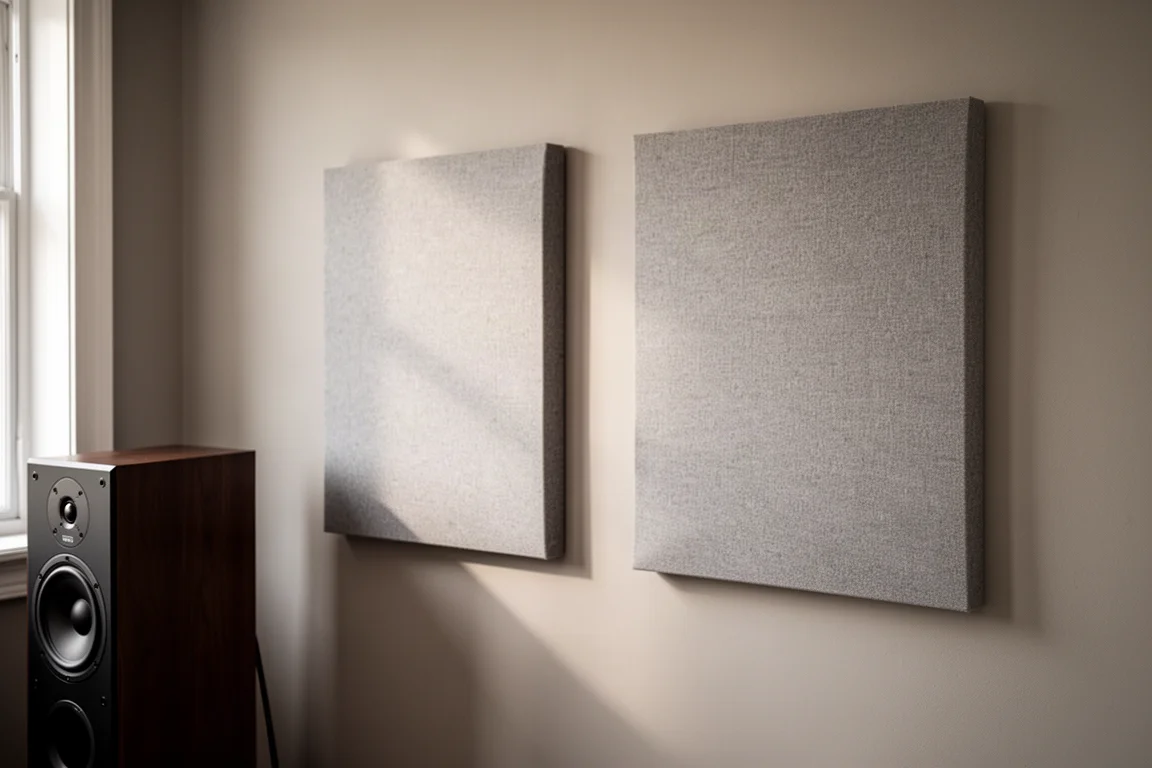
Acoustic absorption on the side walls is a practical extra. Adding panels reduced a peak around 4 to 5 kHz and took some sibilance out of the presentation, which lines up with the directivity data rather than contradicting it.
Buying Advice
A used pair is worth considering when three things line up: clean cosmetics, intact driver surrounds, and a seller who can confirm the speaker has not been abused. A quick physical inspection for dents and surround rot tells you most of what you need to know before powering anything up.
Consistency between units is generally good on this model. A second cabinet measured within about 1 to 1.5 dB of the first overall, and the impedance plots line up closely, which makes a matched pair a reasonable expectation rather than a lucky find.
Plan the rest of the system around the speaker’s limits. An amplifier rated for 4 ohm loads, a subwoofer to cover everything below roughly 50 Hz, and enough room to pull the cabinets out from the wall will get far more out of the Primus 360 than any cable or accessory upgrade. Aesthetics count too, since a tower that looks wrong in the room tends to get moved into a worse position, and position is where this speaker earns its keep.

If the price is fair and the condition checks out, this is a low-risk way to hear what a well-executed budget tower from two decades ago was capable of.
Conclusion
The Infinity Primus 360 is not a miracle, and it is not a substitute for a modern speaker with deeper bass and higher sensitivity. What it does offer is a clear demonstration that careful design at an affordable price has been possible for a long time: flat on-axis response, controlled directivity, low distortion, and a cabinet that responds predictably to equalization and placement.
For a buyer who understands the trade-offs, that combination still makes a compelling case. Bring a capable amplifier, add a subwoofer, give the speakers room to breathe, and this twenty-year-old tower will hold its own in a way that is genuinely hard to argue with.
Product link
View more details for Infinity Primus 360
This product is mentioned in the review. Check the specifications, options, and compatibility before buying.
View more details for Infinity Primus 360Further reading
Related Reviews
Home Audio Speakers
Bose 901 Series VI Review: The Final Direct/Reflecting Flagship
A close look at the last Bose 901, from its open reflected sound and stand-mounted design to the dedicated equalizer and amplifier it needs to perform.
Home Audio Speakers
Focal Aria Evo X Speaker Lineup: A Practical Guide to All Six Models
A model by model look at the Focal Aria Evo X range, from the compact stand-mount No.1 to the flagship No.4, plus the center and surround speakers that complete a full system.
Home Audio Speakers
KEF Blade One Meta Review: Flagship Sound From a Single Apparent Source
A close look at the KEF Blade One Meta, from its 12th generation Uni-Q driver array and MAT absorption to real listening notes and what to weigh before buying.