Hi-Fi Audio
McIntosh MDA200 Review: A DAC and Digital Preamp Built to Be Upgraded
A close look at the McIntosh MDA200, a standalone DAC and seven-input digital preamplifier whose DA2 module can be swapped as digital formats evolve.
Introduction
McIntosh has been building audio components in Binghamton, New York since 1951, and its design philosophy has always leaned toward longevity. Power amplifiers and preamplifiers change slowly, and classic pieces from decades ago still hold their value on the used market. Digital audio does not move at that pace. The MDA200 is McIntosh’s fourth digital-to-analog converter, arriving after the D150 was discontinued a few years ago, and it is built around a direct answer to that problem. The digital circuitry sits on a removable module, so the part of the component most likely to be overtaken by new formats can be replaced without replacing everything else.
The MDA200 works as a standalone DAC and as a full-function digital preamplifier for a digital-only system. It wears the familiar McIntosh look, and it can serve as the digital hub of a two-channel setup or as a converter feeding an existing preamplifier.
Who the McIntosh MDA200 Is For
This is a component aimed at listeners who plan to keep their system for a long time. If you already own McIntosh gear, the MDA200 is designed to sit alongside it visually and functionally, down to knob spacing and panel height. If you are building around digital sources and want one box to handle conversion, input switching, and volume control, the MDA200 covers that too.
It also makes sense for anyone who wants to bring television audio into a two-channel system. The HDMI ARC input lets a TV feed the MDA200 directly, which means movie and series sound runs through the same speakers and the same conversion path as music.
The other group this appeals to is buyers who care about serviceability. A DAC that can accept a new digital module years from now is a different proposition from a sealed converter, and that is the core of the MDA200’s pitch.
Design and Build Quality
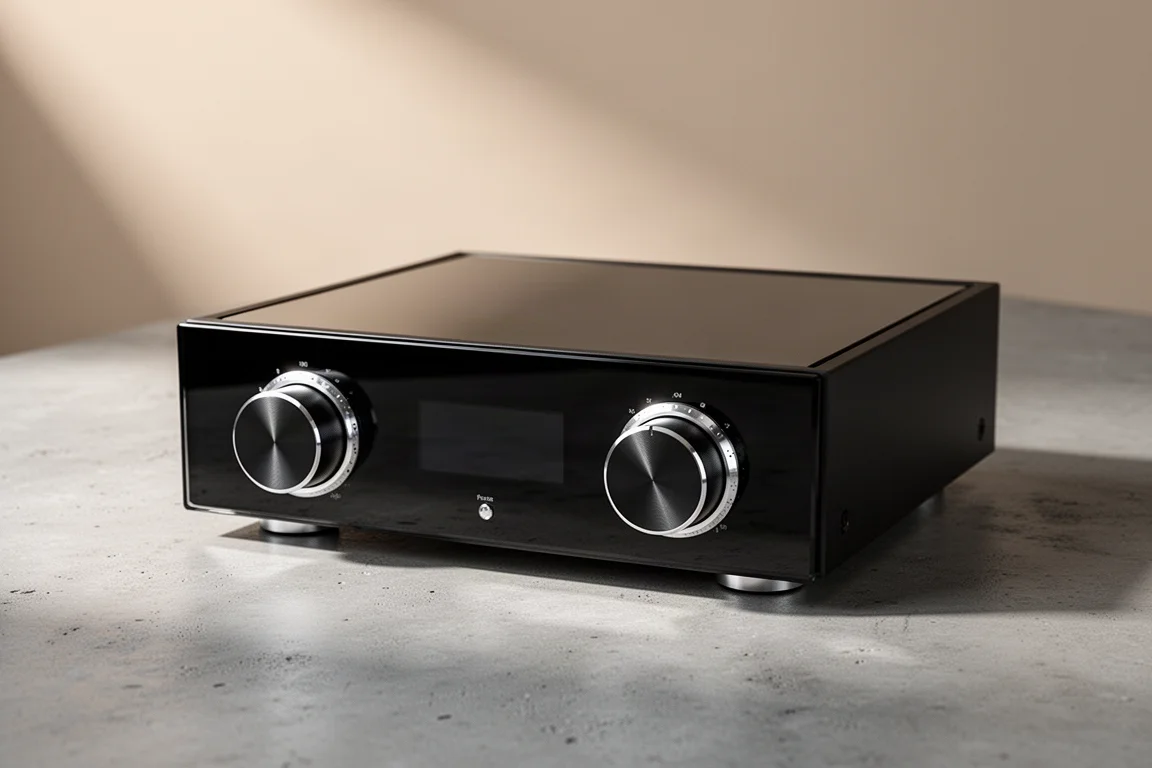
The MDA200 is slim, with a black glass faceplate, an illuminated McIntosh logo, the brand’s classic rotary knobs, and custom machined aluminum end caps. Display brightness can be set in the trim settings, so the front panel can be dimmed to suit a dark listening room.
McIntosh has also moved to a new system for illuminating the front panel. Instead of a small number of LEDs driven hard, the MDA200 uses a much larger number of very small surface-mount LEDs running at low power, an approach intended to deliver decades of service.
The matching extends to dimensions. The MDA200’s knobs are identical to those on the C22 preamplifier and share the same horizontal spacing, and the chassis height lines up with the glass panel section of the C22. It is a small thing, but it is the kind of detail that matters when components sit stacked in the same rack.
Inputs, Outputs, and Everyday Control
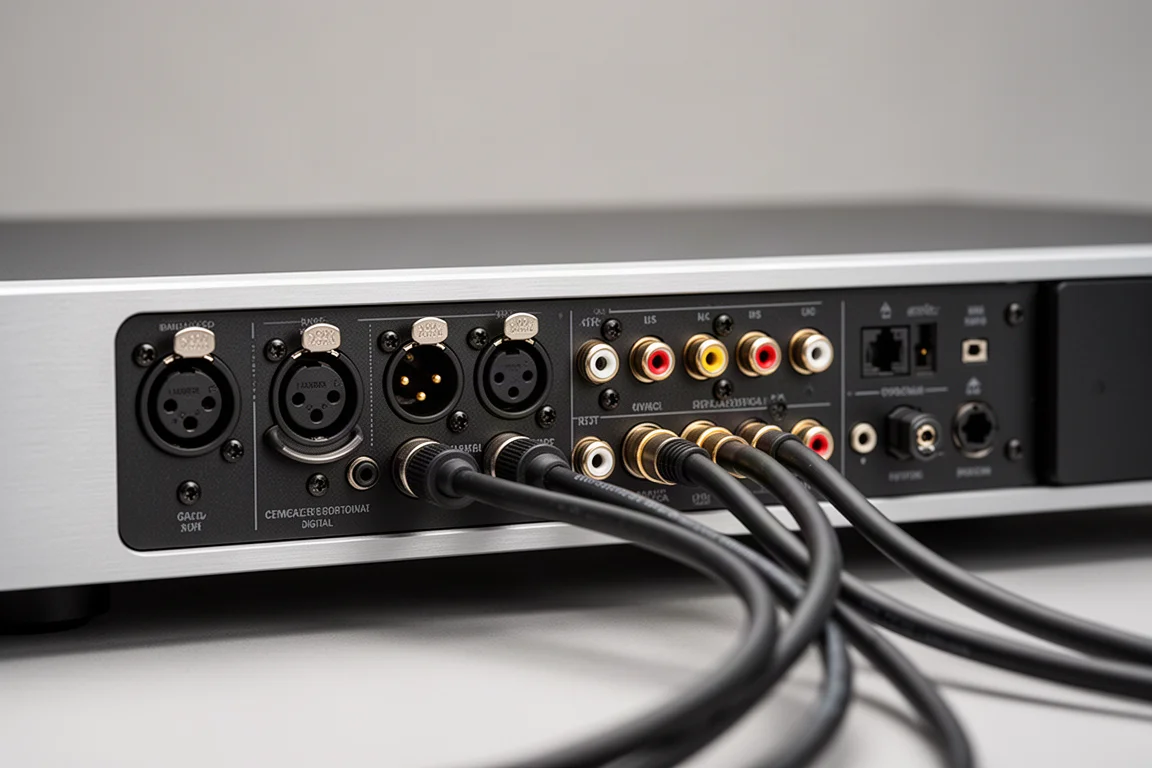
There are seven digital inputs: two coaxial, two Toslink optical, one USB for computer audio, one MCT for McIntosh disc transports, and one HDMI input with ARC. On the output side you get both balanced and unbalanced RCA connections.
For system integration, the rear panel includes standard data ports, an RS-232 connection for control systems, and a power control input and output. That trigger output can switch a McIntosh power amplifier, or any amplifier with a trigger input, on and off with the MDA200.
As a DAC, the MDA200 ships with fixed output, which is what you want when it feeds an existing preamplifier. Change the output to variable in the menu and it becomes a seven-input digital preamplifier. Its output impedance is low enough to drive long cable runs to amplifiers placed near the speakers, and it can output 8 volts RMS where many converters top out at 2 volts. Volume in variable mode is handled by a precision digitally controlled attenuator with a tracking accuracy of 0.5 dB.
Everyday usability is thoughtful. Input switching is electronic, which keeps selection noiseless and free of distortion. Each input can be renamed, and each can be given its own trim level if one source is louder or quieter than the others. The USB input is Roon Tested, so a Roon library can be browsed and played through it.
The HDMI ARC input is the feature that will surprise people. With CEC enabled, a television remote can power on the MDA200, select the HDMI input, and adjust volume. The MDA200 also accepts Dolby Atmos and DTS signals and decides how best to route them to the left and right speakers, so there is no need to force the TV into PCM output. Lip sync can be adjusted manually or left to happen automatically. CEC behaviour depends on the television, and newer sets tend to handle it more reliably than older ones.
One quirk worth knowing: if you use a McIntosh remote that predates this model, its input codes may clash with the MDA200’s factory defaults. McIntosh lets you assign a different set of codes in the setup menu, which resolves the conflict without any rewiring.
The DA2 Module and Its Upgrade Path
The rear panel has a slot for the DA2 digital audio module, and that module is where the conversion happens. Coaxial and optical inputs handle digital signals up to 192 kHz at 24-bit resolution. The MCT connection streams high-bandwidth DSD and PCM from external McIntosh sources. The USB input accepts PCM up to 192 kHz at 32-bit, decodes DSD up to DSD512, and handles DXD at 24-bit with a 384 kHz sampling rate.
Inside is McIntosh’s quad balanced 8-channel, 32-bit converter design. A two-channel converter does not obviously need eight channels, but the arrangement earns its keep: running two converters in parallel improves signal-to-noise ratio by 3 dB, and the balanced layout uses two converters in parallel for the positive half of the signal and another two for the negative half, which further reduces noise.
Once the signal is converted, it leaves the DA2 module and passes to the analog preamplifier section, which uses the circuit design from the C53 solid-state stereo preamp. Both the digital module and the analog stage are supported by fully regulated power supplies, which helps keep performance stable when the power line is not.
The upgrade path is the reason this design exists. If you own another McIntosh component with a DA1 module built in, moving to the DA2 costs $1,000. The module approach means the MDA200’s digital side can be refreshed when better technology arrives rather than replaced entirely.
How the MDA200 Sounds
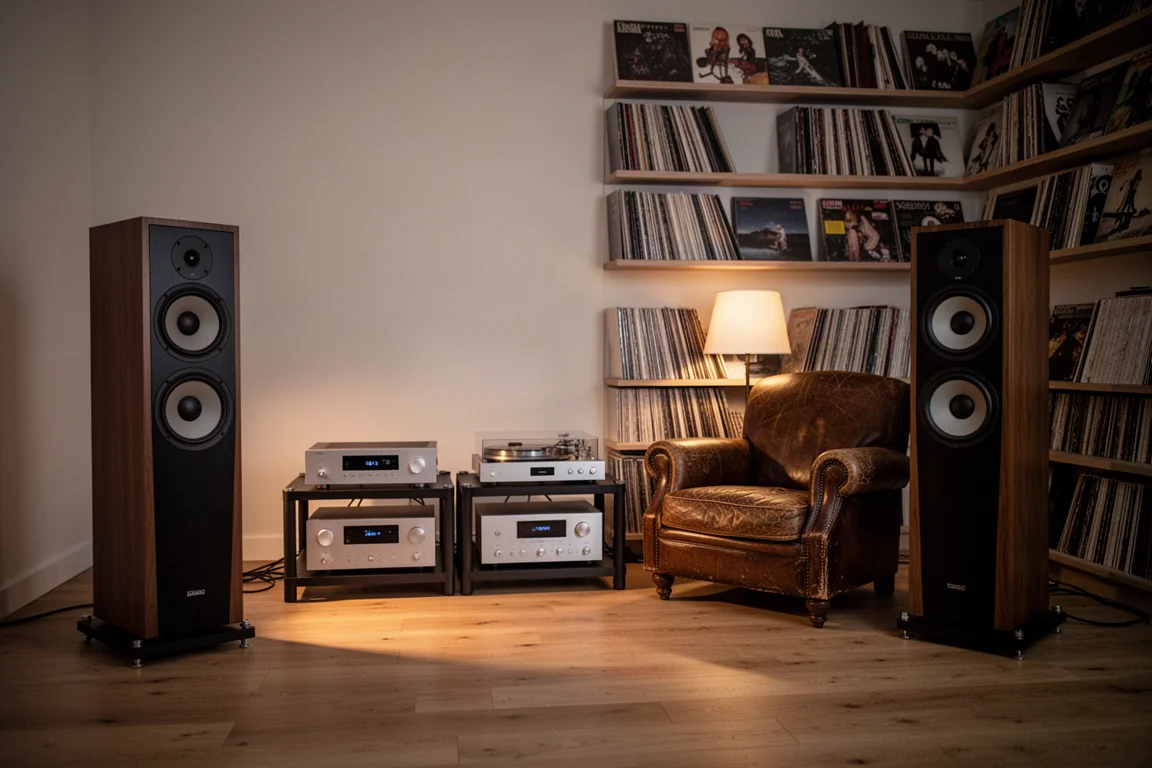
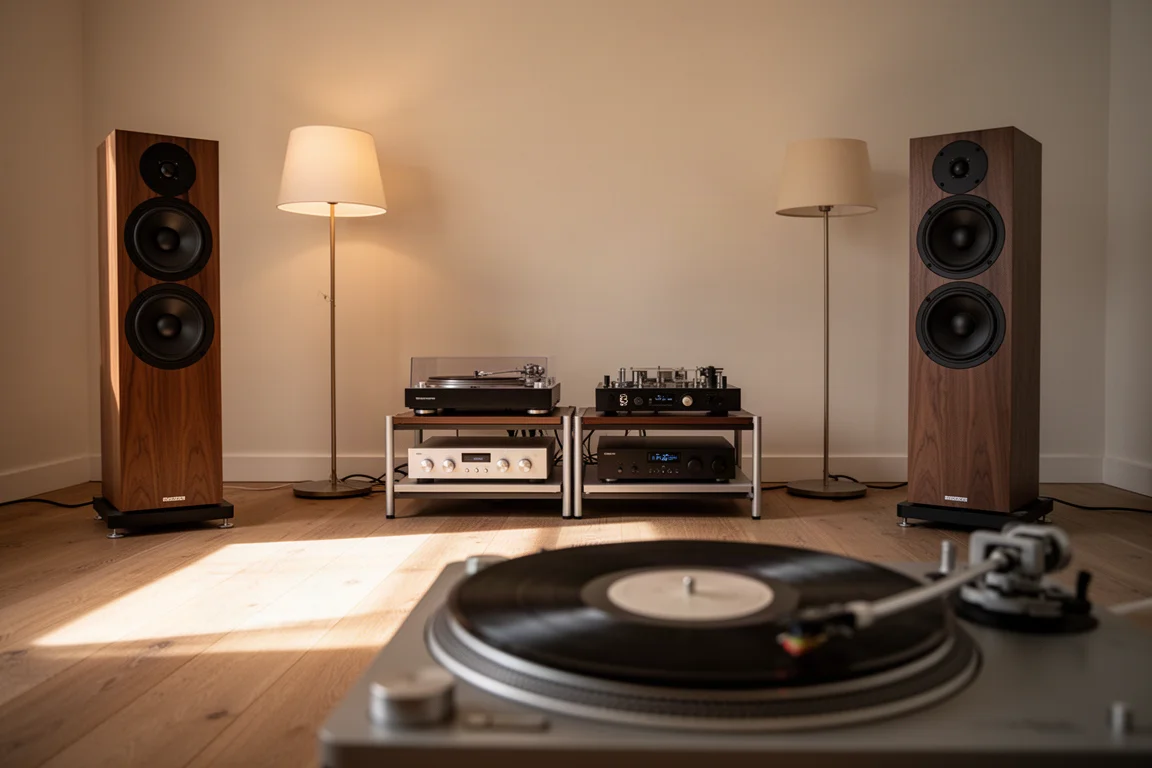
Our listening setup paired the MDA200 as a DAC with a C22 preamplifier, a McIntosh 1502 power amplifier, and JBL 4367 floorstanding speakers. A Cambridge Audio CXN v2 fed it through its coaxial digital output, which is one of the practical ways to add streaming to a component that deliberately has none.
The character is warm and detailed at the same time. Bass lines came through deep, impactful, and tuneful. Dynamic contrast was pronounced, and images were pinpoint, extending beyond the speakers into a three-dimensional space. Rhythm and pacing were strong enough to make the music feel like it was pushing forward on its own.
Some tracks test a system rather than flatter it. America’s “Sandman” can turn edgy when the chain is not quite right, and here it stayed enjoyable. Steppenwolf’s “Magic Carpet Ride” played loud never showed a trace of hardness, while the MDA200 still surfaced small details buried in the mix. Harry Connick Jr.’s “Don’t Get Around Much Anymore” showed the same combination of warmth and clarity.
Context matters when judging that performance: the MDA200 costs roughly four times as much as the Cambridge Audio CXN v2 that fed it. The improvement was not subtle, but it is a comparison between two very different price points.
Things to Consider Before Buying
The MDA200 has no built-in streaming. That is deliberate. McIntosh’s position is that it wanted to build the best-sounding converter it could without paying streaming service license fees or chasing software changes, and that separate streamers with digital outputs are plentiful and inexpensive. A Bluesound Node or a Cambridge Audio CXN model can feed the MDA200’s digital inputs and let the DAC and analog stages do the heavy lifting.
CEC control over HDMI works better now than it did a few years ago, but reliability still varies by television, and newer TVs tend to behave better than older ones. If seamless TV remote control matters to you, that is worth checking with your own set.
Two setup details are easy to miss. The MDA200 ships with fixed output for DAC use, so it needs a menu change to become a variable-output digital preamplifier. And if your McIntosh remote uses the same input codes, you will need to reassign codes in the setup menu.
Finally, the module upgrade path is not free. Moving from a DA1 to a DA2 module costs $1,000, and future modules will presumably carry their own price.
Buying Advice
For McIntosh owners, this is the straightforward DAC to add when you want digital sources in the system. It matches visually, integrates through the trigger and data connections, and gives you both converter and preamplifier functions in one chassis.
For anyone else shopping at this level, the MDA200 deserves serious consideration on sound quality alone. What makes it more compelling than most high-end converters is the slot on the back. Digital standards keep moving, and a component that can accept a new digital board stays current in a way that a sealed DAC cannot.
If you already own a current McIntosh component that accepts the DA2 module, the module upgrade is an easy recommendation in its own right.
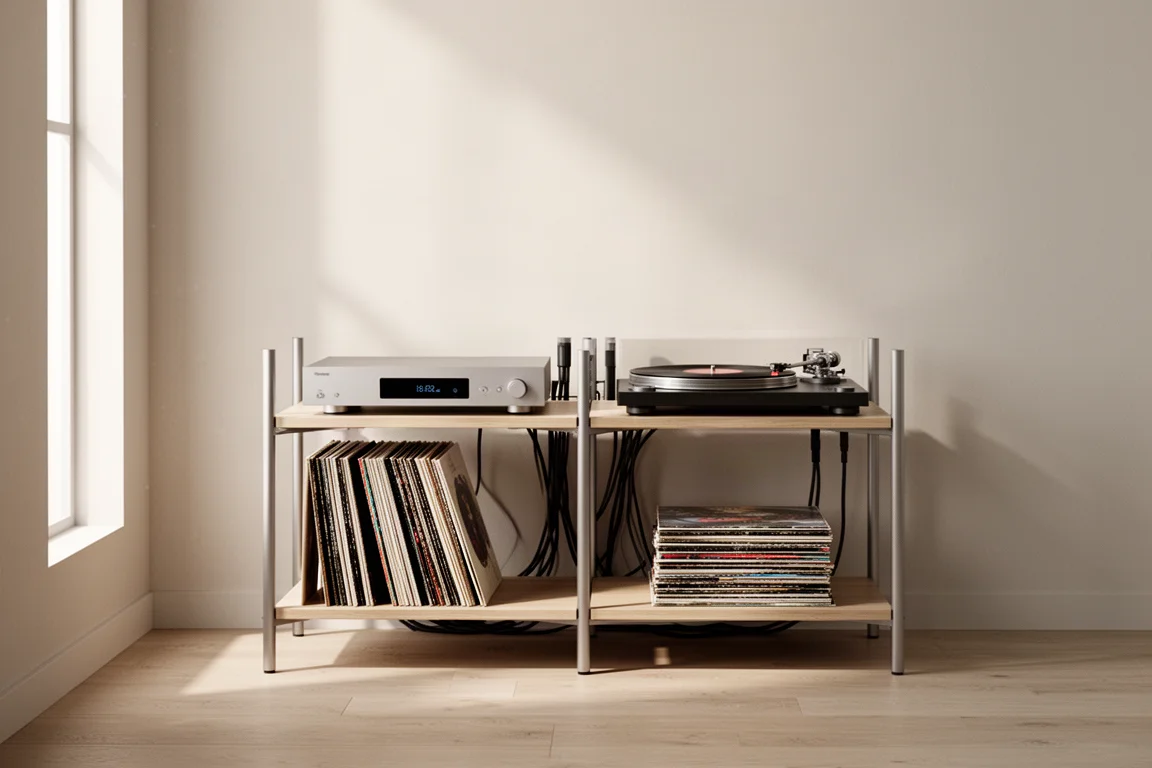
Buying at this price is about more than specifications. Consider how the component fits the rest of your system: whether you need preamplifier functions, whether you want TV audio routed through your speakers, and whether you value the ability to refresh the digital side later.
Conclusion
The MDA200 is another well-executed McIntosh component, and it does the two things buyers at this level care about. It makes music enjoyable across a wide range of recordings, revealing detail without turning harsh, and it is designed to remain relevant as digital formats change. For McIntosh owners it is the natural next step into digital sources. For anyone else in the market for a high-performance converter, the replaceable digital module is a strong argument in its favour.
Product link
View more details for McIntosh MDA200
This product is mentioned in the review. Check the specifications, options, and compatibility before buying.
View more details for McIntosh MDA200Further reading
Related Reviews
Hi-Fi Audio
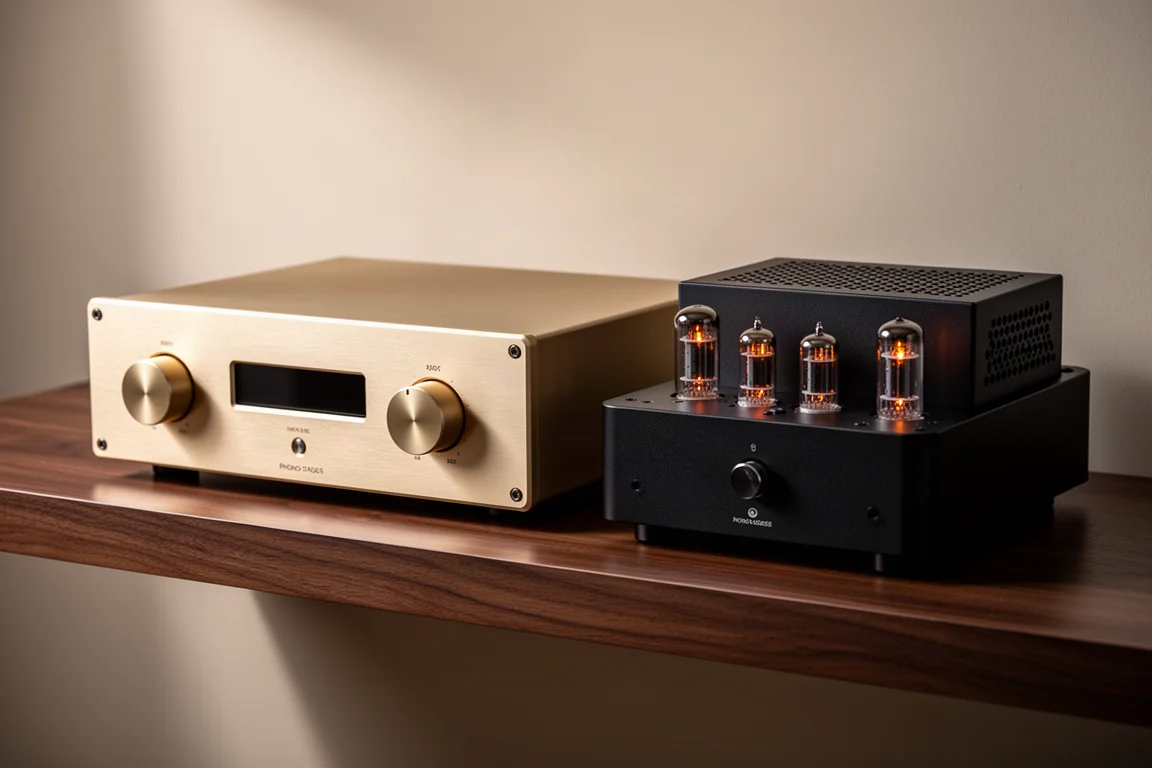
Accuphase C-57 vs Allnic H-7000V: Two High-End Phono Stages Compared
A fully balanced solid-state phono stage with a pitch-black noise floor meets a tube design built for well-loved records. Here is how to choose between them.
Hi-Fi Audio
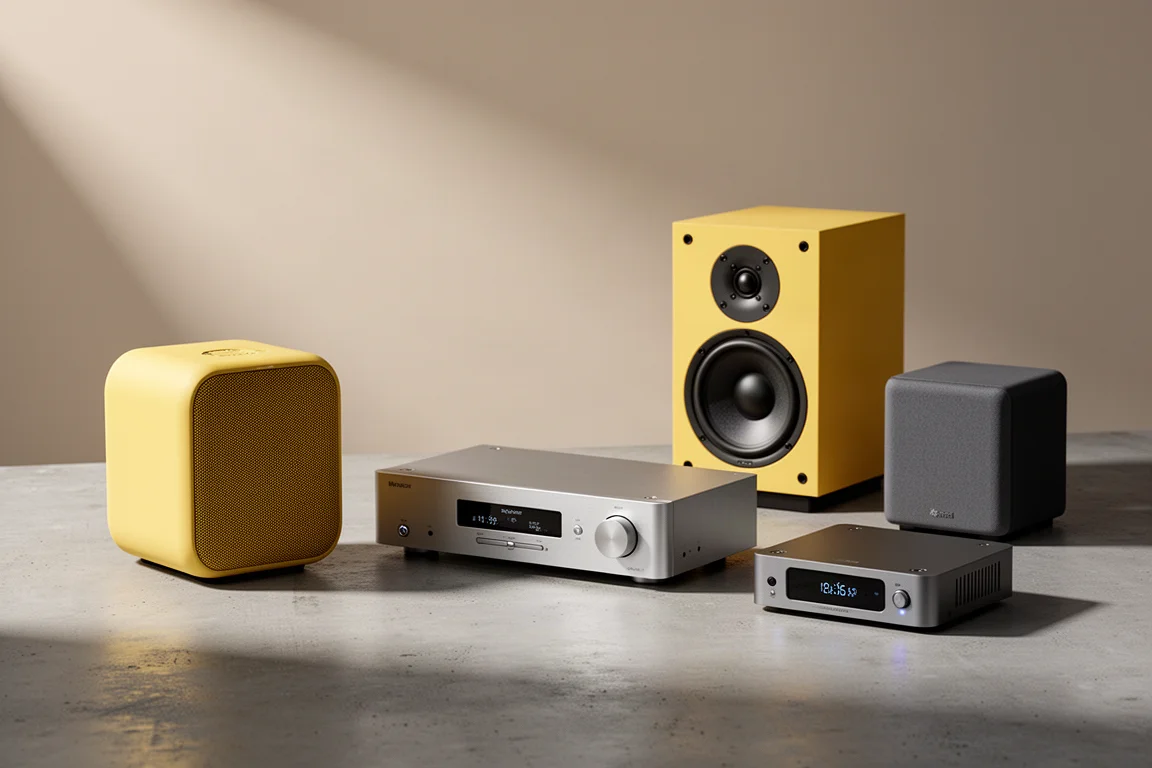
Active vs Passive Hi-Fi: Five Components for a Modern System
Five components that define modern active and passive hi-fi systems, with the strengths, trade-offs and setup details worth weighing before you buy.
Hi-Fi Audio
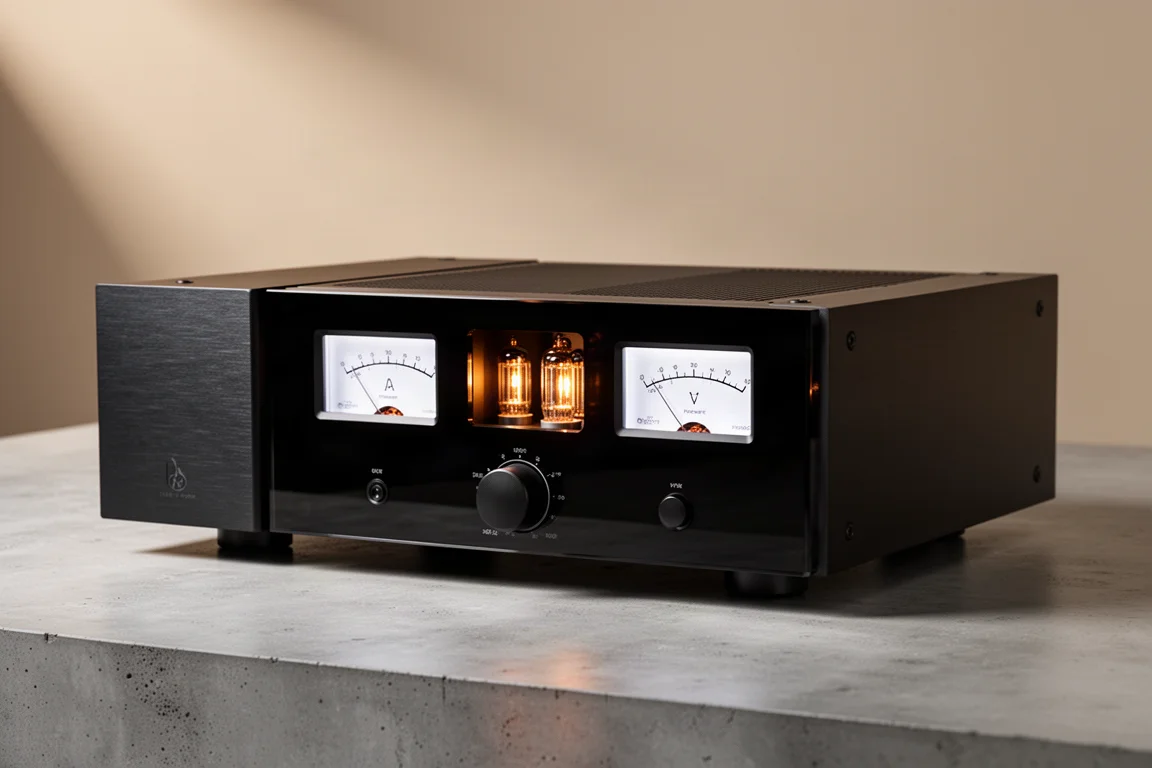
Advance Paris A10 Apex Review: A Hybrid Integrated Amplifier That Covers a Lot of Ground
A French hybrid integrated amplifier with a class A tube preamp stage, analogue power meters, and an internal DAC and phono stage good enough to make extra boxes unnecessary.