Audio Components
McIntosh MB20 Bluetooth Transceiver Review: A Bridge for Legacy Hi-Fi
A practical look at the McIntosh MB20 Bluetooth Transceiver, from its aptX HD support and 32-bit DAC to the ways it brings streaming and wireless headphones into older audio systems.
Introduction
McIntosh has been designing and building audio equipment in Binghamton, New York for more than 70 years, and a great deal of that equipment is still running in living rooms today. That durability creates an unusual problem. Streaming only became mainstream in the past few years, which means decades of otherwise excellent systems have no easy way to play music from a phone, a tablet, or a streaming service.
The McIntosh MB20 Bluetooth Transceiver is built for exactly that situation. It is a compact black component that adds wireless audio to older gear, and it does so with more connections and more flexibility than most Bluetooth products on the market.
What the McIntosh MB20 Brings to a Legacy System
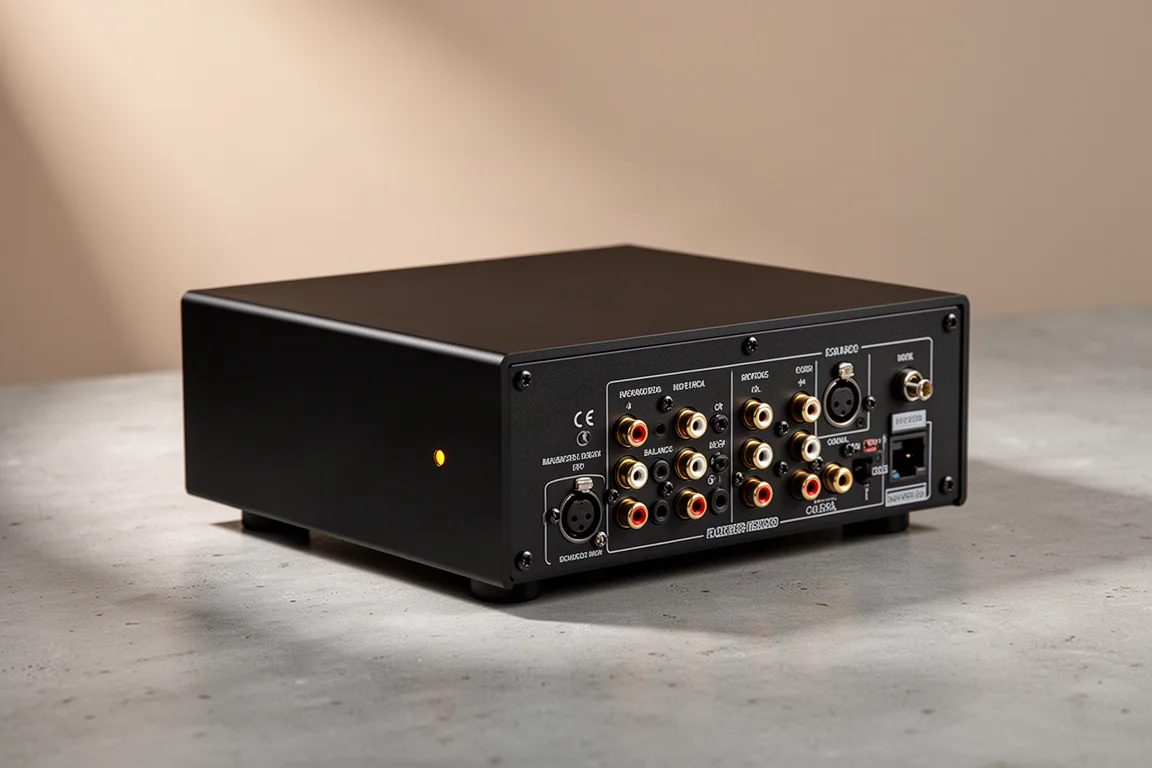
The first thing to understand about the MB20 is that it is a transceiver. It can receive Bluetooth audio and send it into an amplifier, or it can take audio from a source component and transmit it to wireless headphones or a Bluetooth speaker. It cannot do both at the same time, and a button on the rear panel switches between receive (RX) and transmit (TX) modes.
The second thing to understand is its size. Most Bluetooth receivers are tiny boxes with a couple of connectors. The MB20 is noticeably larger, a deliberate trade-off that makes room for better circuitry and a fuller set of audio inputs and outputs.
The front panel is deliberately plain: a black surface with the McIntosh logo and product name screen printed on it. That is a departure from the backlit glass fronts found on many McIntosh components, and the simpler approach was chosen to keep the price accessible to a wider group of customers, including owners of other high-end audio equipment that has no streaming capability built in.
Who This Product Is For
The MB20 makes the most sense for three kinds of listeners.
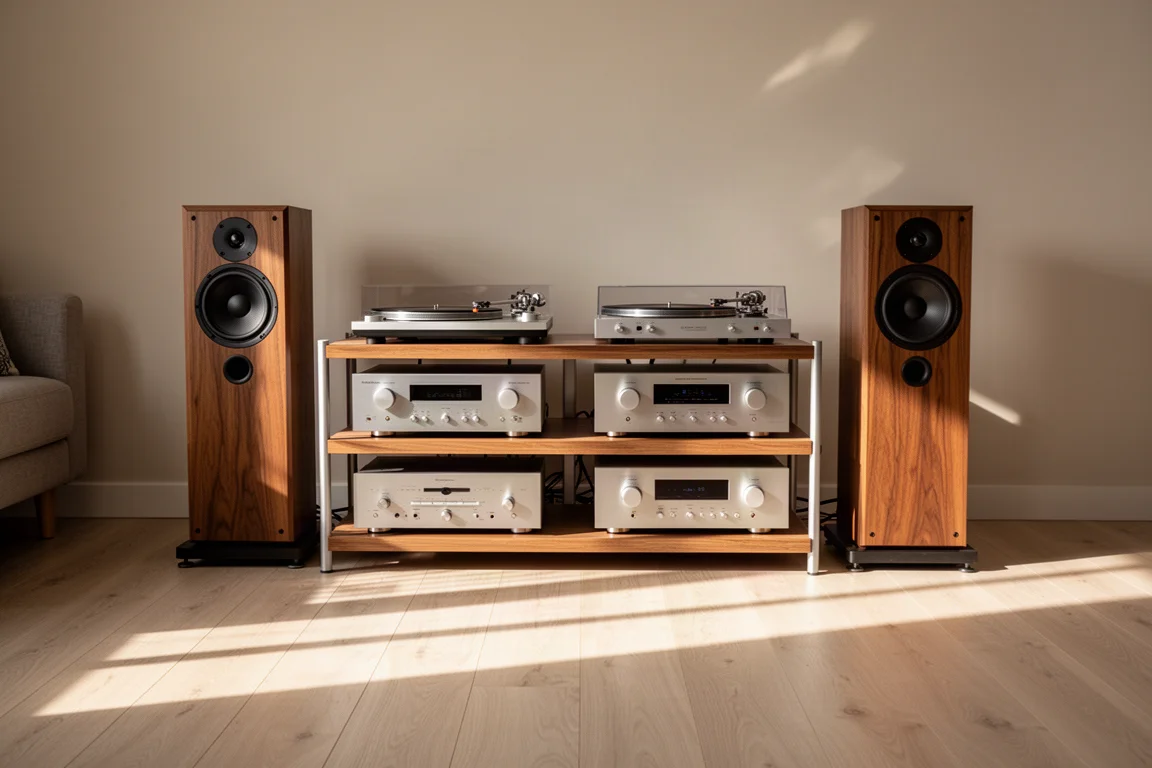
The first is someone with a legacy system, McIntosh or otherwise, who wants to play streaming music through speakers they already own and trust. Set the unit to RX mode, connect the analog or digital outputs to the system, and the streaming world opens up.
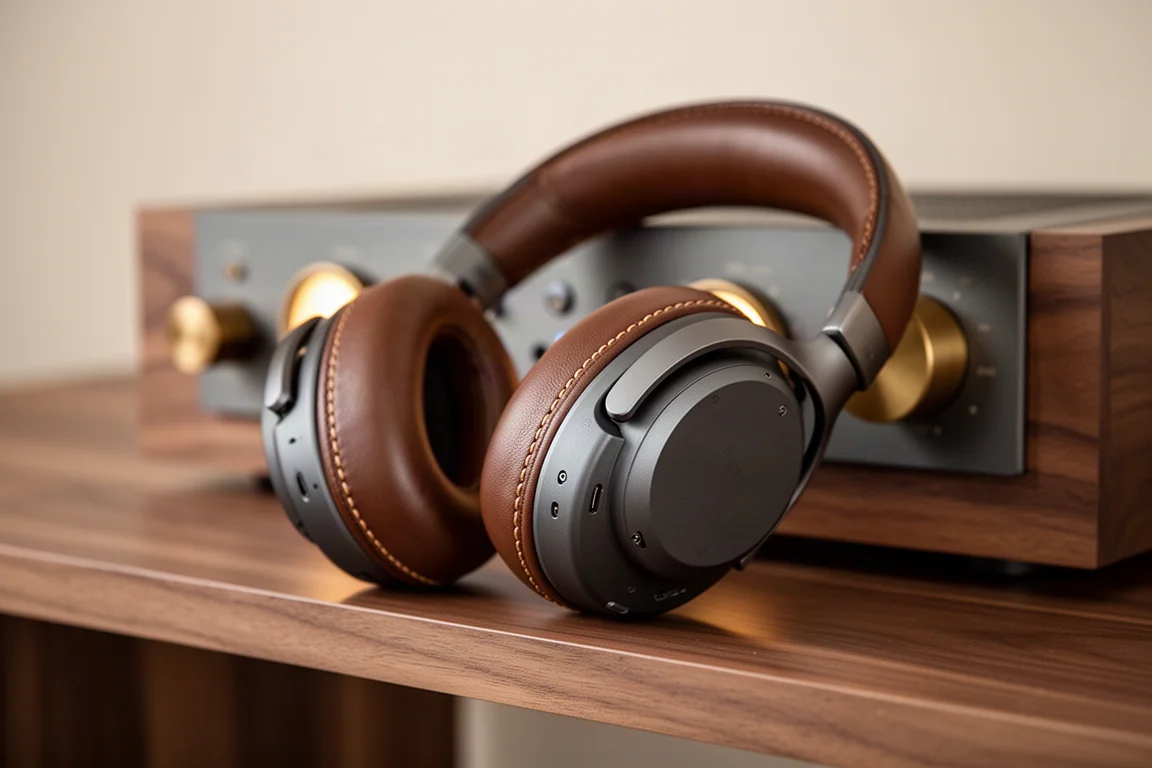
The second is a headphone listener. Set the unit to TX mode, route a source into it, and the audio from a tuner, CD player, turntable, or tape deck can be sent to wireless headphones anywhere in the home.
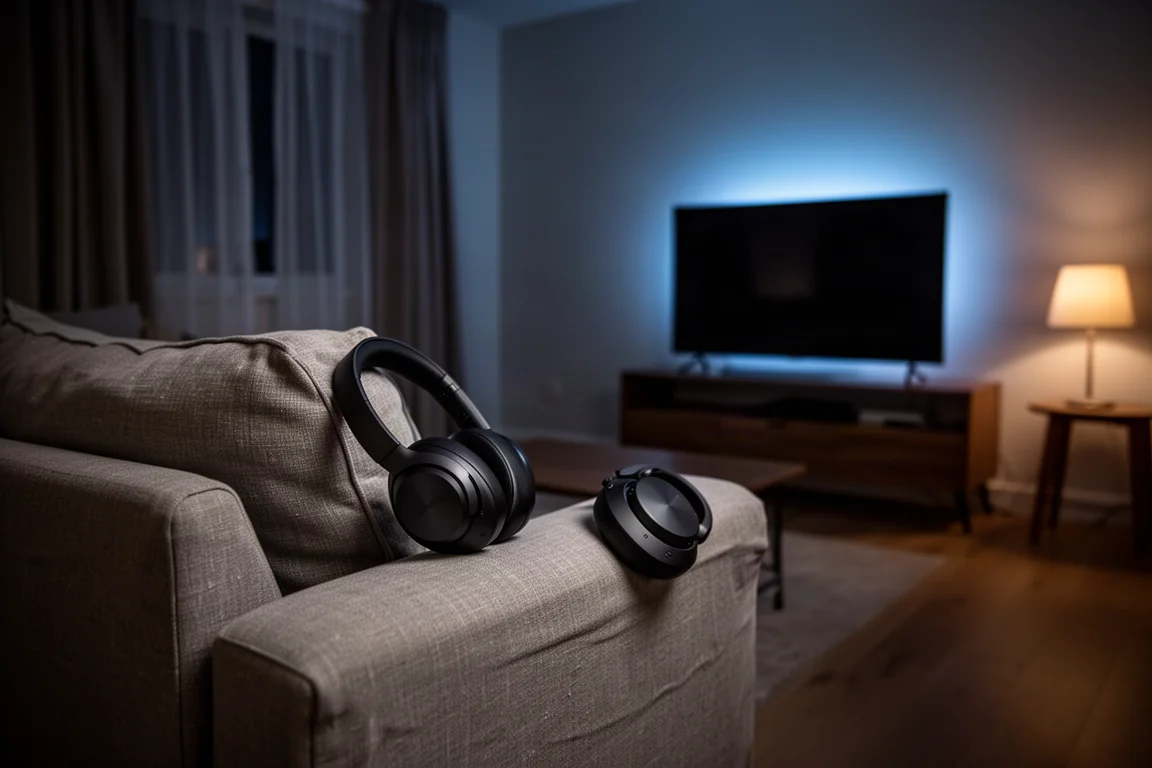
The third is a TV viewer who wants private listening without disturbing anyone else in the house.
Main Strengths
Bluetooth aptX HD and a 32-Bit DAC
The MB20 uses Bluetooth aptX HD, the codec Qualcomm introduced in 2016 and one that has been widely adopted for transmitting audio with minimal signal loss. The transmission is still compressed, but it gets close to the character of a hardwired connection.
On the conversion side, McIntosh uses a 32-bit digital to analog converter with 192 kHz internal processing, the component that turns a digital signal into the analog signal an amplifier can use.
aptX HD is present in most new wireless headphones and in many Android-based phones. It is not available on Apple products, but the MB20 remains backward compatible with the Bluetooth transmitter on an iPhone, so Apple users are not locked out.
Inputs, Outputs, and Automatic Switching
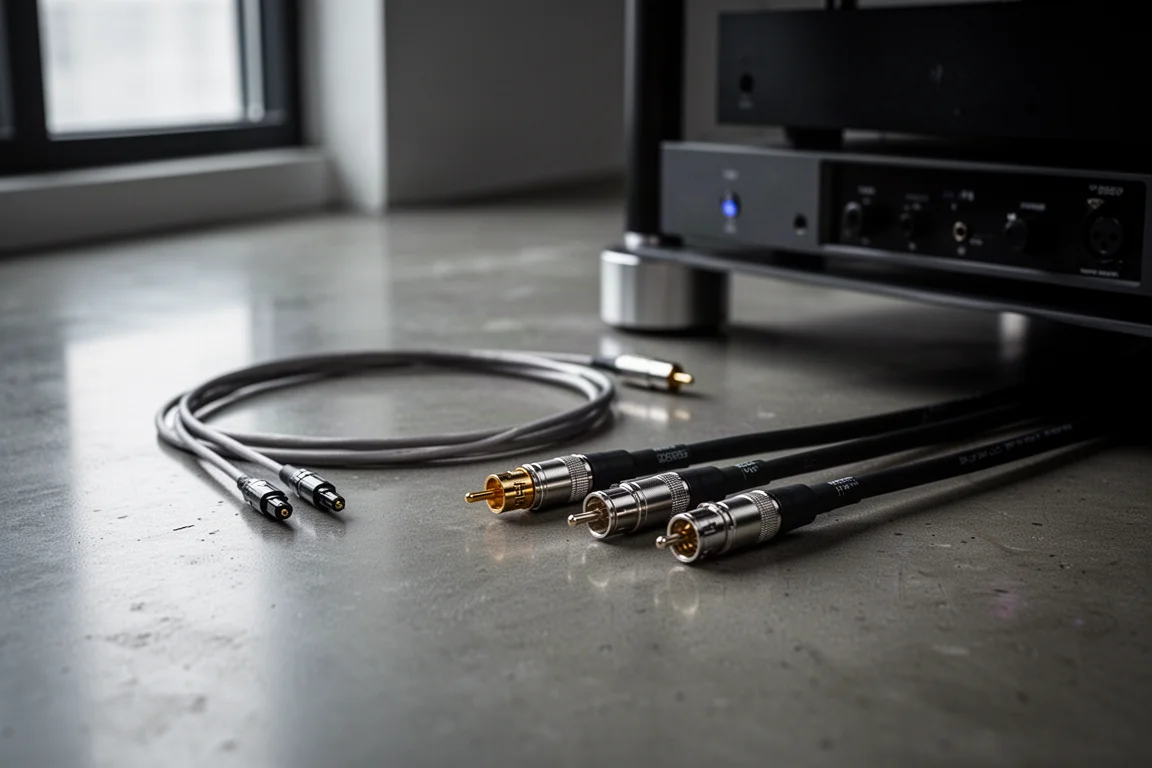
This is where the MB20 separates itself. The input side offers a pair of balanced audio inputs, a pair of RCA audio inputs, TOSLINK digital input, and coaxial digital input. The output side offers the same count and the same types.
All of the inputs switch automatically, so whichever connection has a signal present is the one the unit uses. If you plan to use the digital outputs, the signal is delivered at 96 kHz, which keeps it compatible with older DACs that may not be able to handle 192 kHz.
Wireless Range
A well-made Bluetooth device should hold a connection across a normal home without dropping out, and the MB20 does that once it is paired. The connection proved solid enough to remain intact at distances well beyond a single room.
Practical Use Cases Around the Home
Streaming into a legacy system. Set the rear button to RX and the quality button to HD, then connect the analog or digital outputs to the system. This is the most direct way to bring streaming audio to older equipment.
Headphones from any source. Set the unit to TX and keep quality in HD. Older McIntosh systems typically have a tape output that lets you choose which source is sent to the MB20, so a tuner, CD player, turntable, or tape deck can all be listened to on wireless headphones or a Bluetooth speaker in another room.
Private TV listening. Many televisions have an optical audio output that can connect to the MB20. Set the unit to TX and switch quality to LL, the low latency mode, so the audio stays in sync with the picture. This is exactly the situation low latency mode exists for.
Linking two systems. With a second MB20, one unit can transmit and the other can receive, sending audio from one system to another in a different part of the house. Both units need the quality button in the same position. If both systems play at the same time within earshot, low latency mode keeps them in sync. If audio is only travelling from one to the other, HD mode is the better choice.
Things to Consider Before Buying
The mode and quality buttons live on the rear panel. They are easy enough to find by feel once you know where they are, but front panel placement would have been more convenient for anyone who switches modes often.
Receive and transmit cannot run simultaneously, so the MB20 handles one direction at a time.
Apple devices do not support aptX HD natively, though the unit is backward compatible with the Bluetooth transmitter on an iPhone.
The MB20 sits at the high end of the price range for Bluetooth receivers. That is consistent with how McIntosh builds its products, and the unit performed without issue, but buyers who only want to stream music into an older system should know that component options from Sonos or Bluesound can provide a wired connection and probably better performance. Those alternatives will likely cost more, and they do not offer the transmit option the MB20 has.
Physical size is another consideration. The larger chassis is what allows the better circuitry and the extensive connections, but it takes up more space than a typical Bluetooth receiver.
Where the MB20 Fits Among Other Streaming Options
If the only goal is getting streaming audio into an older amplifier, a dedicated network streamer with a wired connection is a reasonable path, and it may deliver better performance at a higher price. What none of those options do is transmit. The MB20 covers both directions in a single chassis, and the high-performance DAC inside it is part of what sets it apart in that role. For a household that wants streaming and wireless headphone listening from the same box, there is nothing quite like it on the market.
Buying Advice
The MB20 is the right purchase if you want one device that can pull streaming music into a legacy system and push that system’s audio out to wireless headphones or a speaker in another room. It is built to McIntosh standards, it performs flawlessly in that role, and its connection set is unusually complete for a Bluetooth product.
It is a less obvious purchase if streaming is your only goal and you are comfortable with a wired network streamer. In that case, a Sonos or Bluesound component may suit you better, as long as you accept the higher price and the loss of the transmit function.
For McIntosh owners in particular, the appeal is straightforward. The MB20 is designed to sit alongside the rest of a McIntosh system and to extend the useful life of equipment that was built to last decades.
Conclusion
The MB20 addresses a real gap. Decades of high-quality audio equipment predate mainstream streaming, and the MB20 gives that equipment a way into the modern world without replacing any of it. Between aptX HD, a 32-bit DAC with 192 kHz internal processing, a full set of balanced, RCA, optical, and coaxial connections, and the ability to both receive and transmit, it is one of the most flexible Bluetooth components available. The trade-offs are the rear panel controls, the single-direction operation, and a price at the high end of its category. For the right household, those are easy to accept.
Product link
View more details for McIntosh MB20 Bluetooth Transceiver
This product is mentioned in the review. Check the specifications, options, and compatibility before buying.
View more details for McIntosh MB20 Bluetooth TransceiverFurther reading
Related Reviews
Audio Components
Advance Paris ACD Apex vs Onkyo Icon C-30: Two CD Players, Two Very Different Paths
A $1,400 tube-equipped CD player against a $400 deck. Where the extra money goes, what you actually hear, and which one suits your system.
Audio Components
Douk Audio Q11 Review: A $159 DAC With Two Chips and a Switch
The Douk Audio Q11 puts an ESS Saber ES9038 and an AKM AK4493 in one chassis and lets you switch between them. Here is what that dual-chip design actually delivers.
Audio Components
Schiit Freya S, Aegir, and Loki Max Compared: Three Analog Components Worth Knowing
A transparent stereo preamp, a compact class A inspired amplifier, and a six-band analog equalizer, with the trade-offs that matter before you buy.