Audio Components
Douk Audio Q11 Review: A $159 DAC With Two Chips and a Switch
The Douk Audio Q11 puts an ESS Saber ES9038 and an AKM AK4493 in one chassis and lets you switch between them. Here is what that dual-chip design actually delivers.
Introduction
The Douk Audio Q11 is a desktop digital-to-analog converter that takes an unusual route through a well-established category. Rather than a single converter chip, it carries two, and it lets you choose which one feeds the rest of your system. At $159, it lands in a bracket where many converters offer one chip, no volume control, and no remote.
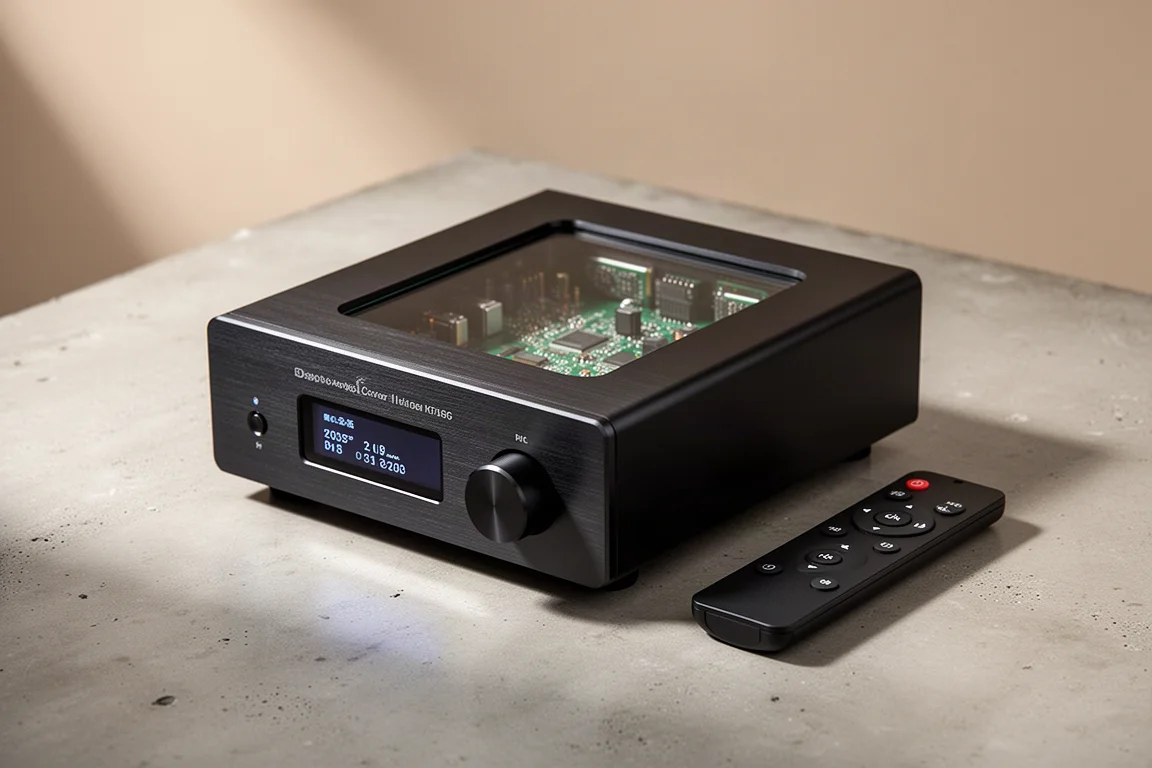
That combination is what makes the Q11 worth a closer look. The ESS Saber ES9038 and the AKM AK4493 sit in the same chassis, a single front knob handles power and volume, the bundled remote covers input and chip selection, and a window on the top panel puts the internals on display. The question is whether the second chip is a genuine feature or a novelty. The answer depends on how you listen.
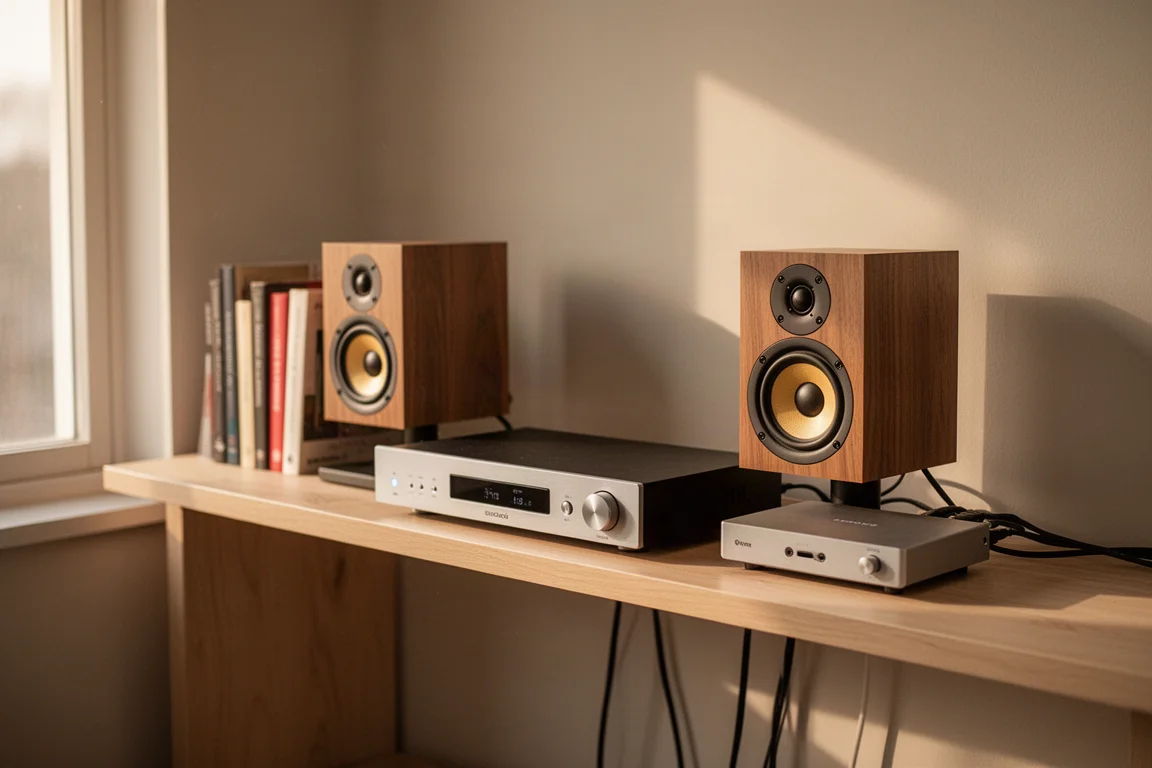
The short version: the Q11 is a flexible, well-built desktop converter with a real upgrade path, and the dual-chip design is more than a marketing line. It also comes with trade-offs that are worth understanding before you buy.
Two DAC Chips in One Chassis
The headline feature is straightforward. Two converter chips, one ESS Saber ES9038 and one AKM AK4493, sit on the same board with a switch to move between them. You can run the Saber section alone, the AKM section alone, or both at once. In the both mode, the Saber chip feeds one RCA output pair and the AKM chip feeds the other, which means each chip’s signal can be sent to a separate analog input on the same amplifier and compared directly.
The connection set covers most desktop needs. The rear panel carries two sets of single-ended RCA outputs, two sets of 3.5mm auxiliary outputs, coaxial and optical inputs, a full-size USB input, and a DC power input. Power comes from a supplied 12V wall adapter.
Douk Audio lists a signal-to-noise ratio greater than 117 dB and total harmonic distortion of 0.003%. Those are strong headline figures for the price, though they are published as single numbers rather than a breakdown of harmonic behaviour across the spectrum.
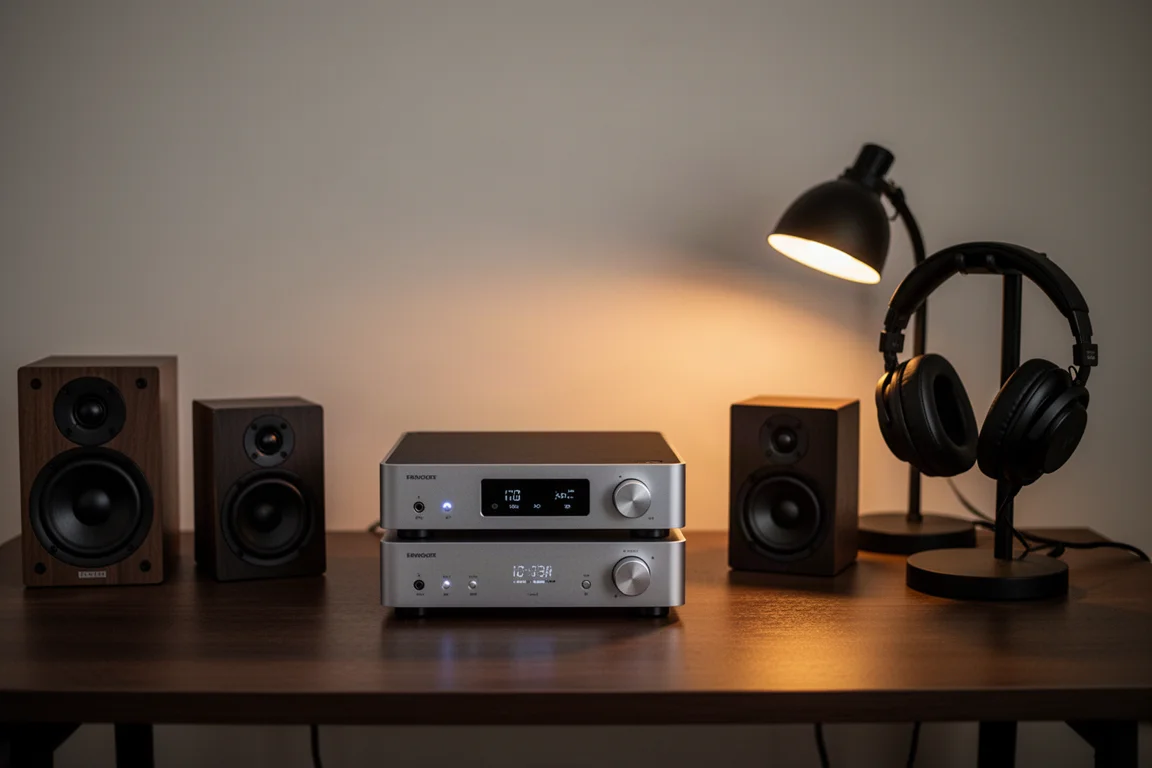
Two smaller details matter more than they first appear. The front-panel knob powers the unit on and controls volume, so the Q11 can feed a power amplifier directly without a separate preamplifier. The top window, which shows the circuit boards lit from inside, is a design flourish rather than a functional necessity, but a genuinely appealing one.
Who This Product Is For
Three kinds of buyers will get the most from the Q11.
The first is the listener who wants to explore how converter chips shape a system. Being able to switch between an ES9038 and an AK4493, and even run both at once on separate outputs, is not a common option at this price.
The second is anyone assembling a compact desktop system that needs volume control and remote input switching without adding a preamplifier. The Q11 covers all of that in one box.
The third is the tinkerer. Two op-amps inside are swappable, and the 12V DC input opens the door to an external power supply upgrade later on.
If you simply want one good converter and have no interest in comparing chips, the extra hardware is not doing much for you, and a simpler single-chip unit will cover the same ground for less.
How the Saber and AKM Chips Compare
This is the part that makes the Q11 interesting, and also the part that resists a simple verdict.
On a vocal-led track such as Lena Hall’s cover of “Creep”, the AKM section left the voice less present, with less air and detail around it, and the soundstage sat slightly further back. Switching to the ES9038 section brought the vocal forward and uncovered more detail around it.
On Tool’s “Chocolate Chip Trip”, the result flipped. The AKM chip handled the drum work with better dynamics, from the toms down to the bass drum, and placed the percussion more firmly in space with a stronger sense of three-dimensional movement across the stage. The ES9038 imaged well too, but the AKM section felt more locked in.
There is a complication worth knowing about. The ES9038 output is louder than the AK4493 output, and comparing two sources with different output voltages by ear is difficult. That difference alone can make one chip sound more forward or more detailed than the other.
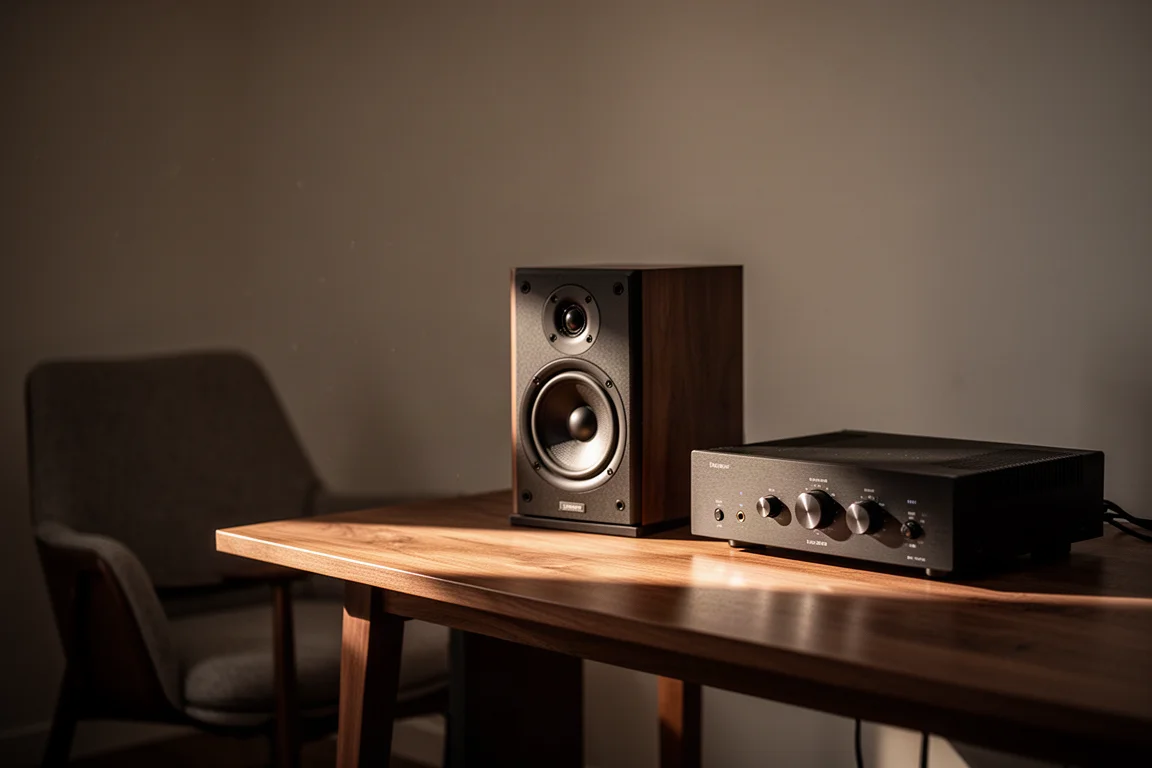
In practice, preference came down to the track being played rather than to one chip being better overall, and switching between the two on the remote was easy enough to make the comparison genuinely usable.
Main Strengths
The value argument is the strongest one. The AKM AK4493 appears in other converters that cost far less, including units that sit around $70 to $80, but those typically lack volume control and a remote. The Q11 adds both, plus a second chip, for $159.
The build is a genuine plus. The chassis feels solid, the display is legible from across a room, and the internal window stays enjoyable rather than gimmicky.
The upgrade path is the third strength. Swappable op-amps and a 12V DC input mean the Q11 can be improved over time rather than replaced outright.
Finally, it is simply enjoyable to use. Chip switching is quick from the remote, and the differences between the two sections are audible enough that the feature earns its place.
Things to Consider Before Buying
Two converter chips sharing one power supply is the main caveat. Running two DAC sections on the same board at the same time raises questions about isolation and noise that a dedicated single-chip design avoids by default. It is not a dealbreaker, but it is worth factoring in.
The output level mismatch between the Saber and AKM sections is the second consideration. Any comparison you make between them will be coloured by that volume difference, so matching levels is essential before drawing conclusions.
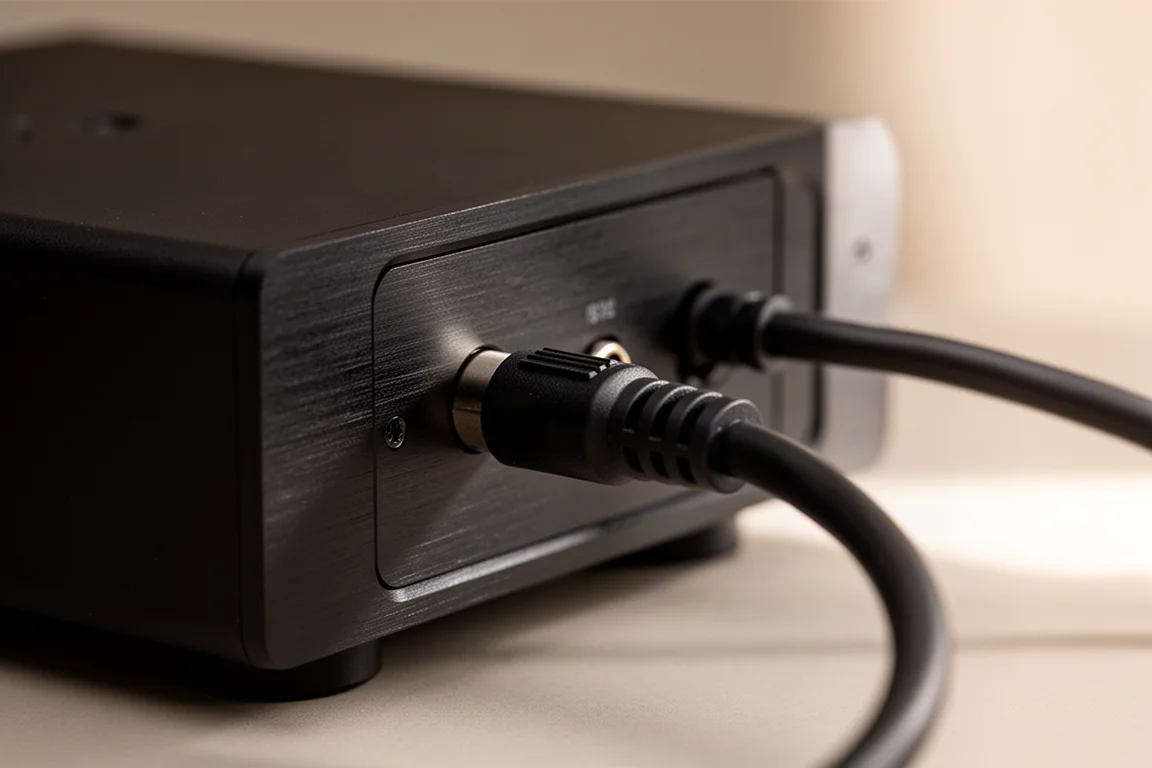
The supplied power adapter is a basic 12V wall wart. It works, but the Q11 responds well to a cleaner supply, which means an additional purchase if you want to hear the unit at its best.
It is also worth reading the distortion figure with realistic expectations. A single THD number does not describe the harmonic structure behind it, and no detailed breakdown of harmonic content is published for this unit.
Power Supply and Op-Amp Upgrades
The Q11 is one of those components that invites a little experimentation, and both upgrade paths are inexpensive to explore.
On power, the unit accepts 12V DC. A linear power supply with a 12V section, or a low-noise 12V switching supply, is the logical next step. Because both DAC sections draw from the same supply, a cleaner feed benefits whichever chip you are running.
On the analog side, two op-amps inside are swappable, one per DAC section. That gives you a second, more hands-on way to nudge the character of each chip’s output, and it is easy to reverse if you prefer the stock configuration.
Neither upgrade is required to enjoy the Q11. Both are simply there if you want them, which is unusual at this price.
Buying Advice
At $159, the Q11 is priced against single-chip converters that give you less. You are getting two converter sections, a volume knob, a remote, a solid chassis, and two routes for future upgrades. Framed that way, the value is easy to justify.
Before buying, decide honestly whether you will use the comparison feature. If switching between chips and running both at once sounds like fun rather than friction, the Q11 delivers on that promise and keeps delivering as you get to know your music. If it sounds like a chore, a simpler converter will serve you just as well.
Budget for a better 12V supply if you plan to keep the Q11 long term, and treat op-amp swapping as an optional hobby rather than a necessity. With those two caveats in mind, this is an easy recommendation for anyone who wants a versatile, well-built desktop DAC that is genuinely entertaining to own.
Conclusion
The Douk Audio Q11 is not a gimmick. Two real converter chips, a usable remote, a volume control that lets it drive an amplifier directly, and a chassis worth looking at add up to a compelling package at $159. The dual-chip design creates a genuine choice between a more forward, detailed presentation and one that handles dynamics and spatial placement more convincingly, and which you prefer will change with the track.
The caveats are real but manageable: shared power, unequal output levels between the two chips, and a basic bundled adapter. None of them undermine the core proposition. If you want one converter that does one thing well, look elsewhere. If you want two converters in one box and the freedom to experiment, the Q11 is a smart buy.
Product link
View more details for Douk Audio Q11
This product is mentioned in the review. Check the specifications, options, and compatibility before buying.
View more details for Douk Audio Q11Further reading
Related Reviews
Audio Components
Advance Paris ACD Apex vs Onkyo Icon C-30: Two CD Players, Two Very Different Paths
A $1,400 tube-equipped CD player against a $400 deck. Where the extra money goes, what you actually hear, and which one suits your system.
Audio Components
McIntosh MB20 Bluetooth Transceiver Review: A Bridge for Legacy Hi-Fi
A practical look at the McIntosh MB20 Bluetooth Transceiver, from its aptX HD support and 32-bit DAC to the ways it brings streaming and wireless headphones into older audio systems.
Audio Components
Schiit Freya S, Aegir, and Loki Max Compared: Three Analog Components Worth Knowing
A transparent stereo preamp, a compact class A inspired amplifier, and a six-band analog equalizer, with the trade-offs that matter before you buy.