Hi-Fi Audio
McIntosh MA2375 Review: The All-Tube Integrated Amplifier Returns
A 12-tube, 75 watt per channel all-tube integrated amplifier with a configurable phono stage, assessed for sound, power headroom, and long-term ownership.
Introduction
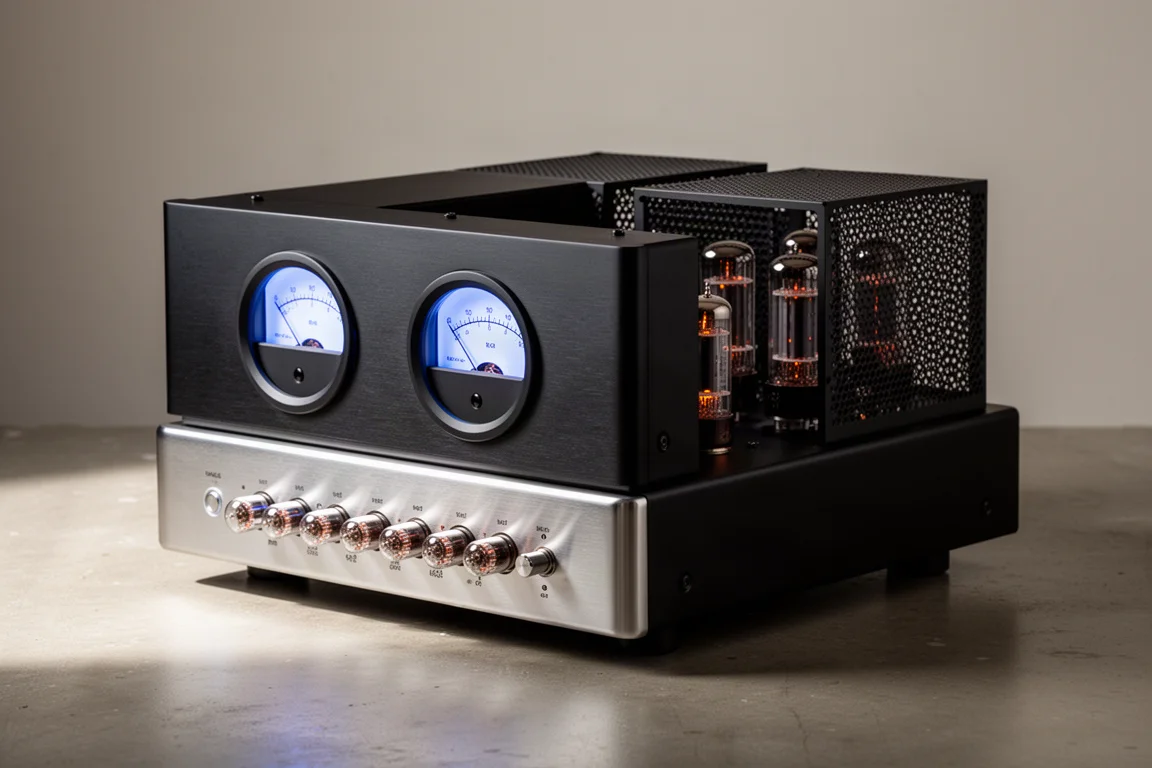
McIntosh has not introduced a new all-tube integrated amplifier in more than a decade. The MA2375 ends that gap, and it does so with a specification that is unusually specific for the category: twelve vacuum tubes, 75 watts per channel, and a chassis that weighs 93 pounds. The price is $15,000, which places it firmly in the upper tier of two-channel audio.
The company has been building amplifiers in Binghamton, New York since 1949, and much of the MA2375 is manufactured in-house, including the output transformers. That detail matters more than it might first appear. In a tube power amplifier, the output transformer is one of the most critical components in the entire signal chain, and a poorly executed one can undermine an otherwise excellent tube design.
The MA2375 is also a single-chassis answer to a familiar problem: how to get a complete tube system without assembling a separate preamplifier, power amplifier, and phono stage. What follows is a practical look at who the amplifier suits, where it is strongest, and what to plan for before buying.
Who the McIntosh MA2375 Is For
Three groups of listeners will find the MA2375 especially relevant.
The first wants a complete tube experience without building a system from scratch. Rather than matching a tube preamplifier to a separate power amplifier and hoping the two work well together, the MA2375 arrives as one integrated unit with a single design intent behind it.
The second group is vinyl listeners. The built-in phono stage handles moving magnet, low output moving coil, and high output moving coil cartridges, with gain, capacitance, and resistance loading adjustable from the front panel. That is a level of control that usually requires a dedicated outboard phono stage.
The third group values longevity. This is the kind of component that earns a dedicated spot in a room rather than being tucked into a cabinet, and it is built to be serviced and supported for decades rather than replaced.
It also makes sense for anyone who has been running a hybrid design and wants to hear what a fully tubed output stage adds. On the MA2375, the tube character is not confined to the preamplifier section. It runs through the entire signal chain, including the point where the signal meets the speakers.
Main Strengths: Twelve Tubes, One Continuous Signal Path
Hybrid integrated amplifiers such as the MA252 and MA352 use vacuum tubes in the preamplifier section and hand off to a solid-state output stage. That combination delivers tube warmth in the midrange alongside the control and low-end power that solid state provides, and it remains a very sensible approach. The MA2375 takes the other route. The tubes do everything, including driving the speakers, so their harmonic character runs through the whole signal chain.
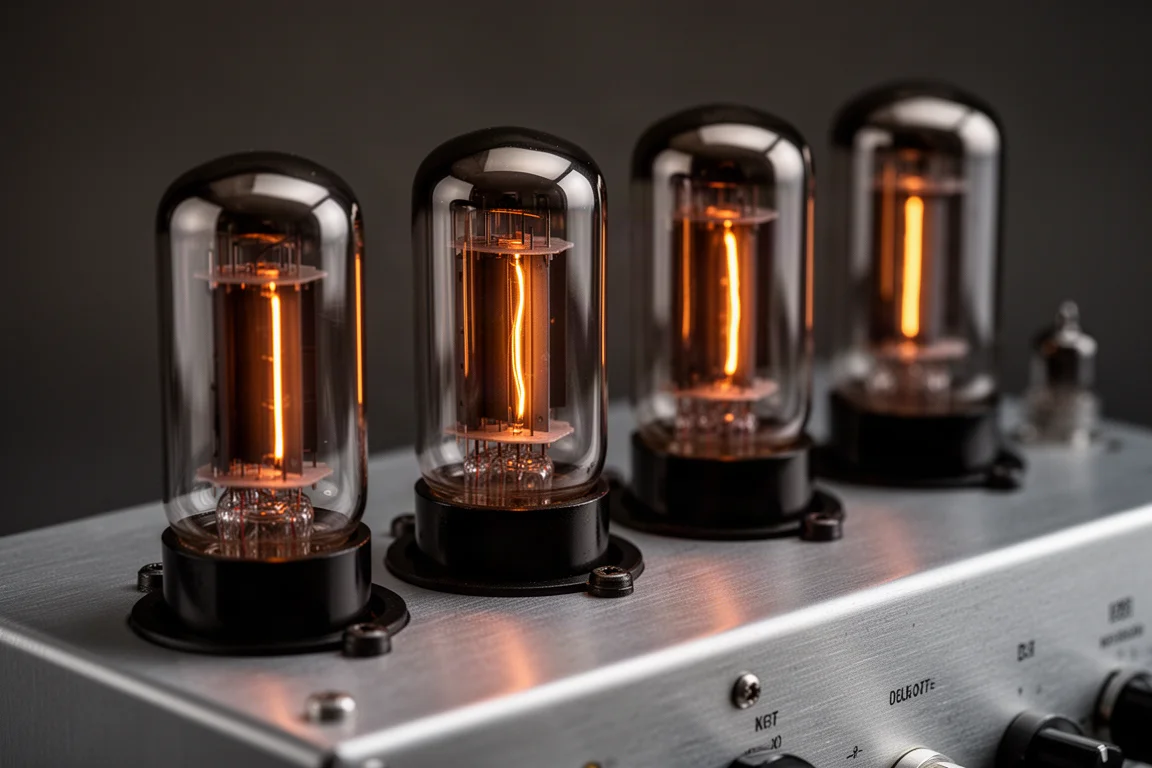
The tube count is twelve. The front of the chassis carries the preamplifier section with two 12AX7A and two 12AT7 tubes. Behind a protective cage at the rear, the power amplifier section uses four 12AT7 driver tubes and four KT88 output tubes.
The KT88 is a large output tube with a long track record in serious audio. It is known for delivering real power with low distortion and a tonal richness that smaller output tubes tend not to reach. Two KT88s per channel is what produces the 75 watts per channel rating, a substantial figure for a tube integrated and enough to drive a wide range of speakers with authority.
When the amplifier powers on, the front preamp tubes glow orange during warm-up and settle into green once the unit is ready to play. It is a small detail, but it is part of what separates owning a component like this from owning a black box.
The design lineage is worth noting as well. The preamp topology draws from the MA352, while the amplifier section follows the MC275 lineage, with the same KT88 output tubes and a similar architecture per channel. The two are not identical designs and they do not sound identical, but the family resemblance is clear.
Unity Coupled Transformers and Tube Protection
The output transformers use McIntosh’s unity coupled circuit, a design the company has been refining for decades. The practical benefit is straightforward: the MA2375 delivers its full rated 75 watts per channel into 4, 8, or 16 ohm speakers. Most tube amplifiers are rated at a single impedance and deliver less power when you move to a different tap. Here, you connect your cables to the posts that match your speakers and get everything the amplifier has to offer on whichever tap you use.
Tube longevity is the other half of the story, and McIntosh addresses it with two systems. The first is the Power Guard screen grid sensor, which differs from the Power Guard system used on the company’s solid-state amplifiers. It continuously monitors the current flowing through the screen grids of the KT88 output tubes and, if that current climbs to unsafe levels, dynamically attenuates the input signal to keep the tubes inside a safe operating range. The second is Sentry Monitor, a fuseless short circuit protection system that shuts the amplifier off if it detects a short in the speaker cables or an impedance mismatch. Together, they make the MA2375 a more forgiving long-term ownership proposition than most all-tube amplifiers.
Inputs, Phono Stage, and Everyday Control
Connectivity covers six analog inputs: three unbalanced, two balanced, and one universal phono input. There is also a subwoofer output and a home theater pass-through for integrating the amplifier into a multichannel system.
The phono stage is conceptually related to the one in the C2800, simplified to a single section rather than a dual section. The phono stage itself is solid state, but once the signal leaves it, that signal still passes through the tube preamp before reaching the amplifier. Vinyl playback therefore does not bypass tubes entirely.
Tone shaping comes from a five-band equalizer at 30 Hz, 125 Hz, 500 Hz, 2000 Hz, and 10,000 Hz. That spread is useful for addressing bass build-up in a room, taming a speaker that is forward in the presence region, or dialing in the top end to taste. A bypass function removes the equalizer from the signal path completely for listeners who prefer a purer route.
On the front panel, the headphone output is a high-drive amplifier with the Headphone Crossfeed Director, or HXD. The signal passes through the tube preamp section before reaching the headphone amplifier, so the tube character carries through to headphones as well. HXD blends a small amount of each channel into the other to simulate the way sound from speakers reaches both ears naturally, rather than the hard left-right separation typical of headphone listening. Because preferences here vary, a one-button toggle lets you try it both ways.
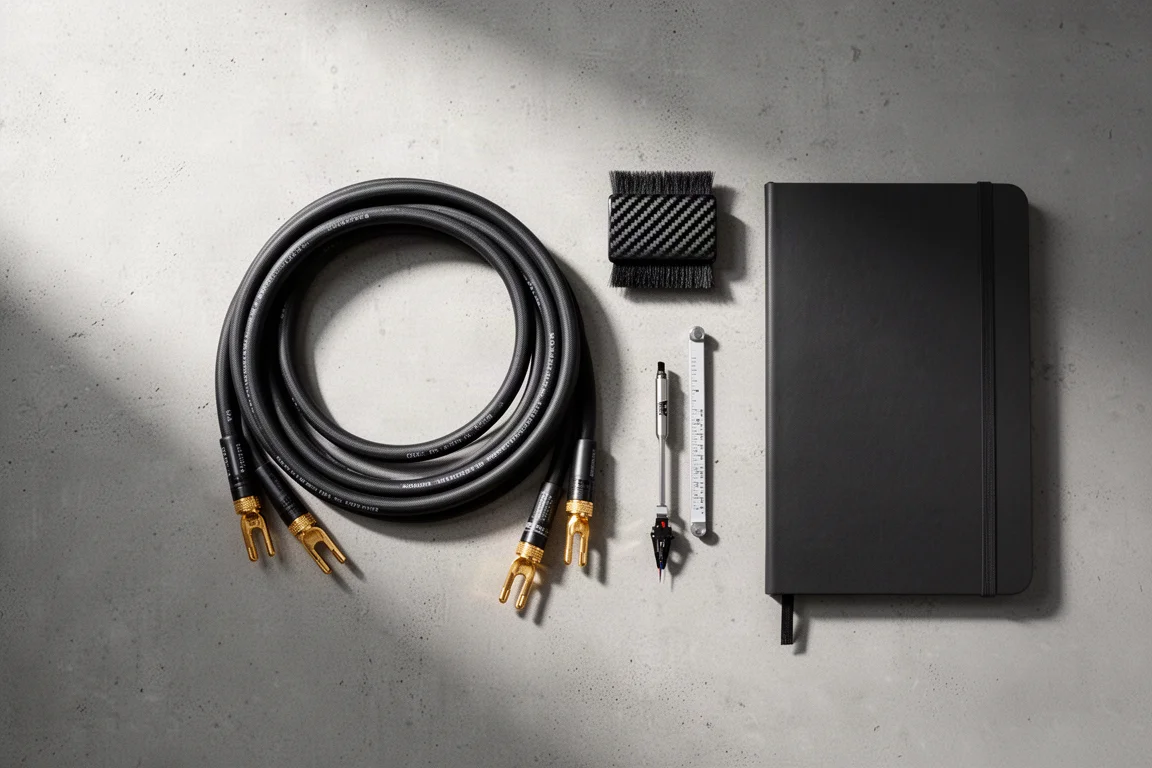
Speaker connections use McIntosh’s solid cinch binding posts. They are gold-plated and designed to hold heavy cables securely without loosening over time, a detail that matters when you are running high-quality cables on an amplifier at this price.
How the McIntosh MA2375 Sounds
The first thing that stands out is how much room the music takes up. The soundstage is wide and deep in a way that many solid-state amplifiers do not approach, and instruments sit in their own space rather than blending together. Vocals in particular have a presence and body that feels natural rather than colored, with nothing pushed forward or hyped.
With the KT88s doing the work from input to output, the midrange carries the density and texture that listeners chase when they move to an all-tube design. The bass is tighter and better controlled than a tube amplifier often manages, which is the unity coupled transformers doing their job. The top end is extended and smooth without becoming hard or bright.

The overall presentation is also quieter and more composed than many tube amplifiers, which is consistent with how long this topology has been refined. It does not sound like a tube amplifier trying to show off. It sounds like music.
Things to Consider Before Buying
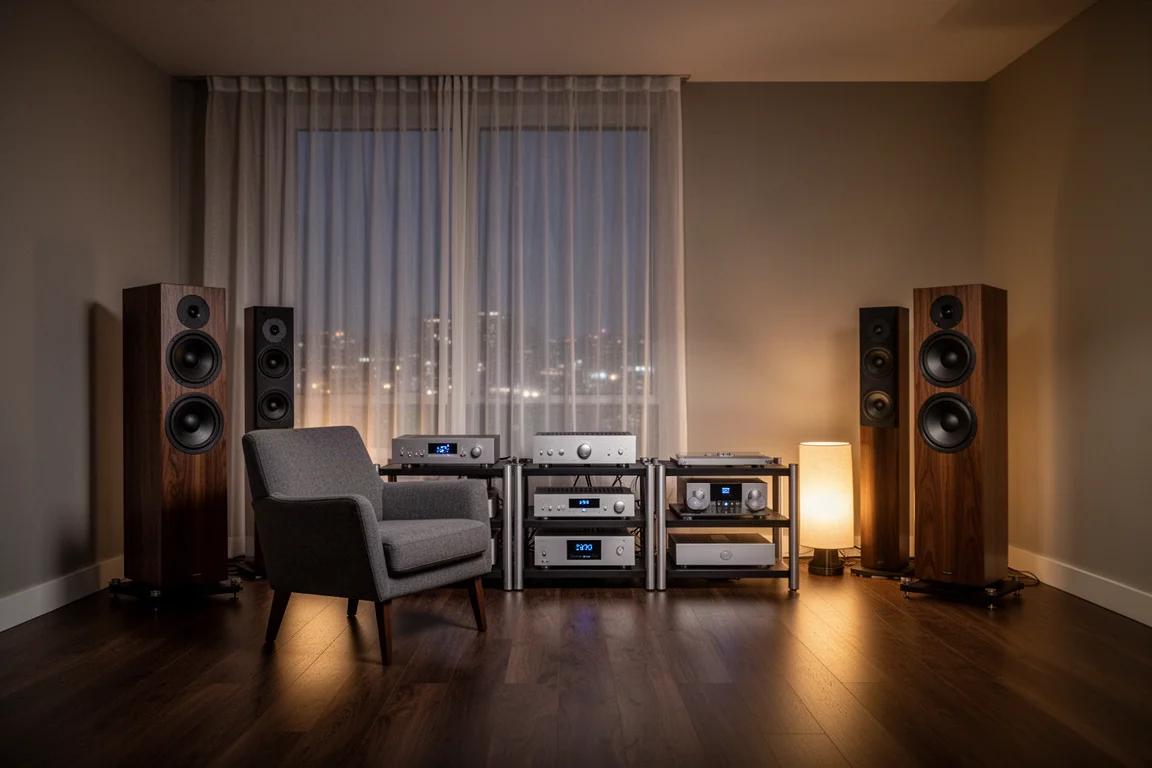
Heat is the most practical consideration. Running four KT88s produces real warmth, and McIntosh specifies at least 19 inches of clearance above the unit. This is not an amplifier for an enclosed cabinet. Plan for an open rack or a dedicated stand where heat has somewhere to go.
Power is the second consideration. It is easy to look at 75 watts, compare it to the 200 watt output of the MA352, and assume the MA2375 is the lesser amplifier. In some situations it is, and that is worth knowing going in. With speakers below roughly 87 or 88 dB sensitivity in a large room, and a preference for loud playback, headroom may run out, and the MA352 or a separate power amplifier would serve better. In most rooms, with speakers that suit an all-tube design, 75 clean and controlled watts through the unity coupled transformers is plenty, and the amplifier can fill a room without strain.
The third consideration is the digital side. The MA2375 is a fully analog amplifier with no digital inputs and no built-in DAC. If your music lives primarily on a streaming service, you will need a separate streamer feeding one of the analog inputs.
Finally, there is the physical presence. At 93 pounds, this is a component that wants a permanent, well-planned place in the room.
Buying Advice
At $15,000, the MA2375 is a serious investment, and the case for it rests on what is included. A configurable phono stage that handles three cartridge types, a five-band equalizer with a bypass, a high-drive headphone amplifier with crossfeed, home theater pass-through, and a fully tubed signal path all arrive in one chassis. Assembling equivalent capability from separate components would take several boxes, several cables, and a good deal of setup time.
The other part of the value is longevity. McIntosh has a long record of manufacturing in-house and supporting its equipment over many years, and buyers at this level are typically thinking in decades rather than product cycles. That expectation of long-term serviceability is a meaningful part of what the price buys.
If your speakers are reasonably efficient and your room is not unusually large, the MA2375 is likely to be more than sufficient. If you run low-sensitivity speakers in a big space and like to play loudly, the MA352 is the more sensible match.
Conclusion
The MA2375 is the first new all-tube integrated amplifier from McIntosh in more than a decade, and it arrives as a complete statement: twelve tubes, 75 watts per channel into 4, 8, or 16 ohms, a configurable phono stage, and a chassis built to be kept rather than replaced. Its strengths are a wide, dimensional presentation, a dense and natural midrange, and bass control that is better than the all-tube category usually delivers. Its limits are heat, weight, a fully analog signal path, and 75 watts that will not suit every speaker.
For listeners whose systems and rooms fit the design, the MA2375 offers a rare combination: the richness of a fully tubed signal chain with the practicality of an integrated amplifier, from a company that has been building amplifiers since 1949.
Product link
View more details for McIntosh MA2375
This product is mentioned in the review. Check the specifications, options, and compatibility before buying.
View more details for McIntosh MA2375Further reading
Related Reviews
Hi-Fi Audio
Accuphase C-57 vs Allnic H-7000V: Two High-End Phono Stages Compared
A fully balanced solid-state phono stage with a pitch-black noise floor meets a tube design built for well-loved records. Here is how to choose between them.

Hi-Fi Audio
Active vs Passive Hi-Fi: Five Components for a Modern System
Five components that define modern active and passive hi-fi systems, with the strengths, trade-offs and setup details worth weighing before you buy.
Hi-Fi Audio
Advance Paris A10 Apex Review: A Hybrid Integrated Amplifier That Covers a Lot of Ground
A French hybrid integrated amplifier with a class A tube preamp stage, analogue power meters, and an internal DAC and phono stage good enough to make extra boxes unnecessary.