Digital Audio
McIntosh DS200 Review: A Flexible High-End Streaming DAC and Digital Preamplifier
A close look at the McIntosh DS200, a standalone streaming DAC that also works as a digital preamplifier, and who it makes sense for.
Introduction
Streaming has become the primary way many listeners reach their music, and high-end manufacturers have responded with dedicated hardware rather than treating network playback as an afterthought. The McIntosh DS200 is one of those responses. It is a standalone streaming component that can serve as a pure digital source for an existing system, or step up as a complete digital preamplifier when paired with a power amplifier.
This review covers what the DS200 offers, where it fits in a system, and the trade-offs worth understanding before you commit.
Who the McIntosh DS200 Is For
The DS200 is aimed at listeners who want control over how their system is built. Instead of bundling amplification and streaming into one chassis, it concentrates on digital playback and leaves the amplifier choice to you. That means it can sit in front of a current McIntosh amplifier, a vintage McIntosh piece, or a power amplifier from another brand, and the rest of the system can change over time without replacing the streaming source.
McIntosh also builds the MSA 5500, an all-in-one streaming integrated amplifier that combines a 100-watt-per-channel amplifier, streaming, a DAC and a phono stage in a single chassis. The two products address the same need from opposite directions, and the DS200 is the better fit when you already own an amplifier you like or when you want to choose one yourself rather than accept a fixed package.
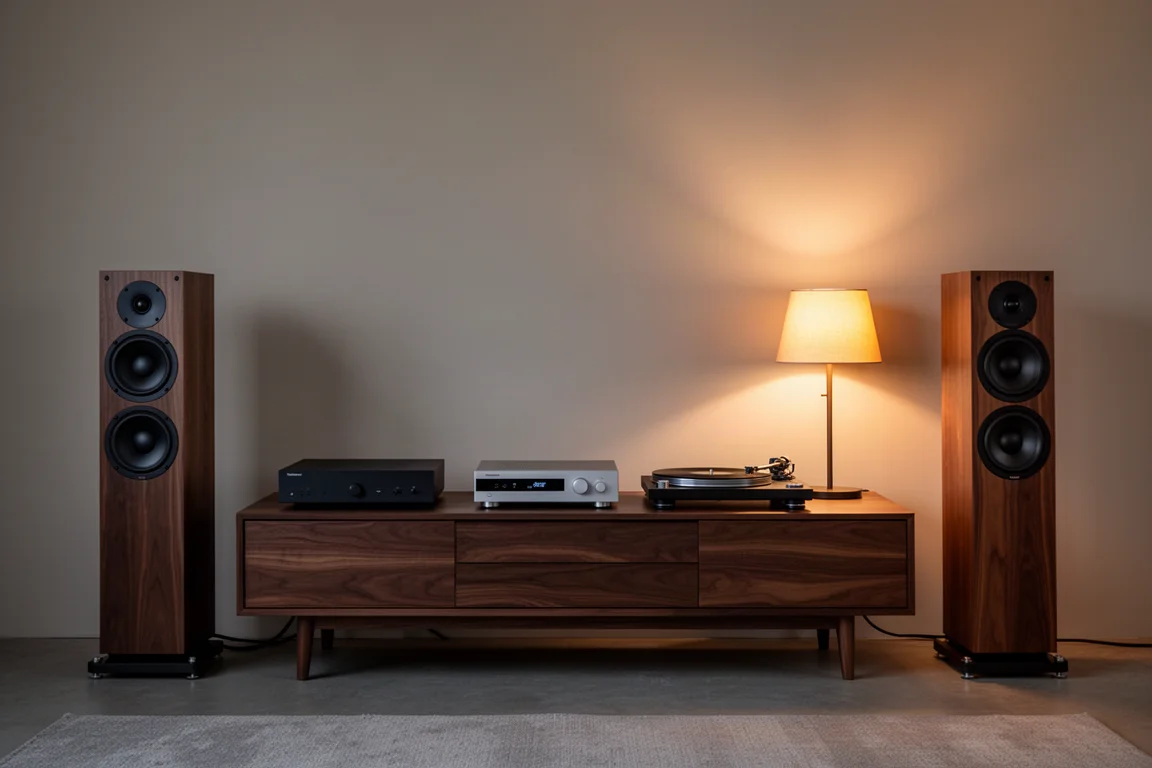
If that sounds like your situation, the DS200 is a natural upgrade path for adding modern streaming to a system that was built around separates.
Design and Build Quality
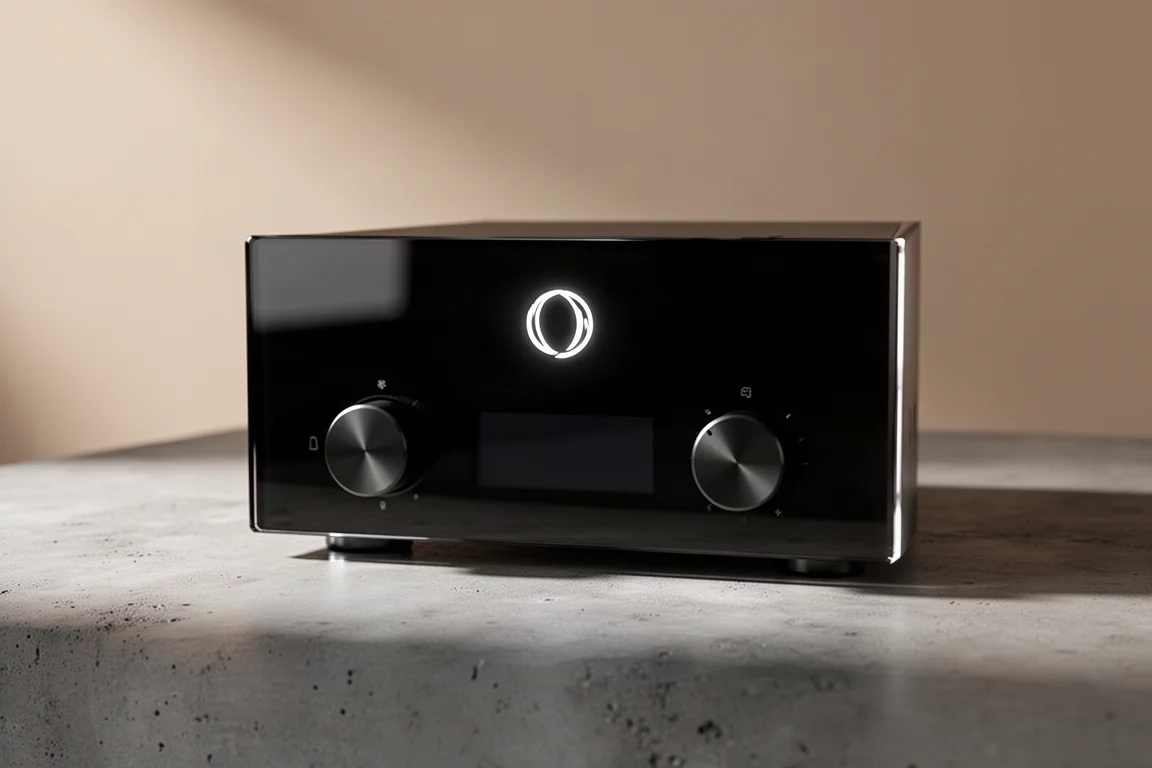
The DS200 follows McIntosh’s familiar design language: a black glass front panel, an illuminated emblem, and two rotary control knobs, one for volume and one for input selection. A central display shows the active source, volume level and streaming format, which keeps the essential information readable at a glance without cluttering the face of the unit.
Front panel controls go beyond the basics. There are play, pause and skip buttons for direct control of playback, plus a dedicated Bluetooth button, a display mute control and a power button, so common adjustments do not require reaching for a phone or remote. Where the MSA 5500 carries McIntosh’s blue power meters, the DS200 keeps a cleaner, more minimal face with the source display as the focal point.
Build quality is consistent with McIntosh’s reputation. The unit feels solid and is engineered to be reliable over the long term, which matters for a component likely to stay in a system for years.
Digital Architecture and Format Support
At the centre of the DS200 is a next-generation 32-bit quad balanced DAC stack built around an eight-channel 32-bit architecture. The balanced approach processes signals symmetrically to reduce unwanted noise and distortion, and it supports a wide dynamic range with low distortion. The result is a digital stage designed to extract detail rather than smooth it over.
Format support covers high-resolution audio up to DSD512 and DXD 384 kHz, so studio-quality streams and locally stored high-resolution files are handled natively. McIntosh does not publish which DAC chip the DS200 uses. What matters more in practice is how the surrounding circuitry is implemented, and the supporting electronics here are built to a high standard.
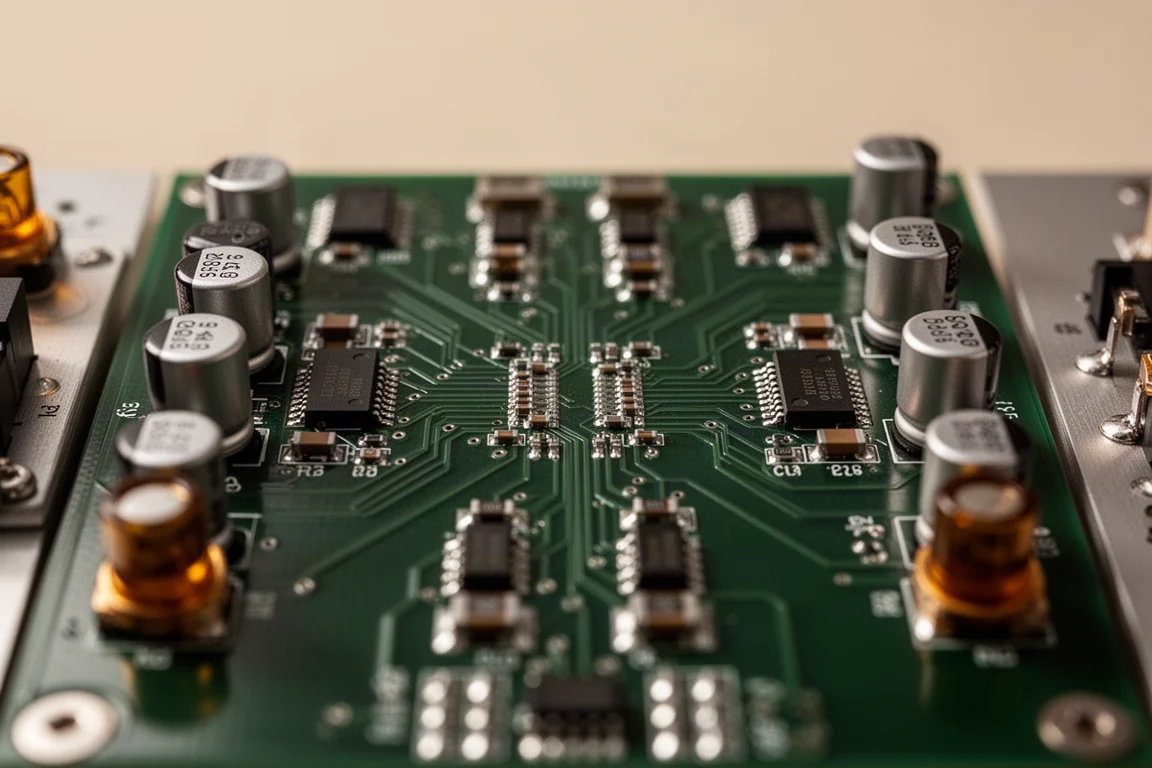
For listeners who keep a local library alongside their streaming subscriptions, that combination of format range and balanced processing is the technical case for the DS200.
Streaming and Connectivity
The DS200 supports Apple AirPlay, Google Cast, Spotify Connect, Tidal Connect and Bluetooth 5.0, which covers the services most listeners already use. There is no dedicated McIntosh control app. Instead, you open the streaming service you already pay for and cast to the DS200, which keeps the workflow simple and avoids adding another app to manage.
The DS200 is also Roon Ready, so it integrates with Roon’s music management and playback system for listeners who use it to organise a personal library or stream lossless music from Tidal or Qobuz.
Inputs, Outputs, and System Flexibility
Around the back, the DS200 offers a broad set of digital inputs, including two coaxial, two optical, an AES/EBU port, a USB-B input and an HDMI ARC connection, so CD players, digital tuners and other high-resolution sources can all feed it. The USB input supports native playback up to DSD512 and DXD 384 kHz, while the coaxial and optical inputs handle up to 24-bit/192 kHz. HDMI ARC brings McIntosh-level sound to a television setup and can convert Dolby and DTS multichannel formats into two-channel audio, a meaningful step up from typical TV speakers or a soundbar.
Analog outputs include balanced XLR and unbalanced RCA connections, giving you the choice of feeding a preamplifier, an integrated amplifier or a power amplifier directly. Out of the box the DS200 runs in fixed output mode, with volume handled by the preamp or amplifier downstream. Switch it to variable output mode and it becomes the preamplifier itself, controlling volume directly when connected to a power amplifier. Ethernet, RS232, external control and power control ports round out the rear panel for system integration.
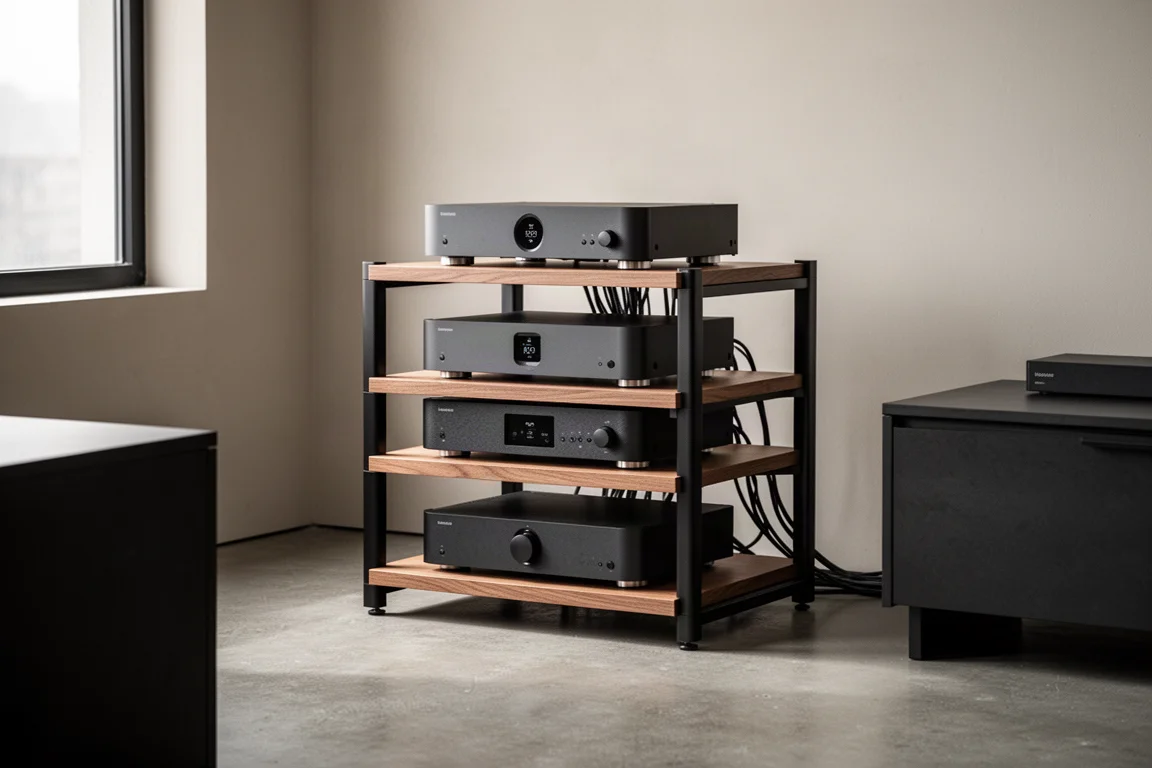
That mix of inputs and output modes is what makes the DS200 adaptable: it can be a source in a large system or the control centre of a lean digital-only one.
Listening Impressions
In use, the DS200 connects without fuss. Streaming through Tidal Connect, Qobuz and Apple Music, along with AirPlay and Bluetooth, worked reliably, and the unit paired cleanly with several McIntosh amplifiers and a range of high-end loudspeakers.
The character is detailed and open. Across a wide range of tracks, the DS200 revealed a high level of detail and separation, with clarity and depth that hold up from quiet passages to busier arrangements. Bass is tight and controlled, the midrange is full bodied with warmth, and the treble stays smooth and detailed without turning harsh. It is the effortless musicality McIntosh is known for, delivered through a digital front end.
Paired with a tube amplifier, a solid-state amplifier or a high-end model from another brand, the DS200 is transparent enough to let the character of the amplifier come through. That is the practical advantage over the MSA 5500, which has its own built-in amplifier and therefore its own fixed voice. For listeners running high-end separates, the DS200 offers a level of resolution that is hard to argue with.
Things to Consider Before Buying
A few points are worth weighing before you decide. There is no dedicated McIntosh app, which is a benefit for anyone who prefers casting from their existing service but a limitation for listeners who want a first-party control experience. The DS200 also omits the blue power meters that many McIntosh owners enjoy, trading that visual signature for a cleaner display-only face.
The unit needs an amplifier to complete a system. If you do not already own one, that is an additional component and an additional cost to plan for. And because the DS200 runs in fixed output mode by default, anyone intending to use it as a preamplifier will need to switch it to variable mode during setup. As a McIntosh component, it sits in the premium tier, so budget is the main practical gate.
None of these are drawbacks in isolation. They are simply the trade-offs that come with choosing a modular digital source over an all-in-one system.
Buying Advice
The decision comes down to how you want to build your system. If you already own a power amplifier, an integrated amplifier or a preamplifier you are happy with, the DS200 slots in as a high-end digital source and preamplifier with minimal disruption. If you prefer a single elegant box with fewer components and less setup complexity, the MSA 5500 covers streaming, amplification and a phono stage in one chassis, though you give up the freedom to choose your own amplifier.
For anyone building a digital-first system around separates, the DS200 is the more flexible option, and that flexibility is the point.
Conclusion
The McIntosh DS200 is a strong choice for listeners who want high-end digital playback and streaming without being locked into an integrated amplifier. Its 32-bit quad balanced DAC architecture, wide format support, broad streaming compatibility and switchable outputs make it a top-tier digital source that can grow with a system rather than define it.
If what you want is a pure high-resolution digital source with the freedom to shape the rest of the chain yourself, the DS200 is built for exactly that.
Product link
View more details for McIntosh DS200
This product is mentioned in the review. Check the specifications, options, and compatibility before buying.
View more details for McIntosh DS200Further reading
Related Reviews
Digital Audio
Best DACs and Streamers: 11 Standout Picks for Better Digital Audio
A practical roundup of desktop DACs, headphone amplifiers, and streamers, from an $80 starter converter to a fully specified flagship, with clear guidance on which one fits your system.
Digital Audio
Best Digital Source Components of 2025: DACs, Streamers, and Transports
A category-by-category guide to the standout DACs, streamers, and CD players of 2025, with a clear pick at every budget level.
Digital Audio
Hi-Fi Rose RS-130 Review: A Flagship Network Transport for Serious Digital Systems
A detailed look at the Hi-Fi Rose RS-130 network transport, covering its linear power supply, OCXO clocking, fiber inputs, video output, and who should consider it.