Digital Audio
Hi-Fi Rose RS-130 Review: A Flagship Network Transport for Serious Digital Systems
A detailed look at the Hi-Fi Rose RS-130 network transport, covering its linear power supply, OCXO clocking, fiber inputs, video output, and who should consider it.
Introduction
The Hi-Fi Rose RS-130 is a network transport, which means it gathers digital music from streaming services, network storage, and local drives, then hands that data to your DAC in the cleanest and best-timed form it can manage. Hi-Fi Rose is a division of Scitec, a South Korean company that has spent more than 50 years building custom hardware and software products, and the brand was founded in 2017 around high-end audio gear that aims to be genuinely easy to use.
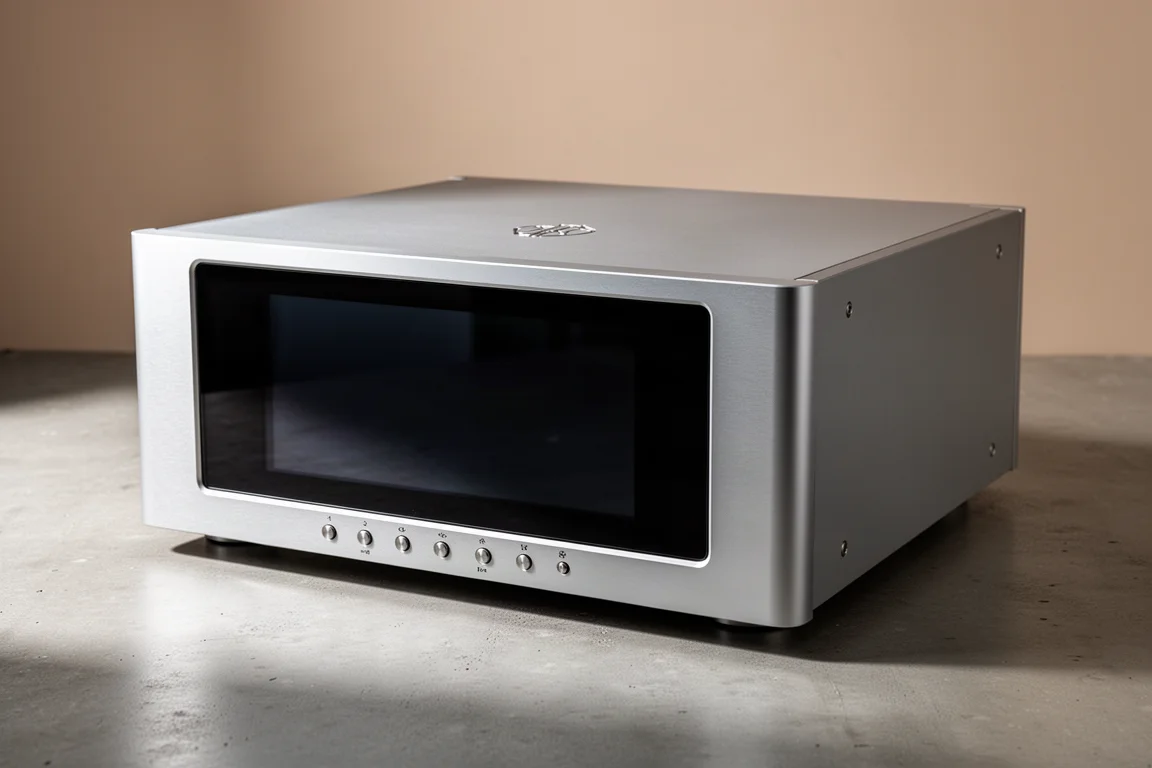
The RS-130 sits at the top of that range. It combines a 15.4-inch touchscreen, a linear power supply with a capacitor stage, an oven-controlled crystal oscillator, fiber network and USB inputs, and a 4K HDMI output for video. That is a lot of capability in one chassis, and the sections below walk through what it does well and what deserves a closer look before you buy.
Who this product is for
The RS-130 makes the most sense for listeners who already own a resolving outboard DAC. Because this is a transport rather than a complete player, conversion still happens in your DAC, and the transport’s job is to feed it a quiet, accurately timed signal. If your DAC can resolve fine detail, the RS-130 gives it more to work with.
It also suits people who would rather run one hub than several boxes. Streaming, local files, CD ripping, and video playback all live in the same unit, controlled either from the front panel or from the Rose Connect app.
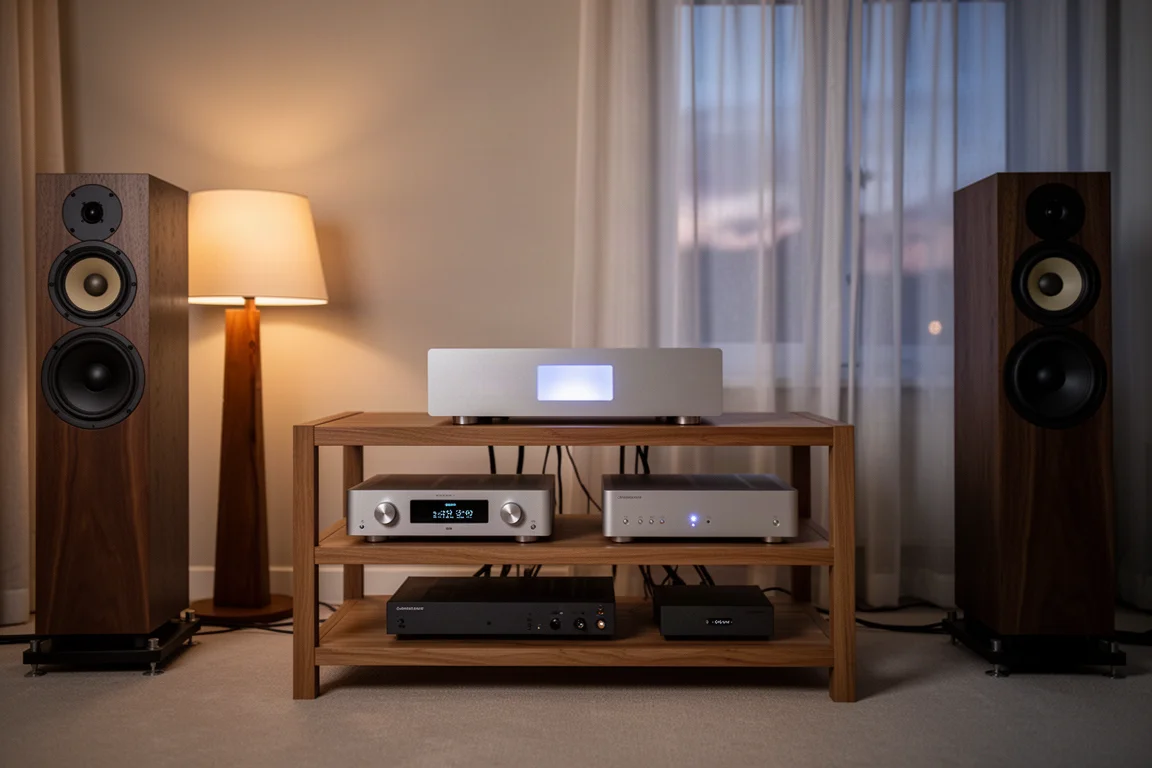
It is not the obvious starting point for a first streaming setup. The price sits at the higher end of the streamer market, and the advantages on offer tend to show up most clearly in a system that can already resolve them.
Main strengths
Design, screen, and controls
The casework is a clear step up, and the design intent is obvious from the first look. The 15.4-inch high-definition touchscreen dominates the front panel, the crystal function buttons sit below it, and the Hi-Fi Rose insignia is milled into the top of the case. The back panel is equally considered, with high-quality jacks, clear markings for each connection, and a printed chart to help you configure the I2S output so it matches your DAC.
The screen carries the same options and settings as the app, so you can interact with the RS-130 physically on the unit or remotely. The Rose Connect app is available on Mac, Windows, Android, and iOS, which means phone, tablet, or computer control is all on the table.
Power supply and clocking
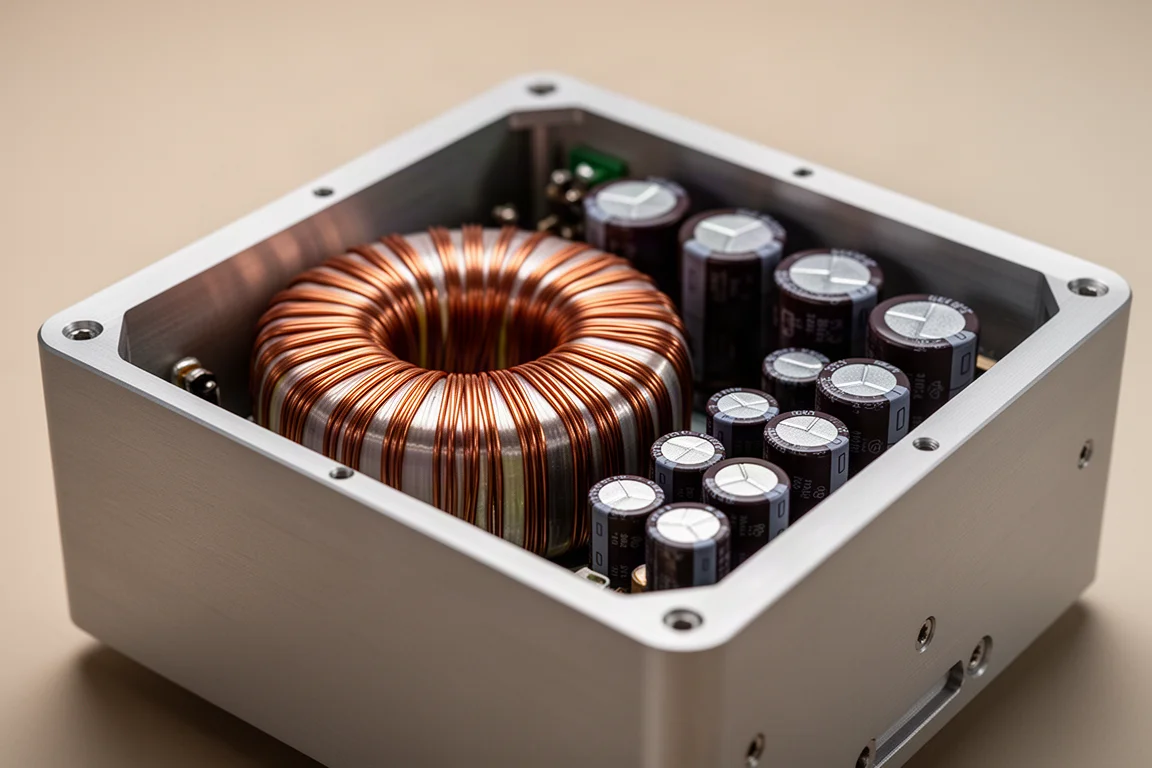
Power supply design has an outsized effect on how digital gear sounds, and Hi-Fi Rose took an unusual route here. The RS-130 uses a traditional overbuilt linear power supply, and the large power transformer feeds a super capacitor stage. Once that capacitor is charged, it supplies the other sections of the unit much like a battery would. The practical result is lower power supply noise reaching the internal components, which Hi-Fi Rose says delivers a cleaner and more natural sound.
Timing gets similar attention. The RS-130 uses an oven-controlled crystal oscillator, or OCXO. Ordinary crystal clocks are accurate with one exception: temperature. As temperature changes, the crystal drifts off its center frequency, which affects its oscillating performance and the resulting timing. The oven-controlled part of the OCXO holds the crystal at a stable temperature so it can work at its best. This clock type is well known as the most accurate used in audio, and it allows the RS-130 to output a jitter-free signal to your DAC.
There is also a master clock input, which lets the RS-130 and a compatible DAC share one clock and reduce jitter further. This is a first for Hi-Fi Rose, and with a compatible DAC the result can be striking. The RS-130 works and sounds great without it, so treat clock synchronization as an available upgrade rather than a requirement.
Connectivity and streaming
The connection list is unusually long: optical and copper network inputs, USB input, Wi-Fi, Bluetooth, USB 3.0, USB DAC, I2S with multiple pin configurations, optical, coax, AES/EBU, and an HDMI 2.0 port specifically for 4K video output.
On the software side, the RS-130 supports Tidal, Qobuz, Apple Music, and Bugs, is Roon ready, and includes Spotify Connect. Hi-Fi Rose also runs its own curated music and video services: Rose Internet Radio, Rose Tube, and Rose Podcast.
Two inputs deserve their own mention. Fiber optic Ethernet and fiber USB transmit only light, which means the electrical noise, EMI, RFI, and other distortions that copper cabling can carry simply are not picked up and passed along. An optical link is also safer, since it will not let electrical surges or spikes through to the RS-130. Both are useful whether you are running a long cable or simply want the noise-cancelling effect of sending digital music in its purest form.
Storage, caching, and video
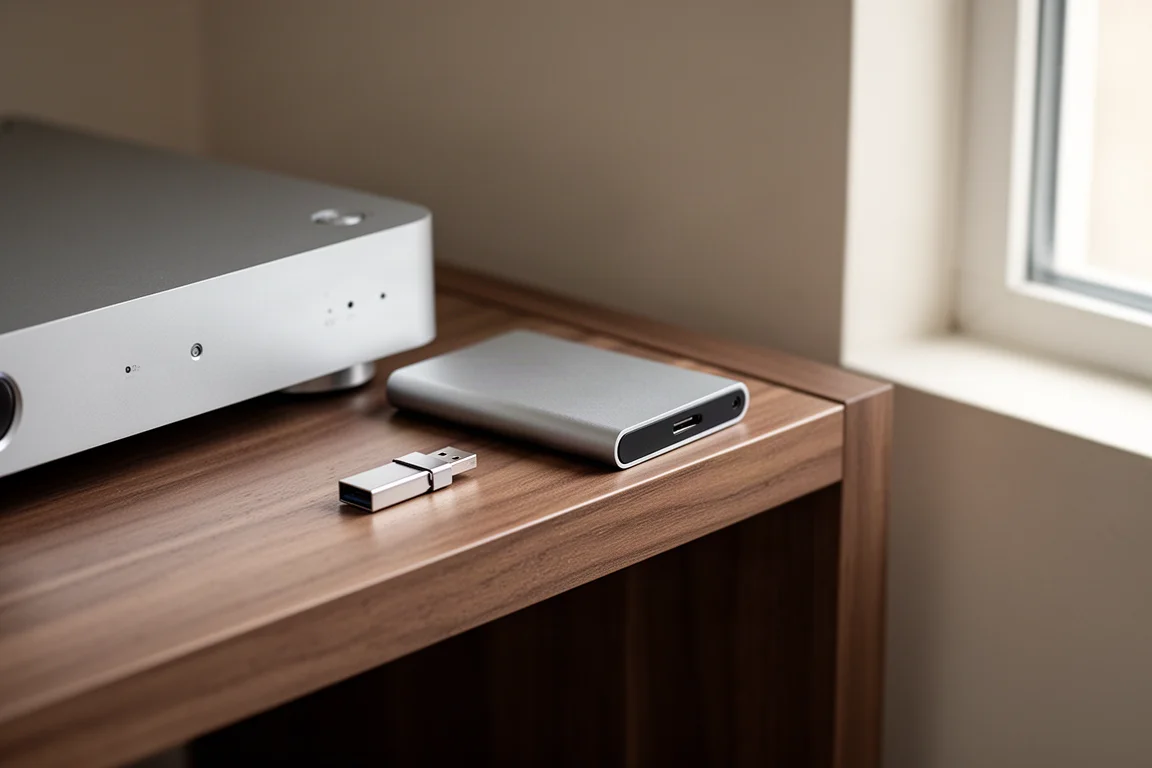
The RS-130 handles local libraries as well as streams. If you have a CD collection, it can rip discs when paired with a CD drive such as the Hi-Fi Rose RSA 780, and you can add an SSD to the underside or the back of the unit to keep everything stored on board.
There is also an internal SSD with a different job. Music played from a connected USB flash drive, hard drive, or network stream is first cached onto that drive. That removes any concern about noise from a spinning external drive and smooths over the delay errors that cause stuttering and stumbling during network streaming. If you have ever heard a stream trip over itself, this is a genuinely useful addition.
Video is fully supported through the 4K HDMI port, and the RS-130 will play the major formats used today in top quality. Rose Tube lets you watch music videos through the app at the best quality available, and if you are a movie watcher who prefers two-channel playback, you can run films through the RS-130 as well.
Things to consider before buying
Two practical points stand out. First, the fiber Ethernet and fiber USB ports need additional hardware that is not included with the RS-130. Those parts are generally low cost and easy to find online, but they are a separate purchase, and they need to be matched correctly to your setup.
Second, the master clock input only pays off with a DAC that supports clock synchronization. Without a compatible DAC you simply rely on the RS-130’s own clock, which is already a strong solution, but the extra benefit stays out of reach.
It is also fair to be direct about the price. The RS-130 is not cheap as streamers go. What you are paying for is a unit that does far more than most streamers can, and the gap it opens over simpler transports is most audible in a system whose DAC can resolve what it sends. In a modest system, that gap will be smaller than the price difference suggests.
Listening notes from a reference system
In use with a reference-level DAC and speakers, the RS-130 behaved like a well-sorted transport. On Hayley Williams’s 2020 album Petals for Armor, the track Dead Horse showed off soundstage width and depth while keeping the bass tight and the highs smooth and detailed. Streamed through Qobuz, the album came through with all of its detail and none of the harshness or grain that lesser streamers can introduce.
On Sound City: Real to Reel, the 2013 album built around an old seventies studio and its mixing console, the track From Can to Can’t, with Corey Taylor on lead vocals, opens in a slow and melodic way. Through the RS-130 that opening arrived with all of its detail while keeping the tension of the mix alive, and when the song builds into its chorus sections it moves into full drive without losing its musicality. Delivering that much detail while staying smooth and comfortable over a long session is no easy task for a network transport, and the RS-130 managed it.
Buying advice
The RS-130 rewards a system that is already built around a capable DAC. If that describes your setup, the transport brings together streaming, network and local file playback, Roon, Spotify Connect, CD ripping, internal caching, and 4K video in one place, with control from a large touchscreen or the app on whichever device is nearest.
Budget for the small extras as well. The fiber Ethernet and fiber USB inputs need inexpensive additional hardware that is not in the box, and the master clock input needs a compatible DAC to be worth using. Neither changes the core value of the unit, but both are worth knowing before you commit. If your DAC is more modest, a simpler streamer will likely get you most of the way there for considerably less.
Conclusion
The RS-130 does considerably more than most streamers. It streams from the major services, plays local and network files, caches playback on an internal SSD, rips CDs when paired with a suitable drive, and outputs 4K video, all from a single chassis with a 15.4-inch touchscreen and a well-organised control app. Behind that sit a linear power supply with a super capacitor stage and an oven-controlled crystal oscillator, both aimed at giving a capable DAC the cleanest, best-timed signal possible.
If your system can resolve what the RS-130 delivers, it is a convincing long-term foundation for digital music and video. If your DAC is more modest, the honest advice is to put the money there first.
Product link
View more details for Hi-Fi Rose RS-130
This product is mentioned in the review. Check the specifications, options, and compatibility before buying.
View more details for Hi-Fi Rose RS-130Further reading
Related Reviews
Digital Audio
Best DACs and Streamers: 11 Standout Picks for Better Digital Audio
A practical roundup of desktop DACs, headphone amplifiers, and streamers, from an $80 starter converter to a fully specified flagship, with clear guidance on which one fits your system.
Digital Audio
Best Digital Source Components of 2025: DACs, Streamers, and Transports
A category-by-category guide to the standout DACs, streamers, and CD players of 2025, with a clear pick at every budget level.
Digital Audio
McIntosh DS200 Review: A Flexible High-End Streaming DAC and Digital Preamplifier
A close look at the McIntosh DS200, a standalone streaming DAC that also works as a digital preamplifier, and who it makes sense for.