Camping Tents
MC2 Mount Inflatable Tent Review: A Six-Person Hot Tent That Pitches in Minutes
A large inflatable hot tent with two doors, four windows, two skylights, and a stove jack for $500. Here is what works well and what to weigh before buying.
Introduction
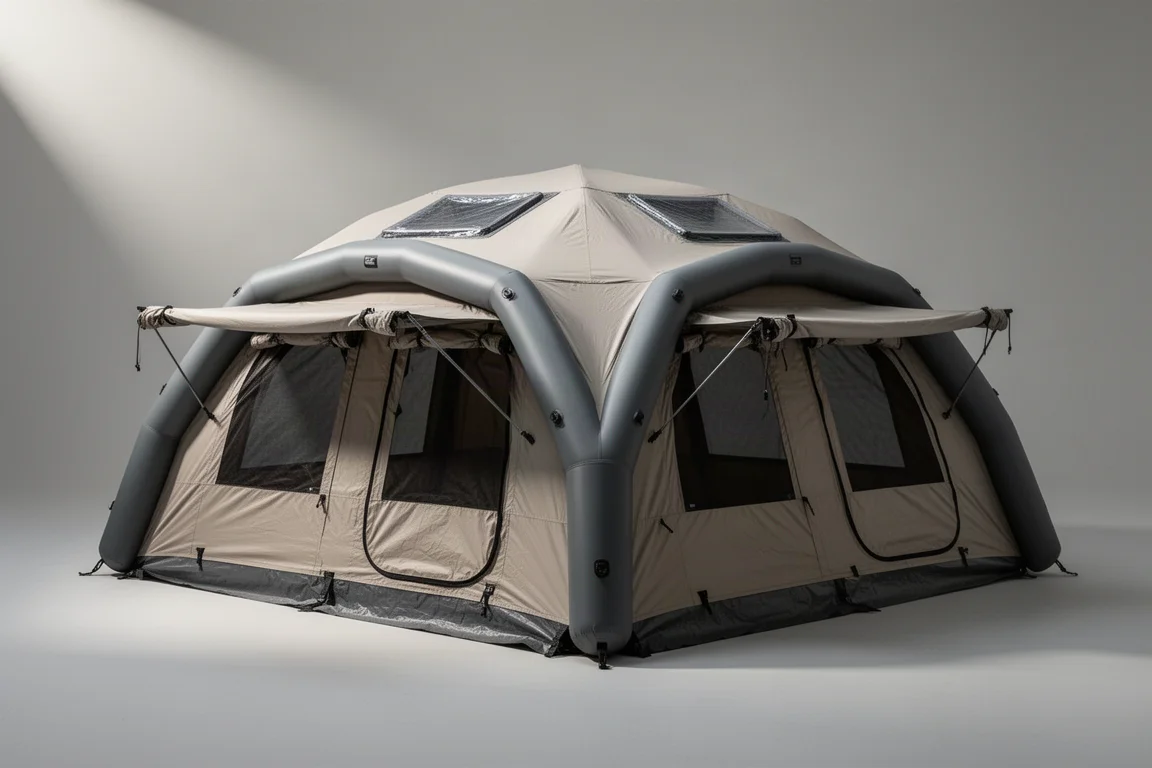
The MC2 Mount inflatable tent makes an unusually bold promise: a shelter that can sleep six, eight, or even ten people, held upright entirely by air beams instead of aluminum poles. Inflatable tents are not a new idea. Early versions reached the market more than a decade ago and then largely disappeared, because they did not offer enough practical benefit over conventional pole tents to justify their drawbacks. Most of the shelters in this category today come from Chinese manufacturers, and MC2 Mount is one of them. What has changed is ambition. The current generation of inflatable shelters is larger, more heavily equipped, and aimed at campers who want a fast pitch and a lot of interior volume.

This tent measures 13 ft long, 9.5 ft wide, and 6.4 ft at its peak, and it weighs 60 lbs dry. It has two doors, four side windows, two roof vents, two clear vinyl skylights, and a stove jack, and it sells for $500. On paper that combination is difficult to match at the price, and real-world use in strong wind and heavy overnight rain suggests the design is more than a marketing exercise.
Who This Tent Is For
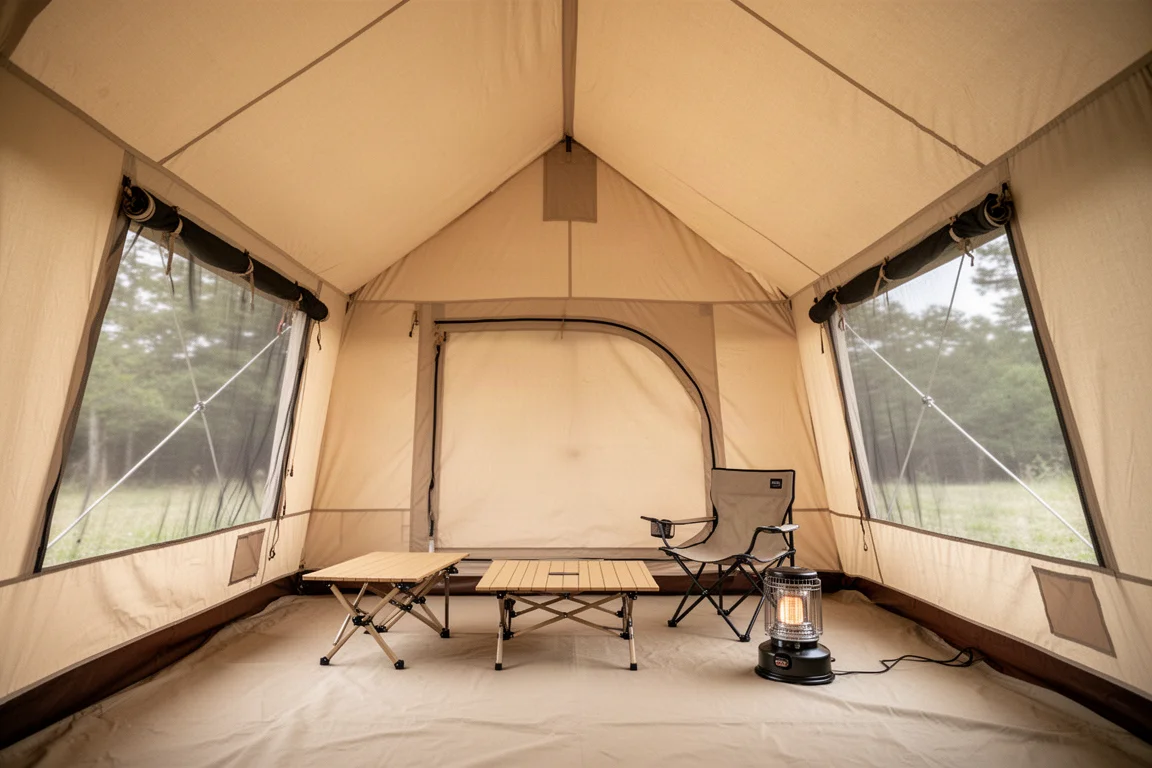
MC2 Mount lists this shelter as a six, eight, or ten person tent. Six is the realistic number. At six, there is room for sleeping arrangements plus gear, a table, chairs, and a heater without anyone feeling crowded. Push toward eight or ten and something has to give, either gear storage or personal space.
It suits campers who drive to their site and settle into a base camp for several days: families, groups of friends, and winter campers who want to run a wood stove. Because the tent is freestanding, stakes are optional, though a staked pitch is noticeably better. Two people can treat it as a palace, with separate sleeping areas plus room for furniture and a heat source.
This is not a backpacking tent and was never intended to be. The 60 lb packed weight and the 30 in x 15.5 in x 15.5 in storage size make that clear from the moment the box arrives.
Main Strengths: Space, Features, and Weather Performance
Space is the headline. The interior feels closer to a small cabin than a tent, with enough floor area for two full sleeping setups plus gear, seating, and a heater. The feature count matches the footprint: two doors, four side windows, two roof vents, two clear vinyl skylights, a stove jack, mesh pockets at each end, and an interior drying line.
Ventilation is the second strength. With the doors, windows, and vents open, airflow through the tent is excellent. Sealed up on a cold night with a small heater, the interior stayed comfortable at around 34°F and there was no condensation by morning. The result is a genuine hybrid: open it up for summer camping, close it down and run a wood stove when temperatures drop.
Build quality also stands out. Stitching is clean with no loose threads, the stakeout points are reinforced, the included stakes are longer than typical, and the zippers are SBS. The air beams sit inside zippered sleeves with Velcro at the base, which means a beam can be unzipped, detached, and removed to trace a leak instead of turning the whole shelter into a write-off. An overfill valve at the inflation point helps prevent over-pressurizing the beams.
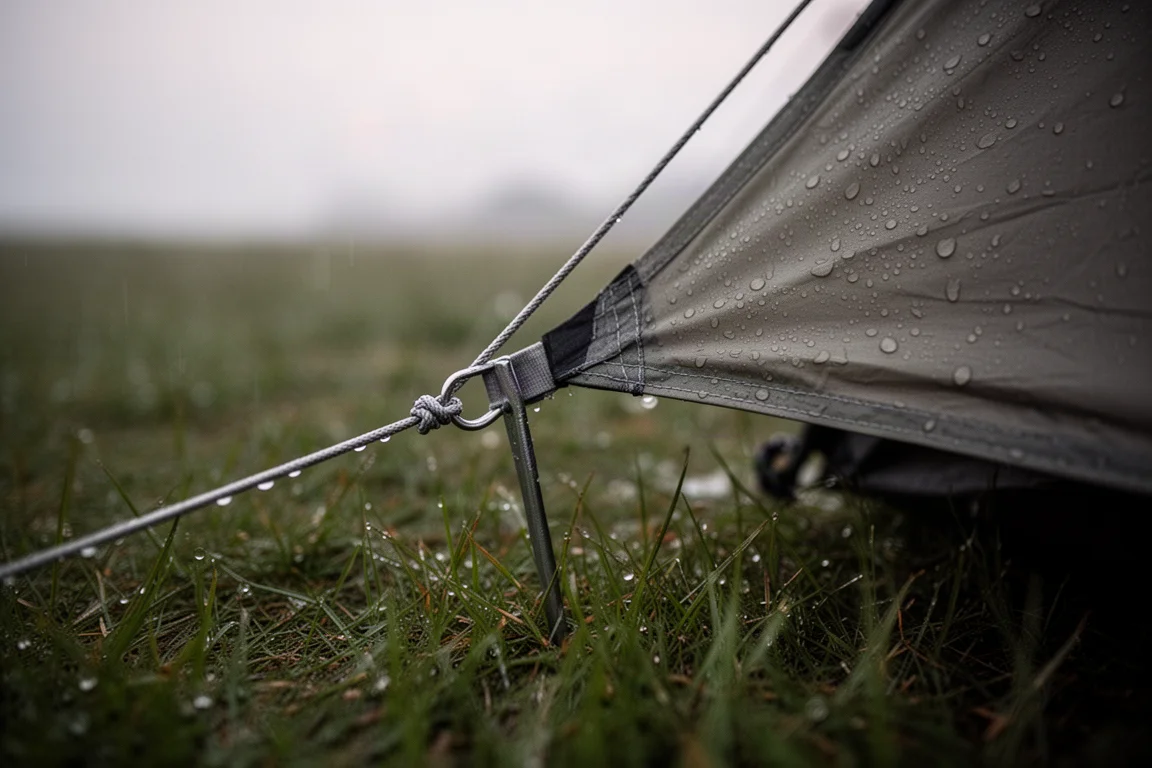
The details add up as well: two-piece front awning panels that can be used independently and zip away when not needed, a cable port for running an extension cord inside, Velcro covers for the windows and skylights, and internal rainflies on the side windows. In sustained winds of 10 to 15 mph with gusts reaching 35 mph, plus heavy overnight rain, the tent stayed stable and stayed dry.
Setup, Inflation, and Pack-Down
Inflation is the part that surprises people. A large bicycle-style pump moves enough air to bring the entire structure up in under three minutes, and a full pitch from start to finish took 2 minutes and 40 seconds. Deflation is just as direct: unscrew the valve, push, and the tent collapses on itself. Fold the sides, roll it up, and it goes back into the storage bag.
Included with the tent are a storage bag, 16 tent stakes, a repair kit, the inflator pump, an inflator hose, and setup instructions printed inside the storage bag.
The company claims a waterproof rating of 3,000 mm or better, although it does not publish the denier of the fly or the floor. The fly is some form of Oxford polyester, the windows and air beams are vinyl, and the zippers are SBS. Waterproofing held up without issue in heavy rainfall, and the large mesh window covers fasten with zippers on the sides and Velcro at the bottom so they stay secure in wind.
Things to Consider Before Buying
Weight is the first thing to think about. At 60 lbs dry, this tent is a two-person carry at best, and it gets heavier when soaked. Packing it away after a rainy trip means handling a wet, bulky load, and that is a physical demand worth being honest about before ordering.
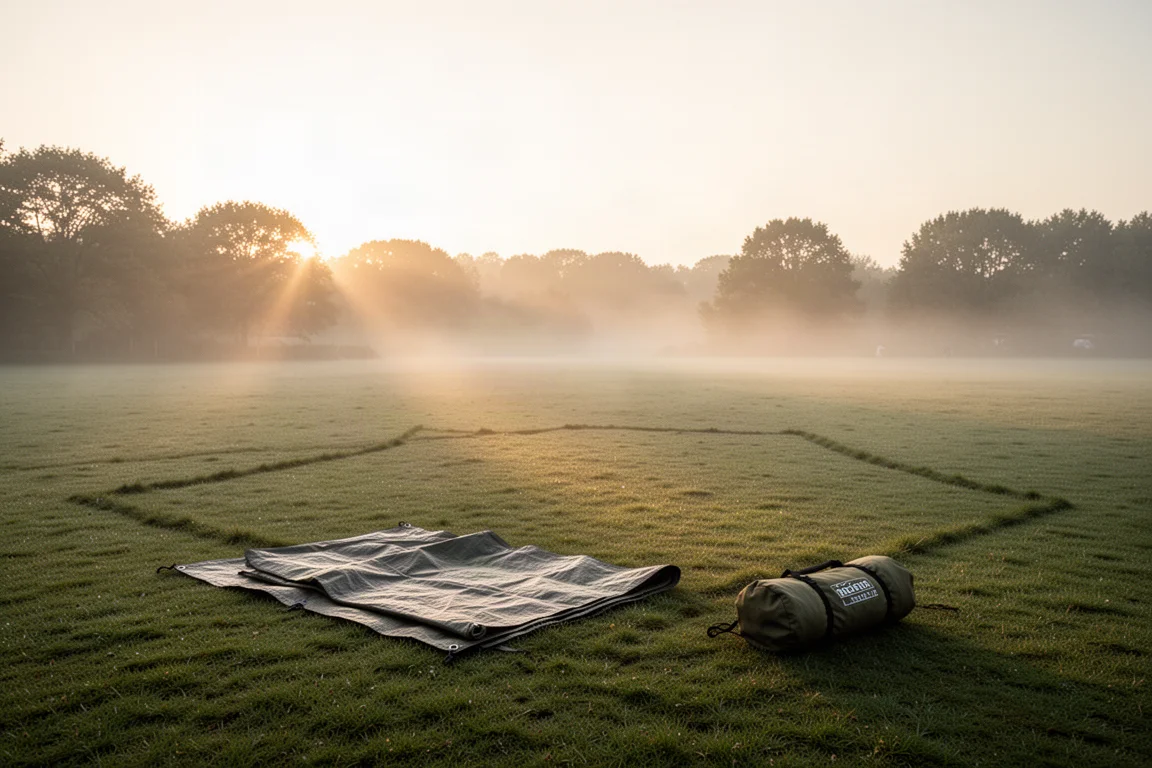
Storage and drying are the second consideration. A tent this size needs somewhere to dry completely before it goes back into storage, and that is genuinely difficult in a small home. The yard is usually the practical answer, ideally with a large tarp underneath so the floor is not sitting on wet ground.
The larger question is longevity. Air beams are fabric bonded with adhesive, and that adhesive begins to break down from the day the tent is manufactured. Every pitch and pack-down flexes and stresses those glued seams. Locating a leak inside an air beam is difficult without the space to submerge the beam, and pulling the frame structure out to hunt for a pinhole is not a task most owners look forward to. A well cared for pole tent can reasonably last 10 to 15 years; an inflatable shelter offers no such guarantee. That uncertainty is why $500 is a sensible ceiling for this category, and it is worth asking how many seasons of use you expect before a problem appears.
A few smaller points are worth noting. The stove jack is not pre-cut, so you cut the opening for your stove pipe yourself. The clear vinyl windows are a welcome feature that largely disappeared from the market in the early 2000s, when most versions leaked or cracked as the material aged, so their long-term durability is worth watching. And on heating, a wood stove has ample capacity, but a small gas heater such as a Kovea Cupid only takes the edge off; below roughly 34°F, a larger heater is needed.
Drying, Storage, and Long-Term Care
Aftercare decides how long this tent lasts. Plan for a full dry-out after every wet trip: pitch it, let it air completely, then break it down and store it dry. Keep the air beams away from sharp edges and abrasive surfaces, use the included stakes and guy lines to reduce movement in wind, and store the tent loosely rather than compressed for long periods. Keep the repair kit with the tent and check the beams and valves periodically so a small issue does not become a large one.
Buying Advice
At $500, the MC2 Mount inflatable tent is a strong value. Inflatable shelters are expensive by nature, and the price climbs quickly with size. Smaller inflatable tents routinely sell for two, three, or even four times this amount, and the build quality here looks closer to tents that cost far more. For campers who want a large, fast-pitching, hot tent capable base camp shelter and who can handle the weight and the storage demands, this is a compelling option.
If those two factors are dealbreakers, a conventional pole tent remains the safer long-term purchase. If they are not, this tent delivers a remarkable amount of space and equipment for the money, with the caveat that inflatable construction is always something of a gamble.
Conclusion
The MC2 Mount inflatable tent earns its place on a short list of inflatable shelters worth considering. It pitches in minutes, sleeps six comfortably with gear, handles wind and rain without complaint, ventilates well enough to avoid condensation, and includes a stove jack for cold weather use. The trade-offs are real: 60 lbs, a large footprint to dry, and the inherent uncertainty of glued air beams. Weighed against $500, those trade-offs look reasonable for the right buyer.
Product link
View more details for MC2 Mount Inflatable Tent
This product is mentioned in the review. Check the specifications, options, and compatibility before buying.
View more details for MC2 Mount Inflatable TentFurther reading
Related Reviews
Camping Tents
3F UL Gear Taiji Two-Person Tent Review: Field Waterproofing Results and Buying Advice
The Taiji pairs an attached fly with a removable inner, but sustained rain exposed untaped vent seams that need sealing before this shelter can be trusted.
Camping Tents
3FUL Gear Lanshan 2 Pro 4-Season Review: A Sub-$200 Single-Wall Trekking Pole Tent
An early look at the 3FUL Gear Lanshan 2 Pro 4-Season, covering its straightforward pitch, generous interior space, and the condensation and seam-sealing questions that come with any single-wall shelter.
Camping Tents
Alps Mountaineering Lynx 1-Person Tent Review: Big Value in a Small Budget Tent
A close look at the Alps Mountaineering Lynx 1-Person Tent, covering real interior dimensions, materials, setup time, ventilation limits, and who should buy it.