Camping Gear
MC2 Mount Airframe Tent Review: A Canvas Shelter Built for Dry, Cold Camping
A practical look at the MC2 Mount airframe tent, covering its two-part airframe design, mesh-heavy ventilation, clear door option, weight, and the canvas care it demands.
Introduction
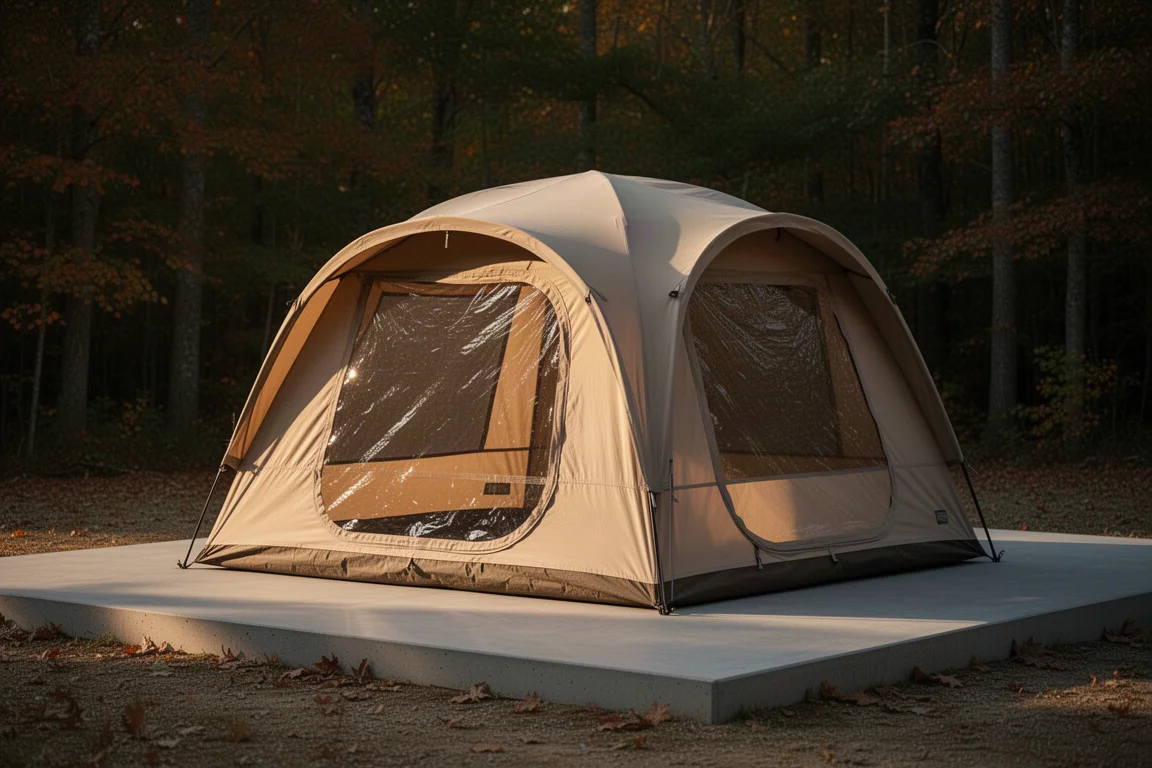
The MC2 Mount airframe tent stands out because of its structure. Rather than the familiar pole and sleeve layout, it uses an airframe that gives the shelter a compact, swag-like silhouette. What makes the design genuinely unusual is that it is a two-component system. The main body is only the first half. A very large awning can be added at the front, and once deployed it roughly doubles the size of the shelter.
Pitching the main body takes about ten minutes. One detail that immediately draws attention is the clear front door panel, an option that makes a great deal of sense for cold-weather camping, when watching snow fall from a protected space is part of the appeal.

Who This Tent Is For
This is a canvas shelter built around dry, cold, and even snowy conditions. Tents in this family tend to perform at their best when the weather is cold and the air is dry, and that is exactly where the MC2 Mount airframe tent fits. It is not a shelter designed for sustained rain.
Weight is the other deciding factor. The tent itself comes in at around 18 lbs, and that figure rises once the awning, poles, and TPU door are added. That places it firmly in car camping and truck camping territory rather than backpacking, where a shelter of this mass would be difficult to justify.
Campers familiar with Australian swag tents will recognize the general idea here, although this design is noticeably larger than a typical swag and offers considerably more internal volume.
Setup and Structure: The Two-Part Airframe
The main body pitches as a self-contained shelter. The second component, a large awning, attaches at the front and substantially extends the covered area. For trips where natural shade is already available, the awning can be left behind, which keeps the setup simpler and the packed weight lower.
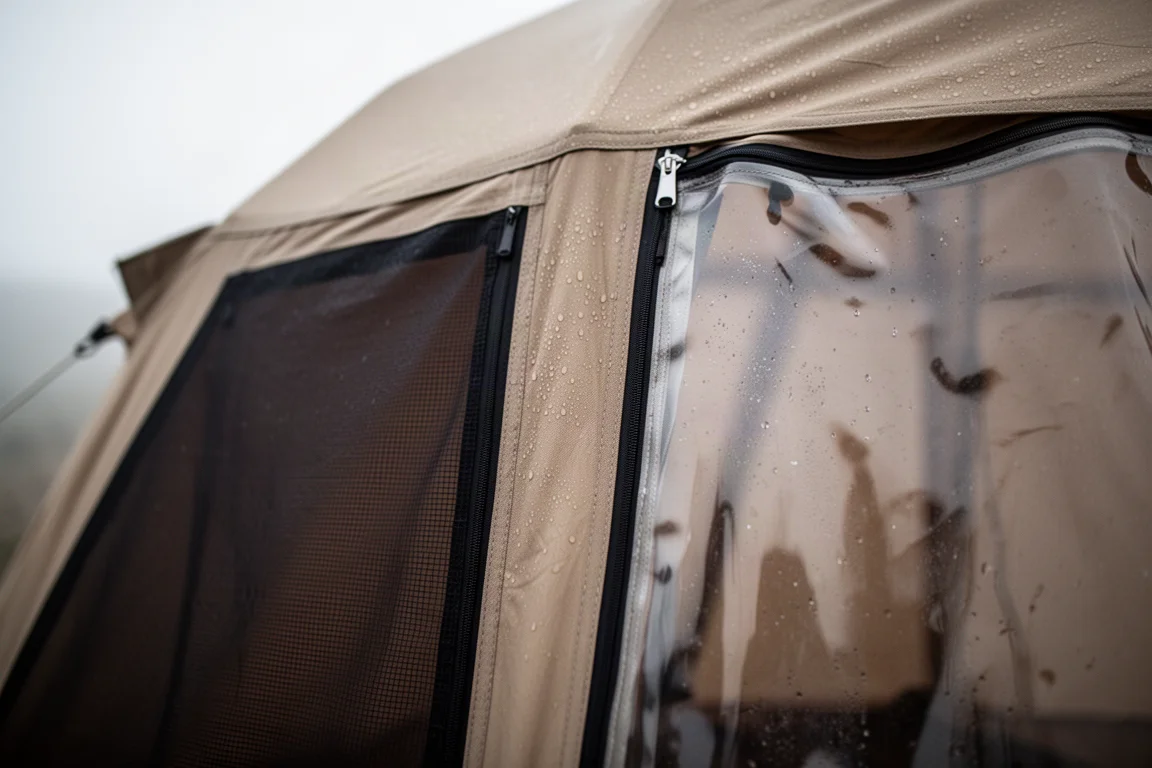
Airflow is clearly a priority in the design. There is a large mesh section at the door, two mesh sections on the sides, and another large mesh panel at the rear. Combined with the optional clear door panel, that gives the tent a flexible front wall: mesh for warm evenings, clear TPU for cold ones. The layout also makes it easy to orient the shelter so that prevailing breezes are directed through the body.
Main Strengths: Ventilation and Cold-Weather Character
Ventilation is the standout quality. With that much mesh distributed around the body, air moves through the shelter easily, and conditions inside stay comfortable overnight even when the tent is closed up against cool air.
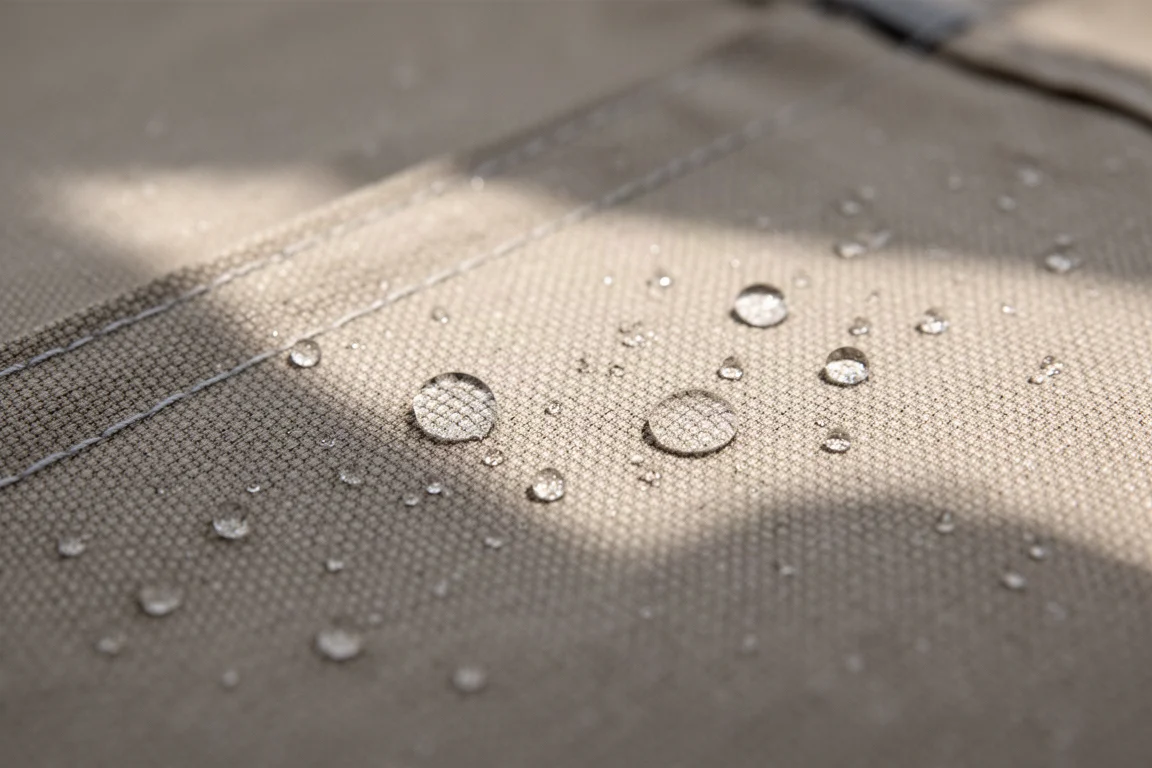
The material mix, a polyester and cotton blend, is what gives the tent its character. Canvas-family fabrics like this are happiest in dry and cold conditions, and they behave differently from fully synthetic shelters in the way they hold warmth and manage interior moisture. The clear door adds a practical winter advantage: a weather-protected view without opening the tent to the cold.
The result is a shelter that feels calm and solid to sleep in, rather than taut and synthetic, which is a meaningful difference on cold nights.
Materials, Care, and Long-Term Ownership
The polyester-cotton blend explains much of the tent’s behaviour. It performs best in dry, cold, and snowy conditions, and it is not the right choice for rainy trips. Canvas and cotton tents also demand more attention than synthetic ones. They need to be stored dry and cared for carefully, because damp storage can lead to mold and rot over time.
That care requirement is the main reason shelters like this remain a niche choice. The trade-off is a tent that feels distinctly different to camp in, with a quieter and more substantial character than a lightweight nylon shelter. For campers who mostly head out in cold, dry weather and who are willing to look after the fabric properly, that trade-off is easier to accept.
Things to Consider Before Buying
Two practical points deserve attention before committing.
First, pitching is not always perfect. In practice, two of the airframes showed significant bows, and the fabric was too tight to extend the structure fully outward and upward at the same time. More work with the tent may resolve it, but buyers should expect a learning curve rather than a flawless first pitch.
Second, the footprint is smaller than photographs suggest. It is larger than a swag tent, but it is not a stand-up shelter. Anyone expecting to stand inside will want to reset expectations and read the published measurements carefully before ordering, because dimensions on paper and a pitched tent in person can feel quite different.
Buying Advice
The right way to think about the MC2 Mount airframe tent is as a specialist shelter rather than an all-rounder. If most of your camping happens in dry, cold conditions, if snow is part of the plan, and if you are loading gear into a vehicle rather than carrying it on your back, the design makes a lot of sense. The mesh-heavy body, the clear door option, and the expandable awning all support that kind of use.
If rain is a regular feature of your trips, or if you want a shelter that can be carried any distance, this is not the tent to build a kit around. Canvas-family fabrics need to stay dry, and the weight climbs once the full two-part system is packed. Check the packed weight with the awning, poles, and TPU door included, and budget time for both the pitching learning curve and the ongoing fabric care that this class of tent requires.

For the right camper, in the right conditions, it is a distinctive and rewarding shelter that does something most mainstream tents do not.
Conclusion
The MC2 Mount airframe tent is an unusual design with clear strengths and equally clear limits. Its two-part airframe, generous mesh ventilation, and optional clear front door make it a compelling choice for dry, cold, and snowy camping. Its weight, its fabric care requirements, and its preference for dry weather make it a poor match for wet trips or backpacking.
Buy it for the conditions it was built for, check the measurements and the packed weight carefully, and expect to spend some time dialling in the pitch. Do that, and it delivers a camping experience that feels quite different from a conventional synthetic tent.
Product link
View more details for MC2 Mount Airframe Tent
This product is mentioned in the review. Check the specifications, options, and compatibility before buying.
View more details for MC2 Mount Airframe TentFurther reading
Related Reviews
Camping Gear
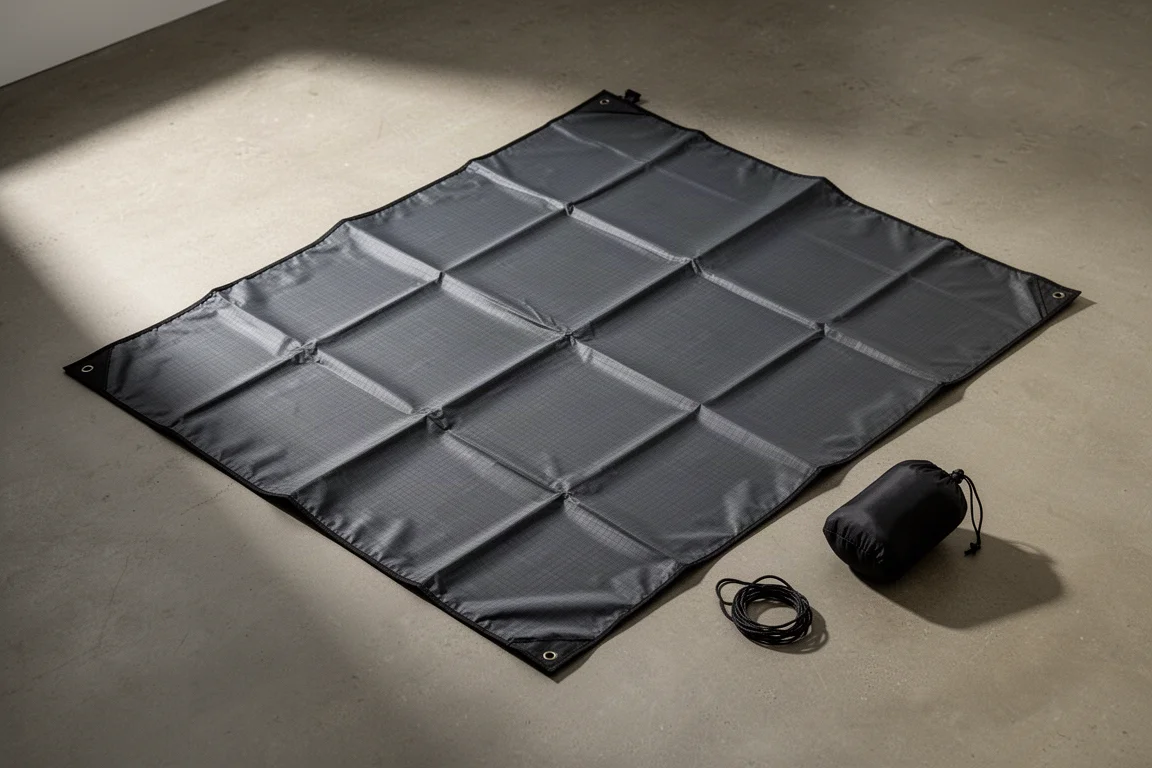
3FUL Ultralight Ground Sheet Review: A Two-Person Footprint Worth Packing
A 6.7 oz two-person ground sheet in ripstop silnylon, priced around $30. Here is what it protects, what it does not do, and who should pack it.
Camping Gear
Backcountry Light Dual-Function Tarp and Floor Review: A Footprint First
A dual-purpose tent floor and tarp that keeps falling rain off you, but cannot block wind. Here is where it works and where it does not.
Camping Gear
Best 2-Person Camping Mattresses for Couples: 10 Options Compared
A practical comparison of ten two-person camping mattresses, covering self-inflating pads, air pads and air mattresses for couples.