Gravel Bike Tires
Maxxis Rambler 40mm vs 50mm: Does Wider Mean Faster on Gravel?
A back-to-back gravel comparison of the Maxxis Rambler in 40mm and 50mm widths, covering lap feel, roll-down results, and why tire pressure mattered more than width.
Introduction
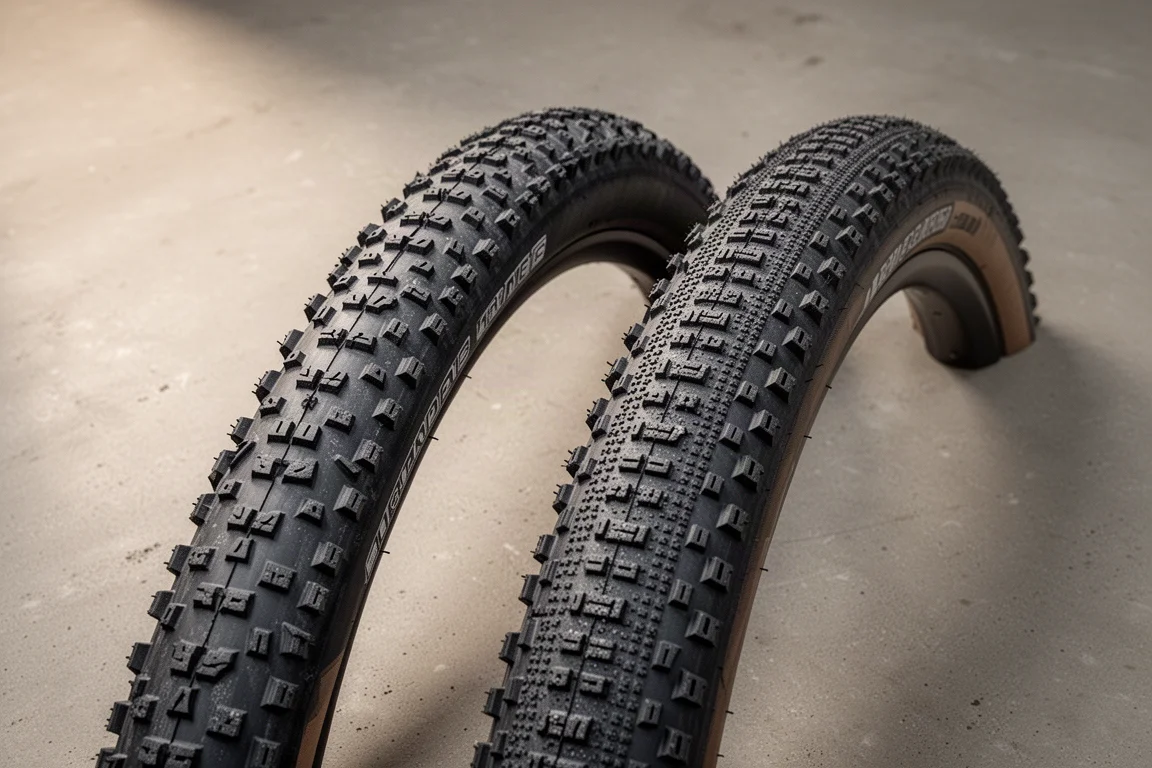
Gravel riders keep asking whether wider tires are actually faster. To find an answer, the Maxxis Rambler was tested back to back in 40mm and 50mm widths on the same bike, with identical sealant volume and pressures set the same way. The test combined timed laps on a mixed-terrain trail with a roll-down test on smooth and chunky gravel at 25 psi and 35 psi.
The headline result is simple: neither width was significantly faster than the other. The clearer findings were that lower pressure beat higher pressure on both surfaces, that line choice influenced times more than tire width did, and that the wider tire was noticeably nicer to ride.
How These Two Tire Widths Were Compared
The Maxxis Rambler is a common gravel tire and a good fit for the mixed conditions on the test course. The 40mm and 50mm versions were run on the same bike, with the same sealant level in each set, and pressures were calculated from surface type, system weight, and weather conditions rather than guesswork. Lap times were logged with a GPS computer.
The trail lap was chosen to expose the limits of both the tires and the rider, with gravel, mud, roots, and steep kickers arriving in quick succession. A separate session on open gravel roads handled the rolling resistance question.
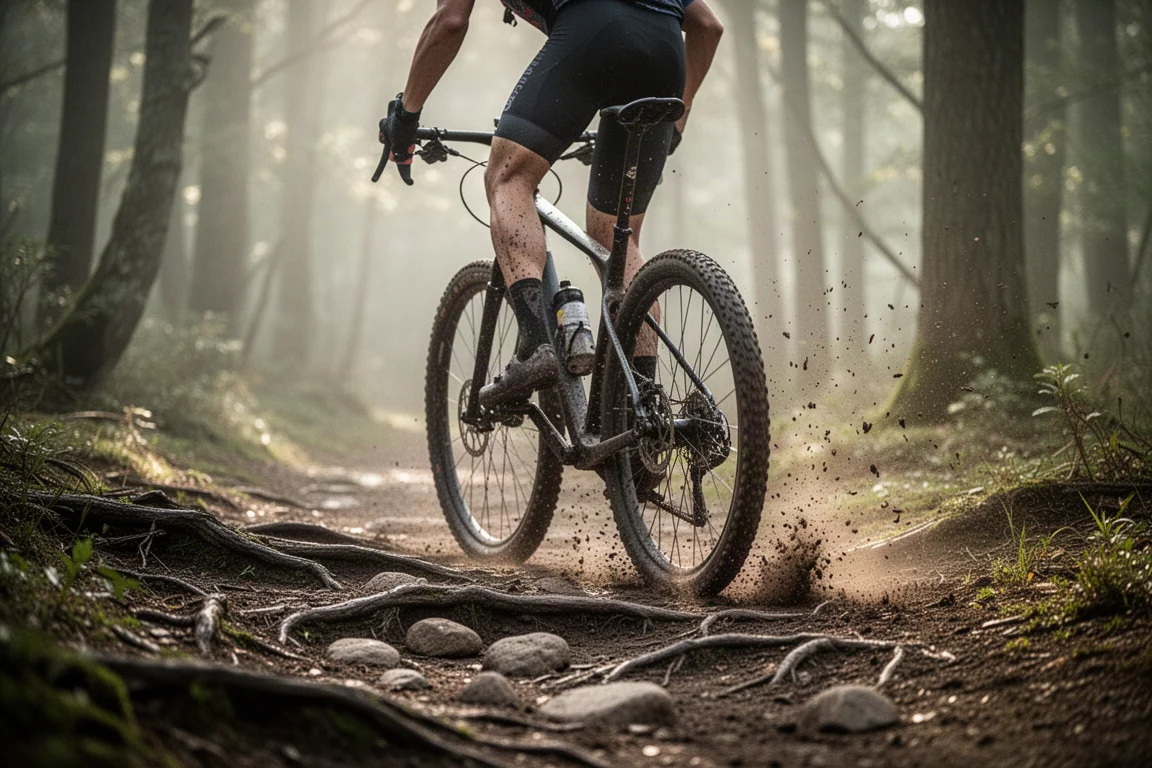
For the roll-down test, the rider crossed a start line at a set rolling speed and was not allowed to pedal until after the finish line, with each run repeated three times per tire and pressure to produce an average. Two surfaces were used, a smooth gravel line and a chunky gravel line, at 25 psi and 35 psi. Differences in tire weight and aerodynamic profile could not be controlled, so the margins were treated with appropriate caution.
Maxxis Rambler 40mm: Lighter and More Sprightly
On the mixed-terrain lap the 40mm Rambler felt faster over most of the course. It was quicker off the line, easier to hold at speed on the straight drags in the first half, and it gave away little in the wooded sections. In sloppy mud it was arguably the better tire, biting into the surface and finding traction where the wider tire floated.
The trade-offs showed up on rough ground. Roots and rocks transmitted more feedback, the bike felt twitchy in places, and the narrower tire lost a little traction on a steep kicker. In the roll-down test it posted the fastest average times on both the smooth and the rough gravel at 25 psi, but by a single second in each case.
Maxxis Rambler 50mm: Wider, Calmer, More Comfortable
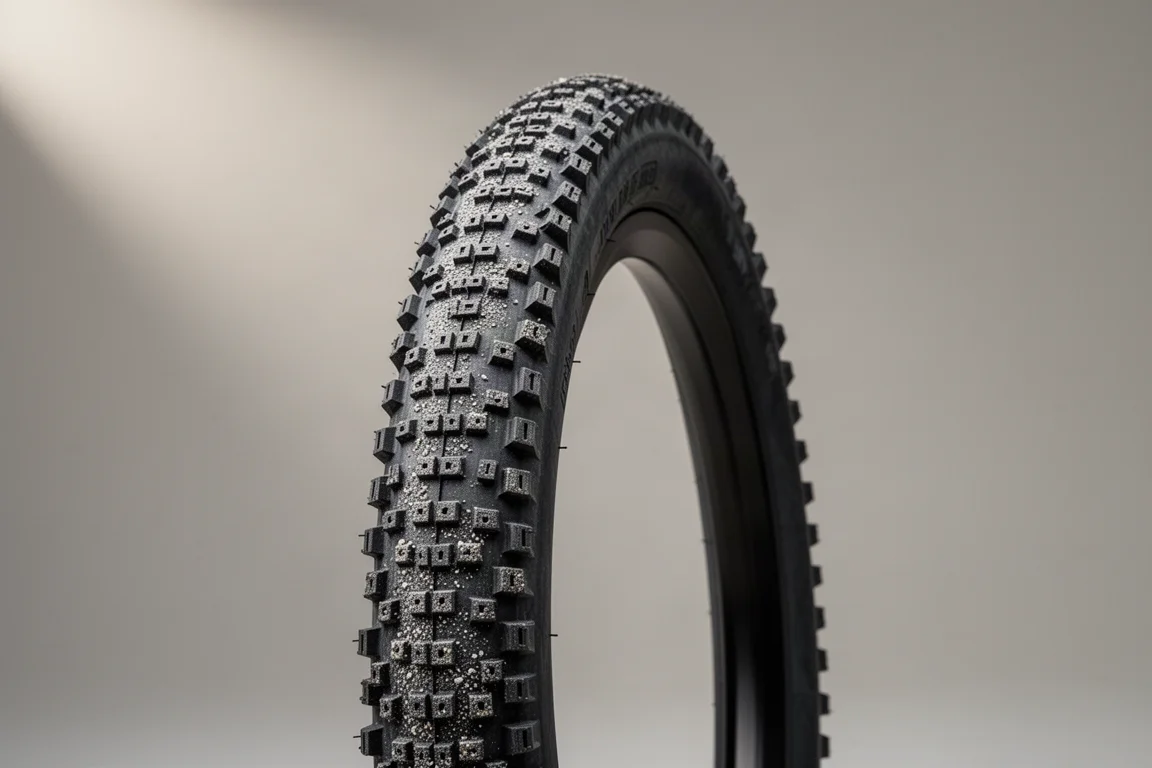
The 50mm Rambler was the calmer of the two. Cornering confidence was higher, the wider casing stayed composed even when it met debris on a corner exit, and roots, rocks, and impacts were far easier to live with. Technical off-road climbing also felt easier on the wider tire.
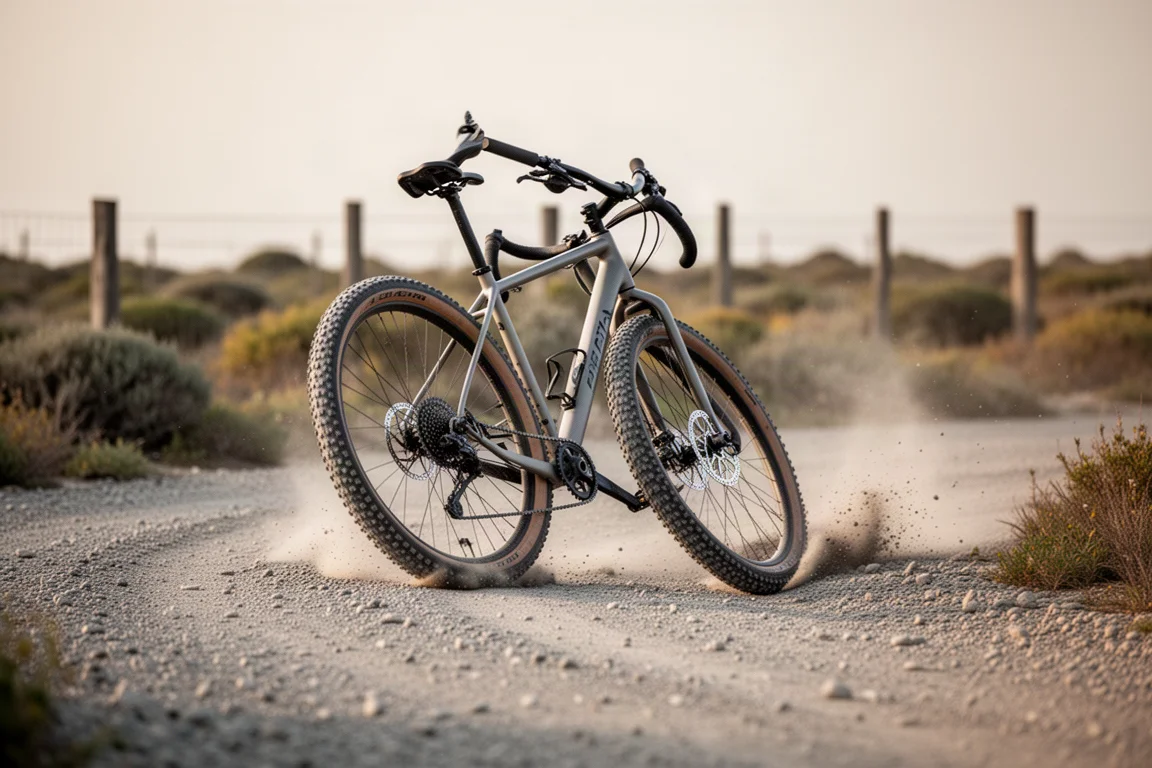
Where it gave ground was in mud, where it floated more and made it harder to track through ruts, and on the faster parts of the lap, where it felt slightly slower. In the roll-down test it was a second faster than the 40mm on smooth gravel at 35 psi and two seconds faster on rough gravel at 35 psi, while trailing the 40mm by a second on rough gravel at 25 psi.
Roll-Down Results: Small Gaps Between the Two Widths
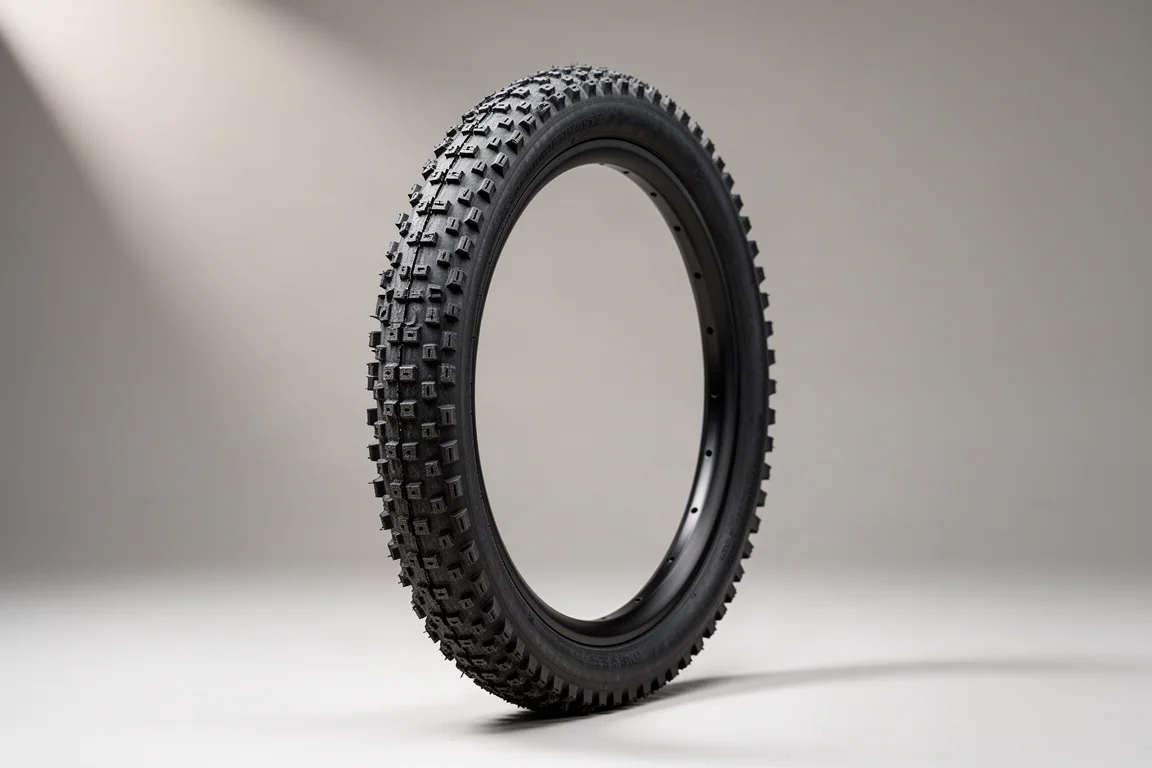
Across the roll-down test, the two widths were separated by very small margins. On smooth gravel at 25 psi the 40mm was fastest by one second. On the same surface at 35 psi the 50mm came out a second ahead. On the rough gravel line at 25 psi the 40mm was a second faster and produced the lowest average time of the test, while at 35 psi the 50mm was two seconds faster.
Given those gaps, and the factors that could not be controlled, there was no significant time saving to be had from either width. Line choice, by contrast, had the biggest influence on times across the whole test, with the smooth line consistently quicker than the rough one.
Tire Pressure and Line Choice Matter More Than Width
Both widths were faster at 25 psi than at 35 psi, on the smooth line and the rough line alike. The effect was larger on the narrower tire: the 40mm was about three seconds quicker on the smooth line and five seconds quicker on the rough line when run at 25 psi. The 50mm also gained at the lower pressure, and it is possible that going lower still would have added more.
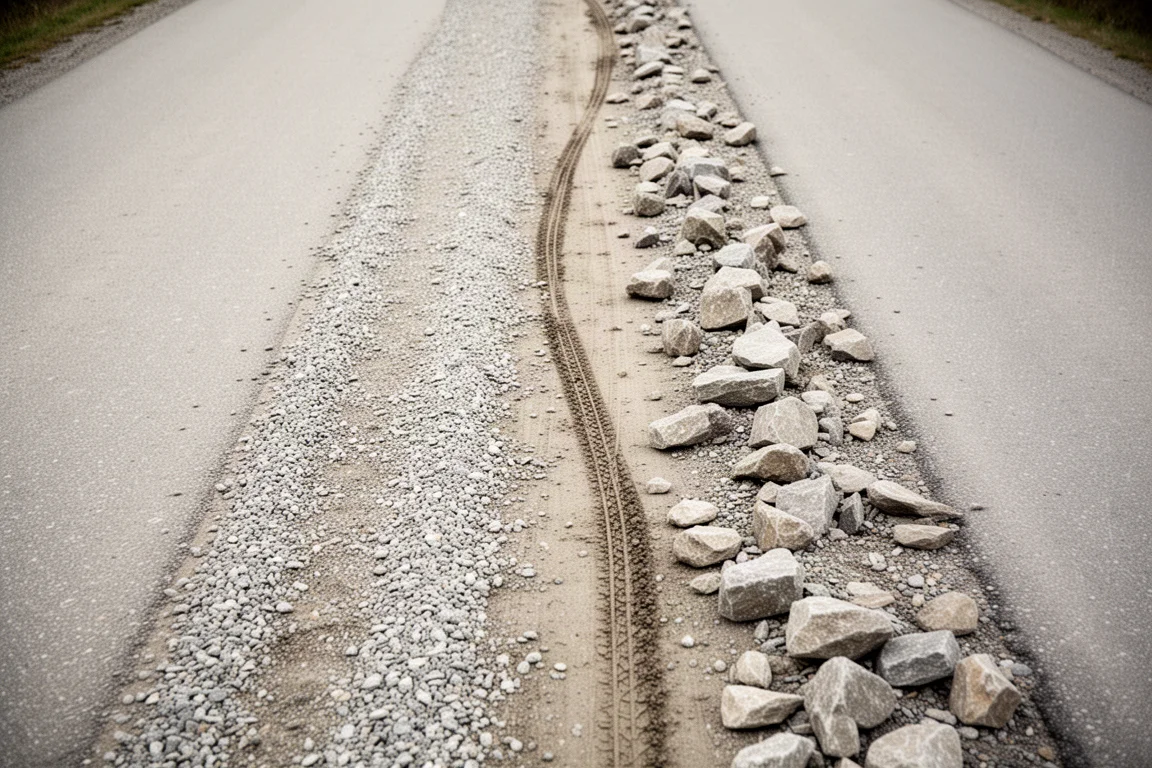
High pressure on rough ground was also draining. After each high-pressure run on the chunky line the rider felt sluggish for a minute or so, and the 40mm at pressure shook the hands so hard they went numb while the bike turned skittish underneath. On a rolling course where descents lead straight into climbs, running a lower pressure even on a narrower tire can reduce fatigue across a long day.
Comfort, Fatigue, and Puncture Risk
Lower pressures are not without cost. On the narrow tire at low pressure there was a clear increase in puncture risk, and on one of the three rough-line runs it felt as though the rim was close to being damaged.
Comfort is where the wider tire made its case most strongly. Lower pressures and wider casings were both calmer, and for anything other than racing, particularly on chunkier gravel, the wide tire was simply the nicer ride. Pressure itself is personal: rider and bike weight, tire choice, terrain, weather, trail conditions, and whether inner tubes are used all change the answer, so time spent experimenting with a lower pressure than usual is time well spent.
Buying Advice: Choosing Between 40mm and 50mm
If speed on mixed terrain is the goal, the 40mm Rambler is the natural pick. It felt quicker over most of the course, was sprightlier off the line, and found better traction in sloppy mud, at the cost of a firmer ride over roots and rocks and a little more care needed around pressure and punctures.
If comfort, control, and confidence matter more, the 50mm Rambler is the easier recommendation. It was calmer over roots, rocks, and debris, more predictable through corners, and less fatiguing on rough ground, which makes it a strong choice for chunky gravel outside of a race context.
The data points to a simpler priority as well. Both tires were faster at 25 psi than at 35 psi in this test, and the time differences produced by pressure were larger than the differences between the two widths. Finding the right pressure for a specific setup is likely to matter more than choosing between 40mm and 50mm.
Conclusion
The fastest average times in the roll-down test came from the 40mm tire, but neither width was significantly faster than the other. What was clear is that the wider tire was nicer to ride, with a calmer feel on rough terrain, less fatigue, more predictable cornering, and extra traction. Whichever width you choose, the lower 25 psi pressure tested faster than 35 psi and helped keep things comfortable, so it is worth spending some time dialling in the pressure that suits your own setup.
Further reading
Related Reviews
Gravel Bike Tires
Continental Race King 2.2 Review: Mountain Bike Tires on a Gravel Bike
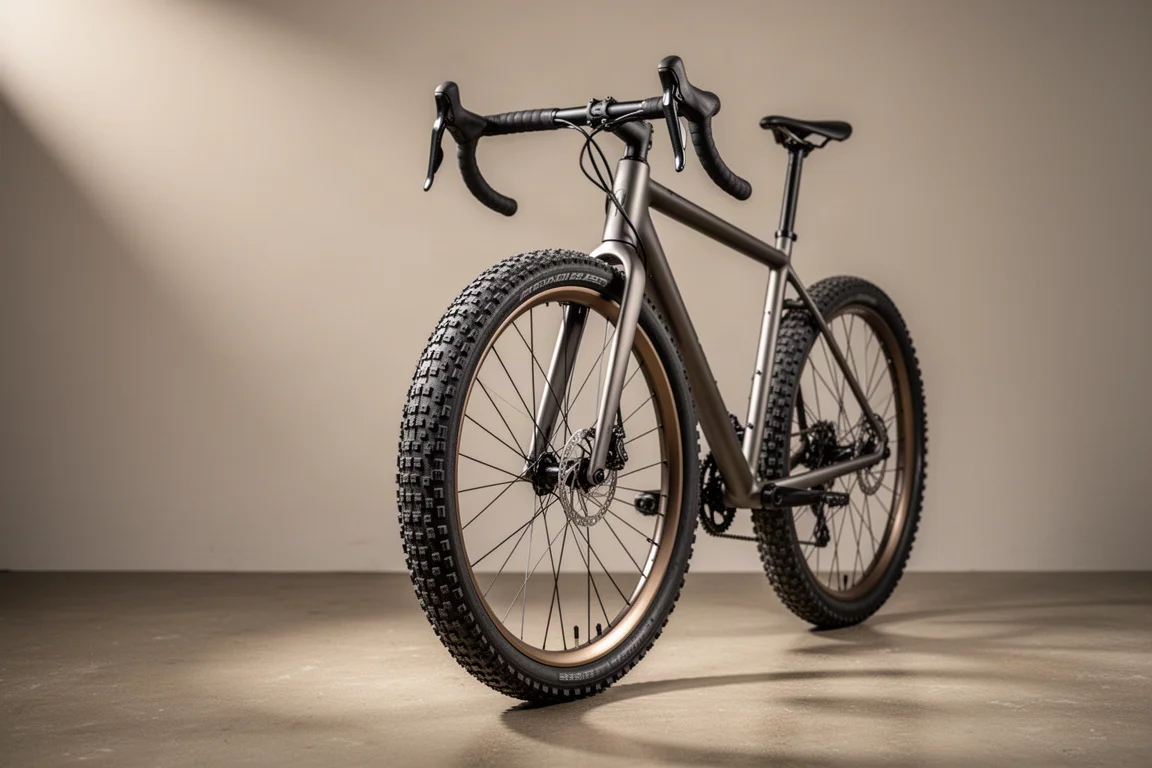
A 55mm knobby tire on a gravel frame delivers real traction and confidence on loose terrain, but frame clearance, toe overlap, and surface choice decide whether it makes sense.
Gravel Bike Tires
Continental Race King 2.2 Review: Wide Tires on a Gravel Bike
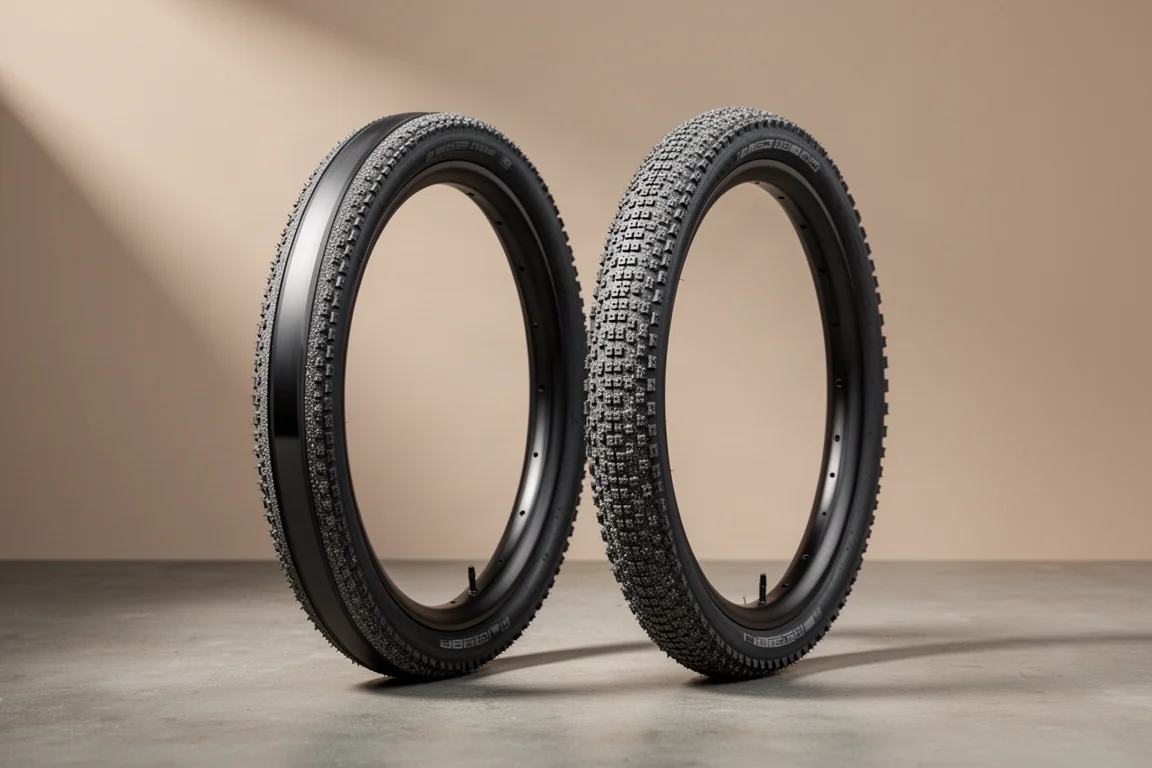
A 2.2 inch Continental Race King fitted to a gravel bike adds real grip and descending confidence, with weight and clearance trade-offs to weigh first.
Gravel Bike Tires
Hutchinson Caracal Gravel Tires Review: Speed, Grip, and Where Each Model Fits
A close look at the Hutchinson Caracal Race TLR and the tougher Caracal TLR, covering rolling resistance, real-world grip, and how to choose between them.