Gravel Bike Tires
Continental Race King 2.2 Review: Wide Tires on a Gravel Bike
A 2.2 inch Continental Race King fitted to a gravel bike adds real grip and descending confidence, with weight and clearance trade-offs to weigh first.
Introduction
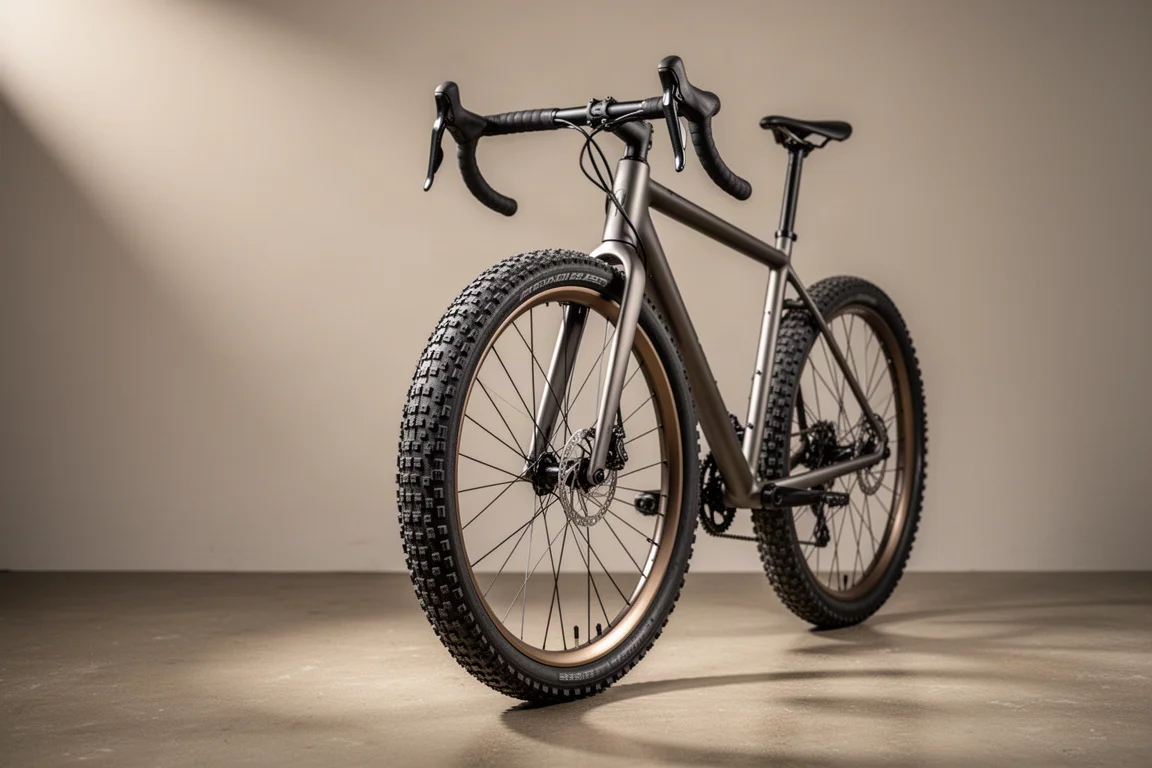
Gravel tire widths have been creeping upward for years. Where a 45 mm tire once counted as wide, top-tier gravel racing now regularly sees 50 mm and beyond, and some riders have gone further by fitting mountain bike tires to their gravel bikes. The Continental Race King, at 2.2 inches, sits at the far end of that trend.
This review looks at what actually happens when a tire of that width is fitted to a gravel frame that can accept it, covering grip, rolling feel, climbing, and the practical compromises that come with the extra volume. The tire was ridden on fire roads, rocky technical trails, and a small amount of tarmac, then raced on mixed gravel terrain over a weekend in wet conditions.
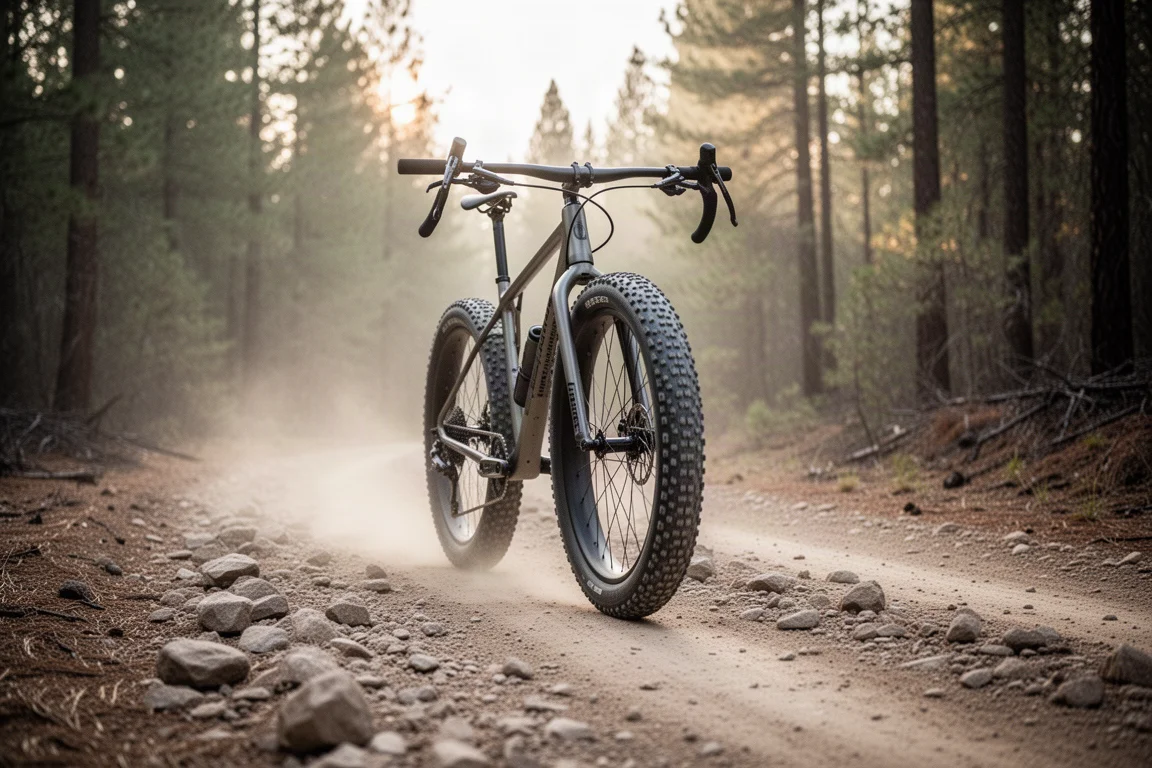
The short answer is that the extra width changed the ride in ways that were easy to notice, and not all of them were positive. The longer answer involves frame clearance, weight, and the kind of gravel you actually ride.
Who this product is for
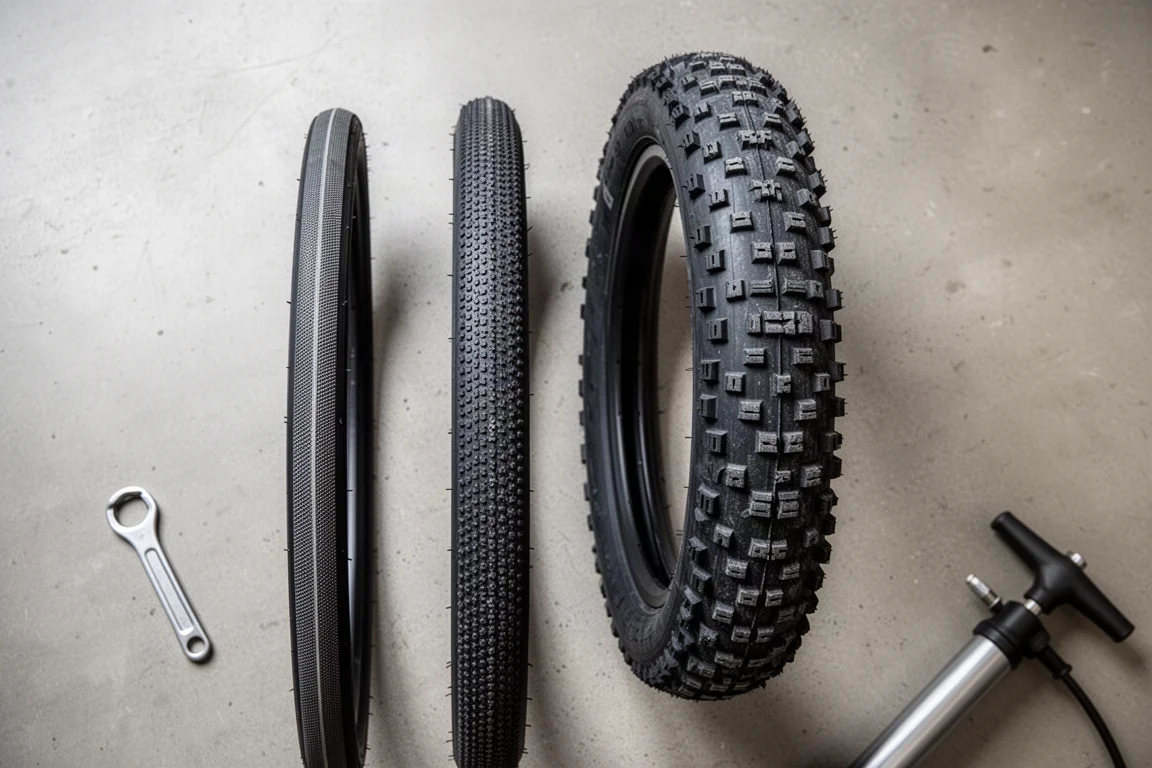
The Race King in 2.2 inches suits riders whose frames have generous tire clearance and whose riding leans toward rough, loose, or rocky surfaces. It is aimed at gravel riders who want to ride more technical terrain than a standard 40 mm or 45 mm tire comfortably handles.
It is a less obvious choice for riders who spend most of their time on smooth towpaths, light gravel paths, or fast rolling fire roads. On that kind of surface, a 45 mm tire remains a fit-and-forget option that does not demand any change in setup or habits.
Riders on frames with narrower clearance are effectively excluded from the decision, because a tire this size simply will not fit. That makes the choice easy for some riders and irrelevant for others.
Main strengths
The most consistent benefit is confidence. On descents, the extra volume made it easier to commit to a line instead of second-guessing every rock. On technical sections, the additional grip was welcome, and loose, uneven surfaces became less of a negotiation.
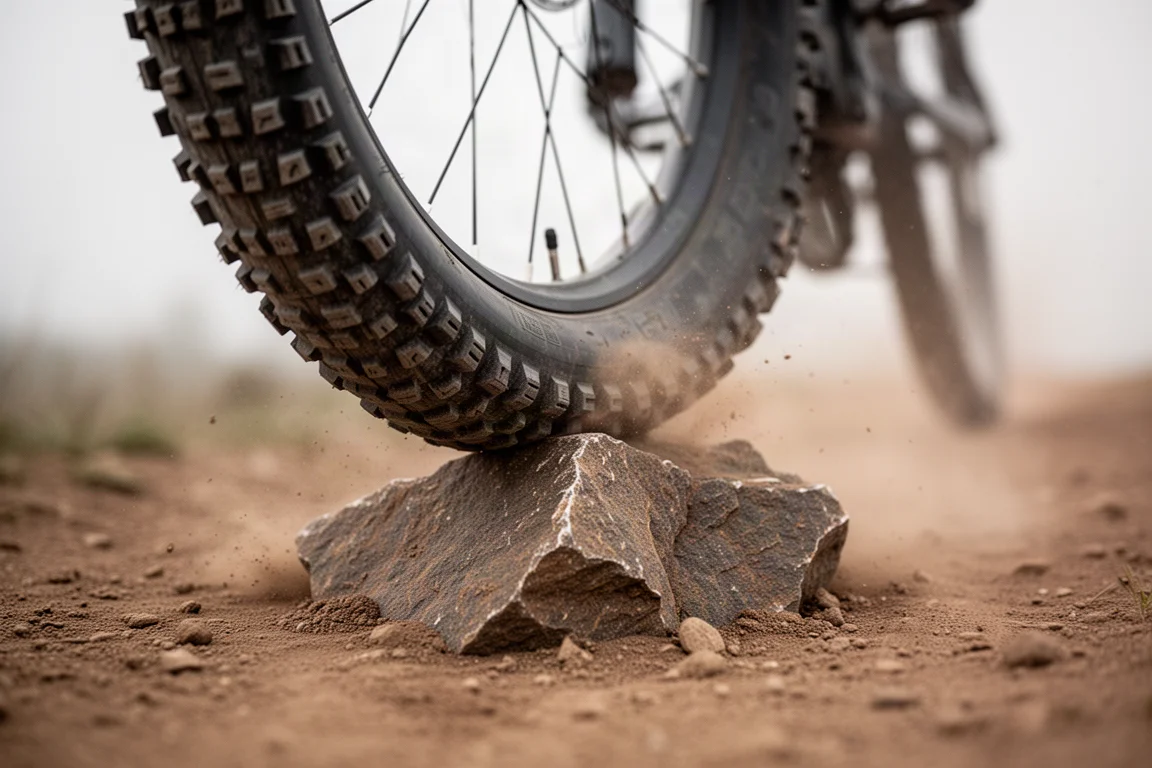
Rocky features that would normally be avoided on a 40 mm tire, and treated with caution on a 45 mm, could be ridden straight over. The wider casing made it possible to ride rough tracks at full pace with far less concern about what lay underneath the wheels.
Rolling resistance on tarmac was also better than expected for a tire of this width. Across a mixed day of riding that included fire roads and rockier terrain, the tires felt composed, and convincing enough that they stayed on the bike for race day.
Things to consider before buying
The first consideration is weight. Wider tires usually carry a weight penalty, and tires that avoid one often do so by using thinner sidewalls that are more vulnerable on rocky ground. That trade-off matters on climbs and on longer, faster days.
The second is toe overlap. With cleats set far back and the foot positioned rearward, a tire this wide can contact the front wheel at low speed, which becomes noticeable during slow, technical maneuvering. It is a fit and geometry question as much as a tire question.
The third is aerodynamics. A wider tire is not more aerodynamic, so any gain has to come from elsewhere. In practice, a wide tire tends to perform best at lower speeds and on rougher surfaces, while a narrower tire stays the more efficient option on smooth, fast gravel.
Riding impressions on gravel and rock
On fire roads and rocky trails, the tire behaved like a genuine upgrade rather than a novelty. Loose climbs that had never been cleared before were still not cleared, but the reason was rider skill rather than traction, and the extra grip made the attempt feel more reasonable.
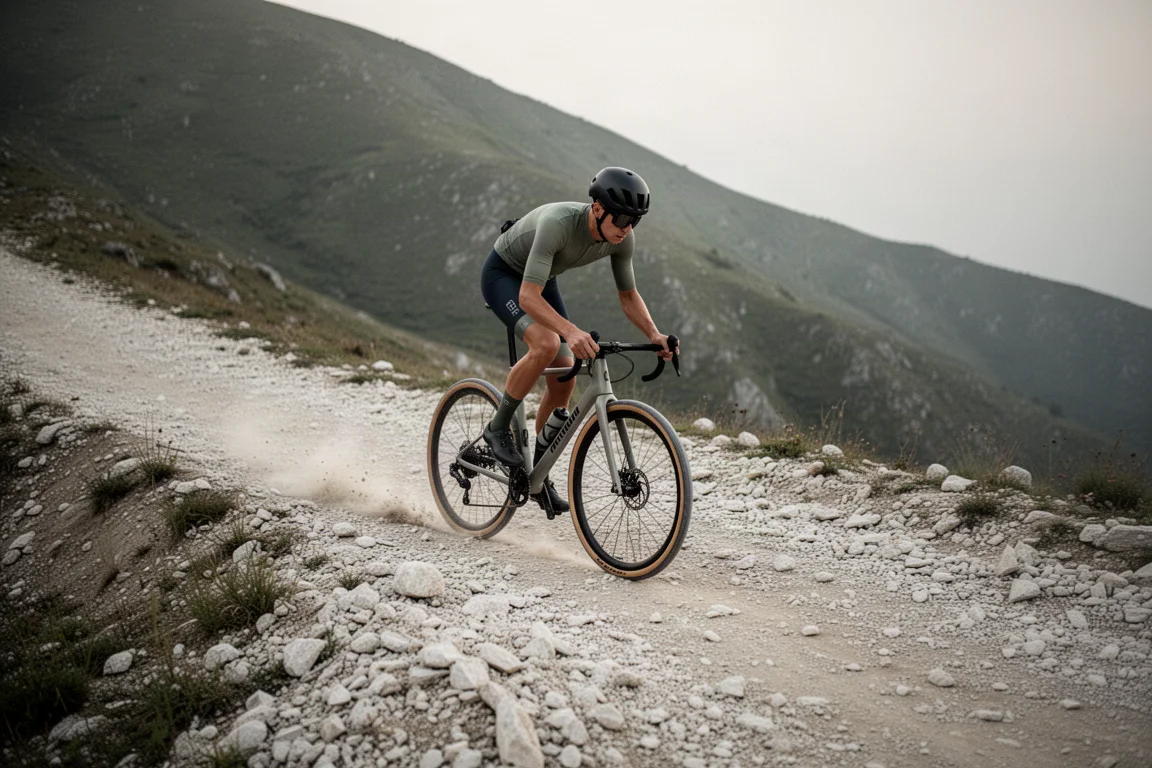
Rocky, technical pitches were where the difference was clearest. On a narrower gravel tire, a rock of that size invites a detour. On a 45 mm tire, it can be ridden over without much drama. At 2.2 inches, it stops being a decision at all, and that freedom is what makes the width appealing for riders who want to keep momentum on demanding terrain.
The weekend race added a useful data point. Wet weather turned the course from dusty to greasy, and the wide tires handled the change without complaint. By the end of the event, they looked like the faster option across that particular mix of surfaces, even though the aerodynamic penalty of the extra width is difficult to measure outside a wind tunnel.
Tire width and frame clearance
Frame clearance decides everything here. The bike used for testing could accept 57 mm tires, so the 2.2 inch Race King had room to spare. Many gravel frames cannot take anything close to that, and no amount of grip advantage matters if the tire will not fit.
There are signs that this is changing. Several gravel race bikes released in recent seasons have moved to wider clearances, which suggests manufacturers are responding both to rider demand and to the argument that wider rubber is faster over a broader range of surfaces.
If your frame can take the width, the decision becomes a personal one about terrain and handling. If it cannot, the question is settled before it starts, and a 45 mm tire remains a sensible, low-drama choice.
Buying advice
If the goal is to travel as fast as possible across a wide range of gravel surfaces and the frame has the clearance, fitting the widest tire it will take is a defensible strategy. If the riding is mostly light trails and towpaths, a 45 mm tire is enough and simpler to live with day to day.
There is a middle path worth considering. Stepping down from a 2.2 inch tire to a 50 mm, or 2.1 inch, width keeps most of the grip and comfort while reducing the chance of toe overlap and trimming a little rotating weight. That is the direction chosen after testing, and it is a reasonable target for riders who want the benefits without the annoyances.
It is also worth asking whether a gravel bike is the right platform at all for very rough terrain. A hardtail mountain bike handles that ground more naturally, though it is more sluggish on the road sections that connect the trails. If most of your riding looks like mountain biking, the honest answer may be a mountain bike.
Conclusion
Wide gravel tires proved to be a genuine option rather than a gimmick. The Continental Race King in 2.2 inches delivered more grip, more descending confidence, and better tarmac manners than the width suggests, and it handled a wet race course without issue.
The caveats are real, though. Clearance limits who can run it, weight and aerodynamics impose a cost on smooth fast surfaces, and toe overlap can spoil slow technical riding on some setups. For riders whose frames accept wide rubber and whose routes are rough, it is an easy recommendation. For everyone else, a 45 mm tire remains the simpler answer.
Product link
View more details for Continental Race King
This product is mentioned in the review. Check the specifications, options, and compatibility before buying.
View more details for Continental Race KingFurther reading
Related Reviews
Gravel Bike Tires
Continental Race King 2.2 Review: Mountain Bike Tires on a Gravel Bike
A 55mm knobby tire on a gravel frame delivers real traction and confidence on loose terrain, but frame clearance, toe overlap, and surface choice decide whether it makes sense.
Gravel Bike Tires
Hutchinson Caracal Gravel Tires Review: Speed, Grip, and Where Each Model Fits
A close look at the Hutchinson Caracal Race TLR and the tougher Caracal TLR, covering rolling resistance, real-world grip, and how to choose between them.
Gravel Bike Tires
Hutchinson Caracal Race TLR Review: Fast Gravel Speed With a Dry-Weather Focus
A fast-rolling gravel tire with a slick centre and light shoulder tread, plus the grip and volume trade-offs to weigh before you buy.