Bookshelf Speakers
MartinLogan Motion XT B100 Review: Neutral, Detailed, and Hungry for a Subwoofer
The Motion XT B100 brings the FMT tweeter and Kevlar mid-range driver of MartinLogan's XT line to a stand-mounted cabinet, with superb imaging, a 4 ohm load, and bass that stops around 50 Hz.
Introduction
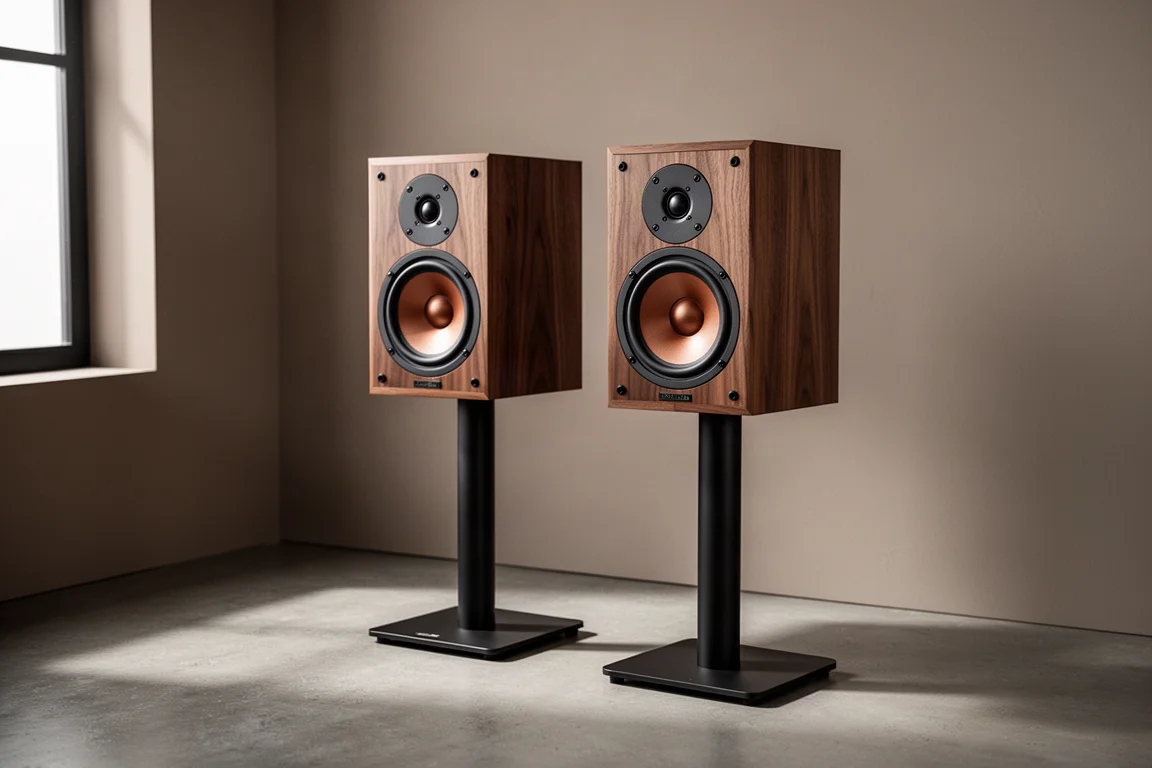
MartinLogan reimagined its Motion line for 2023, and the Motion XT B100 sits at the top of the stand-mounted range. It is the largest bookshelf speaker in the line and the only bookshelf model to carry the full XT badge, which makes it the natural choice for anyone who wants the character of the Motion XT F100 tower in a smaller cabinet.
The specification sheet explains the appeal quickly. The B100 uses the same 1.25 inch by 2.5 inch FMT tweeter found on the F100 tower, paired with a 6.5 inch Kevlar mid-range driver and a large rear-facing port. MartinLogan reports a frequency response of 45 Hz to 25 kHz, a sensitivity of 93 dB and a nominal impedance of 4 ohms. At roughly $800 per speaker, it is asking for a considered system rather than a casual upgrade.
Who the Motion XT B100 Is For
The B100 is built for listeners who put neutrality, detail and imaging ahead of raw low-frequency output, and who accept that a subwoofer is part of the system rather than an optional extra. With the bass rolling off around 50 Hz, full-range playback effectively requires a sub, and a poorly built one will muddy the speaker’s otherwise excellent mid-range. This is not the place to economise.
It also asks for an amplifier that is comfortable driving a 4 ohm load. A sensitivity of 93 dB makes the speaker easy to drive in terms of loudness, but the impedance is not negotiable, and a budget amplifier that struggles below 8 ohms is the wrong partner.
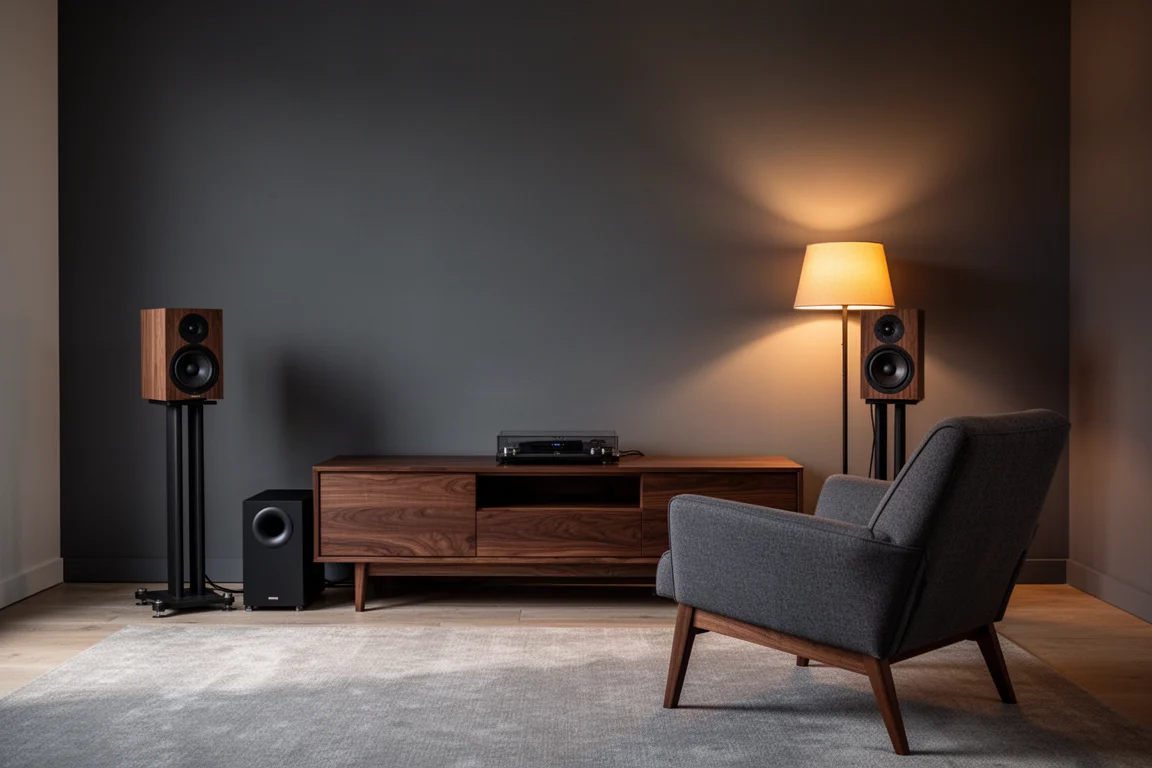
Where the B100 makes less sense is on a desktop or in a system where the main speakers have to carry the low end alone. It is a serious stand-mounted speaker that expects a serious supporting cast.
Design, Build Quality, and Finish
Build quality is one of the strongest arguments in the B100’s favour. The construction is on par with speakers costing considerably more, and it is evident both in the measurements and in the way the cabinet behaves.
The finish options are walnut veneer, gloss black and satin white, and the walnut is real wood veneer rather than a printed wrap, which is a nice touch at this price. Copper accents around the woofers and a new horn-shaped waveguide give the front baffle a distinctive look that will feel familiar to anyone who knows the Klipsch Reference Premiere range, though the two are a long way apart in finish and feel when seen side by side.
There is nothing about the build that warrants concern. Cabinet resonance is kept well under control, and the speaker looks more expensive than its asking price.
Placement, Room Behavior, and Setup
Because the port faces rearward, distance from the front wall changes the low end substantially. Placed about six inches from the wall, the bass can be boosted by roughly 3 dB from 150 Hz downward, which brings the response closer to the 45 Hz figure MartinLogan specifies. Pulling the speakers out 12 inches or more reduces that boost and brings the bass more in line with the rest of the response, although roll-off then begins sooner, at around 50 Hz.
From roughly 200 Hz upward the speaker is remarkably room friendly and consistent, which makes the upper range far less fussy about placement than the bass behaviour suggests. Toe-in sharpens center focus but also adds a slight lift to the high frequencies.
A sensible starting point is about a foot off the front wall, seven to eight feet apart, toed in slightly but not aimed directly at the listening position.
Main Strengths: Neutrality, Detail, and Imaging
A 20 Hz to 20 kHz sweep shows a very linear response. This is one of the most consistent speakers in its class, and like the F100 tower it does not roll off meaningfully in the high frequencies until well past 10 kHz. Detail retrieval is high, and it can even seem more obvious here than on the tower, largely because there is so much less bass underneath it.
The mid-range is clear, nuanced and not the least bit colored, either by design or by the cabinet. Performers and instruments hold clear contrast against one another, so dense recordings stay legible rather than collapsing into a single mass.
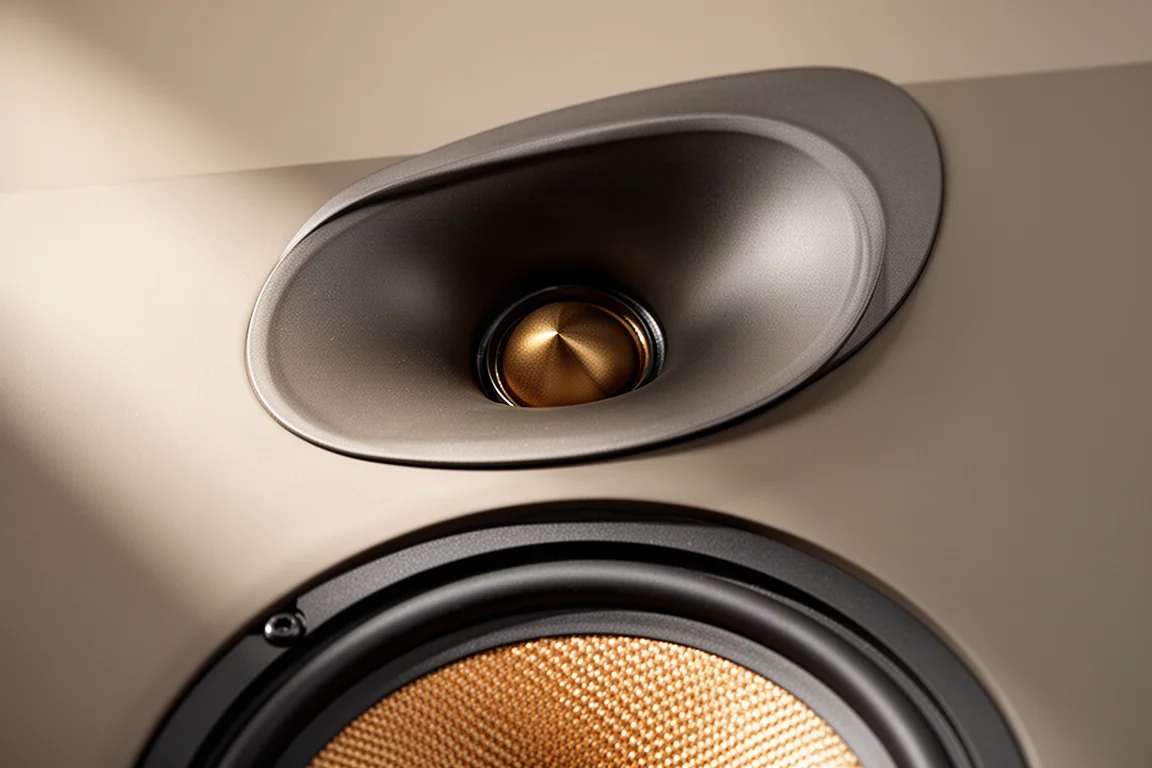
The treble follows a similar pattern. Some listeners may find the speaker leans toward the brighter end of the spectrum, but the treble is not boosted in-room, so what comes through is detail and presence rather than an artificial lift that turns fatiguing at higher volumes. The trade-off is that sibilant recordings are less forgiving here, and anyone whose library leans heavily on compressed modern pop may prefer a warmer alternative.
Imaging is where the B100 is at its most impressive. Scale and the placement of instruments in a three-dimensional space are of a very high standard, and in this respect it may even edge out the F100 tower slightly. Dynamically, it is unflappable at virtually any volume provided the amplifier is comfortable with a 4 ohm load, and it starts and stops on a dime. At low listening levels it is good when driven correctly, but it is not the most efficient performer in this company.
Things to Consider Before Buying
The obvious limitation is bass. The drop hits hard around 50 Hz, and without a subwoofer the speaker sounds forward and lean because it lacks grounding. Rock recordings in particular lose part of their weight, as though members of the band had gone missing. That is a real consideration for anyone planning a two-channel system, because it changes the total budget: the B100 is not a complete solution on its own.
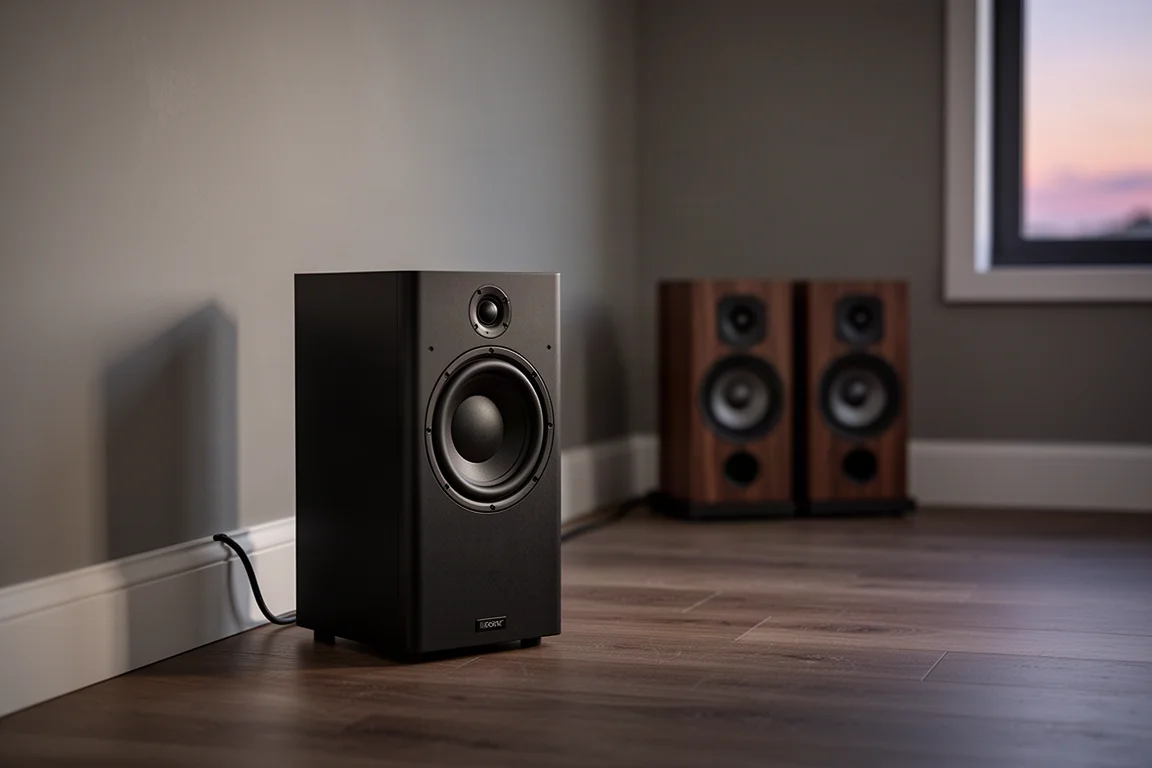
Subwoofer matching matters more than usual here. A Bowers & Wilkins ASW 610 proves a good match, and something like MartinLogan’s own Dynamo 1100X, with its built-in in-room optimization, is likely to work even better. Amplification deserves the same care: the Yamaha 2000A and AudioLab 7000A both drive the B100 comfortably, and the AudioLab 7000A or a Sony 5000ES receiver are among the most logical pairings at this price. For home theater duty, receivers such as the Sony 7000ES and the Anthem MRX 740 handle the load without complaint.
How the B100 Compares With Other Bookshelf Speakers
Against the premium end of the market, the B100 is the value proposition. The Bowers & Wilkins 705 S3 costs roughly $3,400 a pair and is arguably the better looking speaker, yet the B100 gives up nothing in performance at around half the cost and is the more appealing option for anyone who dislikes a mild lift in the high frequencies. The 705 S3 does play a little lower on its own, but both speakers need a subwoofer for genuinely full-range playback, which keeps the comparison close. The Sonus Faber Lumina II is a very similar speaker in character and build, with a touch more bass and a slight treble boost, at roughly $1,200 a pair; if the B100 is beyond your budget, that is the first alternative to consider.
In the middle of the market, the Klipsch RP-600M II shares the most with the B100. The B100 is the better speaker overall, but at under $750 a pair the Klipsch delivers comparable clarity and spaciousness, with more bass that is not quite as tight, plus a more amplifier-friendly load that can save money elsewhere in the system. The Polk R200 is the more versatile option if the setup has to handle music and movies equally well; the MartinLogan sounds better overall, but the Polk’s value for money is hard to argue with.
Below that, the Pro-Ject Speaker Box 5 S2 at around $850 a pair with a 55 Hz to 20 kHz rating, the Arendal Sound 1961 Bookshelf at around $800 a pair with a 5.5 inch woofer and a 75 Hz to 20 kHz rating, and the Wharfedale EVO 4.1 at around $800 a pair with a 5 inch woofer and a 58 Hz to 22 kHz rating each give up ground in specific areas. The Pro-Ject measures very similarly but has even less in-room bass, and its tweeter is nowhere near as refined above roughly 85 to 90 dB. The Arendal has less bass still and is also a 4 ohm design, though it is smaller and, being unported, behaves the same close to a wall as it does pulled out. The Wharfedale is very room friendly thanks to its front slot port, but the B100’s larger FMT tweeter is the more refined of the two at higher volumes. The Focal Chora 806, often discounted below $600 a pair, is less linear and less neutral and is not built to the same standard, though it is more amplifier friendly, more dynamic and arguably better suited to low-level listening.
Within the Motion XT family, the F100 tower is the closer call. From about 200 Hz upward the two speakers are effectively identical in response, so the difference comes down to low-mid bass and bass. The tower needs no subwoofer and makes for the simpler system, which is why it remains the pick for listeners who want one pair of speakers to do everything; the B100 gets very close once the right subwoofer is in place.
Buying Advice
At roughly $800 per speaker, or under $2,000 a pair, the B100 sits above most of its obvious rivals while undercutting the premium alternatives comfortably. The right way to think about the price is as the first line of a system budget rather than the whole of it, because a capable 4 ohm amplifier and a well-built subwoofer are both part of the package.
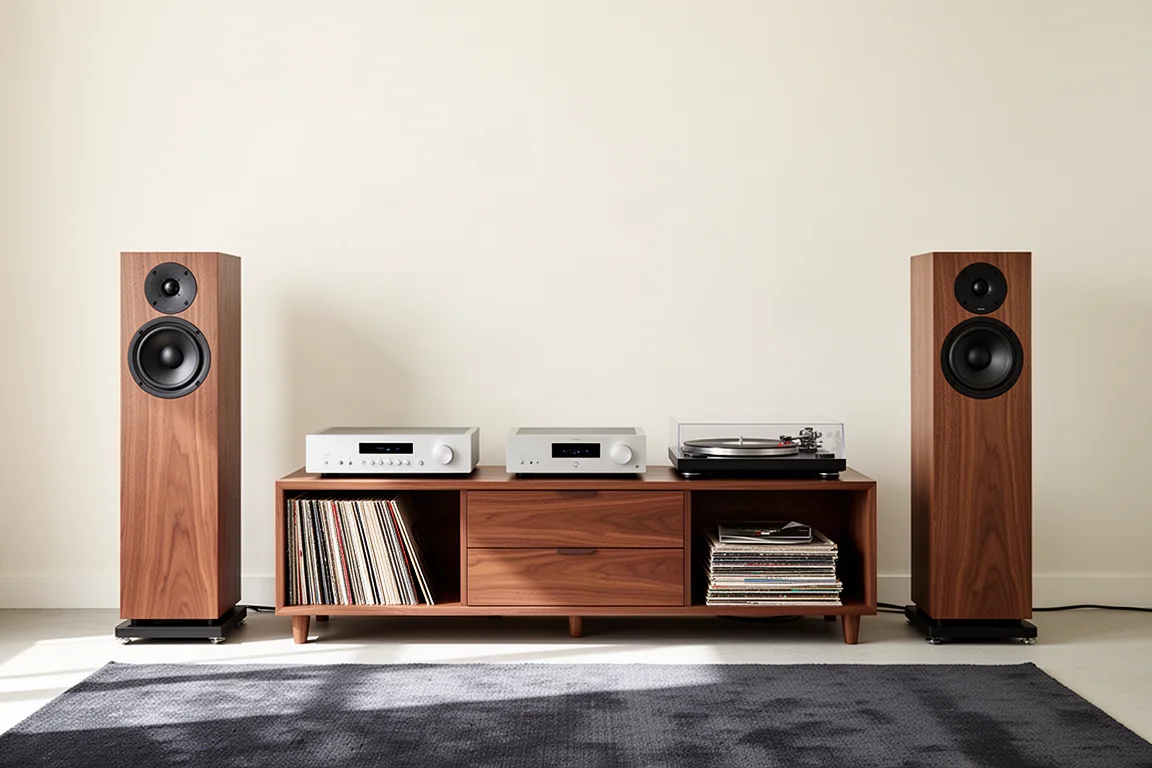
For placement, start about a foot off the front wall, set the speakers seven to eight feet apart and toe them in only slightly. If you need more low-end weight and cannot add a subwoofer, moving them closer to the wall, around six inches, trades some accuracy for roughly 3 dB of extra bass below 150 Hz. Walnut, gloss black and satin white cover most room schemes, and the walnut veneer is the one that looks and feels most premium.
Choose the B100 if neutrality, imaging and build quality matter more to you than convenience. Choose a lower-priced rival if you want one pair of speakers to handle everything without a subwoofer, or if your amplifier is happier at 8 ohms. Either way, the decision should come down to your room and your system rather than the speaker in isolation.
Conclusion
The Motion XT B100 is a genuinely accomplished stand-mounted speaker. It is neutral, precise and beautifully built, and it matches the F100 tower from roughly 200 Hz upward while offering better imaging in some respects. Paired with the right subwoofer, it can reach F100 levels of performance while taking up far less space.
Its demands are clear and worth repeating: an amplifier that is stable into 4 ohms, and a subwoofer for full-range listening. Meet both and the B100 is one of the strongest options under $2,000 a pair. The new XT generation is a decisive step away from earlier Motion designs, and it competes with speakers that sit at far higher price points. For listeners who value accuracy over bass quantity, this is a speaker worth auditioning carefully.
Product link
View more details for MartinLogan Motion XT B100
This product is mentioned in the review. Check the specifications, options, and compatibility before buying.
View more details for MartinLogan Motion XT B100Further reading
Related Reviews
Bookshelf Speakers
Acoustic Energy A100 Mark II Review: A Compact Standmount With an Expansive Soundstage
The Acoustic Energy A100 Mark II brings clarity, natural tonality and a wide soundstage to an entry-level standmount, with a few setup details worth knowing first.
Bookshelf Speakers
Acoustic Energy AE-100 Mark II Review: Compact Bookshelf Speakers With Standout Imaging
A compact British two-way bookshelf speaker with deep, layered imaging, fast bass, and a slight treble lift to weigh against a crowded $500 field.
Bookshelf Speakers
Acoustic Energy AE100 MK2 Review: Measured Performance and Four Alternatives
A close look at the Acoustic Energy AE100 MK2 bookshelf speaker, what its measured performance reveals, and four alternatives with different trade-offs.