Home Audio
Martin Logan Motion Series Guide: Nine New Speakers for Music and Home Theater
A complete walkthrough of the new Martin Logan Motion and Motion XT speakers, from the shared folded motion tweeter technology to how each model fits a room.
Introduction
Martin Logan’s Motion series was created to bring something of the company’s electrostatic character to a conventional speaker, without the cost that electrostatic designs usually carry. This new generation is the fourth iteration of that idea, and it arrives as Martin Logan marks its 40th anniversary, counting from the company’s founding by Gail Sanders and Ron Sutherland with their first speaker.
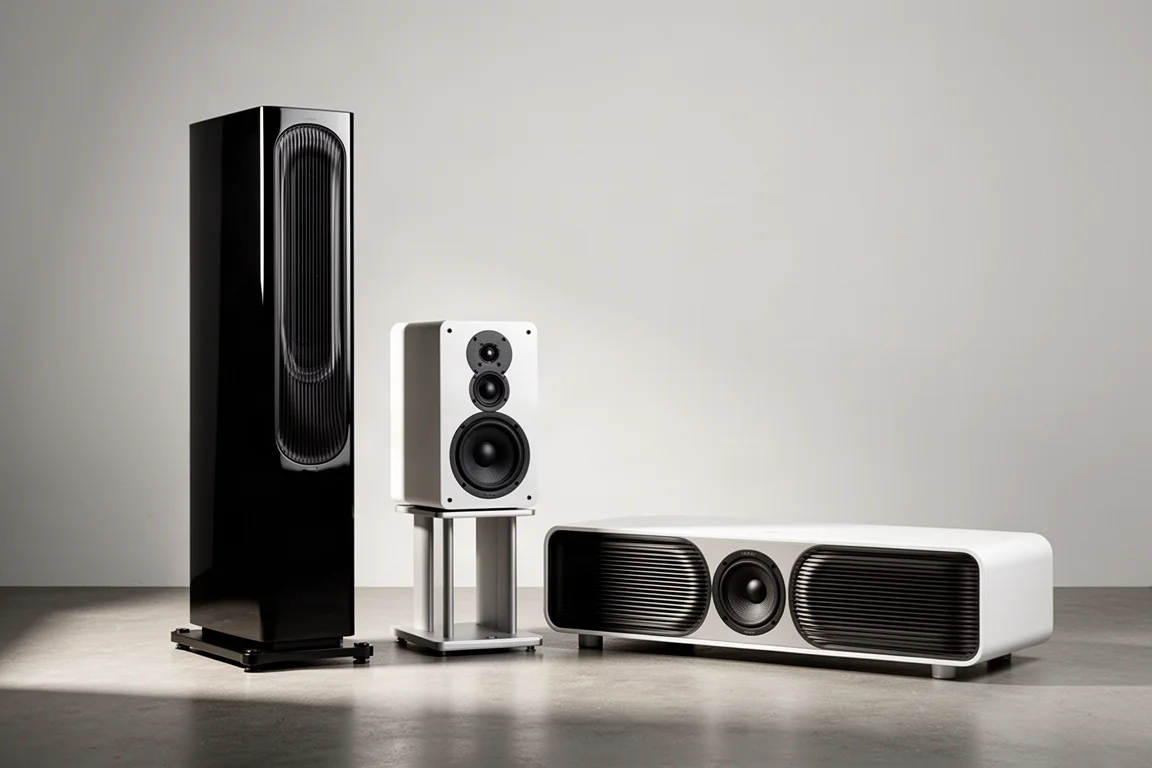
This time the range is split into two tiers. The Motion series covers five models, and the Motion XT series adds four more. Across both, there are four tower models, two bookshelf models, two center channels, and one multi-purpose model that can be used several different ways. Every one of them is new rather than lightly refreshed, with new drivers, new cabinets and new cosmetics throughout.
What the New Motion Series Changes
The folded motion tweeter is the heart of the design, and it has been reworked for this generation. Instead of pushing air with a dome, it squeezes air with a thin folded diaphragm that moves much like an accordion. That gives it a far larger surface area than a typical one-inch dome tweeter and requires roughly 90 percent less excursion to produce the same output, which keeps distortion low and dispersion wide but controlled.
The Gen 2 obsidian version used here adds a stronger magnetic field and more internal air volume, which raises output, lowers distortion and smooths the response curve further. A new waveguide on the front of the cabinet widens dispersion by 10 degrees, and by 15 degrees vertically on the XT models, a useful change in open-plan rooms where listening positions are spread out.
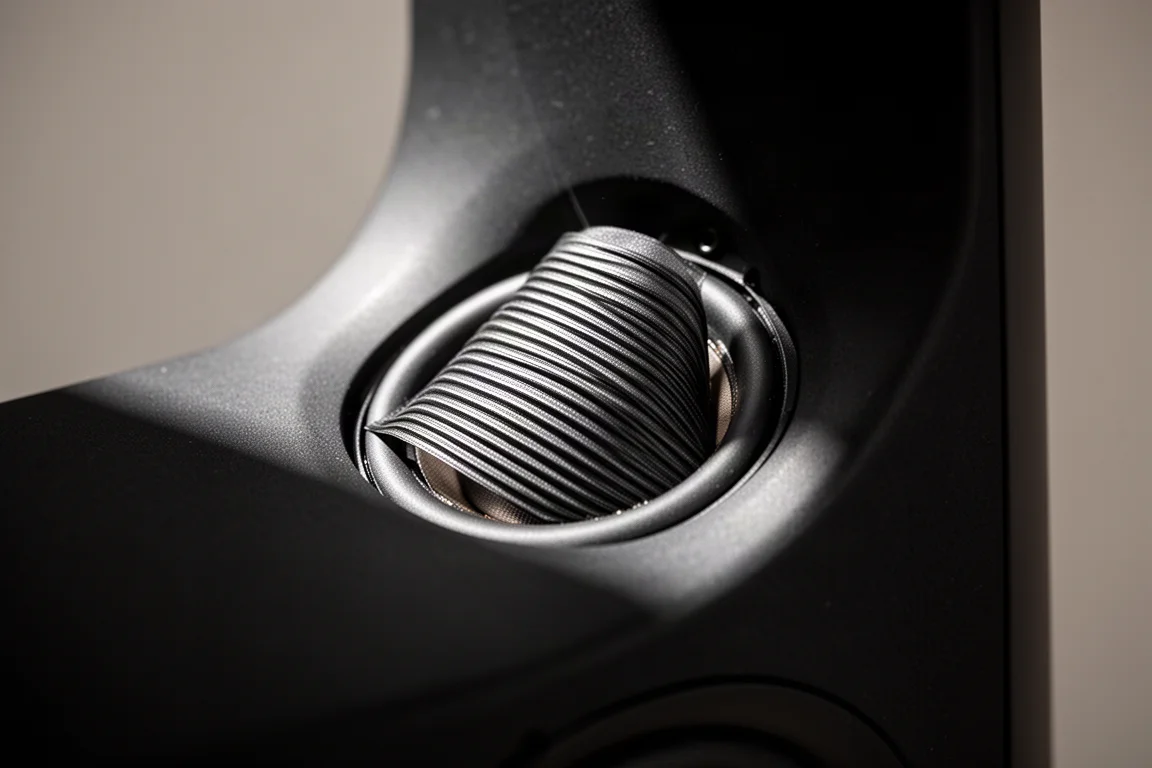
The cabinets have changed just as much. There is more internal bracing than before, and on models with a separate woofer the midrange driver sits in its own sealed enclosure inside the cabinet. Three finishes are offered: gloss black, satin white and walnut, each with matching grilles. Individual grilles cover each driver instead of one panel across the whole baffle, the folded motion tweeter stays fully exposed in a new black finish, and a clamping system replaces magnets so the fabric grain can be aligned vertically or horizontally.
Around the back, the binding posts support bi-wiring on most models. The outrigger feet arrive in a case and accept either spikes for carpet or rubber pads for hard floors, and they can be turned by hand to level the speaker on an uneven floor.
Martin Logan Motion B10: Compact Bookshelf Speaker
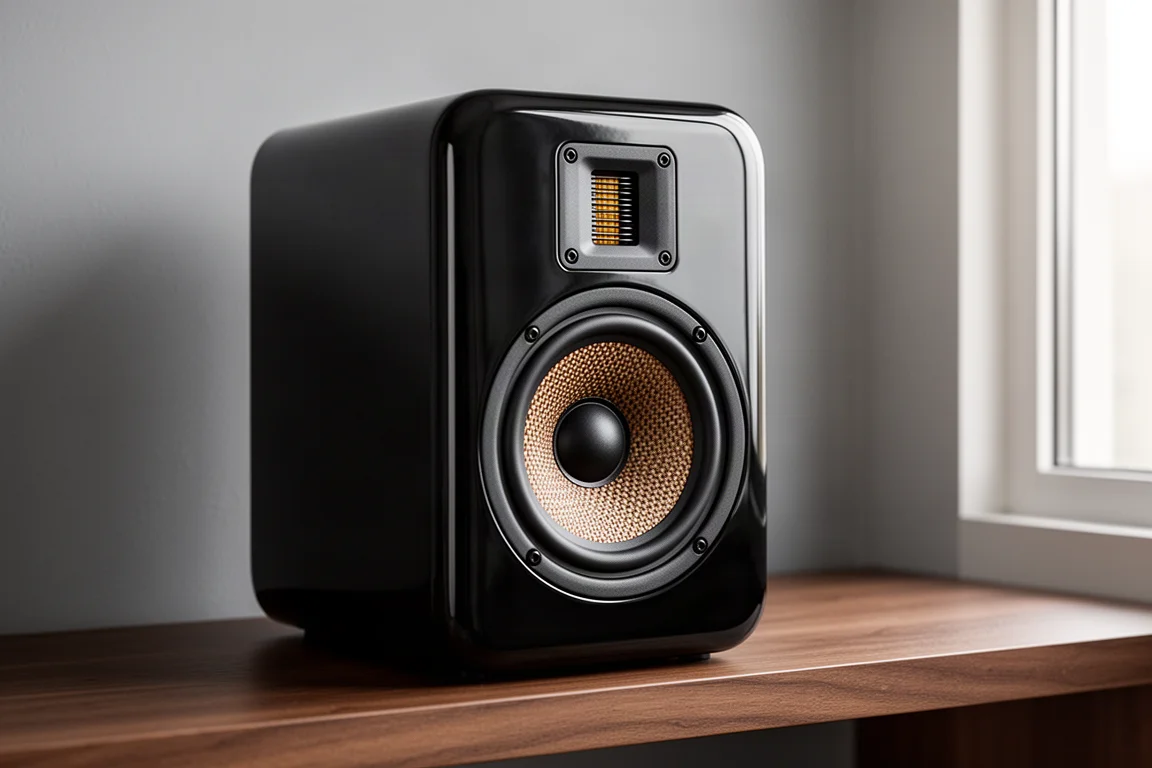
The Motion B10 is the entry point to the range: a compact bookshelf speaker built around the same 5.5-inch woven fiberglass midrange and Gen 2 folded motion tweeter used across the Motion line. It is a rear-ported, single-wiring design rated at 4 ohms with a sensitivity of 92 dB, which is high for a cabinet this size.
In a small to medium room the B10 throws a wide, three-dimensional soundstage, and the top end stays fast but smooth enough to listen to for hours without fatigue. Bass balance was best with the speaker roughly a foot off the back wall, and the rated low end of about 56 Hz means it does not dig especially deep on its own.
As a main or surround speaker it works well, and pairing it with one of Martin Logan’s quick Dynamo subwoofers fills in the missing bottom octave. In a large room, it is better treated as a satellite than as a full-range speaker.
Martin Logan Motion F10: Compact Tower With Deeper Bass
The Motion F10 is the smaller of the two Motion towers and the most compact way to get floorstanding bass from this range. It pairs the 5.5-inch woven fiberglass midrange with two 5.5-inch aluminum cone woofers, and it keeps the same 4 ohm impedance and 92 dB sensitivity as the bookshelf model.
The rated low end drops to 38 Hz, a meaningful step down from the B10, and that extra foundation does more than add bass: it also makes the lower midrange sound better. Imaging is as good as the bookshelf model’s, but the F10 comes across as the more musical speaker overall.
A bottom-firing bass port makes placement unusually flexible, since the port does not fire into a rear wall. The F10 can sit fairly close to a wall without booming, though like any tower it still sounds best a little out into the room. It can be bi-wired.
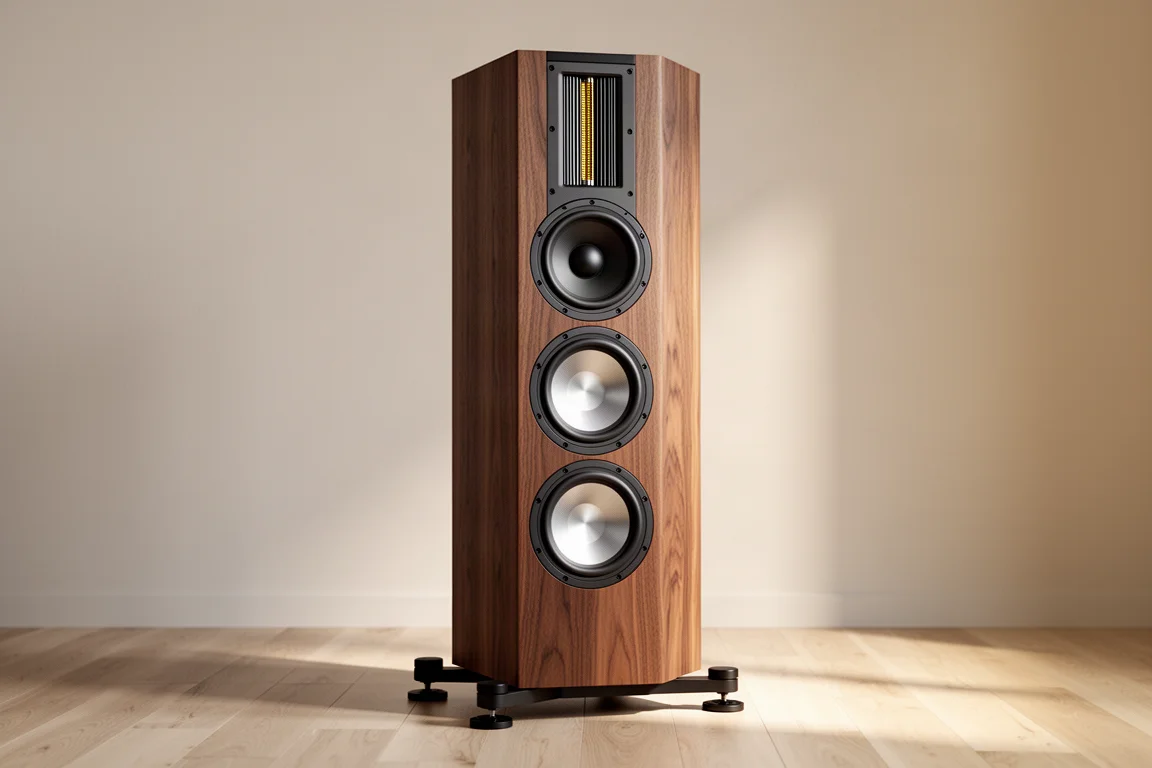
Martin Logan Motion F20: The Flagship Motion Tower
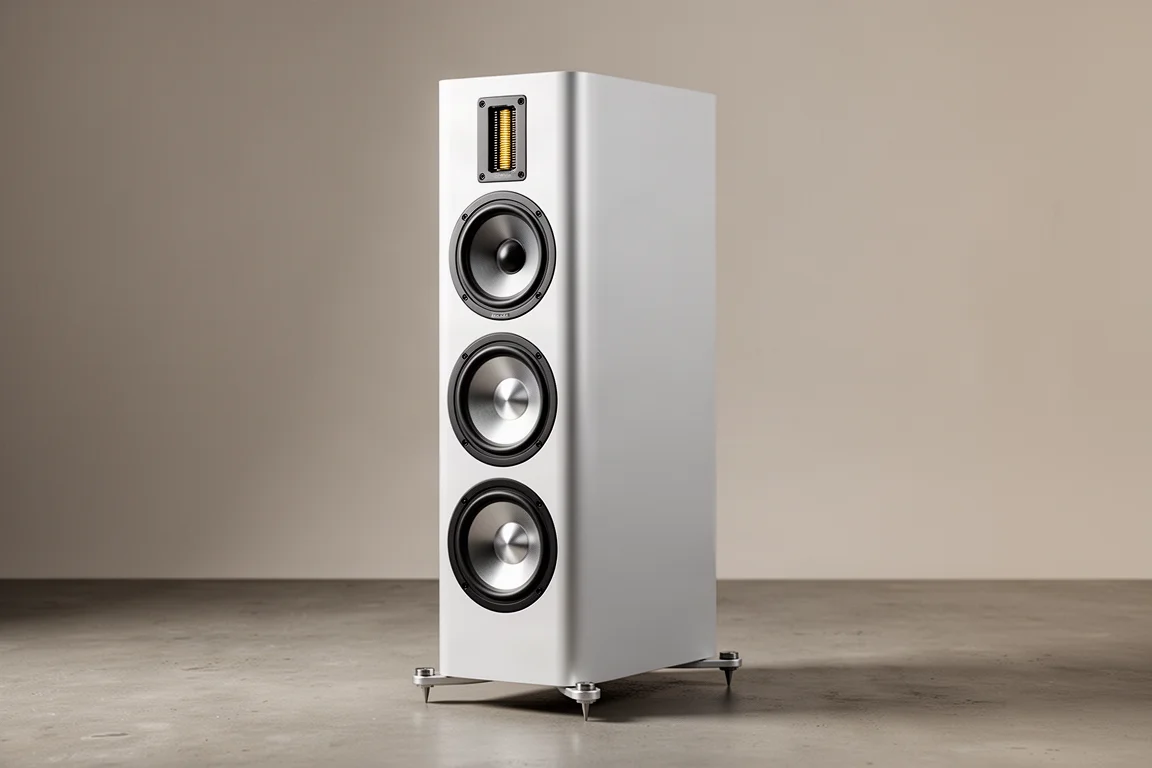
The F20 sits at the top of the Motion tower range. It keeps the 5.5-inch woven fiberglass midrange and the Gen 2 folded motion tweeter but steps up to dual 6.5-inch aluminum bass drivers, and its crossover is arranged slightly differently from the B10 and F10.
On paper the difference looks modest. The rated low end moves from 38 Hz to 35 Hz, and sensitivity stays at 92 dB. In listening, though, the F20 sounds more powerful and more dynamic, and the crossover change gives the lower midrange a more realistic quality.
If you want the most capable tower in the Motion series rather than the XT series, this is the one to plan a system around.
Martin Logan Motion C10: Center Channel for Motion Systems
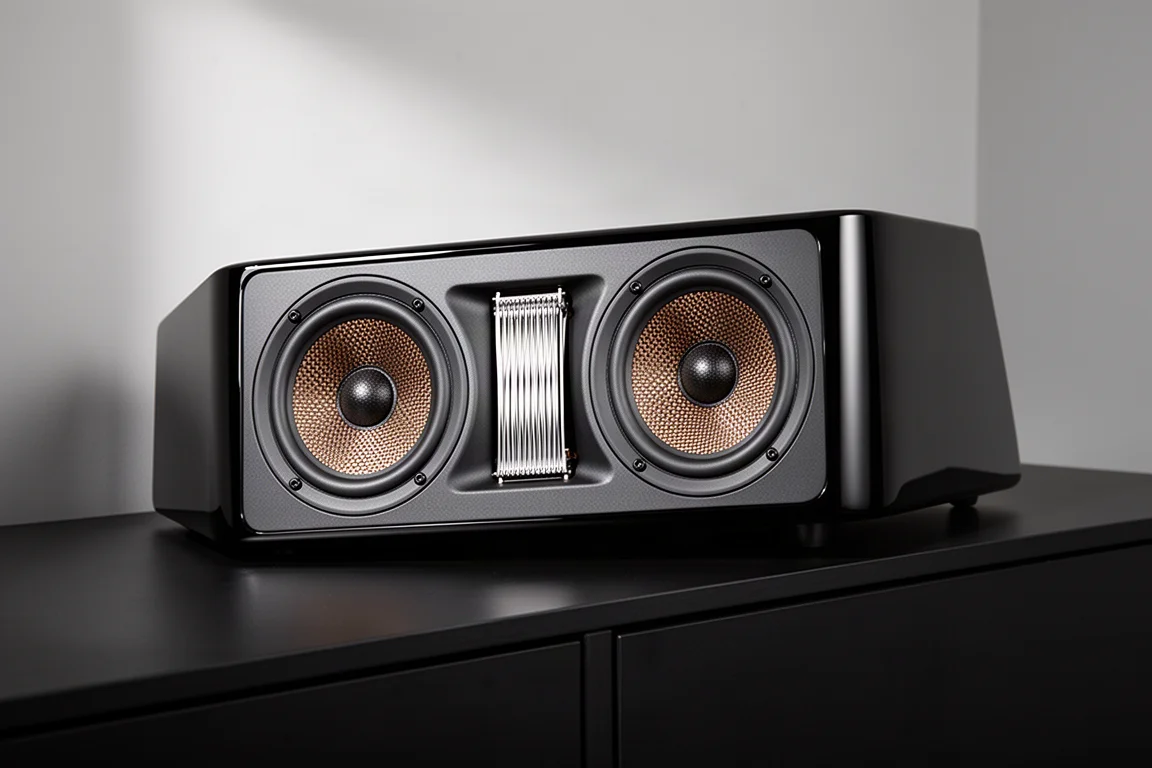
The Motion C10 is the center channel for the Motion series, built around two 5.5-inch woven fiberglass drivers and the Gen 2 obsidian folded motion tweeter. It is a two and a half way anti-lobing design with crossover points at 1,000 Hz and 2,000 Hz, and at 93 dB it is the most sensitive speaker in the line.
The cabinet is tapered on one side, which gives it two positions: flat on a shelf, or flipped so the face angles slightly upward, which suits placement below a screen. It is rear ported, so it is best kept out of an enclosed cabinet if the layout allows it.
Dialogue comes across clearly, and the high sensitivity pays off in two ways: effects mixed toward the center channel hit harder, and small shifts in the volume of a voice are easier to follow, which pulls you further into a film.
Martin Logan Motion MP10: The Flexible Multi-Purpose Model
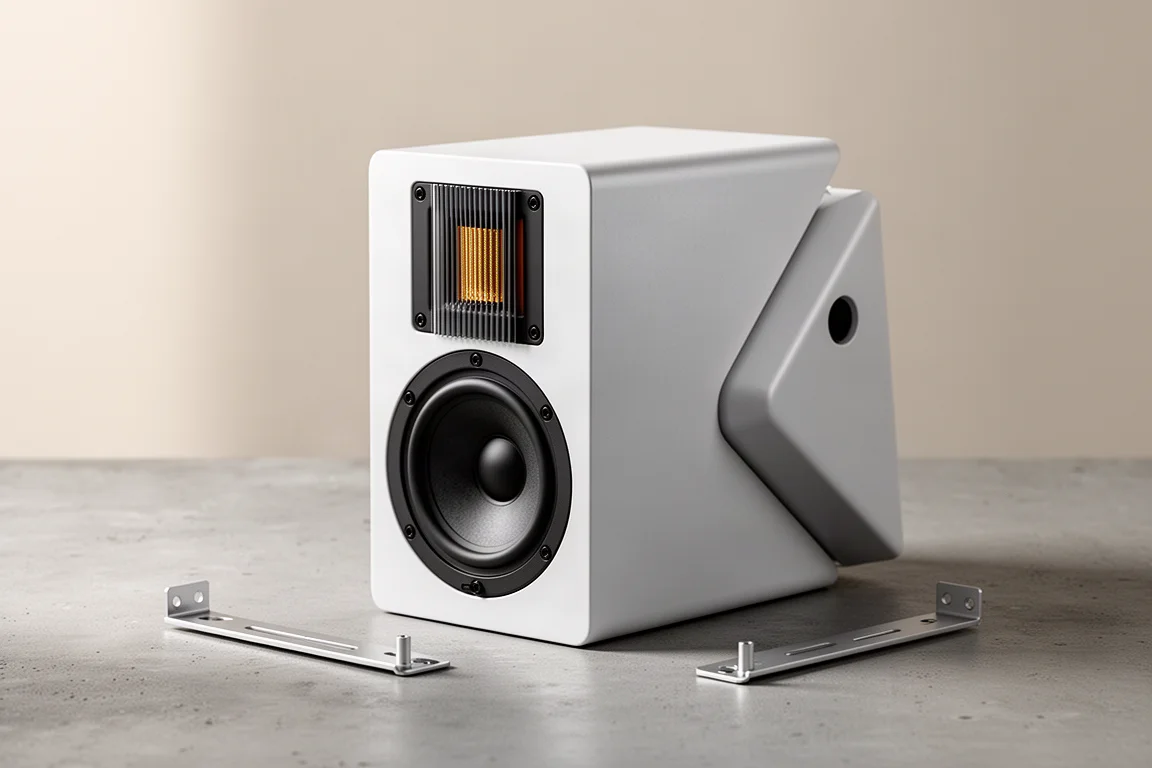
The Motion MP10 is the odd one out in the lineup, and the most flexible. It houses a 5.5-inch driver and a folded motion tweeter in a narrow cabinet with an angled section at the back that contains the port. That shape is what makes it useful in rooms where a bookshelf speaker will not fit: it can serve as a side or rear surround in a tight space, or be wall mounted using the supplied bracket.
Flip it upside down and the angled back lets it fire toward the ceiling, which solves the problem of adding height channels in a room where in-ceiling speakers are not an option. Sensitivity is 92 dB, matching most of the range, and even the logo can be rotated so it reads correctly in either orientation.
Martin Logan Motion XT B100: The Bookshelf Worth the Step Up
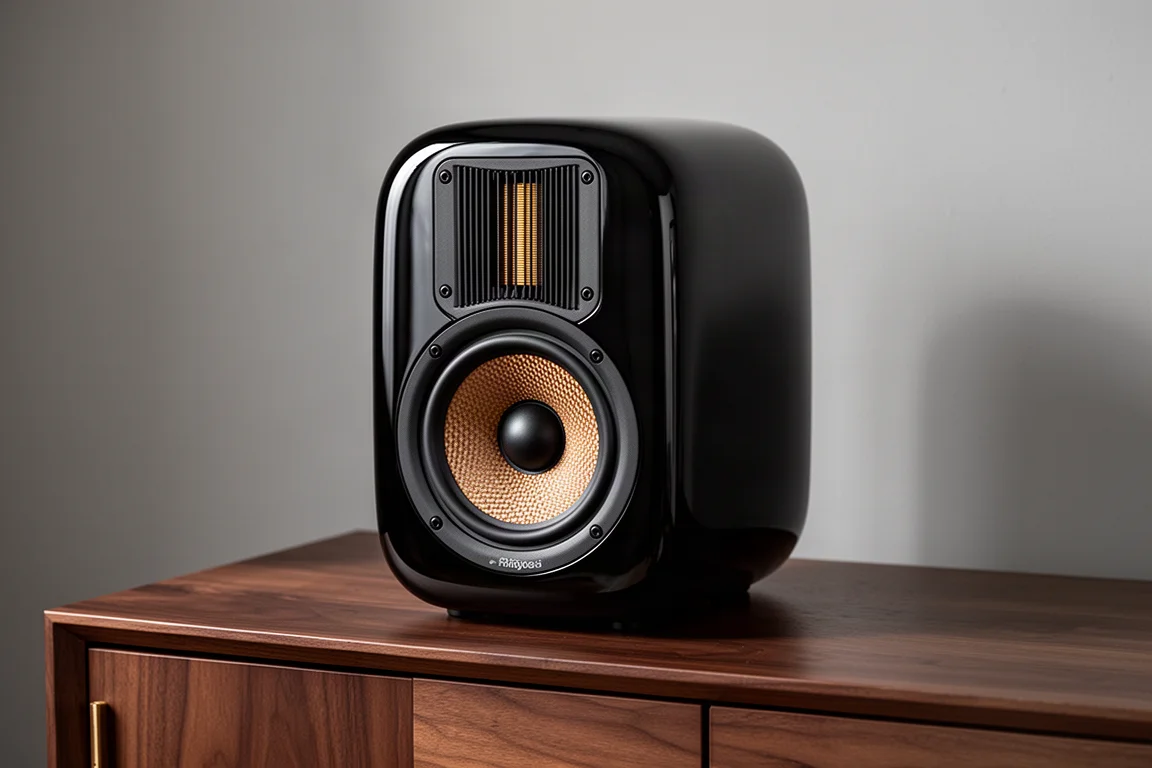
The Motion XT B100 is where the second tier starts, and it is the model most likely to change your mind about bookshelf speakers. The larger XT folded motion tweeter is more than twice the physical size of the Motion version, and the midrange moves to a 6.5-inch woven Kevlar blend driver.
That driver uses constrained layer damping: a very thin layer of Nomex, a material with almost the opposite resonance behaviour to Kevlar, is bonded to the back of the cone to control it. Sensitivity rises to 93 dB and the rated low end reaches 45 Hz.
In a direct comparison with the Motion B10, the differences are not subtle. Bass goes considerably deeper, and voices and instruments in the midrange sound more accurate. The XT B100 also held up in a large room without sounding strained, which is a lot to ask of a cabinet this size.
Martin Logan Motion XT F100: Three-Driver Tower
The Motion XT F100 is the smaller of the two XT towers. It uses three 6.5-inch aluminum cone drivers alongside the Nomex-reinforced Kevlar midrange and the larger XT folded motion tweeter, with the same 92 dB sensitivity as the rest of the tower range.
Its rated low end is 31 Hz, and the three-driver array gives it the scale you expect from a tower in this class.
For most rooms this is the sensible stopping point in the XT range: it brings the driver technology and the larger tweeter of the flagship into a cabinet that is easier to place.
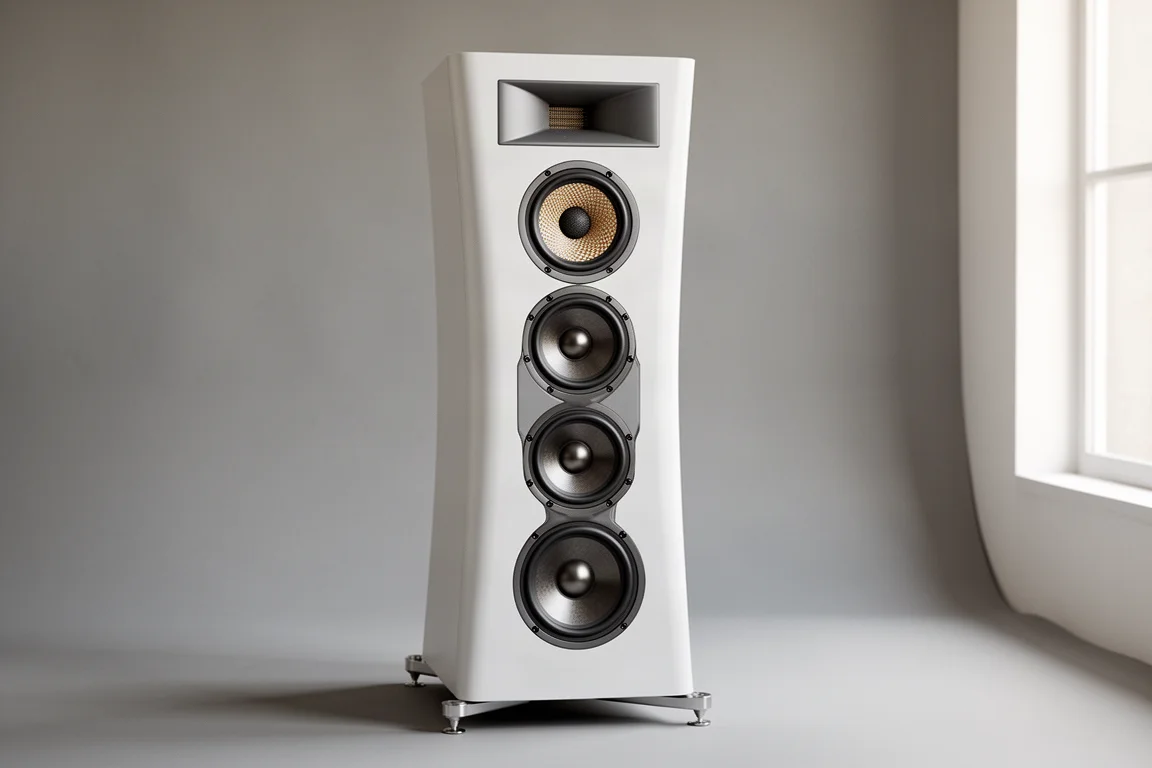
Martin Logan Motion XT F200: The Flagship Tower
The Motion XT F200 is the flagship tower, and the difference is in the woofers: three 8-inch aluminum cone drivers instead of the 6.5-inch units on the F100, with the same Nomex-reinforced Kevlar midrange and XT folded motion tweeter.
The specification gain is about 4 Hz of extension, down to 27 Hz against 31 Hz, but the bigger drivers make a larger impression than that number suggests. The F200 simply has more slam, while keeping the 92 dB sensitivity of the smaller tower. It is the model to consider when the room is large and you want the system to fill it without effort.
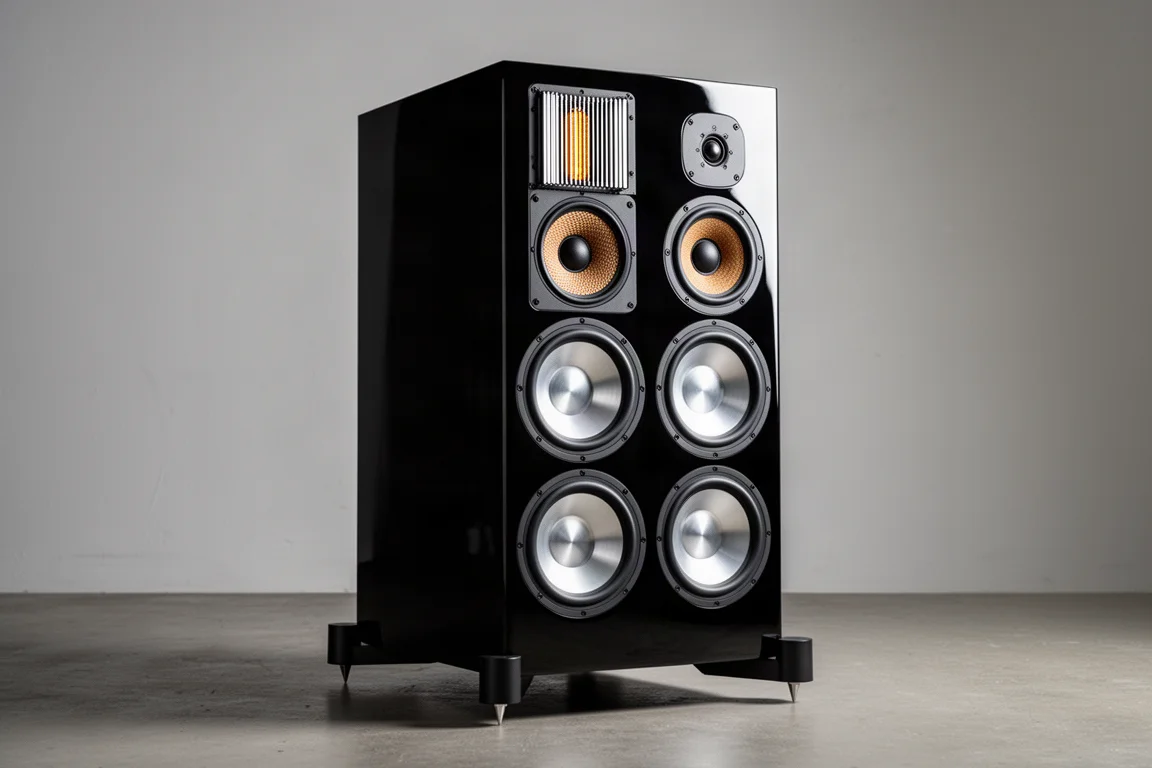
Martin Logan Motion XT C100: Center Channel for XT Systems
The Motion XT C100 completes the XT lineup as its center channel. It uses the same two and a half way anti-lobing layout as the Motion C10, with the Nomex-reinforced Kevlar driver and the larger XT folded motion tweeter, and it shares the tapered cabinet that allows either a flat shelf position or an upward-angled position below a screen.
The combination of the bigger tweeter and the Kevlar midrange gives it the ability to let you hear deep into a performer’s expression, and its high sensitivity keeps it dynamic when a soundtrack asks for it. If the rest of your system is XT, this is the natural match; if you are building a Motion system, the C10 is the equivalent choice.
Matching the Right Model to Your Room
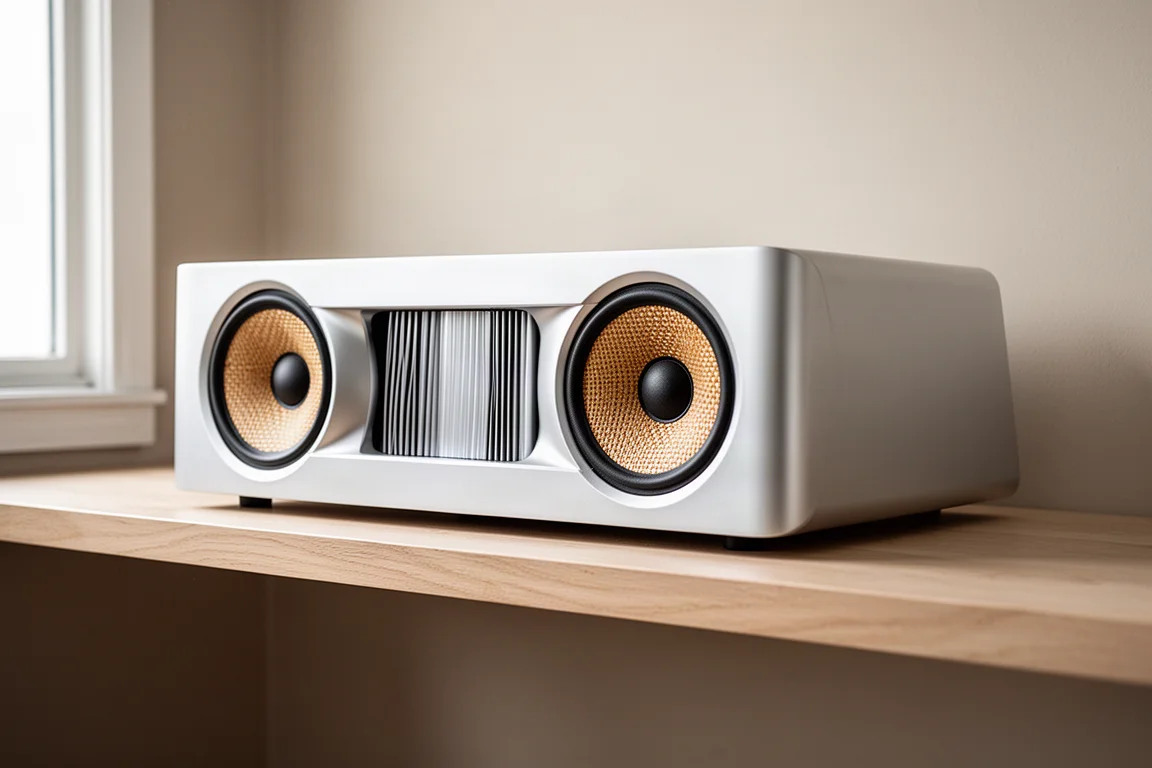
Choosing between these speakers comes down to room size, how loudly you listen, and whether the system is mainly for music or for film.
For a small to medium room, the Motion B10 or the Motion XT B100 on stands is the simplest solution, and the XT model is the stronger performer of the two, with deeper bass and a more accurate midrange. In a larger room a tower makes more sense: the Motion F10 is the compact option, the F20 adds output and dynamic headroom, and the XT towers step up again in driver size and low-frequency reach.
Center channels matter as much as the left and right speakers in a theater system, because so much of a soundtrack is anchored there. The C10 pairs naturally with the Motion models and the XT C100 with the XT models, and both are sensitive enough to stay clear and dynamic at everyday listening levels.
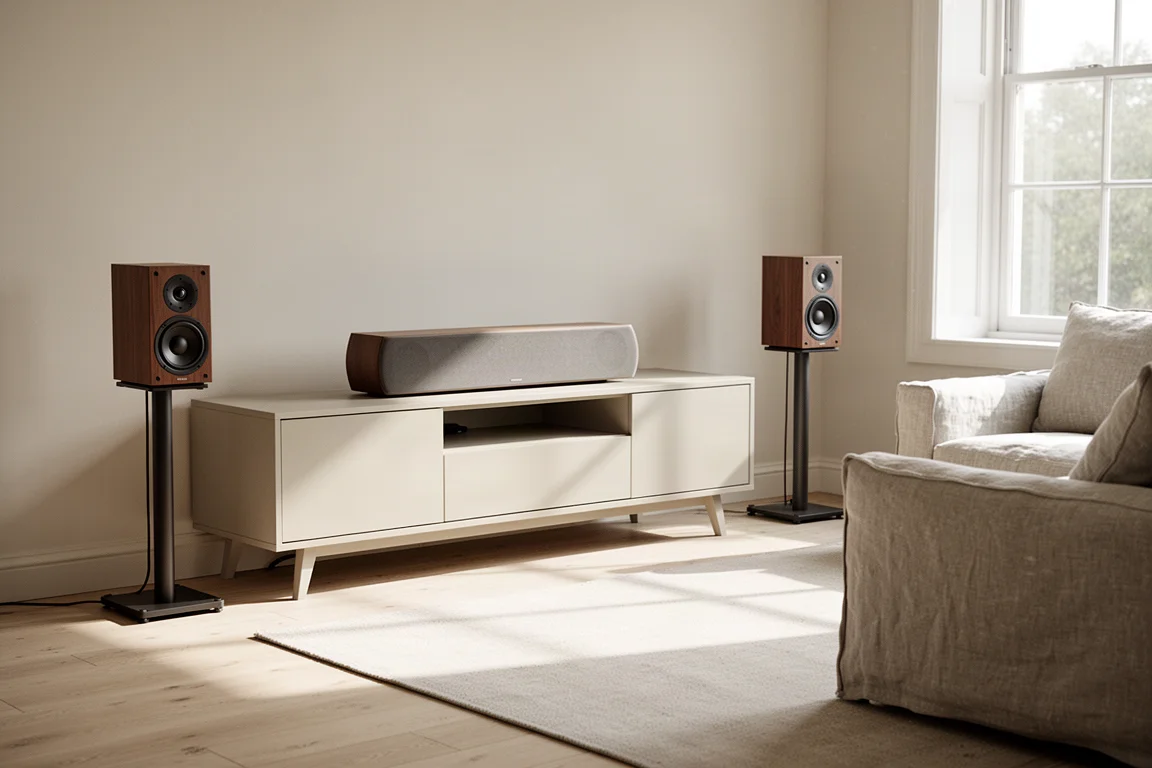
One advantage of the way this range is built is that drivers are shared across models within each tier. In the Motion series, every model uses the same 5.5-inch woven fiberglass midrange and the same Gen 2 folded motion tweeter, so effects pan across the front stage without changing character. The XT series repeats that logic with the larger tweeter and the Kevlar midrange.
If you want to take the system further, Martin Logan also makes in-wall and in-ceiling architectural speakers that follow the same two tiers, with woven fiberglass drivers in the Motion versions and Kevlar in the XT versions. The company’s subwoofers are another natural addition for anyone who wants the bottom octave that even the towers do not fully deliver; they are quick, and they include room correction. The MP10 covers the situations the other models cannot, whether that is a tight surround position or a height channel where in-ceiling speakers are not possible.
Conclusion
Nine speakers is a lot to choose from, but the logic behind the new Motion and Motion XT lines is straightforward. Start with the room: bookshelf models for smaller spaces, towers where you want scale, and the MP10 wherever a conventional cabinet will not fit. Then decide whether the extra driver size, the larger folded motion tweeter and the Kevlar midrange of the XT tier are worth it to you. On the evidence of the range itself, the XT bookshelf is the model that most clearly justifies the step up, and the XT towers carry the same advantages into larger rooms.
Further reading
Related Reviews
Home Audio
Aperion Novus Tower and Center Review: Punchy Home Theater Sound With Real Refinement
A close look at the Aperion Novus tower and center speakers, from their layered paint finish and punchy bass to the 4-ohm load and what the price actually buys.
Home Audio
Arendal 1610 Tower Review: Flagship Dynamics in a Room-Friendly Tower
A compact floorstanding tower with three 8-inch aluminium woofers, a 5-inch carbon midrange, and the kind of bass heft usually reserved for much larger speakers.
Home Audio
Arendal 1723 S THX Review: A Reference Speaker Built Like a Tank
A practical look at the Arendal 1723 S THX, a sealed, THX-certified speaker with exceptional build quality, a very flat top end, and a midrange that responds beautifully to EQ.