Camping Tents
Marmot Tungsten 4-Person Tent Review: Big Vestibules, Slower Setup
A close look at the Marmot Tungsten 4-Person Tent: vestibule space, peak height, rain performance, pole quality, and when the price actually makes sense.
Introduction
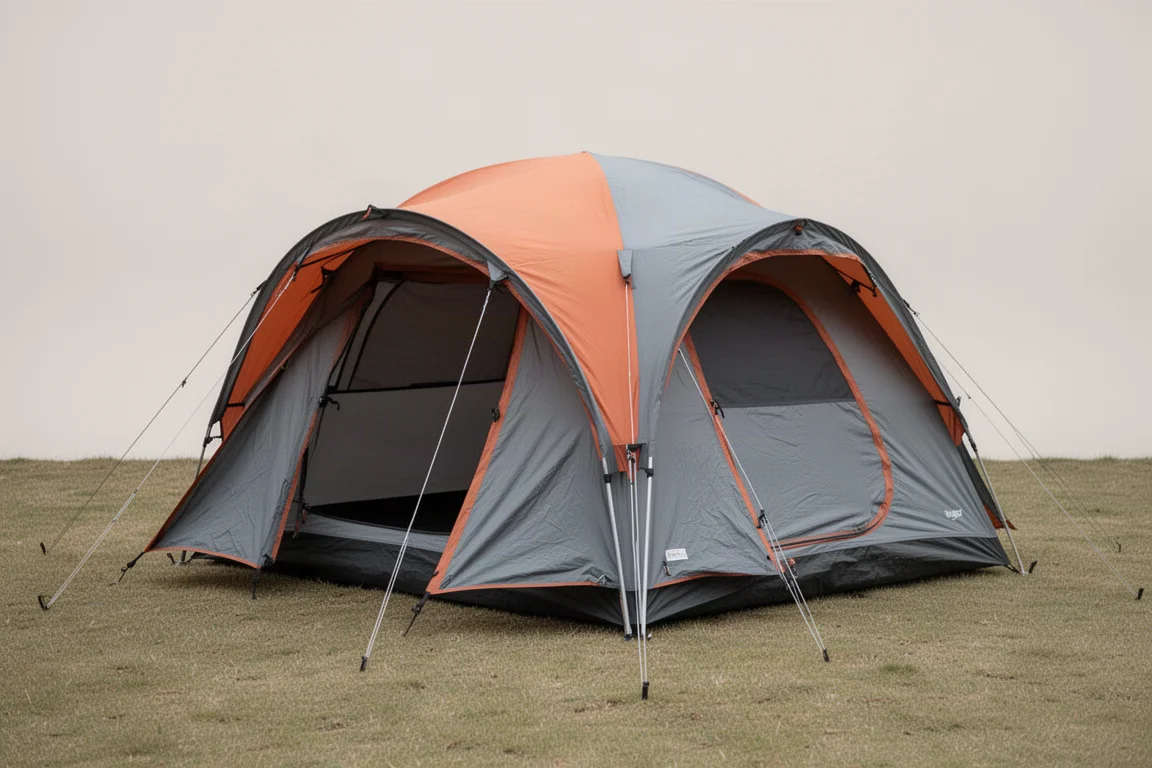
The Marmot Tungsten 4-Person Tent is a two-door, two-vestibule camping tent with a full-coverage rainfly and a footprint included in the box. It is built for campers who want a more upright interior and more covered storage than a typical budget four-person tent provides, and it asks for a little more setup effort in return.
In the box you get the carry bag, a repair splint, eight stakes in a stake bag, the rainfly with four guylines already attached, three poles in a pole bag, the footprint, and the tent body. At full retail the Tungsten 4 sits well above most four-person tents, so the value question matters as much as the feature list.
Who This Tent Is For
The Tungsten 4 works best as a very comfortable two-person shelter, or as a four-person tent for campers who are happy to sleep shoulder to shoulder.
The numbers explain why. Peak height at the centre of the tent is about 52.25 inches, with extended peak heights of roughly 46.25 to 47 inches on the left and right, about 40.25 to 40.5 inches at the back, and 40 inches at the front ends of the two top poles. The base measures about 91 inches long by 81 inches wide, a total of roughly 51.2 square feet.
Four pads fit only one way. Laid across the 91-inch length, they fill almost the entire footprint with about an inch left on each side, leaving roughly eight inches at the front for gear. Swap in a queen mattress and you get about 21 inches of leftover length and 10.5 inches of leftover width, which is enough for an extra single pad if you want one.
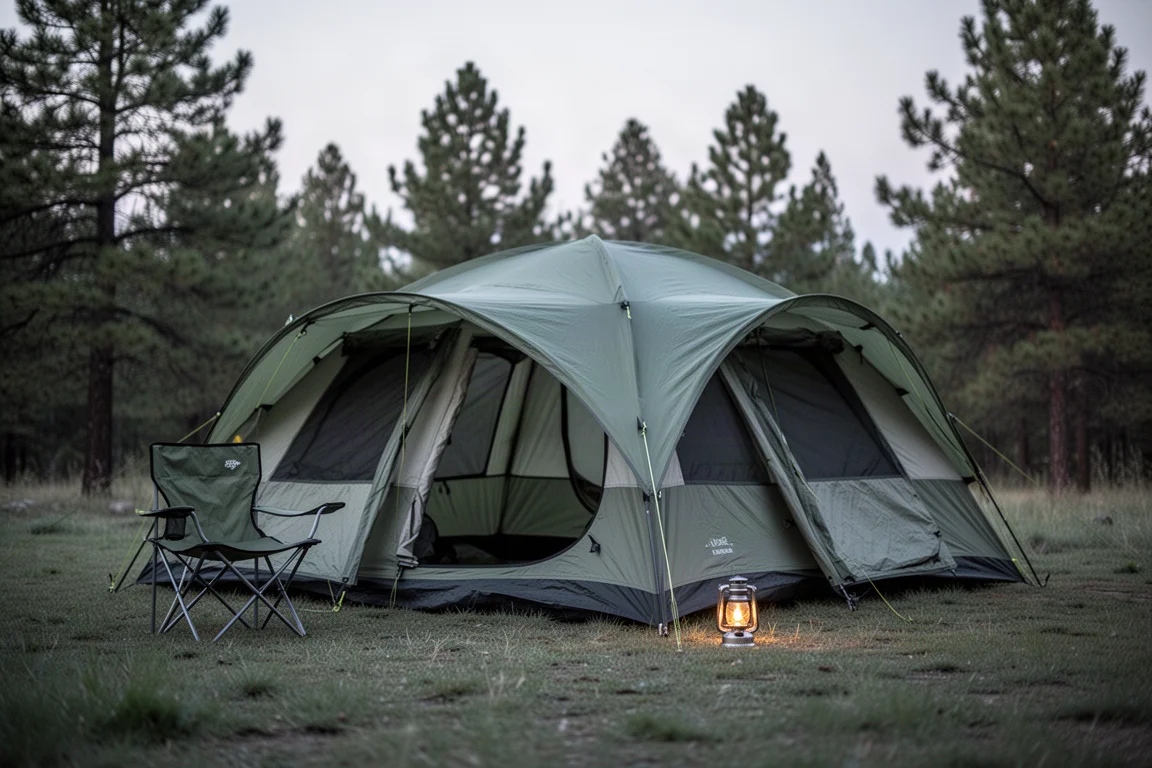
In practice, this is a tent that shines for couples or small families who value living space and covered storage, and feels tighter for four adults who each want room to spread out.
Main Strengths
The Tungsten 4’s strongest arguments are its vestibule space, its upright walls, and a rainfly that is taped along every seam.
Setup and Pack-Away
Setup follows a clear sequence. Lay the footprint and the tent body down together, matching the webbing colors and the red tabs, then seat the orange X-pole in the four corner grommets and attach the first 17 pole clips. The two short blue poles go on top of the X-pole, held by grommets at the top of the tent, and the remaining two clips attach to them. The rainfly drapes over the top with matching webbing and red tabs, its underside grommets seat onto the tips of the short blue poles, and eight Velcro wraps plus easy-clip buckles lock it to the body. The two vestibules are then staked out.
Eight stakes are included, which is not quite enough to also stake the widths and guy out the four supplied guylines, so six extra stakes and two short guylines are worth adding to the kit. Total setup time lands close to 12 minutes, and takedown is slightly quicker at under 11 minutes. The side-loading carry bag is roomier than it first appears, with more than enough space for the packed tent.
Livable Space and Layout
The two short poles at the top are what separate this tent from simpler designs. They hold the roof up across almost the entire tent, so the walls stay close to vertical and the extended peak height carries through rather than collapsing toward the edges. The result is usable sitting height in more places and noticeably more vertical space once a mattress is in.
Each vestibule is trapezium shaped, with a short side of 45 inches, a long side of 91 inches, and a width of 36 inches. That works out to about 17 square feet per side, or 34 square feet across both, which is generous for a tent of this size. It is not, however, a porch: fitting chairs and a table inside is a tight squeeze and not recommended. Each vestibule simply opens or closes rather than offering multiple positions, and two toggles hold it open.
Under each vestibule is a door measuring roughly 45 by 32 inches. The doors unzip almost completely and fold back neatly under a toggle, though entry and exit call for a slight hunch. The zippers are unbranded but run snag-free, with two per track, and the bend in the door zipper is easier to negotiate with two hands than one.
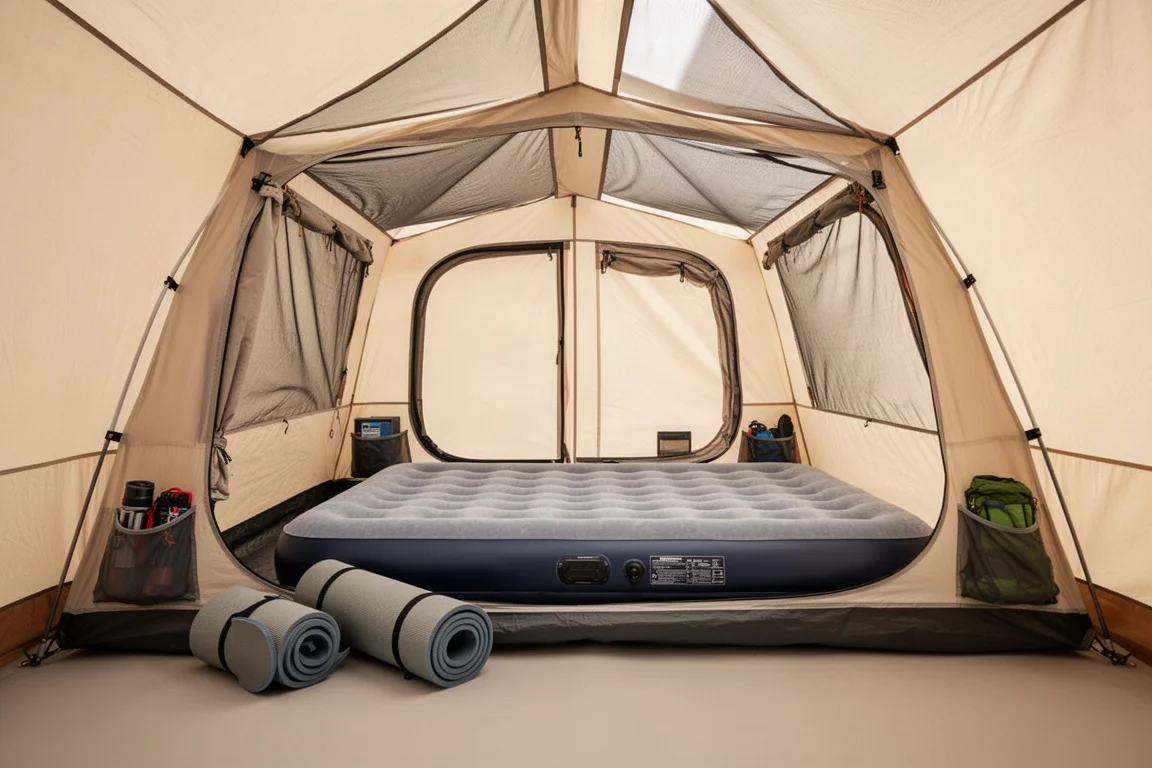
Storage is generous for the class: four double pockets, one in each corner, about 10 inches long and able to swallow a fair amount of personal gear, plus two triangular lampshade pockets at the top measuring about 8.5 by 7.5 inches. Part of each lampshade pocket is sewn shut, so they are best treated as headlamp holders rather than general storage. Five closed felt loops round out the interior fittings.
Weather Protection in Heavy Rain
Waterproofing is where the design shows both its strengths and its limits. The floor edge seams and the corners are taped, and a seam running the length of the tent is taped as well. Everything above the floor edge is not taped, but the rainfly’s seams are all taped, so the main cover does the heavy lifting.
Two mesh-covered vents sit high on the tent and can be left open in rain. They are opened and closed by reaching past the door, which takes some stretching for shorter arms. The full-coverage rainfly also has extra guy-out points along the widths of the tent, letting you pull the fly away from the body. That improves airflow and angles water away from the inner tent.
In about an hour and a bit of very heavy rain, the corners stayed dry and the vents did not leak. A large puddle formed near one side of the tent, and on inspection the floor edge seams were leaking noticeably. The mesh and fabric around the tent stayed dry, and the rainfly was long enough to keep rain off the inner tent, although its underside was slightly damp, with some water seeping through the coating. The takeaway: it copes well with severe rainfall, but it is not built to sit in standing water or flooding.
Things to Consider Before Buying
Floor, Poles, and Long-Term Durability
The flooring is polyester taffeta with no denier rating, estimated at around 68 to 75 denier, and it is not especially thick. After a handful of uses, small rips appeared in one area of the floor. The included footprint effectively doubles the floor’s durability, which is a genuine advantage at this price.
The rainfly and tent body are polyester ripstop at a similar weight. The poles are regular aluminium rather than DAC, and they measure 9 millimetres in diameter, thinner than expected. The X-pole structure also pops out of its grommets more often than two separate crossing poles would, and if a pole segment is not fully inserted it can start to break, which is exactly what the setup instructions warn against.
Mesh holes are smaller than standard mosquito netting, but there is no confirmation that the mesh is rated against no-see-ums. The guylines are shockcord with easy-to-use tensioners, attached to reflective guy-out points, and the stakes are thin shepherd-hook style. Stitching is good throughout, the tent is made in Vietnam, and it meets flammability specifications.
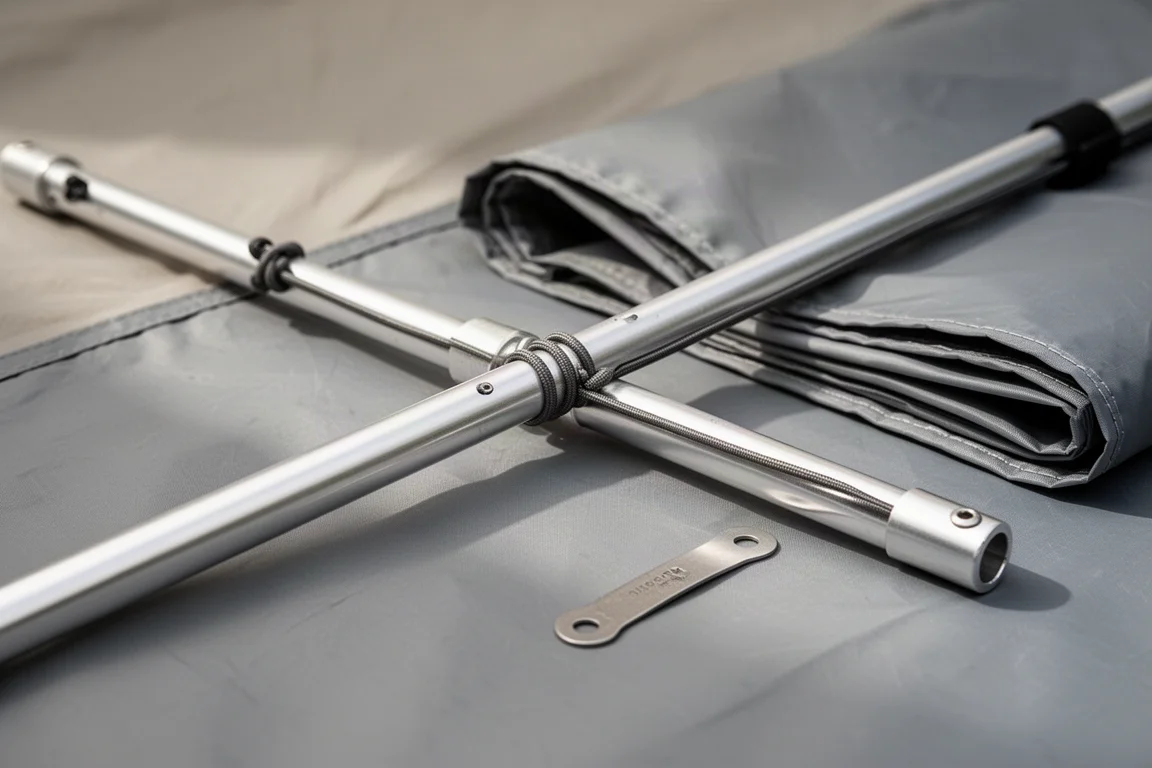
The practical lesson is to check that every pole segment is fully seated before clipping the body on, and to keep the repair splint that comes in the box with the tent. Treating the floor as a footprint-protected surface rather than a bare groundsheet will also extend its life considerably.
Waterproofing Limits and Ventilation Access
Two compromises stand out over time. The first is the untaped section above the floor edge seams, which is where water found its way in during heavy rain, so pitching on well-drained ground matters. The second is ventilation access: the vents work and stayed dry, but reaching past the door to adjust them is awkward unless you have long arms.
With the rainfly removed on warm nights, the inner tent shows its mesh layout. Three walls carry roughly 40 percent mesh each, and one side has considerably more mesh for stargazing, for an overall figure around 45 percent. The mesh color is a little dull and slightly dims the view, but airflow is the bigger benefit.
Buying Advice
At an MSRP around $400, the Tungsten 4 costs close to double the average budget four-person tent while delivering what amounts to a modest performance gain, roughly 10 to 20 percent, through more setup detail, two top poles, a slightly larger base area, more vestibule space, and better materials. Measured against cheaper tents, it takes about two and a half minutes longer to pitch and almost two minutes longer to pack away, sits nearly five inches lower at peak height, and offers about six and a half square feet less inner area, but almost ten square feet more vestibule space and about a pound less weight.
That math makes a sale the sensible entry point. Around $250 is a fair price, and up to roughly $280 is reasonable given that the footprint is included, since a comparable footprint typically adds about $30. If no discount appears, the Teton Mountain Ultra 4 and the Kelty Wireless 4 are strong lower-priced alternatives, and the Coleman Sundome remains a capable choice for buyers shopping on a very tight budget.
Buyers who mostly camp in fair weather and want maximum space per dollar will find better value elsewhere. Buyers who camp in exposed, rainy conditions, want a fully taped fly, and can wait for a promotion will get more out of this tent than its price alone suggests.
Conclusion
The Marmot Tungsten 4-Person Tent is a thoughtfully laid out shelter with real strengths: expansive vestibules, near-vertical walls supported by two top poles, a fully taped rainfly, two doors, and a footprint in the box. Its weaknesses are equally clear: a slower pitch, thin 9 millimetre poles with an X-pole design that demands care, floor edge seams that leaked under extreme rain, and a floor that is not especially rugged on its own.
For campers who value interior comfort and covered storage, and who are willing to buy at the right price, it is an easy tent to live with. At full retail, patience pays.
Product link
View more details for Marmot Tungsten 4-Person Tent
This product is mentioned in the review. Check the specifications, options, and compatibility before buying.
View more details for Marmot Tungsten 4-Person TentFurther reading
Related Reviews
Camping Tents
3F UL Gear Taiji Two-Person Tent Review: Field Waterproofing Results and Buying Advice
The Taiji pairs an attached fly with a removable inner, but sustained rain exposed untaped vent seams that need sealing before this shelter can be trusted.
Camping Tents
3FUL Gear Lanshan 2 Pro 4-Season Review: A Sub-$200 Single-Wall Trekking Pole Tent
An early look at the 3FUL Gear Lanshan 2 Pro 4-Season, covering its straightforward pitch, generous interior space, and the condensation and seam-sealing questions that come with any single-wall shelter.
Camping Tents
Alps Mountaineering Lynx 1-Person Tent Review: Big Value in a Small Budget Tent
A close look at the Alps Mountaineering Lynx 1-Person Tent, covering real interior dimensions, materials, setup time, ventilation limits, and who should buy it.