Bookshelf Speakers
March Audio Sointuva AWG Review: A Neutral Bookshelf Speaker With Genuine Low-End Reach
A compact Purifi-driver bookshelf speaker that stays neutral, digs down to 40 Hz, and asks for careful setup and a capable amplifier in return.
Introduction
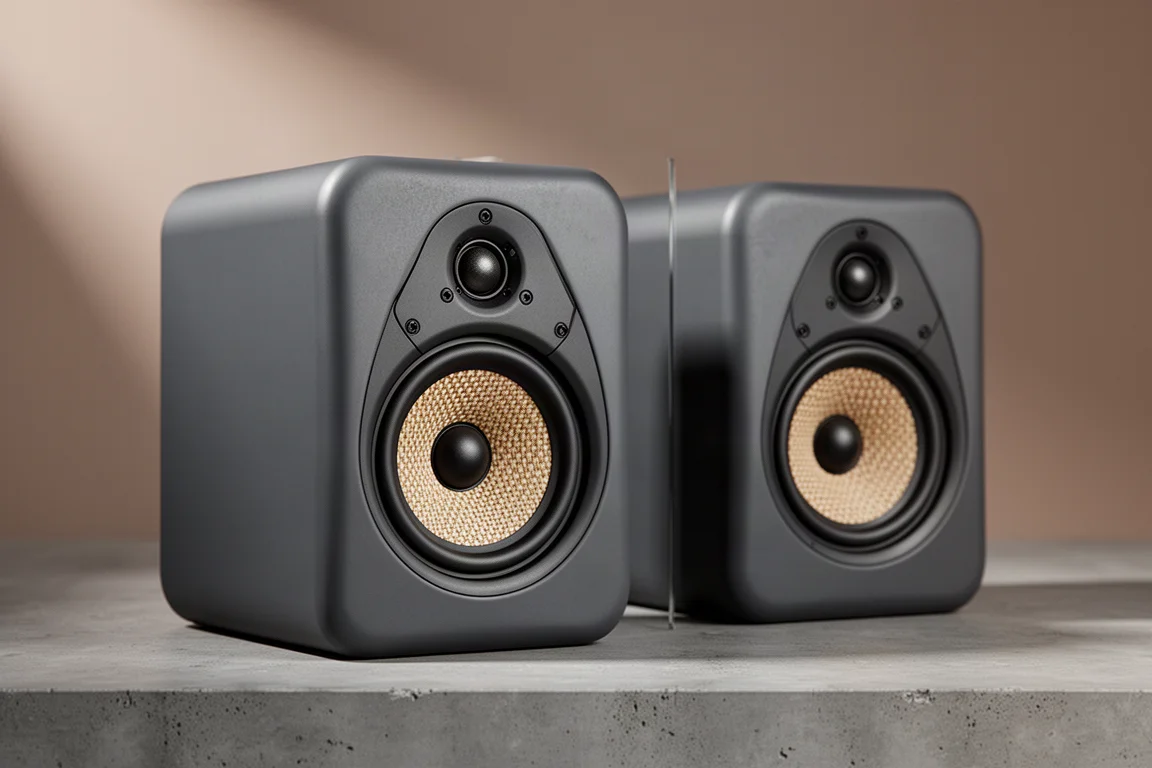
The March Audio Sointuva AWG is a compact two-way bookshelf speaker built around Purifi drive units and priced at roughly $4,000 per pair, with shipping added on top. That is serious money for a stand-mounted design, and it places the speaker alongside floorstanding models from long-established brands rather than in the usual bookshelf bracket.
What makes it worth a closer look is the intent behind the design. This is a speaker meant to be run essentially full range, with usable output down to around 40 Hz and in-room extension toward 30 Hz once a little boundary reinforcement comes into play. It also measures unusually flat for a compact cabinet, and it stays composed at levels where many small speakers start to sound strained.
The trade-offs are equally clear. Sensitivity is low, the vertical listening window is tight, and the upper-frequency radiation narrows earlier than some listeners prefer. Handled with care, though, it makes a strong case as one of the best values in premium stand-mount speakers.
Who This Speaker Is For
This is a speaker for listeners who want genuine hi-fi performance from a small cabinet and are willing to set it up properly. In a room of roughly 14 by 18 feet with a 9 foot ceiling, sitting about 10 feet away, it delivered average levels in the 80 to 85 dB range with plenty in reserve from a 100 watt per channel amplifier. Smaller rooms are even easier to satisfy: 100 watts per channel is generally enough, and the speaker rewards that modest power with a clean, unhurried presentation.
Larger rooms change the equation. Because sensitivity is low, more power is advisable if you sit further back or listen at higher levels. The speaker can get loud, but the effort required scales with the space it has to fill.
The most important thing to understand is that this is not a home theatre speaker. Buyers who want output that plunges toward 20 Hz at cinema levels, or who plan to hand bass duties to a subwoofer at an 80 Hz crossover, are better served by a pair of tower speakers plus a sub. The Sointuva AWG is designed to be used as a full-range instrument, and that is where it earns its price.
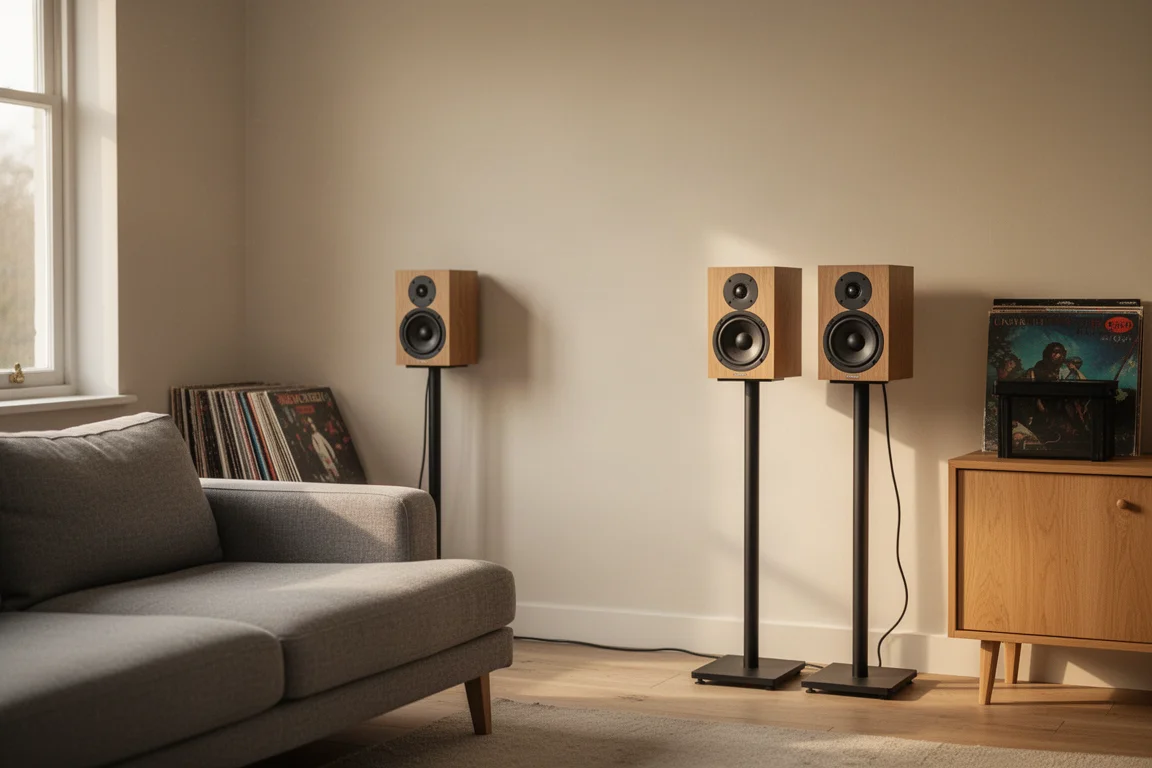
What it offers instead is a compact footprint that behaves like something much larger, provided the room is reasonable and the amplifier is capable. For a listener in a small to medium space who values neutrality over sheer output, that combination is unusually appealing.
Main Strengths: Neutrality and Low Distortion
The defining quality here is neutrality. Nothing about the presentation calls attention to itself: no boosted treble, no thickened upper bass, no forward midrange designed to flatter a first listen. Whatever the recording contains is largely what you hear. Good source material sounds good, and flawed source material is revealed for what it is.
That honesty is paired with very low distortion, and the practical benefit is significant. Most speakers begin to sound harsh and grainy well before they run out of excursion, which makes it uncomfortable to listen loud. This one gives away so little that the usual warning signs never arrive, which means volume discipline becomes the listener’s responsibility rather than the speaker’s.
The detail retrieval is excellent without being analytical. Layered productions hold together, with background elements keeping their own space and weight instead of collapsing into the mix. Vocal overdubs, percussion placed across the stage, and small studio details all retain a sense of presence that lesser designs tend to flatten.
Just as importantly, the speaker never becomes fatiguing. Long sessions across wildly different genres stayed comfortable, and there was no point at which the presentation felt thin, or slow, or as though something was missing in the low end. For a compact two-way, that is a rare combination.
Measured Performance and Bass Extension
The measurements back up what the listening suggests. The mean sensitivity sits at about 82 dB at 2.83 volts at one metre, roughly 3 dB below a typical bookshelf speaker, which is the equivalent of doubling amplifier power to reach the same output. Impedance is low, so a 4 ohm capable amplifier is the sensible choice.
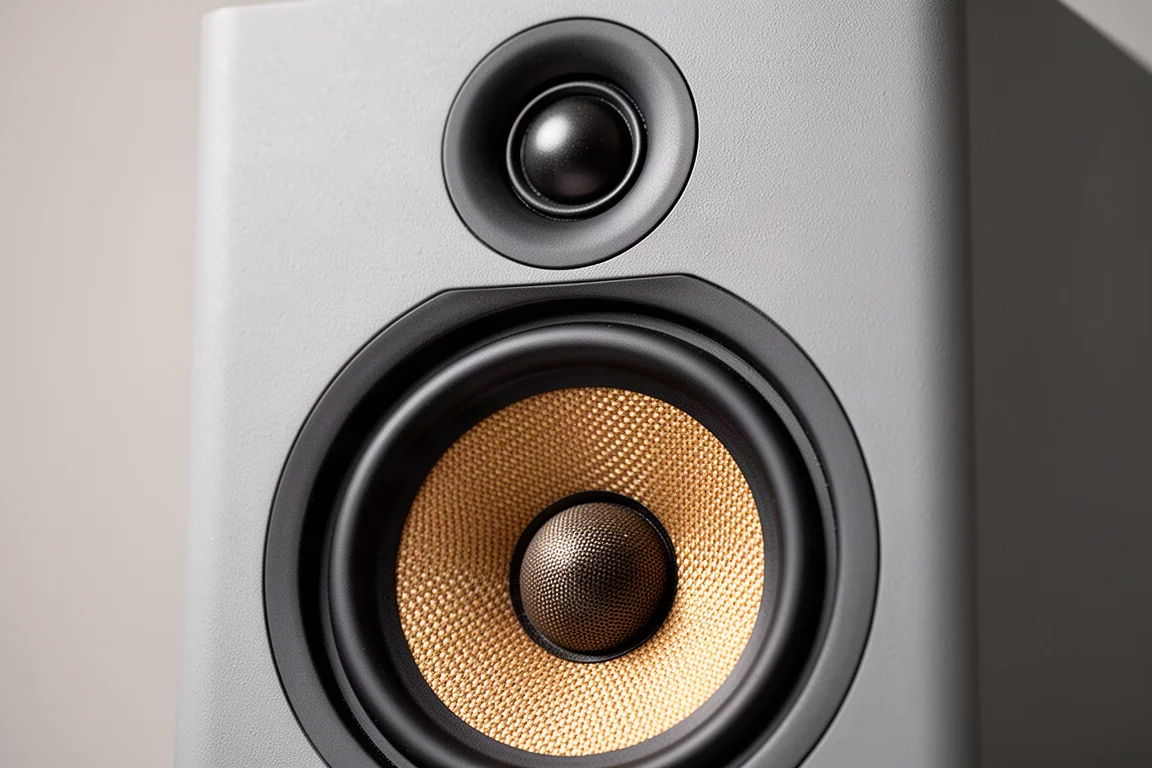
Bass extension is where the design surprises. F3 lands at 40 Hz, with F10 at 30 Hz, and the response tolerance band is held within roughly 1.6 to 1.73 dB, which is remarkably tight for any speaker, let alone a compact one. In practice that means strong, articulate bass down to 40 Hz at high volume, with 30 Hz audible in-room when the placement allows for some reinforcement. It will not rattle the walls the way a large subwoofer does, but it does deliver the kind of low-frequency foundation usually reserved for much bigger cabinets.
Harmonic distortion is very low through the midrange, a direct benefit of the Purifi drivers. On the low end, distortion rises above about 3 percent around 50 to 60 Hz, which is normal behaviour for a small woofer and not a concern in use. Multitone distortion is somewhat elevated in the 1 to 2 kHz region, above a 3 percent threshold, though it was not audible during extended listening. Compression data shows the speaker running out of steam around 60 to 70 Hz only at its highest output levels, and only with heavily bass-driven material.
Horizontal radiation holds within about plus or minus 60 degrees up to roughly 3 kHz before narrowing. There is a directivity mismatch at the tweeter and midwoofer crossover, a consequence of the driver configuration rather than a fault. The estimated in-room response is exceptionally smooth, which is the clearest explanation for why the speaker sounds as even as it does.
Taken together, this is a measurement set that explains the listening experience rather than contradicting it. The flat in-room behaviour and low midrange distortion are exactly what a neutral, non-fatiguing character sounds like on paper.
Placement and Setup: Getting the Listening Axis Right
This speaker is more placement-sensitive than most, and the reason is the vertical listening window. The reference axis sits about 7 degrees above the tweeter, which is unusual enough that ordinary stands will place the speaker too high. Aim for a stand height around 24 inches, which puts the ears at the correct angle relative to the tweeter line.
Get that wrong and the consequences are audible: a scoop through the upper midrange and treble, with dynamics and attack dulled as a result. Get it right and the speaker snaps into focus, with a liveliness and immediacy that is easy to miss otherwise.
Distance from the rear wall matters too. Three feet of clearance is the recommendation, and the speaker benefits from the space. Two feet is workable if the room will not allow more, but the closer the speaker sits to the wall, the more it gives up in openness and image depth. The vertical window is tight enough that small changes in seating height are worth experimenting with.
Power, Amplification, and Output Limits
With sensitivity around 82 dB, the Sointuva AWG asks more of an amplifier than a typical bookshelf speaker. A 4 ohm capable design with 100 watts per channel handled it well in a small to medium room, with the output described as adequate rather than effortless at the upper end of the range.
The more interesting consideration is behavioural. Because distortion stays low right up to high levels, there is no audible cue that the speaker is working hard. Pro audio monitors share this characteristic, and the practical advice is the same: keep an eye on the volume rather than waiting for the speaker to tell you. Hearing damage is the real risk here, not driver damage, and it is easy to listen louder for longer than intended.
If your music contains strong content below 40 Hz, a subwoofer becomes relevant. But adding one at an 80 Hz crossover works against the whole point of the design. Buyers who want that approach will get more output for less money from a pair of tower speakers plus a sub. Anyone choosing this speaker should plan to run it full range, down to 40 or 50 Hz at minimum, and let it do the work it was built for.
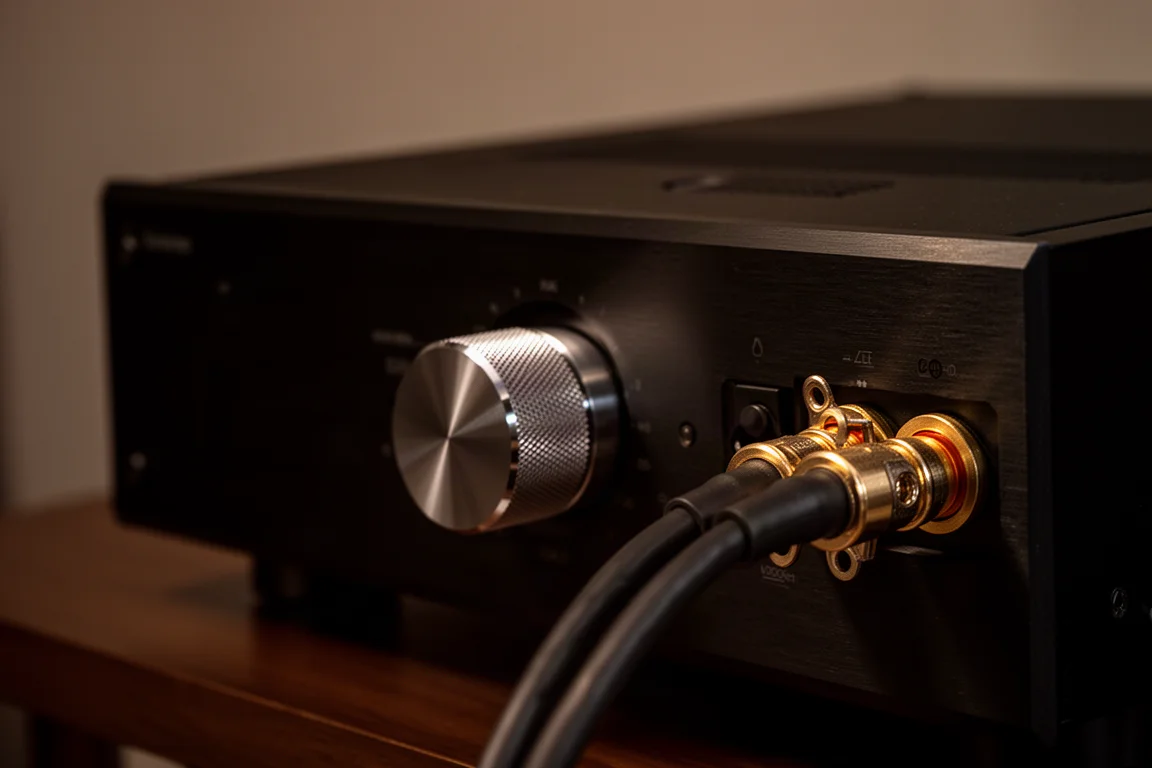
For most listeners in a modest room, a competent 100 watt integrated amplifier is all that is required. The investment belongs in the speaker and in the setup, not in chasing enormous power figures.
Things to Consider Before Buying
The low sensitivity is the first practical constraint. If your amplifier is modest, or your room is large, or you sit far from the speakers, budget for more power or expect to limit how loud you listen.
The second consideration is directivity. Radiation narrows above about 3 kHz, and listeners who prefer wide, consistent dispersion through the treble may find the presentation more directional than they like. Combined with the tight vertical window, this makes careful placement and a properly sized stand non-negotiable rather than optional.
Third, this is not a speaker for high-output, low-frequency-heavy listening. Buyers who want cinema levels down to 20 Hz, or who intend to cross over at 80 Hz, will be better served elsewhere. The elevated multitone distortion between 1 and 2 kHz is also worth noting, even though it did not show up as an audible problem in practice.
Finally, there is the cost. Around $4,000 per pair before shipping places the speaker firmly in premium territory, and the setup requirements mean the true cost of ownership includes suitable stands and an amplifier with real current delivery.
Buying Advice
For listeners in a small to medium room who want a neutral, low-distortion speaker with genuine bass reach from a compact cabinet, this is one of the strongest options in its price bracket. It suits acoustic material, dense studio productions, and long listening sessions equally well, and it does so without ever drawing attention to its own character.
Pair it with a 4 ohm capable amplifier of around 100 watts per channel or more, set it on stands that put the tweeter roughly 7 degrees below ear level, and give it three feet of space behind. Treat it as a full-range speaker and resist the urge to hand its low end to a subwoofer. Do that, and it will outperform expectations set by its size.
If your priorities lean the other way, toward very high output, wide upper-treble dispersion, or home theatre levels, a tower and subwoofer combination is the more sensible path at this budget. The Sointuva AWG rewards a specific kind of buyer, and it rewards that buyer generously.
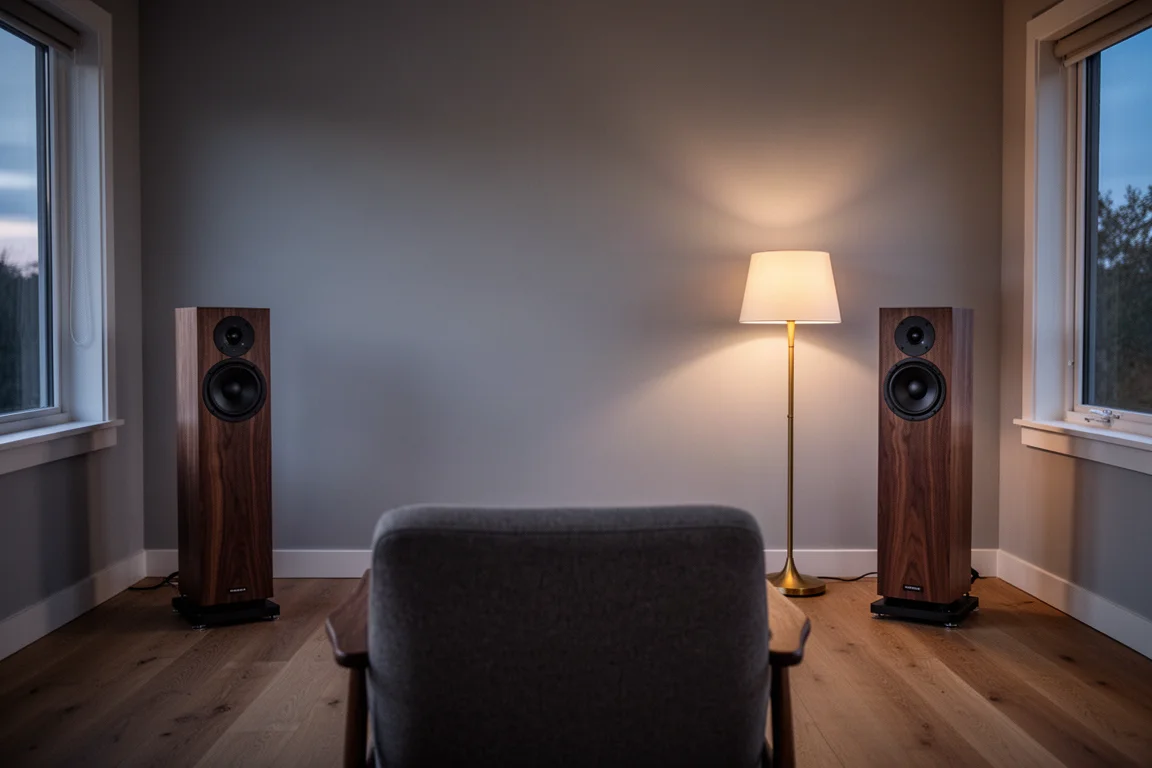
The most useful next step is simply to hear it. This is a speaker whose qualities are difficult to convey in specification alone, and the neutrality that makes it hard to describe is precisely the trait that makes it easy to live with over years rather than weeks.
Conclusion
The March Audio Sointuva AWG earns its place on any shortlist in the $4,000 bookshelf category. It combines unusually flat measured response, very low midrange distortion, and bass extension that has no business coming from a cabinet this size. Its limitations are real but specific: low sensitivity, narrow upper-frequency radiation, a tight vertical window, and a clear preference for full-range use over subwoofer integration.
Buyers who match those requirements will find a compact speaker that is neutral, detailed, and effortless to listen to for hours at a time. Buyers who need maximum output or wide dispersion should look elsewhere. For everyone in between, this is a speaker worth seeking out and hearing for yourself.
Product link
View more details for March Audio Sointuva AWG
This product is mentioned in the review. Check the specifications, options, and compatibility before buying.
View more details for March Audio Sointuva AWGFurther reading
Related Reviews
Bookshelf Speakers
Acoustic Energy A100 Mark II Review: A Compact Standmount With an Expansive Soundstage
The Acoustic Energy A100 Mark II brings clarity, natural tonality and a wide soundstage to an entry-level standmount, with a few setup details worth knowing first.
Bookshelf Speakers
Acoustic Energy AE-100 Mark II Review: Compact Bookshelf Speakers With Standout Imaging
A compact British two-way bookshelf speaker with deep, layered imaging, fast bass, and a slight treble lift to weigh against a crowded $500 field.
Bookshelf Speakers
Acoustic Energy AE100 MK2 Review: Measured Performance and Four Alternatives
A close look at the Acoustic Energy AE100 MK2 bookshelf speaker, what its measured performance reveals, and four alternatives with different trade-offs.