AV Receivers
Marantz Stereo 70 Review: A Slim Two-Channel Receiver for TV and Hi-Fi
The Marantz Stereo 70 pairs a slim two-channel amplifier with HDMI switching, on-screen bass management, and a phono input for around $1,000.
Introduction
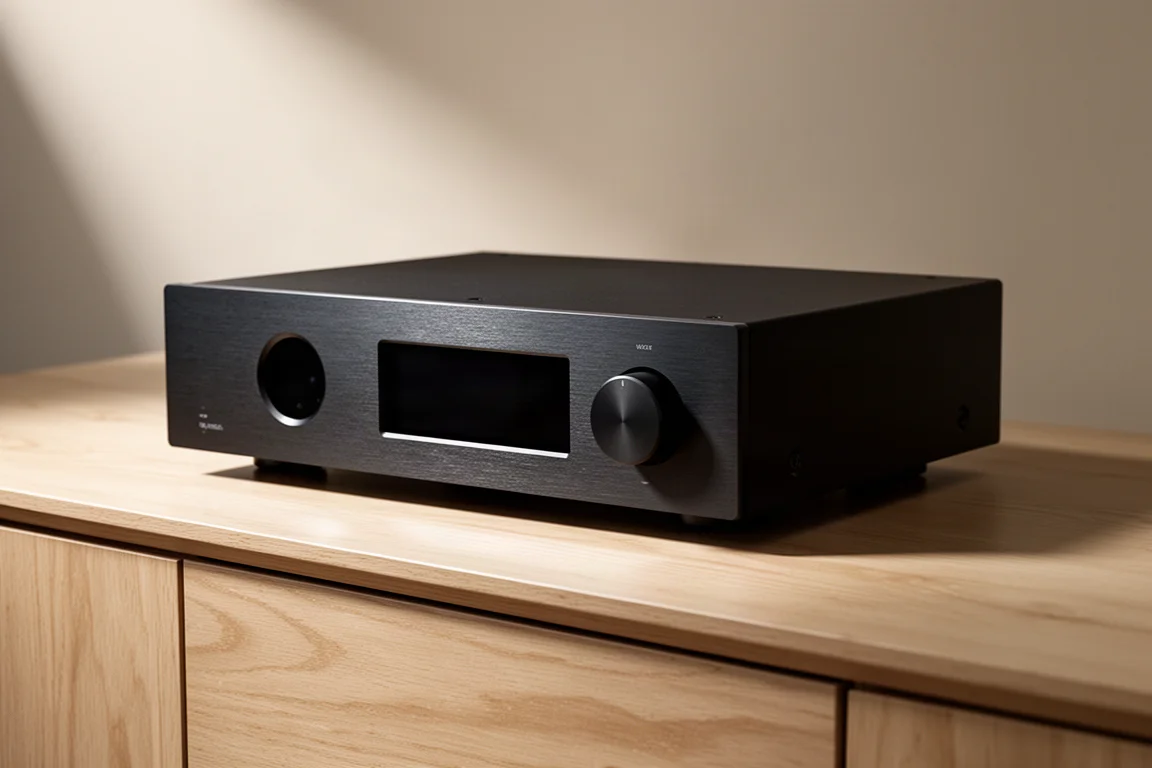
Marantz has built a family of slim, low-profile components that look almost identical once they are sitting on a shelf, and the Stereo 70 is the newest member of that group. It shares its chassis proportions and its HDMI connectivity with the Model 40 and the Cinema 70, but its job is narrower and clearer: it is a two-channel receiver for people who want better sound from a television and a stereo pair, and nothing beyond that.
Rated at 2 x 75 watts and priced at around $1,000, the Stereo 70 is an accessible entry point into the Marantz range. What makes it interesting is that it borrows the working habits of a modern AV receiver while keeping the output strictly two-channel, which is a combination that is genuinely uncommon at this price.
Who the Marantz Stereo 70 Is For
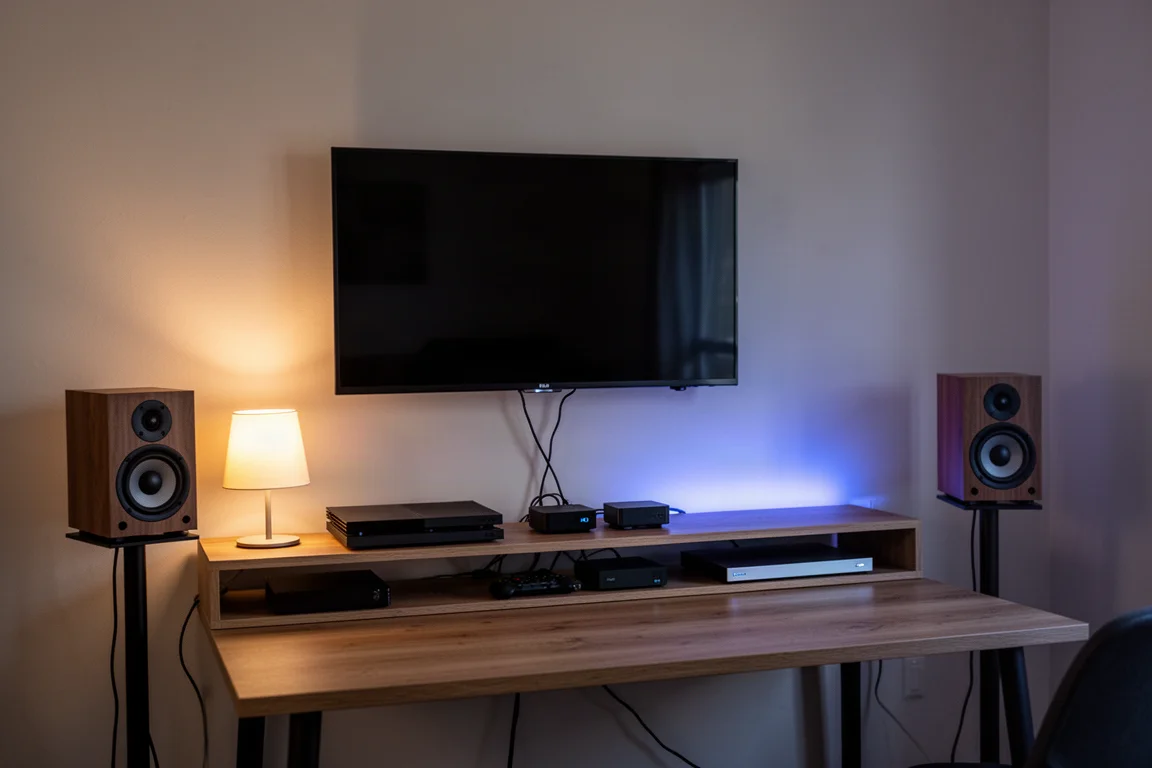
The clearest use case is a room where a television lives but surround sound does not. Picture an office or a secondary living space with a wall-mounted TV, a game console, a streaming stick, an Apple TV, and a Blu-ray player, all feeding two speakers. The Stereo 70 is designed for exactly that combination: several HDMI sources in, one cable out to the television, and two channels of amplification doing the work.
That single-cable arrangement is the practical appeal. Rather than running multiple cables up the wall to the display, every source connects at the receiver and only one cable travels to the TV. When a new device arrives later, it plugs into the back of the receiver instead of into the television.
It also suits listeners who stream most of their music. Because audio travels over HDMI, a connected streaming device can feed the receiver high-resolution audio while track information appears on the connected display. That keeps the television useful as a music interface rather than just a video screen, which is a meaningful convenience for anyone whose library lives in a streaming service.
What the Stereo 70 Does Well
The amplifier section is rated at 2 x 75 watts, and it is stable into 4-ohm loads, where it delivers roughly 100 watts per channel. That is enough headroom for a pair of floorstanding tower speakers rather than only small bookshelf models.
Bass management is the feature that separates the Stereo 70 from a plain stereo amplifier. There are two subwoofer outputs, and the on-screen menu allows speaker sizes and crossover points to be set, so a pair of bookshelves can be crossed over to one or two subwoofers cleanly. In a small room, that flexibility is often more useful than raw power.
A moving magnet phono input is included, so a turntable can connect directly without an external stage. Bluetooth transmission is available as well, meaning audio playing through the receiver can be sent to a pair of wireless headphones. That is a genuinely useful option for late-night listening in a shared room, and it is the kind of feature usually reserved for multichannel receivers.
There is also a preamp mode. If a separate power amplifier is added later, the Stereo 70 can be used purely as a switcher and preamp, and its video handling stays in the chain. Buyers who expect to upgrade gradually will appreciate that the receiver does not become redundant when the amplification does.
Connectivity, Setup, and App Control
Setup follows the logic of a modern AV receiver rather than a traditional stereo integrated amplifier. The Stereo 70 has an on-screen graphical interface, so speaker configuration, input naming, and bass settings are handled on the television instead of through a small front-panel menu.
Multiple HDMI inputs are available for video sources, and the receiver can be controlled through an app in addition to the supplied remote, which is convenient when the unit sits inside a cabinet.
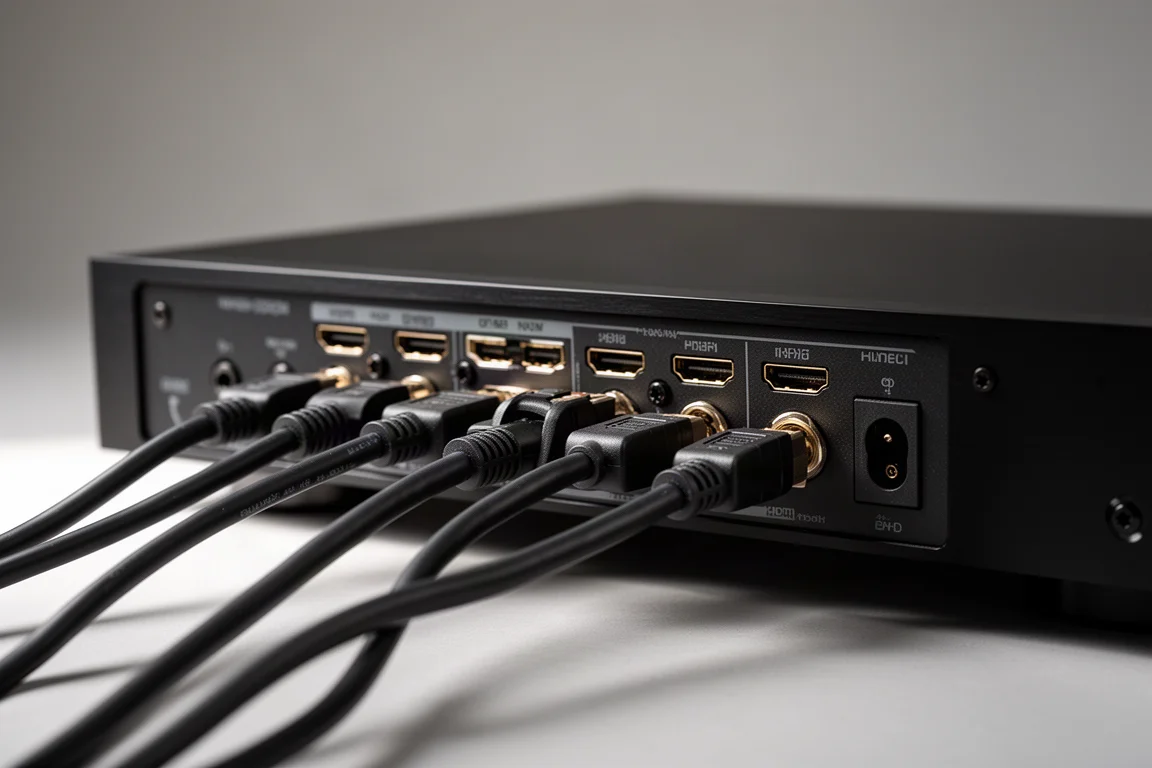
That combination is the reason the Stereo 70 feels like an AV component in a two-channel package. The interface, the input switching, and the app control are precisely the parts most often missing from stereo amplifiers at this price, and they are what make the receiver easy to live with day to day.
How It Compares With the Model 40 and Cinema 70
The Stereo 70 shares a chassis and a strong family resemblance with two other Marantz components, and the differences come down to purpose rather than appearance. The Model 40 is a Hi-Fi component first. It costs considerably more, weighs noticeably more because of its more elaborate audio circuitry, offers a single HDMI input among its many sources, and has no on-screen menu, so adjustments are made from the front panel. Buyers who want a turntable and a CD player at the centre of the system are the audience for that model.
The Cinema 70 takes the same slim format in a multichannel direction. It supports five speakers plus a subwoofer and includes room correction, which the Stereo 70 does not have. Anyone planning a surround setup should be looking there instead.
The Stereo 70 sits between the two. It borrows the receiver-style interface, the HDMI switching, and the bass management of the multichannel model while keeping the output to two channels, and it stays far below the Model 40 on price. The three units look alike until you pick them up, and that is a fair summary of how differently they are built.
Things to Consider Before Buying
The most important limitation is channel count. The Stereo 70 drives two speakers, full stop. If a subwoofer and five speakers are the plan, the Cinema 70 is the correct model in this family, and no amount of menu tweaking changes that.
There is also no room correction. Speaker size and crossover settings can be adjusted, but there is no automatic calibration system and no microphone input for one. The acoustics of the room are therefore handled by placement and manual settings rather than by processing, which is fine for a simple two-channel setup but worth understanding before purchase.
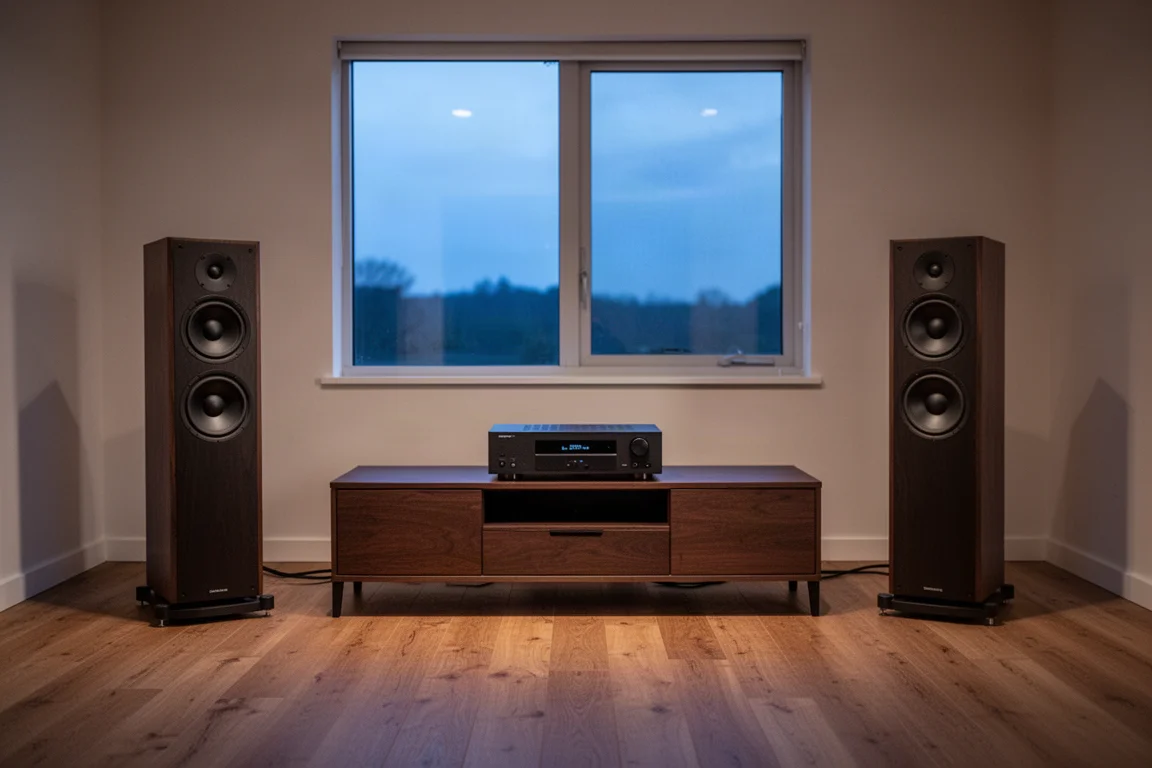
Power is moderate rather than generous. The 2 x 75 watt rating, and the roughly 100 watts per channel into 4 ohms, will suit most tower and bookshelf speakers in normal rooms. Listeners with unusually inefficient speakers who regularly listen at very high levels should weigh that carefully, and consider the preamp mode route with an external amplifier.
Which Speakers and Subwoofers Suit It
Because the Stereo 70 is stable into 4 ohms, it can be paired with a wide range of speakers, including 4-ohm tower models that would trouble a less capable stereo amplifier. That widens the upgrade path considerably for anyone who already owns demanding floorstanders.
Two subwoofer outputs make dual-subwoofer configurations straightforward. A pair of bookshelf speakers crossed over to two subwoofers is a natural match for the receiver’s bass management, and in a small room it is often a better use of budget than a single large pair of towers. The on-screen crossover settings make that arrangement quick to dial in.
Buying Advice
At around $1,000, the Stereo 70 is an accessible entry point into the Marantz range, and it makes the most sense for one specific buyer: someone with a television, several HDMI sources, and a genuine preference for two speakers.
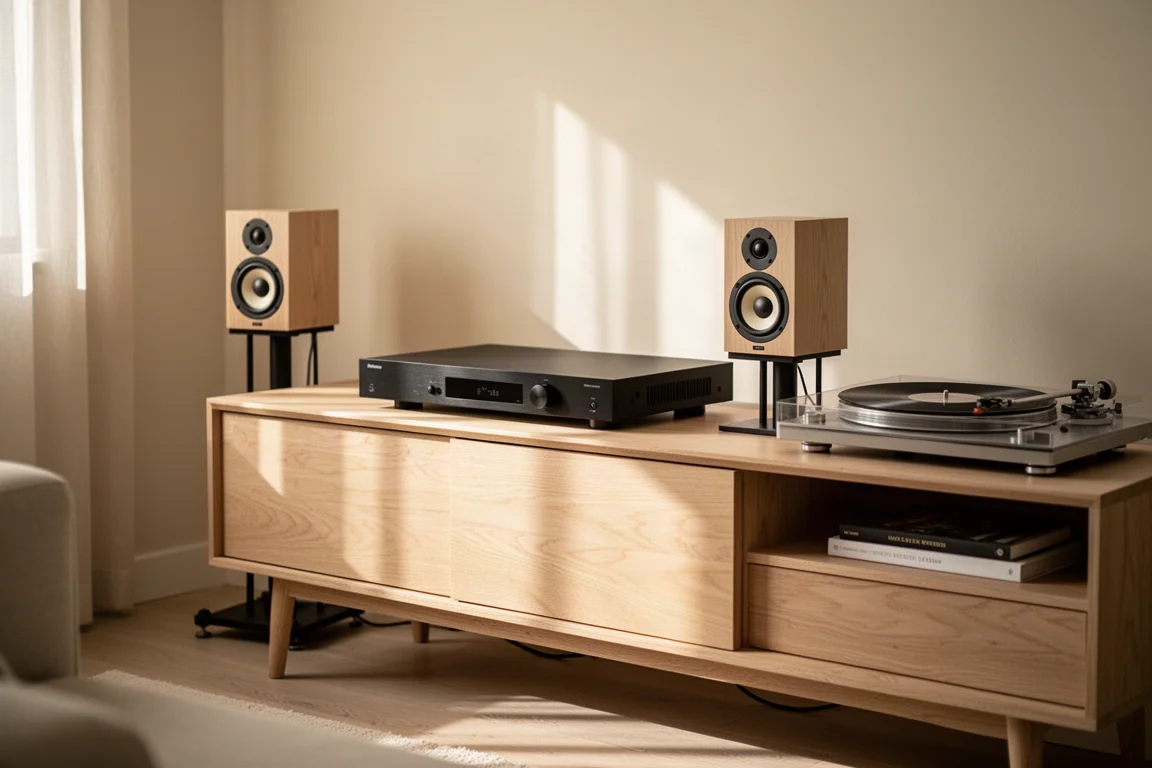
If the system will stay two-channel, the Stereo 70 covers the practical ground well. HDMI switching, on-screen setup, two subwoofer outputs, a moving magnet phono input, and Bluetooth headphone transmission are all present, and preamp mode leaves room to add a separate amplifier later without replacing the receiver.
If surround sound is on the roadmap, or if a turntable and CD player are meant to be the heart of the system, the Cinema 70 and the Model 40 are the better fits within the same family. Matching the receiver to the room is what determines whether it feels like good value, and for a two-speaker room with a lot of HDMI devices, the Stereo 70 is the version that fits.
Conclusion
The Marantz Stereo 70 is a focused product rather than a compromised one. It takes the interface, the input switching, and the bass management of a modern AV receiver and applies them to a two-channel system, which is exactly what a room with a TV, a stack of sources, and a good pair of speakers needs.
Its limits are clear and honest: two channels, no room correction, and a moderate power rating. Within those limits, at around $1,000, it does the job without asking the buyer to pay for surround capability they will never use.
Product link
View more details for Marantz Stereo 70
This product is mentioned in the review. Check the specifications, options, and compatibility before buying.
View more details for Marantz Stereo 70Further reading
Related Reviews
AV Receivers
Anthem MRX 740 8K Review: Composed Home Theater Sound With a Few Rough Edges
A close look at Anthem's mid-tier MRX 740 8K receiver, covering its sound, ARC Genesis room correction, HDMI 2.1 features and the daily quirks worth knowing before you buy.
AV Receivers
Anthem MRX 740 vs MRX 1140: Which AV Receiver Fits Your System?
A measured look at the Anthem MRX 740 and MRX 1140, covering preamp output performance, amplifier behaviour, bass management, and expansion headroom.
AV Receivers
Best AV Receivers for Home Theater: Denon, Onkyo, Marantz and Yamaha Compared
Four home theater receivers compared on features, sound character, setup and value, with clear guidance on which one fits which kind of buyer.