AV Receivers
Marantz SR 8015 Review: A Flagship AV Receiver for Movies and Stereo
A detailed look at the Marantz SR 8015, an 11.2 channel flagship AV receiver that makes a serious case for handling home theater and two-channel listening from one box.
Introduction
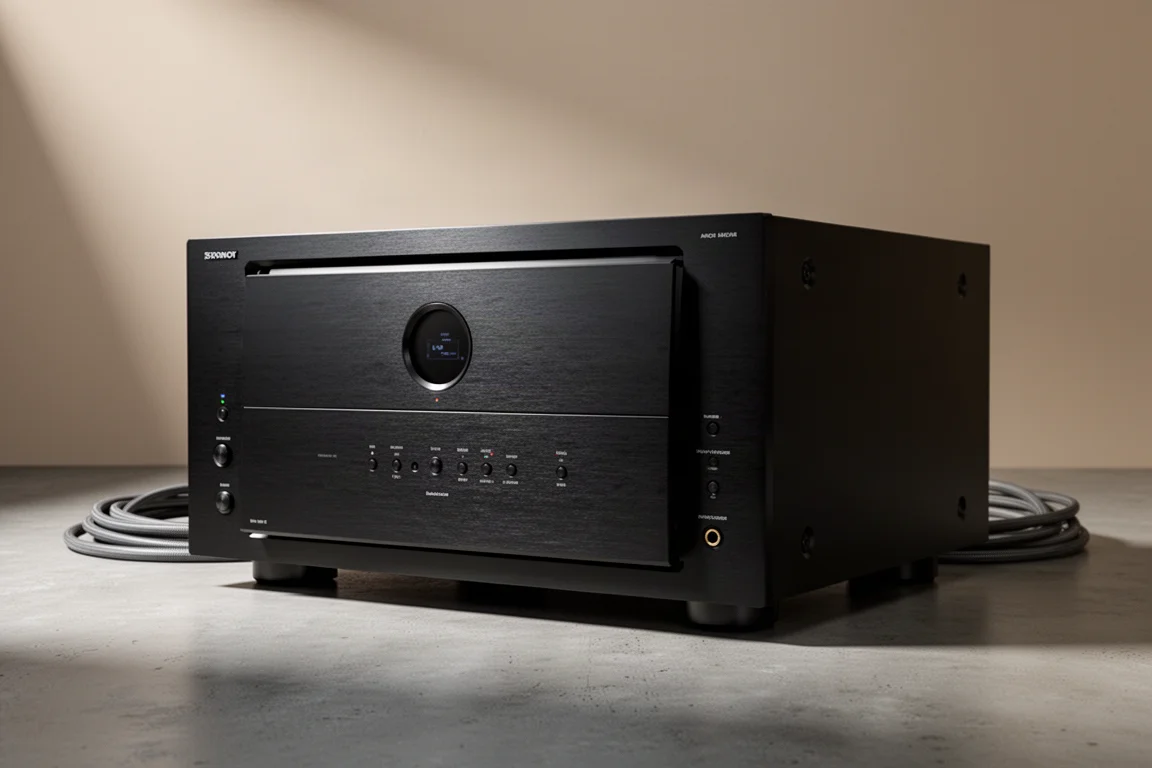
The Marantz SR 8015 is an 11.2 channel AV receiver with Dolby Atmos, DTS:X, Auro-3D and 8K-ready HDMI switching. It is rated at 140 watts per channel into 8 ohms with two channels driven, and it sits at the top of Marantz’s receiver range.
That specification sheet alone puts it in flagship territory. The more interesting question is whether a receiver this focused on home theater can also serve as the heart of a two-channel system. Across extended listening with several speaker combinations, the SR 8015 makes a persuasive case that it can.
Who This Product Is For
The SR 8015 is built for listeners who want one component to handle everything. It can drive surround layouts up to 7.2.4 and almost any configuration in between, and it can also be switched into a strict preamp processor mode for use with external amplification. That gives owners a path to more power later without replacing the receiver itself.
It makes the most sense for two groups. The first is someone assembling a demanding home theater with multiple height channels who does not want to add outboard amplifiers. The second is someone who wants genuinely capable stereo playback from the same box that handles movie night.
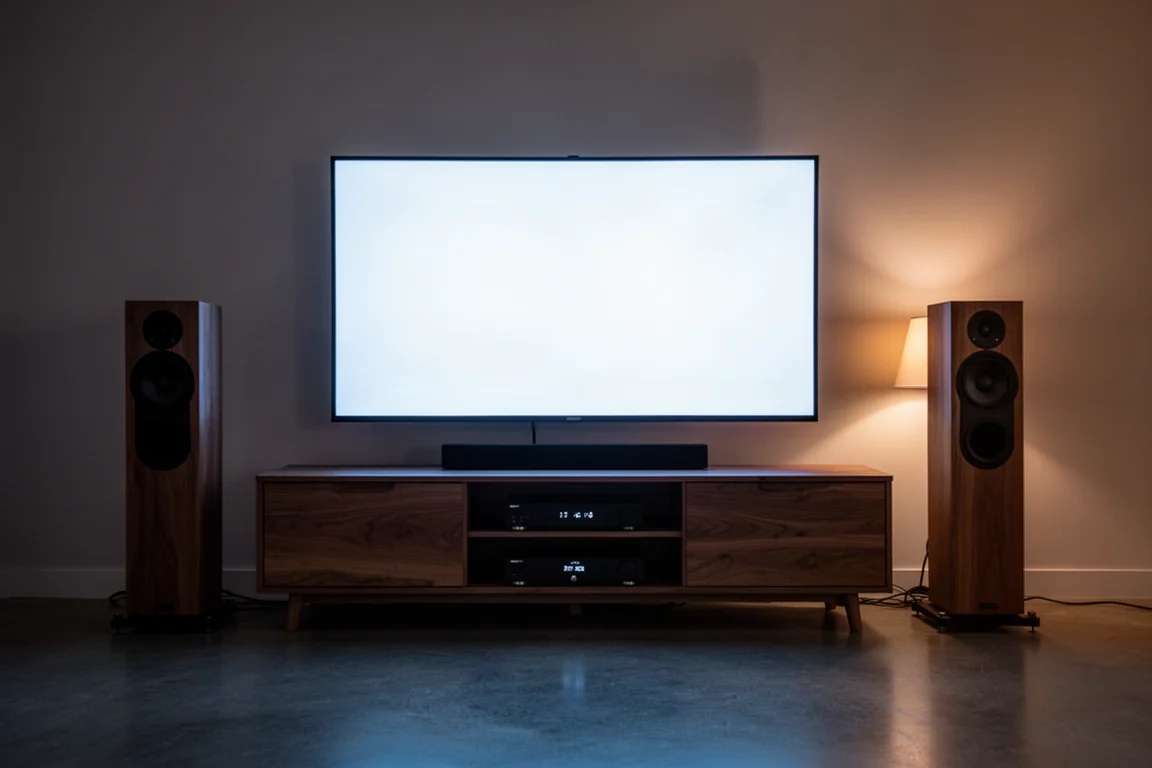
For buyers with average-sensitivity speakers who do not need extra assignable channels or independent subwoofer outputs, a well-equipped 7 or 9.2 channel receiver will cover most of what they will ever use. The SR 8015 is for the listener who would rather not wonder whether the amplifier is the weak link.
Main Strengths
Power Delivery and Amplification
Marantz publishes a 70 percent guarantee with this receiver: when driving up to five channels, roughly 70 percent of the rated power remains available to the speakers. That works out to around 100 watts per channel in a typical five-speaker setup, which is ample for most mass-market loudspeakers on the market today.
The amplifier section is also neutral. Running frequency sweeps against a comparably priced stereo integrated amplifier produced no measurable change in any connected speaker’s frequency response. Bass notes stay tight and composed with detail and control maintained at every volume level, and full-range towers are allowed to reach their low-frequency potential. In a direct comparison with a 70 watt per channel integrated amplifier, no difference was audible in the bass performance of the same tower speakers.
Immersive Audio Performance
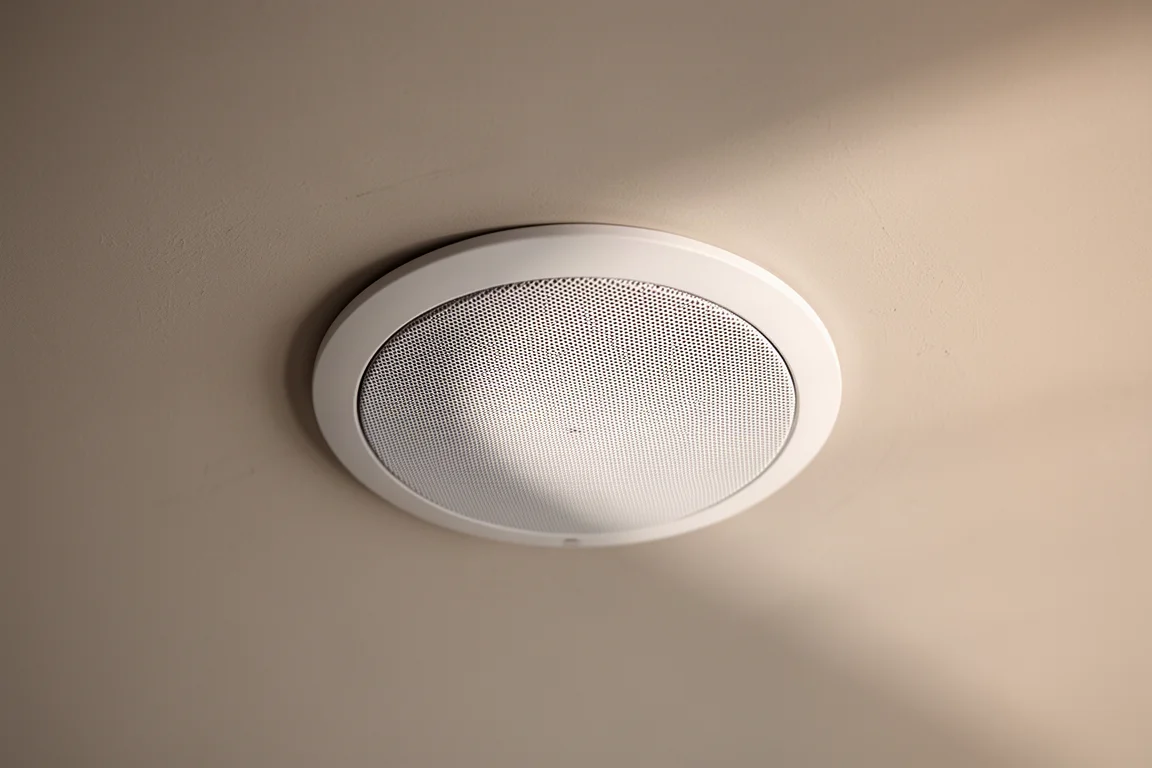
Surround performance is the strongest part of the story. Dolby Digital, DTS and Atmos content all translate into a convincing, room-filling presentation, and upmixing older Dolby material to the height channels sounds very close to native Atmos. Dialogue stays clear and intelligible, and high-frequency detail never turns thin, forward or fatiguing even at high playback levels. Dynamics hold up during sustained loud passages without any sense of strain.
Auro-3D is a different proposition. Rather than being clearly superior to Dolby or DTS upmixing, it is simply different, behaving a little like a loudness control by lifting low-mid bass and bass energy and adding a touch of treble presence. It is enjoyable when engaged and worth trying, but it is not the reason to choose this receiver.
Connectivity and Gaming Features
The rear panel covers eight HDMI inputs and three outputs, plus a broad set of analog and digital connections. One input supports 8K60 and 4K120, while the remaining inputs handle up to 4K60. Analog video can be upscaled to 8K60, which is unusual at this level and useful for older source components, though it will not transform standard-definition footage into anything resembling 4K.
All the major HDR formats are supported, including Dolby Vision. Gaming features include variable refresh rate, auto low latency mode and quick frame transport, and 4K120 gameplay works as expected. IMAX Enhanced content is supported as well, and Bluetooth and AirPlay both connect without fuss. A built-in phono stage is included and performs impressively for what it is.
Setup, Room Correction, and Everyday Control
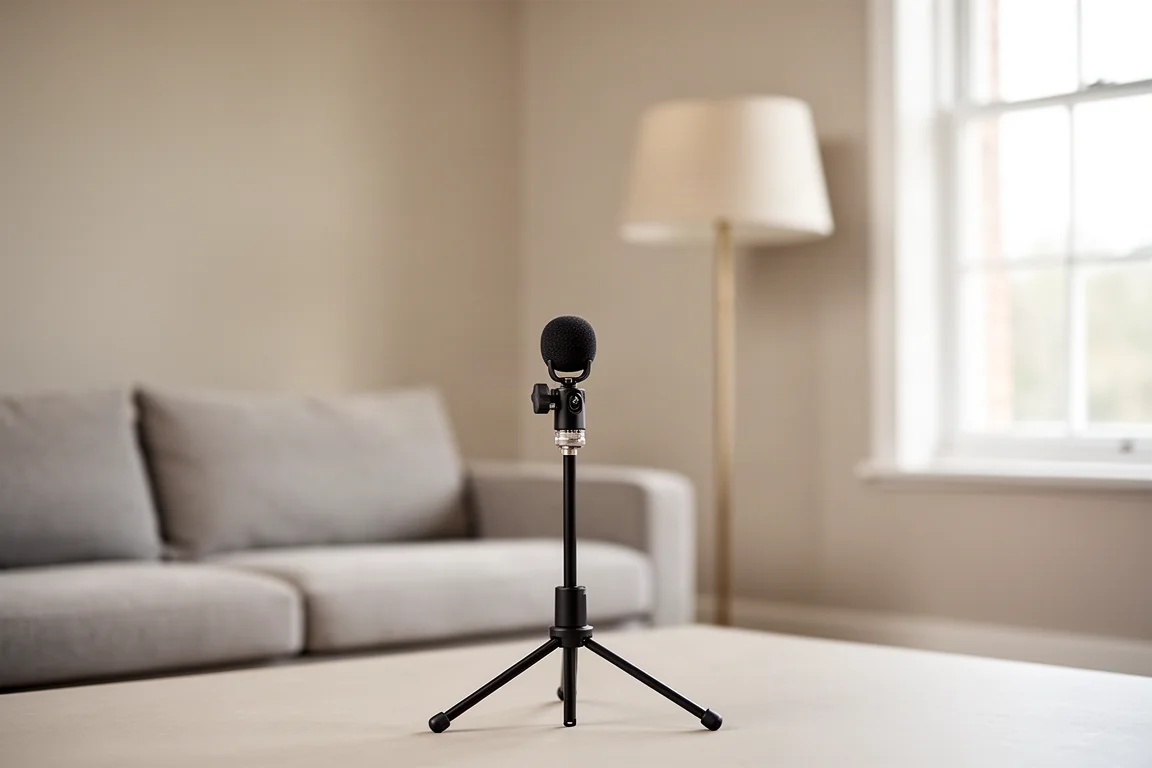
Initial setup is guided on screen and takes around ten minutes in a straightforward system. The receiver stores multiple user presets, so one can be configured manually and another with Audyssey MultEQ XT32, making it easy to compare the two approaches. Audyssey is a reasonable starting point, particularly for anyone new to room correction, though it does not always nail crossover points, speaker levels or distances. Owners who want to go further can use the paid Audyssey app on iOS or Android, and PC users can import their own parametric EQ filters through the MultEQ-X software.
Day to day, the front panel is deliberately minimal. All manual controls hide behind a large aluminum door, leaving only a small porthole display that can be switched off during normal use. The supplied remote is good, and the companion control app is excellent enough that the on-screen menus become largely unnecessary once the initial setup is complete.
Things to Consider Before Buying
The most concrete limitation is HDMI. Only one input carries 8K60 and 4K120, so connecting a modern console and a high-refresh display source at their full potential means swapping cables or adding a separate switcher.
The receiver runs warm during long, loud movie sessions, so it needs reasonable ventilation around it. Very low-sensitivity speakers, such as planar magnetic designs, may be a step too far for the built-in amplification, while most other speakers, including high-end dynamic designs, should present no problem.
Room correction accuracy varies from room to room, and the built-in phono stage, while impressive for a receiver, does not quite match dedicated stereo gear at a similar price. It is also worth noting the price gap: this receiver costs more than double a well-regarded 9.2 channel alternative that already covers the needs of most households.
Buying Advice
The SR 8015 is the right choice when you want a single receiver to do everything and you would rather not add outboard amplification later. For a 7.2.4 build with height channels, multiple sources and a mix of movie and stereo listening, it removes a lot of the guesswork.
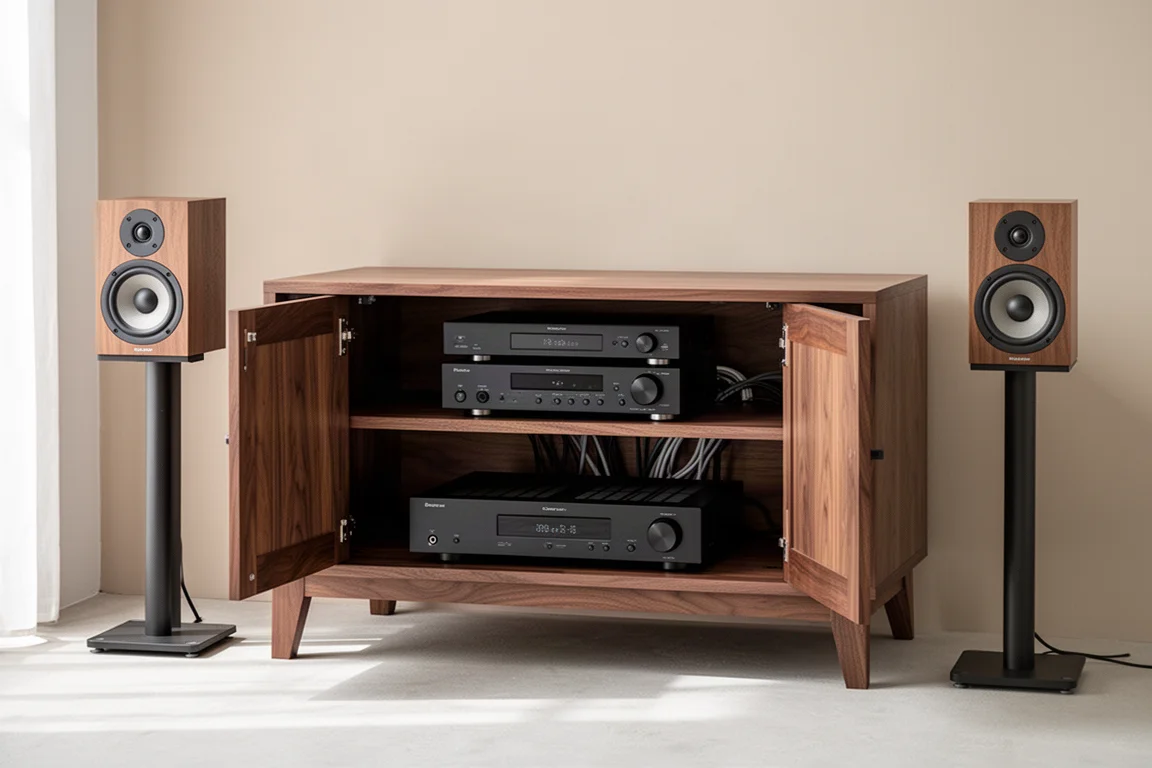
If your setup is simpler, the case weakens. A capable 9.2 channel receiver handles most speaker packages at a much lower cost, and the money saved can go toward better speakers or room treatment. The step up makes sense when the extra channels, the preamp mode, the analog upscaling and the assurance of headroom are things you will actually use.
Comparisons are inevitable at this price. Against a 9.2 channel receiver that sets a strong value benchmark, the SR 8015 is the better performer, and you are paying for those gains. Against a stereo integrated amplifier of similar cost, the Marantz wins on features, channel count and codec support while giving up only a subtle amount of low-end control. Against an 11-channel alternative priced around $700 less with comparable amplifier power, the difference comes down to the rest of the package. Against a flagship from a rival brand at a similar price, the Marantz is the more complete product in its current state, with the caveat that buyers who enjoy deep preset and profile tinkering may find a fraction more flexibility elsewhere.
Conclusion
The Marantz SR 8015 is a flagship receiver that behaves like one. It drives demanding speaker packages without strain, handles every major surround format, offers a genuinely useful preamp mode, and makes setup straightforward enough that the process feels painless rather than punishing.
It is expensive, and it is not for everyone. But for listeners who want a single component that covers home theater and two-channel listening to a high standard, it is one of the most complete options available.
Product link
View more details for Marantz SR 8015
This product is mentioned in the review. Check the specifications, options, and compatibility before buying.
View more details for Marantz SR 8015Further reading
Related Reviews
AV Receivers
Anthem MRX 740 8K Review: Composed Home Theater Sound With a Few Rough Edges
A close look at Anthem's mid-tier MRX 740 8K receiver, covering its sound, ARC Genesis room correction, HDMI 2.1 features and the daily quirks worth knowing before you buy.
AV Receivers
Anthem MRX 740 vs MRX 1140: Which AV Receiver Fits Your System?
A measured look at the Anthem MRX 740 and MRX 1140, covering preamp output performance, amplifier behaviour, bass management, and expansion headroom.
AV Receivers
Best AV Receivers for Home Theater: Denon, Onkyo, Marantz and Yamaha Compared
Four home theater receivers compared on features, sound character, setup and value, with clear guidance on which one fits which kind of buyer.