Streaming Amplifiers
Marantz MODEL M1 Review: How It Compares To Four Streaming Amplifier Rivals
A compact direct digital streaming amplifier with HEOS, HDMI ARC and independent subwoofer filtering, set against four rival streaming amplifiers.
Introduction
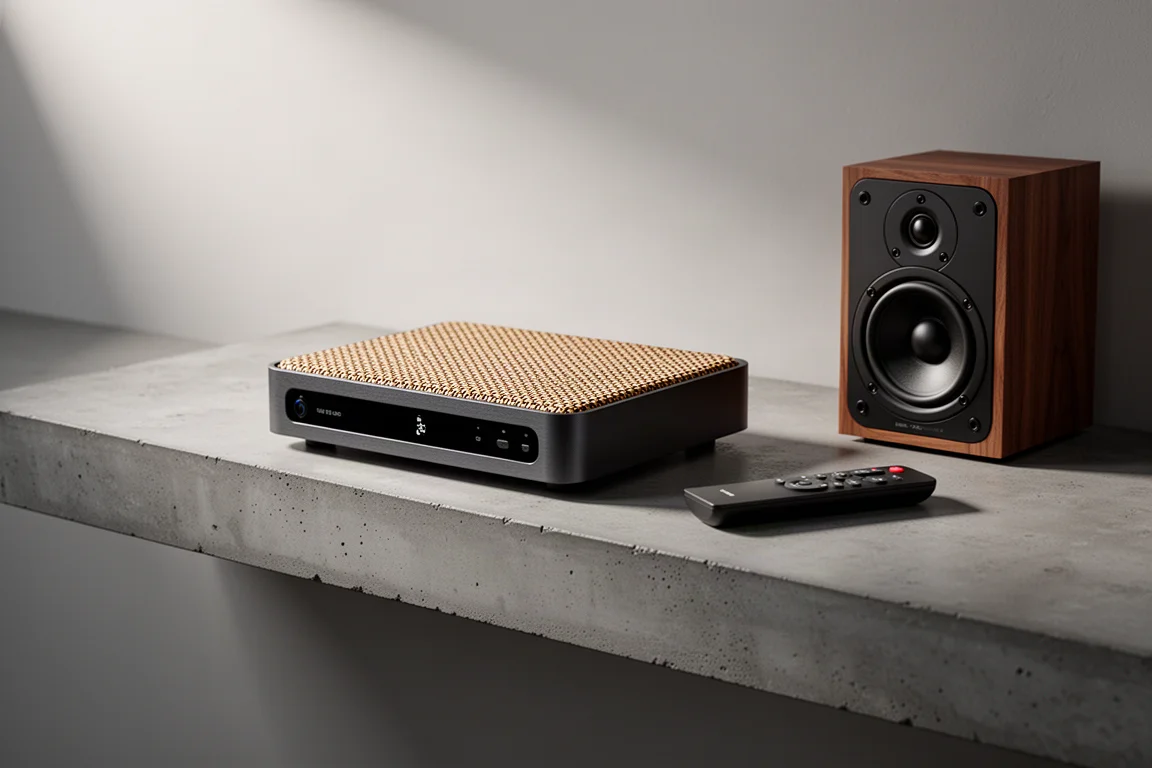
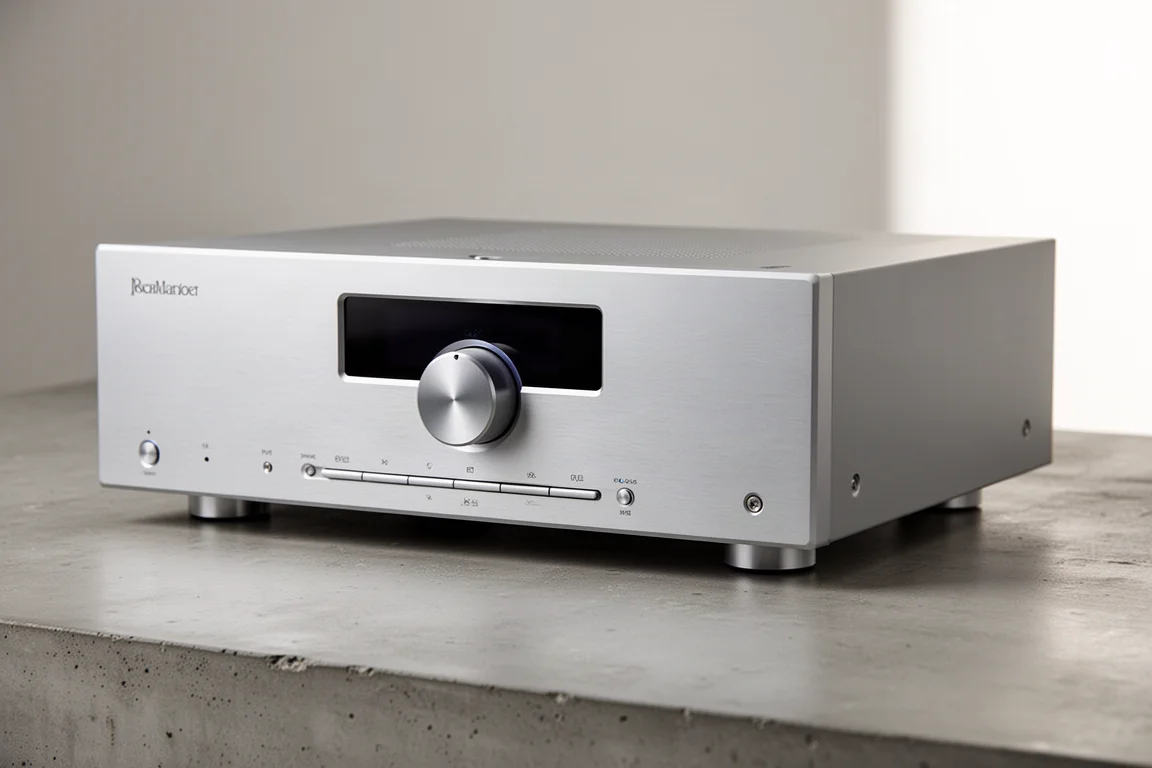
The Marantz MODEL M1 answers a specific question: what does a forward-looking amplifier look like when the manufacturer removes the front panel display, replaces it with capacitive touch buttons, and targets a price below $1,000? The result is a compact streaming amplifier with a woven mesh top for ventilation and a footprint closer to a small desktop computer than a traditional hi-fi component.
This guide sets the MODEL M1 against four rival streaming amplifiers at different price points. Each comparison focuses on amplifier design, streaming support, subwoofer integration and the way each amplifier handles real music.
How These Streaming Amplifiers Were Compared
Each amplifier was assessed on four points: amplifier topology, rated power output, streaming platform support, and subwoofer and bass management flexibility. Listening material spanned electronic, rock, soul and remix work rather than audiophile reference discs.
Because the MODEL M1 had no Roon Ready or Tidal Connect certification at the time, playlists were delivered to its AirPlay input. AirPlay streaming is capped at CD quality, so no high-resolution files were used. That limitation belongs to the AirPlay path rather than to the amplifier itself.
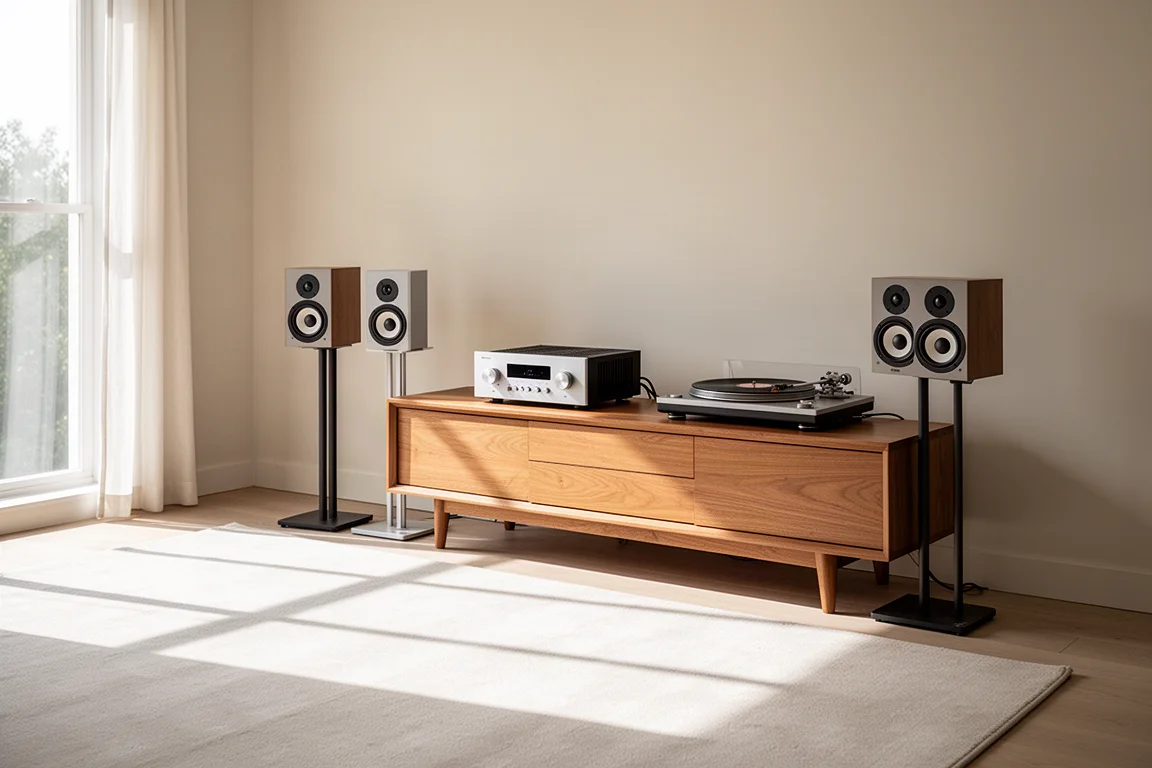
Where a direct comparison was possible, the same playlist was used for every amplifier so that differences in dynamics, top-end extension and soundstage could be judged consistently.
Marantz MODEL M1: Compact Direct Digital Streaming
The MODEL M1 is a streaming amplifier built around a direct digital design. Incoming PCM signals are converted to PWM so they can switch the output devices directly, which removes the traditional DAC stage that normally sits in the middle of the signal path. Marantz rates the amplifier at 100 watts per channel into 8 ohms and around 125 watts per channel into 4 ohms, and the unit is made in Japan.
Streaming runs on the HEOS platform, which brings in Deezer, Tidal and Amazon Music but not Qobuz. Bluetooth, Spotify Connect and Apple AirPlay 2 are all supported, and Roon Ready certification is expected at some point but had not arrived. Until it does, two workarounds are available: the 5V USB socket on the back panel can power a small external streamer whose optical output then feeds the Marantz, or an Apple TV can send audio into the HDMI ARC input.
That HDMI ARC input is also practical for everyday use. TV remotes handle power on and off and volume up and down, so the amplifier can stay out of sight while the television stays in charge. A single small LED on the lower lip of the front panel communicates status: flashing white during startup, solid white when the unit is ready, and flashing amber while a firmware update is applied, during which the MODEL M1 disappears from HEOS and other control apps.
Two details matter for buyers with specific habits. The line-level analog input digitizes incoming analog signals on entry, which is a consequence of the direct digital circuit and the DSP engine behind the unit’s digital filtering. Marantz says that filtering was voiced by its sound masters in Japan. The same DSP handles tone controls and bass management, and the subwoofer settings allow an independent low-pass filter for the subwoofer and a high-pass filter for the main speaker outputs, which is more flexible than the single crossover point used by some rival control apps.
Bluesound POWERNODE: Class D Power With BluOS
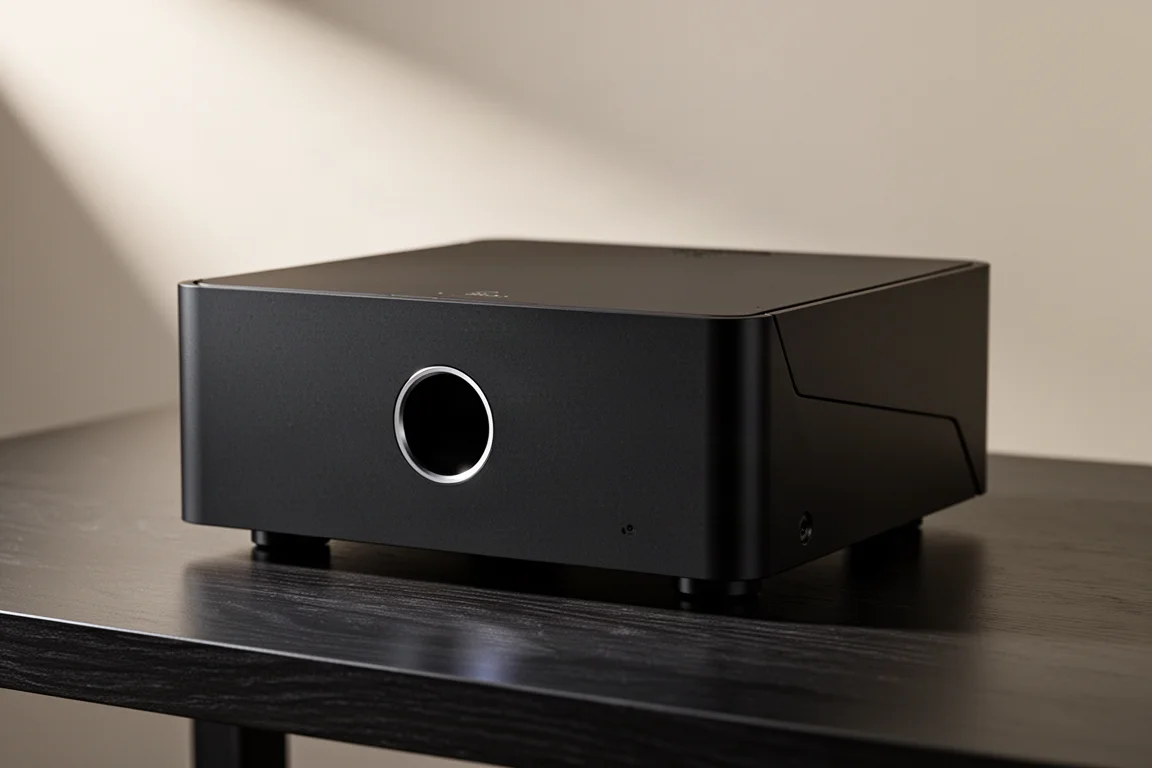
The POWERNODE is priced within close range of the MODEL M1 but takes a different route inside. Instead of a direct digital circuit it uses a Hypex UcD Class D module with an ESS Labs DAC in the middle, and it delivers 80 watts per channel into 8 ohms.
Power figures alone do not settle the comparison. On demanding material the POWERNODE is the more dynamic of the two through the mids and mid-bass, and it handles the attack of a track with more assertiveness, while the MODEL M1 can sound more polite in that region. The MODEL M1 answers with a more extended top end, which surfaces more ambient detail and produces a wider and taller soundstage.
These are noticeable differences rather than dramatic ones. Neither amplifier overwhelms the other, and the choice comes down to whether midrange punch or top-end openness matters more with the speakers and the room in question. Subwoofer integration is the other dividing line: the BluOS app uses a single crossover point, while the MODEL M1 splits low-pass and high-pass filtering.
WiiM Amp: The Value Streaming Platform
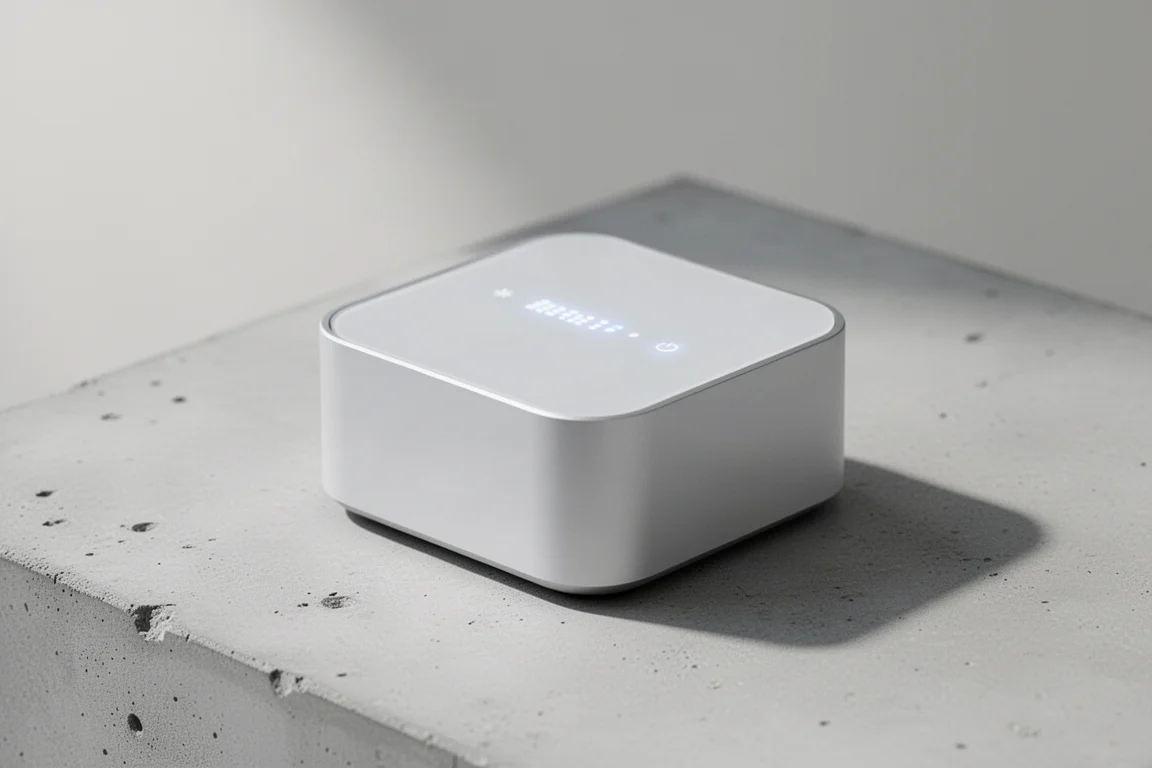
At $300 the WiiM Amp sits far below the other amplifiers here, and it earns its place through connectivity rather than outright sound quality. It runs a TI chip amplifier rated at 60 watts per channel into 8 ohms, matches the MODEL M1 on HDMI ARC and bass-managed subwoofer connectivity, and goes further on streaming protocol support, with a specification list broader than the POWERNODE’s as well.
The audible gap is wider than the POWERNODE comparison suggests. Against the WiiM Amp the MODEL M1 offers much greater clarity, stronger dynamics and more top-end finesse, and the top-end finesse is arguably the largest single difference of the three.
Lyngdorf TDAI-1120: Room Correction And Streaming Flexibility
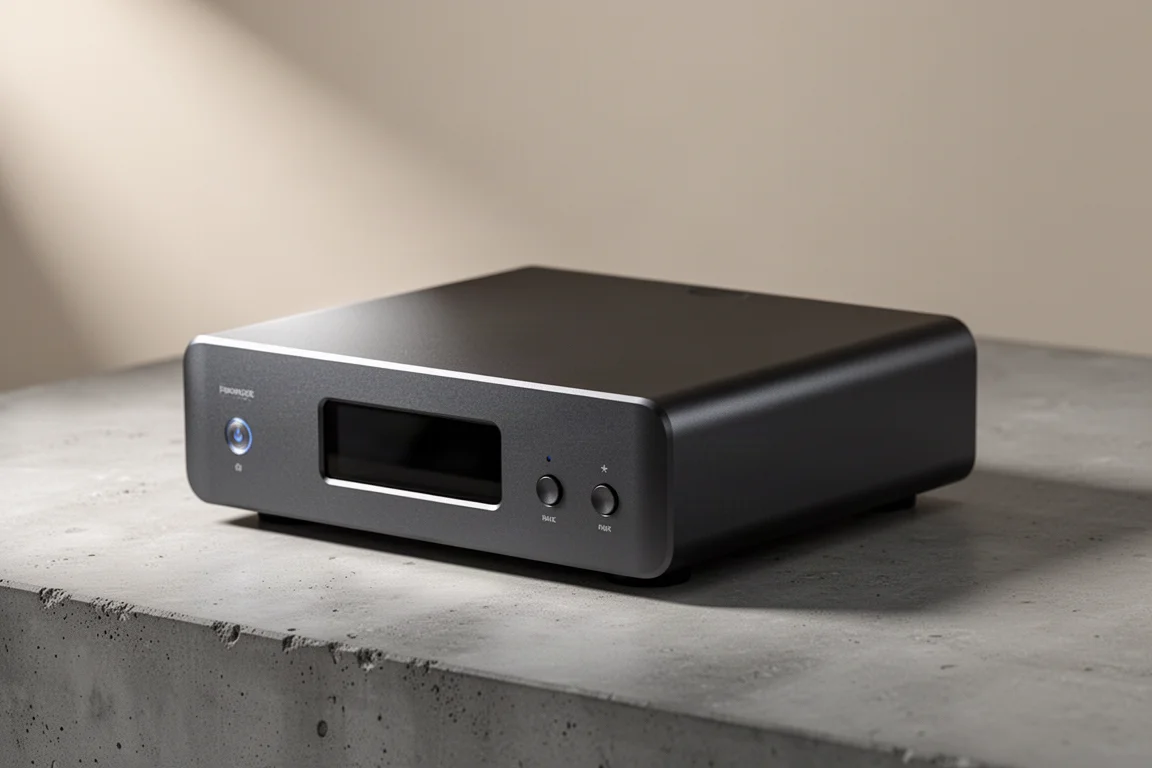
The TDAI-1120 sells for $2,500, more than twice the MODEL M1, and it shares the direct digital approach, with 60 watts per channel into 8 ohms. Setting aside its RoomPerfect room compensation software and its broader streaming options, the comparison is closer than the price gap implies.
Here the MODEL M1 comes out ahead on drive. It offers more dynamic attack from top to bottom, and by contrast the Lyngdorf can sound a little tepid and weak. The MODEL M1 also separates instrumental layers more cleanly, which makes for a more open sound and, combined with the extra dynamic attack, a more expressive and more musically alive presentation.
The case for the Lyngdorf rests elsewhere. Room compensation and automated subwoofer integration are its headline strengths, and it adds a moving-magnet phono stage plus support for Roon, Tidal Connect and Google Chromecast, none of which the MODEL M1 offers.
Audiolab 6000A Play: A Class A/B Alternative
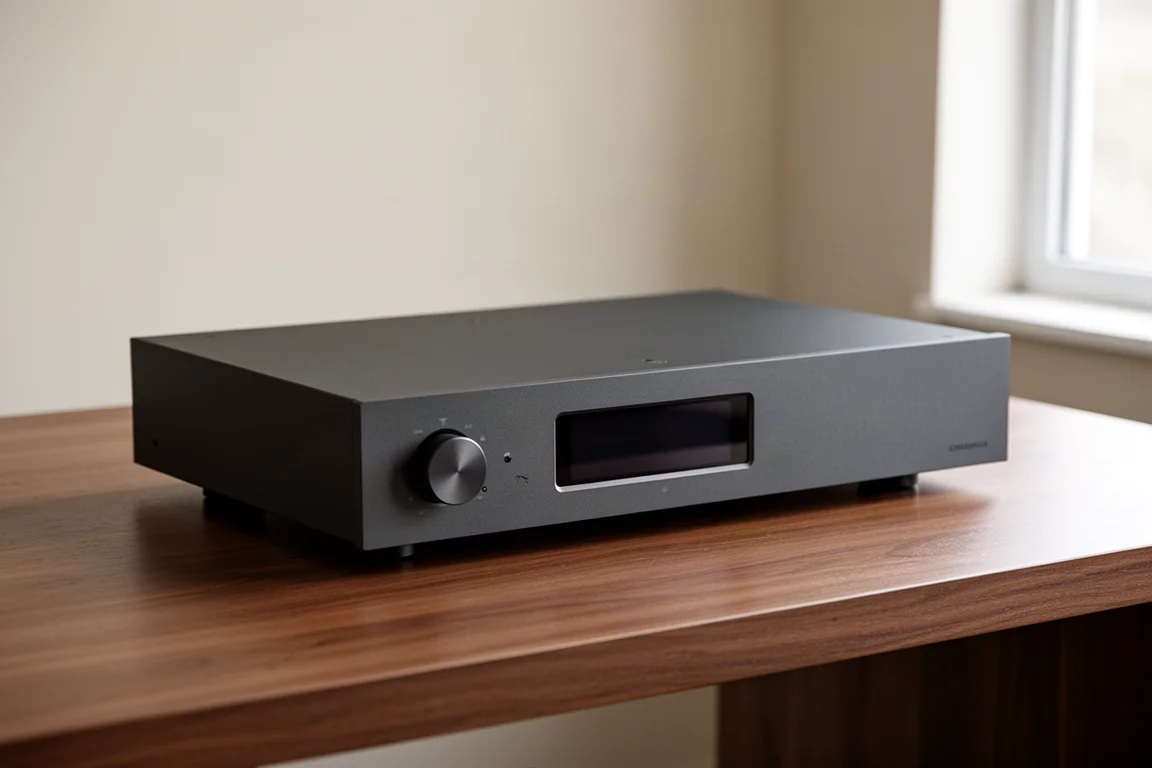
The 6000A Play costs $1,000 and delivers 50 watts per channel from a Class A/B design, making it the traditional counterpoint to the MODEL M1’s direct digital circuit. It leans on Play-Fi for streaming and also supports Spotify Connect. Buyers who want the same amplifier section and the same DAC in a non-streaming chassis can add a third-party streamer to the standard 6000A instead.
The two amplifiers illuminate music differently rather than better or worse. The MODEL M1 is more lit up in the top end but a little leaner sounding, while the 6000A Play softens transients slightly, so leading edges are less keen and less pointy. The MODEL M1 holds the advantage in bass control. Getting the strengths of both would mean spending close to three times as much on a separate amplifier and adding your own DAC and streamer.
Buying Advice: Which Streaming Amplifier Suits You
Start with the room and the speakers rather than the specification sheet. The MODEL M1 is the most compact option here and the only one in this group built in Japan, and it balances crispness and cleanliness with soundstage solidity and punch. Its main compromises are a narrow streaming suite by modern standards, with no Qobuz, and a Roon Ready certification that had not yet arrived.
If midrange drive matters most, the POWERNODE is the closer match. If budget and protocol coverage come first, the WiiM Amp covers a remarkable amount of ground for $300. If automated room correction and a phono stage are non-negotiable, the TDAI-1120 justifies its premium on features rather than on dynamic attack. And if a Class A/B character is what you are after, the 6000A Play offers it, with the option of adding a streamer separately.
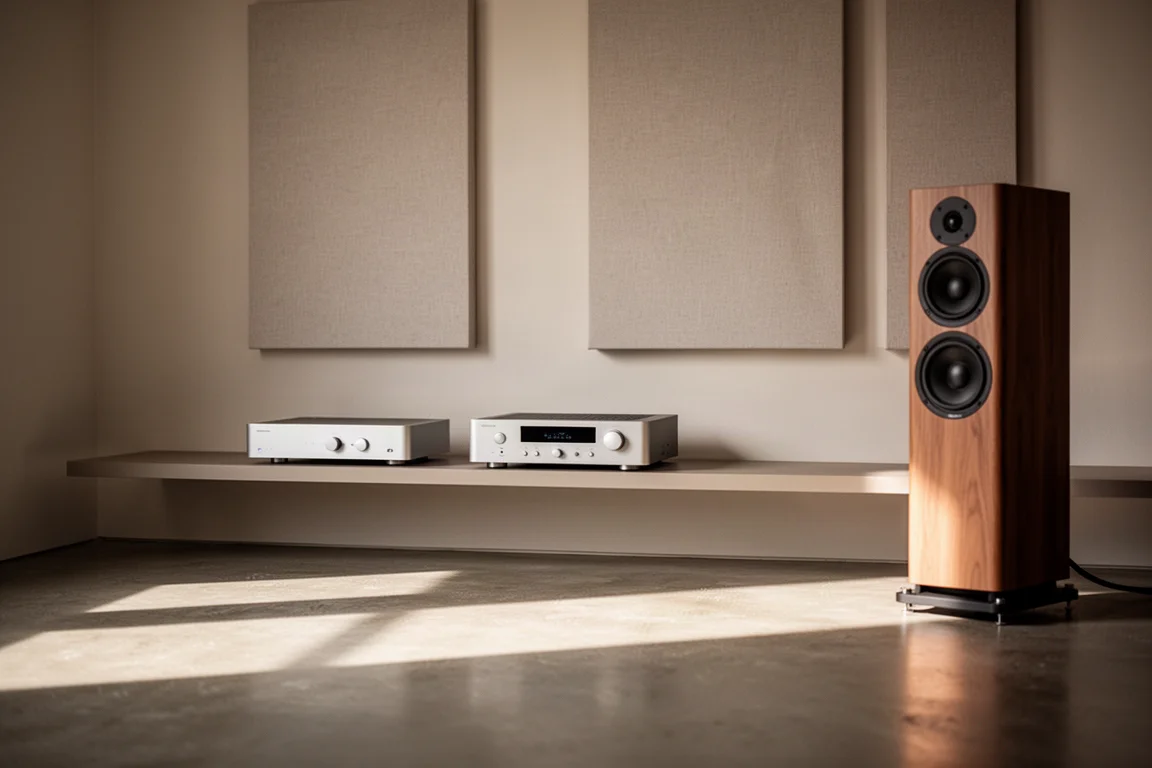
Marantz is direct about the MODEL M1’s intent. It is not aimed at listeners who want the sound or the physical size of a Class A amplifier, which usually needs a large power supply and full-size casework. It is aimed at someone who wants a small streaming amplifier that can sit on a lowboard for minimal visual intrusion or be tucked away entirely.
Conclusion
The MODEL M1 makes a convincing case for the compact streaming amplifier. Direct digital amplification, HDMI ARC, independent subwoofer filtering and a chassis small enough to disappear all point to a considered design, and on sound it trades midrange assertiveness for top-end openness and a tall, wide soundstage.
The remaining question is streaming support. Buyers who rely on Qobuz, or who need Roon Ready certification today, should weigh the alternatives carefully, while those who can work with HEOS, AirPlay 2 and a television connection will find the MODEL M1 does what it sets out to do.
Further reading
Related Reviews
Streaming Amplifiers
Best High-Performance Streaming Amplifiers: Seven Full-Size One-Box Picks
Seven full-size streaming integrated amplifiers for serious two-channel systems, each chosen for a different priority: room correction, power, minimalism, musicality, or reference build.
Streaming Amplifiers
Best Mid-Tier Streaming Amplifiers: NAD M10 V2 vs Naim Uniti Atom
Two compact all-in-one streaming amplifiers compared on interface, app experience, sound character, and connectivity.
Streaming Amplifiers
Bluesound Power Node N331 Review: A Streaming Amplifier Built for More Than Stereo
The Bluesound Power Node N331 keeps the compact chassis of its predecessor and adds a more powerful amplifier, a dedicated center channel output, and a THX AAA headphone stage.