Streaming Amplifiers
Marantz Model M1 Review: A Compact All-in-One Streaming Amplifier That Keeps the Warmth
A small streaming amplifier with 100 watts per channel, HDMI eARC, subwoofer output, and a redesigned HEOS app. Here is what it does well and what to check first.
Introduction
Most compact all-in-one streaming amplifiers ask for a trade. You get a small box that disappears into a shelf, and in return you accept a little less muscle, a little less warmth, and an app that feels like an afterthought. The Marantz Model M1 is built to argue against that compromise.
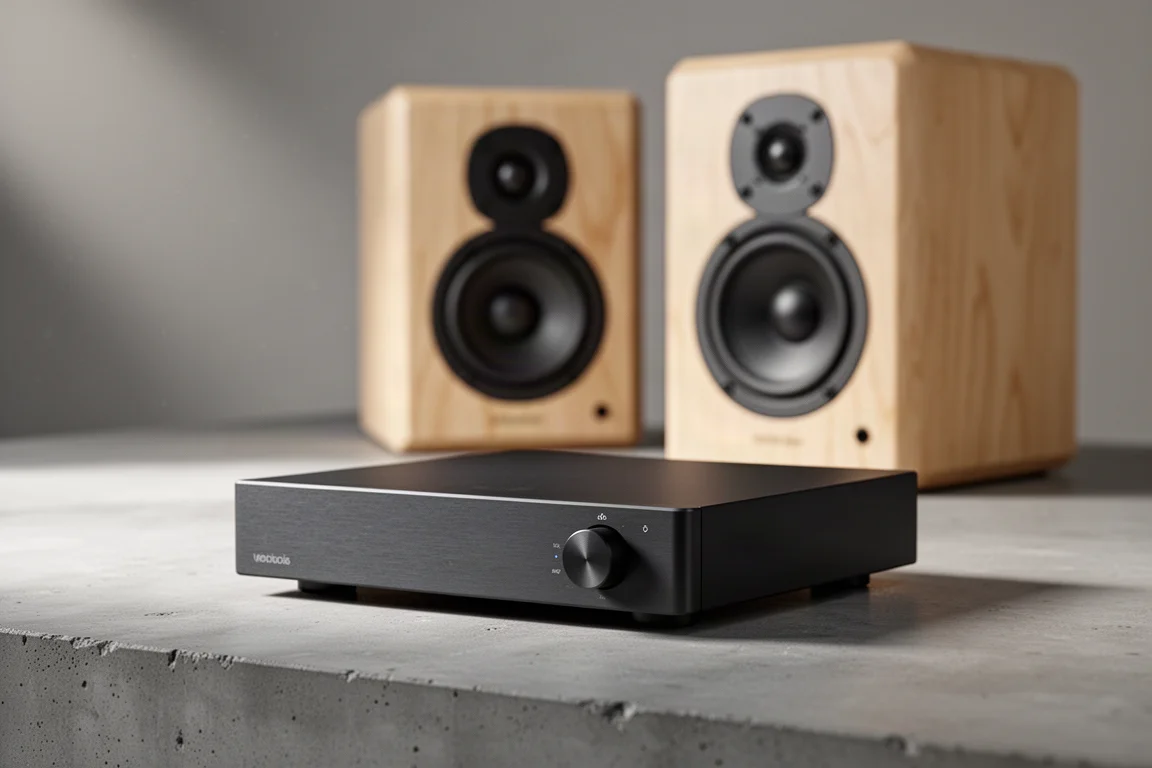
The Model M1 packs a streaming platform and an integrated amplifier into a chassis measuring roughly 8.5 inches wide, 8.5 inches deep, and 3.5 inches tall, weighing 4.84 pounds. Inside, it delivers 100 watts per channel, a dedicated subwoofer output, and HDMI eARC so a television can feed it and control volume with the TV remote. The updated HEOS app handles the streaming side.
Perhaps the most unusual detail is where it is made. The Model M1 is built in Shirakawa, Japan, at the same facility responsible for Marantz reference products such as the Model 30 and AV10, and it is tuned by the company’s Sound Masters. That is rare at this level of the market, and it shapes how the amplifier behaves.
Who this product is for
The Model M1 is aimed at listeners who want one box rather than a stack of components. Its footprint means it fits where conventional separates will not, which opens up options: a main listening room with a pair of quality speakers, a desk or office system, a bedroom setup, or a whole-home arrangement built around several units.
Because it runs cool and stays small, it also suits installations where a full-size amplifier would be awkward, and Marantz has included the control and trigger connections that custom installers look for. If you have been putting off a proper two-channel system because you do not want another rack of gear, this is the kind of product that changes the calculation.
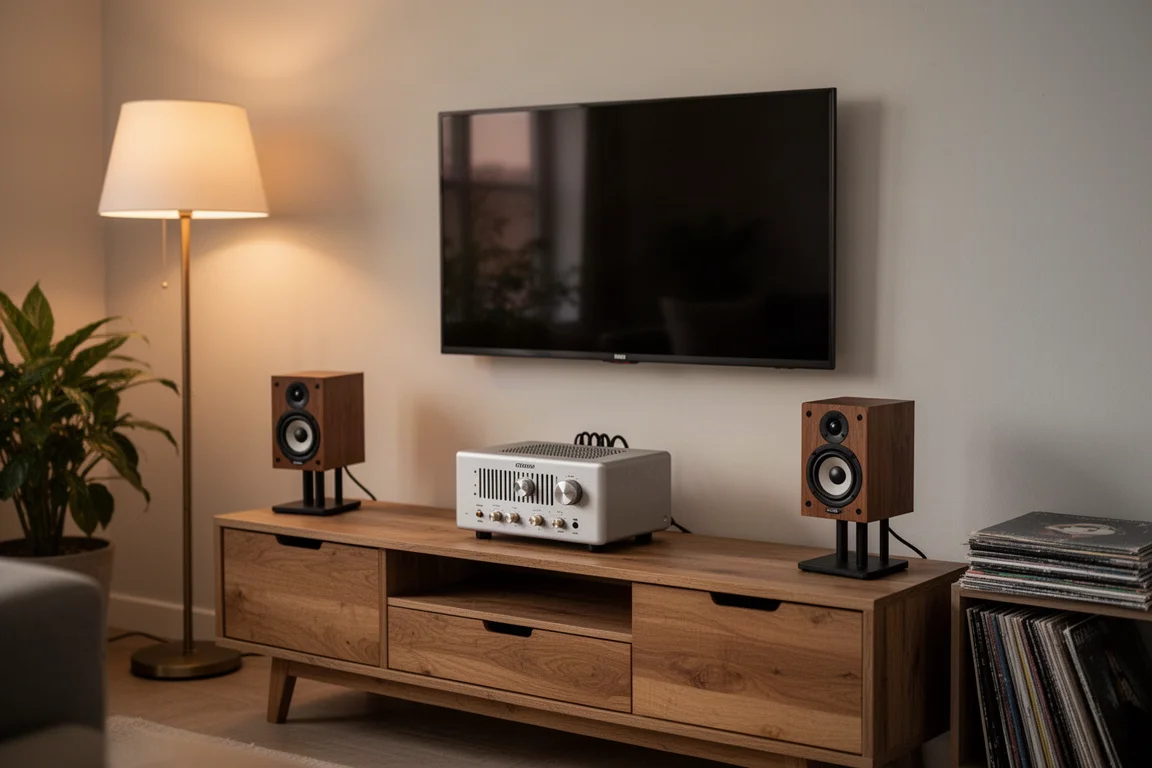
It is equally sensible for anyone whose listening has moved mostly to streaming services. The Model M1 assumes the network is your primary source, with local files and a couple of legacy inputs available when you need them.
Design and build quality
The casework uses a soft touch finish, and the distinctive perforated metal grille across the top is functional as well as visual: it keeps the amplifier cool so it can be placed in tighter furniture or cabinetry without drama. The front panel relies on capacitive touch controls and dimmable LEDs, which keeps the face clean and the operation simple.
Build quality reads as a clear step above most all-in-one streaming amplifiers. The speaker terminals on the rear are high quality binding posts that accept both spade and banana connectors, and the industrial design carries the same restraint Marantz applies to its larger components. Setup is straightforward: connect an Ethernet cable or join Wi-Fi, and the amplifier is ready. Both connection methods hold up well in practice.
Streaming and the HEOS app
The app experience can make or break a device like this, and the 2024 HEOS update is the most meaningful improvement here. The home screen has been rebuilt around music, surfacing recently played tracks, favourites, and preferred content from your streaming services. A now playing strip sits at the bottom of the screen so you always know what is playing, and you can build HEOS playlists that mix tracks from different services or from your own collection.
Universal search is the standout feature. Instead of opening one service, hunting for an album, and repeating the process elsewhere, you search once and play the result, whether it lives on Amazon Music, Spotify, or another supported platform. It is the kind of convenience that is hard to appreciate until you have used it.
HEOS supports Amazon Music, Pandora, SiriusXM, SoundCloud, Spotify, and Tidal Hi-Res, with Tidal Hi-Res capable of native playback up to 192 kHz and 24-bit. Music stored locally on media servers or a computer can also be browsed and distributed through the app. Qobuz and Apple Music were not available at the time of writing, so it is worth confirming current service support before you commit.

If you tried HEOS in the past and found it lacking, the update is worth revisiting. The changes turn a platform with real shortcomings into one of the more capable all-in-one control apps available.
Sound quality and amplifier performance
This is where the Model M1 makes its case. It uses a digital end-to-end class D amplifier topology rated at 100 watts per channel, paired with Marantz’s musical digital filtering, an oversampling technique first developed for the company’s reference-grade products. The goal is to preserve the analog-like character Marantz amplifiers are known for even when the signal is digital from start to finish.
In listening, that goal holds up. Vocals carry texture and body, instruments are presented with detail and a sense of musicality, and the bass has warmth without losing definition. Class D designs tend to have tight control over bass drivers, and the Model M1 demonstrates that strength clearly: low frequencies arrive with weight and slam but stay disciplined. The midrange is detailed while remaining smooth, and the treble follows the same pattern.
Imaging is a genuine highlight for a single-box product. The centre image locks in, and instrument placement is convincing. The soundstage is not as wide as what Marantz’s larger integrated amplifiers can produce, which is a reasonable expectation given how much is packed into this enclosure, but the performance is commendable for the category.
The amplifier drives the speakers it is likely to be paired with to satisfying levels and holds its composure when the music gets demanding. Dolby Digital Plus decoding is on board, along with five sound modes: Stereo, Direct, Virtual, Dialogue Enhancer, and Night Mode. Bass and treble controls let you tailor the presentation, and the sound modes make it easy to shift between focused listening, film dialogue, and late-night sessions without disturbing the rest of the house.
Connectivity and installation flexibility
The rear panel covers the essentials and then adds genuinely useful extras. There is HDMI eARC for a television, an optical TOSLINK input for older TVs without HDMI eARC, and an analog RCA input for legacy sources such as a CD player. Ethernet handles wired networks, Wi-Fi is built in, and Bluetooth 5 lets phones and tablets connect wirelessly for playback.
The subwoofer output is a single RCA connection, and the bass management is unusually thorough for this class. High-pass and low-pass filters are adjustable and independent, with the high-pass ranging from 40 to 250 Hz and the low-pass from 40 to 120 Hz. That lets you dial in the crossover between the subwoofer and the main speakers for a clean transition, and it takes the low-frequency workload off the speakers, which benefits dynamic range, overall system output, and distortion.
Volume can be capped anywhere between 80 and 100 percent, and a balance control offers plus or minus 15 dB of adjustment. For multi-room and custom installation, there is a 3.5 mm IR input with IR learning for remote sensors, compatibility with Crestron, Control4, and AMX control systems over TCP/IP, and a 12 V trigger output. These are features that rarely appear on all-in-one devices, and they make the Model M1 far easier to fold into an existing system.
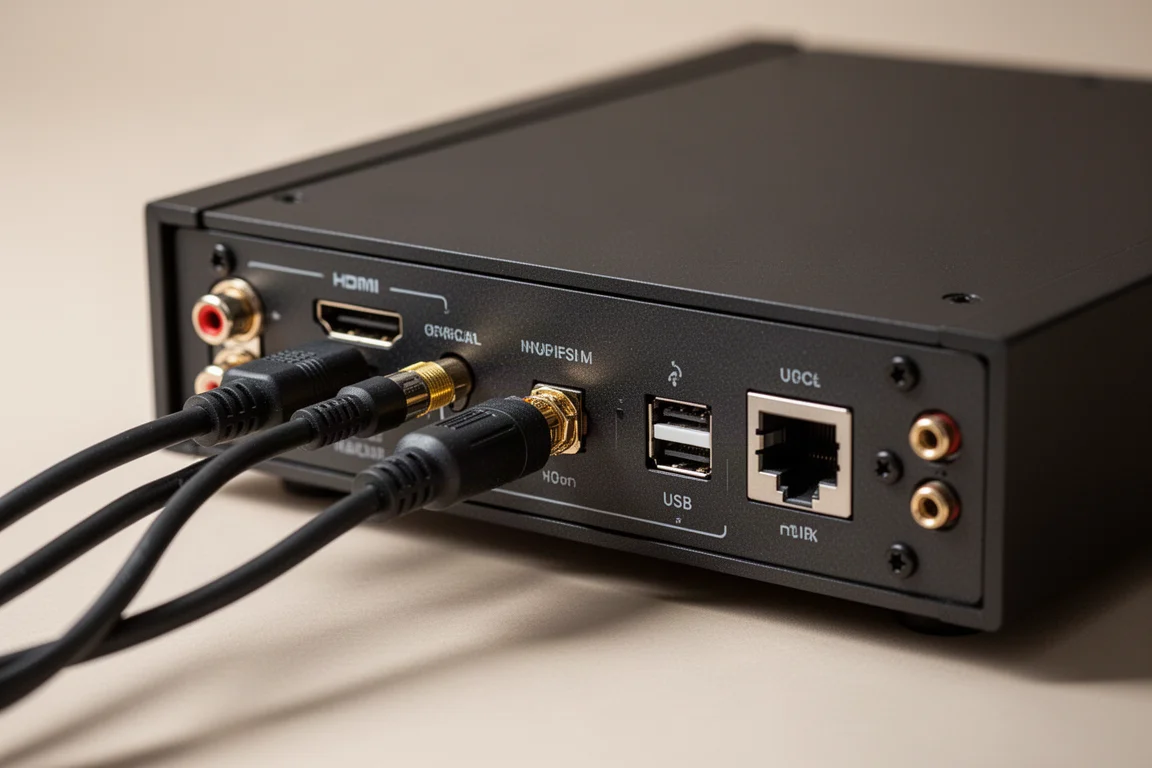
Taken together, the connection set means the amplifier can serve as the centre of a television and music system, as a discreet second-zone unit, or as one node in a larger multi-room build.
Things to consider before buying
The clearest limitation is streaming service coverage. Qobuz and Apple Music were not supported at the time of writing, so if either is central to how you listen, verify the current situation first. Service line-ups change, but it is the one area where the Model M1 asks you to check rather than assume.
The second consideration is scale. The soundstage is narrower than what Marantz’s larger integrated amplifiers deliver. If your priority is the widest possible presentation and you have the space and budget for full-size separates, that remains the better path. The Model M1 is a compromise in size, not in character, and it should be judged on that basis.
Finally, think about speaker matching. The amplifier has enough output for the speakers it is realistically paired with, but the crossover and subwoofer controls reward a little setup time. Budget an evening to dial in the high-pass and low-pass points rather than leaving them at default, because that is where a meaningful part of the performance improvement lives.
Buying advice
Buy the Marantz Model M1 if you want a single compact box that handles streaming, television audio, and two-channel listening without giving up the warm, engaging sound the brand is known for. It makes the most sense for a main listening room where space is tight, a secondary system in an office or bedroom, or a whole-home setup built from several units.
It also makes sense for anyone who values clean installation. The control system compatibility, IR input, trigger output, and cool-running chassis mean it can go places a conventional amplifier cannot, and the binding posts and adjustable crossovers give you room to refine the result over time.
Pair it with speakers you already trust and a subwoofer if you have one, then take advantage of the bass management. The result is a system that behaves like a far larger component while occupying a fraction of the space.
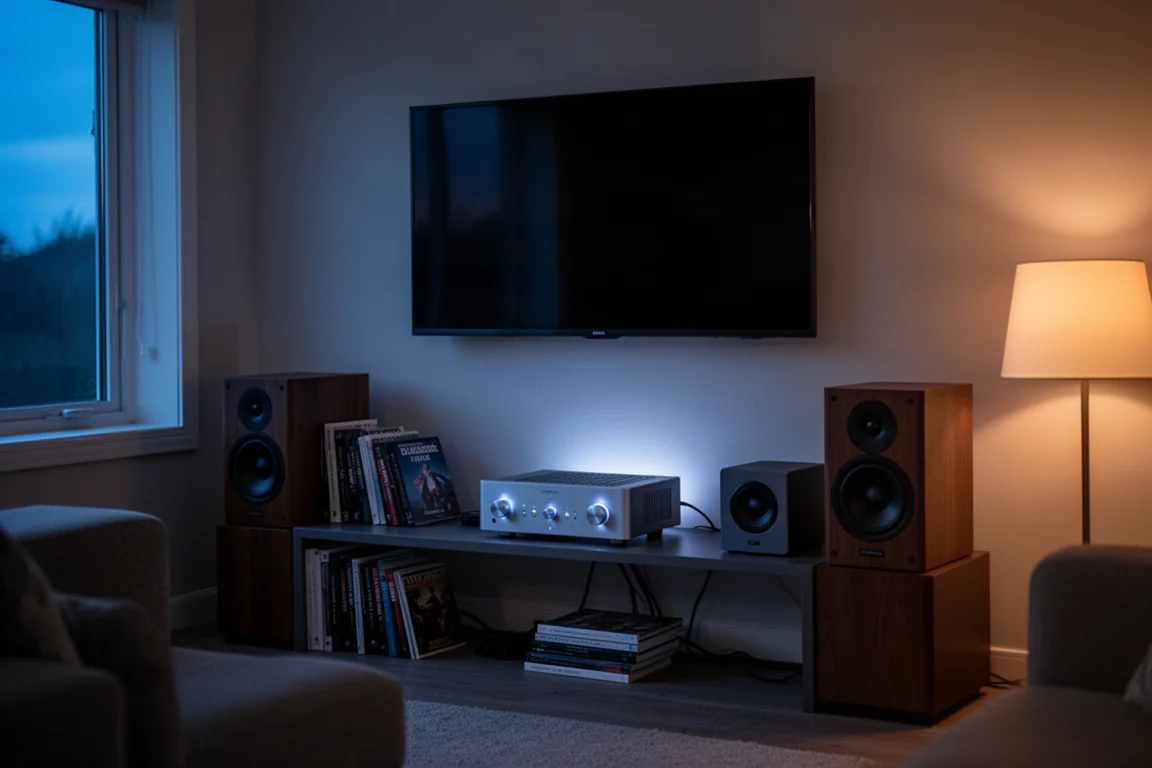
If, on the other hand, you need Apple Music or Qobuz integration today, or you are chasing the widest possible soundstage and have room for full-size separates, look carefully before committing. For everyone else, the Model M1 delivers on the promise of convenience without asking you to accept a lesser sound.
Conclusion
The Marantz Model M1 is a compact streaming amplifier that refuses the usual trade-off. It brings 100 watts per channel, HDMI eARC, a proper subwoofer output, and unusually deep setup options into a chassis small enough to disappear, and the refreshed HEOS app finally matches that hardware with a genuinely good user experience. Built alongside Marantz’s reference products in Japan and tuned by the company’s Sound Masters, it keeps the musical warmth the brand is known for while staying easy to live with. Check the streaming services you rely on, plan a little time for crossover setup, and this is an easy recommendation for a small system that sounds far bigger than it looks.
Product link
View more details for Marantz Model M1
This product is mentioned in the review. Check the specifications, options, and compatibility before buying.
View more details for Marantz Model M1Further reading
Related Reviews
Streaming Amplifiers
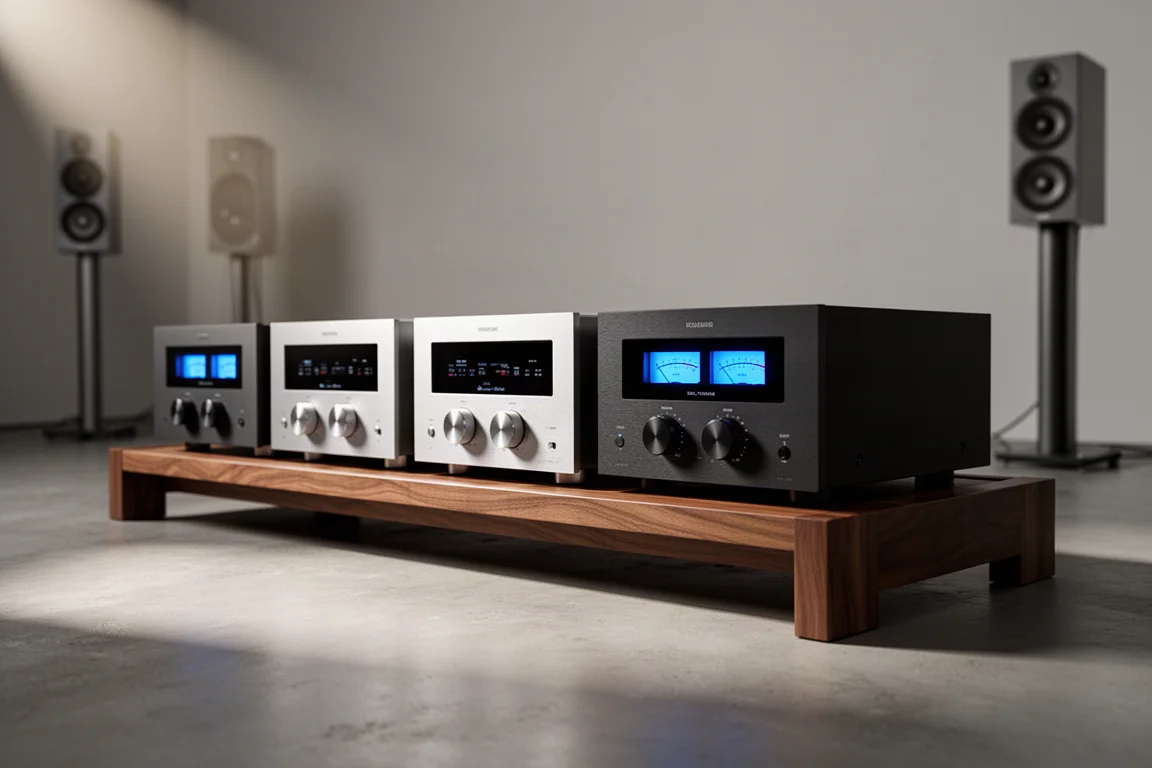
Best High-Performance Streaming Amplifiers: Seven Full-Size One-Box Picks
Seven full-size streaming integrated amplifiers for serious two-channel systems, each chosen for a different priority: room correction, power, minimalism, musicality, or reference build.
Streaming Amplifiers
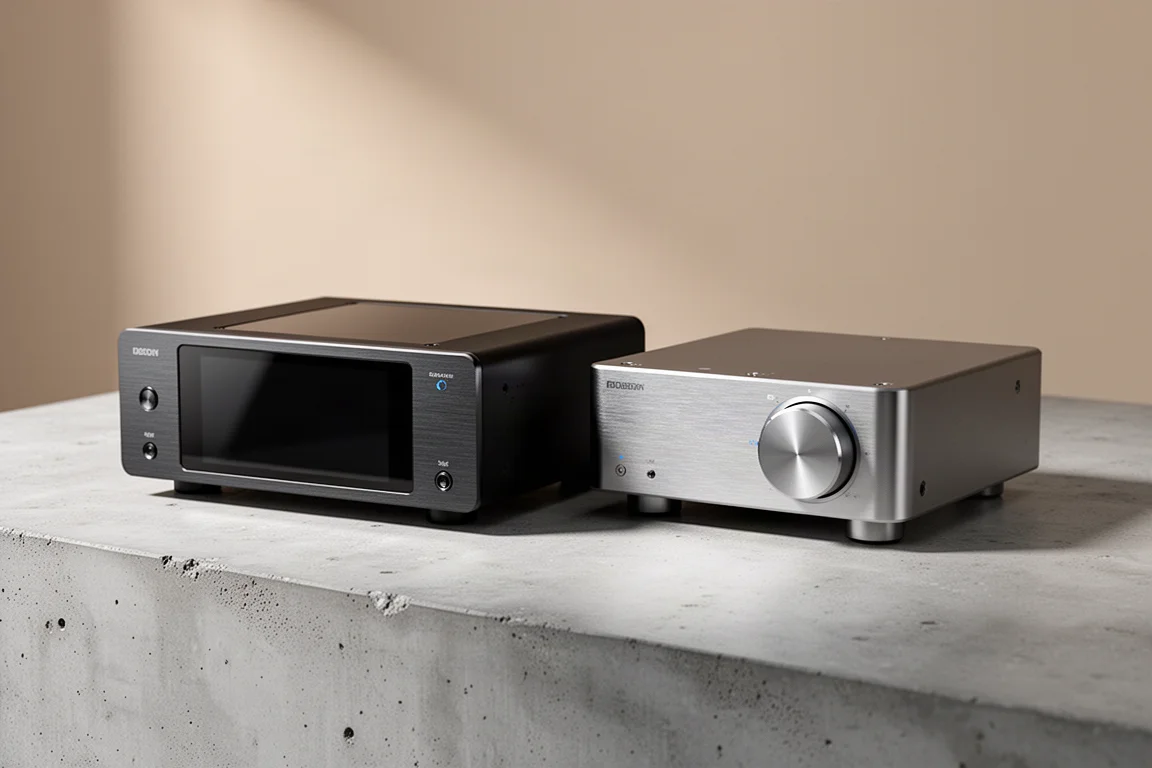
Best Mid-Tier Streaming Amplifiers: NAD M10 V2 vs Naim Uniti Atom
Two compact all-in-one streaming amplifiers compared on interface, app experience, sound character, and connectivity.
Streaming Amplifiers
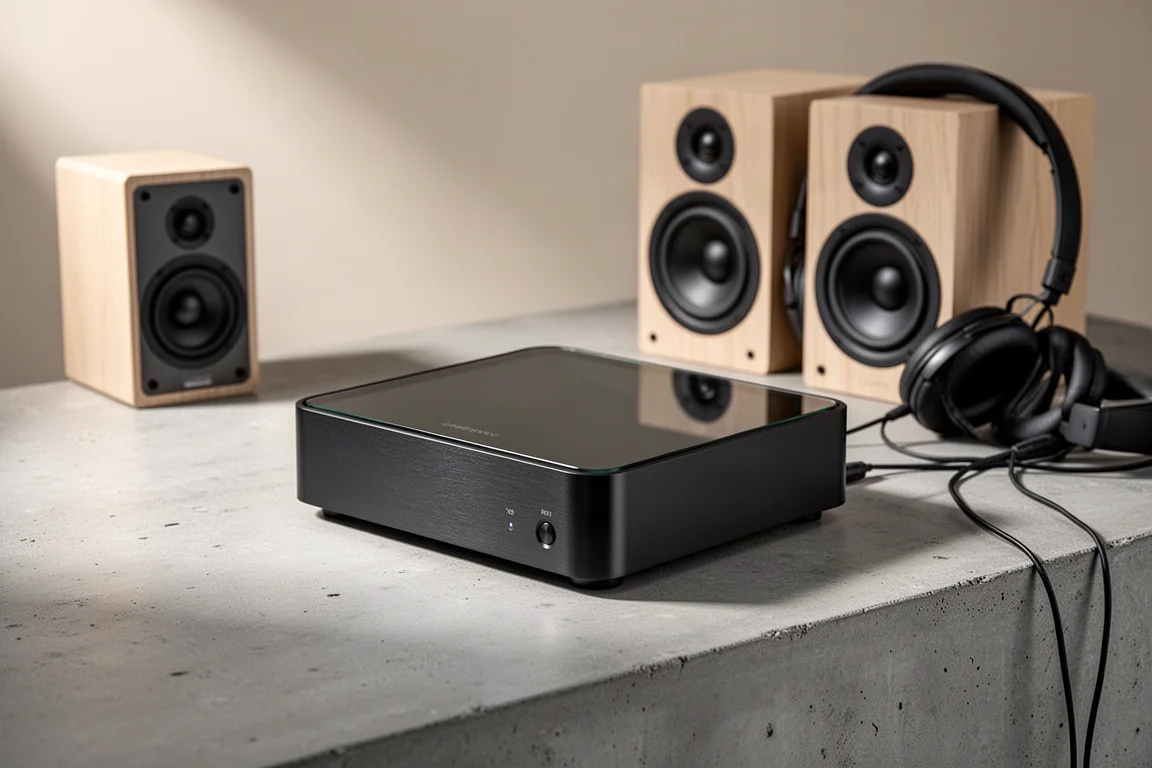
Bluesound Power Node N331 Review: A Streaming Amplifier Built for More Than Stereo
The Bluesound Power Node N331 keeps the compact chassis of its predecessor and adds a more powerful amplifier, a dedicated center channel output, and a THX AAA headphone stage.