Hi-Fi Amplifiers
Marantz Model 40n vs Exposure 2510 vs Willsenton R8: Three Integrated Amplifiers Compared
A streaming integrated amplifier, a purist design, and a valve amplifier at similar money. How the Marantz Model 40n, Exposure 2510, and Willsenton R8 differ, and which one suits your system.
Introduction
Marantz holds a particular place in hi-fi history. The company’s earliest units were built in a New York basement, production moved to the Woodside factory when the business was incorporated in 1953, and the Model 1 preamplifier of 1954 was the first to carry the RIAA equalisation curve. The Model 2 power amplifier followed in 1956 with EL34 valves in an ultra-linear push-pull layout, the Model 3 added an electronic crossover, the Model 5 was a more attractive take on the Model 2, and the Model 7 became the first true stereo preamplifier, with the three-stage phono equaliser known as the Marantz circuit. The brand is now owned by Sound United, part of Masimo Corporation, and the Model 40n is its latest integrated amplifier.
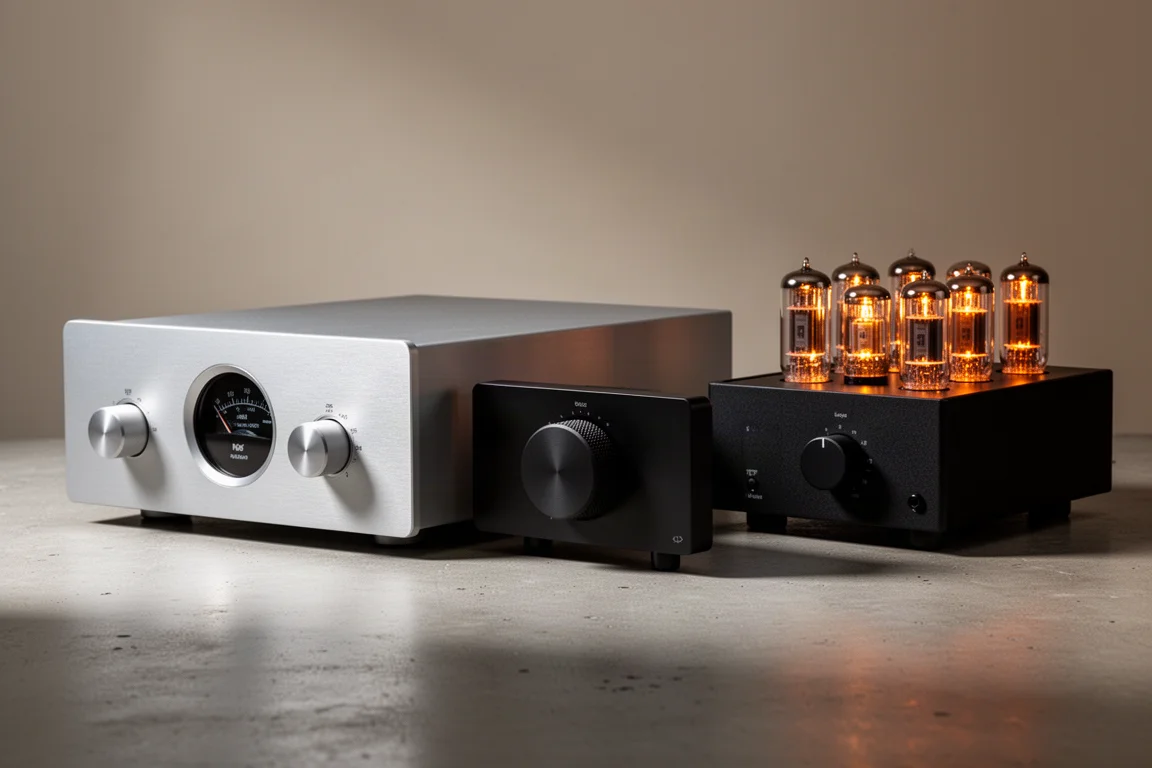
That heritage matters far less than what you can actually buy today. Three integrated amplifiers at similar money take three quite different routes to the same destination: the Marantz Model 40n at £2,199 in the UK, the Exposure 2510 at £1,700, and the Willsenton R8 at around £1,500 with its upgraded PSVane valves.
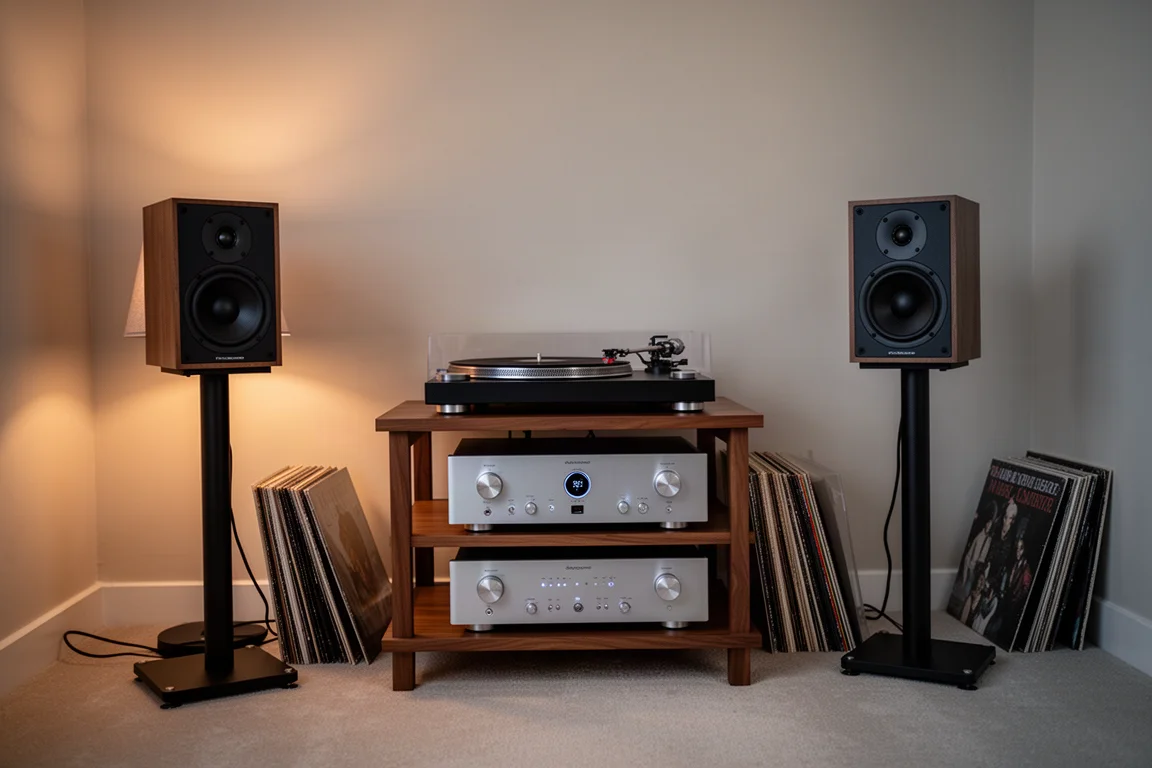
This guide looks at what each amplifier offers, how it behaves in a real system, and which one makes sense for a particular set of priorities.
What Matters in a Modern Integrated Amplifier
At this level, a specification sheet only tells part of the story. Four things separate these designs.
- Power and current delivery. The Marantz Model 40n is rated at 70 watts into 8 ohms and 100 watts into 4 ohms, with four output devices per channel. That is more than the two per side often found at this price, and it should help the amplifier deliver current into demanding speakers.
- Input flexibility. A moving magnet phono stage, line level inputs, digital connections and, in the Marantz’s case, HDMI ARC all shape how easily an amplifier slots into a modern system.
- Streaming and DAC provision. The Marantz includes a network streamer and an internal DAC. The Exposure and the Willsenton are purist designs that expect you to bring your own source.
- Ownership. Valves ask more of an owner than solid state circuitry does, and that is a genuine part of the buying decision rather than a footnote.
Marantz Model 40n: Streaming Convenience With a Warm Voice
Design and Controls
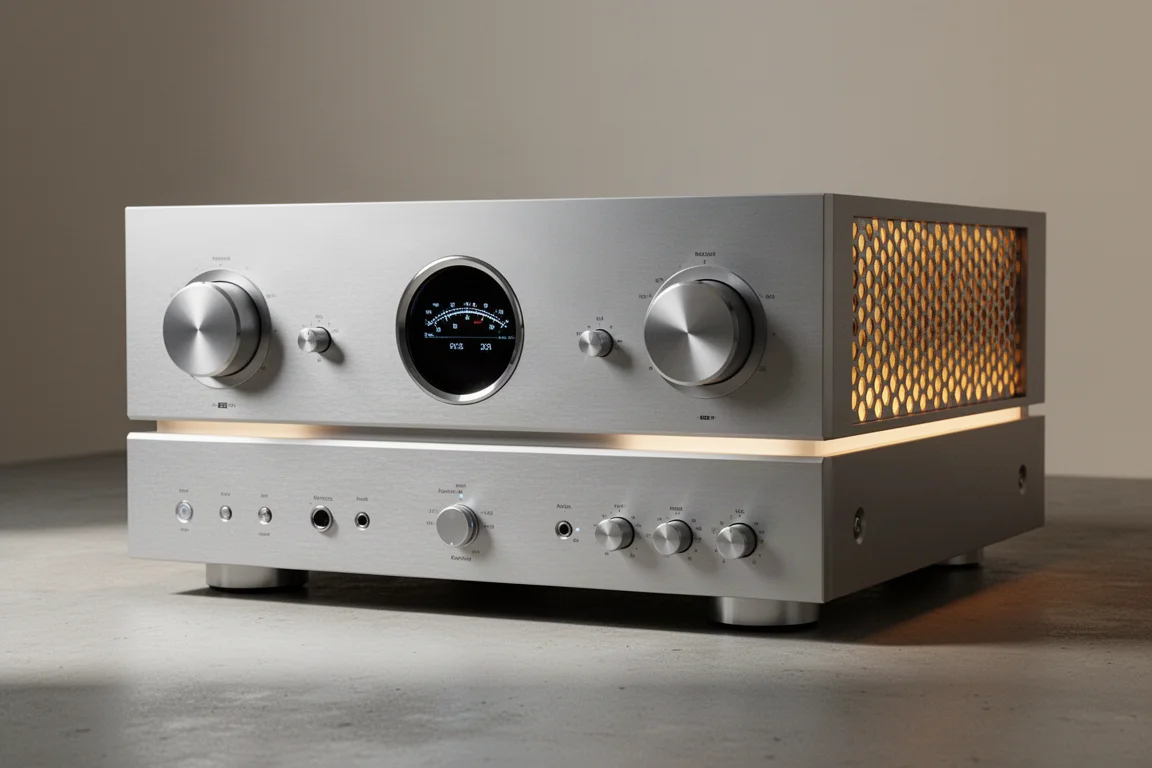
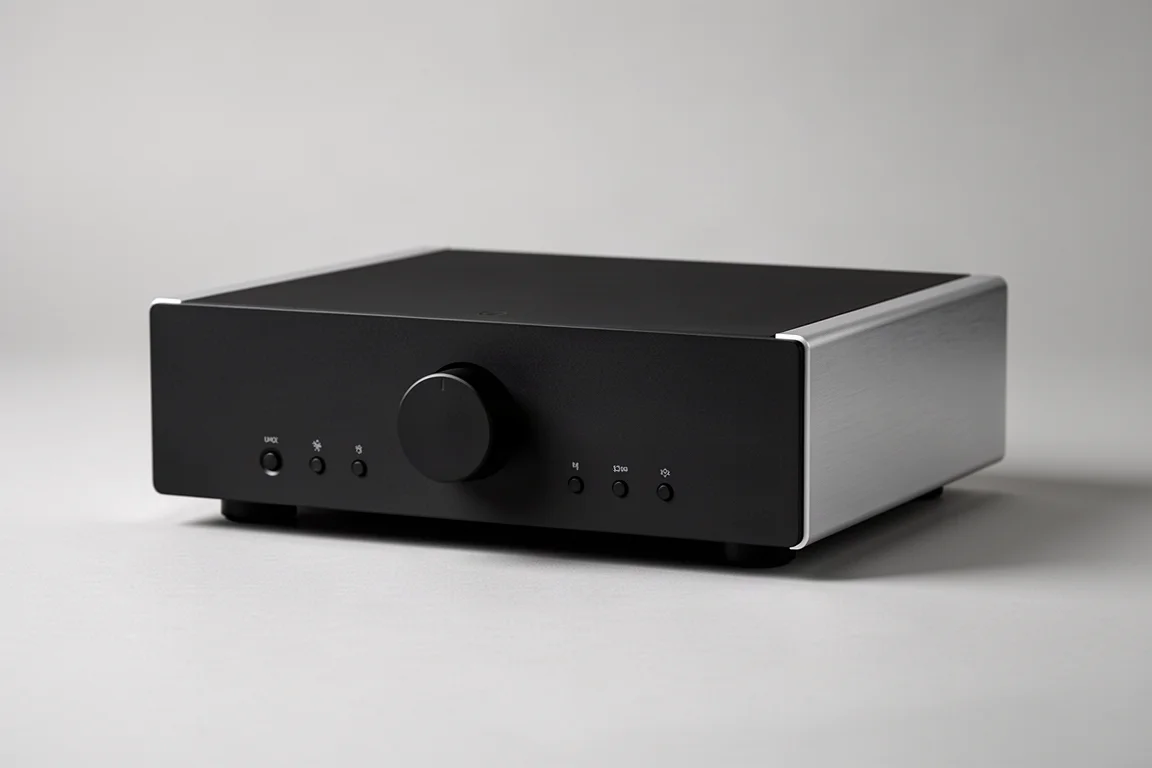
The Model 40n measures 443 by 130 by 432 millimetres and weighs 16.7 kilograms, so it is a substantial piece of equipment. Its front panel uses a two-tier arrangement: edge lighting picks out a honeycomb pattern on a contoured panel that sits behind the protruding fascia, and the layout is symmetrical, with a porthole display at the centre.
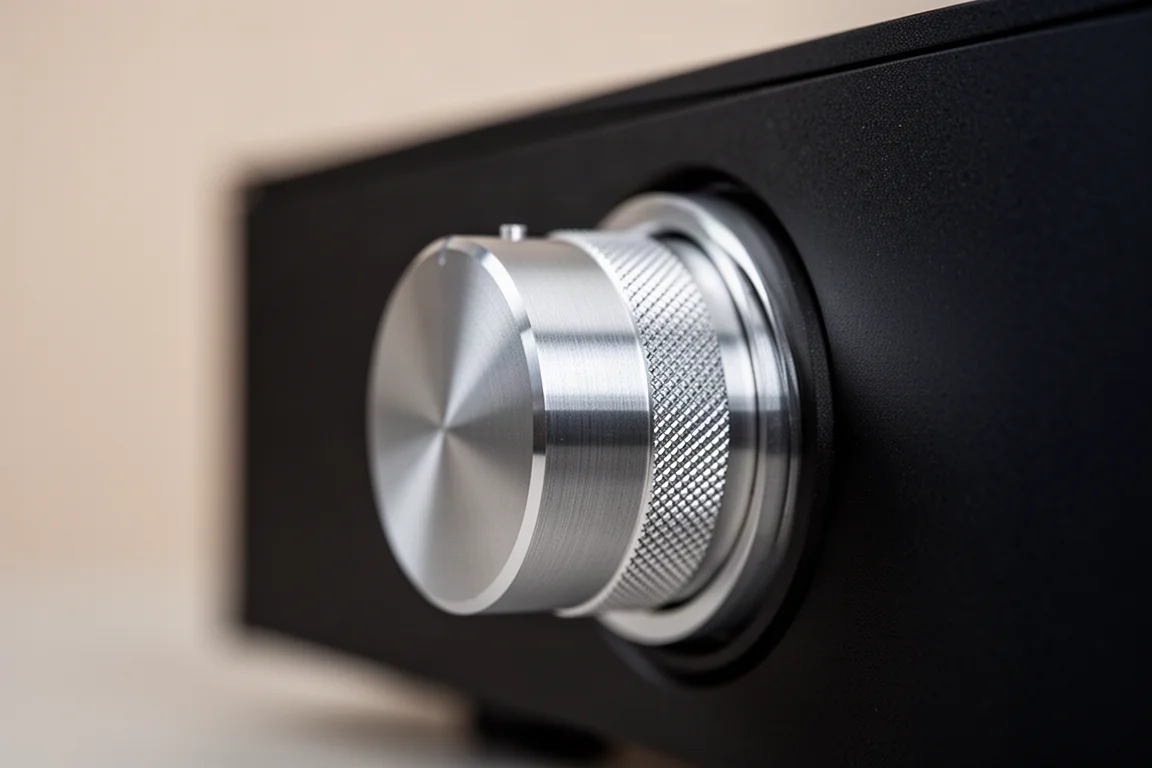
The larger dial on the left selects inputs. Beside it sits a source direct knob that defeats or engages the tone controls, with bass and treble adjustment and a balance control alongside. The larger dial on the right handles volume. All of the dials are metal and have a satisfying resistance to them, and the remote control carries a metal fascia that gives it some weight in the hand, provides direct access to inputs, and can control other Marantz components.
Connections and Streaming
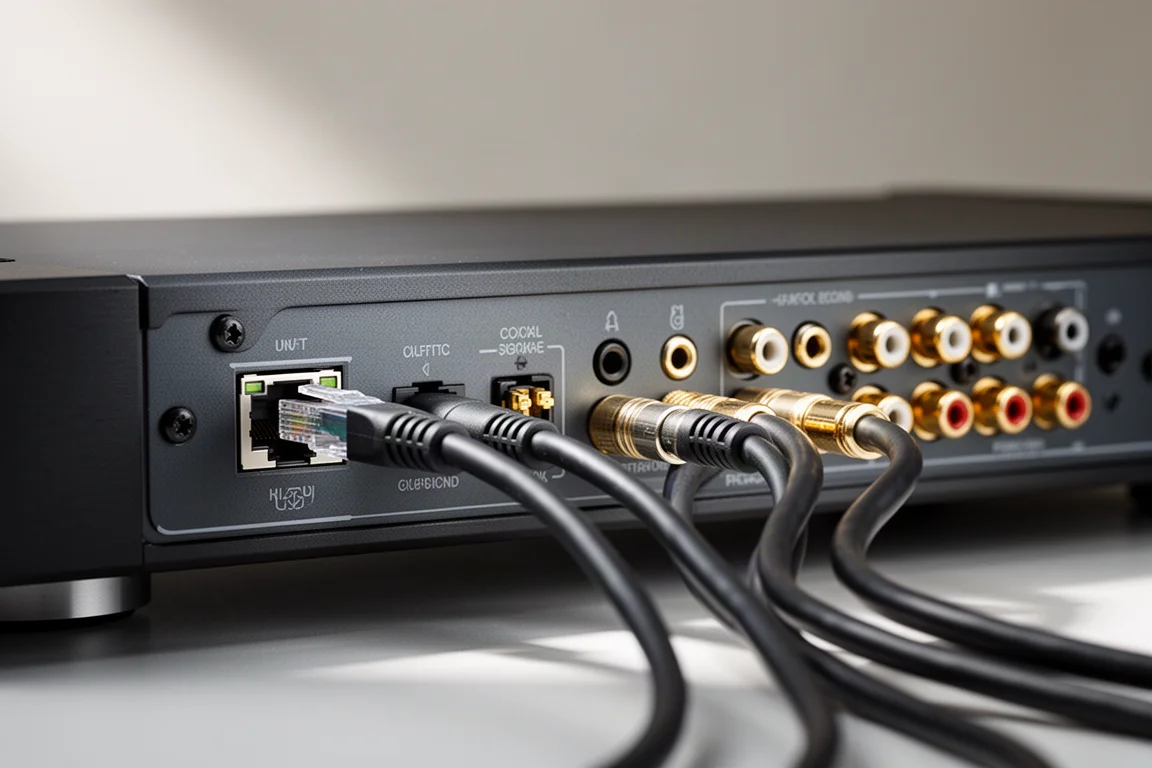
Next to the Bluetooth antenna is a USB port for external hard drives and thumb drives. Streaming runs through the HEOS platform, either wirelessly or over the ethernet port, and HEOS works as a multi-room system across compatible Denon and Marantz products. Streaming services and internet radio are supported, but there is no Roon capability and no Tidal Connect, so listeners are gently encouraged to stay inside the HEOS ecosystem.
On the rear panel, HDMI ARC is a welcome inclusion, letting a television switch the amplifier on and off automatically and adjust volume from the TV remote. Coaxial and optical digital inputs handle additional digital sources, but there is no USB input. That matters if you want to use the interface of an external streamer, connect a computer, or add Roon capability somewhere in the chain. Analogue provision is generous by contrast: a phono input that accepts moving magnet cartridges, three line level RCA inputs, a recording output, a subwoofer output, and a power amp input for external preamplifiers or integration with a home cinema receiver. The speaker binding posts are of decent quality for such a well-featured amplifier at this price.
Inside the Chassis
A switch mode power supply handles standby, while normal operation draws on a linear supply fed by a 3.4 kilogram toroidal transformer, a substantial figure for this class of amplifier. It is encased in a metal ring to reduce noise, and a large heatsink runs almost the full length of the chassis, positioned to act as shielding between the transformer and the electronics on the other side. The size of that heatsink suggests a fair amount of class A bias in the output transistors.
There are four output devices per side, eight in total, where two per side is common at this price, which should help the amplifier deliver a little more current. Unusually, the power supply board is mounted vertically just off the heatsink and kept on the same side as the main board beneath the metal casework, so the run between them stays short, and copper bus bars are used instead of PCB traces and wires to lower power supply impedance. Two custom capacitors are rated at 18,000 microfarads per channel. HDAM modules, Marantz’s discrete preamplifier circuitry, replace op amps in pursuit of a better signal to noise ratio and faster signal transfer, and the sensitive electronics sit under top, middle and bottom shielding plates, with a shielding bar placed between the phono and DAC sections. The DAC is built around a Sabre 9016K2M chip, which handles files up to 192 kHz 24 bit PCM and DSD 5.6 MHz.
Sound Character
The overall character is a big, warm sound with strong dynamic punch, the kind of presentation that appeals to the emotional side of listening rather than the analytical one. It throws out a wide sound stage with punchy bass, a full midrange, and slightly polite highs that make long listening sessions easy rather than an endurance test. It is not the last word in neutrality or resolution, and there are alternatives at this price with better bass definition. Midrange transients are softened enough to feel organic without turning mushy, and the detail in the highs is present but dialled down for a more relaxed presentation.
Exposure 2510: Purist Integrated Design
The Exposure 2510 sells for £1,700 and is about as purist as an integrated amplifier gets at that price: effectively a power amplifier with a volume control and a built-in phono stage.
Design and Features
Simplicity is the point here. With no network streaming, no internal DAC, and a signal path kept as short as possible, the Exposure expects a separate source and, in most systems, a separate digital front end. What it offers in return is a clean, unfussy circuit and a phono stage for vinyl listeners, along with the kind of left brain and right brain balance that suits owners who already have their sources sorted out.
Sound Character
The Exposure maintains warmth while adding tighter bass, a crisper midrange, and more revealing micro detail and texture across the frequency range, including at the top end. Against the Marantz, it is less bold, with a narrower sound stage and less dynamic punch, so the choice between the two comes down to whether you value resolution or presence more.
Willsenton R8: Valve Warmth and Holographic Staging
The Willsenton R8 costs around £1,500 with the upgraded PSVane valves, and it offers even more muscularity than the Marantz Model 40n.
Design and Features
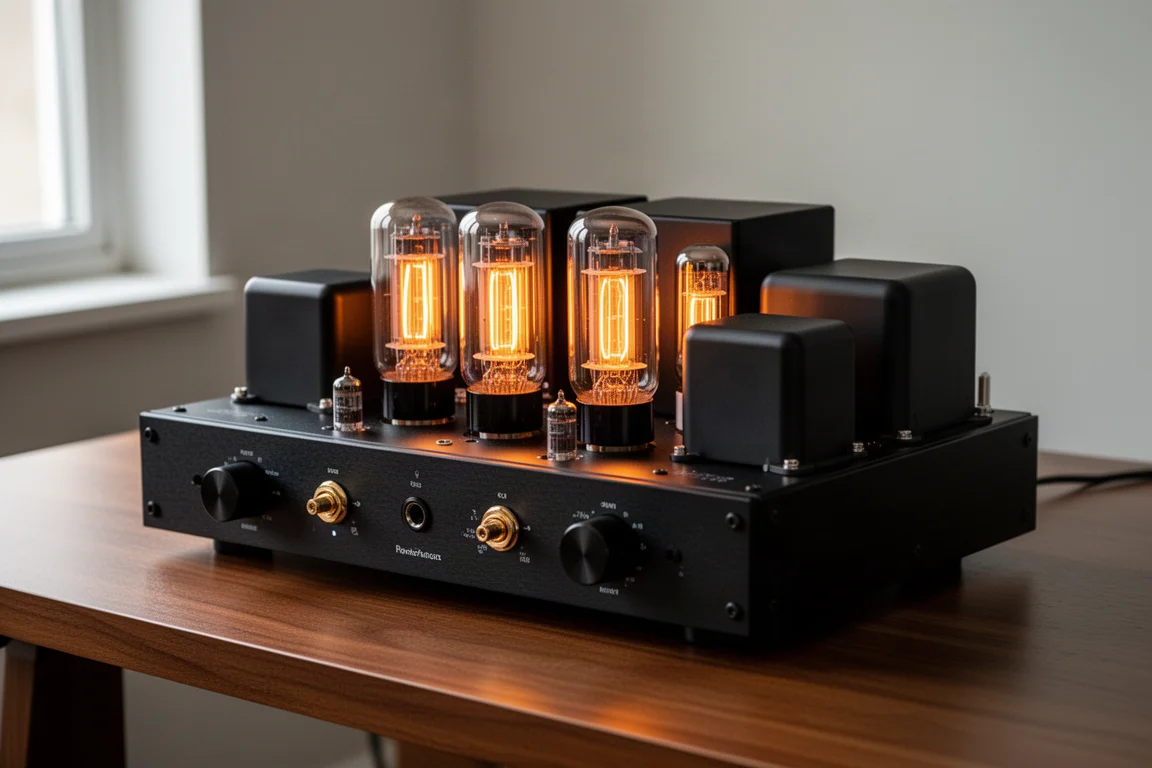
This is a valve design, which shapes both the sound and the ownership experience. Not everybody will want to live with valves, and the R8 has no internal DAC or streaming platform, so a separate source is required. Buyers who go down this route tend to be chasing a specific kind of presentation rather than a feature list.
Sound Character
The R8 delivers more detail across the board and the three-dimensional, holographic sound stage that the best valve amplifiers are known for. If dynamic swing and a sense of scale matter most to you, this is the most muscular amplifier of the three, and it rewards a system that is already resolving enough to show what it can do.
Streaming, DACs, and Everyday Usability
Setting up the Marantz streamer is straightforward. You download the HEOS app, follow a series of instructions, select the device, pair a tablet to the Model 40n and to the remote control, and finally connect it to the network, which can be done wirelessly. The app’s menu system has three tabs. The first shows all your HEOS devices, and you can have multiple units playing different music in different rooms or the same music everywhere. The second is where your music comes together, and while some listeners will want deeper menu customisation and more metadata, it is sufficient for everyday use. Album art could load a little quicker. The third tab shows what is playing now, with volume, pause, play, track skipping, and playlist creation.
Plugging in a two terabyte external USB drive and accessing a library of over 12,000 tracks worked without a problem, which is not always the case with other players. As for the internal ESS DAC, an outboard DAC and separate streamer offered a little more detail and refinement, but the internal converter let the carefree personality of the amplifier come through better. Synergy can be an elusive thing, and the simpler route often wins on enjoyment even when it loses on paper.
The HDMI ARC connection is a practical bonus in a shared living space, since the amplifier follows the television automatically and the TV remote handles volume. That single-box convenience is a large part of the Model 40n’s appeal: one chassis covers streaming, digital conversion, vinyl, and television sound.
Speaker Pairing Notes
Pairing behaviour matters as much as the specification sheet. With a pair of ProAc Response 1SC standmounts, the Model 40n threw a sound stage that spread well beyond the speakers, with a touch of depth, but it could not pull enough information from recordings to let those speakers show their best. A warm, full-bodied standmount produced a wide stage and a rich tone, yet the amplifier held that speaker back in resolving ability. The Amphion Argon 1 looks like a sensible match on paper, with a drier midrange and an extended top end to balance the amplifier’s warmth, and balanced it certainly was, though the amplifier’s sense of drive was subdued. A brief listen with the considerably more affordable ELAC Uni-Fi Reference UBR62 suggested that pairing could work well and deserves a longer assessment.
The wider lesson is that a warm, forgiving amplifier rewards speakers that already resolve well and stay lively, rather than speakers that lean on the amplifier to add detail. If your speakers are smooth and relaxed already, this amplifier can tip the balance too far in that direction.
Buying Advice: Purist or Convenience
If you want one box that handles everything, the Marantz Model 40n is the obvious starting point. Streaming, an internal DAC, a moving magnet phono stage, and HDMI ARC are all built in, the build quality is serious for the money, and the sound is warm, wide, and easy to live with. The trade-offs are a lack of USB input, no Roon support, and no Tidal Connect, so an owner who wants Roon will need to add a separate streamer and accept that the amplifier’s own streaming platform goes unused.
If you already own a DAC and streamer you are happy with, and you want the most resolution and micro detail for the money, the Exposure 2510 is the purist answer. It gives up boldness and dynamic punch in exchange for tighter bass, a crisper midrange, and more texture throughout the range, which suits a system built around a good separate front end.
If valve character is what you are after, the Willsenton R8 delivers the detail and the three-dimensional staging that valves are known for, along with more muscularity than either solid state option, provided you are comfortable with valve ownership and bringing your own source.

One practical point ties the decision together: the Marantz competes both as a single-box system and as a conventional amplifier, and it needs to justify itself against purer designs at the same money. For buyers who value convenience, a warm tonal balance, and a comprehensive feature set, it does.
Conclusion
There is no single winner here, only three coherent answers to the same question. The Marantz Model 40n packages streaming, a DAC, a phono stage, and television integration into an elegant, substantial chassis with a warm and punchy sound, and it is easy to recommend to anyone who wants a one-box system that stays enjoyable over long listening sessions. The Exposure 2510 trades features for resolution and rewards owners with good separate sources. The Willsenton R8 offers the most detail and the most dramatic staging of the three, at the cost of living with valves. Match the amplifier to the rest of your system and the priorities you actually care about, and any of the three will serve well.
Further reading
Related Reviews
Hi-Fi Amplifiers
Accuphase E-280 Review: Entry-Level Accuphase With Flagship Attention to Detail
A close look at the Accuphase E-280 integrated amplifier, covering its champagne build, AAVA volume control, sound quality, and the speakers and sources that suit it best.
Hi-Fi Amplifiers
Advance Paris A10 Classic vs Yamaha A-S301: Two Integrated Amplifiers Compared
A practical comparison of a $350 integrated amplifier and a $2,500 reference model, covering the differences that matter and the ones that do not.
Hi-Fi Amplifiers
Affordable Chinese Amplifiers Worth Buying: Five Budget Hi-Fi Amps Compared
A practical look at five affordable amplifiers, what each one does well, and the trade-offs to weigh before you buy.