Integrated Amplifiers
Marantz Model 40N Review: A Hand-Built Integrated Amplifier With Streaming Built In
The Marantz Model 40N folds the character of the Model 30 series into one chassis, adding HDMI ARC, a subwoofer output, and a moving magnet phono stage.
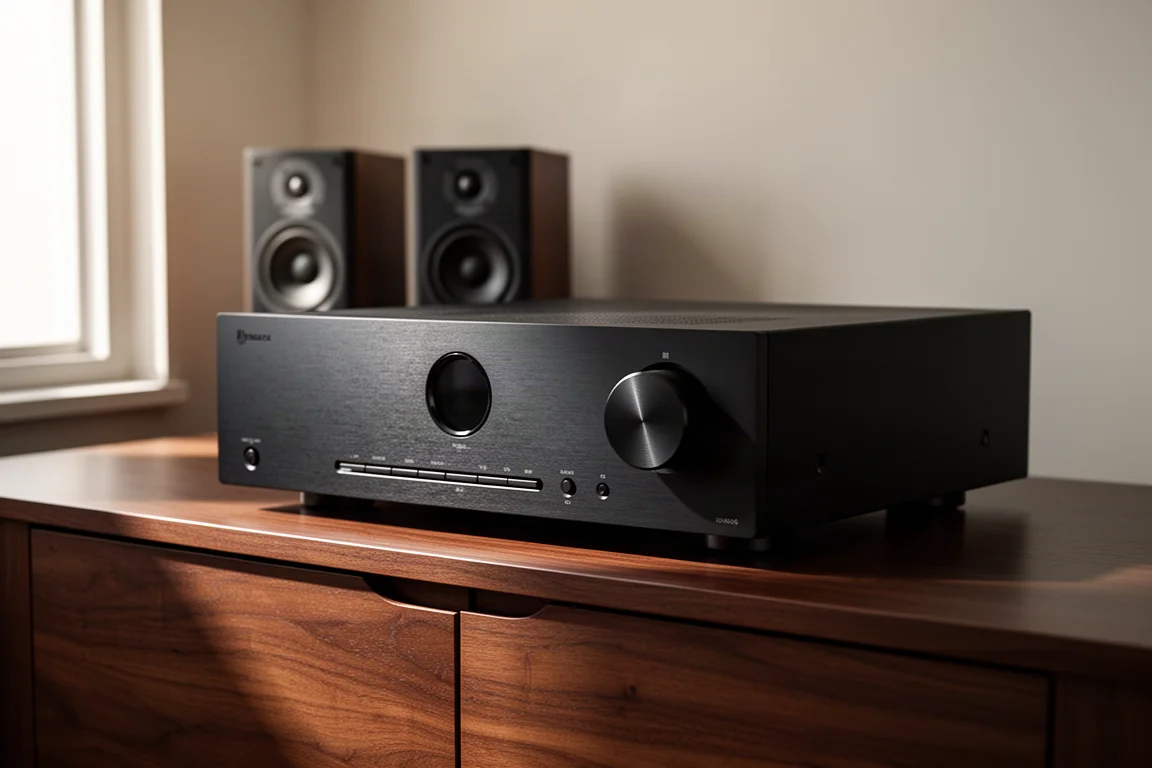
Introduction
The Marantz Model 40N is the newest addition to what has quietly become a modern classic series of hi-fi components. It joins the Model 30 integrated amplifier and the SACD 30n network player, both introduced in the fall of 2020, and it distills the best of those two pieces into a single unit. For listeners who have admired the series from a distance, it also opens the door at a much lower price point than the two-piece stack.
The heritage behind that series is unusual. Vintage Marantz components from the late 1950s and 1960s are among the most desired audio gear in the world, regularly changing hands for ten to fifty times their original selling price despite being more than sixty years old, and the brand’s 1970s output is in high demand as well. The reason is a signature sound. Marantz keeps a group of engineers in Japan whose only job is to protect it. They are trained to recognize that character, and they spend their time listening to Marantz models and fine-tuning circuitry to meet that standard.
The Model 40N is an integrated amplifier with music streaming built in, along with a few features the earlier 30 series components do not offer.
Who This Product Is For
This is for the listener who wants one box to do the work of two. It replaces a separate amplifier and streamer with a single chassis, which simplifies a system without giving up the look or the feel of the series.
It also suits particular habits. Vinyl listeners get a built-in moving magnet phono stage, so a turntable connects directly. Anyone who has kept a cassette deck or a reel-to-reel machine will appreciate the recorder output, which sends a signal out to a tape device. And because the amplifier includes HDMI ARC, a television can feed audio back through the system, with the TV remote handling volume, mute, and power and switching the amplifier to the correct input when the television turns on.
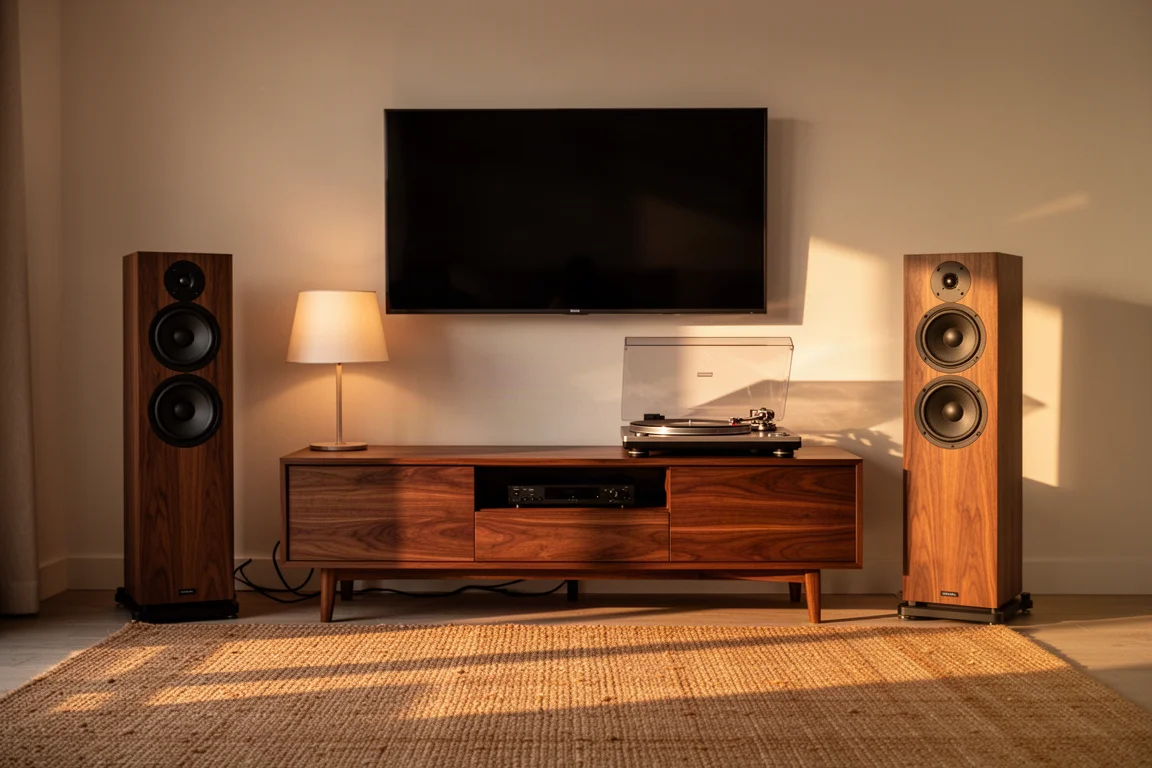
It is a natural fit for a first serious two-channel system, and equally for an existing setup that has grown more complicated than it needs to be.
Design and Build Quality
The design follows the 30 series closely, and that is a compliment. Almost all of the original Marantz gear used a strongly symmetrical layout, with the same number of knobs, dials, and buttons on each side, and the Model 40N carries that idea through, even placing the power button and the headphone jack on opposite sides.
The controls sit on a smaller faceplate that appears to float on top of a large chassis with a carbon-fiber look. Backlighting behind the faceplate adds a subtle glow, and the classic Marantz porthole sits at the center, a motif that goes back to the brand’s tube power amplifiers.
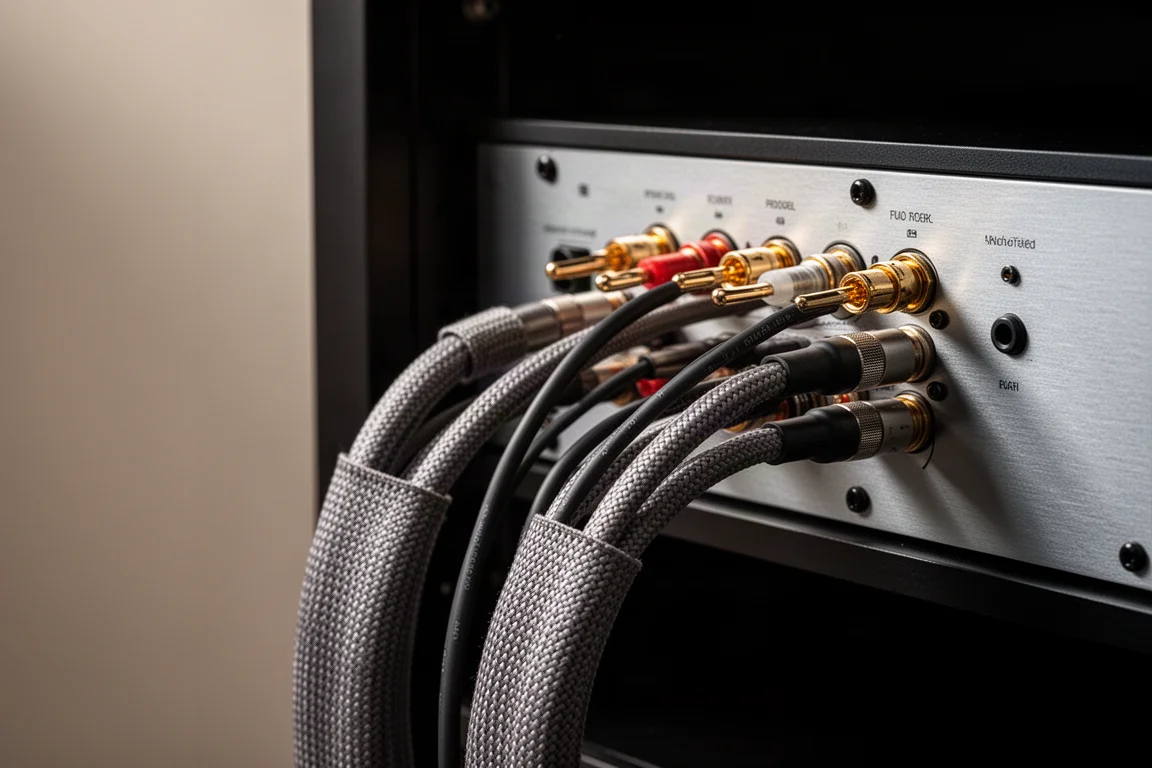
In the hand, the unit feels expensive. Every knob turns smoothly, the fit and finish are excellent, and the included remote has a satisfying weight to it. The rear speaker binding posts accept bare wire or banana plugs, and they feel as solid as the ones on the more expensive components in the range. What stands out most is that none of this feels like a step down: the two 30 series pieces together cost well over twice as much as the Model 40N, yet the build quality is hard to tell apart. Final assembly is done by hand at the company’s audio works plant in Japan.
Amplifier Performance and Sound
An integrated amplifier combines a preamp and a power amp in one box. The preamp handles the controls, input switching, and digital processing, while the power amp drives the speakers. The internal layout of the Model 40N is as considered as that of the Model 30: the large transformer and power supply sit on the left, the substantial heat sinks for the power amp section occupy the middle with very short connections to the binding posts, and the critical low-level components are on the right, some of them inside a fully shielded enclosure.
Marantz rates the power amp section at 70 watts per channel into 8 ohms, and the rating is honest. It is specified from 20 Hz to 20,000 Hz at a low distortion level. The amplifier does not fully double its output into 4 ohms the way the Model 30 does, but it does deliver 100 watts per channel into a 4 ohm load. A large toroidal transformer accounts for a stout weight of over 36 pounds. The same type of hyperdynamic amplifier modules used in the bigger Model 30 appear here, fine-tuned to deliver the classic warm Marantz sound.
That character comes through in listening. Bass is dynamic and well controlled, and the amplifier holds together when pushed hard, without a sense of strain. The soundstage is very three-dimensional. Against a considerably more expensive reference system, that system showed more warmth and inner detail, which is to be expected, but for its cost the Model 40N is extremely musical and can throw out a large soundstage with ease. Larger amplifiers, the Model 30 included, still deliver more impact and control.

With fairly sensitive speakers, the 70 watt rating never really came into play. In modest sized rooms, it should work well with speakers rated at 88 decibels or higher without difficulty.
Connectivity and Inputs
The analog side is more generous than the price suggests. A moving magnet phono preamp is built in, a trickle-down from the design created for the Model 30 rather than an afterthought. There are three line-level inputs labeled CD, Line, and Recorder, plus a recorder output for tape decks. A subwoofer output is a welcome addition, and it includes a variable crossover adjustable in 10 Hz steps from 40 Hz to 120 Hz.
One connection set is easy to misread. The Model 40N provides power amp inputs, which allow the amplifier’s power section to be used on its own. There are no preamp outputs, however, so the more likely upgrade path, keeping the Model 40N as a preamp while adding a more powerful amplifier, is not available.
The digital section covers a Toslink input and a coaxial digital input. The HDMI ARC connection is the one many listeners will use most. It lets an ARC-capable television send audio from its internal apps, or from anything connected to it, back to the amplifier, and it takes over volume, mute, and power control. Most televisions made in the last five years include ARC. A USB port on the rear accepts a drive full of music, and there is both a wired ethernet connection and wireless antennas for network streaming.
Streaming, Network Setup, and Everyday Use
Streaming is handled by HEOS, a platform developed by Marantz’s sister company Denon that has evolved into a solid, well-rounded system. It covers most of the popular streaming services. Switching from the HEOS app to AirPlay is best done by stopping the HEOS app first, which avoids a small switching noise. AirPlay 2 and Bluetooth 4.2 are both on board, and voice control works with Alexa, Google, and Siri. There is no Chromecast and no Bluetooth aptX HD, and Qobuz is not currently supported, though it may arrive later. Those look like deliberate omissions to keep the price down, and HEOS already covers nearly every service most listeners would want.
Setup is refreshingly simple. Getting on the network took less time than with most gear of this type: the amplifier appeared in the network device list, and an iPhone passed along the network credentials over AirPlay. Android users may need to use the HEOS app for the same step. In a location with a somewhat weak Wi-Fi signal, the large dual external antennas held the connection without issue. Roon over AirPlay and Tidal through HEOS both ran well. The app and the remote also work together smoothly, so pausing playback or making a small volume adjustment does not require reaching for a phone.
Day to day, the appeal is simplicity: one box, one remote, and a streaming platform broad enough that most listeners will find their service already supported.
Things to Consider Before Buying
Power is the first consideration. At 70 watts per channel into 8 ohms and 100 watts into 4 ohms, the Model 40N does not fully double down into low impedance loads the way the Model 30 does, and the more powerful amplifier in the series delivers greater impact and control.
Upgrade flexibility is the second. The presence of power amp inputs rather than preamp outputs means the natural path of adding more power later is not available.
Source flexibility is the third. There is no CD player here, which is expected given that the SACD 30n covers that role in the series, and the analog input count is limited to three line-level connections plus the phono stage.
Finally, the streaming feature set has gaps. Chromecast, Bluetooth aptX HD, and Qobuz are not supported, and moving between HEOS and AirPlay takes a small extra step to avoid switching noise.
Buying Advice
The Model 40N makes the most sense for listeners who want a single, well-built box at the center of a two-channel system. Its strongest case is for anyone who wants to bring television audio into a proper stereo. HDMI ARC is a feature the separate 30 series components do not offer, and it makes the amplifier far easier to live with in a shared living space. Vinyl listeners and anyone still using tape will find the phono stage and recorder output genuinely useful rather than decorative.
If maximum power and speaker control matter most, or a CD player is essential, the two-piece 30 series remains the better answer, and it costs considerably more. Judged on its own terms, though, the Model 40N is hard to argue with: the DAC and streaming section are competent, the amplifier is better than expected, and the sound is unmistakably part of the family.
For anyone building a system around a single component, the combination of hand assembly in Japan, a feature set that includes HDMI ARC and a flexible subwoofer output, and that warm, engaging presentation adds up to a compelling package at its price.
Conclusion
The Marantz Model 40N brings the character of a respected series into one chassis and does it at a much lower price than the two components it draws from. It looks and feels like the more expensive models, it is assembled by hand in Japan, and it adds practical features such as HDMI ARC and a subwoofer output with a variable crossover. The trade-offs are clear: less power than the Model 30, no preamp outputs, no CD player, and a streaming platform without Chromecast or Qobuz. For the listener who values build quality, a warm and musical sound, and a simple single-box setup, those are reasonable compromises.
Product link
View more details for Marantz Model 40N
This product is mentioned in the review. Check the specifications, options, and compatibility before buying.
View more details for Marantz Model 40NFurther reading
Related Reviews
Integrated Amplifiers
Advance Paris A10 Classic Review: Vintage Looks and a Lively, Punchy Sound
The Advance Paris A10 Classic pairs glowing blue VU meters and a tube stage with one of the widest input sets on any integrated amplifier. Here is what it does well and what to weigh before spending $2,500.
Integrated Amplifiers
Advance Paris A12 Apex Review: A Modern Integrated Amplifier With Vintage Character
A dual mono integrated amplifier with 180 watts per channel, a tube front end, VU meters, and a connectivity list that covers turntables, televisions, computers, and headphones.
Integrated Amplifiers
Advance Paris Nova Range Review: AI130, AI190 and Modular Upgrades
A practical look at the Advance Paris Nova range, including the AI130 and AI190 integrated amplifiers and the modular streaming, Bluetooth and remote accessories that expand them.