Hi-Fi Audio
Marantz M-C-R60N Review: A Compact All-in-One With CD, Vinyl, and Streaming
A close look at the Marantz M-C-R60N, a compact all-in-one amplifier with a CD player, MM phono stage, HDMI eARC, and HEOS streaming, plus how it compares with the Marantz Model M1 and Denon CEOL N12.
Introduction
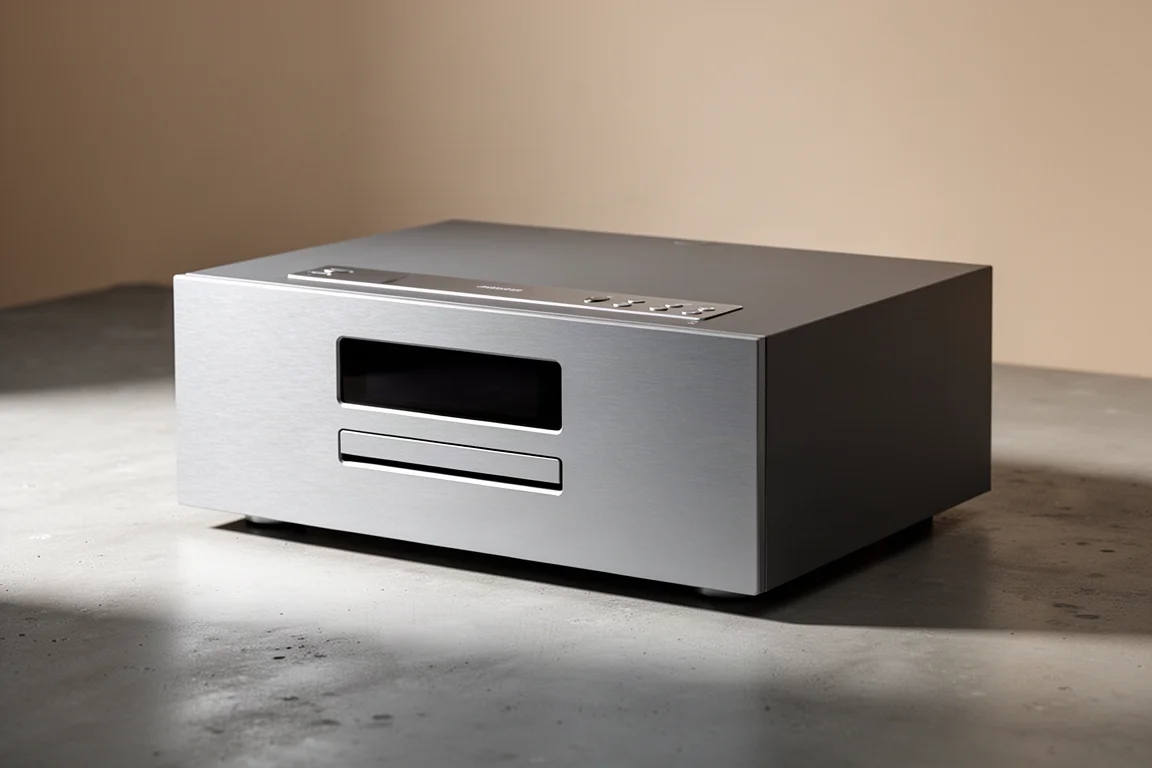
Compact all-in-one hi-fi systems have moved from niche to mainstream over the past few years. Combining a streamer, a DAC, a preamp, and an amplifier in a single chassis means you can run a proper pair of speakers without five separate components, six remote controls, and a full equipment rack. Marantz has been building hi-fi equipment for more than 70 years, and the brand has developed a recognizable sound along the way: a little warmer than strictly neutral, but still detailed and easy to listen to.
The Marantz M-C-R60N takes that idea and pushes it one step further. Where many compact amplifiers assume you have finished with physical media, this one keeps a CD player and an MM phono stage on board. At $1,000 you get streaming, a DAC, amplification, HDMI eARC for television audio, CD playback, and a direct input for a turntable. Marantz describes the goal as bringing streaming, CD, vinyl, and TV audio together in one component, and that is the clearest way to understand the product. The sound was tuned by a Marantz sound master, so the compact form factor has not been treated as an excuse to deprioritize audio quality.
Who This Product Is For
The M-C-R60N is aimed at listeners who want a real stereo system rather than a collection of boxes. If you already own a pair of speakers and a shelf of CDs, or you are thinking about getting back into records, this is a single component that covers all of it. There is no need to check whether a turntable has its own phono preamp, and no need to add a separate CD transport to the rack.
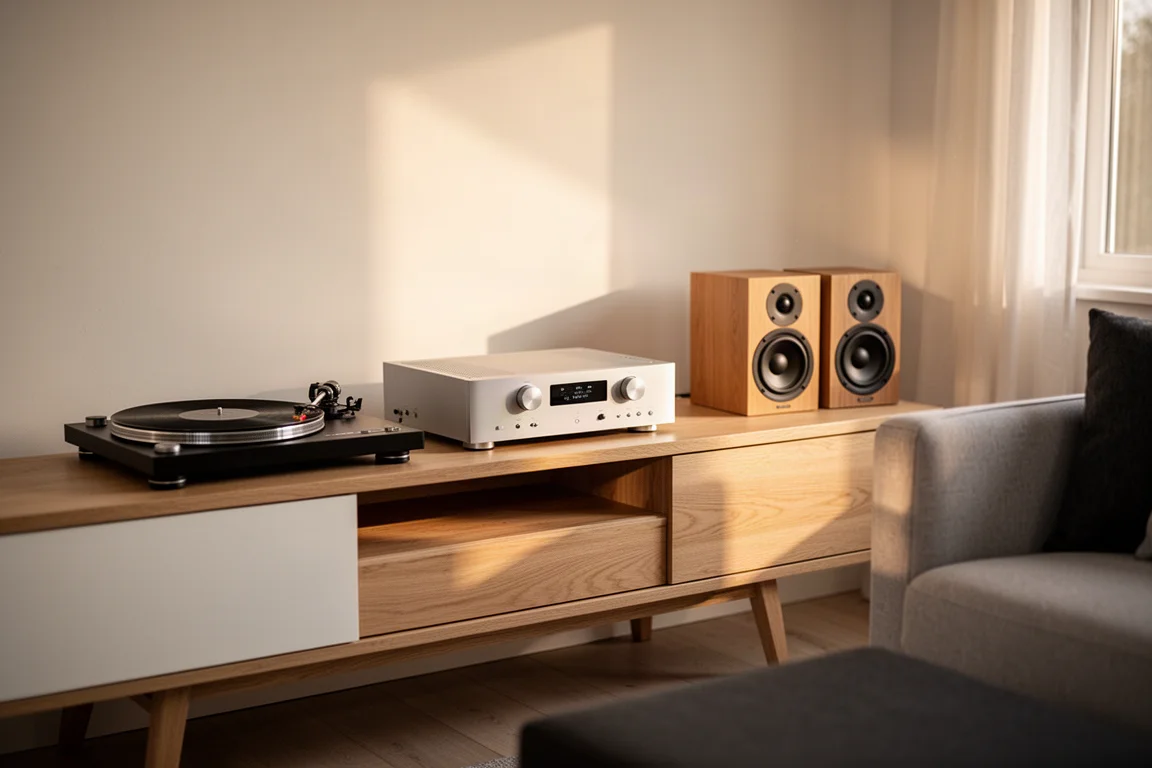
Size is a large part of the appeal. At 11 inches wide, 11.9 inches deep, and 4.4 inches tall, and weighing just over 9 lb, it is considerably smaller than a traditional integrated amplifier or AV receiver. It can sit on a media console beside a turntable, on a bookshelf, or under a television without the audio system taking over the room. For a second system, a small apartment, or a study, that flexibility matters as much as the feature list.
Main Strengths
Physically, the M-C-R60N fits neatly into the current Marantz lineup. The Marantz script runs across the top, the front panel is clean, and a three-line OLED display sits in the center. CD functions use touch-sensitive controls, while power, smart select presets, and volume are handled by tactile buttons on top. A remote is included, which is worth noting: not every interaction with a stereo system should require reaching for a phone. You can use the HEOS app when it suits you and the remote when it does not.
Streaming, Multi-Room, and High-Resolution Audio
The modern side of the system is built around HEOS, which has improved substantially in recent years. The redesigned app is faster and easier to navigate, with a customizable home screen, universal search across multiple music services, and better control over rooms and grouping. HEOS covers Amazon Music, Qobuz, TIDAL, Deezer, Pandora, SiriusXM, and internet radio, and there is a built-in AM and FM tuner as well.
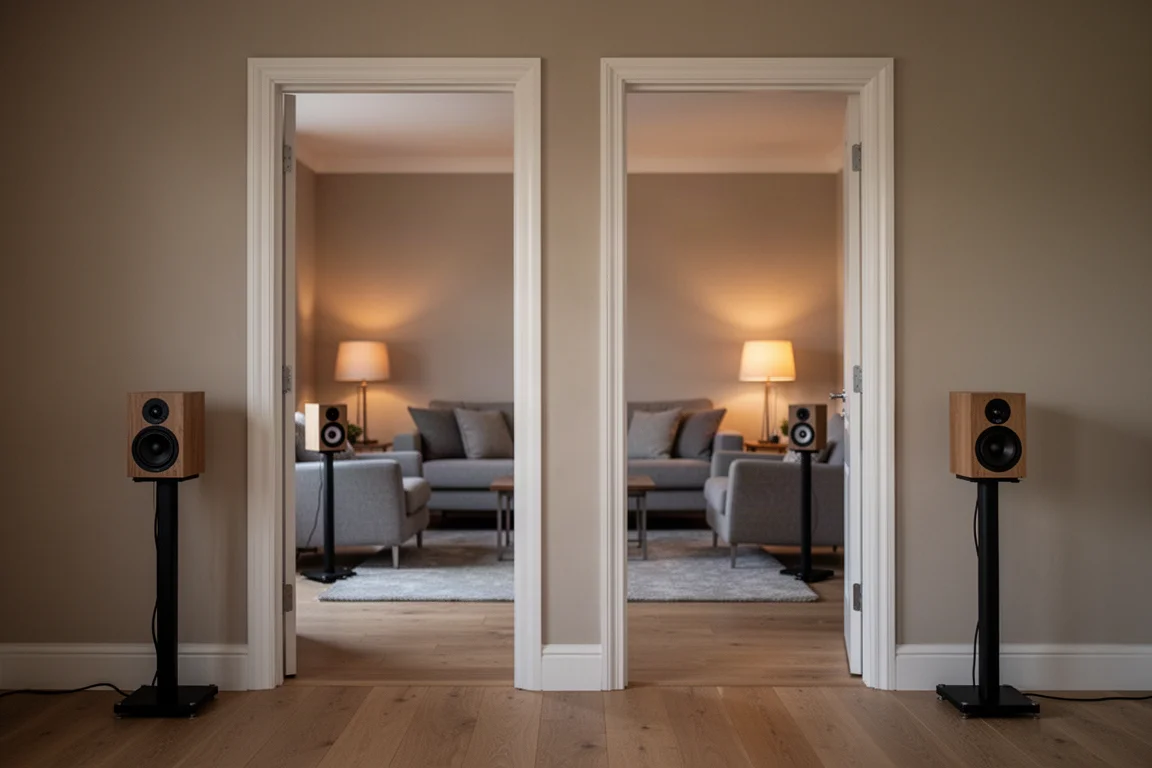
You are not locked into the HEOS app. Spotify Connect, TIDAL Connect, and Qobuz Connect are all supported, so you can stay inside the app you already use and control volume from there. AirPlay 2, Bluetooth, and Roon Ready support round out the wireless options, and Bluetooth works in both directions, so you can stream into the M-C-R60N or send audio out to a pair of Bluetooth headphones. Local high-resolution playback reaches 384 kHz 32-bit PCM and DSD 11.2, which is a lot of capability for a component that also spins CDs and powers speakers.
Because HEOS is shared across Marantz and Denon products, the platform is also a practical reason to buy into the ecosystem if you plan to add more rooms later and control everything from one place.
CD Player, Phono Stage, and TV Audio
The built-in CD player and MM phono stage make the M-C-R60N an easy way to build a system around physical media. Vinyl is straightforward: connect a turntable directly, add a pair of speakers, and you have records, CDs, and streaming from the same setup, with no separate phono preamp required.
Connectivity on the back panel is generous for the size. There is a phono input, a second analog input, optical, HDMI eARC, USB, Ethernet, a subwoofer output, an assignable pre-out, and two sets of speaker terminals. HDMI eARC is the feature that lets the unit double as your television’s audio system. It supports Dolby Digital and Dolby Digital Plus decoding, so one good pair of stereo speakers can handle both music and movie audio instead of a soundbar. Volume can be controlled through the TV remote, which makes the whole arrangement feel like a single system.
Amplifier Flexibility and Room Correction
In its normal two-channel configuration, the amplifier is rated at 65 W per channel into 4 ohms. Using all four amplifier channels drops that to 33 W per channel into 4 ohms. You can run speaker A, speaker B, or both at once, with independent volume control for each pair. Those four channels can also bi-amp a compatible pair of speakers, which Marantz recommends trying where the speakers support it. A parallel BTL mode uses all four channels with a single pair of speakers, another configuration Marantz suggests for getting the most from the amplifier section.
The M-C-R60N can also be upgraded with Dirac Live room correction. The Dirac license is a separate purchase, but it is one of the most capable room correction systems available and is usually associated with much more expensive equipment. Dirac Live measures how your speakers interact with your room and corrects frequency response and timing problems that basic bass and treble controls cannot address. It is entirely optional, and the system is enjoyable without it, but having the option to dial the setup into a specific room later is a meaningful advantage.
Things to Consider Before Buying
The most important limitation concerns the two speaker outputs. Speaker A and speaker B cannot play different sources at the same time; both listen to the same input. In practice this makes the second output a second wired listening area rather than a fully independent second zone.

Power is the other consideration. At 65 W per channel into 4 ohms, the M-C-R60N is not the most powerful option in its class. Listeners who stream almost everything and want maximum drive may prefer a design with more amplifier output for the same money. Dirac Live also requires an extra license purchase if you want room correction, and the speaker A/B arrangement, while flexible, will not replace a true multi-zone system.
How It Compares With the Marantz Model M1 and Denon CEOL N12
Marantz’s own Model M1 costs the same $1,000 and runs the same HEOS platform with HDMI eARC, in an even smaller chassis. The difference is what each product prioritizes. The Model M1 has no CD player, no phono stage, and no front display, and it puts the emphasis on amplification instead: 100 W per channel into 8 ohms and 125 W into 4 ohms, against 65 W into 4 ohms here. For listeners who stream everything, own no turntable, and have no plans to play a CD, the Model M1 is the more logical Marantz. If you do use CDs or vinyl, the arithmetic changes, because adding a CD player and a phono preamp to the Model M1 means rebuilding much of what is already inside the M-C-R60N.
The Denon CEOL N12 is the closest relative in feature terms. At $699 it offers HEOS, a CD player, an MM phono input, HDMI ARC, AirPlay 2, Bluetooth, a subwoofer output, and 65 W per channel. If the goal is simply to get this combination of features for the least money, the Denon deserves a close look. The M-C-R60N moves things forward with HDMI eARC rather than ARC, Roon Ready certification rather than Roon Tested, higher-resolution file support, the optional Dirac Live upgrade, and a more flexible speaker A/B and amplifier configuration.
Tonally, the M-C-R60N sits close to the Model M1. With Jessica Pratt’s “World on a String”, vocals carried the same warmth and body, the guitar had plenty of texture, and the presentation stayed smooth and easy to listen to. The Model M1 sounded slightly more refined and a little more spacious, but the two share a clear family character. Moving to Dua Lipa’s “Radical Optimism”, the extra power of the Model M1 became more obvious, with tighter bass control, more punch, and greater confidence at higher volumes. The M-C-R60N nevertheless held together well and never felt underpowered, keeping the same Marantz tonal balance with a little less authority. Considering everything else it handles in the same box, that trade-off makes a great deal of sense.
Buying Advice
The M-C-R60N makes the most sense for listeners who want a traditional-feeling Marantz system, still use records and CDs, and want modern streaming and television features without assembling a rack of separate components. If that describes your listening habits, the combination of a CD player, a phono stage, a front display, HDMI eARC, and HEOS in a compact chassis is difficult to assemble any other way for $1,000.
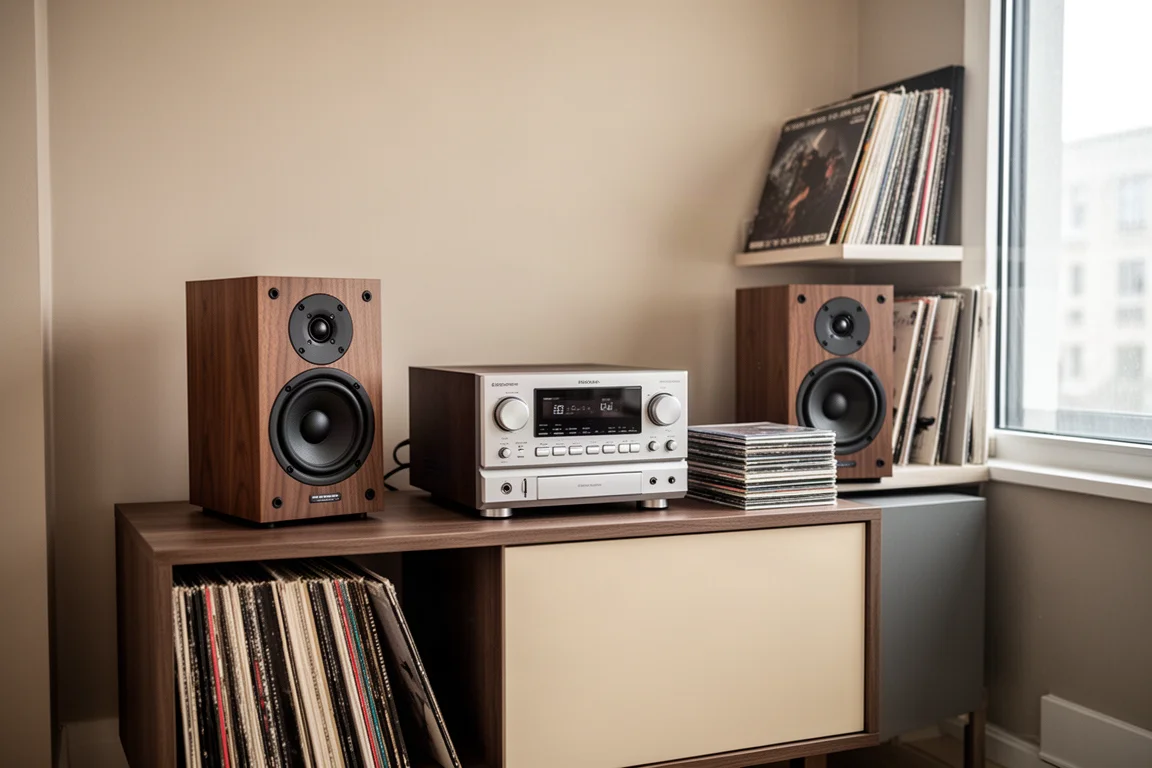
If you stream exclusively and never expect to play a disc or a record, the Marantz Model M1 gives you more amplifier power for the same price. If budget is the priority and you can accept HDMI ARC instead of eARC, the Denon CEOL N12 delivers a similar feature set for less. The decision really comes down to how much you value physical media and TV audio in the same box.
Conclusion
The Marantz M-C-R60N is a well-built, thoughtfully specified all-in-one system that keeps the Marantz signature sound while covering streaming, CD, vinyl, and television audio in one component. It gives up some amplifier power compared with the Model M1 and costs more than the Denon CEOL N12, but it offers a level of flexibility that is hard to match at this price. For anyone rebuilding a stereo around both physical and streaming sources, it is a compelling place to start.
Product link
View more details for Marantz M-C-R60N
This product is mentioned in the review. Check the specifications, options, and compatibility before buying.
View more details for Marantz M-C-R60NFurther reading
Related Reviews
Hi-Fi Audio
Accuphase C-57 vs Allnic H-7000V: Two High-End Phono Stages Compared
A fully balanced solid-state phono stage with a pitch-black noise floor meets a tube design built for well-loved records. Here is how to choose between them.
Hi-Fi Audio
Active vs Passive Hi-Fi: Five Components for a Modern System
Five components that define modern active and passive hi-fi systems, with the strengths, trade-offs and setup details worth weighing before you buy.
Hi-Fi Audio
Advance Paris A10 Apex Review: A Hybrid Integrated Amplifier That Covers a Lot of Ground
A French hybrid integrated amplifier with a class A tube preamp stage, analogue power meters, and an internal DAC and phono stage good enough to make extra boxes unnecessary.