Home Theater Receivers
Marantz Cinema 50 vs Cinema 60: Which Home Theater Receiver Fits Your Room?
A practical comparison of the Marantz Cinema 50 and Cinema 60, covering shared features, channel counts, subwoofer outputs, and the room each receiver suits best.
Introduction
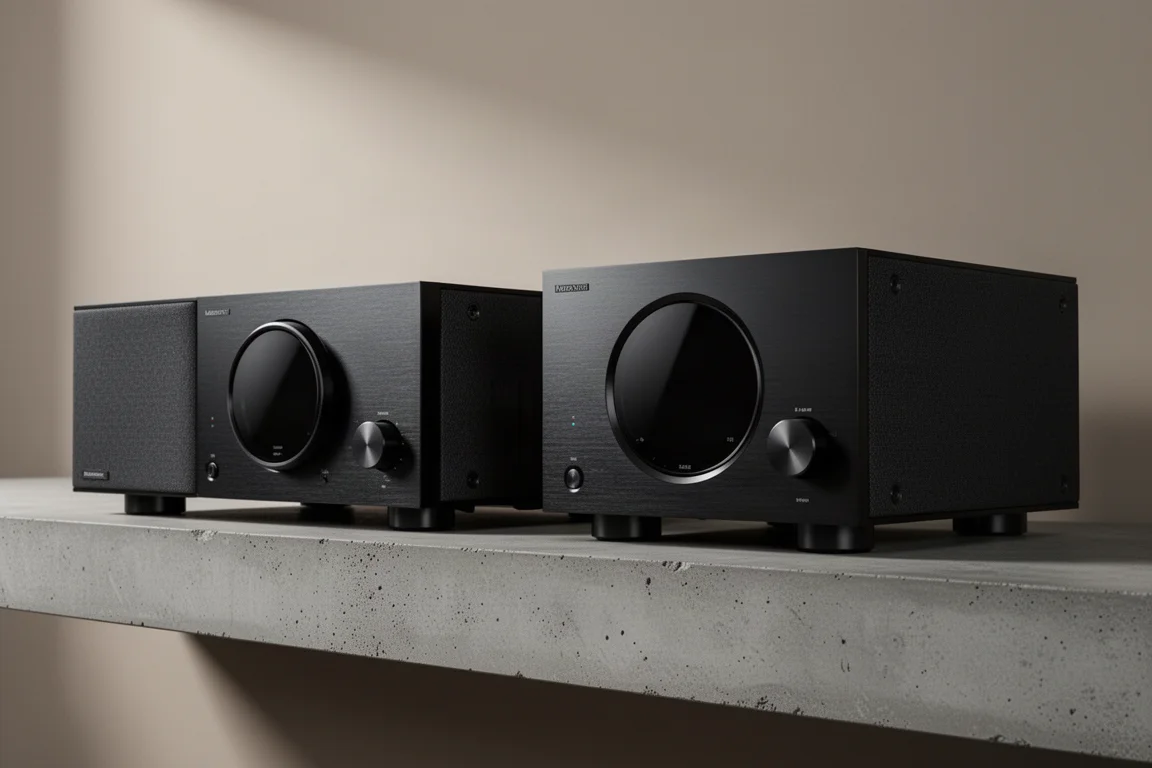
Marantz has released two new home theater receivers, the Cinema 50 and the Cinema 60. They share a great deal of DNA: 8K HDMI 2.1 connectivity, Dolby Atmos and DTS:X decoding, Audyssey MultEQ XT room correction, and a five-year parts and labor warranty. The real differences come down to channel count, subwoofer flexibility, input count, and amplifier headroom.
The brand has a long history behind it. Marantz was founded in 1953 by an engineer named Saul Marantz, who began building his own audio gear because he was not satisfied with what was available at the time. That heritage still shapes how the company positions its products. Marantz receivers have generally been priced a little higher than competitors with similar looking specifications, and the gap becomes clearer when you look at build quality, weight, and the amplifier design underneath the lid.
This guide covers what both receivers do well, then breaks down where they diverge so you can match one to the room you actually have.
Features Shared by Both Receivers
Both units handle 8K video over HDMI 2.1 and support the latest HDR formats, including Dolby Vision. Each one includes eARC HDMI connections, which makes it straightforward to send audio from TV apps into the receiver. For gaming, both support low latency with variable refresh rate and auto low latency mode. Even so, connecting a game console directly to the TV and using eARC to route the sound is often the simpler path.
Audio decoding covers Dolby Atmos and DTS:X on both models, and both include virtual height speaker processing that works with either format. It is not a substitute for real height speakers, but it adds a sense of overhead presence when ceiling speakers are not an option.
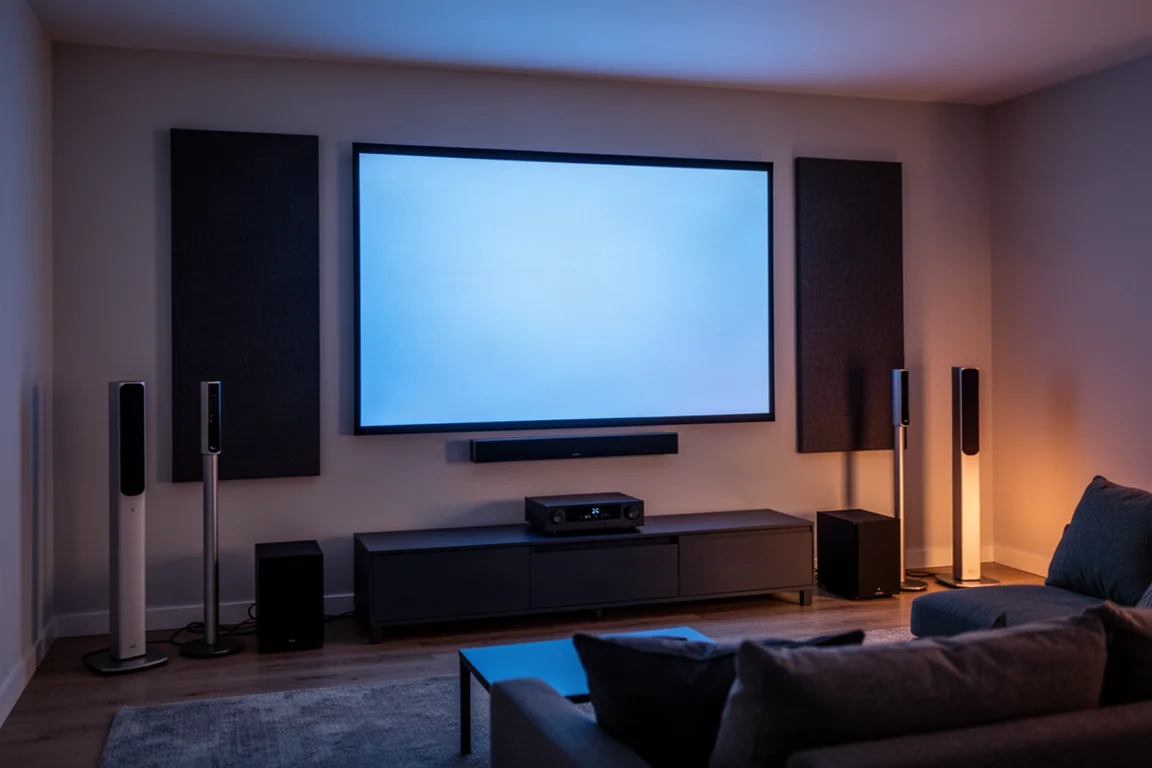
Room correction comes from Audyssey MultEQ XT, and the amplifier section uses HDAM SA2 technology carried over from more expensive Marantz designs. All channels use discrete amplifiers paired with a large power supply, so there is current in reserve for the big dynamic swings in action material. There are no chip amps here. Both receivers also include a built-in moving magnet phono stage for a turntable.
Voice control works with Apple, Google, and Amazon assistants, and the on-screen setup guide is genuinely helpful: it asks a series of questions, shows where each speaker connection goes, and runs audio checks to confirm everything is wired correctly.
Marantz Cinema 60: Seven Channels for Smaller Media Rooms
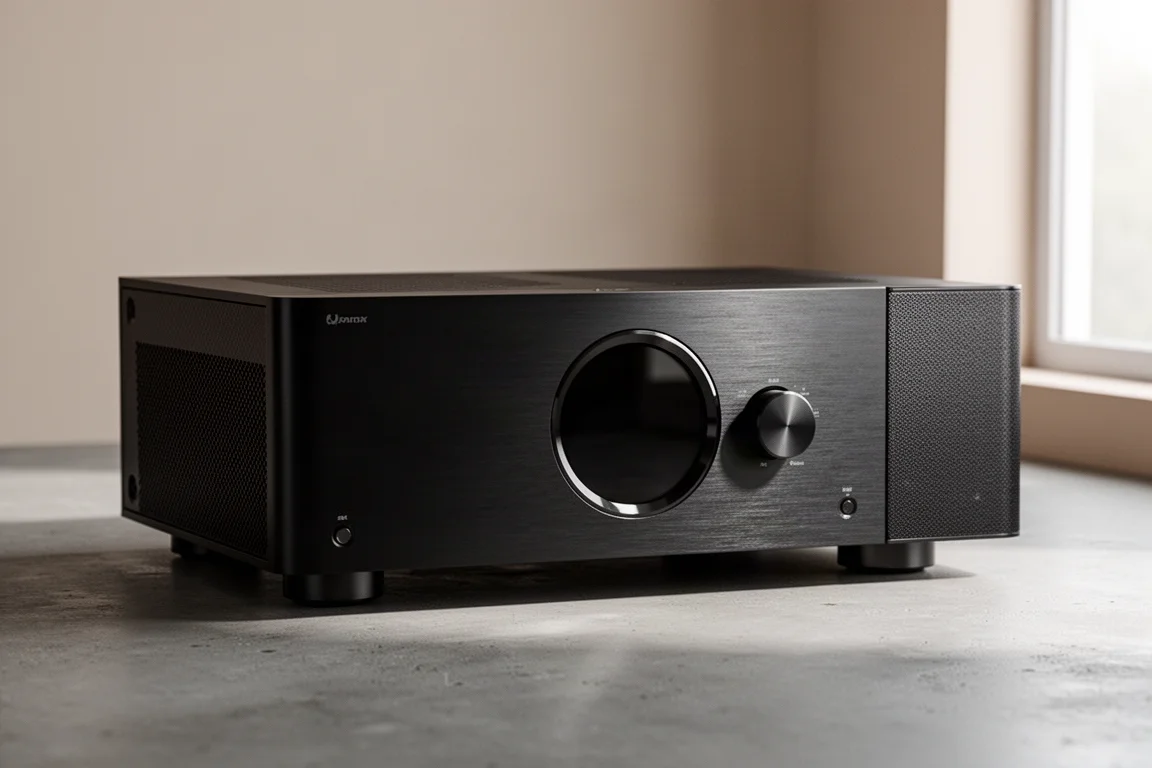
The Cinema 60 is rated at 100 watts per channel across seven powered channels, with preamp outputs on all of them if you later want to add a more powerful amplifier for your main speakers. It supports 5.2.2 or 7.2 configurations, and that is the ceiling for channel count.
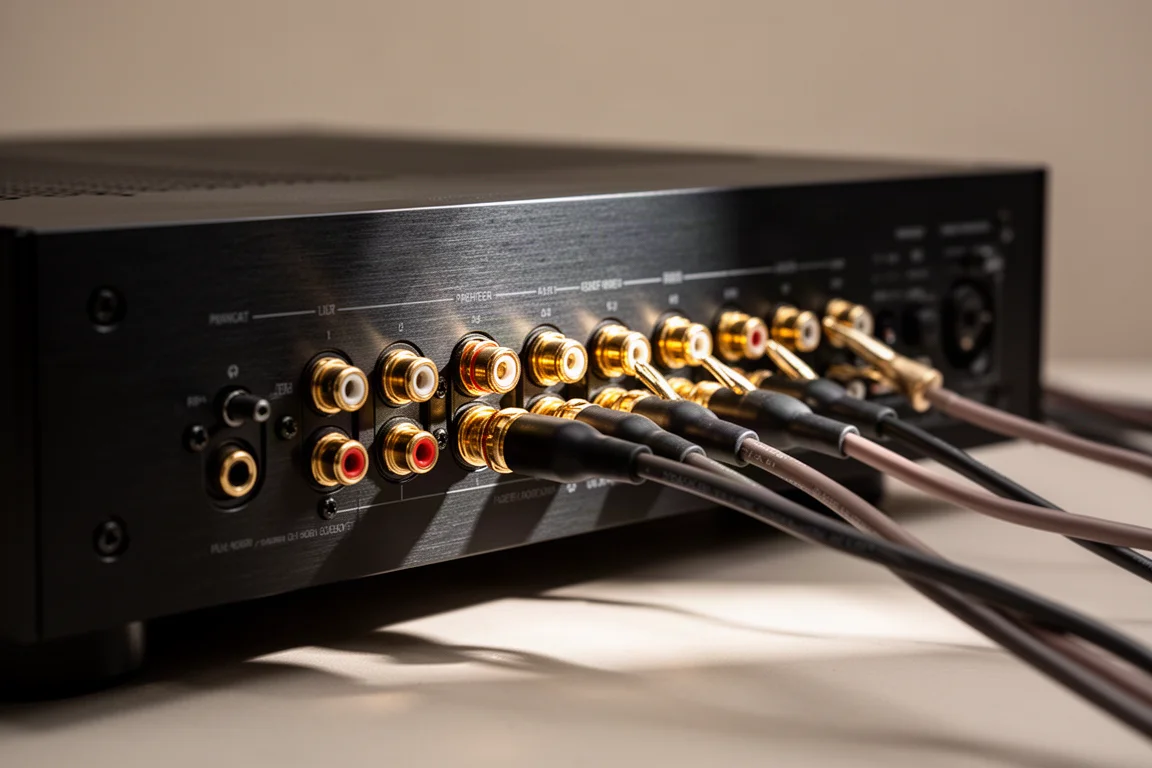
Connectivity includes six HDMI inputs, three of which are 8K and three of which are 4K, plus one 8K HDMI output and one 4K HDMI output. There are two subwoofer outputs, but they are wired in parallel, so there is no independent level or delay adjustment for each subwoofer.
This is a receiver for someone who wants a genuinely good sounding system while keeping the speaker count to five or seven. That describes a lot of media rooms, where placing speakers on every wall simply is not practical.
Marantz Cinema 50: Nine Channels and Four Subwoofer Outputs
The Cinema 50 is the more ambitious design. It has nine built-in amplifier channels with processing for 11 channels, plus four independent subwoofer outputs. Power is rated at 110 watts per channel, but that number understates the difference: the Cinema 50 uses a far larger power supply and delivers noticeably stronger dynamics than the Cinema 60.
All seven HDMI inputs are 8K, and there are two 8K HDMI outputs plus a third 4K HDMI output. Alongside Dolby Atmos and DTS:X, it adds Auro 3D and IMAX Enhanced.
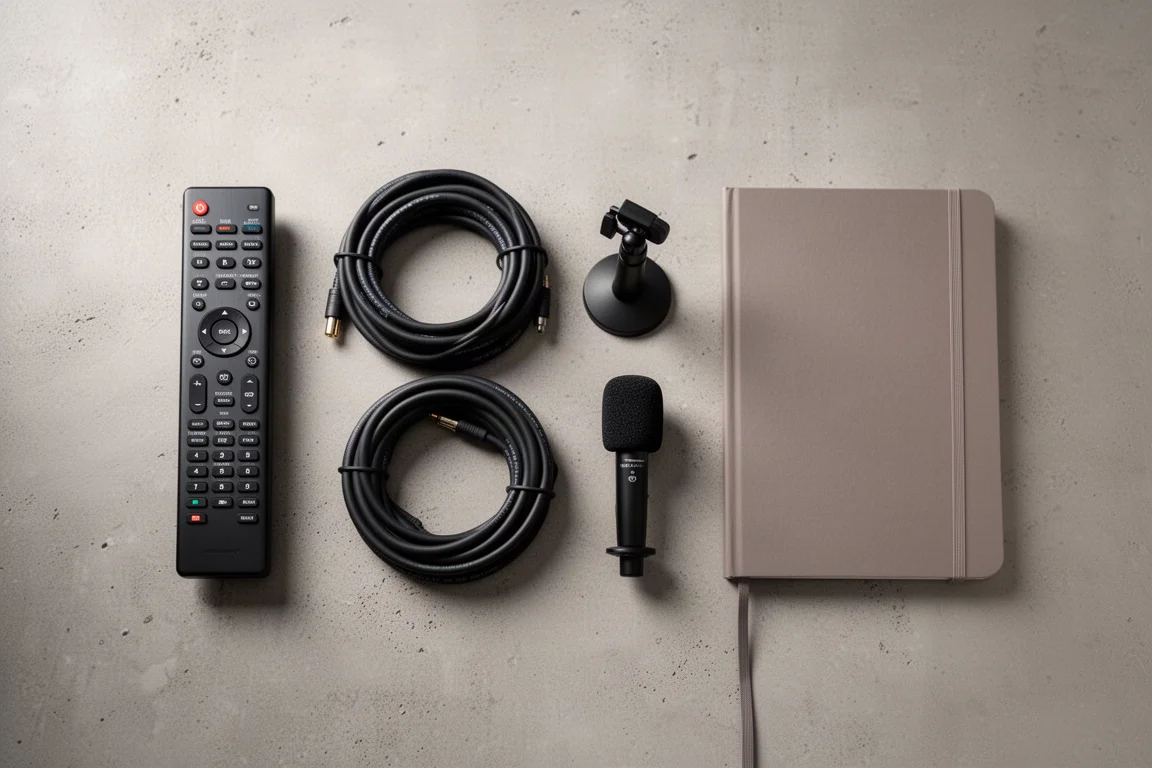
Two features stand out. First, the receiver can be upgraded to Dirac Live for a fee. Pricing for that upgrade has not been finalized. Dirac Live operates at a different level than Audyssey and does a far more thorough job of room correction. If you go that route, a better measurement microphone than the one in the box is worth the money, and miniDSP makes a strong option for the price.
Second, the four independent subwoofer outputs come with real setup intelligence. In setup mode you can send all low frequency information to every subwoofer, or route the low frequency from the speakers closest to each subwoofer to that specific sub. The second approach usually blends the subwoofers with the rest of the system more evenly.
There is also amp routing, which lets a two-channel power amplifier drive the front left and right channels, the rears, or one pair of Atmos speakers. That makes it possible to reach the full 11 immersive channels by adding a single two-channel amplifier.
At $2,500, the Cinema 50 is not cheap, but it covers a lot of ground for the price.
Build Quality, Setup, and Warranty
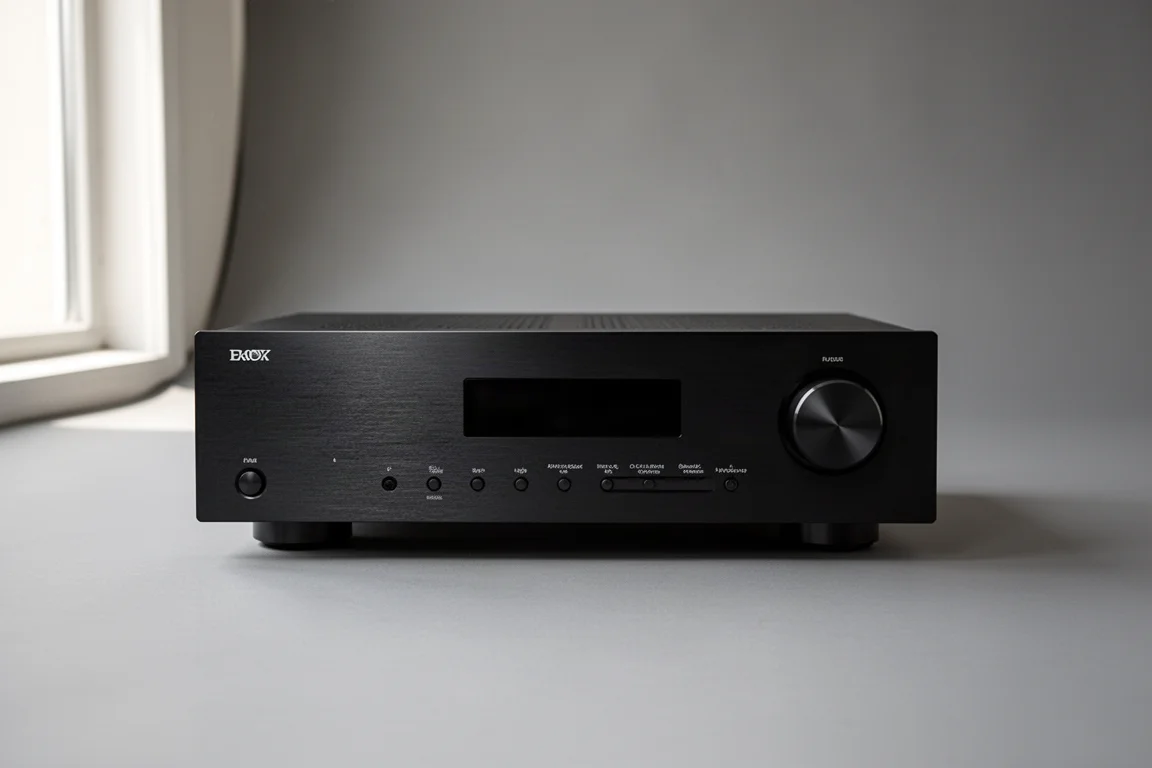
Both receivers are built to a standard you can feel when you lift one. Speaker connections are solid, and every HDMI connection had a snug fit rather than the loose feel that plagues cheaper chassis.
The redesign borrows from Marantz stereo components, with carbon fiber side panels and a larger faceplate. The classic circular meter remains in the center of the front panel and provides visual feedback while the unit is running. A five-year parts and labor warranty backs both models.
Setup deserves its own mention. The on-screen guide walks through a series of questions and then illustrates exactly how and where to make every speaker connection, which means most buyers can complete a first setup and be confident it was done correctly.
How the Two Receivers Compare in Practice
The clearest split is channel count. The Cinema 60 tops out at 7.2 or 5.2.2, while the Cinema 50 processes 11 channels and can drive nine of them internally. If you plan a full Atmos layout with multiple height pairs, the Cinema 60 will run out of channels well before the Cinema 50 does.
Subwoofer handling is the second split. The Cinema 60 offers two subwoofer outputs wired in parallel, so both subwoofers receive the same signal. The Cinema 50 offers four independent outputs with per-sub routing options.
Input count and video support form the third split. The Cinema 60 provides six HDMI inputs split between 8K and 4K, while the Cinema 50 provides seven inputs that are all 8K. If you have several current-generation sources and want every one of them to pass full bandwidth video, the Cinema 50 is the simpler answer.
Power and dynamics round out the comparison. Both use discrete amplifiers and include a moving magnet phono stage, but the Cinema 50’s larger supply gives it a clear advantage on demanding soundtracks.
Room Correction and Subwoofer Setup Notes
Audyssey MultEQ XT is included on both receivers and handles the basics well. The Cinema 50 adds the option to move to Dirac Live through a paid upgrade, which does a far better job of correcting a difficult room. The included microphone is adequate to start with, but a dedicated measurement microphone from a brand such as miniDSP is a worthwhile addition if you intend to run Dirac Live properly.
If you are running four subwoofers on the Cinema 50, spend time with the routing option in the setup menu. Sending all low frequency content to all four subwoofers is the traditional approach. Routing the bass from the speakers nearest each subwoofer to that individual subwoofer usually produces a smoother blend across the seating area.
On the Cinema 60, remember that the two subwoofer outputs share a single signal path. Matching the subwoofers and placing them symmetrically will matter more than fine-grained level tweaks, because independent adjustment is not available.
Which Marantz Receiver Is Right for Your System?
Choose the Cinema 60 if your room supports five or seven speakers and you want a well-built receiver that focuses on sound quality rather than channel count. It fits typical media rooms, and the preamp outputs leave the door open for a separate amplifier later.
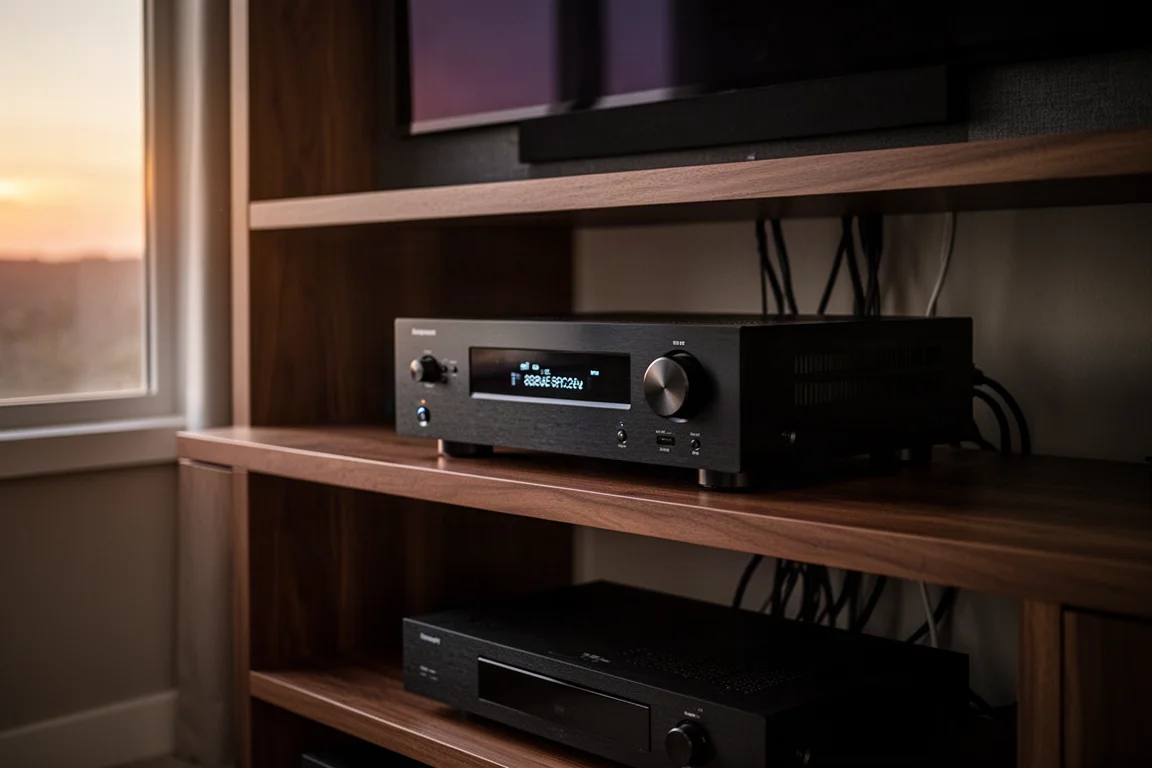
Choose the Cinema 50 if you want an immersive 11-channel layout, four independently controlled subwoofers, the option of Dirac Live, and enough 8K inputs for a full rack of sources. At $2,500 it costs more, but this combination of channel count, subwoofer flexibility, and room correction options is difficult to find at that price.
A practical way to decide: count the speakers you can actually place, and count the subwoofers you realistically intend to own. If those numbers stay at seven and two, the Cinema 60 covers the job. If they climb toward eleven and four, the Cinema 50 is the one that will not leave you upgrading again in a year.
Conclusion
Both receivers share the fundamentals that matter: 8K HDMI 2.1, Dolby Atmos and DTS:X, Audyssey MultEQ XT, discrete amplification, a moving magnet phono stage, and a five-year parts and labor warranty. The Cinema 60 is the focused choice for five to seven speaker systems, and the Cinema 50 is the flexible choice for larger immersive builds with multiple subwoofers and an upgrade path to Dirac Live. Match the receiver to the room you actually have, and either one will serve well for years.
Further reading
Related Reviews
Home Theater Receivers
Arcam AVR11, AVR21, AVR31 and AV41: Inside the Current Home Theater Lineup
Three AV receivers and one surround processor share Arcam's house sound and a complete modern feature set. Here is how they differ and which one fits your room.
Home Theater Receivers
Best Home Theater Receivers 2026: Ten Picks From Entry Level to Flagship
A practical roundup of ten home theater receivers, from an affordable 5.1.2 model to a 15-channel flagship, with the features that matter most before you buy.
Home Theater Receivers
Best Home Theater Receivers: Eight Picks From Entry Level to Audiophile
Eight home theater receivers compared on channels, amplifier headroom, room correction, subwoofer outputs, and expansion, from an entry-level pick under $750 to audiophile flagships.