AV Receivers
Marantz Cinema 40 Review: A Versatile 9.4-Channel Dolby Atmos Receiver
The Marantz Cinema 40 combines 9.4-channel Dolby Atmos processing, Class AB amplification, four independent subwoofer outputs, and preamp outputs for up to 11.4 channels.
Introduction
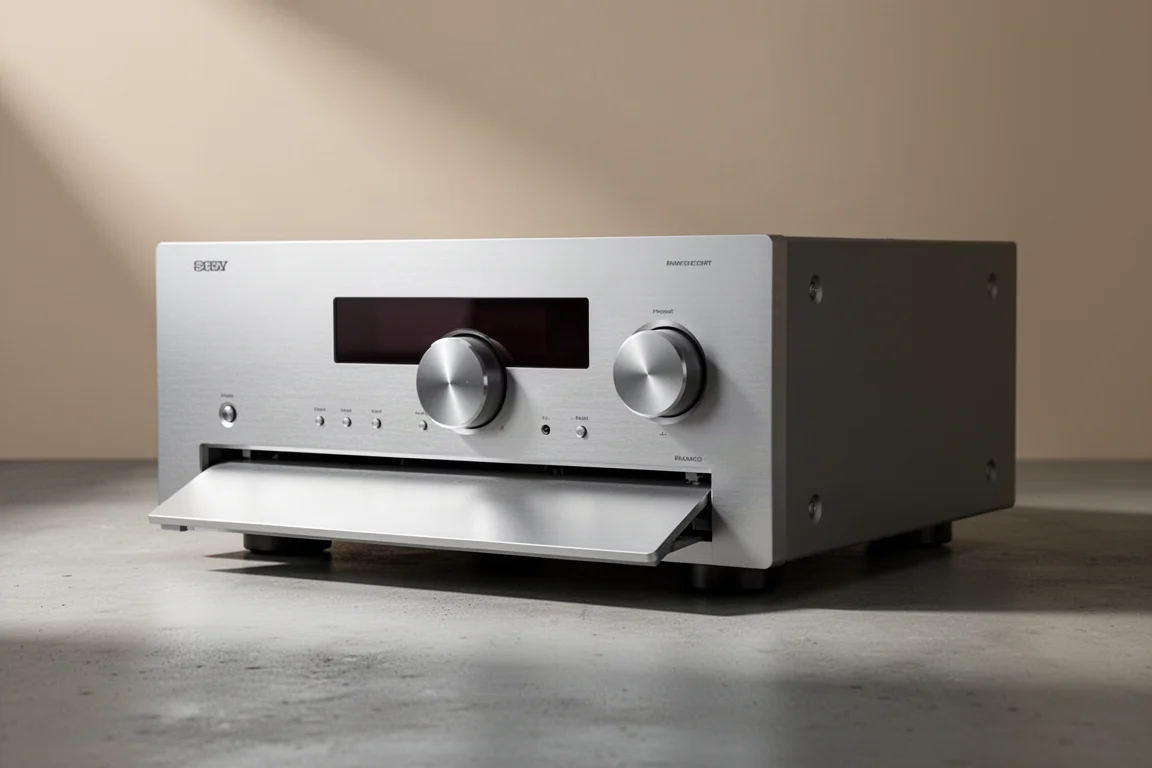
Marantz positions the Cinema 40 at the top of its current Cinema receiver range: a 9.4-channel Dolby Atmos model built around Class AB amplification. Marantz rates it at 125 watts per channel in stereo, and its 70 percent power guarantee points to roughly 85 watts per channel with five channels driven. It supports 4K 120 and 8K 60 signals, carries seven HDMI inputs, and offers full preamp outputs for up to 11.4 channels, so a system can grow over time with third-party amplifiers. For many buyers, that combination is the appeal: it works as a complete one-box receiver today and as the processing core of a larger setup later.
Who the Marantz Cinema 40 Is For
The Cinema 40 makes the most sense for someone assembling a home theater around a mix of speakers and subwoofers rather than one matched set. It supports up to four subwoofers, and all four outputs are independent, which matters for anyone who wants to tune multiple subs separately. Full preamp outputs for up to 11.4 channels let the receiver hand off amplification duties to external amps while remaining the hub of the system, and a strict preamp mode disables the internal amplifiers entirely when you go that route.
There is also a practical argument for it if you still own older sources. The Cinema 40 keeps analog video inputs on board, which matters for component and composite devices such as legacy game consoles or a LaserDisc player. Buyers with no need for those connections, and no need for the extra power, will usually find better value further down the line.
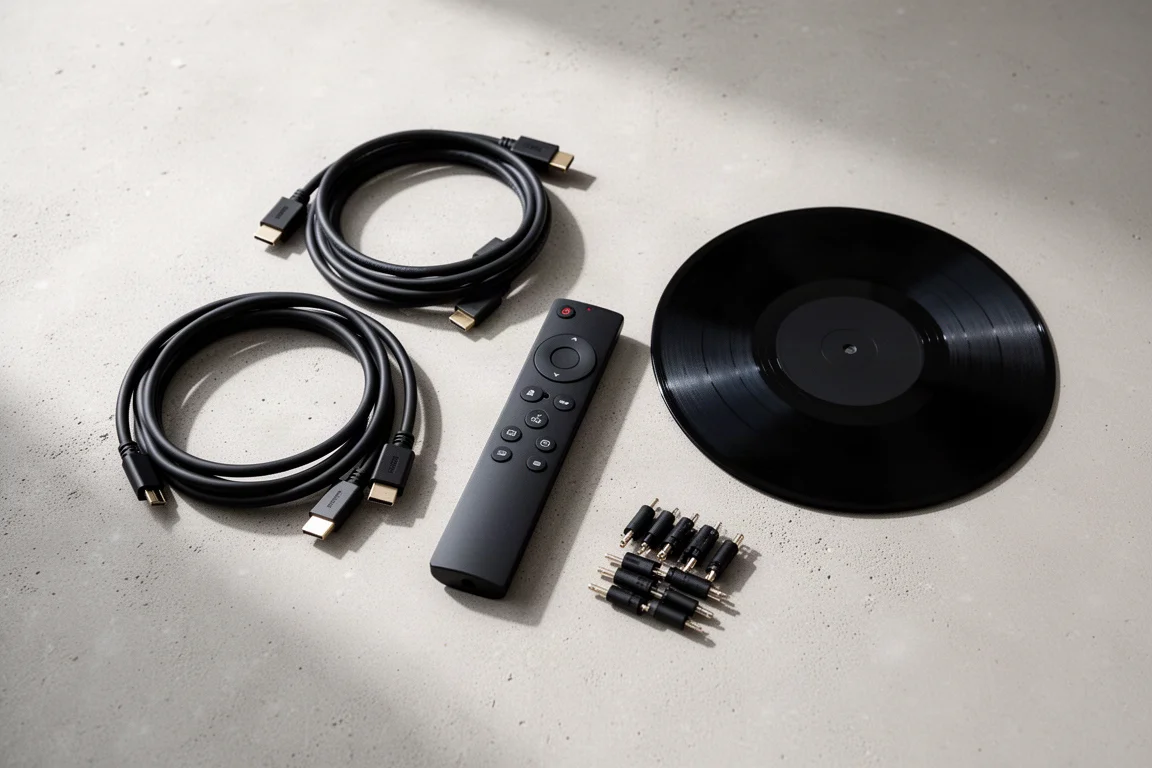
Vinyl listeners get a built-in moving magnet phono preamp, so a turntable can connect directly without an extra box. Gamers are covered too, with support for 4K 120, variable refresh rate, auto low latency mode, and quick frame transport.
Design, Setup, and Daily Use
The front panel is deliberately sparse, with most physical controls hidden behind a flip-down door. Setup can be carried out through the on-screen menus using the supplied remote and a TV, or through the Marantz control app, which offers a more visual way to work through the process. The on-screen menus and interface are among the strongest in the category.
Room correction is where the Cinema 40 offers unusual flexibility. You can configure it manually, use Audyssey MultiEQ XT32, or step up to Dirac, which costs extra. In a reasonably balanced room, the factory settings with no EQ applied are a credible starting point, and Direct mode tends to produce a more neutral result than Audyssey, which lifts the treble and bass a little harder. Dirac can blend the tonal character of different speakers for a more seamless presentation front to back and overhead, though it can also trim some of the sense of spaciousness in a room. All three approaches are worth experimenting with rather than treating as fixed.
Main Strengths: Sound Quality for Music and Movies
In stereo and direct modes, the Cinema 40 is genuinely strong for a home theater receiver. It has a fuller, warmer tonal character than comparable receivers, with firm, deep, and textured bass and mid-range instruments that carry real dimension and body. The highs are extended, airy, and detailed, though slightly rolled off compared with leaner-sounding receivers, which makes the Marantz an easier match across a wider range of recordings, including heavily compressed tracks. Its stereo soundstage gets close to dedicated separates, with good separation and a focused, three-dimensional placement of instruments and performers.
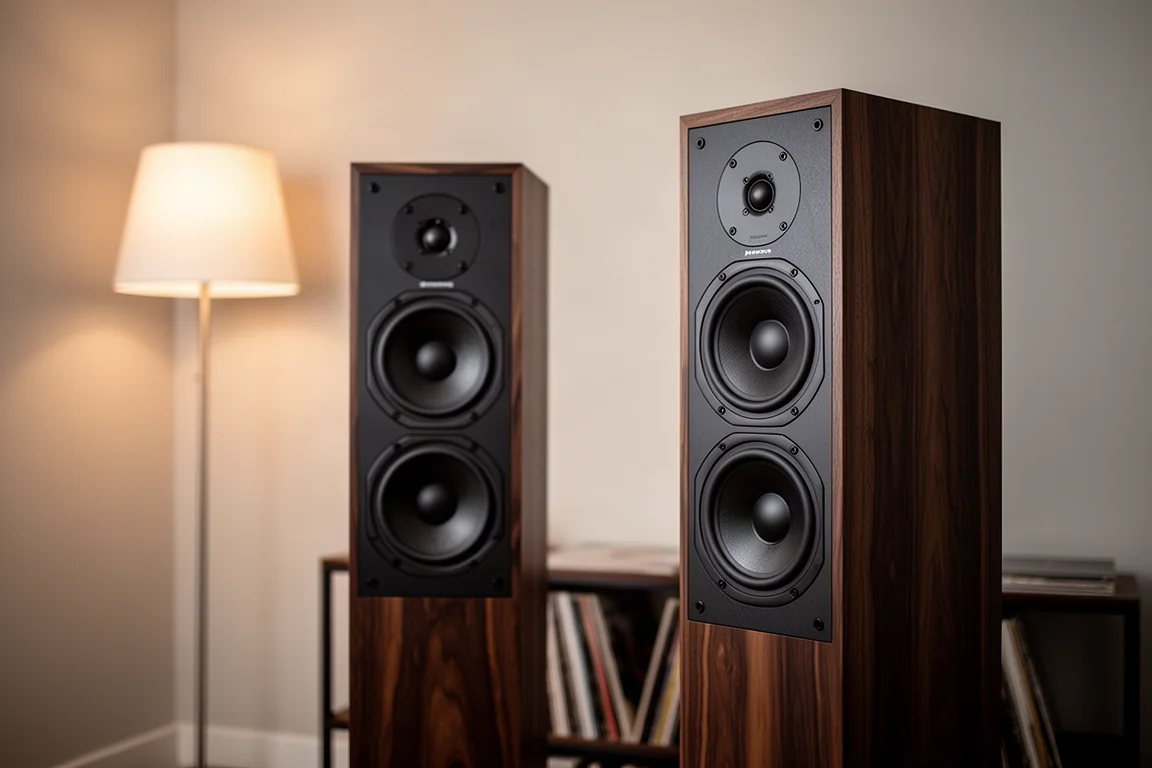
Dynamics come alive as volume rises, and the receiver stays composed at high in-room levels. At low listening levels it is on par with other quality receivers rather than class-leading. For movies, the Cinema 40 is very impressive: surround effects are exceptionally clear, control over in-ceiling and Atmos channels is confident, and dialogue clarity is excellent. The mild roll-off at the top end mates well with many center speakers and can take the edge off sibilant dialogue without needing tone controls or EQ. Dialogue enhancement is available, but applying too much skews the overall tonality toward the treble.
Connectivity, Streaming, and Gaming
Seven HDMI inputs feed three HDMI monitor outputs, one of which handles ARC and eARC. The receiver supports the major HDR formats, including Dolby Vision, and can upscale HD and 4K signals up to 8K depending on your settings. HEOS is built in for streaming services such as Amazon Music HD, Tidal, and Spotify Connect, and Apple Music listeners can use AirPlay 2. Bluetooth, Wi-Fi, and Ethernet are all on board, along with smart home control through Alexa and Google Assistant.
Gaming performance is drama free. Playing fast-paced titles on a PS5 through the game HDMI input at the highest quality settings was flawless, with no input lag concerns. High-resolution music playback is well supported, and the receiver handles the common high-res file types without fuss.
Things to Consider Before Buying
The Cinema 40 sits at a premium price, and several of its most attractive features carry caveats. Dirac costs extra on top of the receiver itself, which is worth factoring in if you plan to use it. The internal amplifiers are capable, but speakers with demanding loads, such as high-end tower models, sound better when driven by an outboard amplifier with more headroom, which adds cost and rack space.
The built-in dialogue enhancement can help with difficult mixes, but too much of it shifts the receiver’s tonality noticeably toward the treble. Low-level listening is competent rather than exceptional, so buyers who mostly listen quietly should weigh that against receivers that perform better in that specific area.
The value calculation also depends on what you actually need. If you do not require the analog video inputs or the extra power, the step-down model in the same line delivers a very similar experience for less money.
How the Cinema 40 Compares With Other Receivers
Among its direct competitors, the Cinema 40 holds up well on features. A less expensive alternative includes Dirac and goes toe to toe on features, and it occupies a useful middle ground in tonal character between the Marantz and leaner-sounding receivers. A Yamaha option saves some cash and adds a few channels of amplification, and it remains the pick for anyone who loves manual parametric EQ, though it is more specialized and more complicated for buyers without much home theater experience. A NAD model at roughly the same price has fewer channels and does not yet support 4K 120, which makes the Cinema 40 the better buy. An Anthem alternative sounds fantastic but is outclassed on user experience.
Within the Cinema line itself, the Cinema 40 shares top position with the model below it. The two sound very similar, and the step-down option is the better value unless you need the legacy analog video connections or that extra measure of power. Owners of the step-down model have no reason to upgrade. The smallest model in the line also has a case to make when paired with an outboard amplifier, since it can come in cheaper while covering the needs of most rooms.
Buying Advice
Buy the Cinema 40 if you want a receiver that can run a full 9.4-channel Dolby Atmos system today and still serve as a processor for external amplification later. It is the right choice for anyone who needs to manage four subwoofers independently, connect a turntable, or keep older analog video sources in the chain.
If none of those apply, the step-down model in the same family offers a very similar sound and better value, and it is the more sensible purchase for most people. Those who want to keep costs down further can pair the smallest model in the line with an outboard amplifier and still cover the vast majority of rooms.
Conclusion
The Marantz Cinema 40 is a versatile, well-rounded receiver. Its warm, full sound works across music and film, its calibration options are broader than most of the competition, and its channel and subwoofer flexibility give it room to grow. It is not the cheapest route into 9.4-channel Dolby Atmos, and some of its best features, such as Dirac, cost extra, but for buyers who need what it offers, it is a confident recommendation.
Product link
View more details for Marantz Cinema 40
This product is mentioned in the review. Check the specifications, options, and compatibility before buying.
View more details for Marantz Cinema 40Further reading
Related Reviews
AV Receivers
Anthem MRX 740 8K Review: Composed Home Theater Sound With a Few Rough Edges
A close look at Anthem's mid-tier MRX 740 8K receiver, covering its sound, ARC Genesis room correction, HDMI 2.1 features and the daily quirks worth knowing before you buy.
AV Receivers
Anthem MRX 740 vs MRX 1140: Which AV Receiver Fits Your System?
A measured look at the Anthem MRX 740 and MRX 1140, covering preamp output performance, amplifier behaviour, bass management, and expansion headroom.
AV Receivers
Best AV Receivers for Home Theater: Denon, Onkyo, Marantz and Yamaha Compared
Four home theater receivers compared on features, sound character, setup and value, with clear guidance on which one fits which kind of buyer.