Home Theater
Marantz Cinema 30 Review: A Flagship AV Receiver With Honest Power Ratings
A practical look at the Marantz Cinema 30 flagship AV receiver, from its 11 powered channels and 8K connectivity to Dirac Live support and real listening behavior.
Introduction
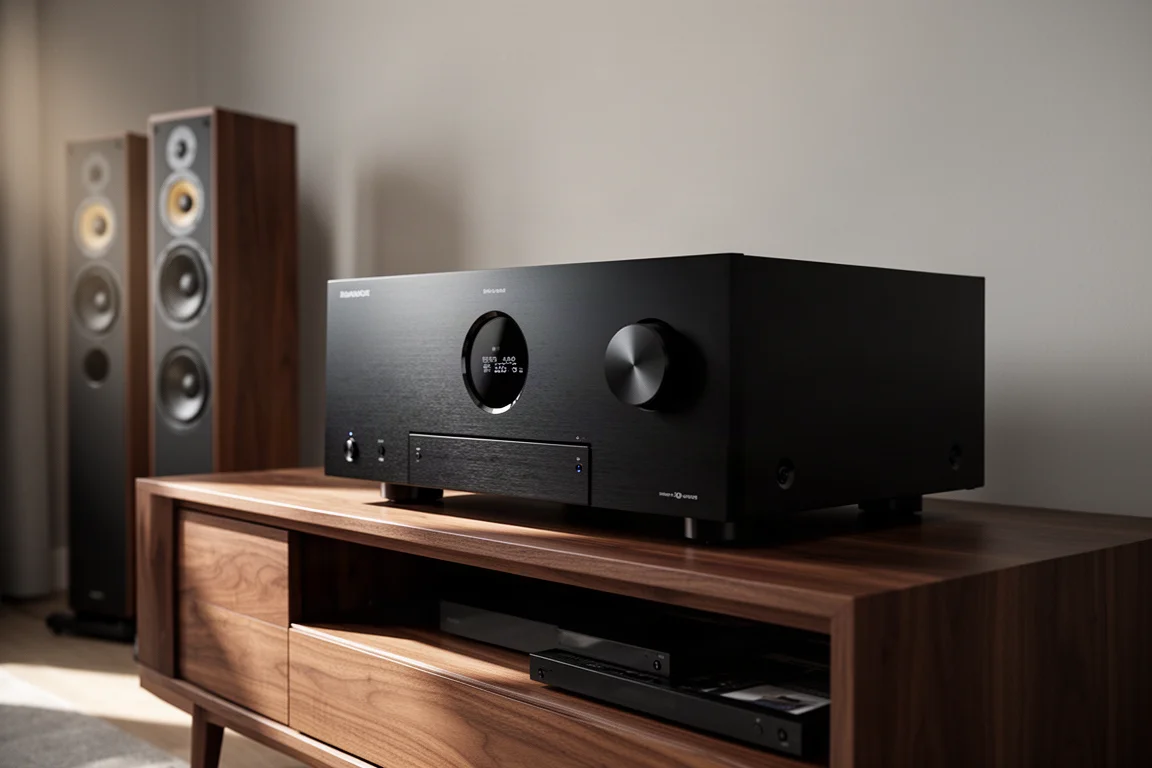
The Marantz Cinema 30 is the flagship home theater receiver in the Cinema series. Built at Marantz’s production facility in Shirakawa, Japan, it replaces the SR8015 at the top of the range and concentrates on two priorities: compatibility with almost any source or speaker layout, and enough customization to grow with a system over several years.
It combines 11 powered amplifier channels with 13.4 channels of processing, seven 8K HDMI 2.1 inputs, two independent 8K HDMI outputs, and 32-bit ESS Sabre digital to analog conversion. Marantz also rates the amplifier in a way that is easy to plan around: 140 watts into two channels at 0.05% total harmonic distortion with a full range signal at 8 ohms, peak power of 250 watts at 6 ohms, and a 70% guarantee that five channels will each receive at least 70% of the rated two-channel output.
For anyone assembling a serious media room, that combination is the core of the appeal. The Cinema 30 is designed to drive a full surround system, handle legacy and current sources side by side, and leave room for upgrades such as Dirac Live room correction and additional subwoofers.
Who This Product Is For
This receiver suits listeners who are building a dedicated home theater and want headroom rather than the minimum number of channels. Eleven powered channels cover a 7.1.4 layout without external amplification, and the 13.4 preamp outputs make it possible to add a two-channel amplifier later if the system grows beyond that.
It is also a sensible choice for music listeners who keep a two-channel setup in the same room. The preamplifier stage and voicing sit at the centre of the design, and the processing hardware supports lossless files and high-resolution streaming alongside movie formats.
The clearest upgrade case is an owner of an SR8015 or a comparable older flagship. Amplifier output is broadly similar, but the processing section, subwoofer flexibility, and room correction options move forward considerably.
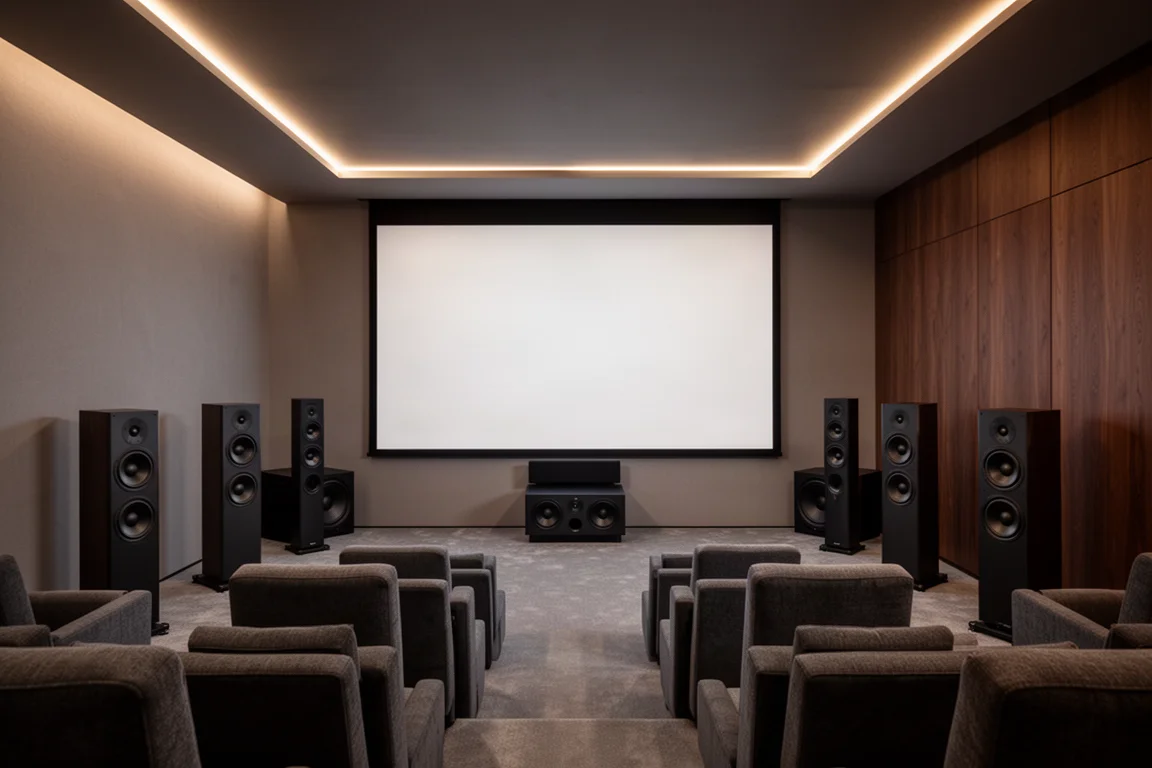
Listeners with a compact 5.1 system will likely find the Cinema 40 or a smaller model easier to justify, because much of what the Cinema 30 offers only pays off in larger rooms with more speakers.
Design and Build Quality
The all-metal front panel keeps the look restrained: an input selector, a volume knob, and a small display for volume level, selected source, sleep timer status, zone status, and radio tuning frequency. A hinged section along the lower edge opens to reveal the front panel controls, a larger display with more detailed information, a headphone jack, and the power button.
The sides of the panel use the textured finish that runs across the current Marantz line, and user-selectable lighting in the front panel adds a subtle accent without becoming distracting. The casework and rear panel are laid out cleanly and feel solid throughout.
Physically, this is a larger component than the Cinema 40. The chassis is deeper at 17.6 inches versus 15.8 inches, and it weighs 42.8 pounds versus 32.3 pounds. Both black and silver gold finishes are available, so it can be matched to the rest of a rack.
Power and Amplification
Marantz rates the Cinema 30 at 140 watts with two channels driven at 0.05% THD using a full range signal at 8 ohms, with peak power of 250 watts at 6 ohms. The 70% guarantee then promises that five channels will each deliver at least 70% of the rated two-channel output, which works out to roughly 98 watts per channel into 8 ohms. Actual performance is expected to land slightly above that floor.
That rating approach matters because it avoids the shortcuts that make some specifications look stronger than they are, such as measuring a single channel, quoting power at excessive distortion, or using a 1 kHz test signal that does not reflect full range output. The result is a realistic picture of how much power a complete surround system will receive.
Inside, the amplifier section uses an 835VA toroidal transformer and two 22,000 microfarad power supply capacitors feeding 11 discrete HDAM Class AB output modules. Copper plating inside the chassis adds isolation, and the finished components are tuned by Marantz’s Sound Masters in Japan. Preamp outputs for all 13.4 channels are driven by the HDAM SA2 preamplifier stage.
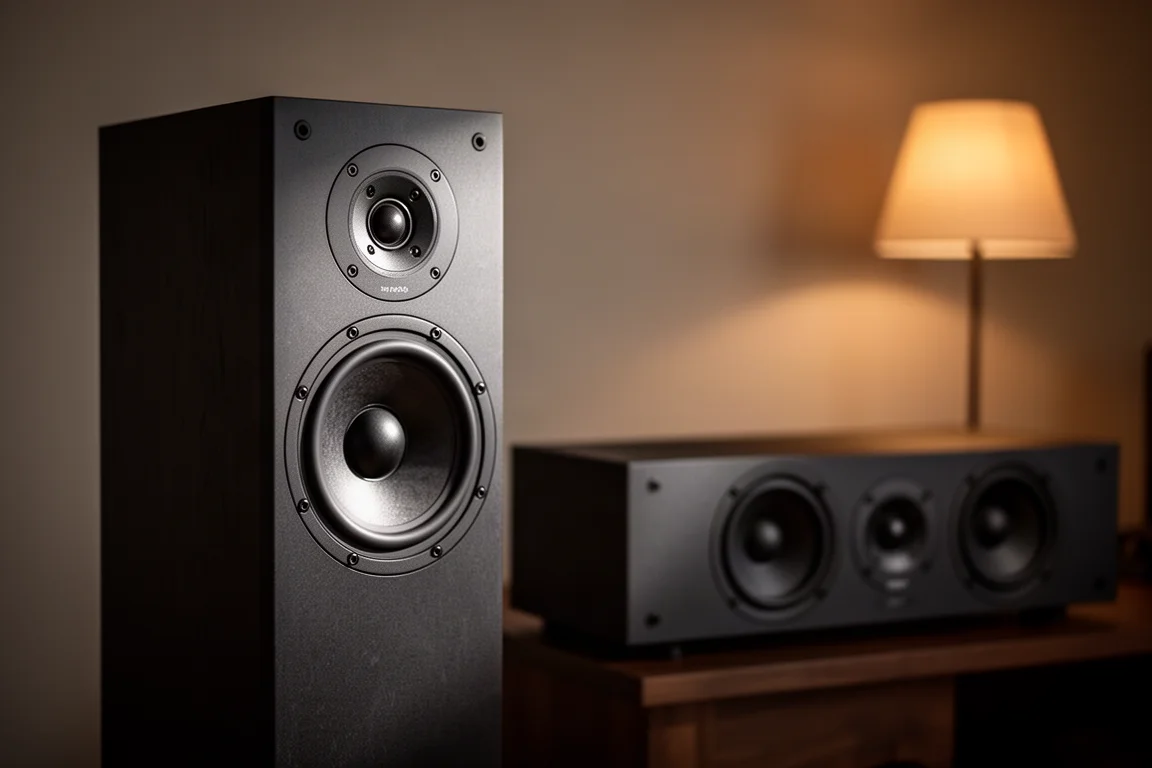
For most rooms this is more than enough current for a full speaker package, and the preamp outputs mean the receiver can stay in a system even if separate amplification is added later.
Connectivity and Video Support
Seven 8K HDMI 2.1 inputs and two independent 8K HDMI outputs cover a projector and a television at the same time, with HDMI ARC and eARC support and a separate 4K HDMI output for a second zone. 8K upscaling, HDR, HLG, Dolby Vision, HDR10+, and dynamic HDR are all supported, which keeps the receiver compatible with current disc players, streamers, and game consoles.
Digital connections include two coaxial and two optical inputs plus USB. Analog inputs are generous, with multiple RCA inputs for CD players and other components, and there is even a component video input for legacy sources. A moving magnet phono input handles a turntable directly, and Bluetooth is supported for late-night headphone listening. Voice control works with Alexa, Google Assistant, and Siri.
Processing, Formats, and Streaming
The digital section uses 32-bit ESS Sabre DAC chips with built-in jitter reduction, feeding a dual SHARC DSP chipset. That processing chain brings the Cinema 30 much closer to Marantz’s AV10 reference processor than its position in the range would suggest, and it decodes the formats used by current films and music: DTS HD Master Audio, DTS:X, DTS:X Pro, DTS Neural:X, DTS Virtual:X, Dolby TrueHD, Dolby Atmos, Dolby Atmos height virtualization, Dolby Atmos Music, and Dolby Surround.
Music support is broad. FLAC and WAV files play back losslessly up to 24-bit/192 kHz, DSD is supported at 2.8 and 5.6 MHz, and gapless playback is included. The MDAX 2 algorithm is on hand to make compressed MP3 files sound fuller. Streaming covers HEOS multi-room, AirPlay, Spotify Connect, Pandora, SiriusXM, and Roon tested compatibility, with Amazon Music and Tidal available through their apps.
Speaker configuration is flexible. Run 11 powered channels for an 11-channel system, or use the 13.4 preamp outputs and add a two-channel amplifier for the remaining pair. In a 5 or 7 channel setup, spare channels can be assigned to bi-amp the main speakers.
Room Correction and Calibration
Audyssey MultEQ XT32 is included, and the Cinema 30 also supports Dirac Live room correction with Dirac Live Bass Control. Dirac Live carries an additional cost, but it adds more powerful speaker tuning and independent bass management for each subwoofer.
Four subwoofer outputs are independently controlled, which is a meaningful change for anyone running more than one sub. Fine-tuning each one separately gives cleaner, better balanced low frequency output than a single shared output can.

Setups that skip Dirac still benefit from the four subwoofer outputs, since a pair of subs can be aligned individually rather than treated as one.
Listening Impressions
With a full surround system in place and Audyssey calibration completed, the Cinema 30 drove a tower speaker package to room-filling levels with power in reserve. A demanding action sequence with a long underwater passage revealed the extra detail and finesse that the upgraded conversion and processing bring, and a hard-hitting action film on 4K Blu-ray showed what Dirac Live tuning adds: a spacious, dynamic presentation that stays composed when the mix gets loud.
The one consistent observation is that the warm, musical voicing Marantz is known for can make the most aggressive dynamic scenes feel slightly restrained. It is a minor point and only becomes noticeable on the most demanding tracks.
Bass performance stands out. With four subwoofer outputs tuned through Dirac Live Bass Control, low frequencies reached deep with a level of frequency balance usually associated with far more expensive processors. Overall, the receiver comes closer to Marantz’s AV10 and AMP10 separates than its place in the range implies.
In two-channel listening, the warmth and musicality carry over. The 32-bit ESS Sabre conversion and Dirac Live tuning add realism and detail, and imaging and sound staging are strong for an AV receiver, though they do not reach the level of purpose-built high-end two-channel components.
How It Compares to the Cinema 40 and SR8015
Against the Cinema 40, the difference is mostly scale and refinement. The Cinema 40 provides nine powered channels and 11.4 preamp channels, including four subwoofer outputs, while the Cinema 30 provides 11 powered channels and 13.4 preamp channels. The Cinema 30 also outputs roughly 15 more watts into two channels, uses a toroidal transformer instead of an EI core transformer for lower radiated noise, adds copper cladding inside the chassis, and uses slightly higher performance DAC chips. Both include Audyssey MultEQ XT32 and both can be upgraded with Dirac Live room correction and bass control.
Against the SR8015, the amplifier sections are similar and deliver the same rated power, but the processing has moved on. The Cinema 30 uses 32-bit ESS Sabre DACs in place of older chips, supports more formats, and replaces a single subwoofer output with four independently controlled outputs. It also supports Dirac Live, which the SR8015 does not.
Things to Consider Before Buying
- Dirac Live room correction and bass control are optional and cost extra.
- The warm voicing can soften the most dynamic movie moments for listeners who prefer a more forward presentation.
- The chassis is deeper and heavier than the Cinema 40, so rack depth and shelf clearance need checking.
- A 5 or 7 channel system will not use the extra powered channels or the full 13.4 processing capability.
- The price class is premium, so the value case depends on how large a system you plan to build.
Buying Advice
Choose the Cinema 30 if you want 11 powered channels, a clear path to 13.4 channels, four independently controlled subwoofer outputs, and the option to add Dirac Live now or later. It is the most capable receiver in the Cinema range, and the conservative power rating makes it easier to plan a speaker package around it.
If nine powered channels cover your layout and you do not need the extra processing headroom, the Cinema 40 remains a strong alternative. SR8015 owners with a fully built system can reasonably stay put, while anyone chasing more detail, more subwoofer control, or Dirac Live will find the Cinema 30 a worthwhile step up.
Conclusion
The Marantz Cinema 30 is a flagship receiver built around accurate power ratings, flexible speaker configuration, and a deep connection suite. Its DAC and processing hardware, four independent subwoofer outputs, and Dirac Live support deliver a level of capability that is usually reserved for separate processors. For a large home theater that also handles music well, it is a top contender in its price class.
Product link
View more details for Marantz Cinema 30
This product is mentioned in the review. Check the specifications, options, and compatibility before buying.
View more details for Marantz Cinema 30Further reading
Related Reviews
Home Theater
Anthem AVM 90 Review: A 15.4-Channel Flagship Preamp Processor
A close look at Anthem's flagship preamp processor, covering its dual ESS DAC architecture, 15.4-channel layout, ARC Genesis calibration and four independent subwoofer outputs.
Home Theater
Apple TV 4K With AirPods: A Best-Value Home Theater Setup
An Apple TV 4K paired with AirPods over Bluetooth makes a compact home theater setup for movies, spatial music and late-night viewing, and it can be assembled for as little as $300.
Home Theater
Arcam AVR15, AVR25, AVR35, and AVP45 Compared: Which AV Amplifier Fits Your System?
Four new Arcam home theater components share nine-channel amplification and Dirac Live, but differ in power, processing ceiling, and channel flexibility.