Home Theater
Marantz AV30 and AMP30 Explained: Where They Fit in the Reference Lineup
Two new Marantz separates join the reference home theater range, and here is how the AV30 processor and the AMP30 amplifier compare with the AV10, AV20, AMP10 and AMP20.
Introduction
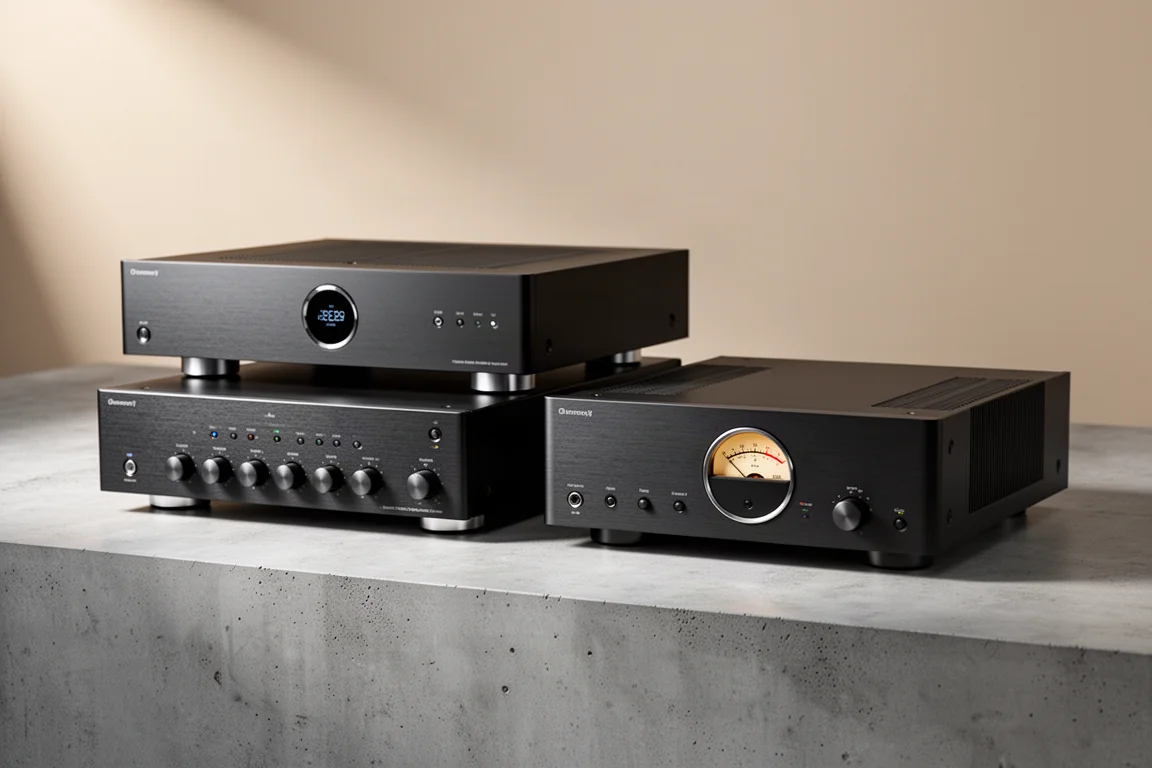
Marantz has added two new separates to its reference home theater line: the AV30 AV preamplifier and the AMP30 six-channel power amplifier. Both sit below the existing flagship models, and both are aimed at listeners who want the character and build quality of that range without committing to the channel counts of the largest systems.
Like the AV10, the AV20, the AMP10 and the AMP20, the new AV30 and AMP30 are built at Marantz’s Shirakawa factory in Japan and tuned by the company’s sound masters. That facility is fully vertically integrated, which means design, prototyping and final assembly all happen under one roof, and products built there carry a five-year parts and labor warranty.
That combination of a defined factory, a long warranty and a clear position in the range matters when you are assembling a system you intend to keep for years. What follows is how each model in the current lineup fits together, and where the two new units make the most sense.
Marantz AV30 and the 11.4-Channel Sweet Spot
The AV30 processes 11.4 channels, which is enough for a full 7.4.4 speaker layout: three front channels, a complete surround and rear surround array, four height speakers, and up to four independently calibrated subwoofers. For a great many rooms, 7.4.4 is the practical sweet spot rather than a compromise.
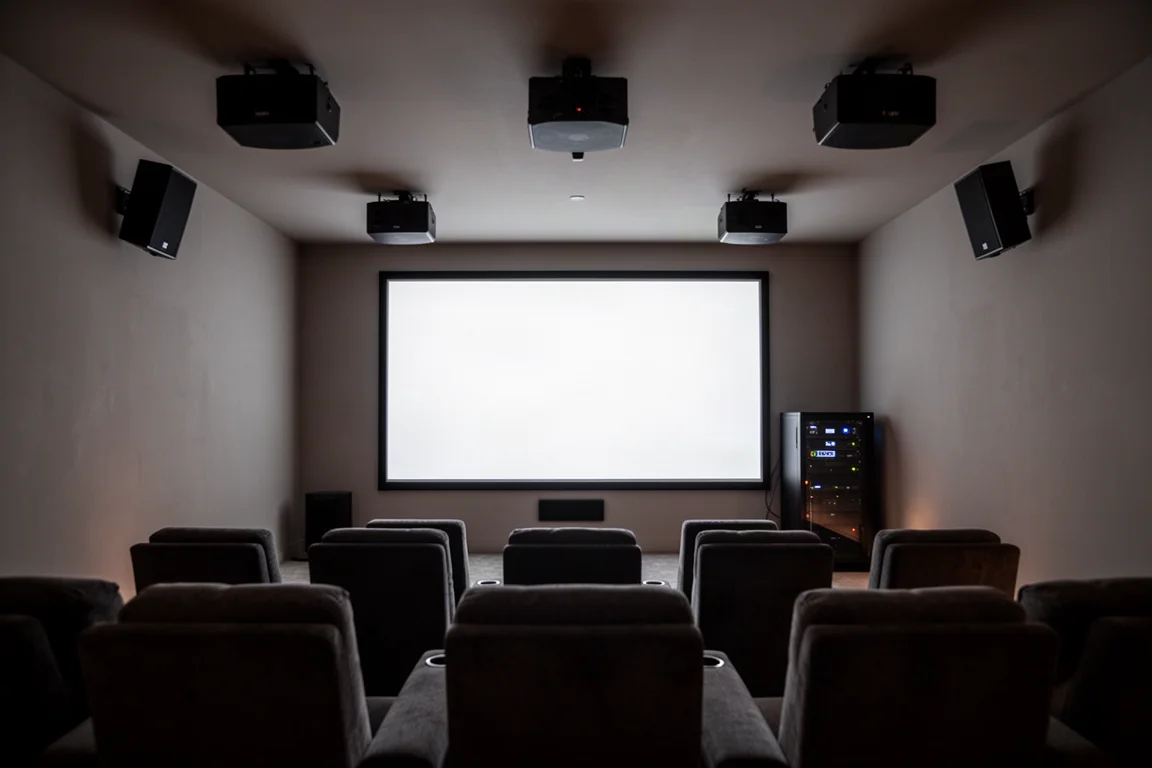
Room correction is built in, with Audyssey MultEQ XT32 supplied as standard. It remains one of the most approachable calibration systems, useful for listeners who want strong results without spending hours editing curves. Dirac Live is available as an optional upgrade, including Dirac bass control and active room treatment, for owners who want deeper control over the result.
The AV30 keeps four independent subwoofer outputs, so each subwoofer can be calibrated on its own, which helps bass smoothness and consistency across multiple seats. Balanced XLR outputs sit alongside conventional RCA outputs, giving useful flexibility when choosing power amplifiers, and the guided onscreen setup keeps configuration straightforward even for a first high-channel-count system.
On the video side, the AV30 provides seven HDMI inputs and three outputs, all HDMI 2.1 with up to 40 Gbps of bandwidth. That covers 8K, 4K at 120 Hz, HDR10+, Dolby Vision and HLG, along with VRR, ALLM and QFT for gaming, plus HDMI eARC for clean audio return from a modern television.
Streaming is built in through HEOS, with support for the major streaming services and multi-room audio, and Bluetooth with retransmit lets you listen on wireless headphones without disturbing the rest of the house. The AV30 also works with Tidal and Qobuz Connect and is Roon ready, which matters if the system doubles as a serious music setup.
Marantz AMP30 and Flexible Six-Channel Power
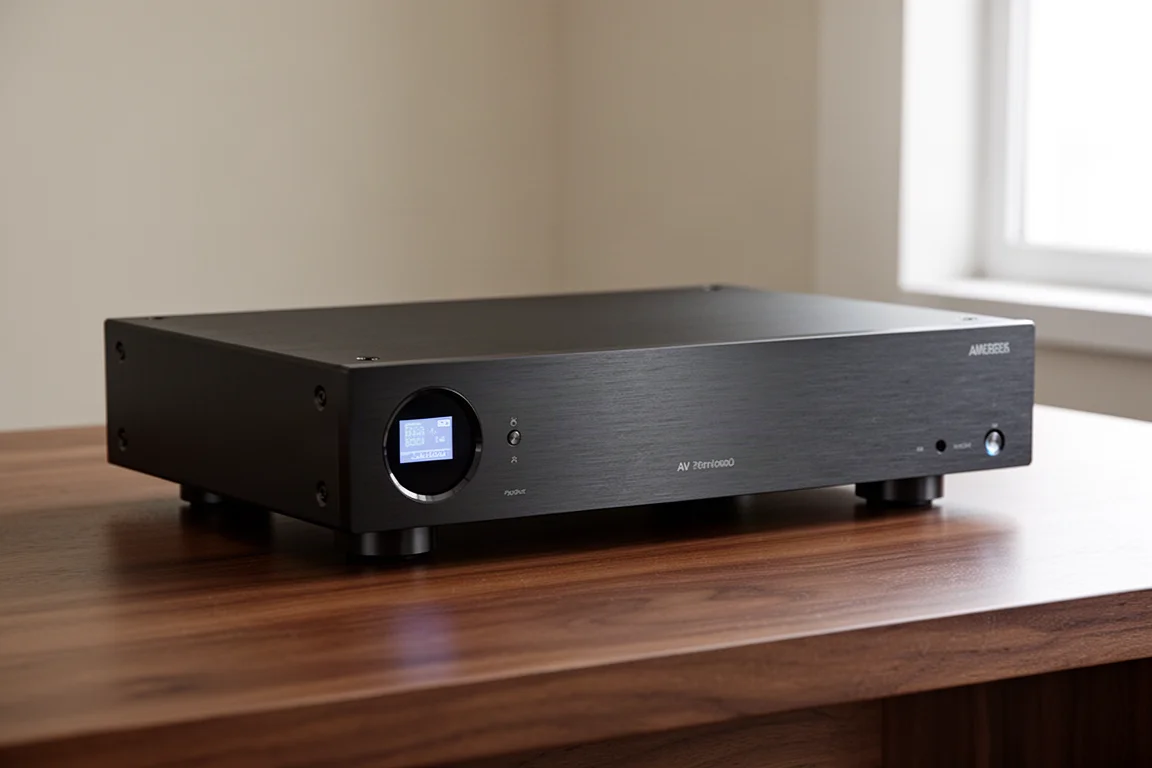
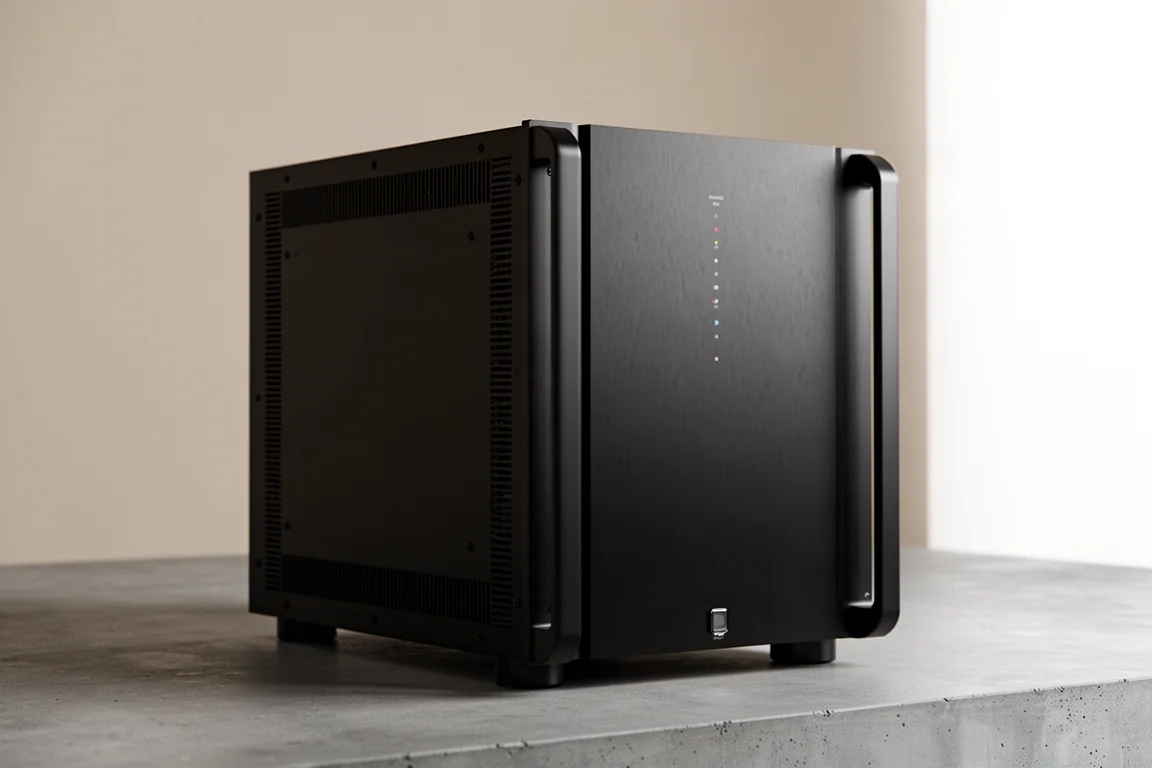
The AMP30 takes a different approach from the AMP20 and AMP10. Rather than fitting as many channels as possible into one chassis, it concentrates on six channels of high-quality power in a noticeably slimmer design. Each channel is rated at 200 watts into 8 ohms and 400 watts into 4 ohms, which is ample for demanding speakers.
Two modes add flexibility. In BTL, or bridge-tied load mode, pairs of channels are bridged so the amplifier becomes a three-channel unit delivering 400 watts per channel into 8 ohms, which suits a left, center and right front stage. In bi-amp mode, high and low frequency duties can be split across compatible speakers.
Balanced XLR and unbalanced RCA inputs are included, along with Marantz’s HDAM and current feedback amplification topology. The front panel carries the classic porthole with an analog level meter and subtle side lighting that matches the rest of the reference range.
Physically, the AMP30 is easier to place than its larger siblings. All three amplifiers share the same 17.4-inch width and depth, but the AMP10 and AMP20 stand around 7.5 inches tall while the AMP30 is only 4.4 inches tall. That reduced height helps in existing media furniture and crowded equipment racks where vertical space is limited.
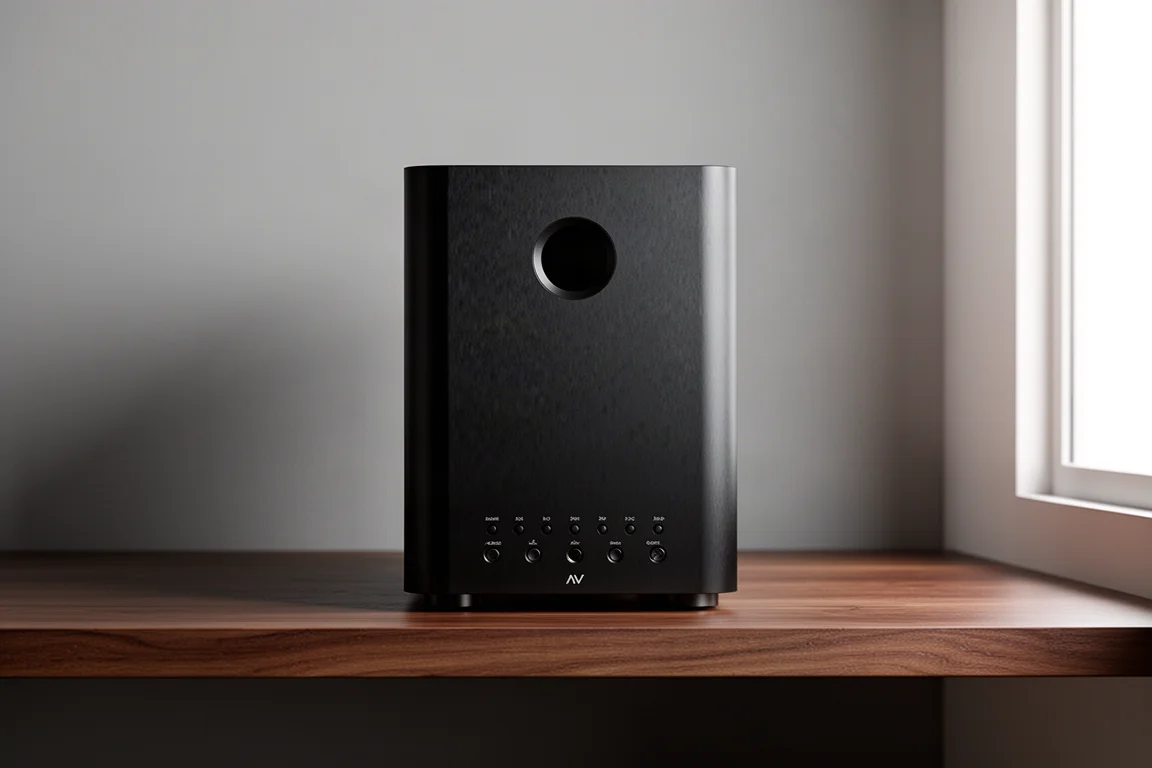
Marantz AV20 and the Step Up in Components
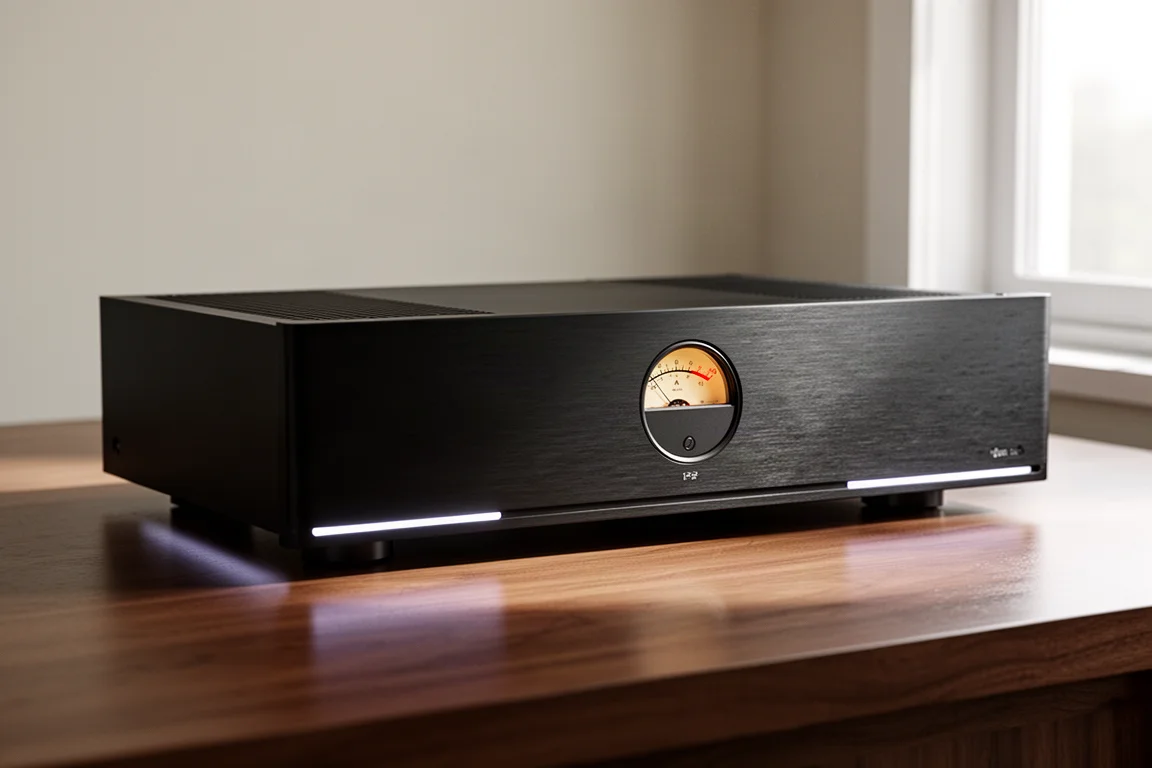
The AV20 processes 13.4 channels and keeps almost all of the AV10’s performance while fitting more rooms and more budgets. It uses multiple stereo digital-to-analog converters from the ESS reference line, and those converters alone are roughly eight times more expensive than the ones used in the AV30.
The AV20 also carries 17 HDAM SA3 boards, and its chassis is copper plated, following the flagship approach to build and shielding. For listeners with a revealing system, those choices translate into more low-level detail and nuance from films and concerts.
Marantz AV10 and the Flagship Processor
The AV10 remains the flagship of the range, with 15.4 channels of processing, four independent subwoofer outputs, and sound quality that rivals dedicated two-channel components. It uses 19 HDAM SA3 boards and a copper plated chassis.
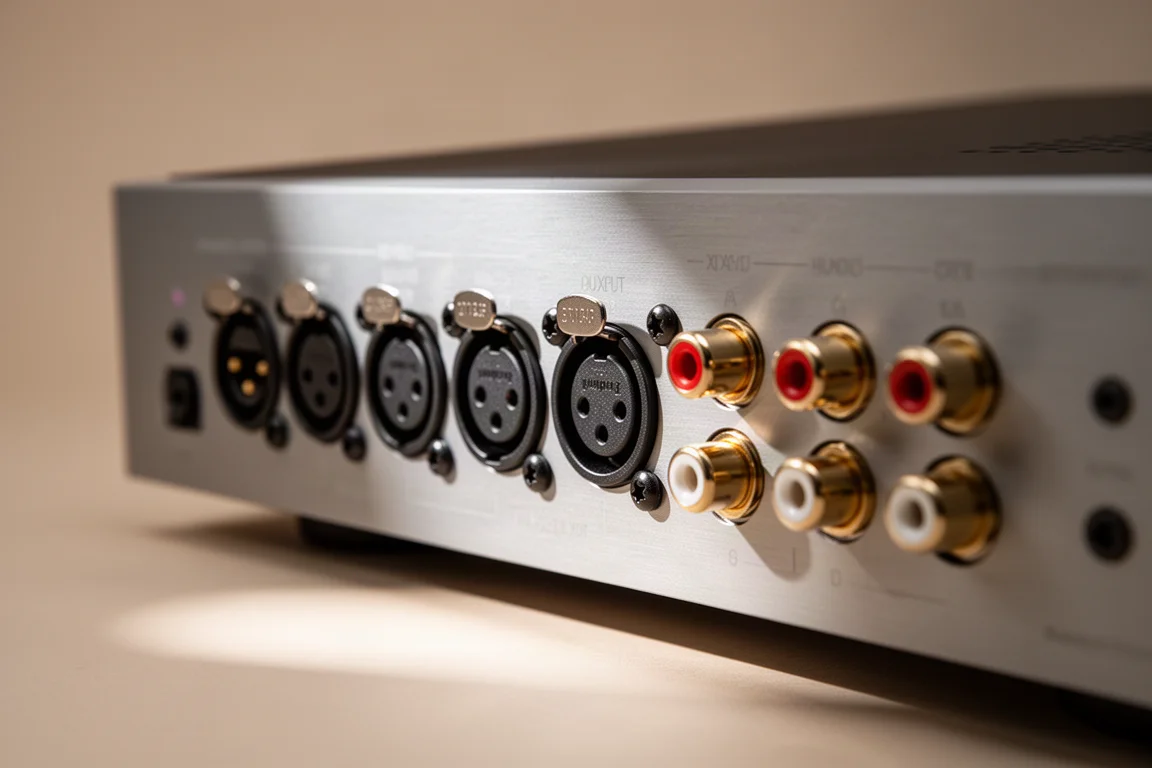
Its supply is built around a large toroidal transformer with OFC wiring, making it the most generously specified processor in the lineup. Buyers who step up to it are paying for the highest component grade Marantz offers in a processor, not simply for a higher channel count.
Marantz AMP20 and Twelve-Channel Amplification
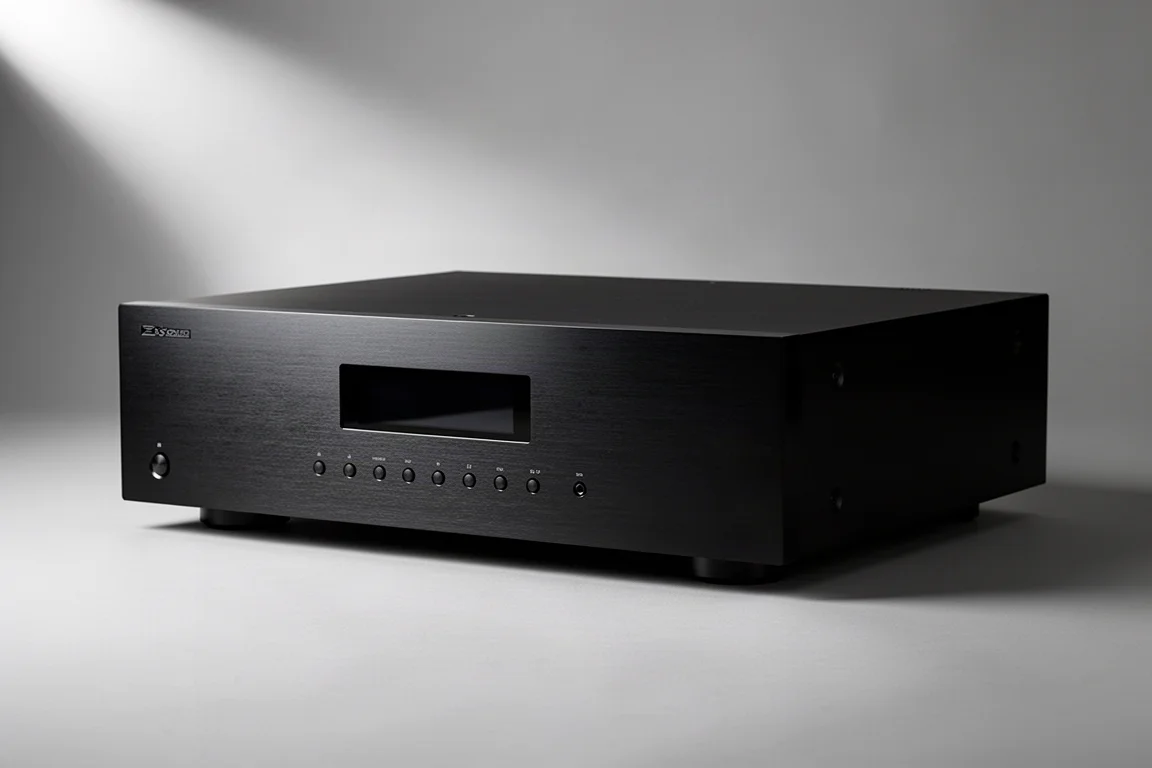
The AMP20 delivers 12 channels of amplification in a single chassis, which makes it a strong all-in-one solution for larger surround systems. It stands around 7.5 inches tall, so it needs a shelf or rack with real vertical clearance.
Where the AMP30 is modular, the AMP20 is about covering an entire system from one box. For a room with a full surround and height array, that can mean fewer separate units and fewer cable runs to manage.
Marantz AMP10 and Sixteen-Channel Amplification
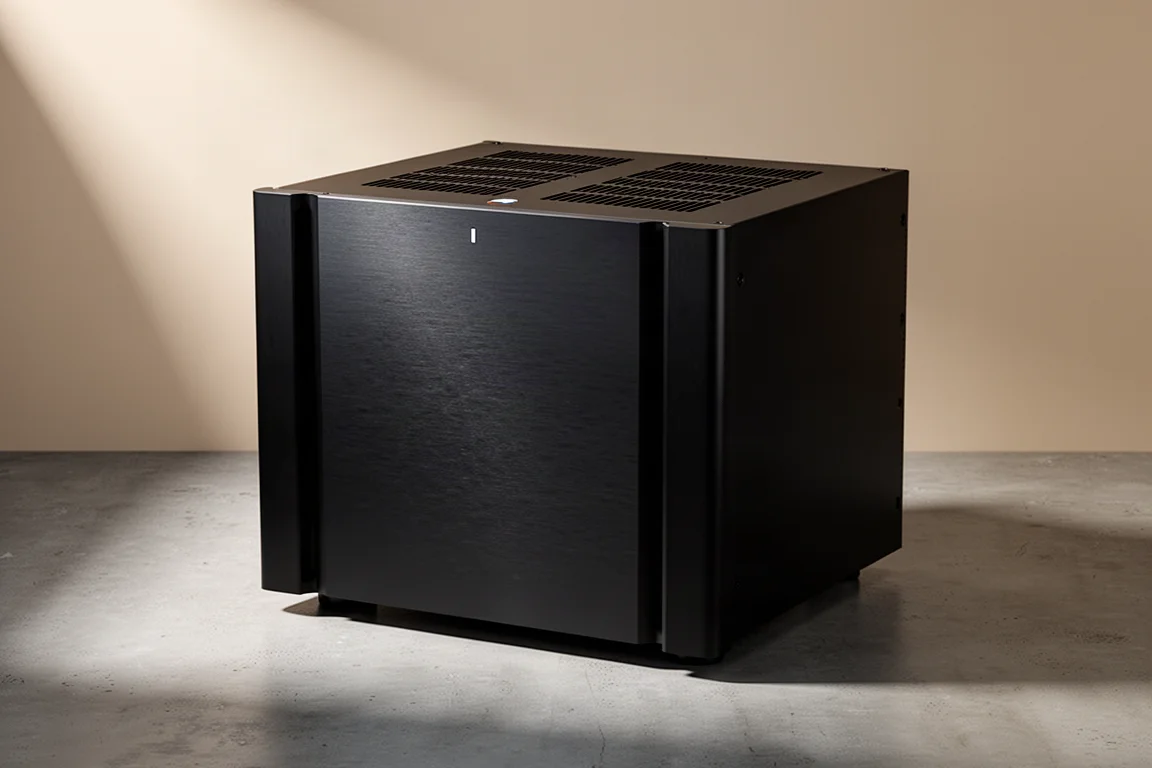
The AMP10 takes the same concept further with 16 channels, aimed squarely at very large and complex home theaters where everything can live in one amplifier. It shares the 17.4-inch width and depth and the roughly 7.5-inch height of the AMP20.
That channel count is more than most rooms will ever use, but in a dedicated theater with a dense speaker array it removes the need to distribute amplification across several boxes.
How the AV30 and AMP30 Compare With the Flagships
The AV30 shares a great deal with its more expensive siblings, but it is not simply an AV20 with fewer channels. It uses two converters from the ESS high performance line, while the AV20 and AV10 use multiple stereo converters from the ESS reference line.
HDAM implementation differs as well. The AV20 carries 17 HDAM SA3 boards and the AV10 carries 19, while the AV30 uses a single 15-channel HDAM SA2 board. All three rely on a substantial toroidal transformer, but the supply is larger in the upper models and uses OFC wiring. The chassis is copper plated on the AV20 and AV10 and steel on the AV30.
In practice, stepping up to the AV20 brings more micro detail and nuance out of a film or a concert, and the AV10 takes that further again. The AV30 is still a strong performer in its own right, and it surpasses the AV7706 by a wide margin, with much of the sonic benefit Marantz developed for the AV10 carried over.
On the amplification side, the AMP30’s modular design is the main philosophical difference. It is intended to be combined with additional AMP30 units, or mixed with AMP20 and AMP10 models, so power can be allocated where it matters most, such as extra output for the front stage while higher channel count amplifiers handle surrounds and height speakers.
Suggested System Configurations
One clean option is an AV30 paired with two AMP30 amplifiers. Because all three units are slim, the stack takes up less space than the combined channel count might suggest, and it provides 12 channels of isolated power with the AV30 handling processing. Two channels can then be bridged to send 400 watts to the center speaker.
Another sensible combination is an AV30 with an AMP20 and an AMP30, using the AMP30 for the front stage and the AMP20 for surround and height channels. Owners who already have an AMP10 or AMP20 can add an AMP30 to raise power for the most critical speakers without replacing the whole system.
Listening Notes for Music and Movies
Extended listening with early samples of the AV30 and AMP30 covered both music and film. With Fleetwood Mac’s Dreams, the first impression was the familiar Marantz warmth. The lead vocal sat locked in the center with full-bodied presence, and the rhythm section had the kind of timing that keeps you listening track after track.
On film material, the AV30 and AMP30 combination powering the left, center and right speakers plus two surrounds handled serious dynamics. Through the Mach 10 Darkstar sequence in Top Gun Maverick, the separation between the roar of the jet engines and the dialogue held up well, and the panning of aircraft passing overhead came across cleanly even without height speakers, without ever turning harsh or fatiguing.
With a revealing system, the AV20 and AV10 will still dig deeper. They add more air around instruments and more detail in dense cockpit effects, and the flagship models remain the choice for the very best of the range. The AV30 nevertheless delivers a satisfying result at its position in the lineup.
Conclusion
The AV30 and AMP30 do not replace anything in the range. They widen it. If you want the sonic character of the AV10 or AV20 but do not need their channel counts, the AV30 offers 11.4 channels, four independent subwoofer outputs, Dirac Live as an option, and a modern HDMI 2.1 board set.
If your amplification has grown piece by piece, the AMP30 offers a clean, powerful and flexible way to add six channels, bridge to three high-output channels, or build a modular system that can grow later. For anyone upgrading from an older Marantz processor such as the AV8805 or AV7706, the AV30 represents a meaningful step forward in HDMI capability, bass management, room correction options and overall sound quality.
Both new units are built at the Shirakawa factory in Japan and covered by a five-year parts and labor warranty, which is worth weighing when the plan is to keep a system in place for a decade.
Further reading
Related Reviews
Home Theater
Anthem AVM 90 Review: A 15.4-Channel Flagship Preamp Processor
A close look at Anthem's flagship preamp processor, covering its dual ESS DAC architecture, 15.4-channel layout, ARC Genesis calibration and four independent subwoofer outputs.
Home Theater
Apple TV 4K With AirPods: A Best-Value Home Theater Setup
An Apple TV 4K paired with AirPods over Bluetooth makes a compact home theater setup for movies, spatial music and late-night viewing, and it can be assembled for as little as $300.
Home Theater
Arcam AVR15, AVR25, AVR35, and AVP45 Compared: Which AV Amplifier Fits Your System?
Four new Arcam home theater components share nine-channel amplification and Dirac Live, but differ in power, processing ceiling, and channel flexibility.