Home Theater
Marantz AV20 and AMP20 vs AV10 and AMP10: Which Combination Fits Your System?
A practical comparison of Marantz's newest 13.4-channel processor and 12-channel amplifier against the flagship AV10 and AMP10, covering channels, power, board design, and setup.
Introduction
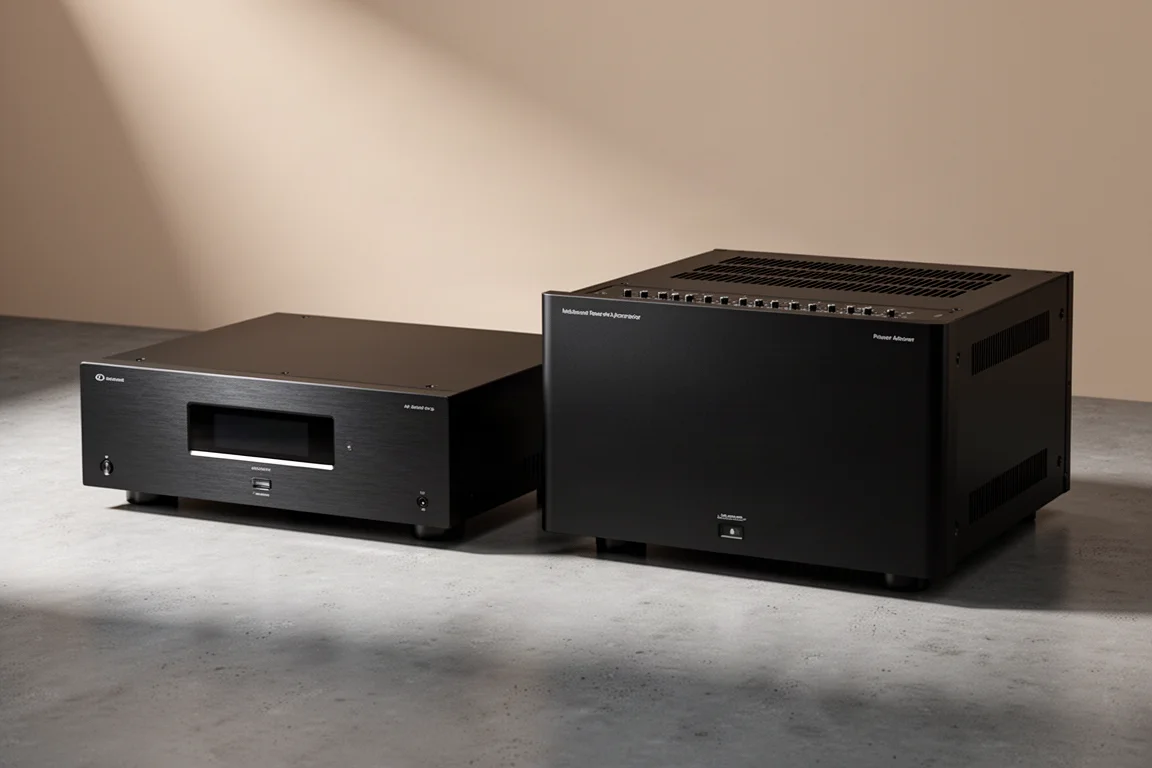
The AV10 processor and AMP10 amplifier arrived in 2024 as Marantz’s flagship home theater pair, setting a new performance benchmark for the brand. The AV20 processor and AMP20 amplifier now join them at roughly 20% less, which raises an obvious question: what do you actually give up, and when does the flagship still make sense?
Both pairs share a design philosophy, a factory, and in several places the same hardware. The differences are specific rather than sweeping, and they come down mostly to channel count, board layout, and how much fine tuning has gone into the analog stages.
What Sets These Marantz Components Apart
Marantz has been building audio equipment since the 1950s, when the company was founded by Saul Marantz, and vintage pieces still command strong prices on the used market. To protect that signature sound, Marantz created the role of sound master, whose job is to evaluate prototypes and adjust parts and circuitry until the audio quality matches what has defined the brand for decades.
All four of these components are produced at the Shirakawa Marantz factory in Japan. The facility is fully vertically integrated, so concept, design, prototyping, and full production all happen under one roof, which lets engineers work closely together throughout development. Nearly everything built there carries a full five-year parts and labor warranty, and that includes the AV20 and AMP20.
That manufacturing and warranty context matters when comparing prices, because the more affordable pair is not a stripped-down product from a different line. It comes from the same building, the same engineering culture, and the same support terms as the flagship models.
Marantz AV20: 13.4 Channels With an Updated HDMI Board
The AV20 is a 13.4-channel surround processor: thirteen channels plus four independent subwoofer channels that can each be calibrated separately. That is enough for a multi-row theater with three front channels, a pair of front wides, main surrounds, back channels, and four height channels, with up to four subwoofers tuned individually.
Connectivity is broad. There are seven HDMI inputs and three outputs, and the HDMI board is newer than the one in the AV10, with all inputs supporting 8K at 40 Gbps. AMD FreeSync is included as a branded form of variable refresh rate. Immersive audio coverage includes Dolby Atmos, DTS:X, IMAX Enhanced, 360 Reality Audio, and AURO-3D.
Analog and legacy sources are well covered too: one moving magnet phono input, two optical and two coaxial digital inputs, plus two composite video and one component video input that can be upscaled to the HDMI outputs, so an older disc player can still be connected. HEOS streaming is built in, Bluetooth with retransmit is on board, and the unit is Roon ready. Balanced connections sit alongside RCA outputs for every channel, and two additional zones of preamp outputs cover other rooms in the house.
Room correction is Audyssey MultEQ XT32 as standard, with Dirac Live available through an optional software purchase. Audyssey is the simpler path for most people and includes target curves, while Dirac offers more depth for those willing to work through the setup process. Setup itself is guided, either through the on-screen menu, which walks through speaker assignment with clear visuals, or through a web interface reached by typing the unit’s IP address into a browser.
Two speaker presets are useful for switching between a small-group calibration and an averaged large-crowd measurement, or between Audyssey and Dirac for a direct comparison, and Smart Select makes changing between them quick. Two-channel music playback can use different crossovers from theater playback, or run full range.
Inside, the AV20 shares its power transformer with the AV10, uses a large fully discrete power supply at the front of the chassis to reduce noise, and arranges the audio boards for a short signal path. The chassis is 18 inches deep, an inch less than the AV10, which helps on tighter shelves.
Marantz AV10: The Reference Processor
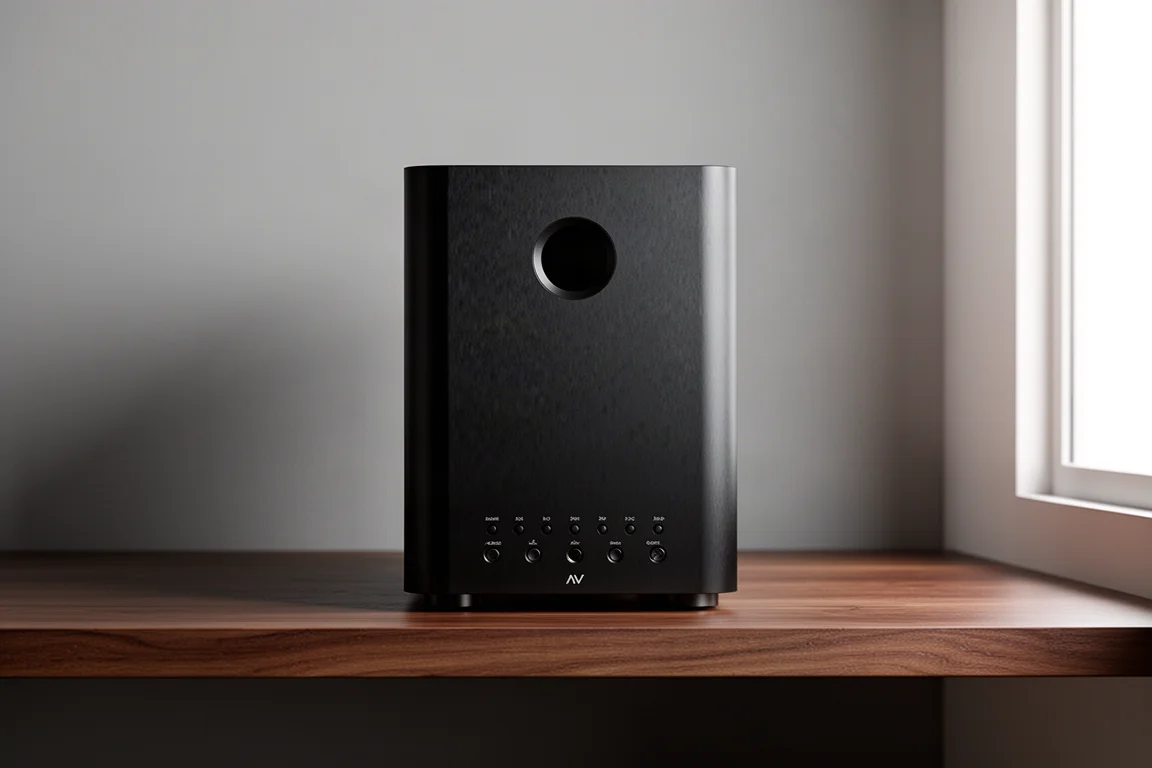
The AV10 offers 15.4 channels of processing and established the current benchmark when Marantz introduced it in 2024. It uses the same ESS digital-to-analog conversion approach as the AV20, with ten DAC chips rather than nine to cover the additional channels, and it shares the same power transformer.
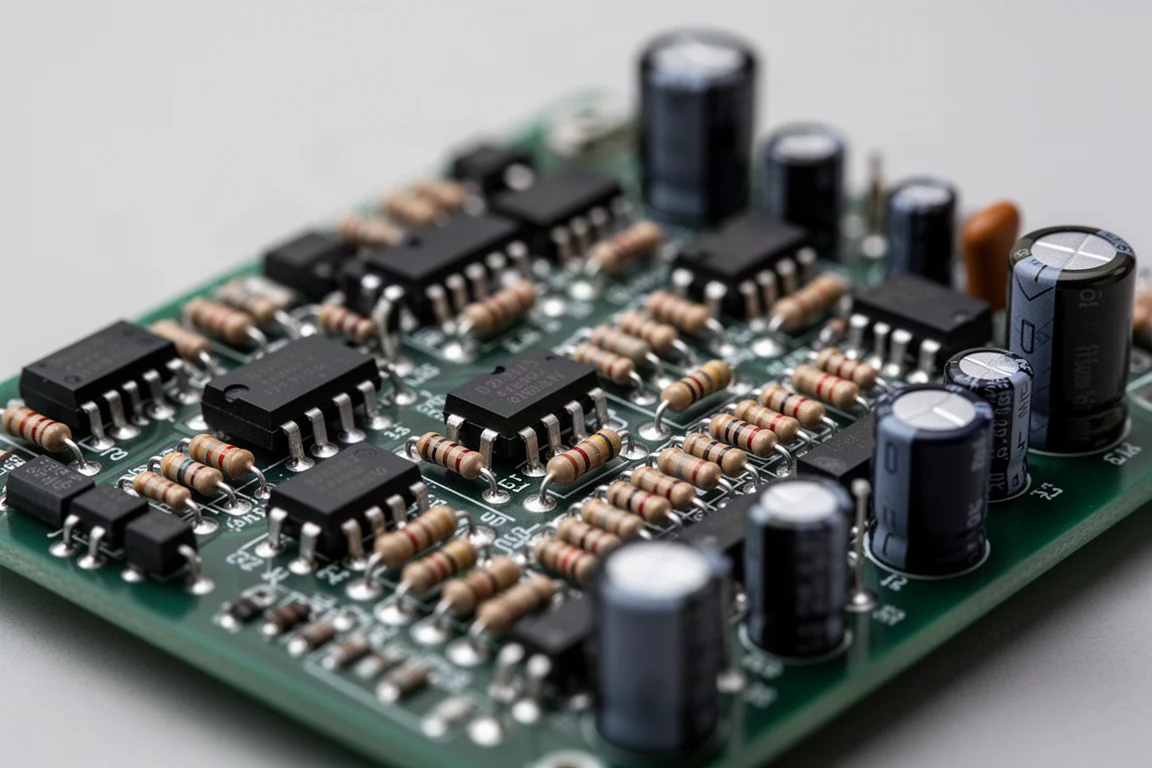
Where the AV10 separates itself is the analog stage. Its HDAM boards, short for hyper-dynamic amplifier module, are more sophisticated than those in the AV20. HDAM uses all discrete components in place of the inexpensive op amps many companies rely on, and Marantz builds them so the sound masters can tune them with better parts and for the specific application they serve.
Three concrete board differences set the two processors apart. The AV10 uses thin film resistors, which are well regarded in high-end audio for audio quality. Its surface-mount power supply capacitors have higher capacity. And its board is a four-layer design with separate layers for each channel, the power supply, and ground, while the AV20 separates the channels but combines the ground and places the power supply on one of the channel layers, for two boards in total. The AV10 chassis also uses bigger layers for more rigidity.
In listening comparisons, the immersive effects were hard to distinguish between the two, but the AV10 came across as smoother overall, and that difference was clearest in two-channel listening. Listeners who spend serious time on music with high-quality speakers are the ones most likely to appreciate the extra tuning. The AV10 also has a better phono board, which can postpone the need for a separate phono preamp, though anyone serious about vinyl or running a moving coil cartridge is still better served by a dedicated unit.
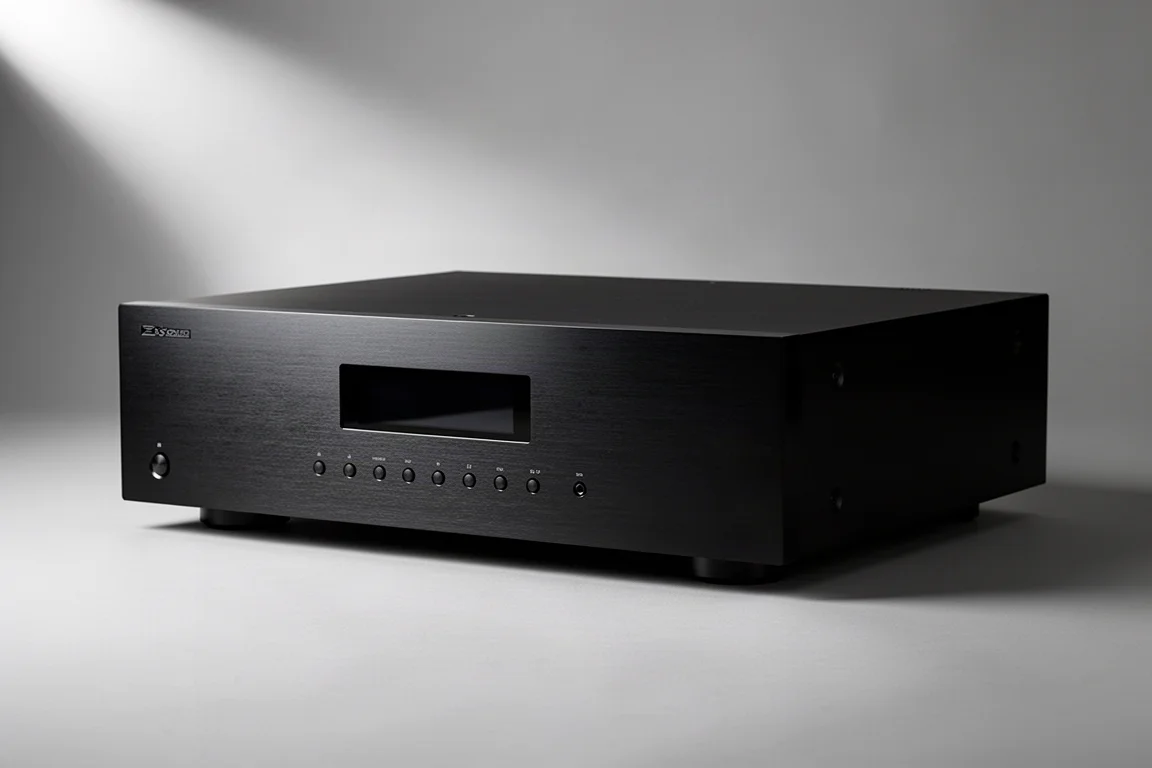
Marantz AMP20: Twelve Channels of Flexible Power
The AMP20 is a 12-channel multi-channel power amplifier. It uses a toroidal power transformer, Marantz HDAM SA2 modules, and the four-layer boards also found in the AMP10, along with a well-isolated power supply layout and the same toroidal transformer as its larger sibling.
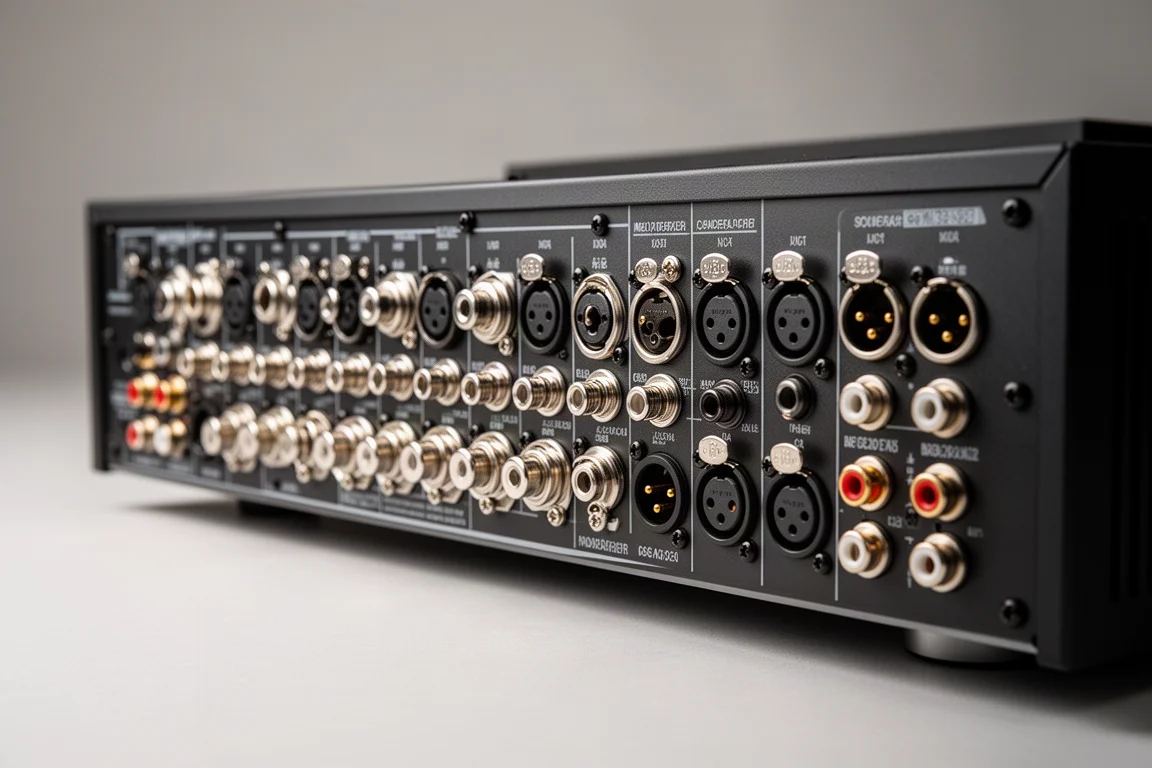
On the rear panel, the AMP20 provides the same solid binding posts and the same RCA and XLR inputs as the AMP10, which keeps flexible source connections available at the lower price. Its depth of 17.4 inches is roughly two inches less than the AMP10, and that can matter once XLR connectors add depth at the back. Both are substantial units, so dimensions are worth checking before committing to a shelf.
Power output is rated at 200 watts per channel with one channel driven at 0.05% distortion at 1 kHz, a fairly easy frequency. More telling is that the power does not drop when five channels are driven at 0.07% distortion, and 4-ohm output doubles with two channels driven at 0.07% distortion.
Two configuration features make the channel count go further. BTL, Marantz’s bridged mode, combines two channels into one and doubles output into 8 ohms, producing 400 watts when engaged. Bi-amp mode sends the odd-numbered input to both channels, so a bi-wired speaker can have one channel handling treble and the other handling bass.
For a nine-channel system, the AMP20 leaves three spare channels that can be bridged for double power to the front three speakers or used in bi-amp mode. An eleven-channel layout with four height channels leaves one spare channel for bridging or bi-amping the center channel, which is where many listeners will want the extra headroom.
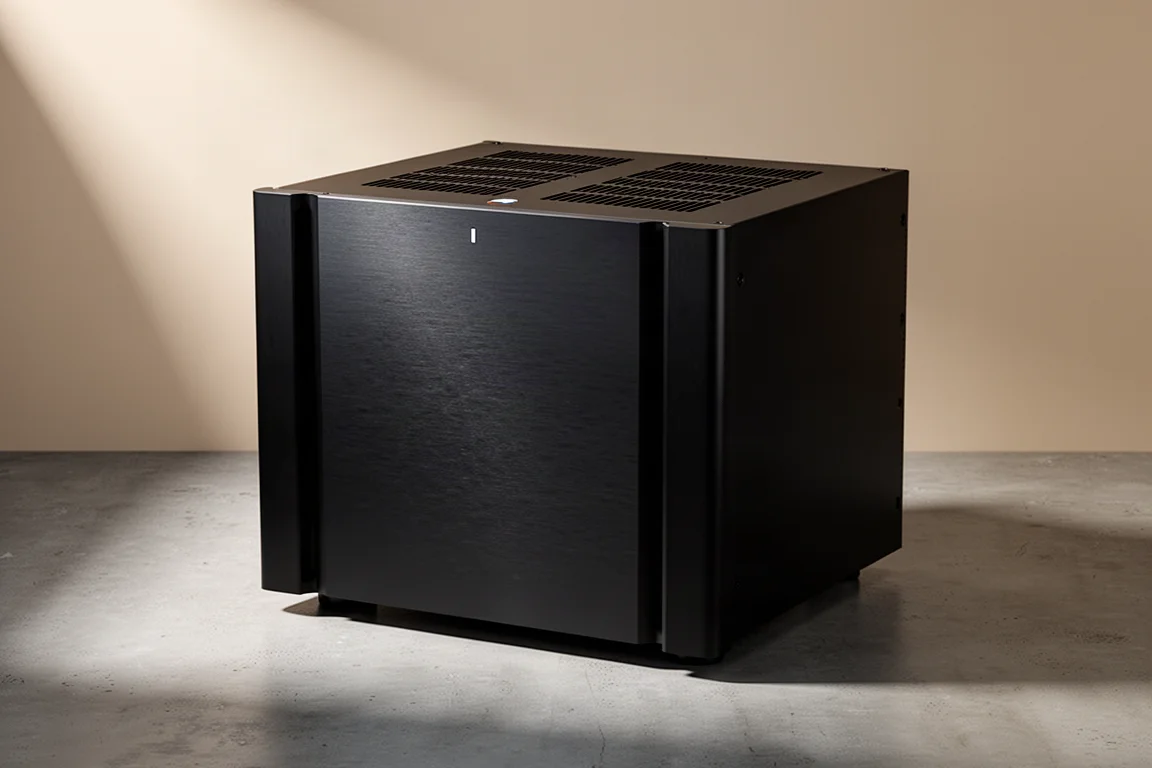
Marantz AMP10: Sixteen Channels for Large Systems
The AMP10 steps up to 16 channels, four more than the AMP20, and shares the same toroidal transformer, HDAM SA2 modules, and four-layer board design. The main chassis difference is that its side panels use 2.5 mm aluminum while the AMP20 uses 1.2 mm steel, which may offer a very small audio benefit. In practice, the two amplifiers are unlikely to sound noticeably different.
The rear panel is essentially identical apart from the extra channels, with the same binding posts and the same RCA and XLR inputs. Depth is the practical difference on the other side of the ledger: the AMP10 measures 19.2 inches deep, so it may not fit shelves that accommodate the AMP20. Power ratings match the AMP20 at 200 watts per channel with one channel driven at 0.05% distortion, with the same behavior when multiple channels are driven.
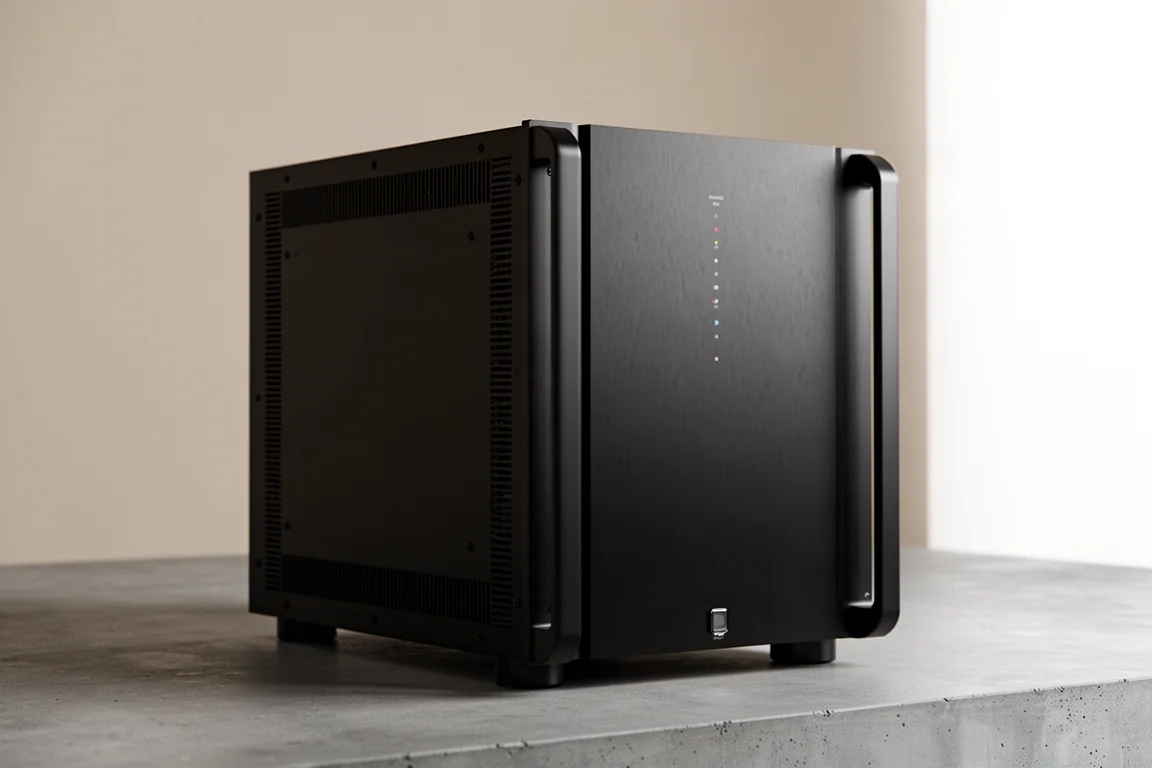
The extra channels open up more ambitious builds. Sixteen channels leave more room for bridging or bi-amping across a larger system, and two AMP10 units can supply 32 channels for a 15.4-channel configuration when paired with an AV10.
Matching Channels to Your Room
The right combination depends less on raw performance than on how many speakers you actually run. The AV20 covers 13 channels plus four subwoofers, which suits the majority of multi-row theaters. The AV10 covers 15.4 and adds the more refined analog stage for listeners who prioritize music.
On the amplification side, the AMP20 covers twelve channels, so it pairs neatly with systems of nine to eleven channels while leaving spare channels for bridging or bi-amping. Once a system exceeds twelve channels, the AMP10 becomes the simpler single-box answer.
Buying Advice: Choosing Between the AV20, AV10, AMP20, and AMP10
For most buyers, the AV20 and AMP20 deliver the core experience. The AV20 keeps four independently calibrated subwoofer channels, the newer 8K-capable HDMI board with FreeSync, the full set of immersive formats, balanced outputs, and two extra zones, while the AMP20 supplies the same 200-watt rating and the same connection options as the flagship amplifier. Together they cost roughly 20% less than the flagship pair and take up less depth in a rack.
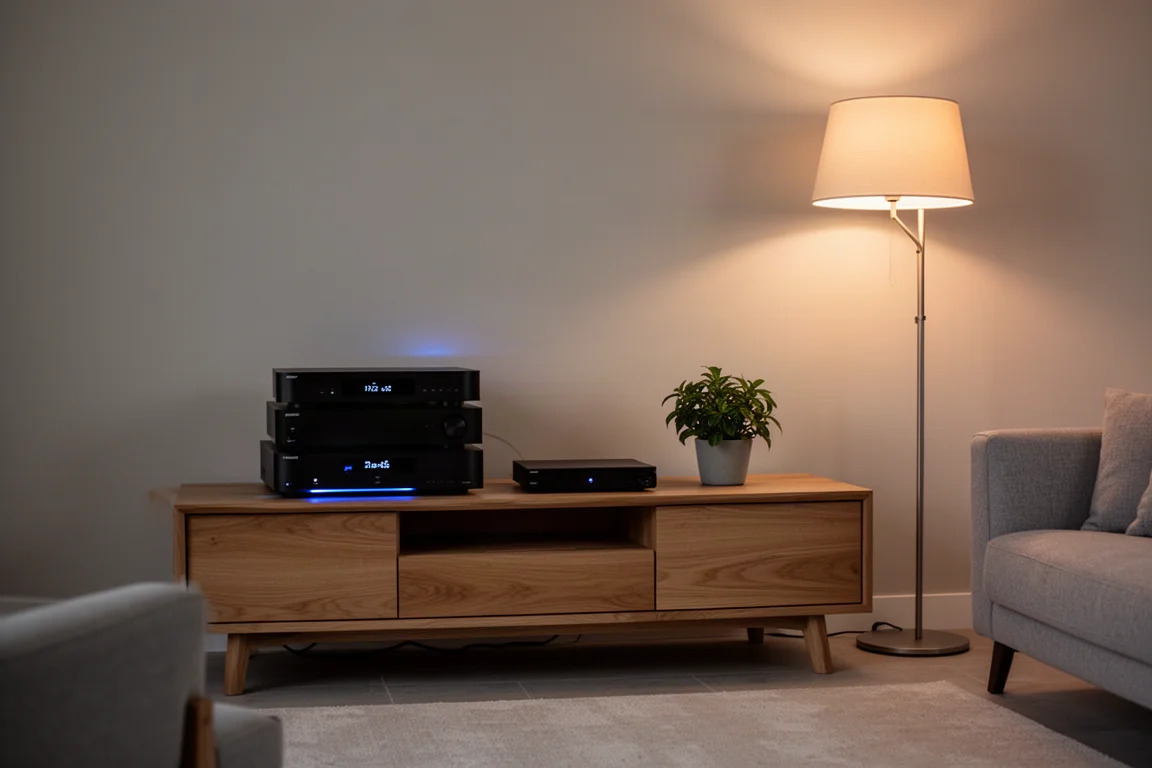
The AV10 and AMP10 make more sense in two situations. The first is a large theater that needs 15.4 channels of processing and 16 channels of amplification, where the flagship pair avoids adding a second amplifier. The second is a music-first system with high-quality speakers, where the AV10’s thin film resistors, higher-capacity capacitors, and separate board layers produce the smoother two-channel presentation. If you run the AV20 at its full 13 channels, one practical route is a separate stereo amplifier for the main speakers, leaving the AMP20 to handle the remaining eleven channels with a spare channel available for the center. Marantz’s own two-channel Class AB 725 power amplifier is one option worth considering here.
Owners of older Marantz processors such as the AV8805 or AV7706 have clear reasons to move up, including better subwoofer control, the Dirac option, the latest HDMI support, and improved audio. At this channel level, the AV20 is also among the more affordable surround processors available.
Conclusion
The AV20 and AMP20 are not so much compromises as right-sized versions of the flagship design, built in the same factory, backed by the same five-year warranty, and priced about 20% lower. Choose them when channel count, connectivity, and rack depth matter more than the last degree of analog refinement. Choose the AV10 and AMP10 when you need 15.4 channels of processing, 16 channels of amplification, or the extra tuning that shows up most clearly in two-channel listening.
Further reading
Related Reviews
Home Theater
Anthem AVM 90 Review: A 15.4-Channel Flagship Preamp Processor
A close look at Anthem's flagship preamp processor, covering its dual ESS DAC architecture, 15.4-channel layout, ARC Genesis calibration and four independent subwoofer outputs.
Home Theater
Apple TV 4K With AirPods: A Best-Value Home Theater Setup
An Apple TV 4K paired with AirPods over Bluetooth makes a compact home theater setup for movies, spatial music and late-night viewing, and it can be assembled for as little as $300.
Home Theater
Arcam AVR15, AVR25, AVR35, and AVP45 Compared: Which AV Amplifier Fits Your System?
Four new Arcam home theater components share nine-channel amplification and Dirac Live, but differ in power, processing ceiling, and channel flexibility.