AV Processors
Marantz AV10 Review: A 15.4-Channel AV Processor With Serious Measured Performance
A detailed look at the Marantz AV10, covering measured output drive, noise floor, channel isolation, phono performance, and its advanced bass management features.
Introduction
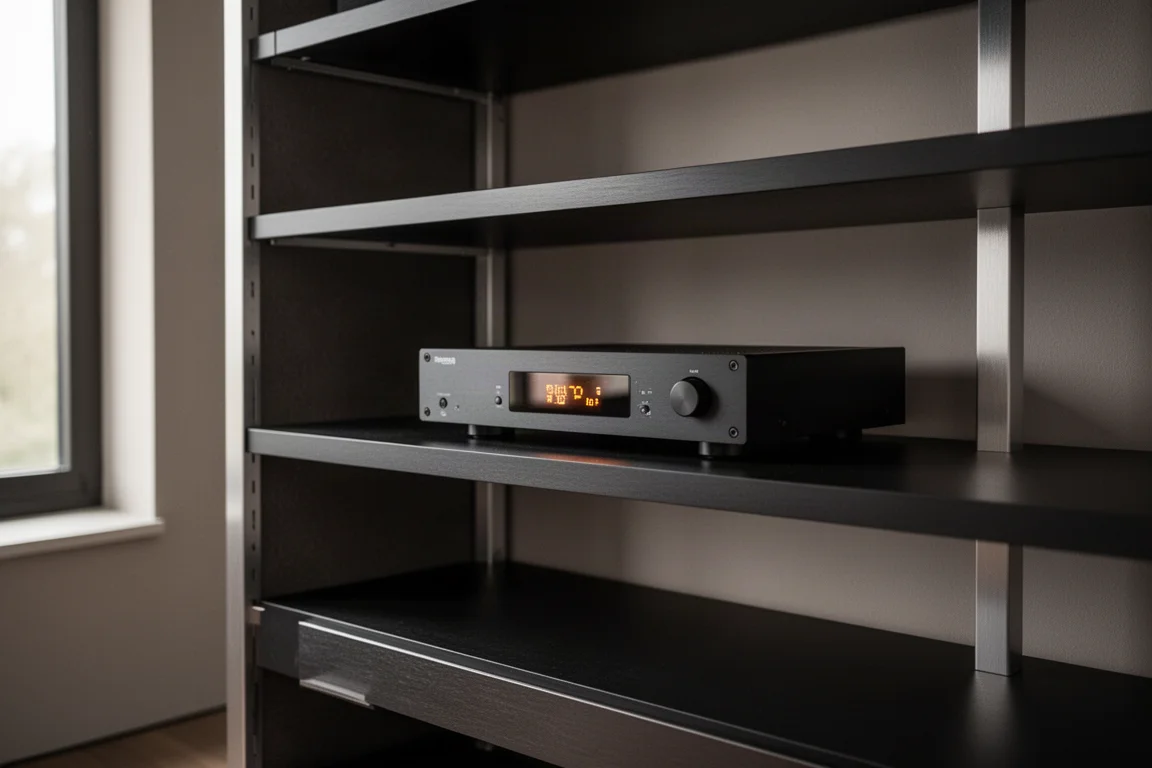
The Marantz AV10 is a 15.4-channel AV processor built for listeners who assemble a system around separates rather than a single receiver. It handles processing and preamp duties while amplification is left to external power amplifiers. At around $7,000 it sits firmly in premium territory, so the meaningful question is what the measured performance and feature set actually deliver.
Bench testing concentrated on three areas: the multichannel preamp outputs, the analog and phono inputs, and the bass management tools. The results are worth walking through in plain terms.
Who this product is for
The AV10 suits listeners who run external amplification and want a processor with enough clean output voltage to drive almost any power amplifier to full power. Measured output reaches 12 V RMS unclipped from the XLR outputs and 6 V RMS from the unbalanced outputs. For context, a processor needs roughly 4 V RMS balanced or 2 V RMS unbalanced to drive most amplifiers to maximum output, so the margin here is generous.
It also suits vinyl listeners with a moving magnet turntable, and anyone who wants to route LFE bass to large front speakers or distribute bass across multiple subwoofers.
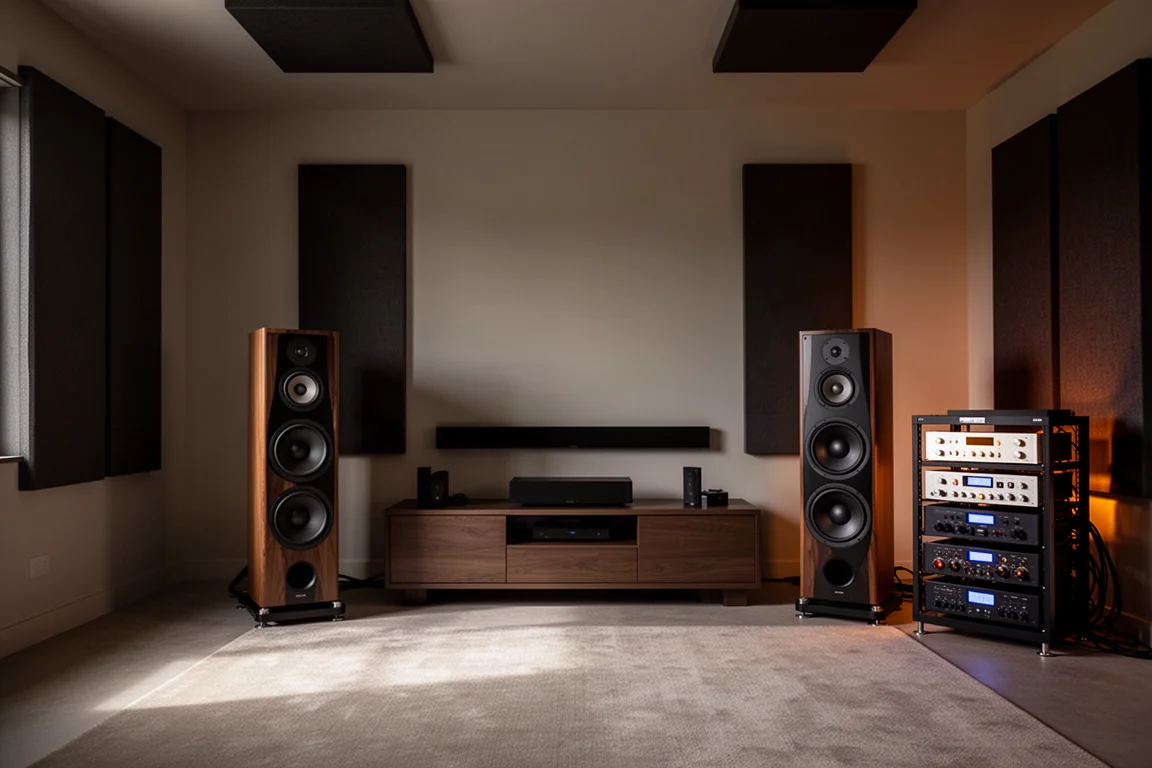
If your system is built around a single receiver with modest speakers, a good portion of this capability will simply go unused.
Main strengths
Output drive and distortion
Distortion stays very low across the usable output range. Above roughly 2 to 3 V RMS, total harmonic distortion plus noise measured about 0.015 percent, with SINAD around 96 dB, and the outputs do not clip until beyond 12 V RMS. Distortion from the RCA outputs tracked closely with the XLR outputs, which is expected given that the design uses a phase splitter rather than a true differential output stage. The practical benefit of XLR here is noise immunity, and the unbalanced outputs still deliver a clean 6 V RMS.
A 1 kHz tone at 4 V RMS produced a very clean spectrum, with the third-order harmonic sitting around 110 dB below the fundamental and no meaningful hum from the power supply. The unbalanced output measured 101 dB down at the second-order harmonic at 2 V RMS. Changing the volume between 2 V and 4 V shifted the odd and even order harmonic balance slightly, which is not audible but is worth noting academically.
Noise floor and channel isolation
With a 0 dBFS digital input and 2 V RMS output, signal-to-noise ratio measured 112 dB, among the best results seen from a processor. In practice that means no audible hiss even with high-sensitivity speakers and a listening position close to a surround speaker. The result held in both Pure Direct and Auto modes.
Crosstalk was tested with all channels driven and one channel undriven, which is the most demanding arrangement. Channel-to-channel isolation measured around 80 dB at 20 kHz and 110 dB at 1 kHz. Anything above 60 dB at 20 kHz is generally considered good separation, so this sits comfortably ahead of that mark.
Analog and phono performance
Analog inputs feed a wide-bandwidth preamp with a flat response from 5 Hz to 80 kHz, the limit of the test equipment, with a likely extension beyond 100 kHz. The distortion spectrum is clean with no visible hum at 60 Hz, and DC offset measured very low.
The phono stage applies the RIAA curve correctly, producing a flat response to 20 kHz with a slight rise above it. Distortion plus noise measured 0.001 percent across the bandwidth, and signal-to-noise ratio from the phono output measured 92 dB at 2 V RMS. For a moving magnet turntable and a well-kept record collection, that is a serious phono section rather than a token one.
Bass management and LFE routing
Standard bass management follows textbook THX slopes. With an 80 Hz crossover, bass-managed satellite speakers receive a second-order high-pass at 12 dB per octave, while the subwoofer receives a fourth-order low-pass at 24 dB per octave. The subwoofer output measured with a 24 dB per octave slope in the LFE plus both configuration, and the front and bed channels tracked closely across the sweep.
The more notable feature is LFE bass routing. Traditionally, when a subwoofer channel was active, LFE content could not be redirected to main speakers even if those speakers were set to large. The AV10 allows LFE to keep feeding a dedicated subwoofer while also being routed to any bed channels set to large. Slope and level are adjustable, including settings that reduce the redirected LFE by 10 dB or 20 dB, and the feature is off by default.
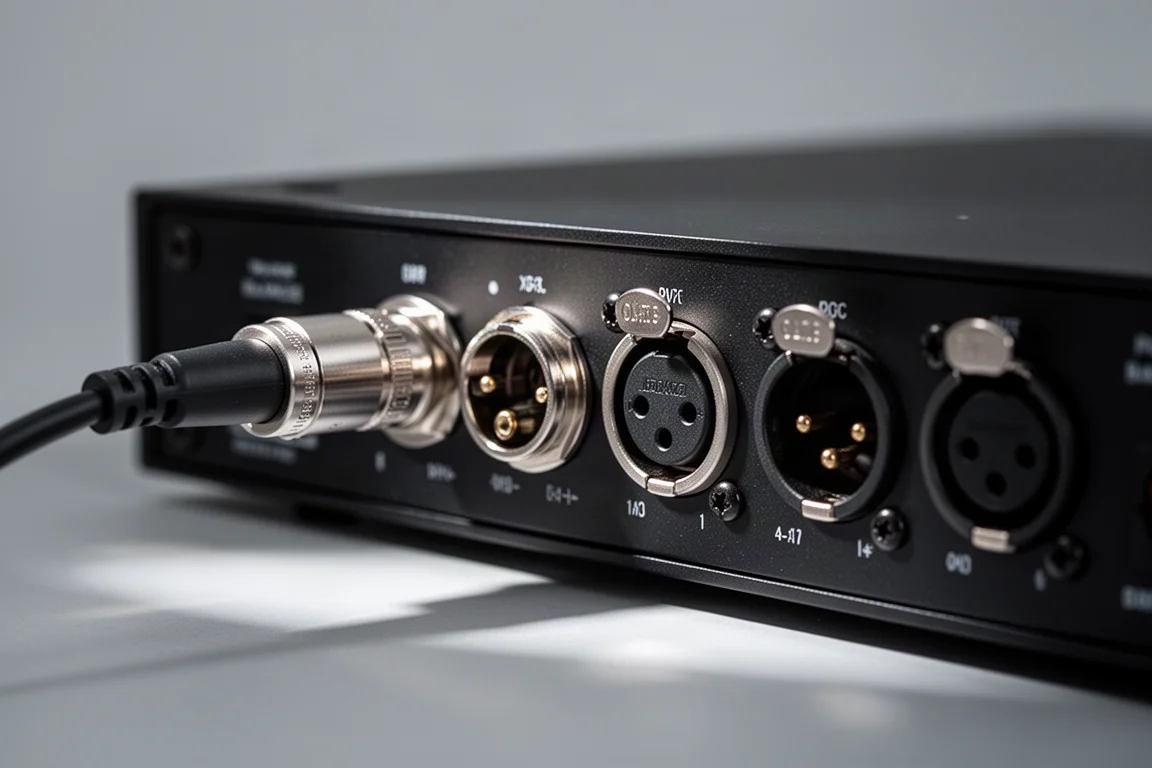
Routing of this kind has previously been limited to considerably more expensive processors. It is worth using carefully: redirected LFE only makes sense with speakers that genuinely handle deep bass at high levels, and the levels should be raised gradually rather than in one step.
Things to consider before buying
Price is the first consideration. At around $7,000 the AV10 is a premium purchase, and the advanced bass features are the clearest justification for choosing it over less expensive processing. There is no direct equivalent at this price point, but stepping up to processors that also offer this routing means spending considerably more.
The LFE routing feature carries real risk if used carelessly. Sending LFE content to speakers that cannot handle it can damage drivers, so it should be treated as an advanced tool for systems with genuinely bass-capable speakers.
One further observation from the sweep: the surround left channel rolled off slightly earlier than the others, around 78 kHz against 80 kHz, with roughly 0.1 dB of extra roll-off at 20 kHz. Both figures sit far above the audible range, so this is an academic detail rather than a practical concern.
Multi-subwoofer bass routing in practice
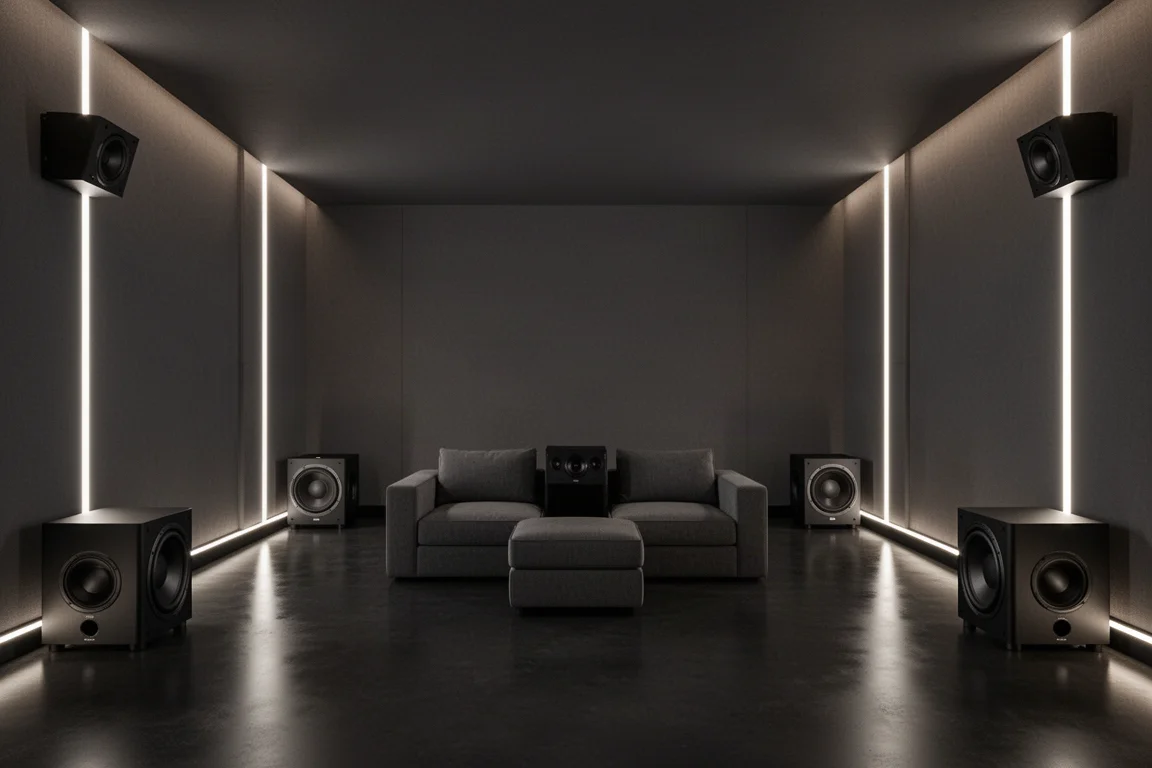
The AV10 can also assign bass zones. With four subwoofers, one in each corner, bass from a bass-managed speaker is sent to the nearest subwoofer. In directional mode, the center channel draws bass from both front subwoofers at a reduced level, about 4 dB down, since two subwoofers are reproducing the same signal. Surround speakers route to the subwoofer on the matching side at unity gain.
In mono split mode with four subwoofers, level is reduced by roughly 9 dB per subwoofer. That compensates for the fact that several correlated sources playing the same signal sum to a higher overall level, so the reduction keeps output predictable rather than excessive.
Subwoofer 4 can be dedicated to a tactile transducer and still receives LFE information. Importantly, all subwoofers continue to receive LFE in that configuration, unlike some earlier implementations where only the tactile output carried it.
What the AV10 changes in a system
Taken together, the measured output drive, the 112 dB signal-to-noise ratio, the low crosstalk, and the bass management toolkit describe a processor that is quiet, flexible, and unlikely to be the weak link in a high-quality system. The 15.4-channel layout leaves room for a large speaker array and multiple subwoofers, and the analog and phono inputs mean a turntable and analog sources can stay in the same signal chain.
Buying advice
Choose the AV10 if you run external amplification, want a processor with ample clean output voltage, and expect to use either LFE routing to large speakers or bass distribution across multiple subwoofers. Those capabilities are the clearest reason to pay a premium price.
If you are building a simpler system around a single receiver and a pair of subwoofers, the extra headroom and routing options may not translate into an audible benefit, and a less expensive processor is likely to serve you just as well.
Weighing the whole package, the AV10 earns its place in a separates-based system where its flexibility will actually be used.
Conclusion
The Marantz AV10 measures very well: high output drive, a low noise floor, excellent channel isolation, a capable phono stage, and bass management tools that until recently were reserved for far more expensive processors. The $7,000 price is significant, but for a separates-based system that will genuinely use these features, it is a hard combination to match.
Product link
View more details for Marantz AV10
This product is mentioned in the review. Check the specifications, options, and compatibility before buying.
View more details for Marantz AV10Further reading
Related Reviews
AV Processors
Anthem AVM 90 8K Review: A Reference-Grade AV Processor for Music and Movies
A close look at the Anthem AVM 90 8K AV processor: measured performance, two-channel and immersive listening notes, bass control, and what to weigh before buying.
AV Processors
Anthem AVM 90 vs Marantz AV10: Which 15.4-Channel AV Processor Fits Your System?
A practical comparison of two flagship 15.4-channel AV processors, covering formats, streaming, video processing, room correction, converters, and everyday usability.
AV Processors
Marantz AV10 Review: Advanced LFE Bass Management in a Mainstream Processor
The Marantz AV10 adds an LFE distribution feature that routes low frequency effects back into large main channels while keeping subwoofers active, a capability usually reserved for specialty processors.