AV Processors
Marantz AV10 Review: Advanced LFE Bass Management in a Mainstream Processor
The Marantz AV10 adds an LFE distribution feature that routes low frequency effects back into large main channels while keeping subwoofers active, a capability usually reserved for specialty processors.
Introduction
The Marantz AV10 is a 16-channel AV processor built for separates-based home theater systems. Alongside the bass management tools you would expect at this level, it now offers an advanced LFE distribution capability that lets owners route low frequency effects content back into main channels set to Large, while the subwoofers stay active at the same time.
That combination has traditionally been reserved for specialty processors from the custom-install and high-end audio world, the kind of hardware sold by Storm Audio, Trinnov, Datasat and AudioControl. Seeing it arrive in a mainstream processor changes what a well-equipped home theater can do with bass.
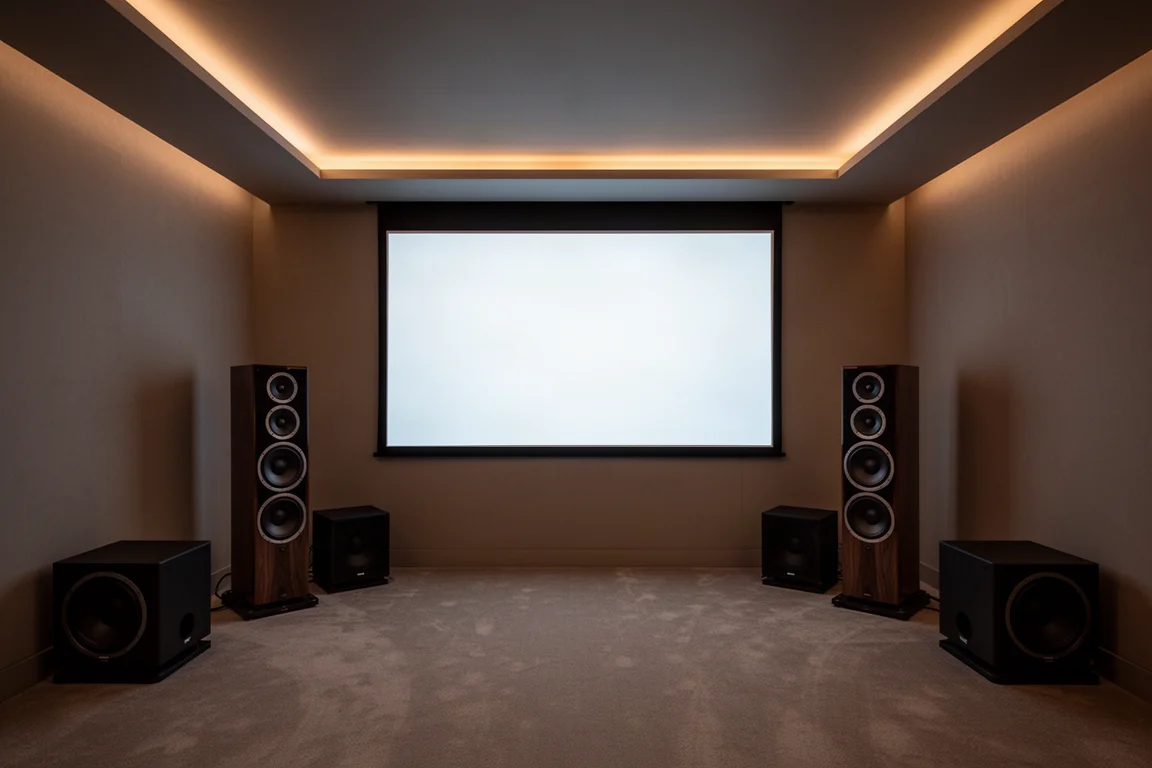
For listeners with genuinely large, bass-capable speakers, this is the kind of feature that reshapes how a system handles low frequencies. It also demands care, because the same flexibility that makes it useful can overload speakers that were never designed to reproduce LFE content at level.
Who the Marantz AV10 Is For
The AV10 targets listeners who run a processor with separate amplification and want granular control over every channel. The LFE distribution feature narrows that audience further: it is intended for owners of main speakers with real low frequency capability.
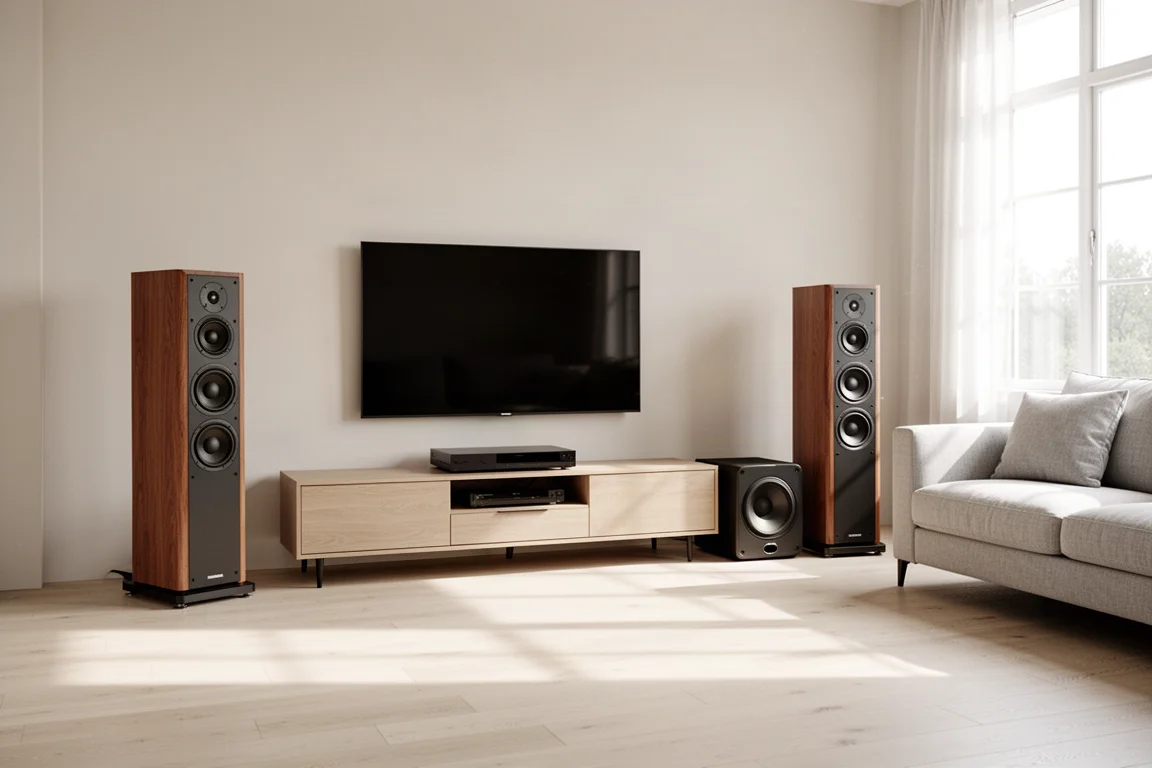
Think towers with multiple 10-inch or 12-inch drivers, or larger. Those designs have the excursion and power handling to absorb LFE content without strain. A slim tower carrying several 6-inch drivers is not a candidate, and the feature should either be left alone in that case or used only at very low distribution levels.
The feature also suits listeners who want every bass-producing speaker in the room, main channels and subwoofers alike, working together as one coherent low frequency system. When the mains, the surrounds and the subs all receive the same low frequency information, room modes can be managed across all of them at once rather than treated as separate problems.
Main Strengths: Advanced LFE Distribution
What makes this notable is the routing logic. LFE distribution can be enabled per channel group, covering the front channels, the center, the surrounds and the back channels. Each group gets its own distribution level, adjustable from 0 dB down to -20 dB, so the amount of LFE energy sent into a given speaker can be scaled to what that speaker can actually handle.
Subwoofers remain active throughout. That is the key difference from older workarounds, which required switching the subwoofer channel off entirely and then handling bass management locally inside the subwoofers themselves. That approach was awkward to configure and rarely recommended.
How the LFE Distribution Levels Work
When LFE content is recombined into the main channels, it follows the same second-order filter response used by the bed channels, rather than the steeper fourth-order low pass applied to the subwoofer path. The practical result is less filtering and more low frequency energy reaching the mains than the subwoofer channel receives.
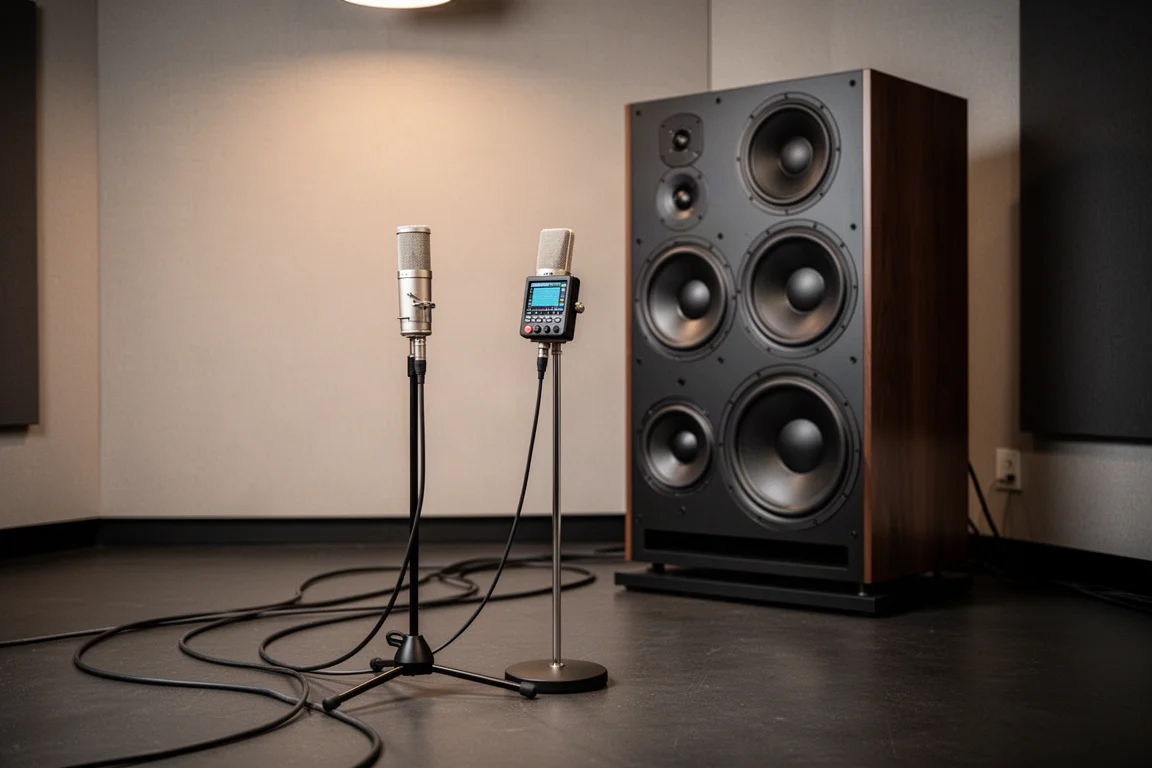
Bench measurement confirms the behavior. A signal injected into the LFE channel appears at the main channel output, level-matched to the subwoofer at 0 dB, and attenuates progressively as the distribution level is lowered in 10 dB steps.
Because the redistribution path is less aggressively filtered, it pays to start conservatively. A setting around -6 dB is a sensible ceiling for speakers with serious low frequency capability, while -10 dB or lower is safer for designs with smaller drivers. The feature rewards patience far more than it rewards enthusiasm.
Bass Management Fundamentals the AV10 Gets Right
The standard behavior underneath all of this is worth understanding, because it explains what the new option adds.
With main speakers set to Large and LFE plus Main selected, bass from those channels is copied to the subwoofer channel through a fourth-order, 24 dB per octave low pass at the chosen crossover frequency. That keeps subwoofers working during two-channel music, which they otherwise would not be when the mains are set to Large and the processor is set to LFE only.
With main speakers set to Small, the processor applies a second-order, 12 dB per octave high pass and a fourth-order, 24 dB per octave low pass. This is textbook bass management of the type THX-style products are expected to deliver. The crossover is adjustable across a wide range, from roughly 40 Hz up to around 200 Hz, so 80 Hz is a starting point rather than a fixed rule.
The LFE crossover is a separate control. It defaults to 120 Hz and sets the bandwidth of LFE content sent to the subwoofer channel and to any channels receiving redistributed LFE. Lowering it, for example to 80 Hz, limits how much of that bandwidth reaches the main channels.
There is also a tactile transducer output, which uses subwoofer four when enabled. Measurements confirm that switching it on does not stop LFE from reaching the other subwoofer channels, an improvement over earlier designs where that output took over the LFE signal and left the remaining subwoofer channels with only summed bass.
Setting It Up Through the Web Interface
Configuration is available through the processor’s on-screen display and through a web interface reached by IP address, which makes the deeper settings easier to work through on a computer.
The LFE distribution controls sit in the distribution menu. Each channel group can be switched on and assigned a level, from full strength at 0 dB down to -20 dB. Most listeners will find the front channels the only group worth enabling, since surround speakers rarely have the low frequency capability to justify it.
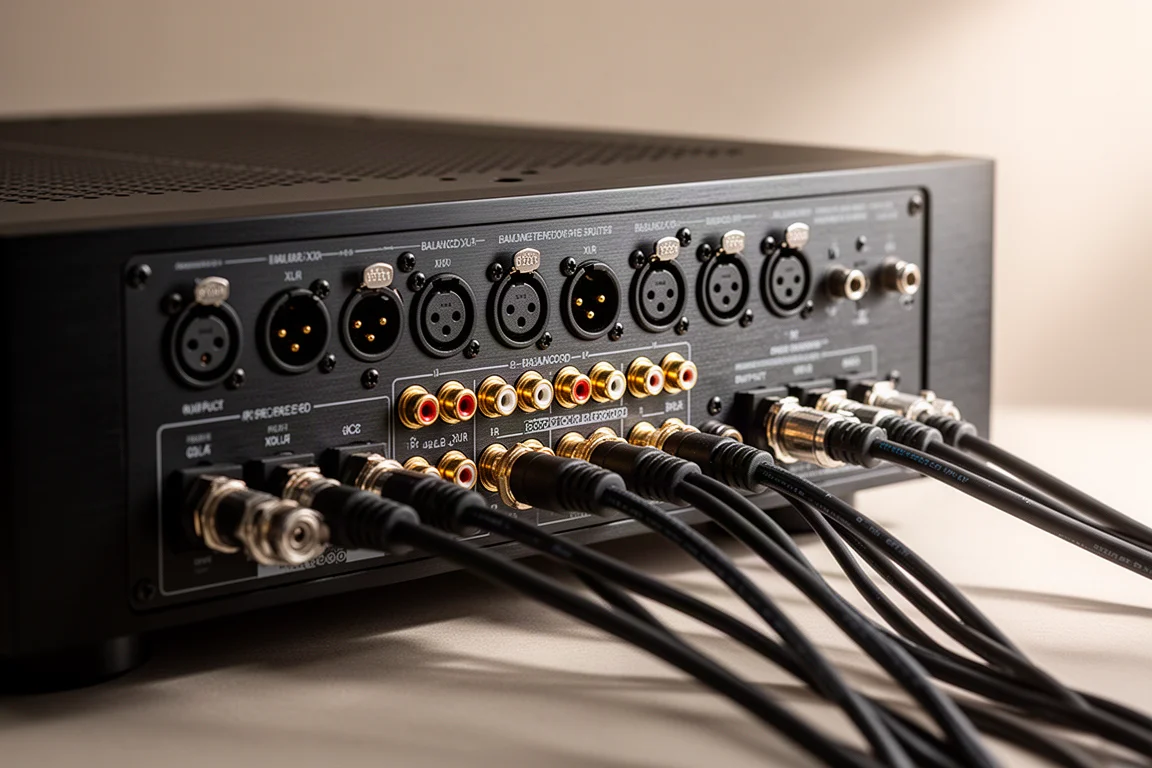
The LFE crossover control is in the same area of the menu and defaults to 120 Hz. Because it governs the bandwidth of the redistributed signal, lowering it to 80 Hz is a reasonable adjustment when LFE content is being sent into the main channels. The LFE plus Main setting is separate again: it determines whether bass from Large main channels is copied into the subwoofer channel at all. With LFE only and Large mains, subwoofers stay silent during two-channel music.
Things to Consider Before Buying
The first consideration is speaker capability, and it is not negotiable. Routing LFE content into a speaker that cannot handle the excursion is a reliable way to damage it. If the mains are not built for that workload, this feature should be left switched off.
The second is level discipline. Because the redistribution path applies lighter filtering, more energy reaches the mains than many users expect. Starting at -10 dB or lower and raising the level gradually is far safer than beginning at full strength.
The third is integration. Combining LFE with the bass already present in Large main channels can produce excessive low frequency output, sometimes described as double bass. Correcting that requires proper level setting and equalization, which is well within reach for an experienced user and a genuine risk for anyone who is not.
Finally, this is an advanced feature by design. It is not required for good sound in a typical system, and it offers no benefit at all to speakers that cannot take advantage of it.
Buying Advice
The AV10 makes sense for listeners assembling a serious separates-based home theater with large, bass-capable main speakers and multiple subwoofers. In that setup, LFE distribution is a genuine capability rather than a checkbox, because it lets every bass-producing speaker in the room contribute to a single, unified low frequency presentation.
It is equally worth knowing that the capability is not exclusive to this model. The same feature set has been confirmed on the Denon AVR-A1H, and there are indications it may appear on some 2024 Denon and Marantz receivers as well, including models in the Cinema and AVR ranges. Buyers comparing options should check the bass management menus on the specific model they are considering rather than assuming the feature is limited to the AV10.
For anyone whose speakers are modest towers with small drivers, the feature will stay switched off, and the purchase decision should rest on the AV10’s other merits: channel count, processing flexibility and the quality of its standard bass management. On that last point, the textbook filter slopes are consistently delivered, which is exactly what a processor at this level should provide.
Conclusion
The Marantz AV10 brings a capability normally associated with specialty processors into a mainstream product, and it does so without removing any of the fundamentals. Standard bass management remains correct, the LFE plus Main behavior is well understood, and the tactile transducer output no longer interferes with the other subwoofer channels.
The advanced LFE distribution feature is best treated as a tool for a specific listener: someone with large, bass-capable speakers who wants full-range main channels and active subwoofers working together. Used conservatively and with proper level setting, it opens up a level of low frequency control that has rarely been available at this price point. Used carelessly, it can damage speakers. The responsibility sits with the owner, and the AV10 gives you the means to use it well.
Product link
View more details for Marantz AV10
This product is mentioned in the review. Check the specifications, options, and compatibility before buying.
View more details for Marantz AV10Further reading
Related Reviews
AV Processors
Anthem AVM 90 8K Review: A Reference-Grade AV Processor for Music and Movies
A close look at the Anthem AVM 90 8K AV processor: measured performance, two-channel and immersive listening notes, bass control, and what to weigh before buying.
AV Processors
Anthem AVM 90 vs Marantz AV10: Which 15.4-Channel AV Processor Fits Your System?
A practical comparison of two flagship 15.4-channel AV processors, covering formats, streaming, video processing, room correction, converters, and everyday usability.
AV Processors
Marantz AV10 Review: A 15.4-Channel AV Processor With Serious Measured Performance
A detailed look at the Marantz AV10, covering measured output drive, noise floor, channel isolation, phono performance, and its advanced bass management features.