AV Processors
Anthem AVM 90 vs Marantz AV10: Which 15.4-Channel AV Processor Fits Your System?
A practical comparison of two flagship 15.4-channel AV processors, covering formats, streaming, video processing, room correction, converters, and everyday usability.
Introduction
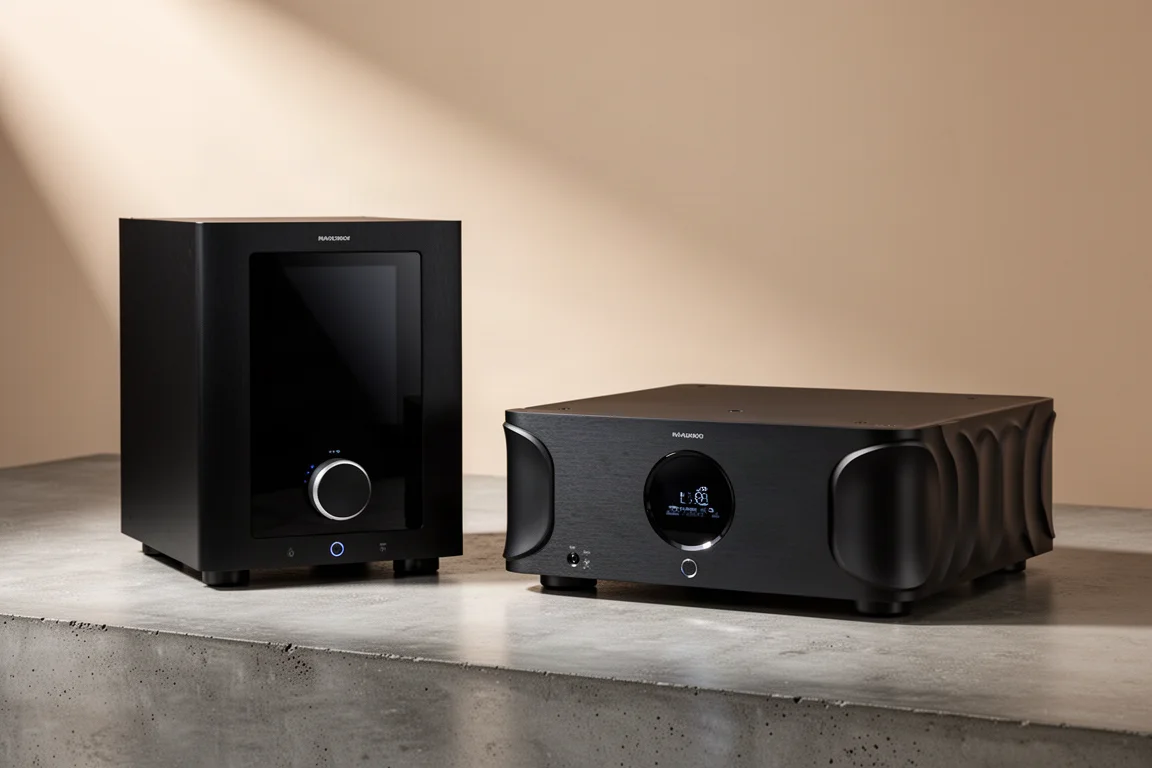
Choosing between two flagship processors is a good problem to have. The Anthem AVM 90 and the Marantz AV10 are both 15.4-channel AV processors built for immersive home theater and serious two-channel listening, and both sit at the top of what each brand currently offers. Each is the flagship expression of its manufacturer’s approach, and each solves the same problem from a different angle.
The AVM 90 leans on Anthem’s ARC Genesis room correction, a generous set of assignable virtual inputs, and a deliberately focused feature set. The Marantz AV10 counters with a wider format and streaming toolkit, built-in video processing, and room correction options that scale up to professional calibration tools. Neither is a compromise. The better fit depends on which details matter most in your room and in your daily routine.
What the Anthem AVM 90 and Marantz AV10 Have in Common
Start with the fundamentals, because they are extensive. Both processors run 15.4 channels, both decode Dolby Atmos, DTS:X, and IMAX Enhanced, and both provide four independent subwoofer outputs. Each uses flagship ESS digital-to-analog converters across every channel rather than reserving the best silicon for the front pair, and that includes the subwoofer channels.
Both offer Apple AirPlay 2 and Spotify Connect, Bluetooth, and a browser-based control interface that can also back up your settings to a USB drive. Both use multi-layer circuit boards, six layers in the Anthem and four in the Marantz, which is unusual in consumer audio and supports cleaner grounding and signal routing.
Measured performance is another area of agreement. Distortion and noise figures for both processors sit far beyond the threshold of audibility, so this is not a comparison where one unit is transparent and the other is not. Owners of either processor can expect a low-noise, low-distortion signal path, and both are designed so that every channel, including the subwoofer channels, receives the same converter quality.
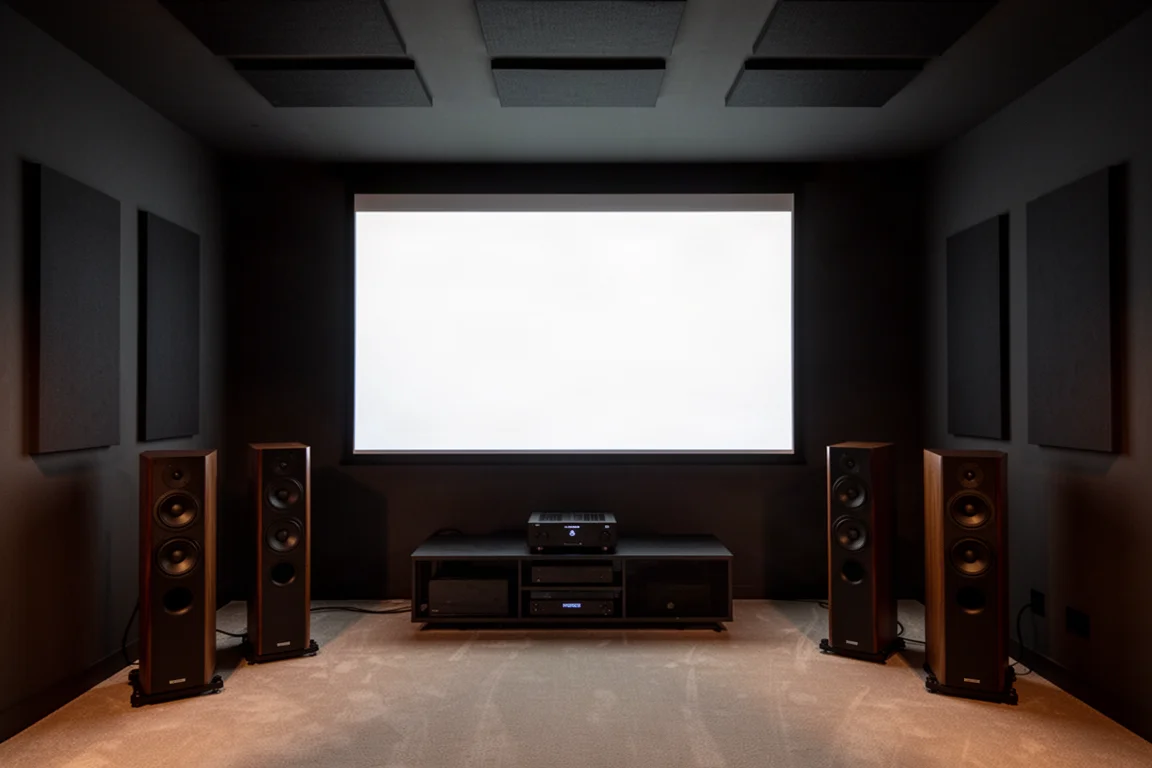
The differences show up in how each company chose to spend its engineering budget, and those choices are what the rest of this comparison is about.
Anthem AVM 90: Room Correction, Virtual Inputs, and Usability
The AVM 90 ships with ARC Genesis, Anthem’s own room correction system, and the full version is included in the purchase price with no software tiers or upgrade fees. A calibrated microphone designed specifically for the AVM 90 and AVM 70 is included, and it carries a directional marking that helps with measurements above 5 kHz. The software runs on both Mac and PC, and because it works from a laptop, you are not required to plug a microphone into the processor itself.
ARC Genesis supports up to four measurement sets, which can be built into up to four profiles, and any profile can be assigned to any of the 30 virtual inputs. That means a movie profile with an acoustically transparent screen in place and a separate profile for two-channel listening can live on different inputs and switch instantly. A Quick Measure feature lets you see what the room is doing before committing to a full calibration, and the phase alignment tool uses all-pass filters to align subwoofers with the main channels automatically.
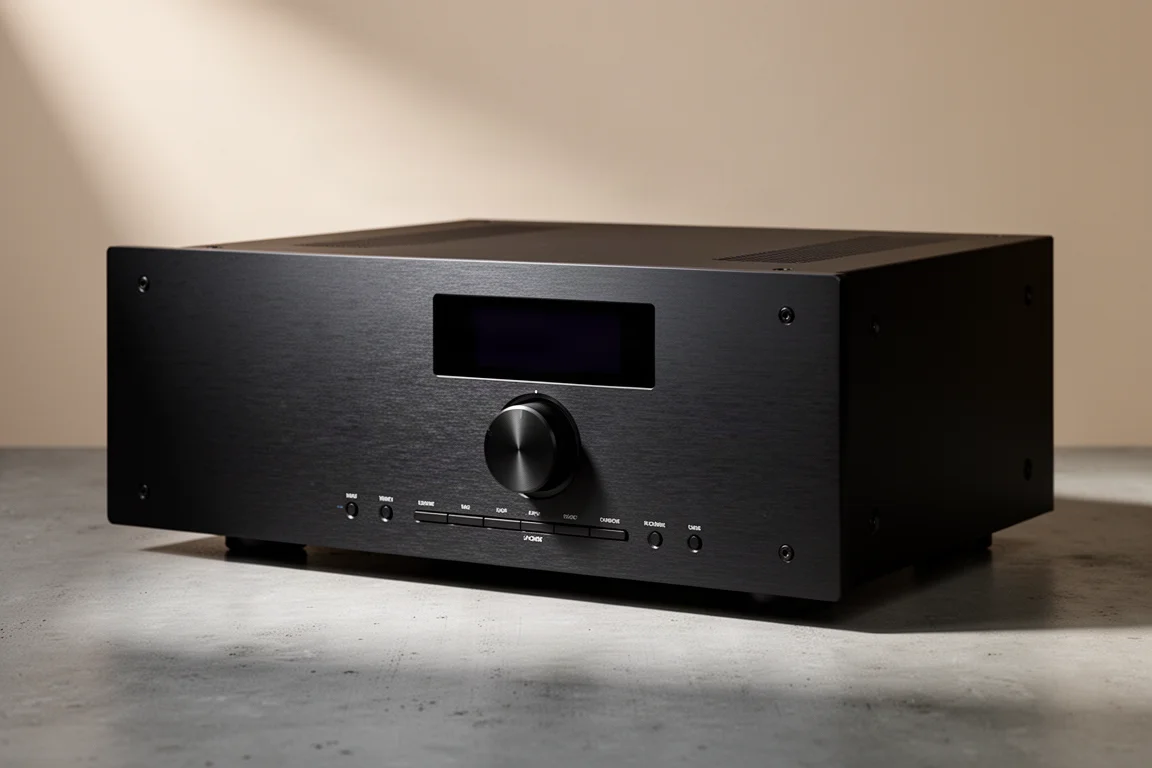
Two-channel listeners get Anthem Music, an upmixer that handles stereo content naturally and is a useful alternative for anyone who does not care for two-channel upmixing without center spread. The front panel is deliberately minimal: a bright TFT display readable from across the room, a volume control, input selection, menu, and power. Zone two power has to be handled from the remote or the mobile app rather than the front panel. The unit is built in Vietnam, includes three triggers that can be programmed over IP or RS232, and offers no balanced inputs and no DTS:X Pro or Auro-3D support.
Marantz AV10: Formats, Streaming, and Video Processing
The AV10 adds DTS:X Pro and Auro-3D, two formats the AVM 90 does not support. Auro-3D also brings its own upmixer, which gives the Marantz an extra tool for two-channel and immersive upmixing. Dolby Center Spread, which routes center channel information into the center and the left and right speakers, is available on the AV10 and is not available on the Anthem.
Streaming is broad. HEOS is built in, and the AV10 can stream to Bluetooth headphones, a genuinely convenient feature for late-night listening. It supports Amazon Alexa, Google Assistant, and Apple HomePod natively, while the AVM 90 supports Google Assistant natively and can reach the others through third-party control. The AV10 also includes Google Chromecast.
Video processing is the clearest functional gap. The AV10 handles 8K upscaling and anamorphic lens support internally, and its advanced on-screen display shows active speakers, input signal, and other details graphically. The Anthem leaves that work to a projector or an external video processor and provides a basic on-screen readout instead.
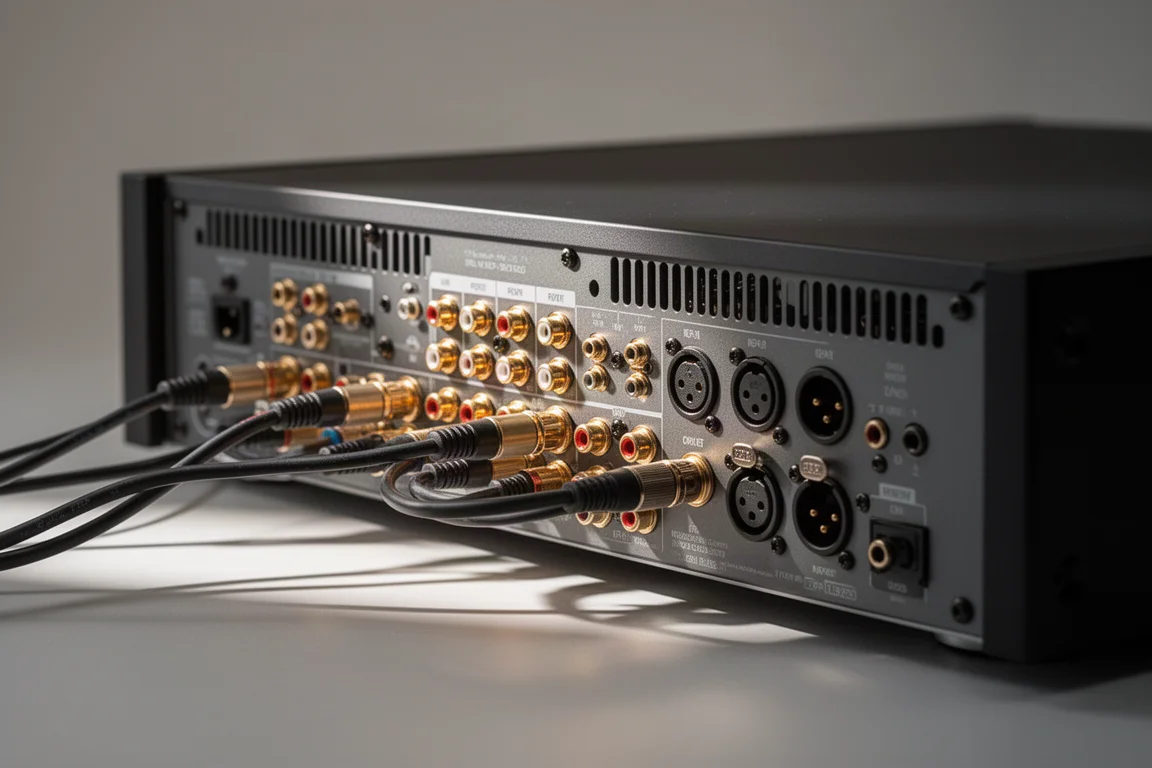
The AV10 also offers two balanced inputs, a three-zone design, a backlit metal remote, and two 12V triggers plus two additional trigger outputs built specifically for Marantz power amplifiers, which can control amplifier lighting and other functions over a control cable. It is assembled in Japan. On the room correction side, the built-in Audyssey MultEQ XT32 is limited, applies midrange compensation that cannot be disabled without the optional mobile app, and requires the microphone to be connected to the processor. Upgraded two-channel and multi-channel correction options are available at additional cost.
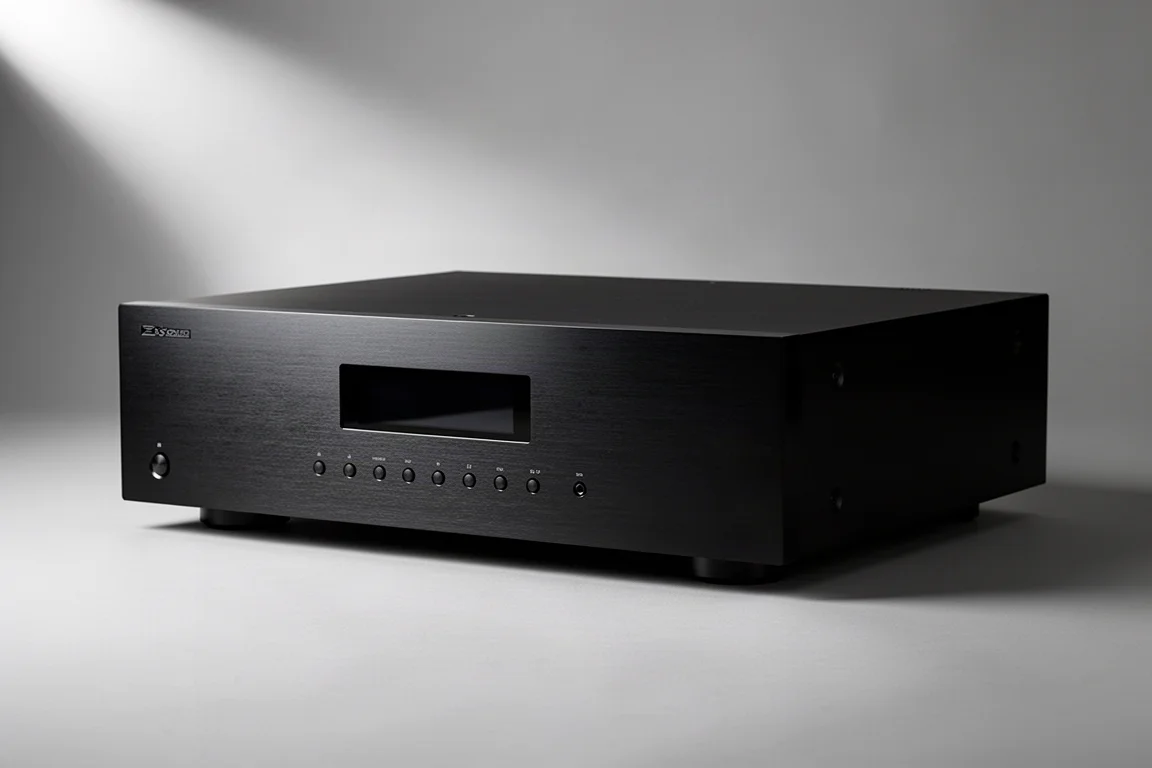
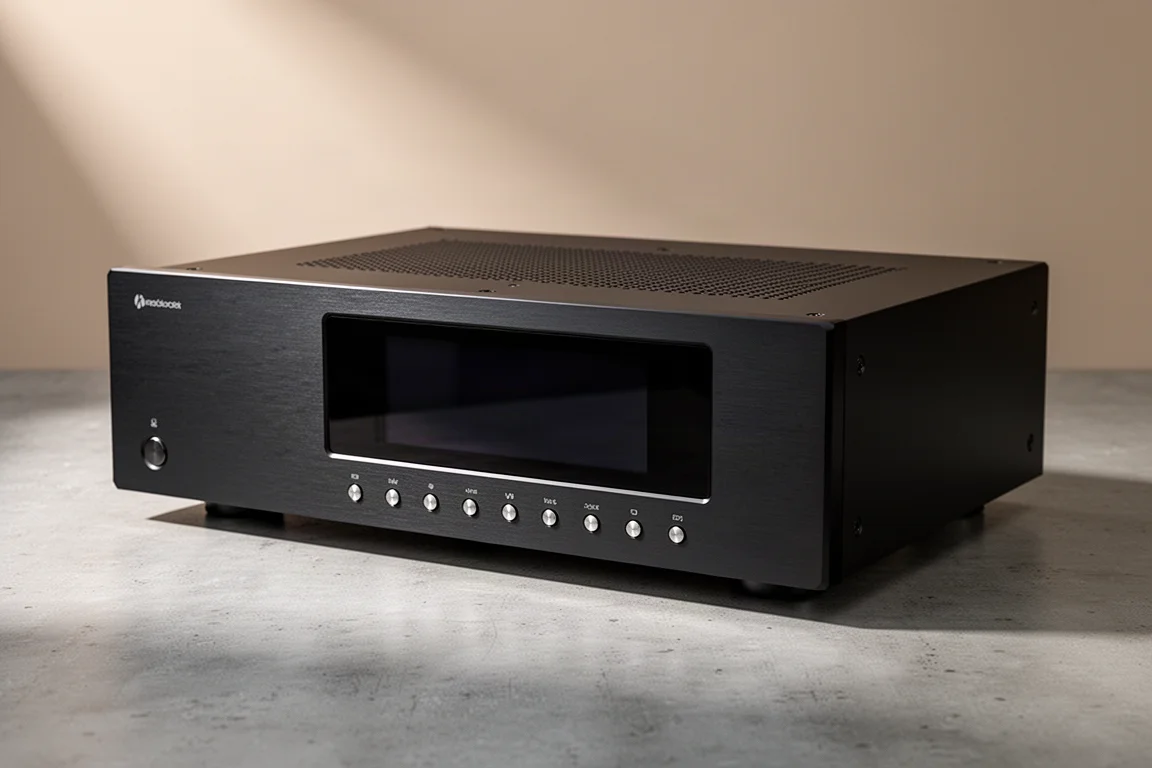
Physically, the AV10 is substantially larger and deeper than the AVM 90, which is worth checking against your rack or cabinet before you commit. Its front display sits behind a fold-down flap, and the small porthole readout is not easy to read from a distance, although the on-screen display is far more informative than the Anthem’s.
Room Correction: ARC Genesis vs Audyssey and Dirac
This is where the two products diverge most, and where your own habits matter most.
ARC Genesis is designed to do no harm. A calibration can be completed in ten to fifteen minutes and typically sounds better than the uncorrected system, with the option to raise the bass level afterward in software. The interface is straightforward, the phase alignment tool works automatically, and Quick Measure makes subwoofer placement easier. For someone who wants excellent results without learning measurement software, this is the low-friction path.
The AV10 gives you more options and more rope. The PC version of Audyssey MultEQ XT32 and Dirac Live are both available, and Dirac Live Bass Control can be added. These tools offer parametric EQ, impulse response correction, and deeper control than ARC Genesis, and a professional calibrator will find more to work with. They also demand more time and expertise: reaching a genuinely excellent result can take several hours of measuring, adjusting filters, and refining subwoofer delays. Dirac in particular can make a system sound worse if it is configured carelessly.
One practical detail is worth noting. Audyssey requires the microphone to be plugged into the processor, which is inconvenient when the processor lives in a rack away from the screen, while ARC Genesis and Dirac both run from a laptop.
DACs, Measurements, and Analog Circuitry
Both processors use ESS converter chips, but not the same ones. The AVM 90 uses two ES9038 Pro converters with a 32-bit, 768 kHz architecture, 132 dB of dynamic range, and total harmonic distortion plus noise of about minus 122 dB. It also uses the stereo version of the same converter family for the subwoofer channels. The AV10 uses ten ES9018K2M stereo converters with 32-bit resolution, 127 dB of dynamic range, and distortion plus noise around minus 120 dB. On paper the Anthem has the edge, and in practice both are exceptional.
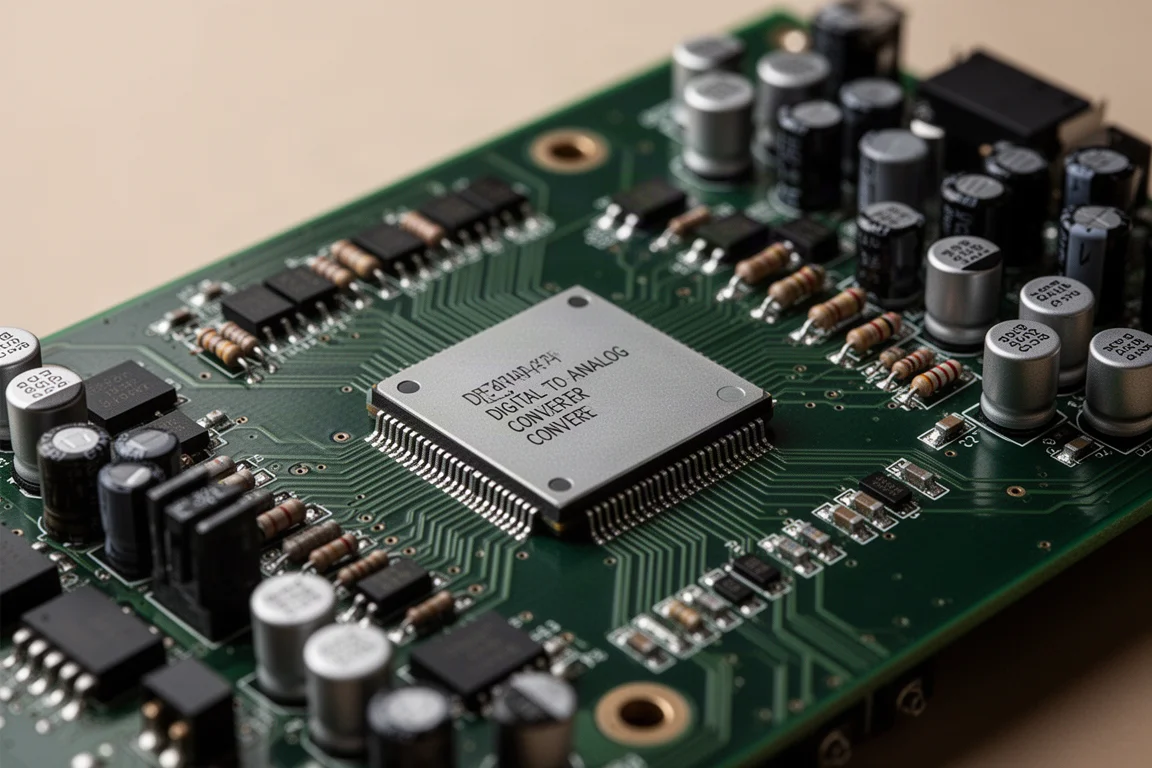
The Marantz offers selectable DAC filters, including a gentler rolloff option that some listeners prefer for its transient behavior, while the Anthem uses a single fixed filter. The AVM 90’s single-ended outputs measure slightly better than its balanced outputs, which reflects a design that is not fully differential from input to output, a common approach in consumer components.
Anthem’s analog-to-digital converters are also strong and run at up to 192 kHz, so analog sources passing through the DSP retain low noise and low distortion. Around the converters, both companies upgraded operational amplifiers, voltage regulators, and resistors, and the Anthem uses a six-layer board against the Marantz’s four-layer design.
Connectivity, Control, and Build Quality
Both units provide seven HDMI inputs. The Marantz is a three-zone design and the Anthem is two-zone, and both offer extensive trigger options. The Anthem’s three triggers can be set and fired over IP and RS232 as well as through the app, which is useful for control system integration. The Marantz’s two amplifier-specific triggers communicate with Marantz power amplifiers over a control cable.
The control experience differs in character. Anthem’s web interface is the cleaner of the two, gives everything at a glance, and exposes some controls that are not available on the front panel or the remote, and it can display the speaker layout for each profile. The Marantz web interface is functional and supports backups but is less polished. The Anthem mobile app is streamlined and easy, particularly for toggling ARC or switching between surround and stereo, while the Marantz app is more feature-rich but takes more steps to reach common settings. The AV10’s remote is a substantial backlit metal unit; the Anthem’s is plastic, comfortable when new, and known to develop a sticky coating over time.
Reliability reports differ as well. The AV10 has a reputation for bulletproof HDMI switching and handshaking, with occasional HDCP messages that appear to be source-related. The AVM 90 has had some CEC quirks and anecdotal reports of volume jumps, which is a good argument for setting a maximum volume limit on either processor. Anthem’s user community and technical support are both strong resources.
Buying Advice: Matching the Processor to Your System
If you want a processor that is simple to set up, sounds excellent with minimal calibration effort, and gives you unmatched input flexibility, the Anthem AVM 90 is the easier recommendation. Its ARC Genesis correction, 30 virtual inputs, four measurement profiles, readable front display, and web interface make it easy to live with, and its two-channel performance is first rate.
Choose the Marantz AV10 if formats and features matter more than simplicity. DTS:X Pro, Auro-3D and its upmixer, Dolby Center Spread, internal 8K upscaling and anamorphic lens support, native support for all three major voice assistants, HEOS, Bluetooth headphone streaming, two balanced inputs, and a three-zone design add up to a wider toolkit. If you plan to bring in a professional calibrator or want to invest time in Audyssey PC or Dirac Live, the AV10 has more headroom to reward that effort.
Room and rack space also deserve a mention. The AV10 is noticeably larger and deeper than the AVM 90, and its display is harder to read from a distance, while the Anthem’s display is legible from well across the room. If your processor lives in a visible rack and you value a clean front panel, that difference may matter more than any specification.
Conclusion
Both processors are outstanding, and both are among the best measuring units in their class. There is no wrong choice here, only a choice of priorities. Anthem’s AVM 90 favors effortless room correction, flexible virtual inputs, and a clean user experience. Marantz’s AV10 favors format coverage, video processing, streaming breadth, and calibration depth. Decide which of those lists describes your system and your habits, and the decision becomes straightforward.
Further reading
Related Reviews
AV Processors
Anthem AVM 90 8K Review: A Reference-Grade AV Processor for Music and Movies
A close look at the Anthem AVM 90 8K AV processor: measured performance, two-channel and immersive listening notes, bass control, and what to weigh before buying.
AV Processors
Marantz AV10 Review: Advanced LFE Bass Management in a Mainstream Processor
The Marantz AV10 adds an LFE distribution feature that routes low frequency effects back into large main channels while keeping subwoofers active, a capability usually reserved for specialty processors.
AV Processors
Marantz AV10 Review: A 15.4-Channel AV Processor With Serious Measured Performance
A detailed look at the Marantz AV10, covering measured output drive, noise floor, channel isolation, phono performance, and its advanced bass management features.