Home Theater
Marantz AV10 and AMP10 Review: Living With a 15.4-Channel Separates System
A long-term look at the Marantz AV10 processor and Marantz AMP10 amplifier as a pair, covering bass management, room correction, bridging flexibility, heat, and everyday HDMI stability.
Introduction
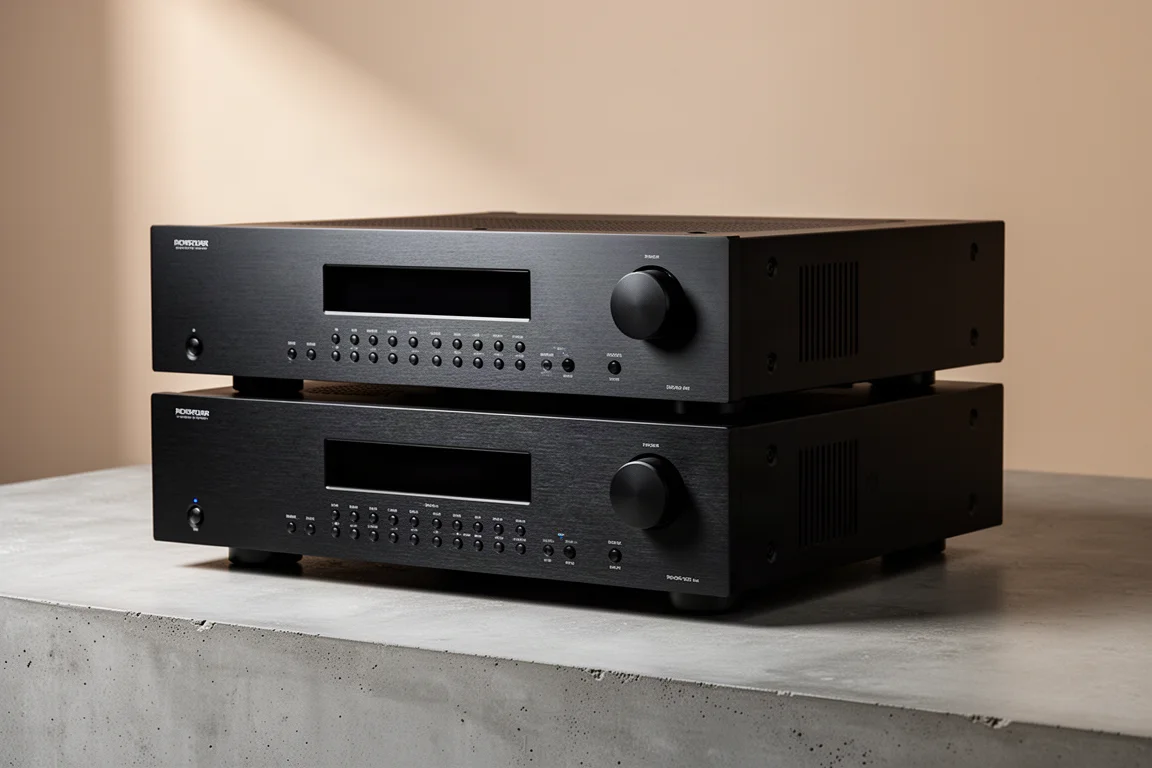
A separates-based home theater usually comes down to two boxes: a processor that handles decoding, room correction, and bass management, and a power amplifier that supplies the channels. The Marantz AV10 and Marantz AMP10 are exactly that pairing, and after close to a year of daily use in an open-plan living space, they have proven to be a flexible foundation for a 15.4-channel system.
This article focuses on what matters over the long run rather than on day one: bass management tools, room correction options, amplifier bridging, heat, HDMI stability, and the practical question of who should consider buying either unit.
What Sets This Marantz Pair Apart
Most processors at this level do one or two things well. The AV10 stands out because it combines a high channel count with four independent subwoofer outputs, two separate room correction platforms, and 8K HDMI switching inside a single chassis. The AMP10 partners it as a 16-channel class D amplifier that can be bridged for extra power on the channels that need it most.
That combination means a system can be built in stages. You can start with a conventional speaker layout, add subwoofers later, and reassign amplification as the channel count grows, all without replacing either box.
Marantz AV10: The 15.4-Channel Processor
The AV10 is a 15.4-channel processor with 15 channels of processing and four independent subwoofer outputs. Each subwoofer output carries its own level and delay settings, and bass can be steered deliberately, for example sending different low-frequency content to front and rear subwoofers depending on how the layout is arranged.
Low-frequency routing to the main speakers is another feature worth understanding. It is not something to enable casually, because most speakers cannot handle the extra load, but in a large open room where four subwoofers are not practical, routing some low frequency to capable main channels adds real physical impact while the in-wall subwoofers continue to do their share of the work. In that arrangement the speaker-to-subwoofer blend was convincing enough that a visiting speaker designer asked which subwoofers were in use.
The video board is a serious piece of hardware with 8K HDMI switching, and the DAC implementation is a genuine highlight. Two filter options are available, and the wider bandwidth filter was the preferred setting in listening, matching what the measurements showed.
Room Correction and Bass Management on the AV10
Two room correction systems come with the AV10: Audyssey and Dirac. Finding both in a single processor is unusual, and it gives buyers a choice rather than a fixed path.
Getting the best from Audyssey takes work. Limiting correction bandwidth to roughly 5 to 6 kHz, adding a shelving filter to taste, and applying manual parametric EQ to smooth out bass response produced the strongest result, and it was the first time Audyssey was preferred over leaving correction switched off. The optional microphone calibration kit takes the calibration further still. Dirac Live Bass Control is part of the platform but was not part of this evaluation period, so it remains an open item rather than a confirmed strength.
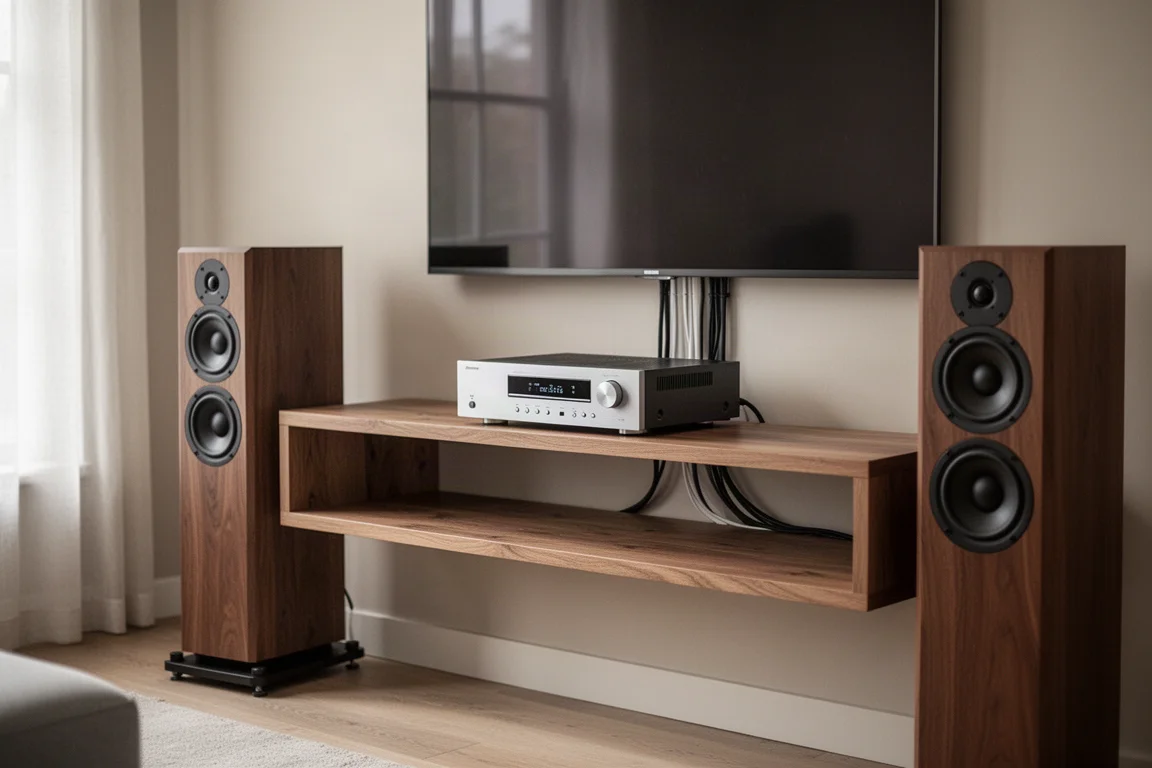
It is worth repeating that none of these systems delivers magic from a single button press. Budget time for tuning, and the AV10 rewards it.
Marantz AMP10: 16 Channels of Class D Power
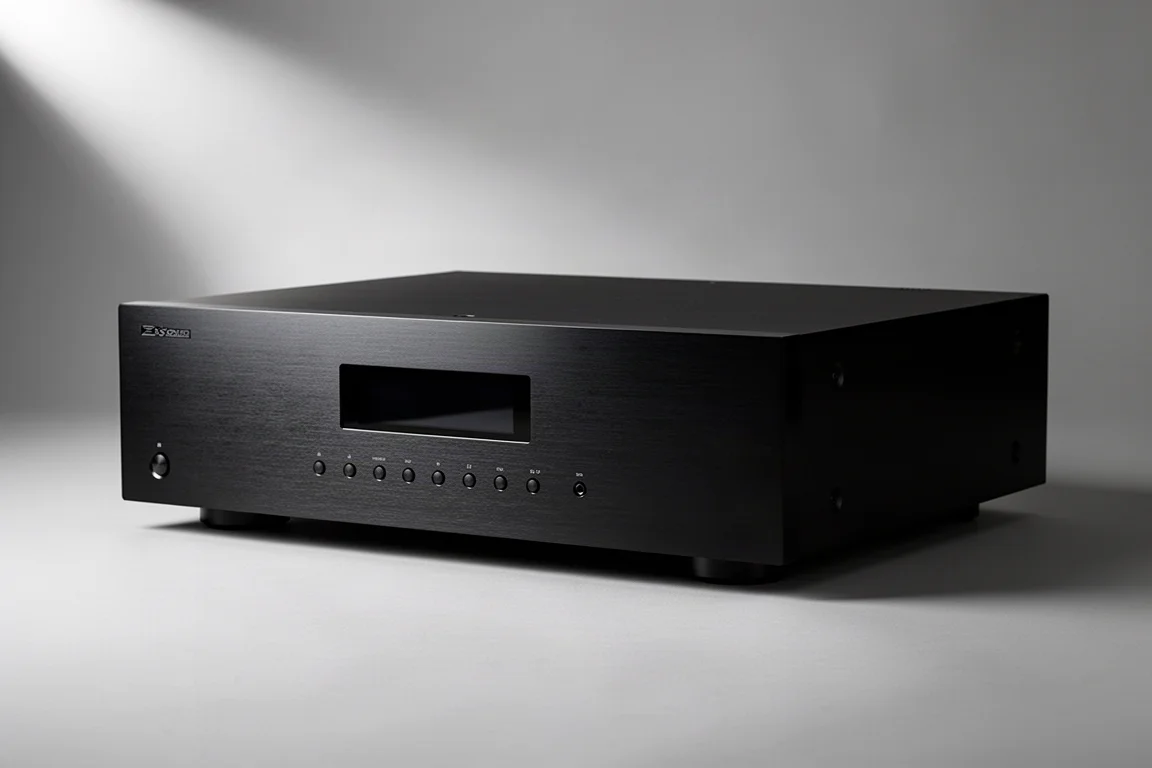
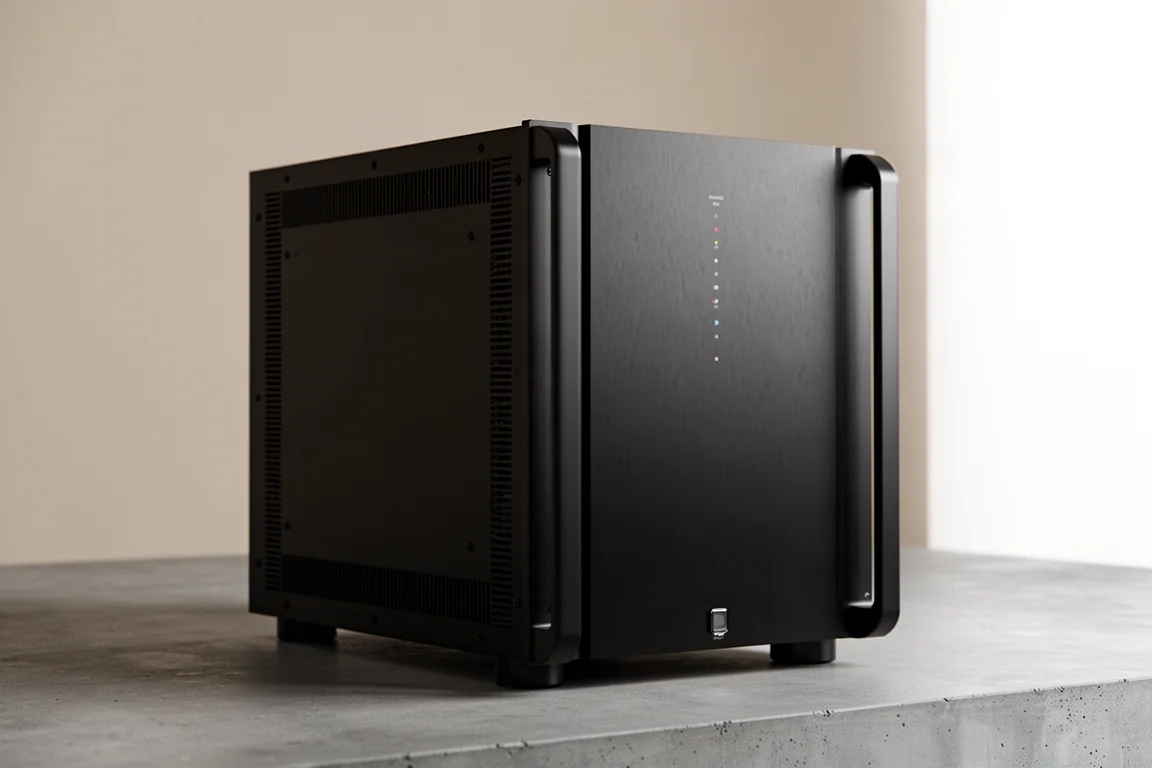
The AMP10 is a 16-channel class D amplifier built around an ICE Edge module. Its most useful capability is bridging: pairs of channels can be bridged to double the power delivered to a single speaker. In a nine-channel system, every bed channel was bridged while the height channels were single-amped, which places power exactly where the demand sits.
The manual cautions against bridging 4-ohm speakers, yet in practice the amplifier drove 4-ohm speakers hard in bridged mode without shutting down or distorting. That is a real-world observation rather than an invitation to ignore the manual.
Class D has come a long way. This amplifier sounds clean and laid back rather than strident, and the efficiency, space savings, and lower heat dissipation matter more and more as channel counts rise in modern immersive systems.
The chassis still runs warm. Sixteen channels of amplification in one box generates heat regardless of topology, so plan for a ventilated rack or closet. Active cooling in a closed cabinet keeps temperatures, and therefore long-term reliability, in a better place.
Living With the System: Movies, Music, and Upmixing
Day-to-day stability is where the AV10 has impressed most. HDMI switching has been solid, with only an occasional HDCP handshake hiccup from a streaming device that a reset clears. That is a long way from the frequent handshake failures associated with older processors.
Immersive mixes are genuinely convincing in an open-plan room. A knock on a door in one series was convincing enough to be mistaken for someone at the actual door, and background chatter in a hospital drama sounded like it was coming from the kitchen.
Music is well served by three upmixers: Dolby Surround, DTS, and Auro-3D. Auro-3D, with the room size set large, suits jazz where a front bias is wanted. Dolby Surround, with its center spread feature, is the better choice for material with a lot of decorrelated information because it preserves the stereo image instead of collapsing everything into the centre channel. Native spatial audio and straight two-channel listening both hold up well.
Control is handled through an app, a web interface, and PC software for the room correction systems, so most adjustments can be made without touching the front panel. The front fascia itself is more interesting than the usual black box, with contoured edges, a subtle checkered section, and backlighting that can be set to white or blue, plus a flip-down panel that reveals more of the display area.
Buying Advice: Who These Separates Are For
The AV10 sits around $7,000, and both units are large chassis, so this is a purchase to plan around a rack rather than a shelf. If you are staying at 15 channels or fewer, this pair covers essentially everything an immersive home theater needs. Moving beyond 15 channels means stepping up to processors that cost roughly $25,000 and more, which is a different category of spending entirely.
The amplifier decision is simpler than the processor decision. If your speaker count is high and you want one box to handle it, the AMP10’s 16 channels and bridgeable pairs give you headroom and flexibility. If you run a modest 5-channel system, a good receiver will do the same job for far less.
Both units are firmware-updatable, which matters for a processor that has to keep pace with HDMI and immersive audio standards over several years of ownership.
Conclusion
The Marantz AV10 and AMP10 work best as a pair, and they work for the same reason: flexibility. Four independent subwoofer outputs, two room correction platforms, 8K HDMI switching, and a bridgeable 16-channel amplifier cover a wide range of rooms and speaker layouts without forcing an upgrade path.
The trade-offs are honest ones. Both units are large, the processor is expensive, the amplifier needs ventilation, and room correction delivers its best results only after careful manual tuning. For a system that stays at 15 channels or fewer, that is a very reasonable set of compromises.
Further reading
Related Reviews
Home Theater
Anthem AVM 90 Review: A 15.4-Channel Flagship Preamp Processor
A close look at Anthem's flagship preamp processor, covering its dual ESS DAC architecture, 15.4-channel layout, ARC Genesis calibration and four independent subwoofer outputs.
Home Theater
Apple TV 4K With AirPods: A Best-Value Home Theater Setup
An Apple TV 4K paired with AirPods over Bluetooth makes a compact home theater setup for movies, spatial music and late-night viewing, and it can be assembled for as little as $300.
Home Theater
Arcam AVR15, AVR25, AVR35, and AVP45 Compared: Which AV Amplifier Fits Your System?
Four new Arcam home theater components share nine-channel amplification and Dirac Live, but differ in power, processing ceiling, and channel flexibility.