Power Amplifiers
Marantz AMP 10 Review: 16 Channels of Class D Power in One Chassis
A 16 channel, 200 watt per channel power amplifier that holds its rated output whether one channel or seven are driven. Here is what the bench results show and where the limits sit.
Introduction
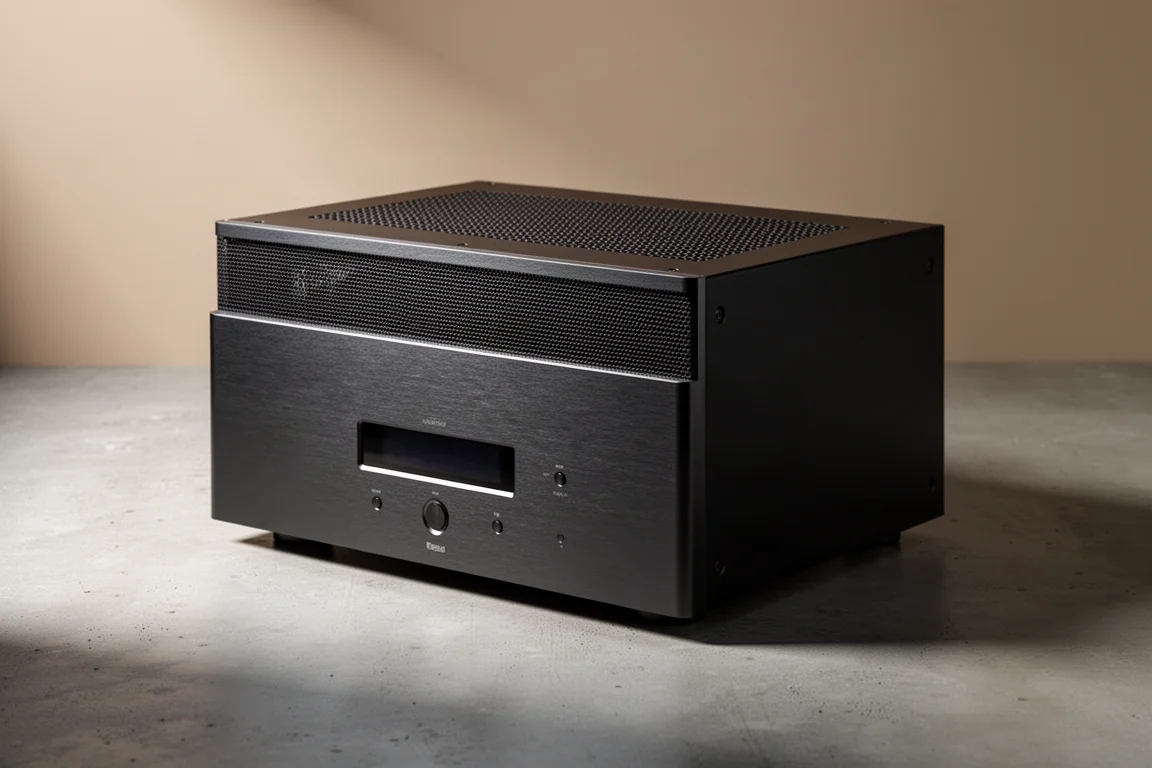
The Marantz AMP 10 is a 16 channel power amplifier rated at 200 watts per channel, with a retail price of $7,000. It belongs to the same separates range as the matching AV 10 processor, and it represents two firsts for the company: a 16 channel amplifier in a single chassis, and class D amplification built on an ICE Edge power module across every one of those channels.
Before this amplifier existed, putting together 16 channels of amplification from Marantz meant three separate boxes costing well over $5,000 combined, and the result would still deliver less power. The AMP 10 collapses that stack into one chassis weighing roughly 48 to 50 pounds, which is a fraction of what older high channel count designs demanded. That combination of channel count, honest power rating and manageable weight is the core of the value argument, and the measured performance is what determines whether the price holds up.
Who the Marantz AMP 10 Is For
This amplifier is aimed at listeners building a high channel count immersive system, the kind of setup where the processor alone can address 15 or more channels. Once you pass the nine channel barrier, amplification options narrow quickly, and the AMP 10 is designed to cover that entire speaker array from one box rather than from a rack of smaller amplifiers.
It also suits owners who have channels left over. A 16 channel amplifier driving an 11 or 13 speaker layout leaves spare module pairs available, and those can be bridged to feed the front stage with considerably more power. That flexibility is unusual in a single chassis at this price point, and it makes the amplifier relevant both to full immersive builds and to simpler systems with demanding front speakers.
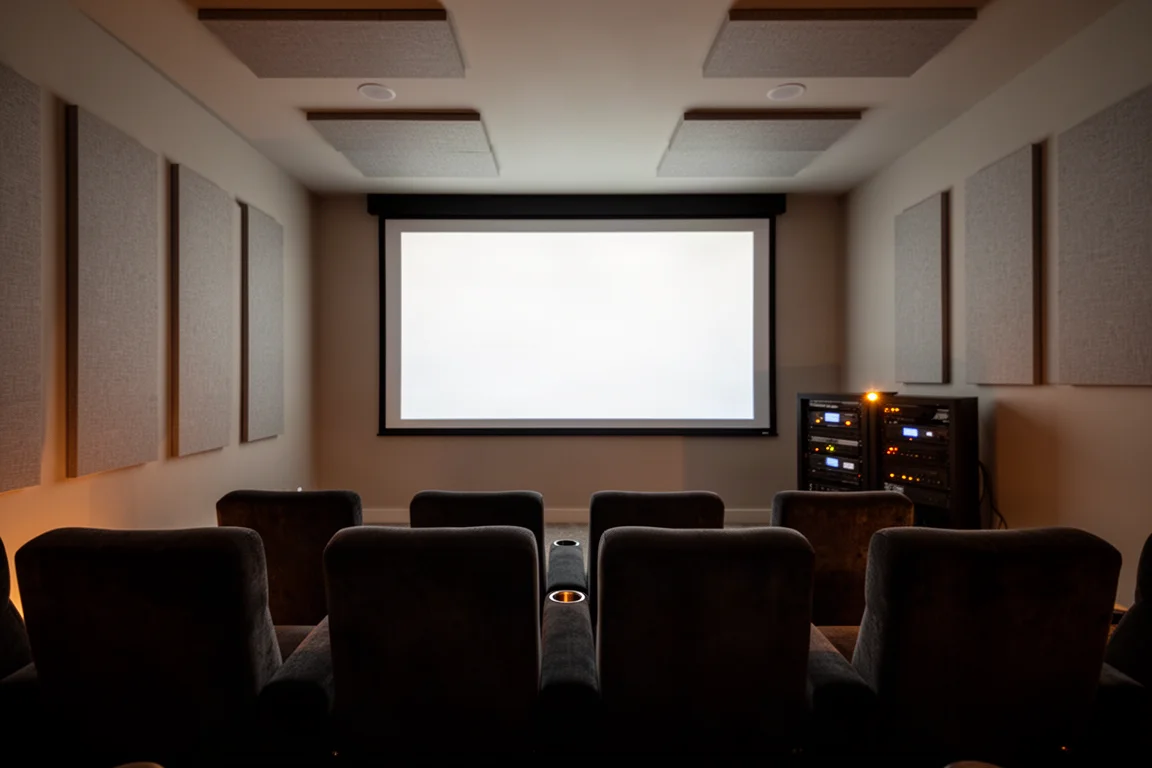
Weight matters more than it sounds in this category. A 16 channel amplifier that one person can lift and slide into a rack is easier to install, easier to service, and less demanding of the shelf or cabinet it sits on. Owners upgrading from older multi-box arrangements will notice the difference immediately, both in cable clutter and in how quickly the system can be assembled.
Main Strengths: Steady Power Across All Channels
The headline result is that the AMP 10 delivers the same output whether one channel or seven channels are driven. At 1 kHz it produced 215 watts at 0.1 percent distortion and 226 watts at 1 percent, and those figures held identically across one, two, three, four, five, six and seven channels driven simultaneously. The regulated switch-mode power supply keeps the rails locked in, so there is no collapse in output as more speakers come online.
That behaviour is rare. Marantz’s other amplifiers apply a 70 percent power rule once five or more channels are driven, which means the rated figure is not what you actually get in a full system. The AMP 10 does not need that caveat, and for anyone running a large immersive array the practical difference is real: every channel can be counted on for the full rating.
Into 4 ohm loads with two channels driven, the amplifier exceeded its own specification, producing 427 watts at 0.1 percent and 457 watts at 1 percent. On a continuous full power bandwidth sweep from 10 Hz to 20 kHz with two channels driven, output reached 400 watts while staying linear and stable across the band. Derated to avoid low frequency dips in continuous multi-channel sweeps, the amplifier still delivered 172 watts with five channels driven and 146 watts with seven channels driven at 0.1 percent distortion.
Distortion, Noise, and Load Invariance
A well designed amplifier should behave the same way regardless of the load connected to it, and this is where many early class D designs struggled. The AMP 10 keeps its frequency response essentially unchanged whether it is driving an 8 ohm or a 4 ohm load, holding flat out to 35 to 40 kHz, with overall bandwidth extending to roughly 80 kHz. In practice that means the amplifier should sound consistent across different speakers rather than being optimised for one impedance.
At 1 watt, where an amplifier spends most of its working life, the spectrum is exceptionally clean. There is no visible power supply hum at 60 Hz, DC offset stays in the low millivolt range, and the third order harmonic sits 113 dB below the fundamental. Overall distortion measured around 0.002 percent, a SINAD figure near 96 dB, which is a strong result for a multi-channel power amplifier.
Noise performance is equally solid. Signal to noise ratio measured between 91 and 95 dB at 1 watt, comfortably above the 80 dB that many multi-channel amplifiers manage. Channel separation held at roughly 90 dB at 1 kHz and about 70 dB at 20 kHz with the remaining channels driven as disturbers, so crosstalk between adjacent channels stays well controlled.
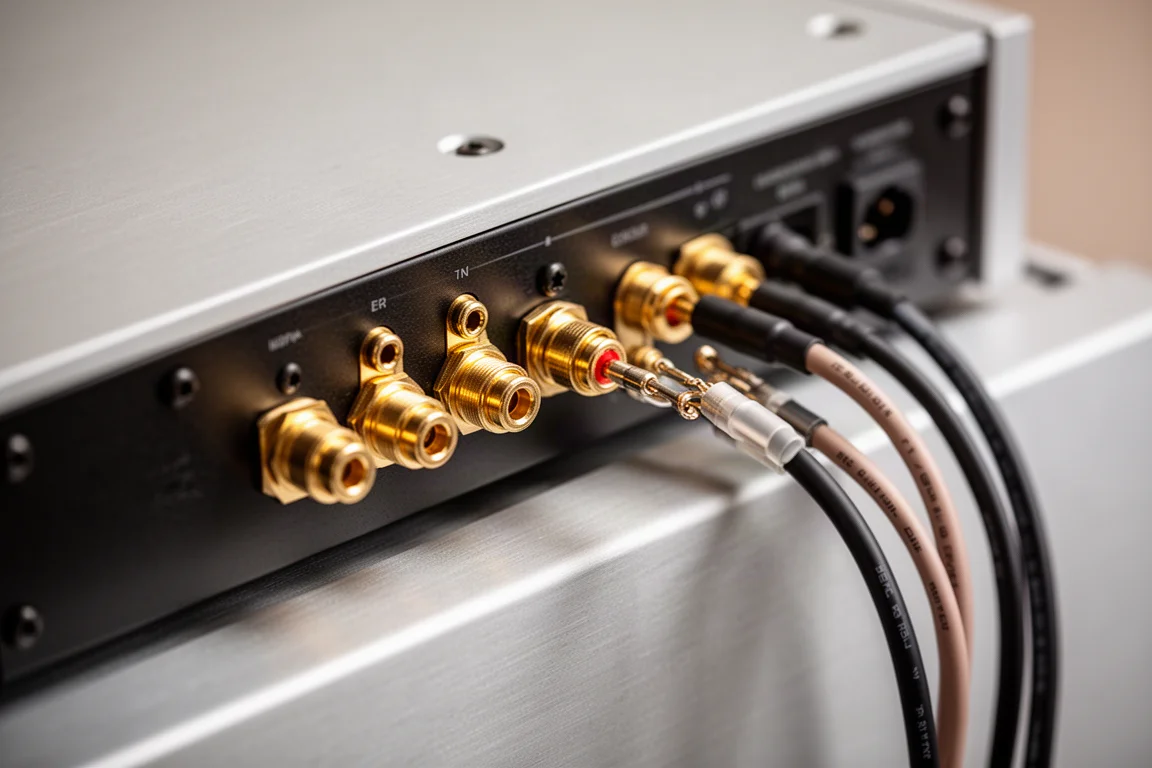
One nuance worth noting is that the cleanest distortion profile occurs below the 200 watt rating. At the full 200 watts the third order harmonic is still a respectable 75 dB below the fundamental, but higher order harmonics begin to appear. Back the level off to around 150 watts and the spectrum cleans up noticeably, which is normal behaviour for amplifiers rated close to their supply voltage limits.
Bridge Mode: More Power When You Have Spare Channels
Bridging a module pair into an 8 ohm load produced 519 watts at 0.1 percent distortion and 550 watts at 1 percent, roughly double the single channel figure rather than the theoretical four times. Distortion stayed linear out to about 400 watts in this configuration, and SINAD remained close to 95 to 96 dB, so bridging does not compromise the amplifier’s cleanliness.
Marantz advises against bridging 4 ohm speakers, and that guidance is worth following. Bridging into a 4 ohm load added very little: 596 watts at 0.1 percent and 612 watts at 1 percent, a clear sign the amplifier is current limited in that mode. A continuous sweep into a 4 ohm bridged load triggered a shutdown with the indicators turning red. Speakers with a nominal impedance of 6 ohms or higher are the sensible candidates for bridging, and low impedance designs that dip below 3.2 ohms should stay single amplified.
Used sensibly, bridge mode is one of the most useful features here. A nine channel layout with the five bed channels bridged and the four height channels driven single ended makes efficient use of the available modules, and it gives the front stage a substantial power reserve without adding another chassis to the rack.
Things to Consider Before Buying
The regulated supply that produces such consistent multi-channel output also removes dynamic headroom. Because the amplifier is rated at 200 watts, essentially at the rails, dynamic burst testing produced almost exactly the same figure as continuous testing, with 220 watts measured with seven channels driven. Rate the same amplifier at 125 watts instead and it would show about 2.5 dB of headroom, which is a matter of how a specification is framed rather than a difference in hardware.
Continuous full bandwidth multi-channel drive reveals a limitation at the low end. With seven channels driven across the full band, output dipped around 70 Hz during the sweep, and spot checks with discrete tones showed the same behaviour. Five channels driven did not show the dip. Marantz could not reproduce it and instead showed a graph where output fell below 200 Hz, and test duration and sweep direction can influence the result. Derating to 172 watts with five channels and 146 watts with seven channels removes the dip.
A small distortion blip was measured at roughly 45 to 50 watts when a single channel within a module was driven on its own. It stayed below 0.005 percent total harmonic distortion plus noise, so it is academic rather than audible, but it was repeatable on the test setup even though Marantz could not reproduce it.
Two practical points remain. The amplifier runs moderately warm rather than hot, so it needs reasonable ventilation around it. And an all channel driven test at 16 channels was not feasible, so the published figures cover up to seven channels driven, with the single channel and bridged results covering the rest of the picture.
Buying Advice: How It Compares
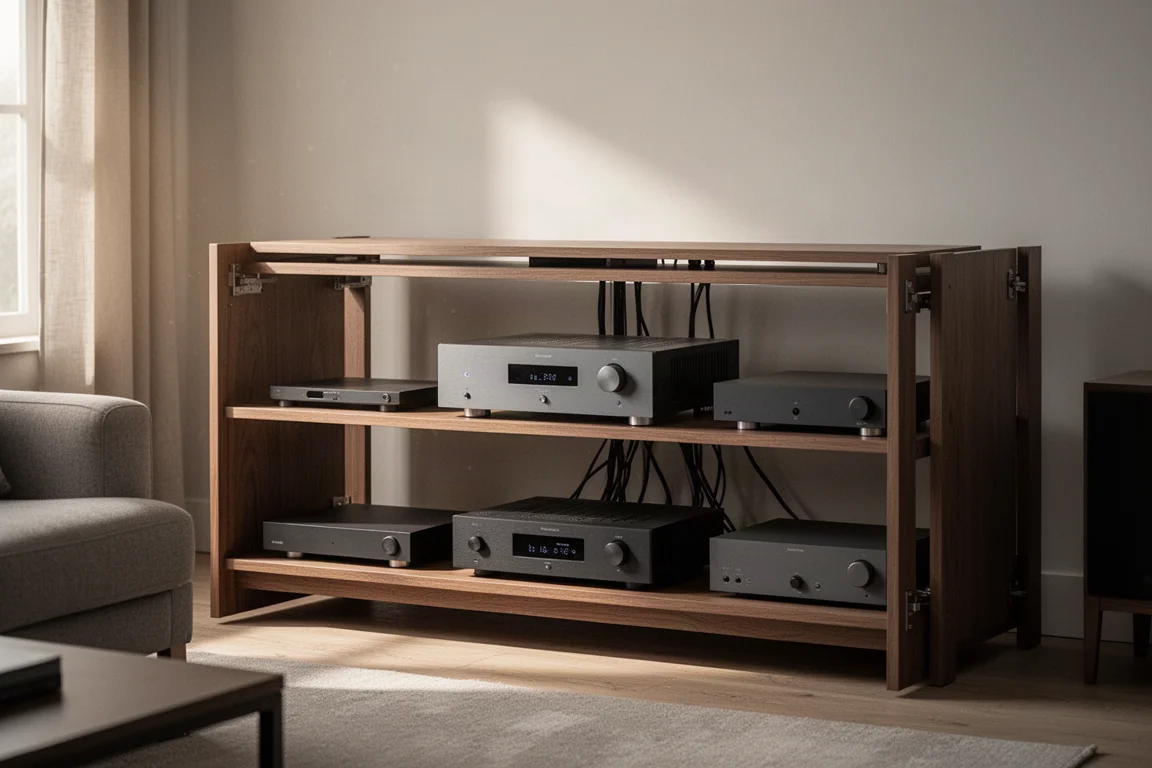
The 16 channel amplifier market is small, and the AMP 10 sits at the accessible end of it. A Storm Audio 16 channel amplifier, for example, uses a Pascal module with a 3200 watt power supply and is more powerful, but it costs around $12,000 and cannot be bridged. Trinnov offers a comparable design built around a similar ICE Edge class D module with a large power supply and bridging support. Both are excellent amplifiers, and the Marantz is the least expensive of the three while delivering performance that stands up to the comparison.
For a buyer weighing the $7,000 price, the calculation is straightforward. If you need more than nine channels of amplification and you want it in one box, the AMP 10 delivers a genuine 200 watts per channel with consistent output across channels, low distortion, a quiet noise floor and useful bridge flexibility. If you only need five or seven channels, a smaller and cheaper amplifier will do the same job for your system, and the extra capacity goes unused.
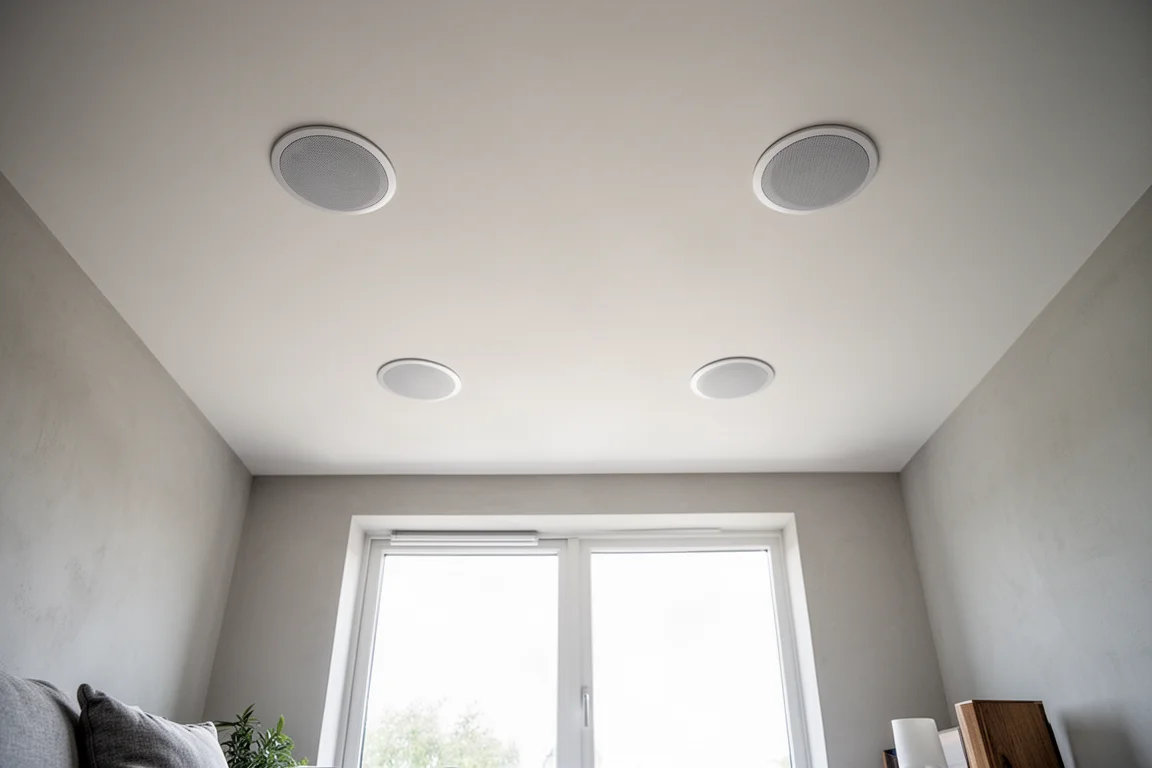
The case for the AMP 10 is strongest for immersive systems where channel count is the constraint and where a single, liftable chassis simplifies installation. In that scenario, the price is easier to justify than the headline number suggests, because it replaces multiple amplifiers and delivers more usable power than the boxes it replaces.
Conclusion
The Marantz AMP 10 is a well executed answer to a specific problem: how to power a large immersive speaker array from one amplifier without the usual multi-channel compromises. Its defining achievement is consistent power delivery from one channel all the way to seven, which is something very few multi-channel amplifiers manage, and it pairs that with low distortion, strong signal to noise performance, load invariant frequency response and a modest 48 to 50 pound chassis.
The trade-offs are real but narrow. There is no dynamic headroom because the rating sits at the rails, low frequency output is limited under sustained seven channel full bandwidth drive, and 4 ohm speakers should not be bridged. None of those points undermine the fundamentals for the buyer this amplifier was built for.
If your system needs to break the nine channel barrier and you want it handled in a single box, this is one of the strongest value propositions available at its price.
Product link
View more details for Marantz AMP 10
This product is mentioned in the review. Check the specifications, options, and compatibility before buying.
View more details for Marantz AMP 10Further reading
Related Reviews
Power Amplifiers
Advance Paris X-A160 EVO Review: A Focused Power Amplifier Built to Last
A $1,999 stereo power amplifier with selectable class A bias, 160 watts per channel, blue VU meters, and a build designed to be serviced for decades.
Power Amplifiers
Benchmark AHB2 Review: A Compact Power Amplifier Built Around Transparency
A compact reference-oriented power amplifier with THX-patented feed-forward error correction, balanced-only inputs, and the current to drive low-impedance speakers.
Power Amplifiers
Burson Timekeeper 3X GT Review: Class A Character in a Compact Monoblock
A compact flagship monoblock with the first 30 watts in Class A, 110W into 8 ohms, pinpoint imaging, and an unusually large soundstage.