Power Amplifiers
Advance Paris X-A160 EVO Review: A Focused Power Amplifier Built to Last
A $1,999 stereo power amplifier with selectable class A bias, 160 watts per channel, blue VU meters, and a build designed to be serviced for decades.
Introduction
The Advance Paris X-A160 EVO does one job. It takes a line-level signal and turns it into speaker-level power, and it leaves everything else to the rest of your system. There is no DAC inside, no phono stage, and no streaming module. For listeners who already own a good source and preamplifier, that purity is a feature rather than a limitation.
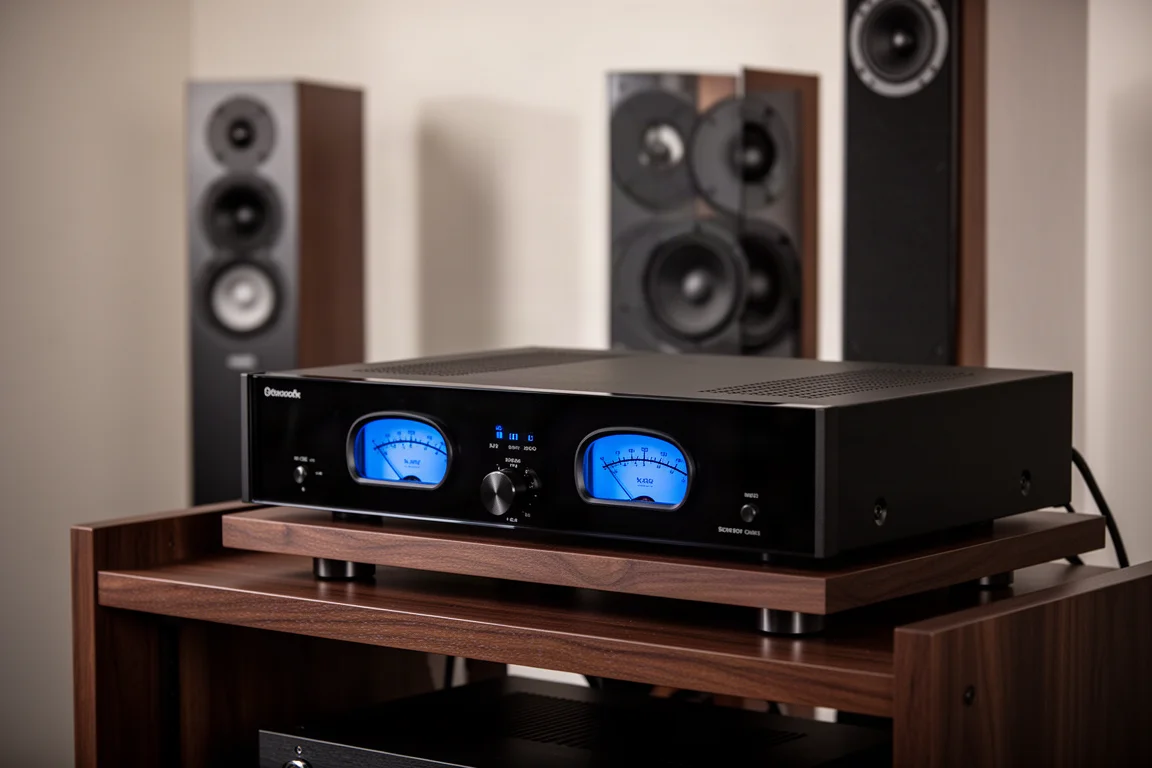
At $1,999, the X-A160 EVO sits in serious territory, and Advance Paris is clearly comfortable being measured against far more expensive amplifiers. What you get for the money is a heavy, deliberately old-school design with blue VU meters, selectable class A bias, and a construction method that keeps it serviceable for decades.
Who this product is for
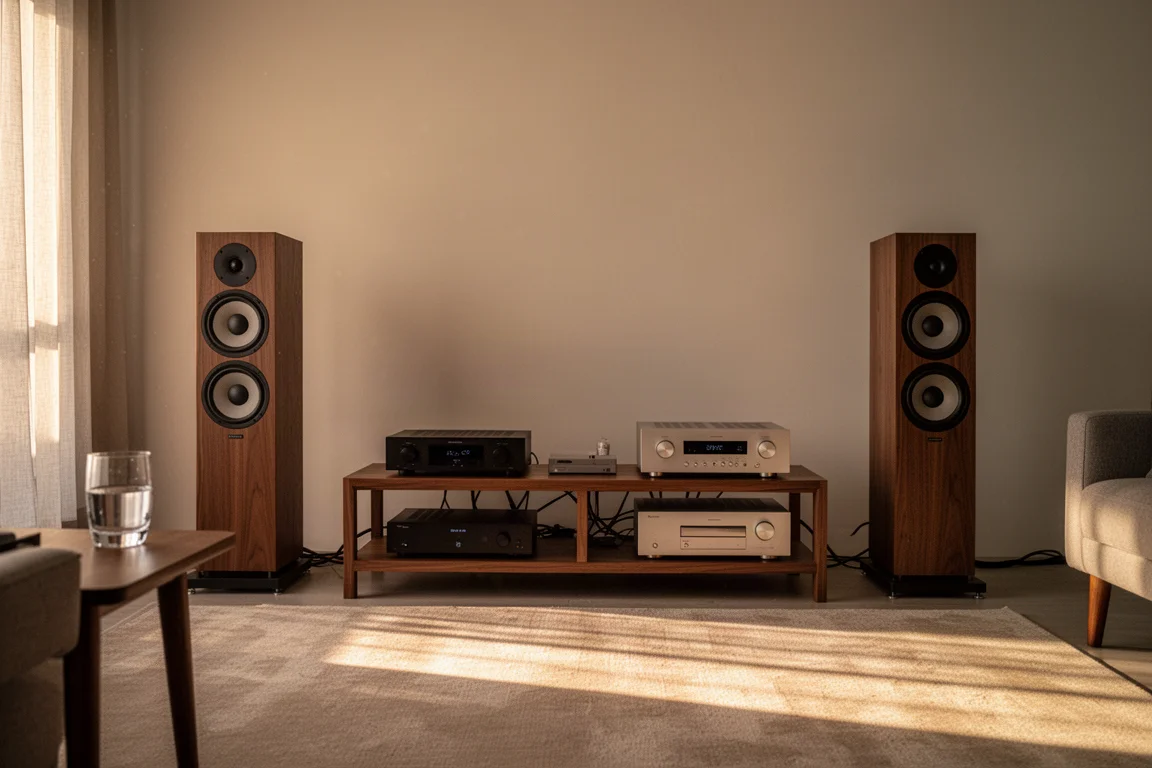
This amplifier suits listeners building or refining a separates system. If you already run a preamplifier, or a streamer and DAC with variable output for volume control, you can add the X-A160 EVO directly and skip a traditional preamp entirely.
It is also a natural fit for owners of reasonably efficient speakers. It drove floorstanding towers rated at 89 dB sensitivity and bookshelf speakers rated at 91 dB without any sense of strain. Both are easy loads, and the amplifier had headroom to spare with each.
If you want a single box that handles streaming, phono, and amplification together, this is not that product. The X-A160 EVO assumes you have already solved the front end, and it rewards that assumption with a clean, powerful output stage.
Main strengths
The headline numbers are 2 x 160 watts into 8 ohms and 2 x 240 watts into 4 ohms, fed by a 700 watt toroidal power transformer. Those ratings translate into the quality that defines this amplifier: an effortless, punchy presentation with a wide soundstage and bass that arrives with real weight.
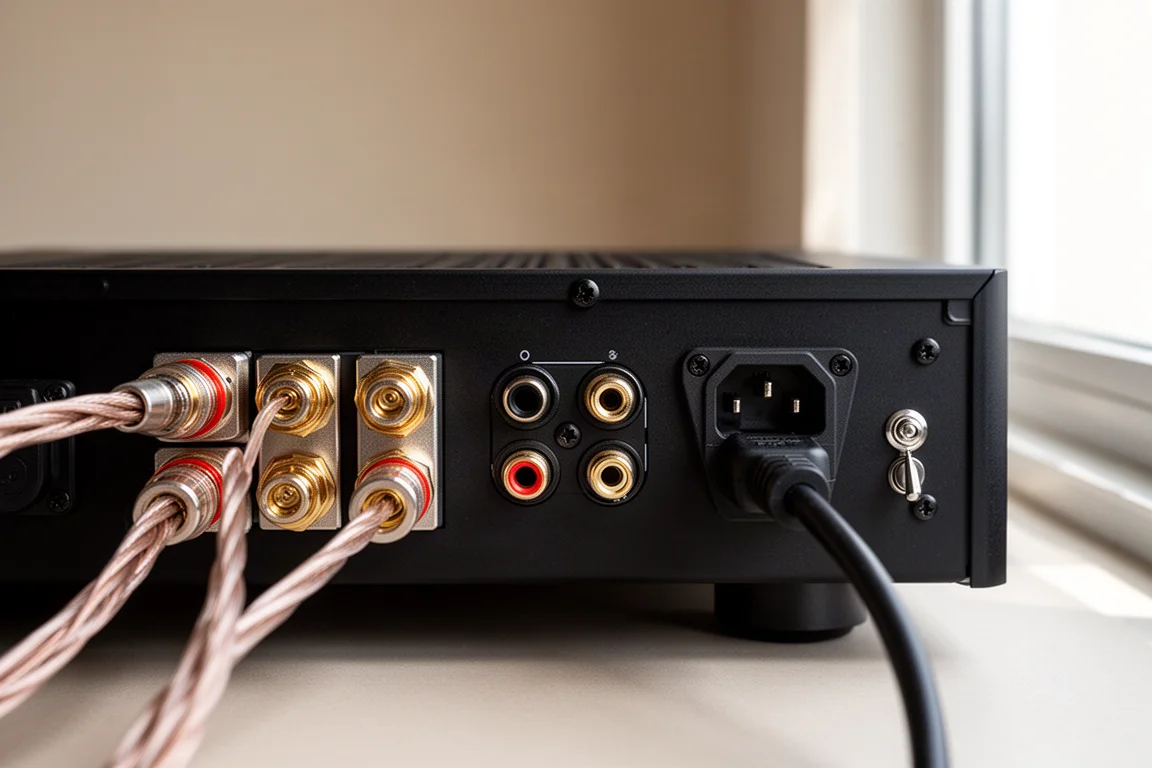
Connectivity is straightforward and covers both camps. The rear panel offers balanced and single-ended inputs, with a toggle switch to select between them, alongside a master power switch, an IEC connector, and two substantial binding posts. Two switches sit on the top panel: one engages the high bias class A mode, and the other sets the intensity of the VU meter lighting across off, medium, and high.
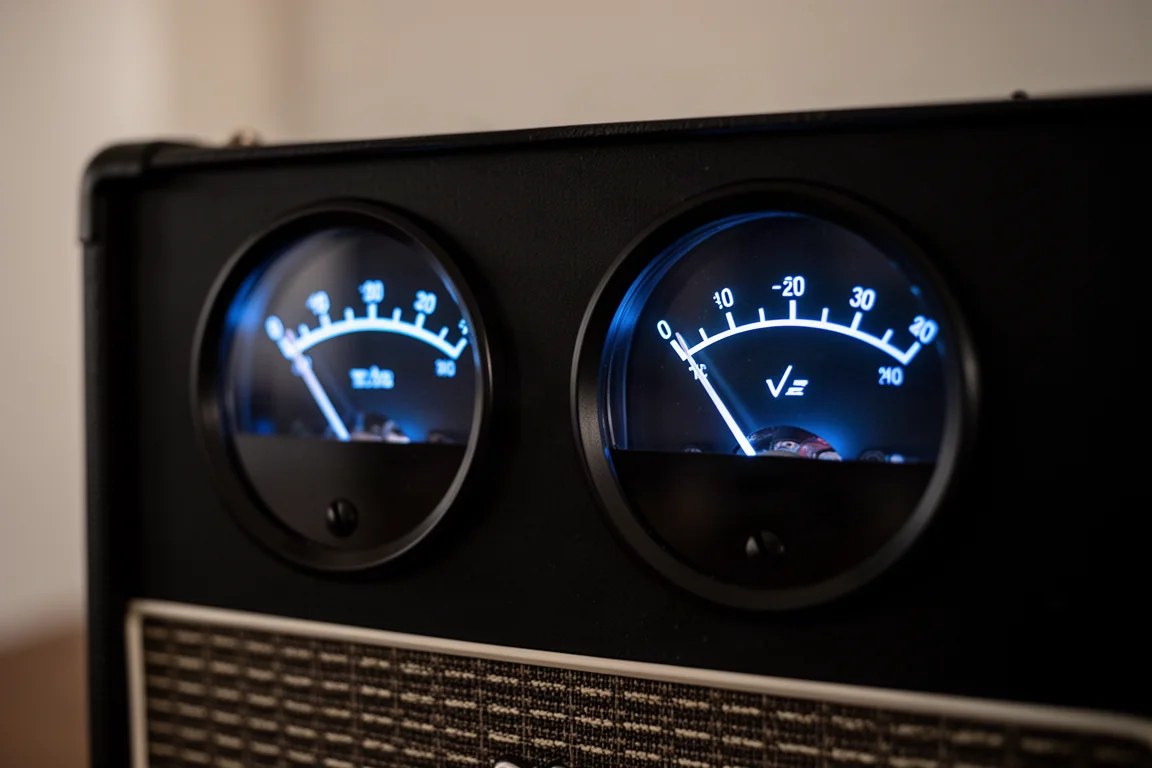
The front panel keeps things equally simple. A single power switch glows red when the amplifier is off and light blue when it is on, with a high bias indicator directly above it. The VU meters are the visual signature of the design, and the front glass or plexiglass panel is roughly half an inch thick, giving the amplifier a substantial, vintage-inflected presence.
High bias versus standard bias
The high bias switch changes how the first few watts are delivered. In high bias, the opening watts run in class A, and the amplifier delivers around 20 watts in that mode, which is more than most listeners use in most rooms at normal levels.
The audible difference is real but not dramatic. In class A bias the treble takes on a slightly sweeter character, while bass definition is marginally tighter in standard bias. Neither mode sounds analytical. Think of it as two closely related voicings in one chassis, with the class A setting adding a touch of refinement at the top end.
Most listening in class A bias felt musical and dynamic rather than clinical, which is what most people already expect from a well-executed class AB design. The switch is worth having precisely because the two modes are distinguishable without being distracting.
Power ratings and system matching
Bass output is the characteristic to plan around. The low end is forceful enough that floorstanding speakers may need to be moved further out from the wall to keep it controlled. If your speakers are punchy at the bottom and have to sit close to a wall, plugging the ports is a sensible first step.
The power figures themselves are generous. 160 watts into 8 ohms and 240 watts into 4 ohms will cover the vast majority of domestic speakers and rooms. Unlike autoformer designs that hold output constant across loads, this amplifier’s output varies with speaker impedance, but the available power is high enough that the difference rarely matters in practice.
Build quality and long-term ownership
The X-A160 EVO weighs 19 kg, roughly 42 pounds. That is not extreme for a power amplifier, but it is heavy enough to signal that the internals are not an afterthought, and heavy enough to deserve a solid shelf.
Construction uses through-hole soldering and follows the same fundamental approach as amplifiers built in the 1960s, 1970s, and 1980s. That matters because faults can be addressed at the component level rather than condemning the whole board. The amplifier carries a 2-year warranty, and its design intent is clearly long service life.
That longevity is the strongest argument for the price. A power amplifier does not become obsolete the way a phone, a computer, or a television does, because the job it performs does not change. Amplifiers and speakers remain among the safer places to spend money in a hi-fi system, and a well-built power amplifier can plausibly stay in a system for 20, 30, or even 40 years. Spread across that lifespan, the cost looks very different.
In practical terms, that means an amplifier you repair rather than replace when something eventually wears out, which is an increasingly rare quality at this price point.
Things to consider before buying
The X-A160 EVO is a power amplifier only, so budget for the rest of the chain. You will need a preamplifier, or a streamer and DAC with variable output, before you can play anything.
Its 19 kg weight and large chassis require a sturdy rack with proper ventilation space. The bass authority that makes it so engaging also means you may need to experiment with speaker placement or port plugs to get the low end sitting correctly in your room.
At $1,999, it is not an impulse purchase. Simpler power amplifiers exist for less, including box-style designs around $1,200, but they do not offer the VU meters, the thick front panel, the selectable class A bias, or the same emphasis on long-term serviceability.
Buying advice
The most useful comparison is price and intent. A current McIntosh power amplifier costs roughly twice as much, and the X-A160 EVO is designed to be judged in that company. Its effortless dynamics and wide soundstage recall the character of a large McIntosh design, even though the two are not identical and the Advance Paris output varies with speaker impedance.
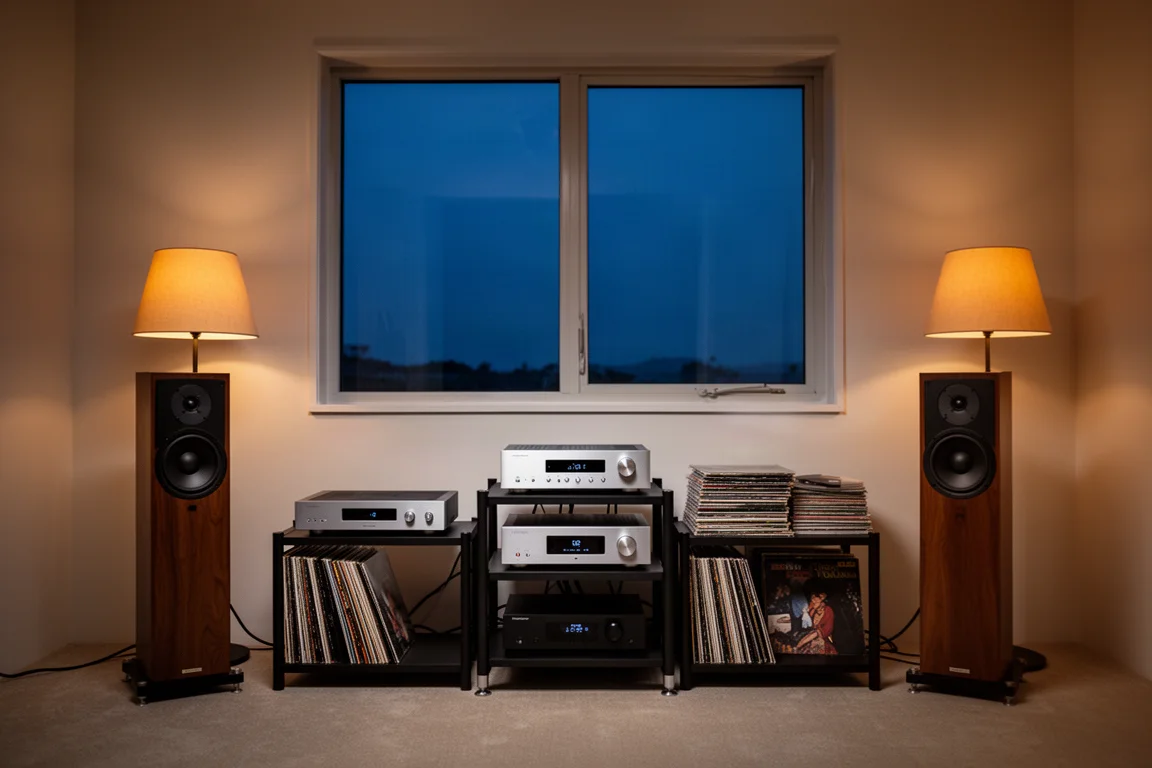
What makes the case for the X-A160 EVO is everything around the sound: the blue VU meters, the substantial front panel, the switchable class A bias, and a construction approach that keeps it repairable. If those qualities matter to you and you already own the front end to feed it, this amplifier represents a considered, long-term purchase rather than a disposable one. If you simply want clean power in a plain enclosure, a cheaper alternative will do the job.
Conclusion
The Advance Paris X-A160 EVO is a focused, powerful, and beautifully built stereo power amplifier that asks you to bring your own source. Its 160 watts per channel rating, selectable class A bias, and serviceable through-hole construction make it a compelling option for listeners who plan to keep their system for years. Buy it for the sound, the build, and the meters, provided you have the preamp or variable-output DAC to pair with it.
Product link
View more details for Advance Paris X-A160 EVO
This product is mentioned in the review. Check the specifications, options, and compatibility before buying.
View more details for Advance Paris X-A160 EVOFurther reading
Related Reviews
Power Amplifiers
Benchmark AHB2 Review: A Compact Power Amplifier Built Around Transparency
A compact reference-oriented power amplifier with THX-patented feed-forward error correction, balanced-only inputs, and the current to drive low-impedance speakers.
Power Amplifiers
Burson Timekeeper 3X GT Review: Class A Character in a Compact Monoblock
A compact flagship monoblock with the first 30 watts in Class A, 110W into 8 ohms, pinpoint imaging, and an unusually large soundstage.
Power Amplifiers
Classé Audio Fifteen Power Amplifier Review: Vintage Warmth With Modern Clarity
A used-market Classé Audio Fifteen delivers 175W into 8 ohms, balanced inputs, and a warm, spacious presentation that still holds up against far pricier modern amplifiers.