High-End Audio
Marantz 10 Series Reference Collection: Model 10, Link 10n, and SACD 10 Explained
Marantz returns to reference-grade two-channel audio with the Model 10 integrated amplifier, the Link 10n streamer and preamplifier, and the SACD 10 CD and SACD player.
Introduction
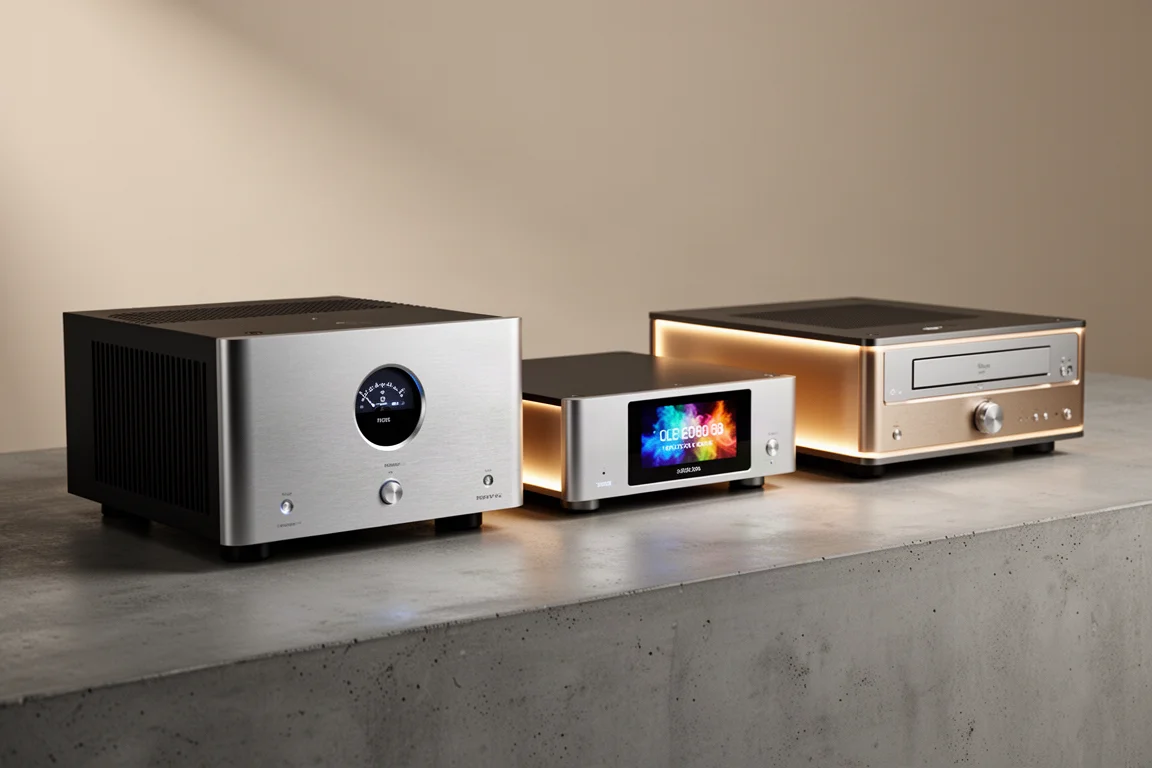
Marantz has spent more than 70 years building high-end audio equipment, and the new 10 Series Reference Collection marks the company’s return to reference-grade two-channel components. The last time Marantz released reference-quality two-channel products was 2016, with the PM10 and the SA10. The 10 Series picks up that thread with three pieces: the Model 10 integrated amplifier, the Link 10n network streamer and preamplifier, and the SACD 10 CD and SACD player.
All three are designed and engineered at Marantz’s Shirakawa facility in Japan, and all three share the same chassis language, materials and internal isolation approach. Marantz’s Sound Master, who brings decades of experience to the role, oversaw the voicing to keep the warm, inviting character the brand is known for.
This guide walks through what each component does, where the strengths sit, and the practical questions worth answering before committing to one piece or the whole stack.
What Makes the Marantz 10 Series Different
The 10 Series is positioned as the finest equipment Marantz has built. That claim rests on concrete engineering details rather than marketing language alone.
Each unit uses a copper-plated, triple-layer chassis. The Model 10’s side covers measure up to 15.8 mm at their thickest, with a 6 mm top cover, machined aluminium front and rear panels over copper plating, and a triple-layer copper-plated bottom panel. Copper plating also appears on internal parts such as the transformer cover. The purpose of all that metal is electrical isolation, and it is an expensive way to pursue it.
Internally, the same philosophy continues. Circuits are regulated inside their own subsections of the chassis and shielded from neighbouring stages so interference does not creep into the signal path. That layout repeats across the Model 10, the Link 10n and the SACD 10.
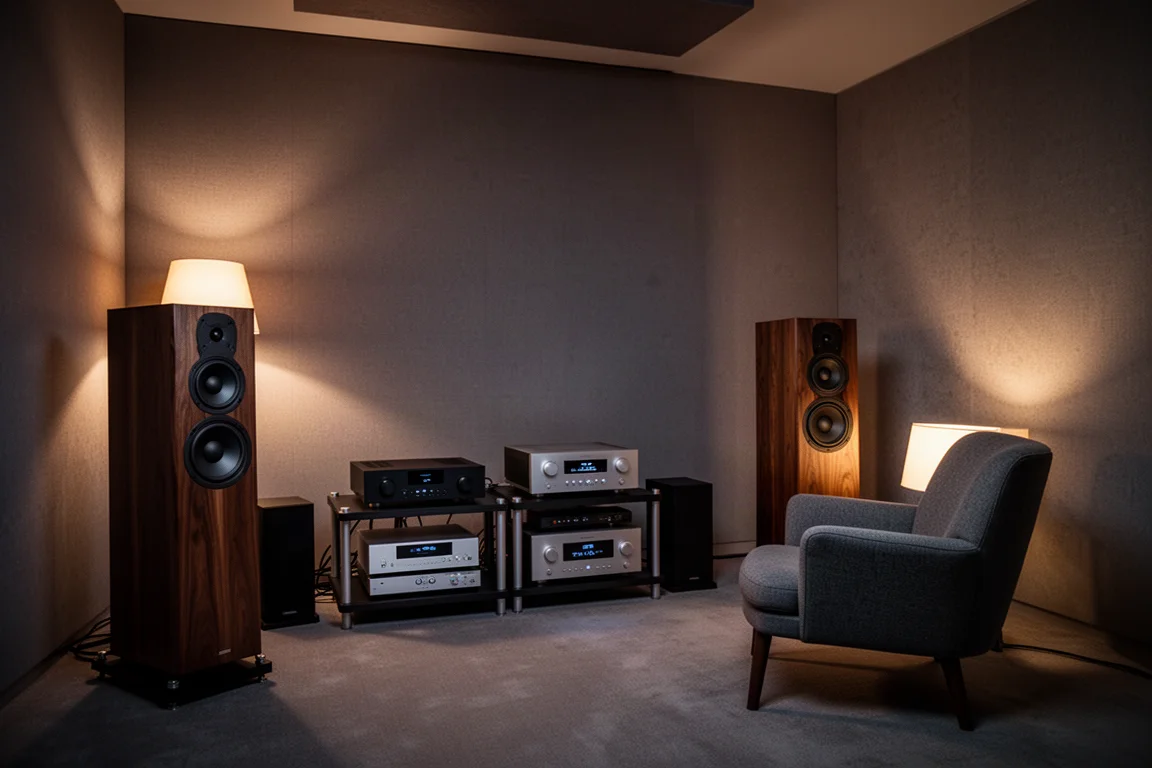
That shared foundation is what makes the series read as a system rather than three unrelated products. If you are building toward a complete Marantz chain, the parts are designed to sit together.
Marantz Model 10 Integrated Amplifier
The Model 10 takes a few architectural notes from the earlier PM10. It remains a purely analog integrated amplifier with no DAC and no HEOS, just analog inputs and speaker outputs. Beyond that, almost everything has been redesigned.
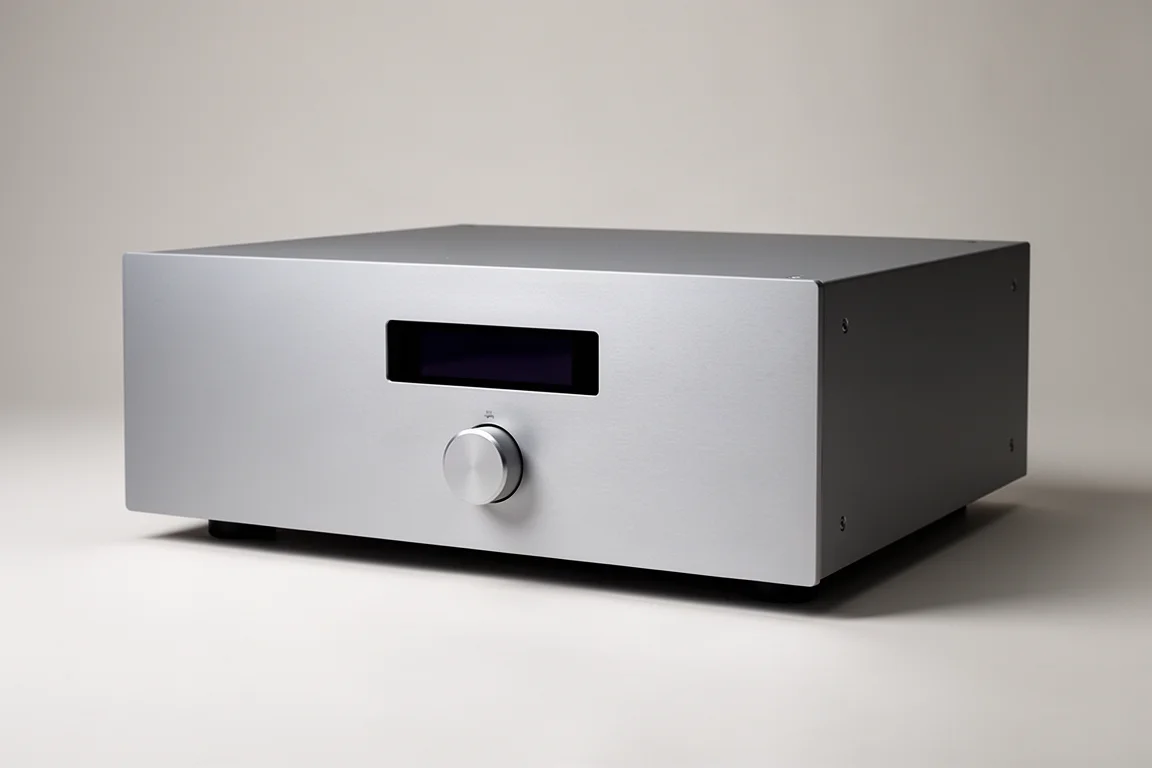
The front panel adopts the simpler layout seen across the Marantz cinema range: a source selector, a volume knob, and the classic circular window, which is now a high-resolution TFT display showing volume, input or any engaged special mode. Turning the input selector steps through sources with a positive click intended to echo how vintage Marantz amplifiers felt. A dedicated VU meter mode brings up two digital meters, one per channel. The specially surfaced aluminium is thicker and more substantial than on other Marantz amplifiers, and backlighting above and below the inner front panel gives it a floating look.
A headphone jack on the front is rated at 130 mW into 32 ohms and uses the HDAM SA2 plus diamond buffer amplifier circuit. It will happily drive lower-impedance, high-sensitivity headphones, though very high-impedance or planar magnetic models that demand more power into high impedance may want a dedicated amplifier. The Model 10 is available in black or the Marantz champagne finish.
Under the lid there are three power supplies: two switch-mode supplies, one per amplification channel, plus a separate supply for the rest of the circuitry. The high-voltage and low-voltage sections sit in separate, fully shielded compartments. Amplification comes from two newly developed amplifiers in a dual mono layout, co-developed with the Danish company Purifi. Rather than using off-the-shelf Purifi modules, Marantz partnered with Purifi on a custom Class D topology in a bridged tied load configuration. Marantz quotes total harmonic distortion of 0.05% across the full audio spectrum at maximum power, with better performance at half power, 30 amps of peak current, and a frequency response that stays consistent regardless of load impedance. The preamp stage uses the latest all-discrete version of Marantz’s HDAM circuit, a technology the company introduced in 1992 and tuned here for a balance of response speed and signal transparency.
Connectivity is fully balanced: two balanced inputs, a balanced preamp output and a balanced power amplifier input, with RCA jacks for the preamp output and power amp input as well. Three sets of RCA inputs cover legacy sources, and recording inputs and outputs let you connect a tape deck or another recorder. Every RCA terminal is nickel-plated, which resists the tarnishing that copper or brass can develop over time. Speaker outputs come in two sets per channel for multiple speaker pairs or bi-wiring. Vinyl fans get a built-in phono preamp with a single input that adapts to moving magnet or moving coil cartridges, though moving coil loading is not especially tunable. The chassis weighs close to 75 lb, which leaves plenty of room for cooling.
Marantz Link 10n Network Streamer and Preamplifier
The Link 10n is the Model 10’s natural partner and brings flagship-level streaming to the series. It runs the HEOS platform, which covers services including Spotify, Deezer, Tidal, Napster, TuneIn, SoundCloud and Mood Mix, with Chromecast built in to add more. You can also play tracks directly from a phone, tablet or USB drive, and Marantz has said additional services will follow. The Link 10n is Roon ready from launch.
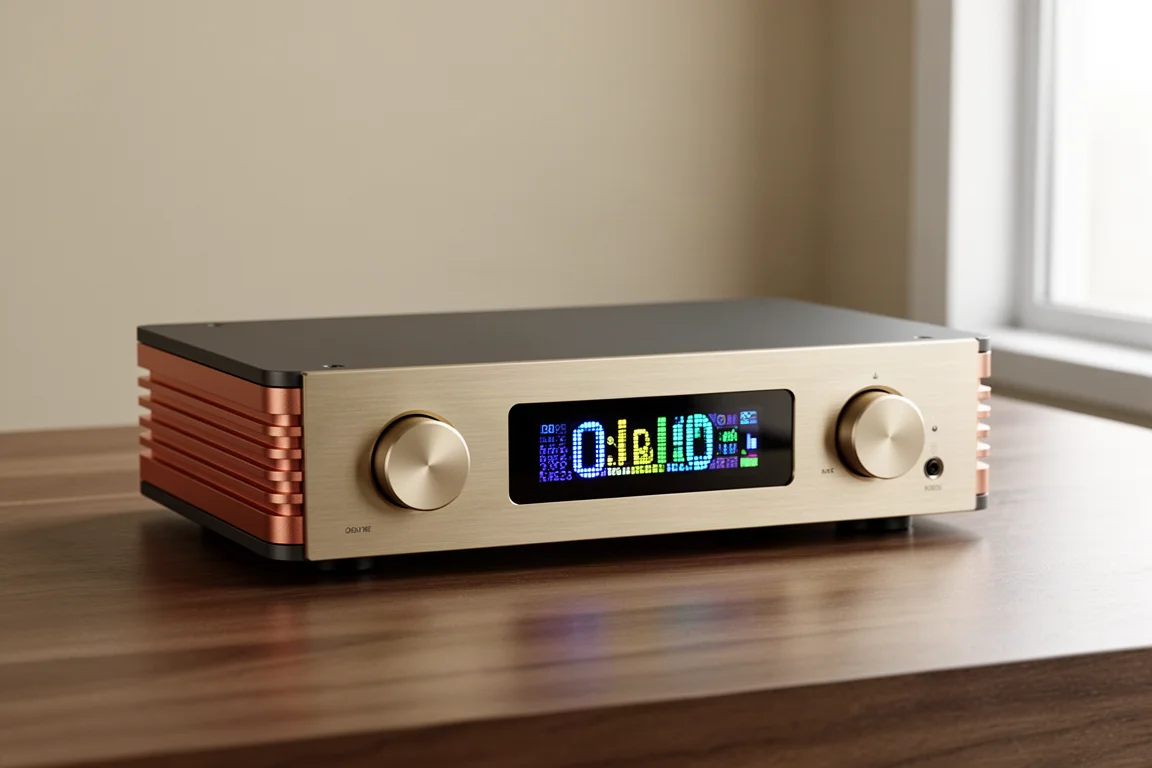
The front panel carries a full-colour OLED display alongside the same input and volume knob as the Model 10, with the power button and headphone jack in the same positions, so the two units look and behave as a pair. The chassis follows the same triple-layer aluminium construction with copper plating and original PCB boards, and it is built at the Shirakawa facility to the same standards.
The rear panel is fully equipped. Coaxial, two optical, USB and digital outputs in coaxial and optical cover digital sources, while Ethernet handles networking and HDMI ARC lets the unit serve as a TV sound source. Balanced and RCA outputs connect to an integrated amplifier such as the Model 10.
What sets the Link 10n apart from most streamers is that it is really a high-end preamplifier with streaming built in. It includes a full moving magnet and moving coil phono preamp, RCA or balanced analog inputs for an analog source, and analog preamp outputs in both RCA and balanced form, fed by a complete HDAM-quality preamp circuit. Marantz describes this HDAM module as the cleanest and lowest-distortion version it has created.
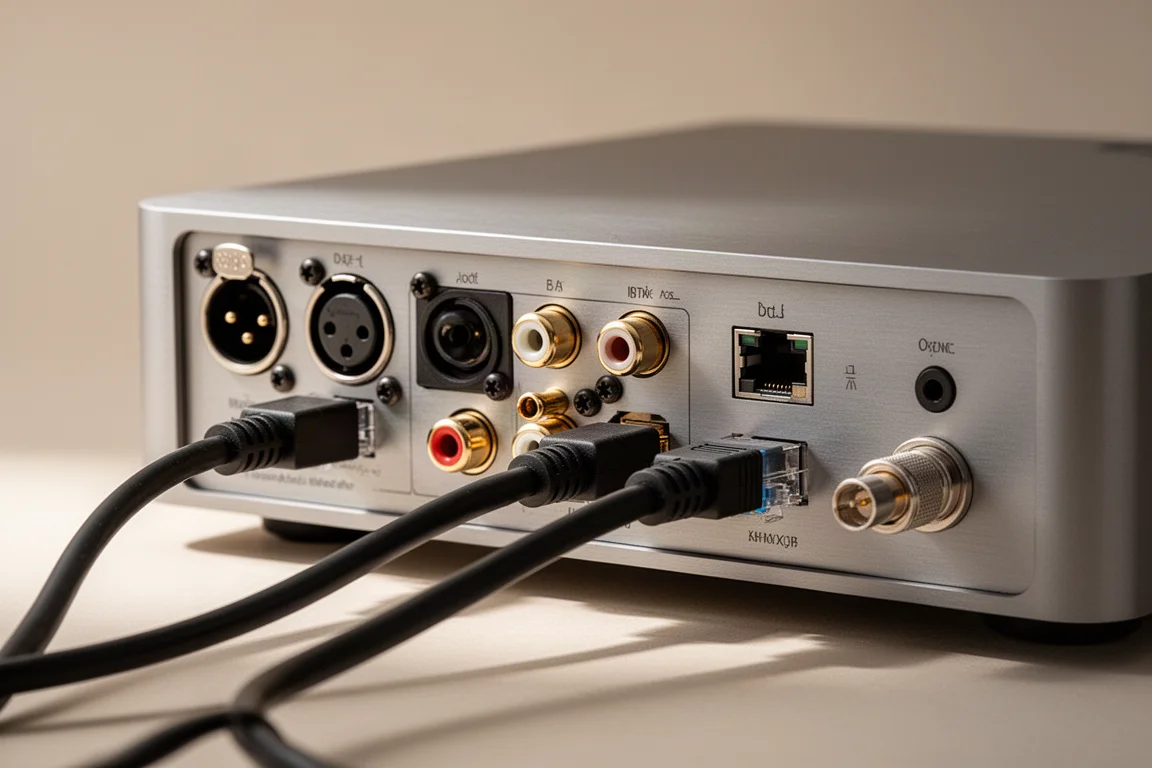
For anyone whose system revolves around a turntable, a television and a streaming library, that combination of inputs covers a lot of ground without extra boxes.
Marantz SACD 10 CD and SACD Player
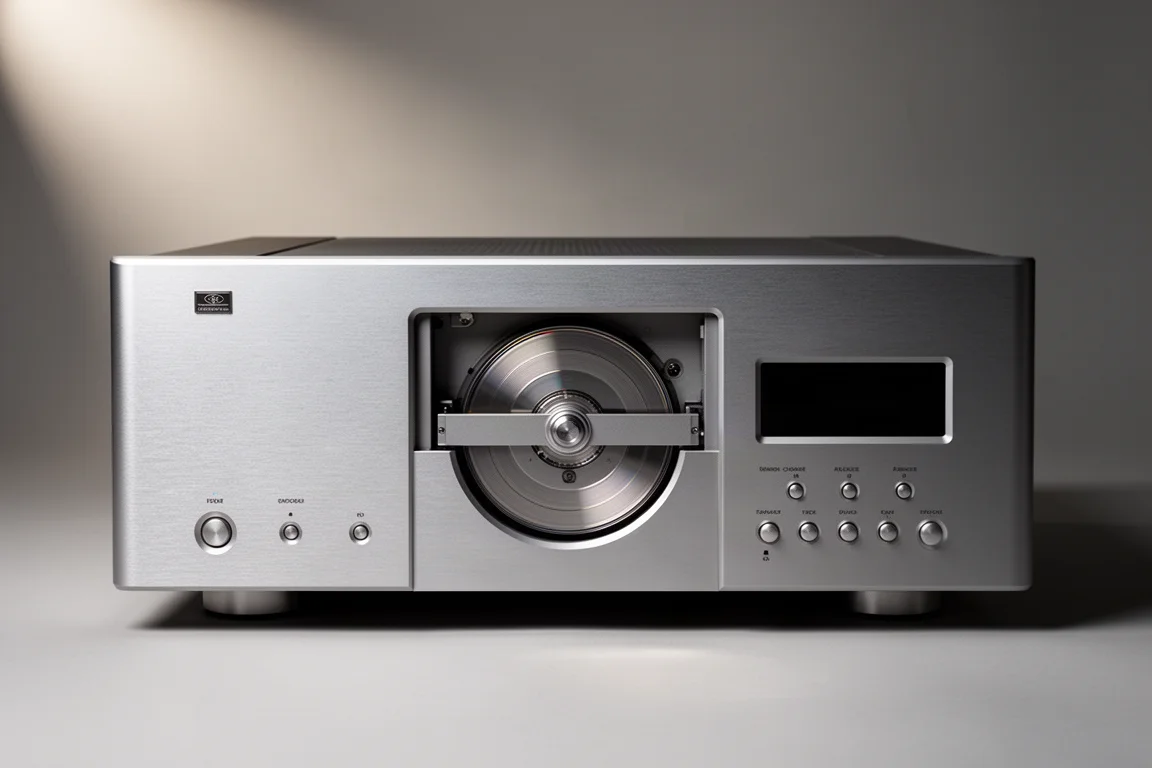
Physical media still matters to a lot of listeners, and the SACD 10 addresses that directly. It is first and foremost a CD and SACD player, built around the SACD M3 disc transport and housed in the same aluminium and copper-plated triple-layer chassis as the rest of the series. Marantz positions it as the best CD and SACD player it has ever built, and it carries the same upgraded Marantz Musical Mastering DAC found in the Link 10n.
The back panel adds a full set of digital connections, which means the SACD 10 can also serve as a standalone DAC for digital music collections stored on hard drives or connected through optical, coaxial or USB inputs. Coaxial and optical outputs are provided as well. Upgraded HDAM circuits sit in the inputs and outputs to keep the analog signal leaving the player on the same level as its digital performance. As with the other two components, each circuit is regulated inside its own electrically isolated subsection of the chassis.
Marantz Musical Mastering: The DAC Inside the Link 10n and SACD 10
Both the Link 10n and the SACD 10 use Marantz Musical Mastering, the company’s own digital-to-analog conversion design. Instead of a conventional single-step conversion, it processes digital audio through a series of stages that include upconversion and filtering before the signal reaches the analog output.
The specification is generous: support for PCM up to 32-bit/384 kHz and DSD up to 11.2 MHz. Because the same conversion architecture appears in both the streamer and the disc player, a system built around the two should stay consistent no matter which source you are playing.

That consistency is the practical argument for staying within the series when assembling a digital front end.
Floating Control Bus and System Building with the 10 Series
Marantz’s Floating Control Bus System appears on selected models and opens up some unusual configurations. It can connect up to four Model 10 units with one acting as the control centre, which allows a full biamp setup: one Model 10 as the integrated amplifier controller and the other three as power amplifiers. Four Model 10s together add up to roughly 4,000 watts into 4 ohms.
Pair the Link 10n with the Model 10 and the bus becomes even more flexible. With its built-in preamp, the Link 10n can act as the control centre for up to four Model 10s, creating a high-power digital system, or it can sit as a streamer and preamp feeding a single Model 10 used purely as a power amplifier.
There is one wrinkle worth thinking through. The Model 10 includes a high-level phono stage, and the Link 10n includes a phono preamp as well. Once the Link 10n takes over preamp duties, the Model 10’s controls and phono stage become largely redundant. That overlap is not a flaw in either product, but it can make it harder to work out which combination you actually need. Deciding up front whether you want a single integrated amplifier, a streamer-preamp plus power amplifier arrangement, or a multi-amp system will save a lot of second-guessing.
Buying Advice for the 10 Series
At this level, the components are not competing on features so much as on how well they fit a specific system. A few questions are worth answering first.
Do you want analog purity or built-in flexibility? The Model 10 deliberately excludes a DAC and streaming, concentrating its budget on amplification and isolation. The Link 10n goes the other way, folding streaming, a preamp, a phono stage and HDMI ARC into one chassis. Buyers who already own a streamer or DAC may find that the Model 10 plus the SACD 10 covers everything they need, while anyone starting fresh will get further with the Link 10n at the centre.
Do you still play discs? The SACD 10 is the only way to get the SACD M3 transport in this series, and it doubles as a DAC for external digital sources.
Hearing these components in person is genuinely useful at this price point. The differences between a single integrated amplifier, a preamp and power amplifier split, and a multi-amp configuration are audible and room-dependent. If you can audition the units, or work through your room and speaker requirements with a specialist, you will land on a better configuration than guessing from specifications alone.
None of that changes the underlying appeal: craftsmanship, heavy copper-plated construction and the warm Marantz voicing are consistent across all three units.
Conclusion
The Marantz 10 Series Reference Collection is a clear statement about where the company sees its two-channel future. The Model 10 brings a purist analog integrated amplifier with a custom Purifi-based dual mono Class D design and a fully balanced, well-isolated layout. The Link 10n turns streaming into a genuine high-end preamplifier with HEOS, HDMI ARC, a phono stage and the Marantz Musical Mastering DAC. The SACD 10 keeps physical disc playback alive with the SACD M3 transport and the same conversion architecture.
If you love the Marantz sound and the history behind it, these are the most ambitious components the company has built. The main task is deciding which pieces match your system, and the Floating Control Bus leaves room to grow once you do.
Further reading
Related Reviews
High-End Audio
Accuphase E-3000 Review: A Class AB Integrated Amplifier Built to Last
The Accuphase E-3000 is the entry point into a legendary Japanese high-end line. Here is how it sounds, how it is built, and who should consider it.
High-End Audio
Arreté Floorstanding Speakers and Benchmark HPA2: A Premium Pairing Worth Hearing
A close look at how Arreté floorstanding speakers and Benchmark HPA2 power amplifiers pair up, what each component contributes, and what to weigh before buying.

High-End Audio
Aurelia Acoustics MRB1 Review: Marble Cabinets and a Big, Lively Sound
The Aurelia Acoustics MRB1 pairs a marble cabinet with Accuton ceramic drivers and a lively, spacious sound that stays easy to listen to. Here is what to know before buying.